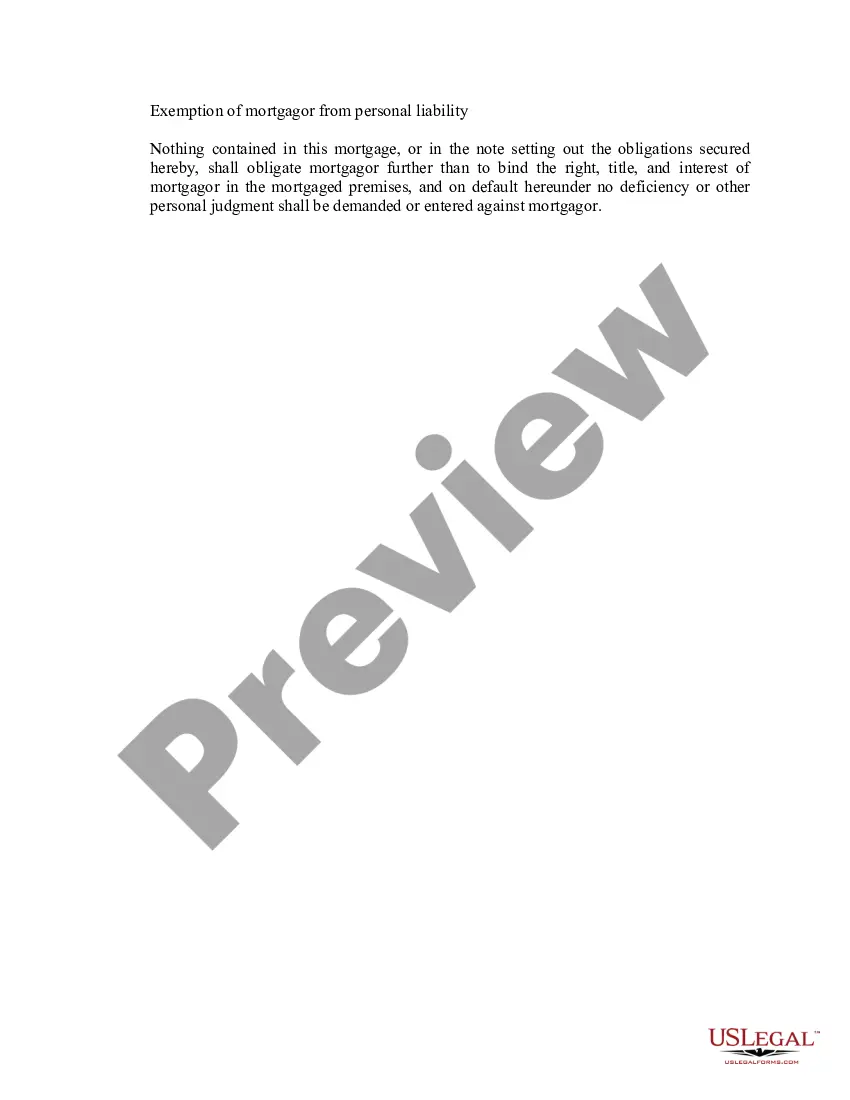
Exemption of mortgagor from personal liability
What is this form?
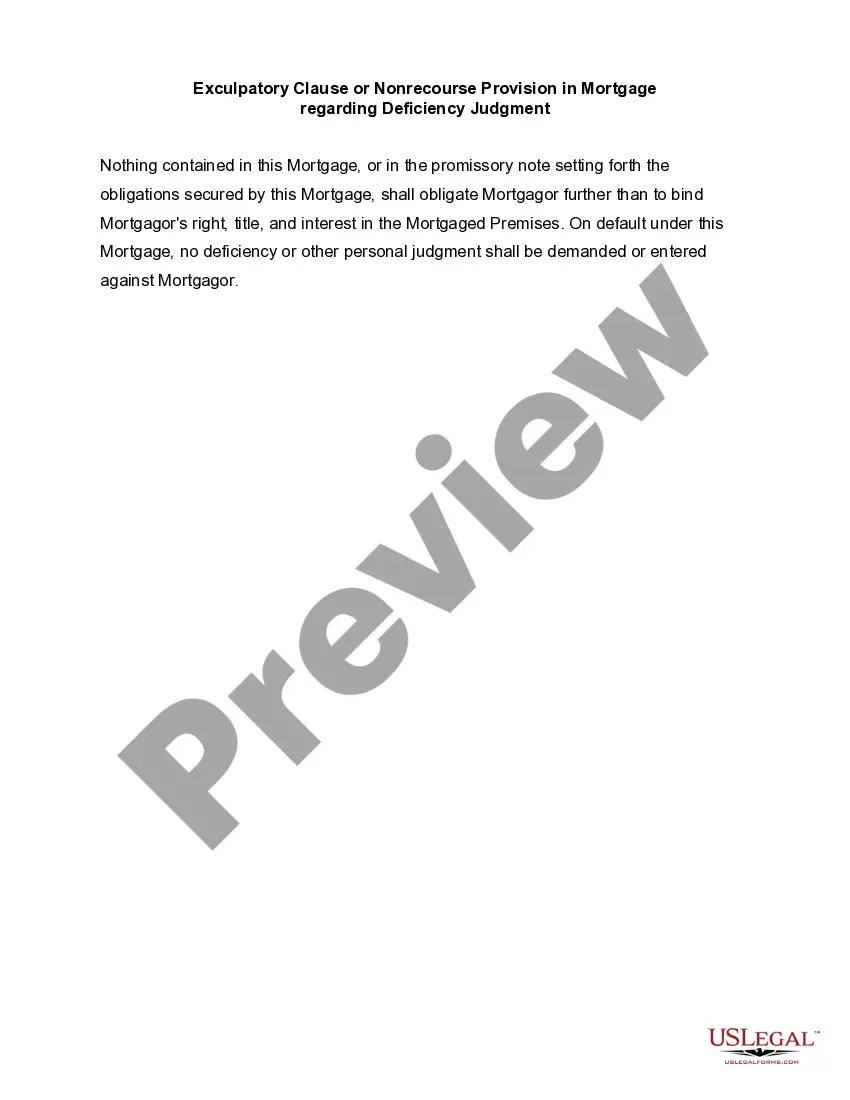
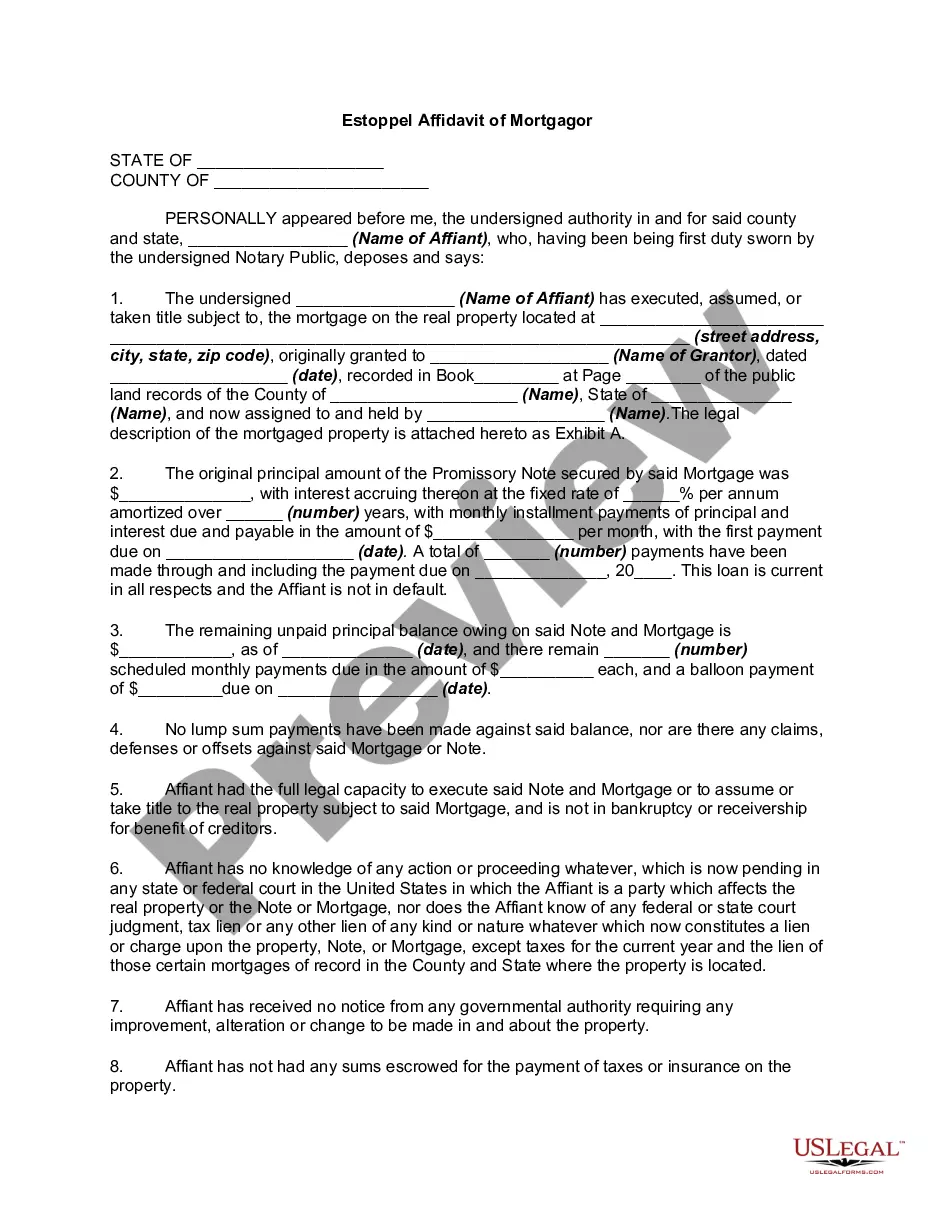
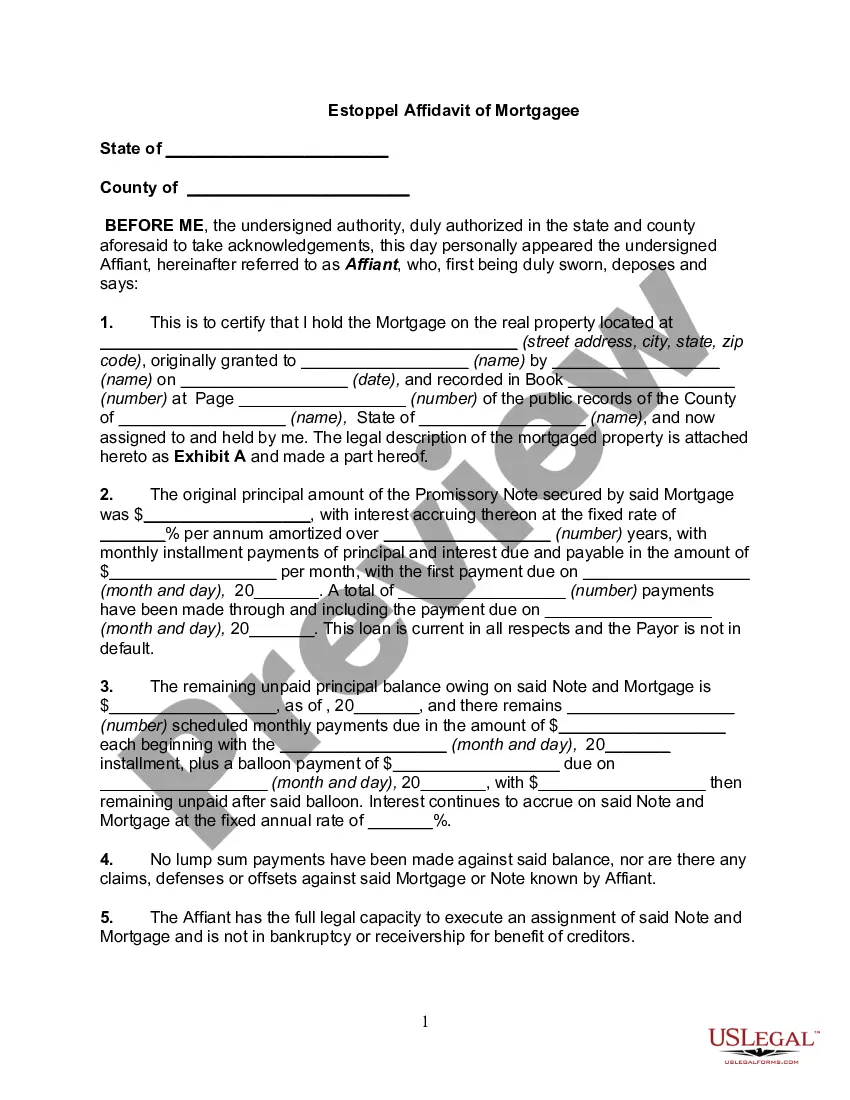
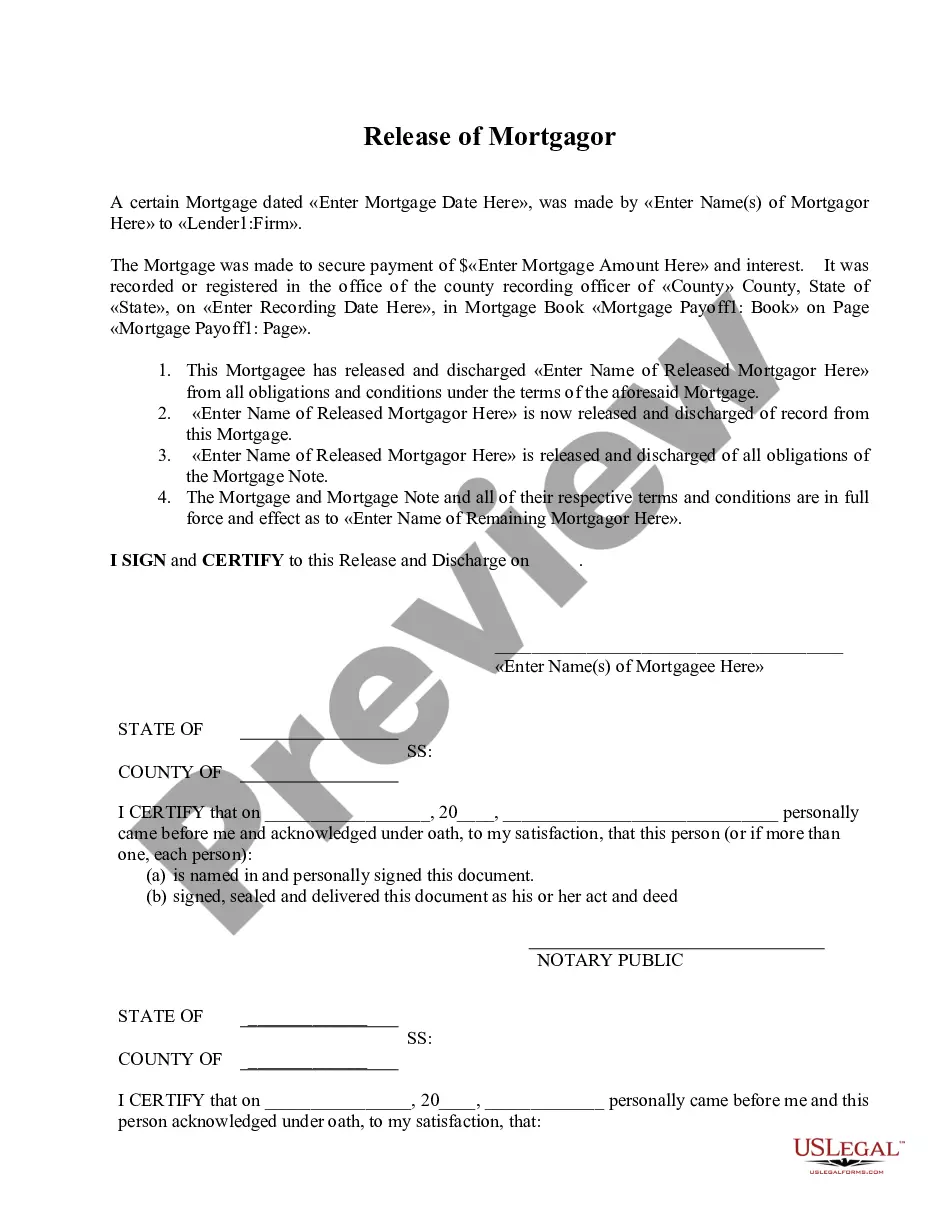
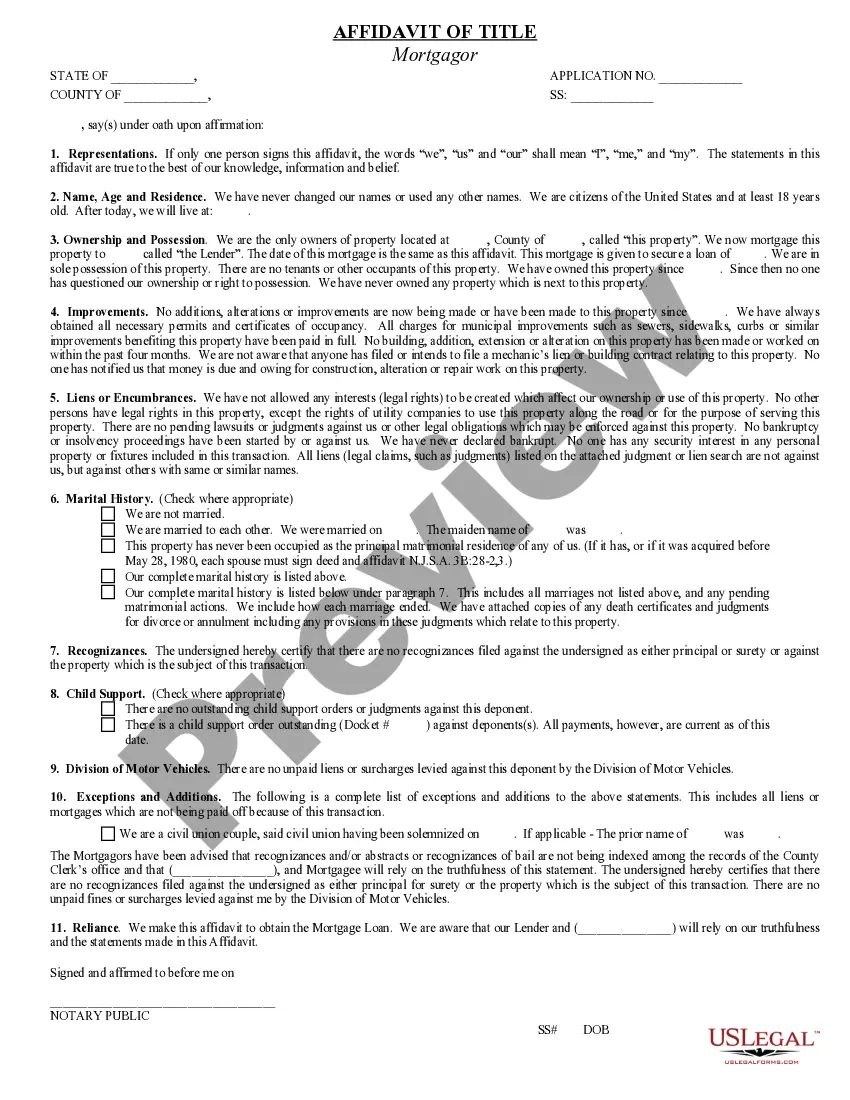
The Exemption of Mortgagor from Personal Liability form is designed to protect the mortgagor from being personally liable for any debt that arises from the mortgage agreement. This form limits the obligation of the mortgagor strictly to the property itself, ensuring that on default, no deficiency judgment can be entered against them personally. It serves as an important document to secure the mortgagor's financial safety, distinguishing it from typical mortgage agreements which may impose personal liability.
Main sections of this form
- Definitions of terms and parties involved in the mortgage agreement
- Clauses outlining the limits of personal liability for the mortgagor
- Conditions under which the exemption applies
- Provisions regarding non-default or default situations
- Instructions for signing and dates
When to use this document
This form is typically used in real estate transactions where a mortgagor wishes to limit their personal liability. It is particularly useful during refinancing, purchases of investment properties, or when renegotiating existing mortgages. If there is any concern about the risk of personal judgment in the event of a default, this form provides a critical safeguard.
Who this form is for
- Homeowners seeking to limit their personal risk in mortgage agreements
- Real estate investors managing multiple properties
- Individuals refinancing their mortgage
- Business owners securing loans against property
Steps to complete this form
- Identify all parties involved in the mortgage agreement.
- Clearly define the property being mortgaged.
- Outline the exemption clauses regarding personal liability.
- Enter any additional terms or conditions that apply.
- Sign and date the document as required.
Does this document require notarization?
This form does not typically require notarization unless specified by local law. It is advisable to check local requirements to ensure compliance and validate the document's enforceability.
Get your form ready online
Our built-in tools help you complete, sign, share, and store your documents in one place.
Make edits, fill in missing information, and update formatting in US Legal Forms—just like you would in MS Word.
Download a copy, print it, send it by email, or mail it via USPS—whatever works best for your next step.
Sign and collect signatures with our SignNow integration. Send to multiple recipients, set reminders, and more. Go Premium to unlock E-Sign.
If this form requires notarization, complete it online through a secure video call—no need to meet a notary in person or wait for an appointment.
We protect your documents and personal data by following strict security and privacy standards.

Make edits, fill in missing information, and update formatting in US Legal Forms—just like you would in MS Word.

Download a copy, print it, send it by email, or mail it via USPS—whatever works best for your next step.

Sign and collect signatures with our SignNow integration. Send to multiple recipients, set reminders, and more. Go Premium to unlock E-Sign.

If this form requires notarization, complete it online through a secure video call—no need to meet a notary in person or wait for an appointment.

We protect your documents and personal data by following strict security and privacy standards.
Typical mistakes to avoid
- Failing to accurately identify all parties involved.
- Omitting key clauses regarding personal liability.
- Not signing and dating the document correctly.
- Using inappropriate language that conflicts with local laws.
Benefits of completing this form online
- Immediate access to professionally drafted templates.
- Increased convenience with downloadable formats.
- Ability to edit and customize the document to meet specific needs.
- Availability of guidance throughout the form completion process.
Looking for another form?
Form popularity
FAQ
How to report the bankruptcy exclusion. To show that your debt was canceled in a bankruptcy case and is excluded from income, attach Form 982 to your federal income tax return and check the box on line 1a.
Under liabilities, you'll include all debts such as car loans, credit cards, other mortgages and any alimony or child support you're obligated to pay.
For most households, liabilities will include taxes due, bills that must be paid, rent or mortgage payments, loan interest and principal due, and so on. If you are pre-paid for performing work or a service, the work owed may also be construed as a liability.
More in depth: Monthly Debt Service is a potentially misleading term, as it is limited to certain monthly debts. It does not include health insurance, auto insurance, gas, utilities, cell phone, cable, groceries, or other non-recurring life expenses.
How to Fill Out Form 1099-C or Cancellation of Debt PDFRun YouTube Start of suggested clip End of suggested clip If their address has an apartment number included in this section. The city or town state orMoreIf their address has an apartment number included in this section. The city or town state or province country and postal code of the debtor. And the account number of the debtor.
Liabilities are anything you owe money on. A car loan, home mortgage, or even child support obligations are all liabilities that should also be included in your overall net worth.
Form 1099-A, Acquisition or Abandonment of Secured Property, is an informational form used to report foreclosure on a property. You might receive this form if your mortgage lender foreclosed on your property and canceled some or all of your mortgage, or sold your property in a short sale.