Affidavit of Understanding & Addendum to Purchase Agreement
What this document covers
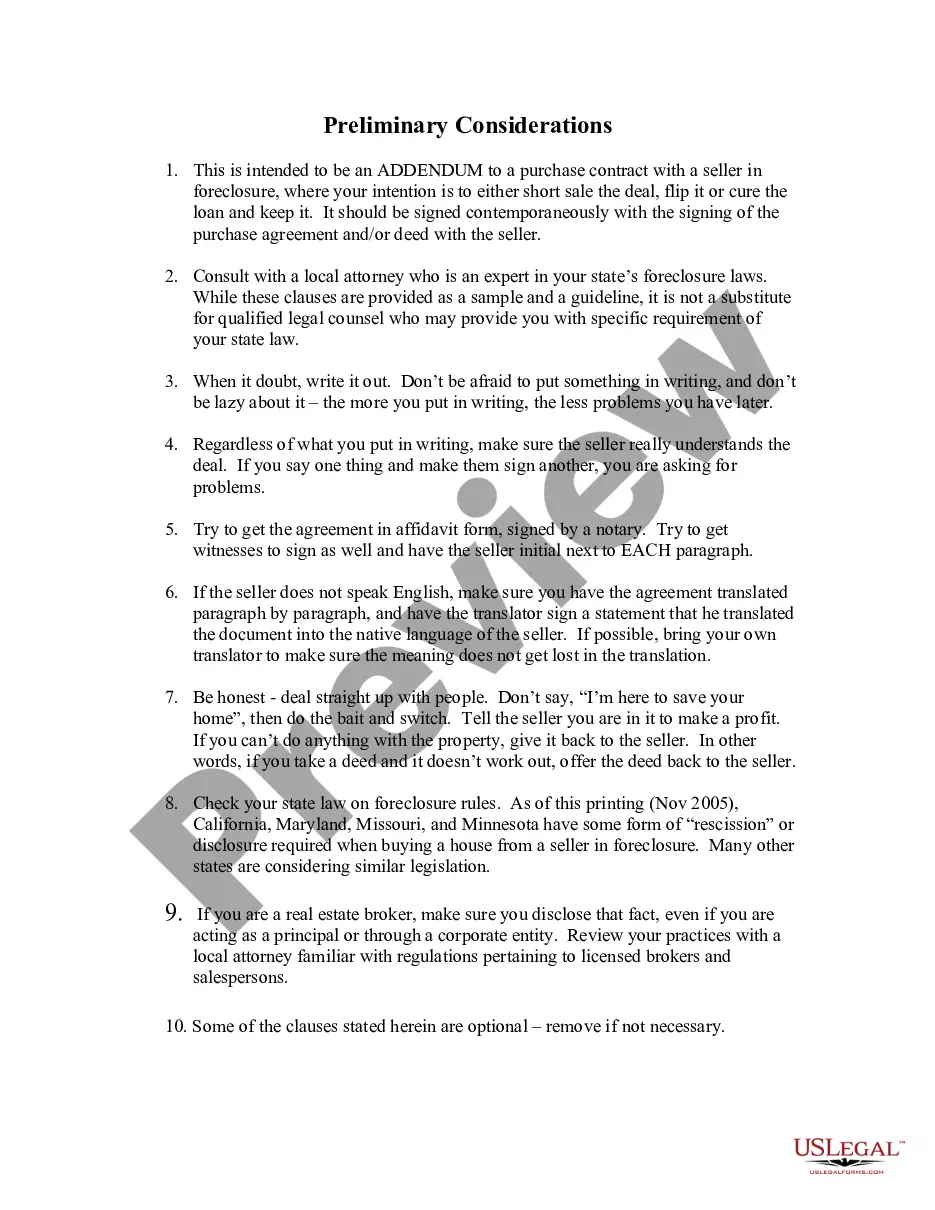
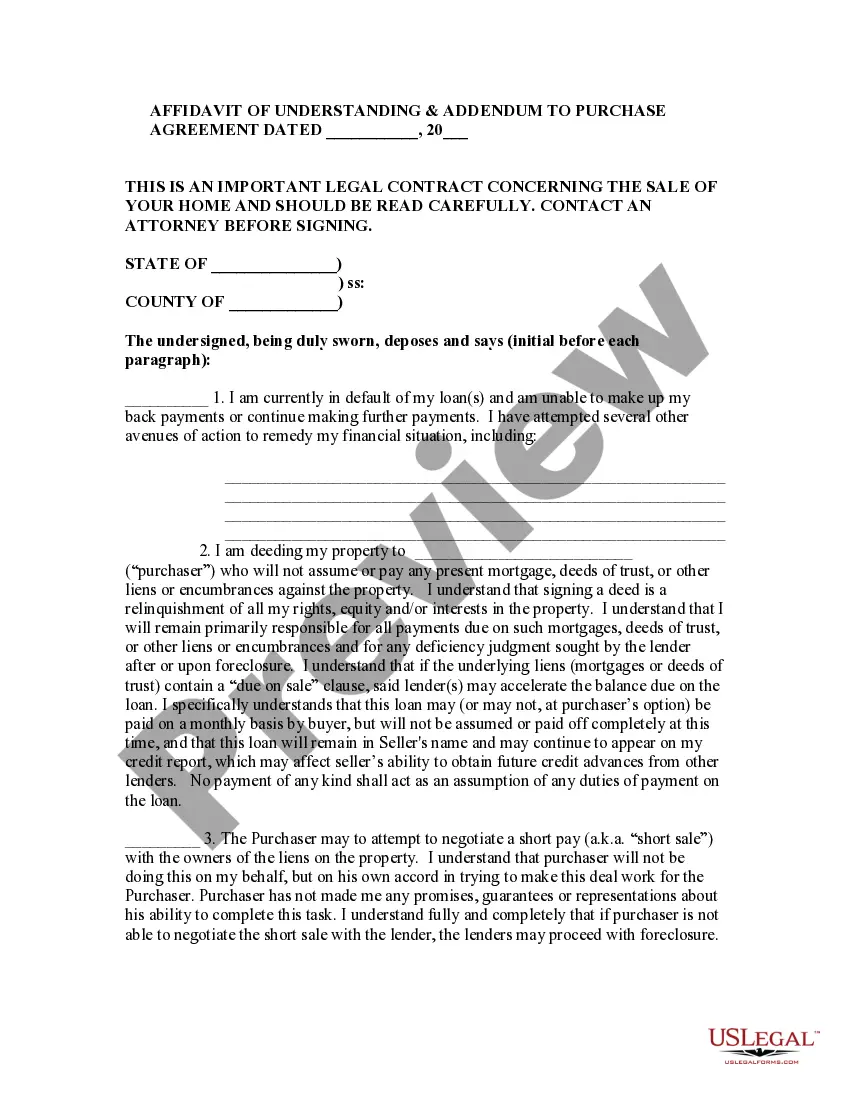
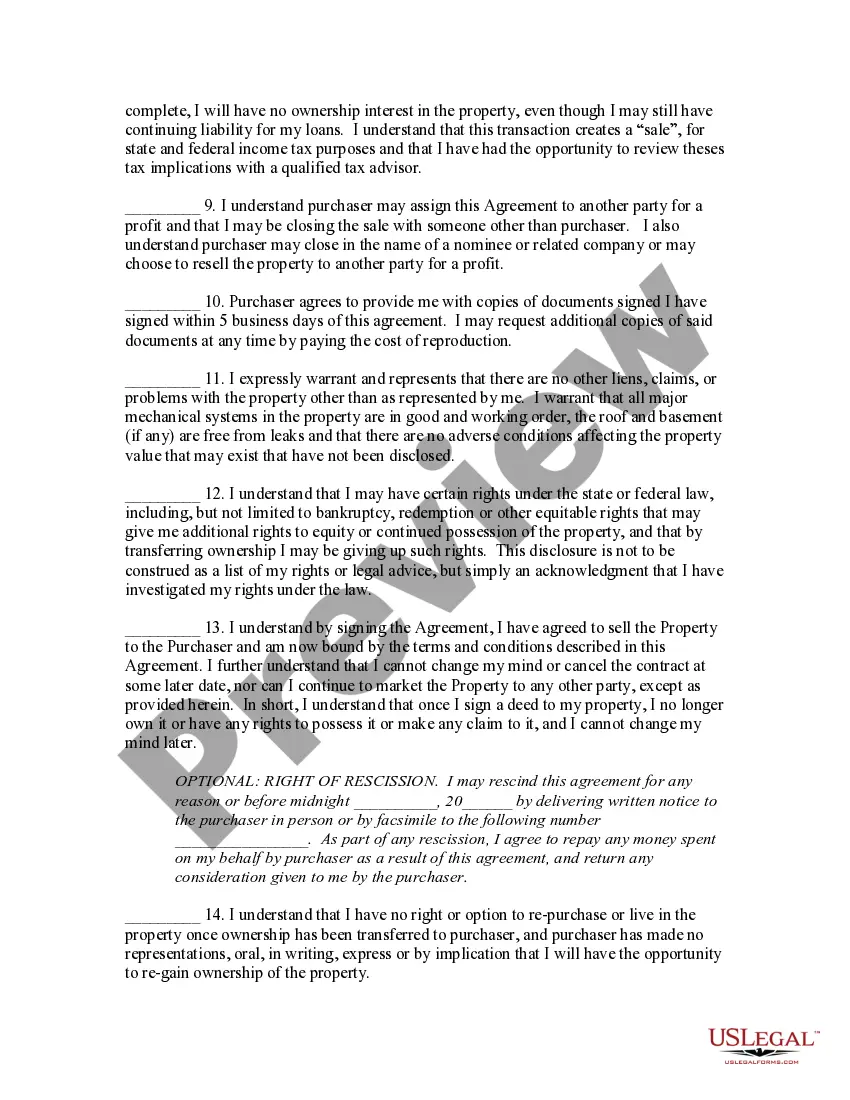
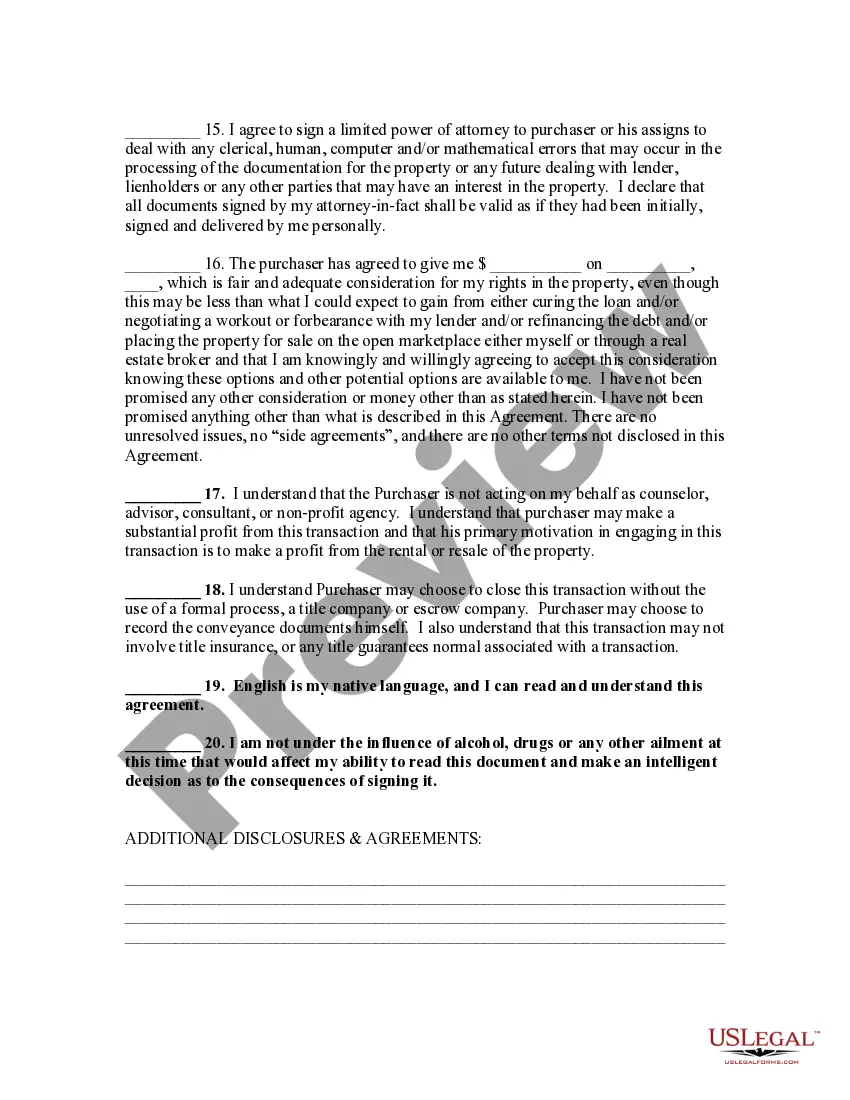
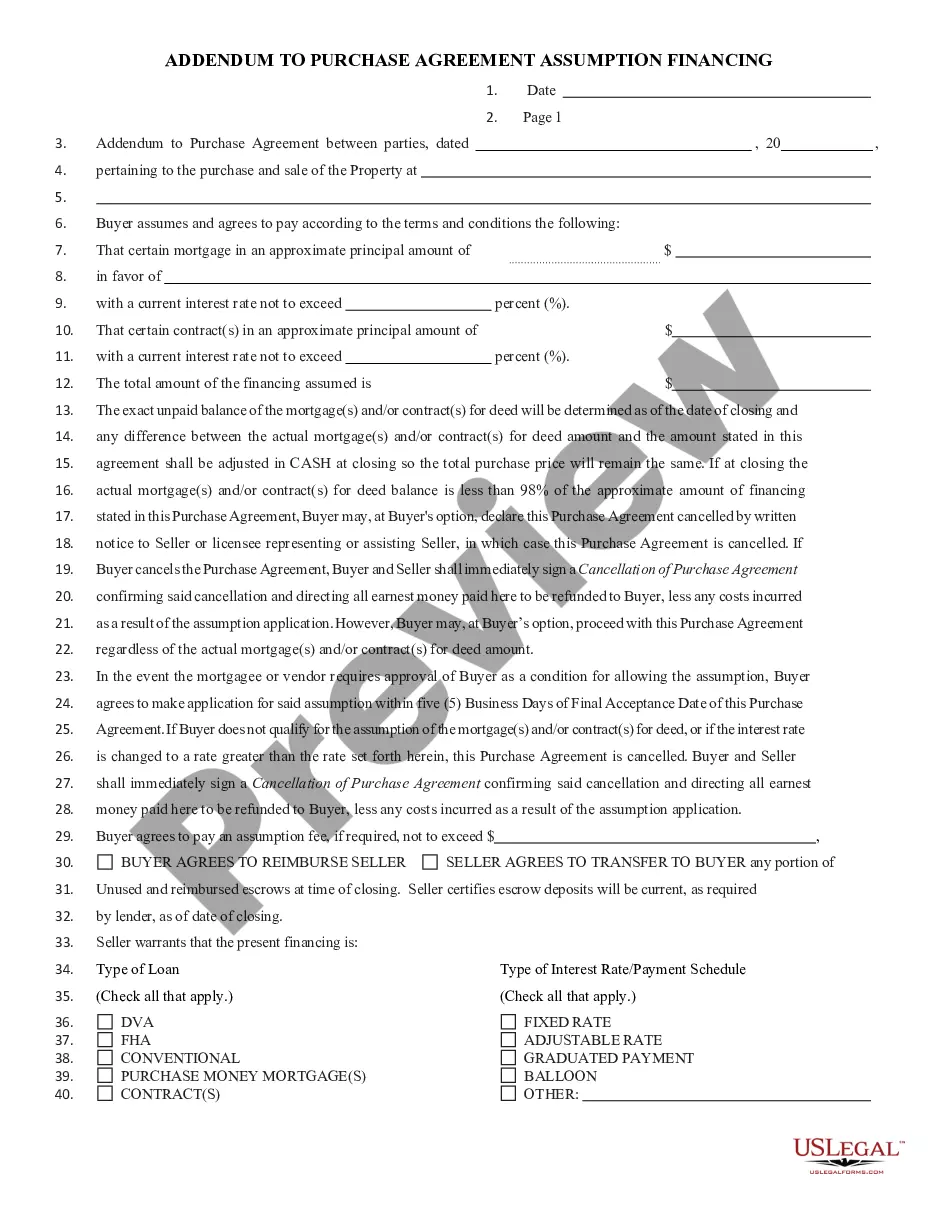
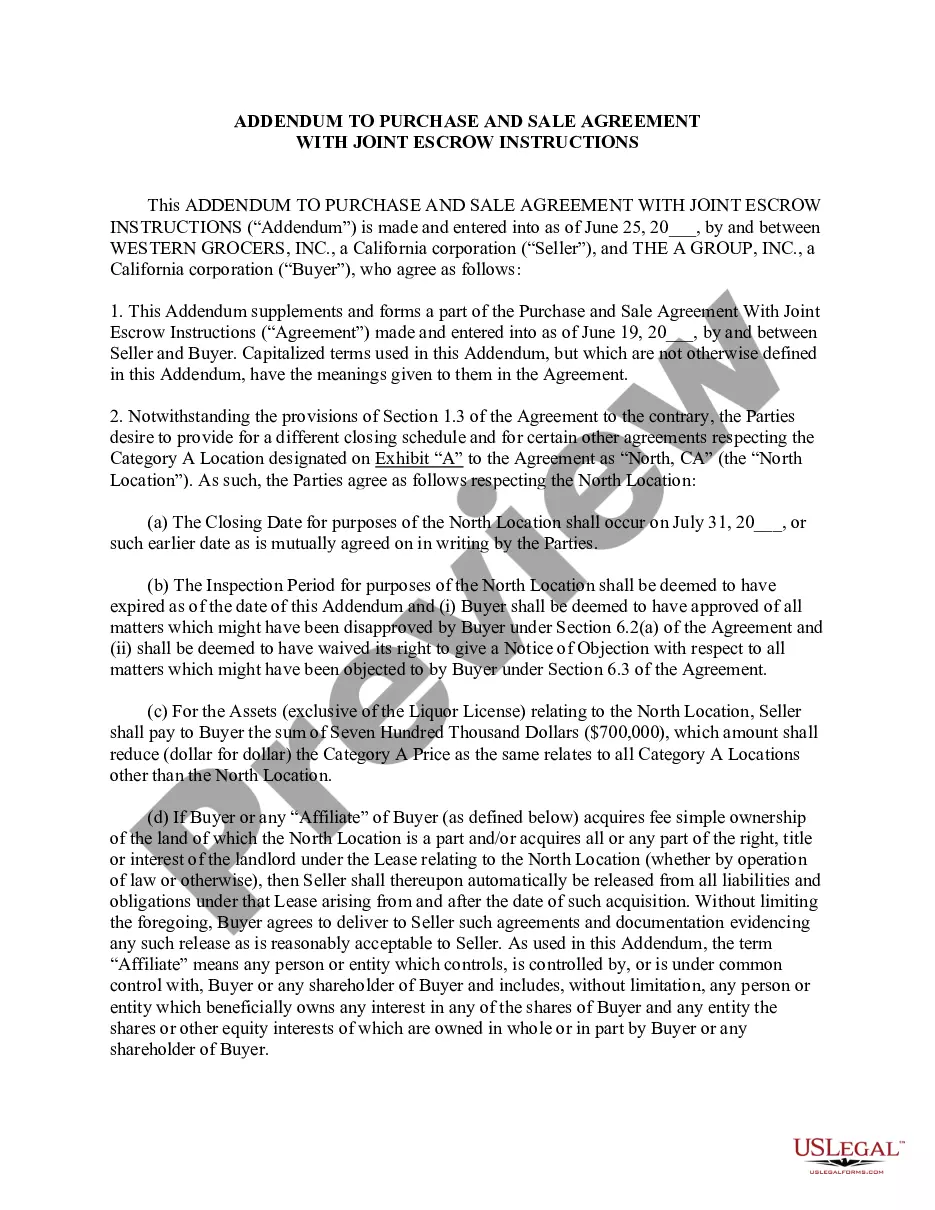
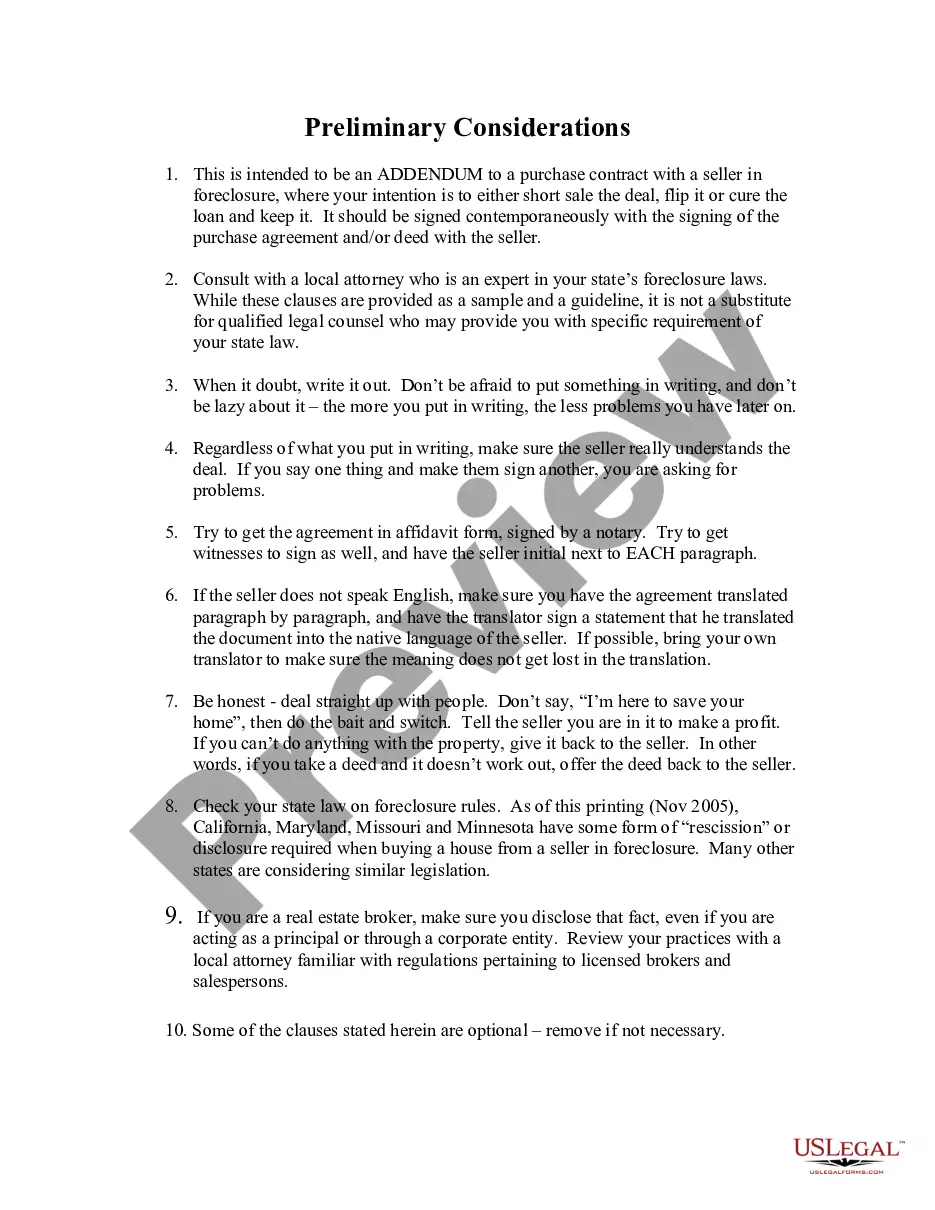
The Affidavit of Understanding & Addendum to Purchase Agreement is a legal document designed to accompany a purchase contract with a seller who is facing foreclosure. This form solidifies the intentions of the buyer, whether to short sale, flip the property, or cure the mortgage and retain ownership. It serves to clarify the terms of the sale and the responsibilities of both parties, setting clear expectations and minimizing potential disputes.
Key parts of this document
- Declaration of the seller's default on loan payments.
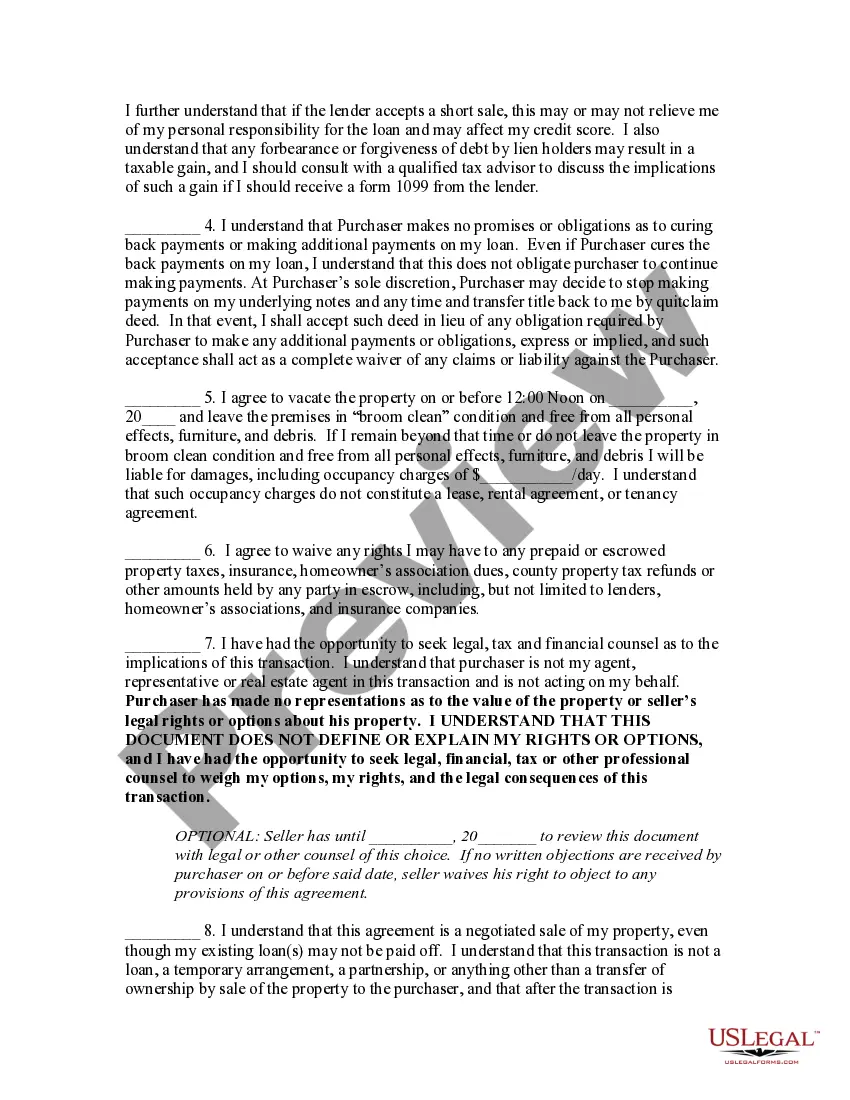
- Details regarding the transfer of property to the purchaser without assumption of the mortgage.
- Understanding of the purchaser's negotiation efforts regarding a short sale.
- Agreement on the timeline for vacating the property and its condition upon departure.
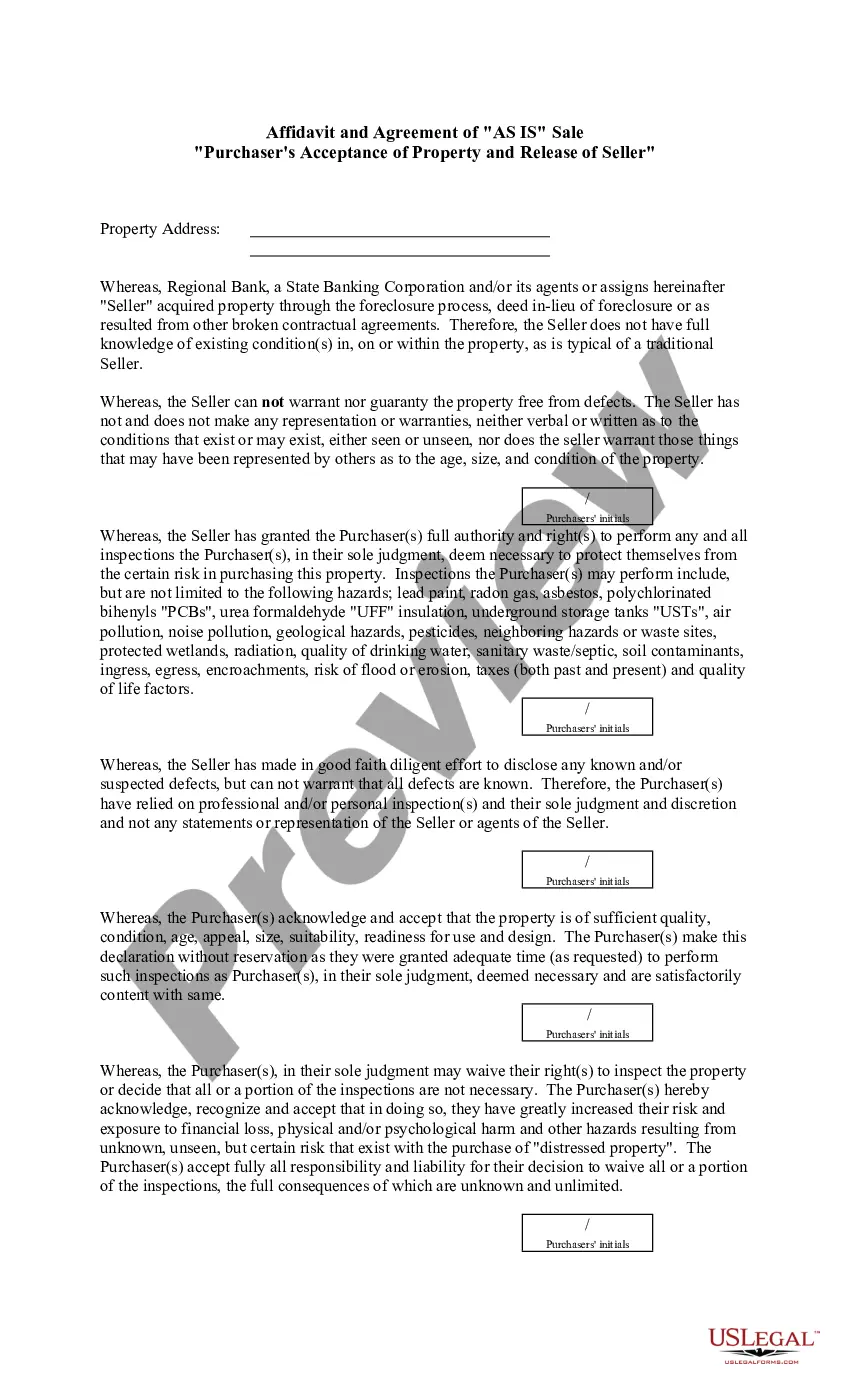
- Warranties and representations made by the seller regarding the propertyâs condition.
- Disclosures regarding rights and possible tax implications of the transaction.
When this form is needed
This form is essential when a seller in foreclosure is engaging in a real estate transaction that involves transferring their property rights to a buyer. It is typically used in situations where the seller is unable to continue mortgage payments and is seeking to clarify the terms of the sale and the buyer's responsibilities, as well as to protect against legal issues that may arise in the future. This form is particularly important in scenarios involving short sales or non-standard agreements about a property's disposition.
Who should use this form
- Sellers who are in foreclosure and looking to sell their property.
- Buyers interested in acquiring property from sellers in financial distress.
- Real estate professionals who facilitate transactions involving distressed properties.
- Anyone needing to formalize a purchase agreement related to a property facing foreclosure.
Completing this form step by step
- Identify all parties involved in the transaction, including sellers and purchasers.
- Clearly describe the property being sold, including its address and current liens.
- Provide specific details regarding the seller's financial situation and intentions.
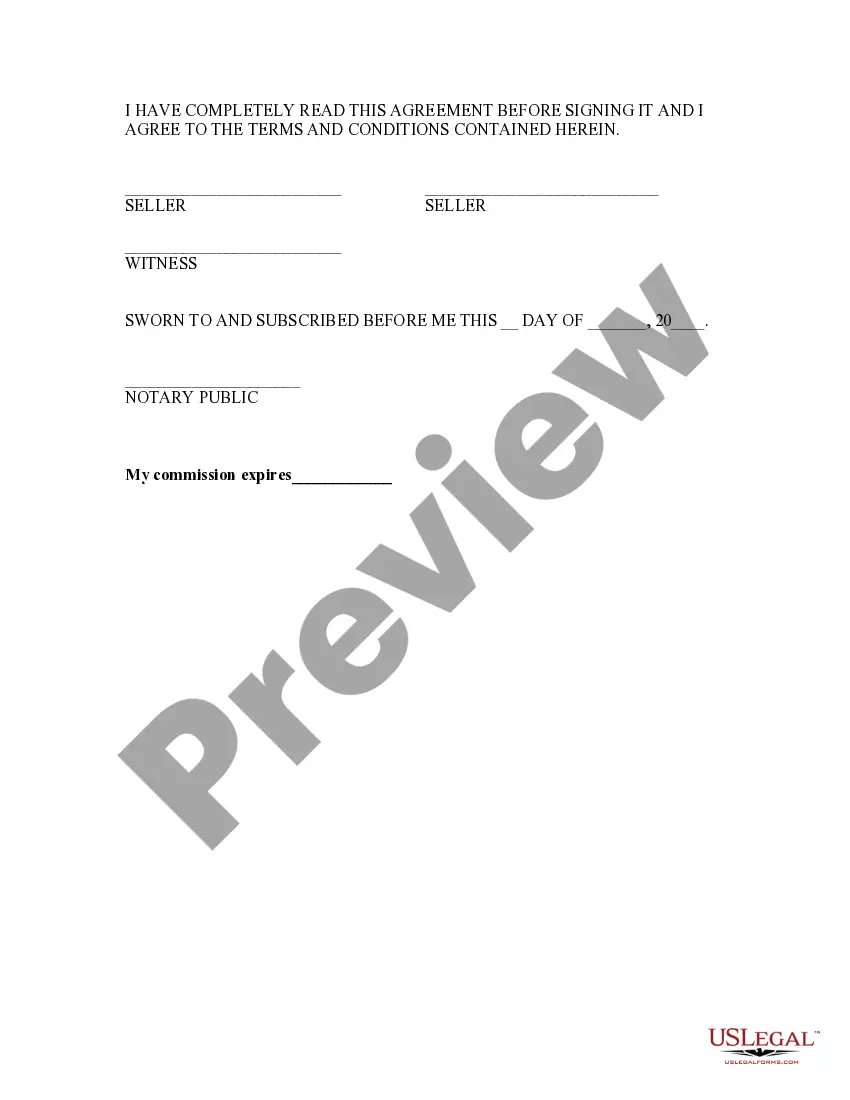
- Obtain necessary signatures from all parties, including witnesses if applicable.
- Consider having the document notarized to ensure legal acceptance.
Does this document require notarization?
Yes, this form must be notarized to be legally valid. Notarization ensures that the document is properly authenticated and helps protect against fraud. US Legal Forms offers integrated online notarization, making it easy and secure to complete your form via a video call anytime, anywhere.
Get your form ready online
Our built-in tools help you complete, sign, share, and store your documents in one place.
Make edits, fill in missing information, and update formatting in US Legal Forms—just like you would in MS Word.
Download a copy, print it, send it by email, or mail it via USPS—whatever works best for your next step.
Sign and collect signatures with our SignNow integration. Send to multiple recipients, set reminders, and more. Go Premium to unlock E-Sign.
If this form requires notarization, complete it online through a secure video call—no need to meet a notary in person or wait for an appointment.
We protect your documents and personal data by following strict security and privacy standards.

Make edits, fill in missing information, and update formatting in US Legal Forms—just like you would in MS Word.

Download a copy, print it, send it by email, or mail it via USPS—whatever works best for your next step.

Sign and collect signatures with our SignNow integration. Send to multiple recipients, set reminders, and more. Go Premium to unlock E-Sign.

If this form requires notarization, complete it online through a secure video call—no need to meet a notary in person or wait for an appointment.

We protect your documents and personal data by following strict security and privacy standards.
Common mistakes
- Failing to have the form notarized when required by state law.
- Not fully understanding or disclosing all liens and encumbrances attached to the property.
- Signing the document without consulting legal advice specific to foreclosure laws.
Benefits of completing this form online
- Convenient access to templates drafted by licensed attorneys.
- Easy to download and customize to meet specific needs.
- Reliability ensured through professionally drafted legal language.
Looking for another form?
Form popularity
FAQ
An affidavit is a sworn statement put in writing. When you use an affidavit, you're claiming that the information within the document is true and correct to the best of your knowledge. Like taking an oath in court, an affidavit is only valid when you make it voluntarily and without any coercion.
That I am of , Son/D/W/B of . That my (Relationship with Applicant) (Name) expired on (Date of Death) at (Name of place). That I am swearing this Affidavit to establish relationship with my .
Example: I, Jane Smith, swear that the information in my sworn statement is truthful to the best of my knowledge and understanding. Your statement of truth must be in the first person and you need to identify yourself in it. Keep it short and sweet.
An affidavit is a statement on oath duly witnessed by an Oath Commissioner or a Notary Public.
The affidavit includes identifying information of the Affiant, including their name, age, citizenship, civil status and their address. If the Affiant is a minor, the user will be asked the name of the guardian who will accompany the Affiant to the notary public and sign the affidavit.
How to make a sworn statement. A blank SAPS affidavit template can be downloaded below, filled in and stamped at any police station. The form can also be obtained from the police station and completed by hand.
An Affidavit is a formal written statement of facts voluntarily made by an affiant under an oath or a public official such as the notary public or a person authorized to do so. It will be used to prove the truthfulness of a certain statement in court.
Drafting an Affidavit Appearances are important.Introduce yourself.Write in the first person about facts you know.Keep it as simple as possible.Stick to what is relevant.Don't guess.Be specific about conversations.Be specific about timing and frequency, to the extent this is relevant.