Lack of Form Petition
Overview of this form
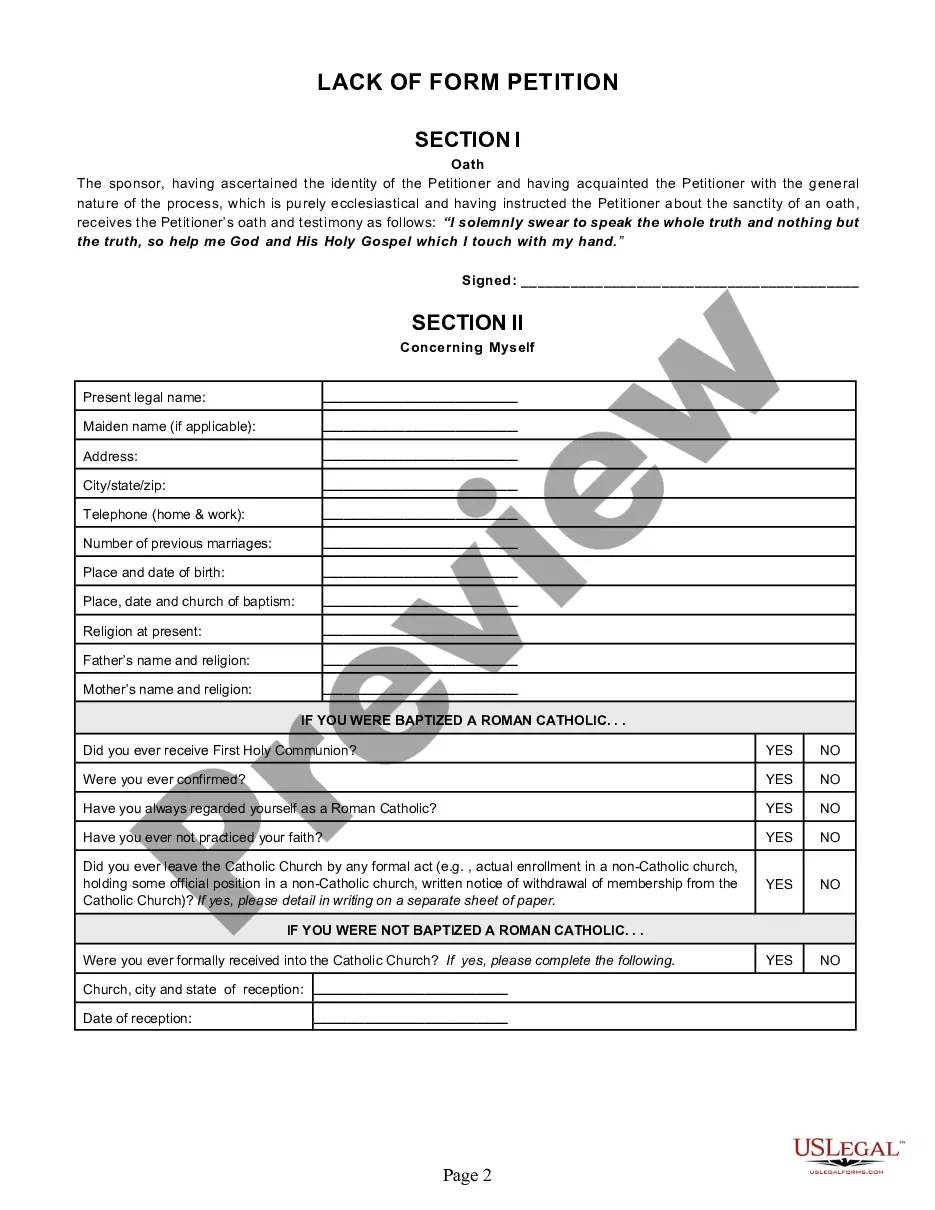
The Lack of Form Petition is a legal document used by Catholic individuals seeking to resolve the status of a marriage not recognized by the Church. This petition is specifically for cases where a Catholic was married outside the Church without the necessary permissions and has not had the marriage validated. This process is distinct from other annulment petitions, as it specifically addresses marriages that lack formal recognition due to the absence of a Catholic ceremony.
Key components of this form
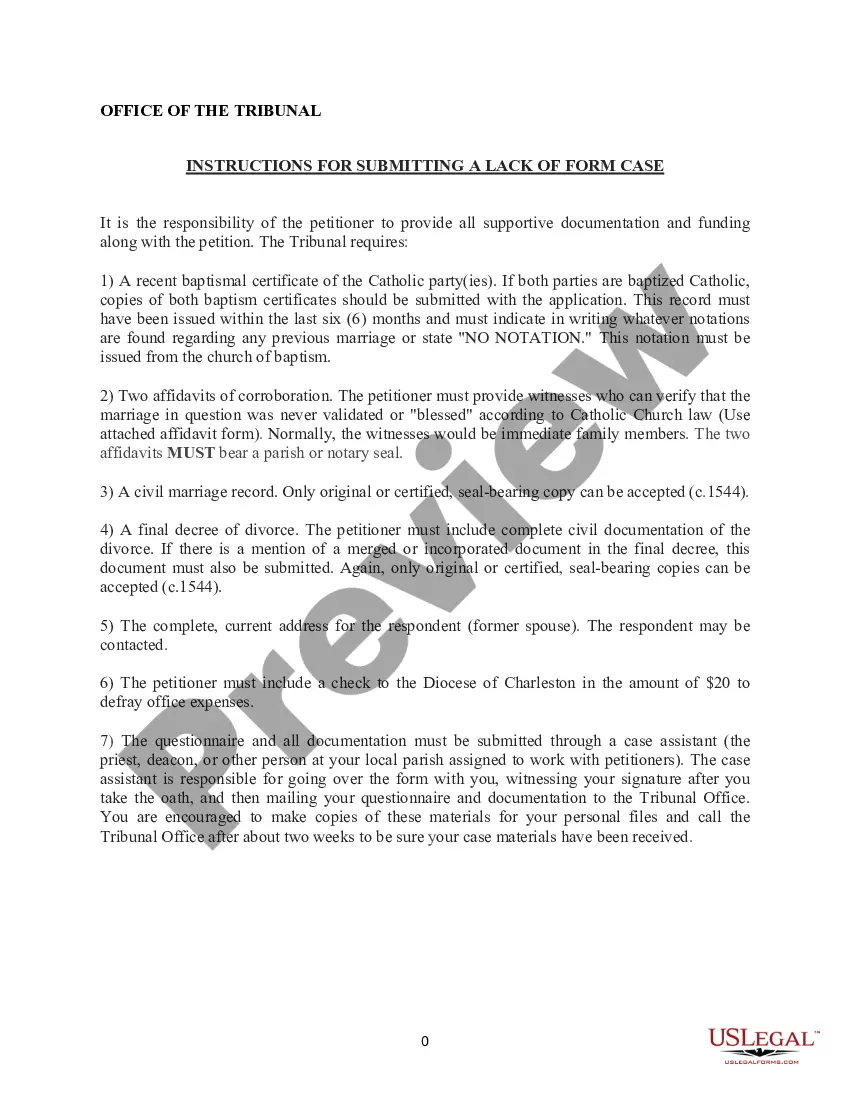
- Oath: A declaration affirming the Petitionerâs intent to provide truthful testimony.
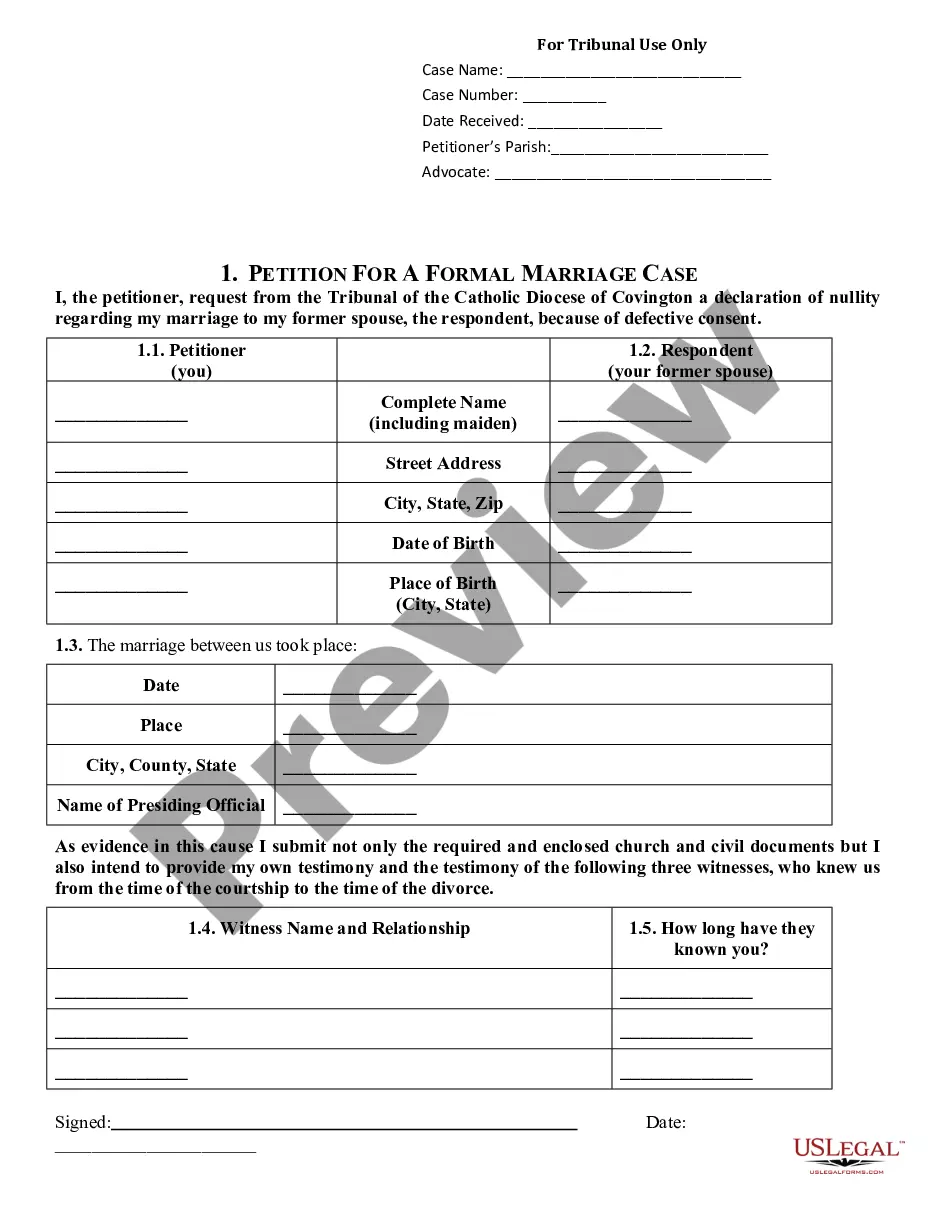
- Personal Information: Sections to fill out details about the Petitioner and previous marriages.
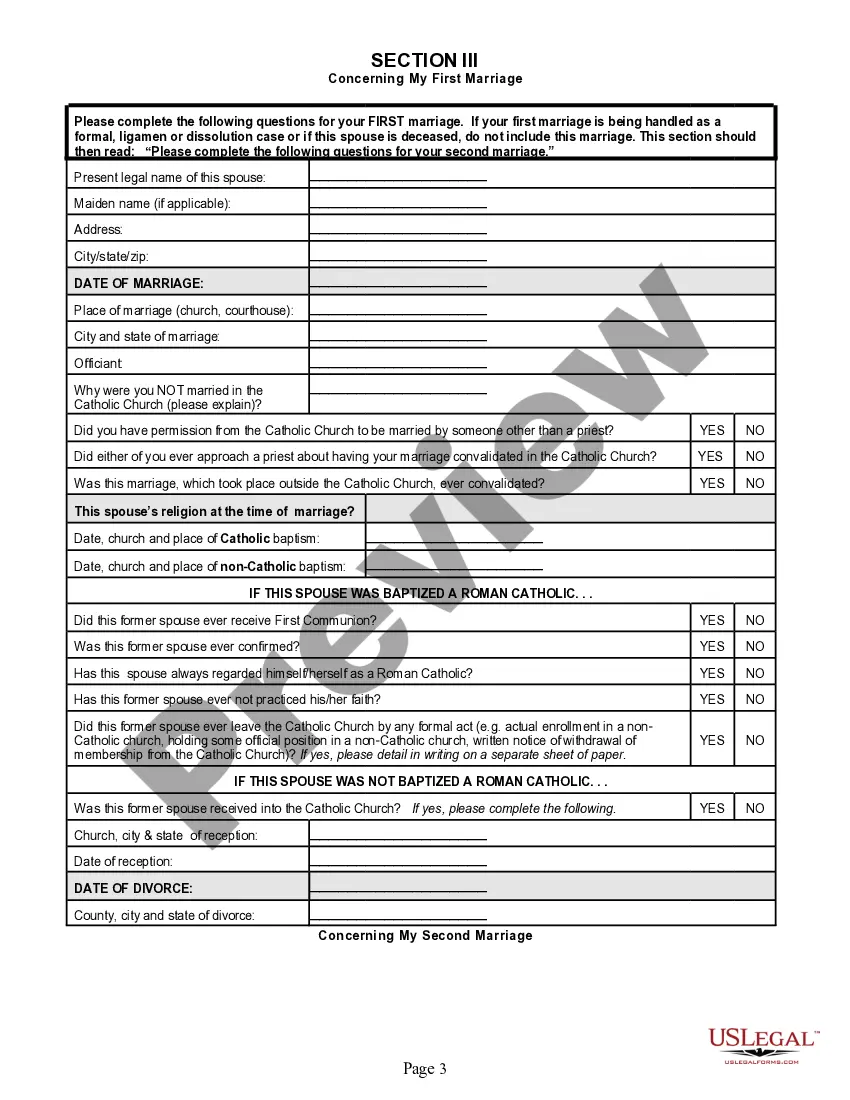
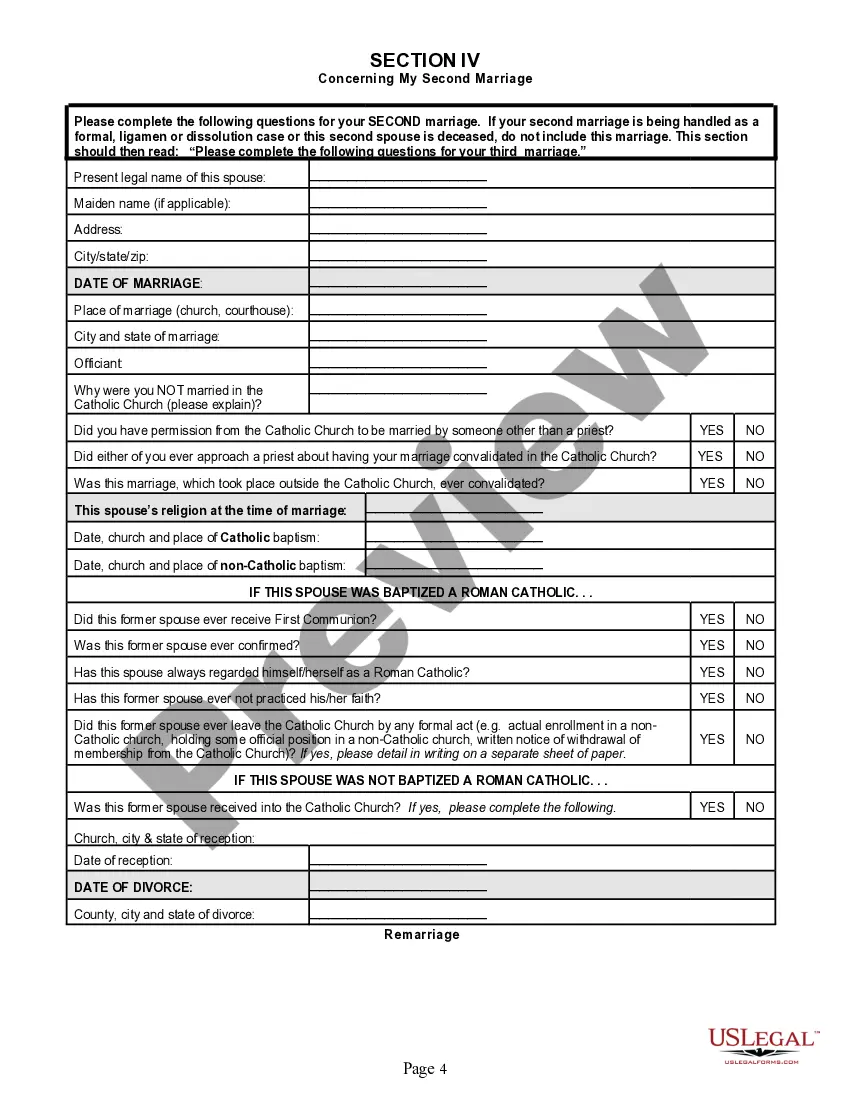
- Marriage Details: Questions about past marriages, including where and when they occurred, and reasons for non-Catholic ceremonies.
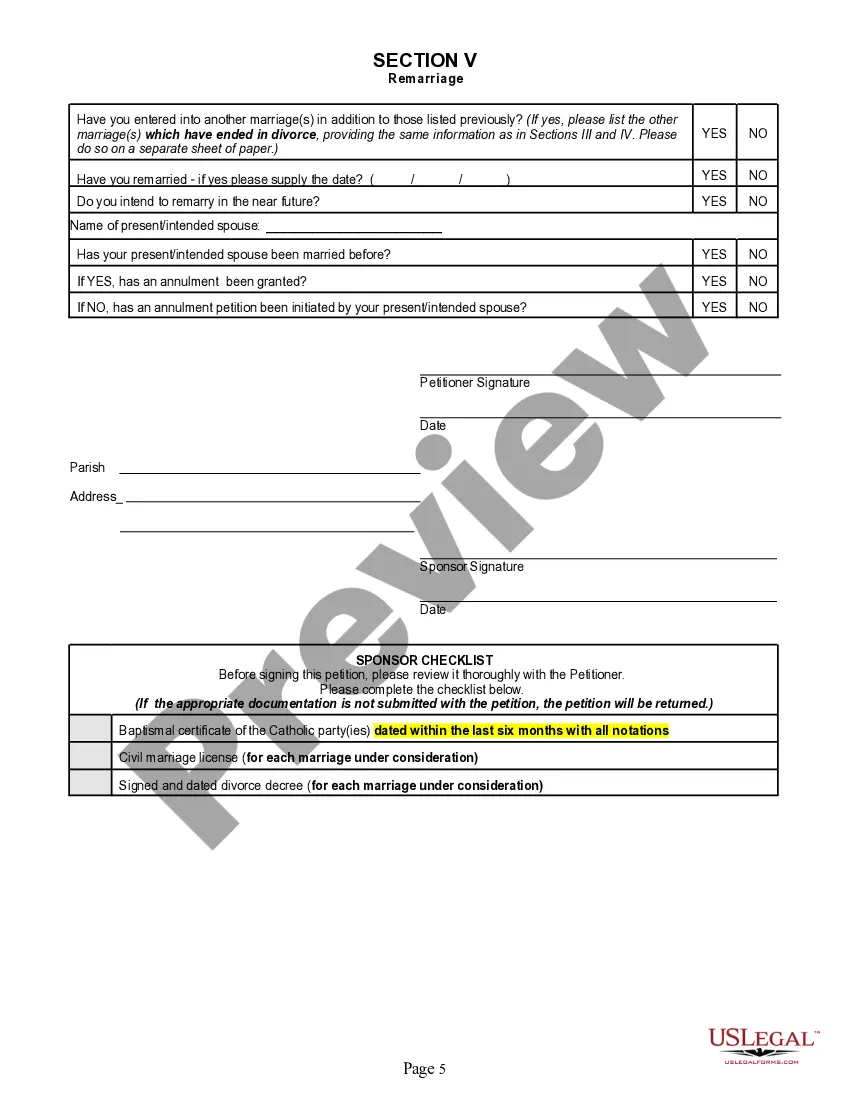
- Remarriage Information: Sections capturing intentions for remarriage and details about current or intended spouses.
- Document Checklist: A list of required documents, such as baptismal certificates and divorce decrees.
When to use this form
This form is essential for individuals who were married civilly or in non-Catholic ceremonies and are seeking to have their marriage recognized by the Catholic Church. It is typically used when the parties involved wish to remarry within the Church, requiring clarity on their marital status.
Intended users of this form
- Catholics who have been married outside of the Church.
- Individuals seeking to validate a marriage after a civil or non-Catholic ceremony.
- People who wish to remarry in the Catholic Church after a previous marriage that lacked proper recognition.
How to prepare this document
- Begin with the Oath section, where you will affirm your commitment to truthfulness.
- Fill in your personal information, including your name, address, and marriage history.
- Address details about your previous marriages, including reasons they were not validated in the Catholic Church.
- Complete information about your current or intended spouse, including any previous marriages.
- Attach required documentation, ensuring everything is accurately submitted to avoid processing delays.
Notarization guidance
This form does not typically require notarization unless specified by local law. However, it is advisable to confirm specific requirements with your local parish or diocese for additional processes that may apply.
Get your form ready online
Our built-in tools help you complete, sign, share, and store your documents in one place.
Make edits, fill in missing information, and update formatting in US Legal Forms—just like you would in MS Word.
Download a copy, print it, send it by email, or mail it via USPS—whatever works best for your next step.
Sign and collect signatures with our SignNow integration. Send to multiple recipients, set reminders, and more. Go Premium to unlock E-Sign.
If this form requires notarization, complete it online through a secure video call—no need to meet a notary in person or wait for an appointment.
We protect your documents and personal data by following strict security and privacy standards.

Make edits, fill in missing information, and update formatting in US Legal Forms—just like you would in MS Word.

Download a copy, print it, send it by email, or mail it via USPS—whatever works best for your next step.

Sign and collect signatures with our SignNow integration. Send to multiple recipients, set reminders, and more. Go Premium to unlock E-Sign.

If this form requires notarization, complete it online through a secure video call—no need to meet a notary in person or wait for an appointment.

We protect your documents and personal data by following strict security and privacy standards.
Avoid these common issues
- Failing to provide complete information about previous marriages.
- Not including the required documents with the petition.
- Omitting details that could affect the validation process.
- Submitting the form without careful review for accuracy.
Benefits of using this form online
- Convenience: Download and fill out the form at your own pace from anywhere.
- Editability: Easily adjust the information as needed before finalizing.
- Reliability: Ensure you are using legally vetted forms drafted by licensed attorneys.
Looking for another form?

Form popularity
FAQ
The nullity of marriage due to lack of canonical form (Canon 1108) occurs when a Catholic does not marry before a Catholic priest or deacon and two witnesses.
If a priest or deacon did not have the appropriate delegation prior to witnessing a wedding, then it is considered a defect of form, which invalidates the marriage (and yes, this does happen!).
Dispensation is the canonical equivalent of license which, ing to Black's Law Dictionary, is the authorisation to do something which would normally be illegal if the competent authority had not granted permission.
If a priest or deacon did not have the appropriate delegation prior to witnessing a wedding, then it is considered a defect of form, which invalidates the marriage (and yes, this does happen!).
Church law recognizes twelve specific impediments to marriage. They include things like coercion, being too young, already being married, blood or in-law relations, having received holy orders, being under vows of chastity, or being impotent (permanently unable to engage in sexual intercourse).
What is a Lack of Canonical Form case? If a Catholic is not married in the presence of a priest or deacon and has not received a dispensation from canonical form, then the Church's required form of marriage has not been followed and the Church does not recognize the union as a valid marriage.
Church law recognizes twelve specific impediments to marriage. They include things like coercion, being too young, already being married, blood or in-law relations, having received holy orders, being under vows of chastity, or being impotent (permanently unable to engage in sexual intercourse).
DEFECT OF FORM Definition & Legal Meaning An imperfection in the style, manner, arrangement, or non-essentialparts of a legal instrument, plea, indictment, etc., as distinguished from a ?defect ofsubstance.? See infra.