Privileged communication is information/communication shared with only a few people for furthering certain purposes.
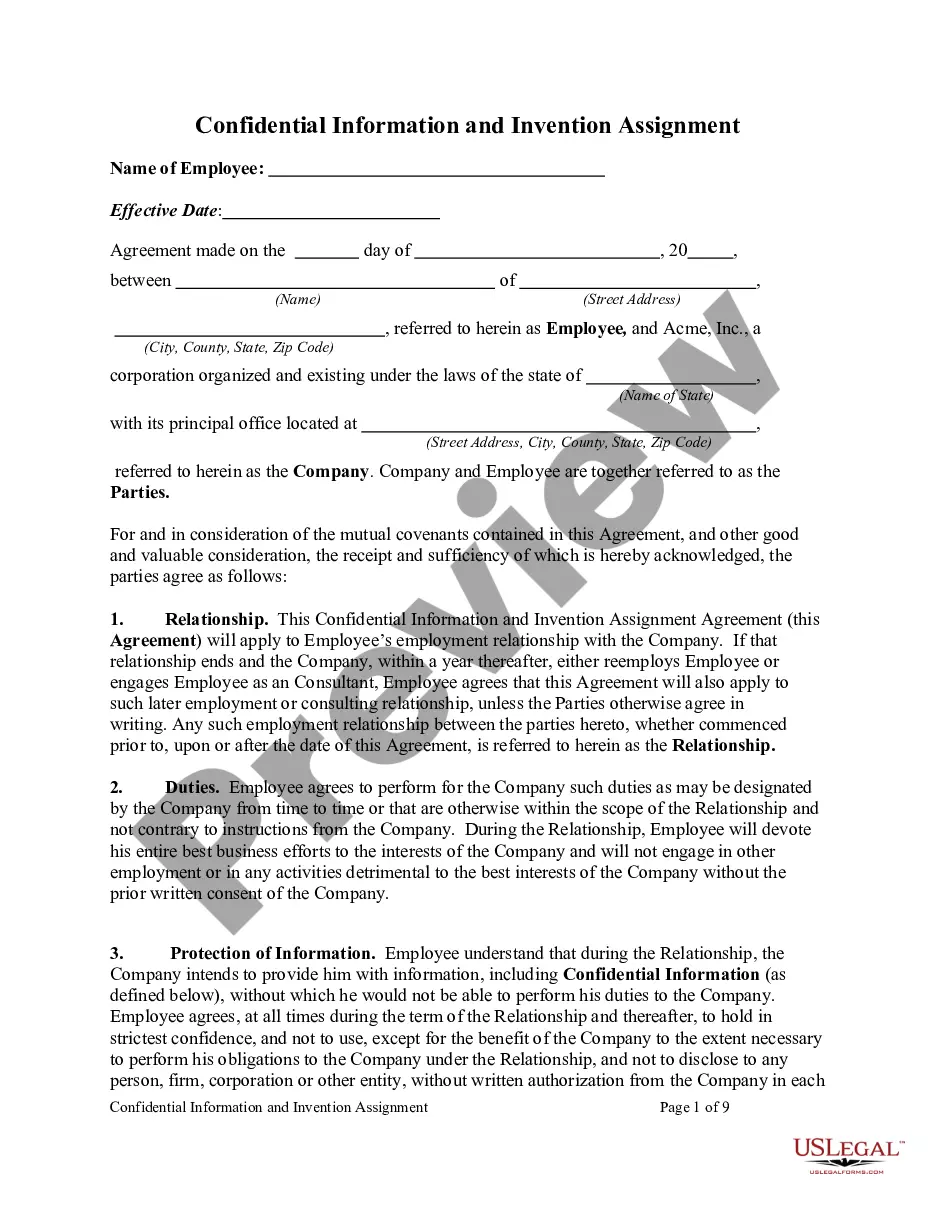
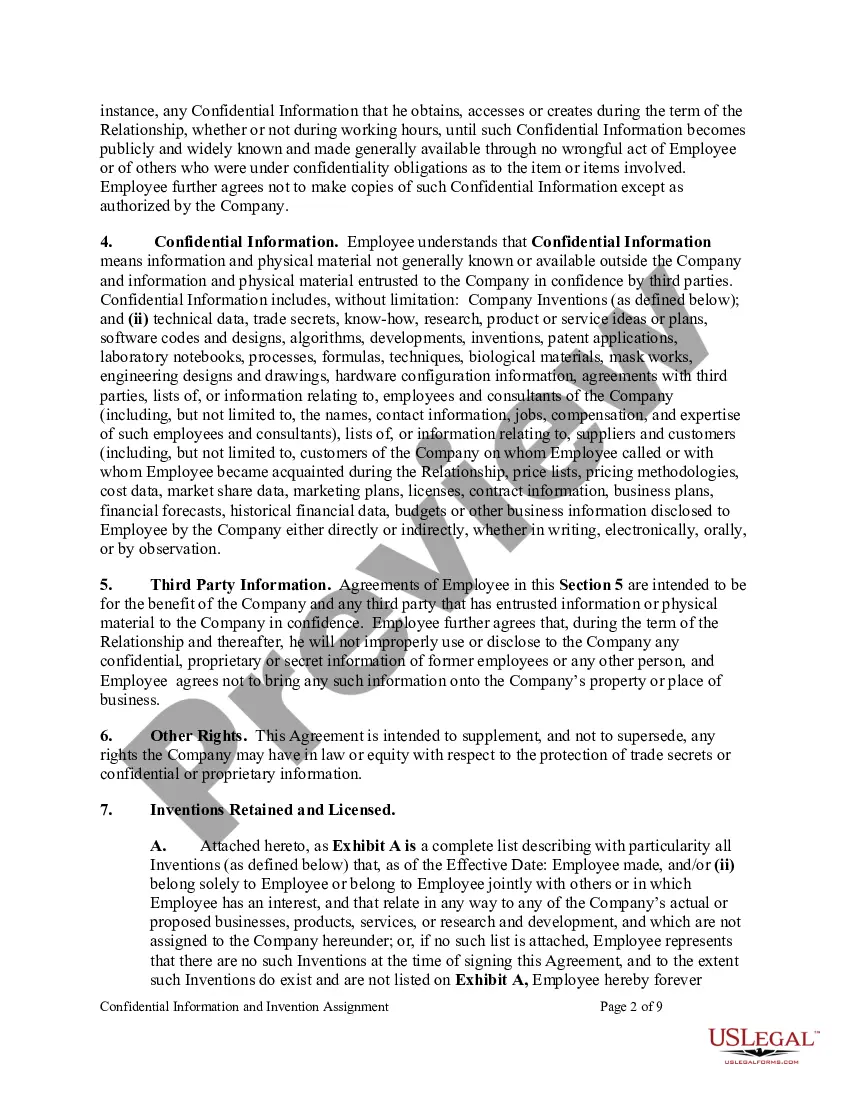
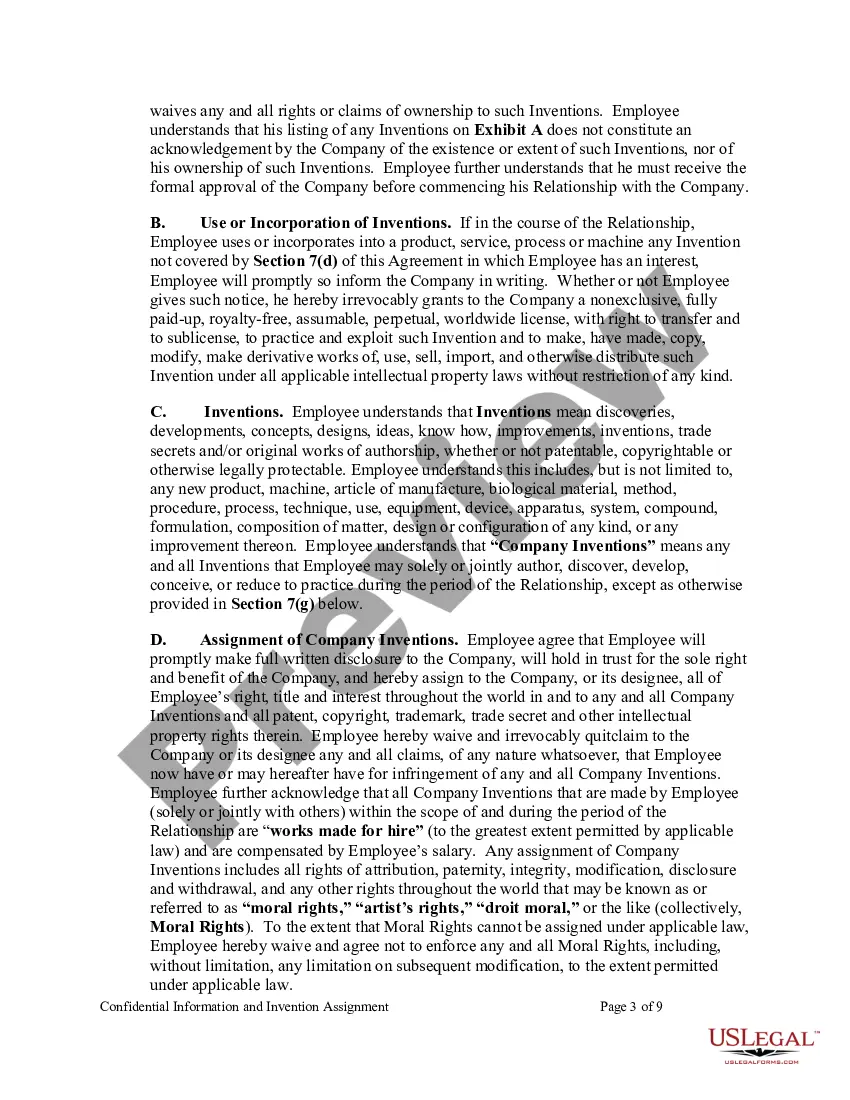
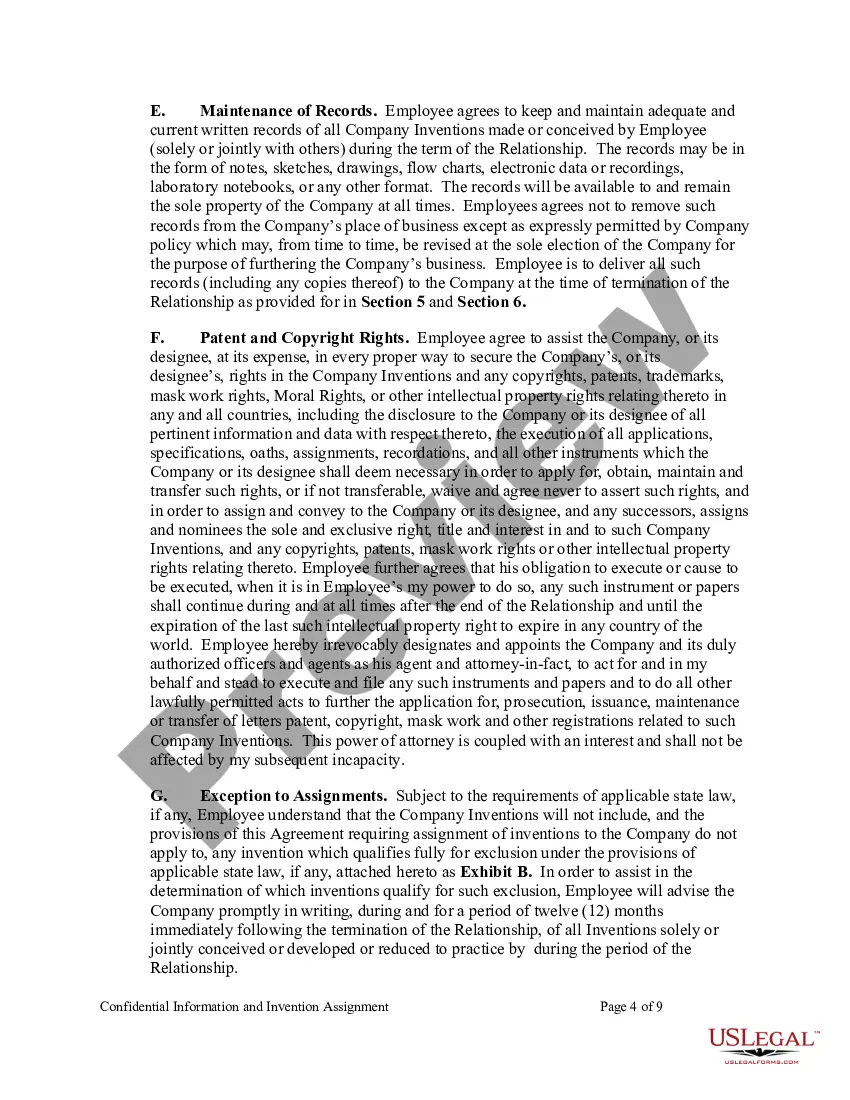
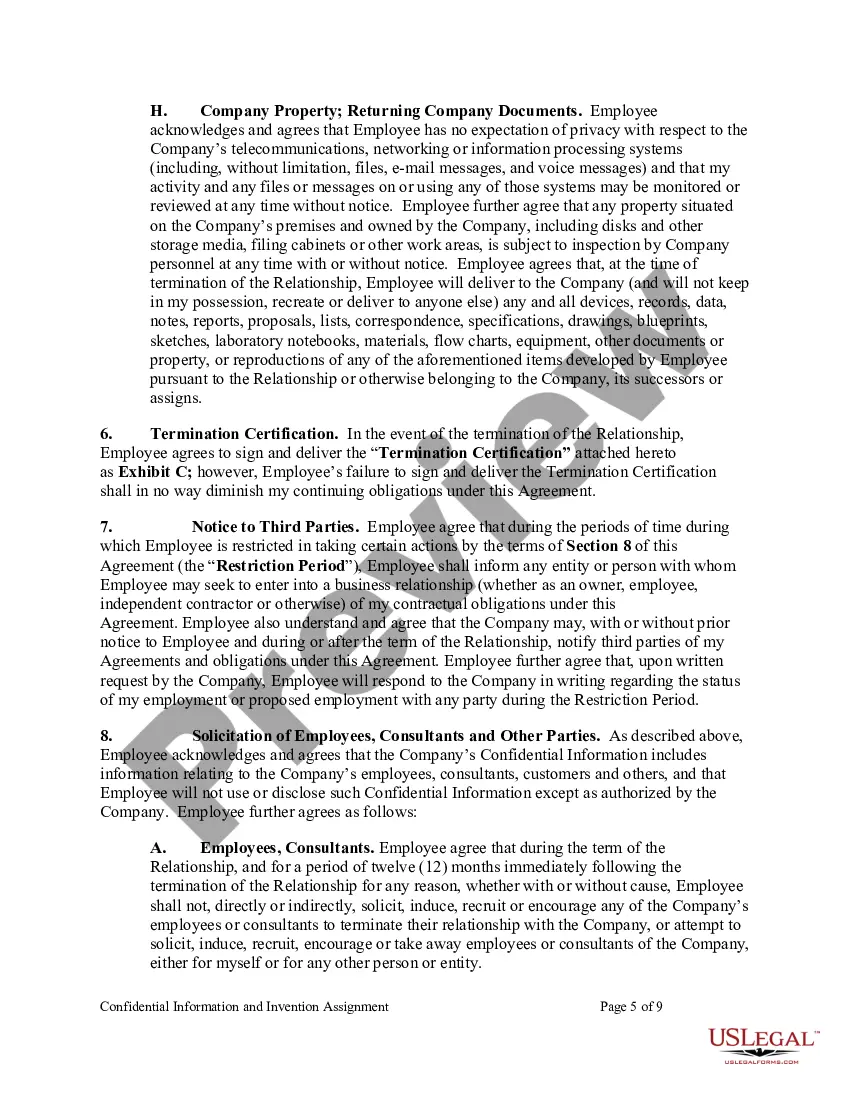
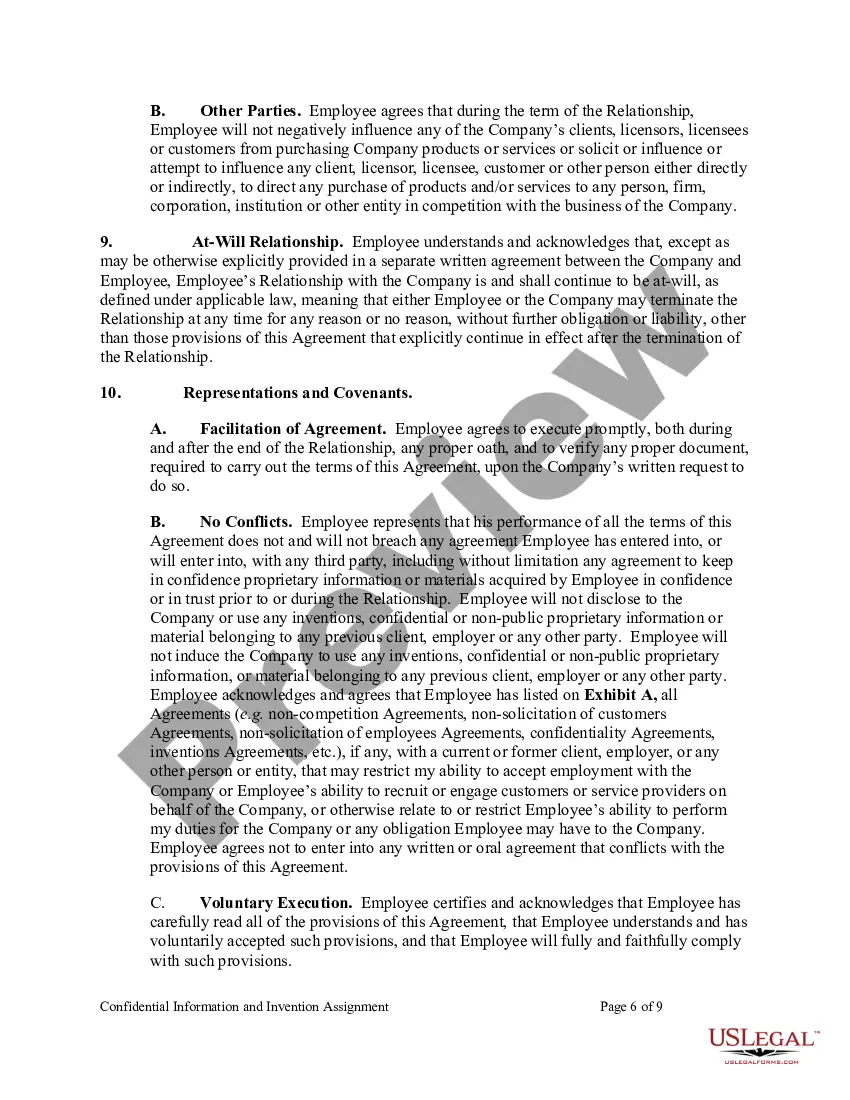
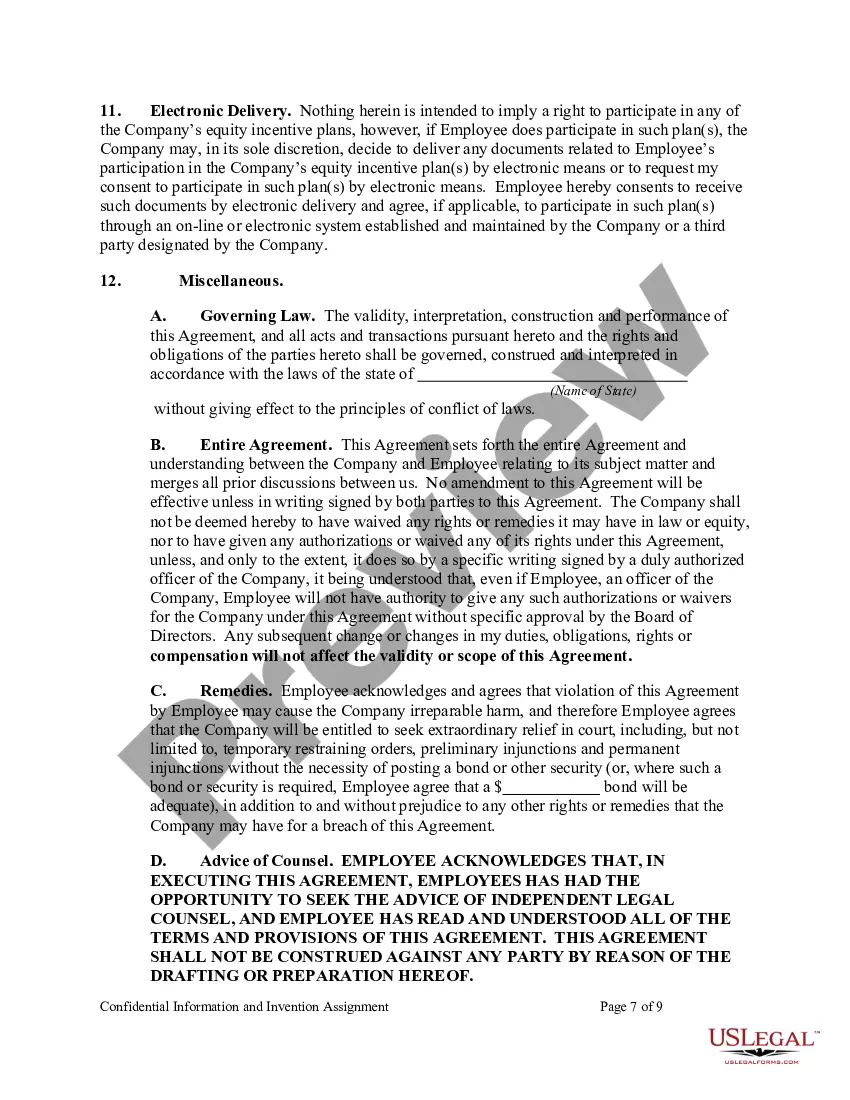
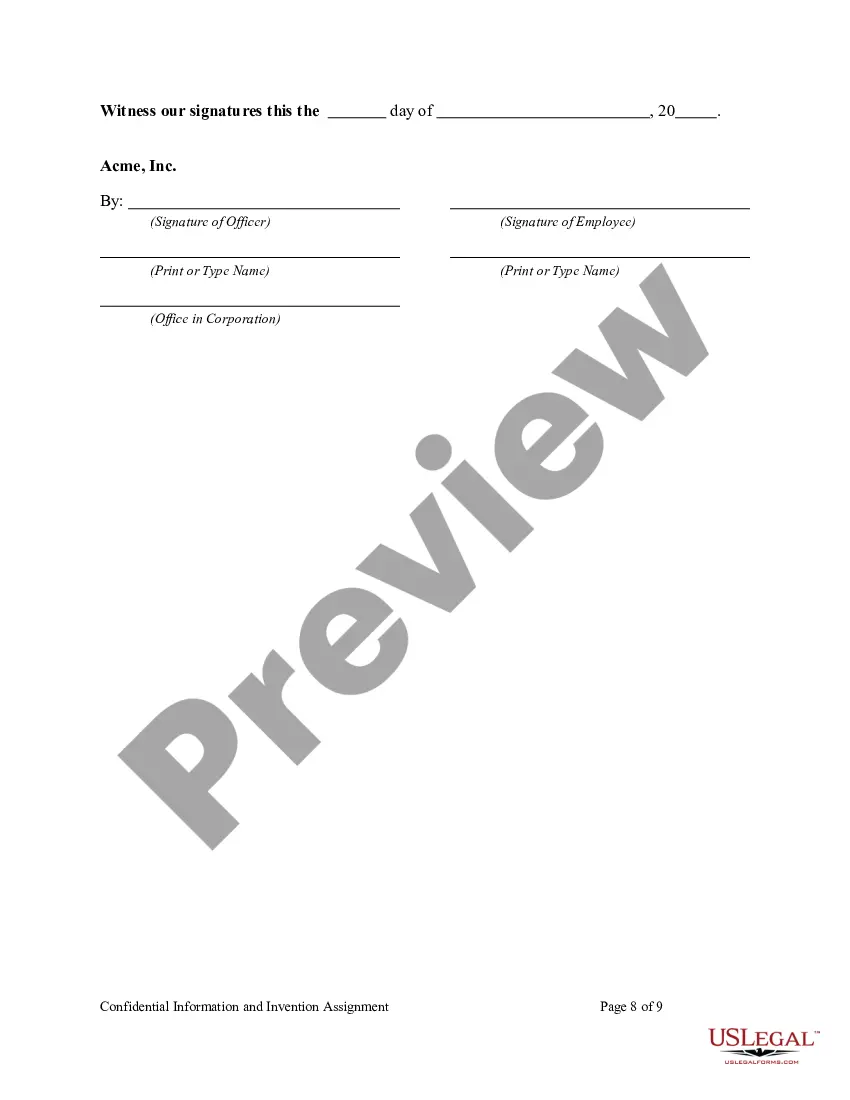
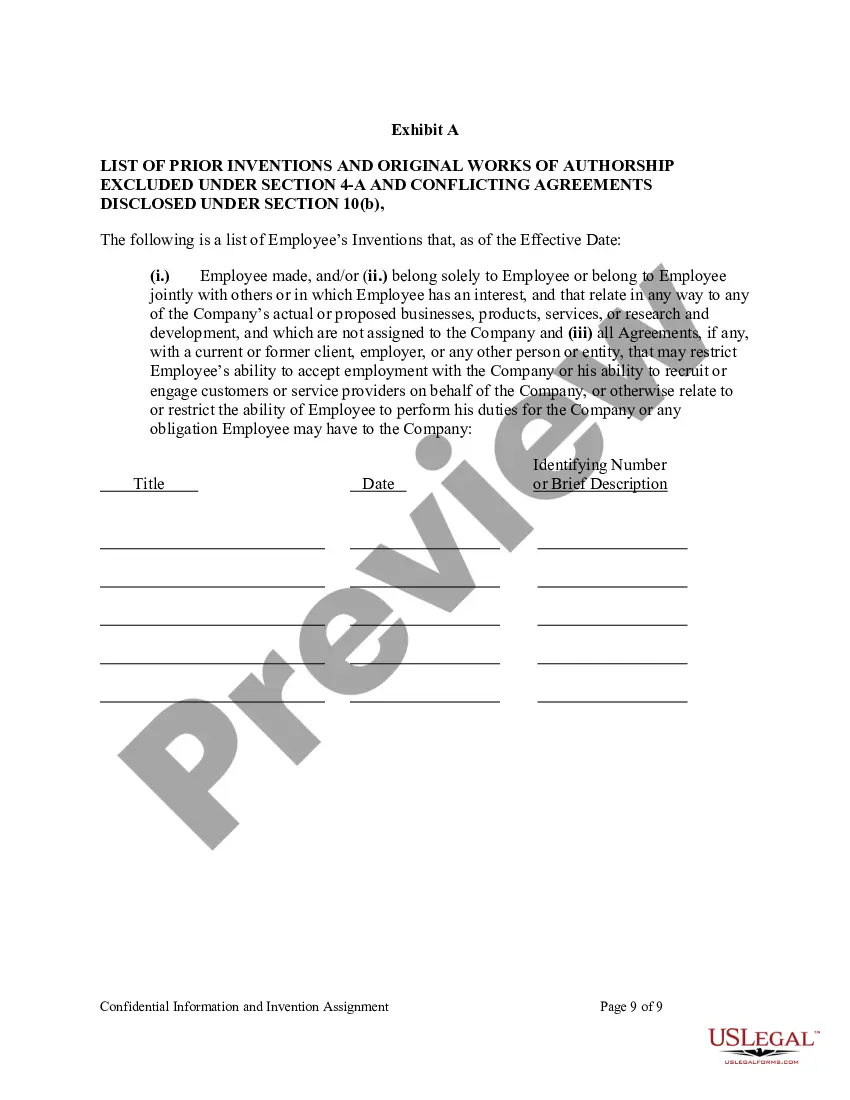
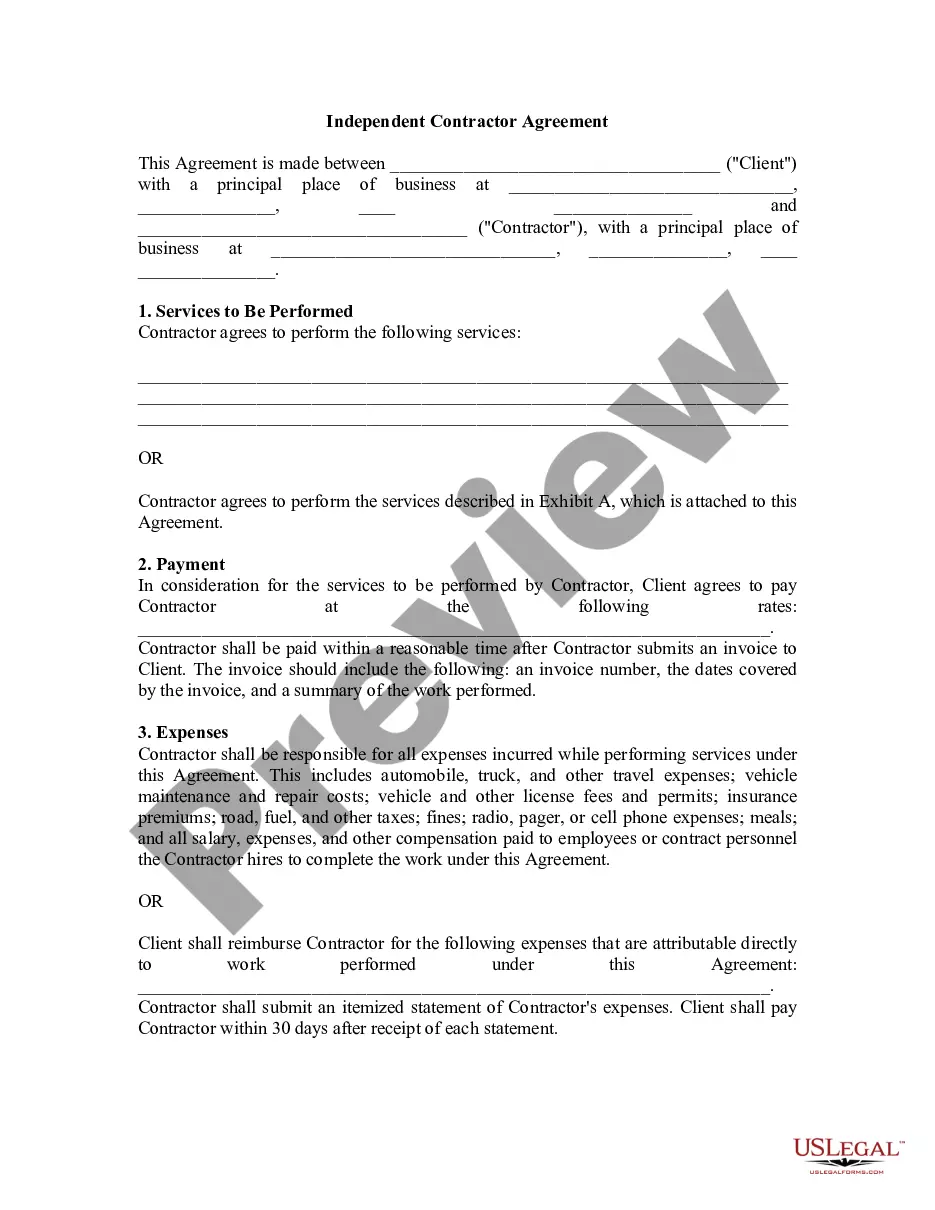
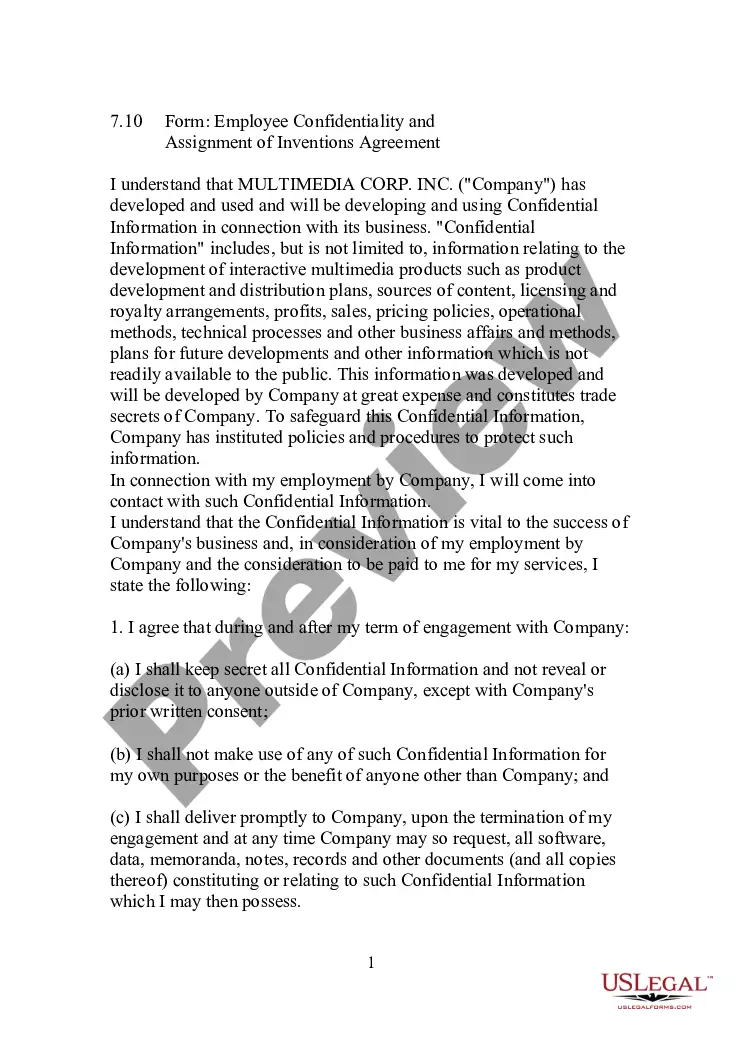
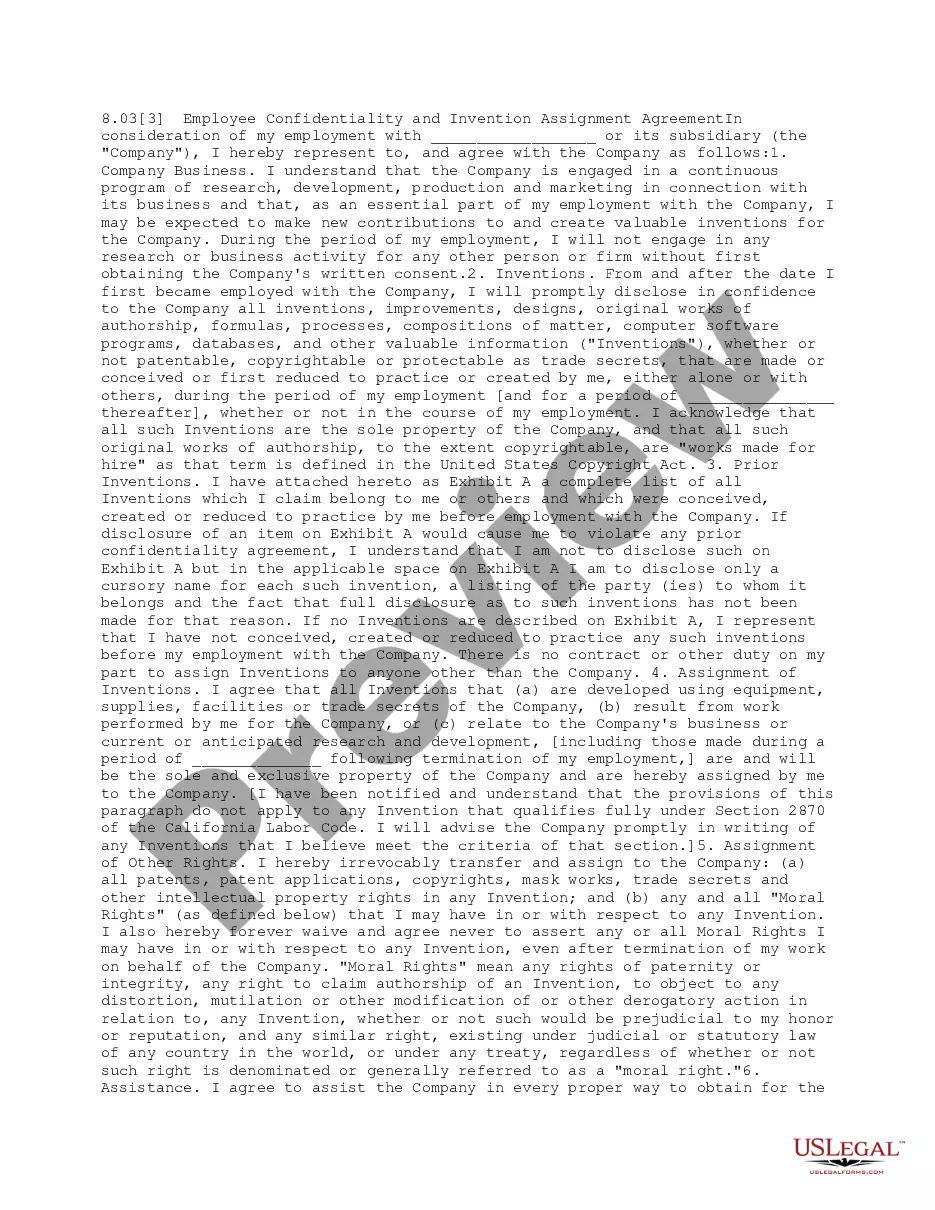
This is an extensive form for execution by employees, where the employee agrees to keep various information used by the company confidential. The employee also agrees that various inventions and ideas developed by the employee related to the business of the company are deemed owned by the company. Such an agreement is especially important for technology companies.
It is a common practice for employers to require employees involved in research and development or other technical work to sign agreements assigning in advance to the employer their ownership interest in any inventions they create while employed.
Utah Confidential Information and Invention Assignment
State:
Multi-State
Control #:
US-0023BG
Format:
Word;
Rich Text
Instant download
Description
Free preview
Get your form ready online
Our built-in tools help you complete, sign, share, and store your documents in one place.
Built-in online Word editor
Make edits, fill in missing information, and update formatting in US Legal Forms—just like you would in MS Word.
Export easily
Download a copy, print it, send it by email, or mail it via USPS—whatever works best for your next step.
E-sign your document
Sign and collect signatures with our SignNow integration. Send to multiple recipients, set reminders, and more. Go Premium to unlock E-Sign.
Notarize online 24/7
If this form requires notarization, complete it online through a secure video call—no need to meet a notary in person or wait for an appointment.
Store your document securely
We protect your documents and personal data by following strict security and privacy standards.

Make edits, fill in missing information, and update formatting in US Legal Forms—just like you would in MS Word.

Download a copy, print it, send it by email, or mail it via USPS—whatever works best for your next step.

Sign and collect signatures with our SignNow integration. Send to multiple recipients, set reminders, and more. Go Premium to unlock E-Sign.

If this form requires notarization, complete it online through a secure video call—no need to meet a notary in person or wait for an appointment.

We protect your documents and personal data by following strict security and privacy standards.
Looking for another form?

How to fill out Confidential Information And Invention Assignment?
You might spend numerous hours on the web attempting to locate the approved document template that satisfies the federal and state requirements you need.
US Legal Forms offers a vast array of legal forms that are reviewed by specialists.
You can download or print the Utah Confidential Information and Invention Assignment from the platform.
If available, use the Preview button to review the document template as well.
- If you already have a US Legal Forms account, you can Log In and click the Download button.
- Subsequently, you can complete, amend, print, or sign the Utah Confidential Information and Invention Assignment.
- Every legal document template you purchase is yours permanently.
- To obtain another copy of the acquired form, visit the My documents section and click the appropriate button.
- If you are utilizing the US Legal Forms website for the first time, follow the simple instructions below.
- First, confirm that you have selected the correct document template for your area/town.
- Refer to the form description to ensure you have chosen the right form.
Form popularity
FAQ
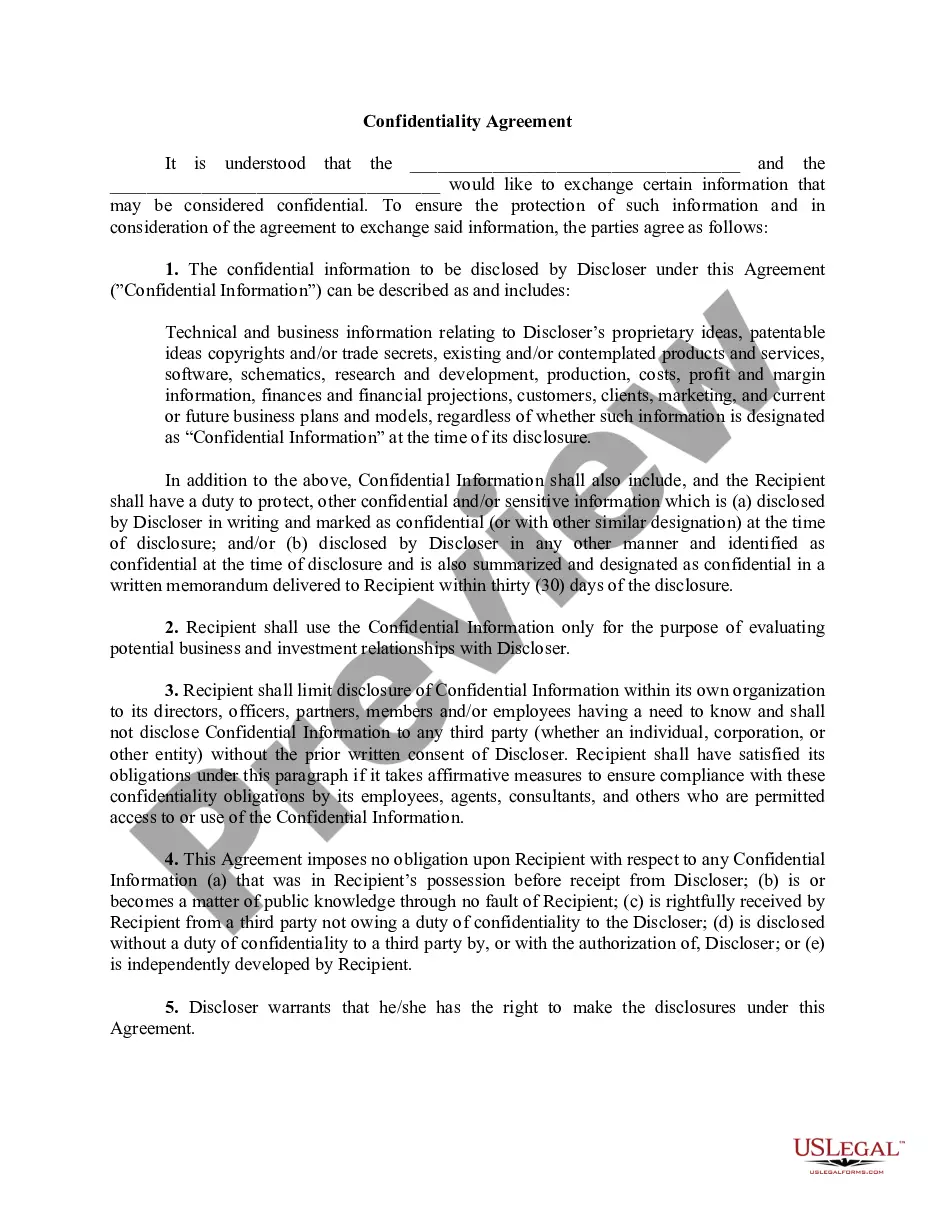
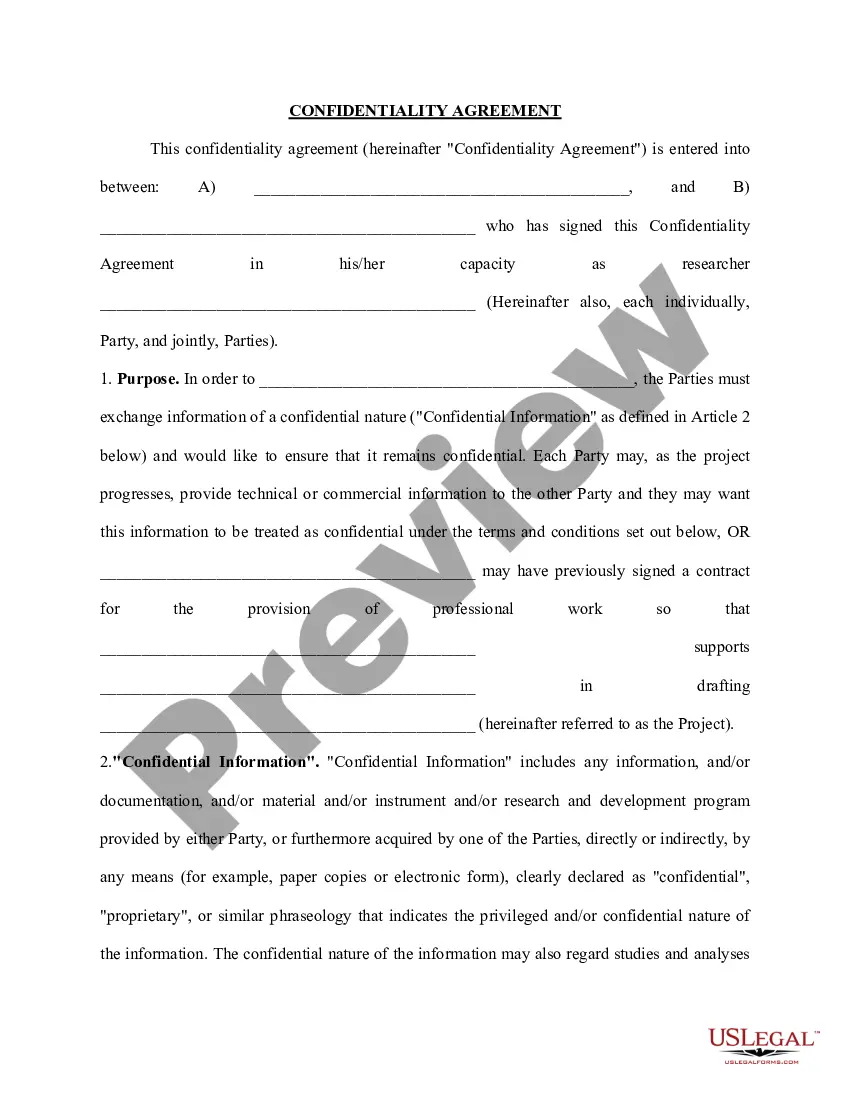
disclosure agreement is a legally binding contract that establishes a confidential relationship. The party or parties signing the agreement agree that sensitive information they may obtain will not be made available to any others. An NDA may also be referred to as a confidentiality agreement.
Also known as Proprietary Information and Inventions Assignment Agreements (or PIIAAs), Confidential Information and Inventions Assignment Agreements ensure that intellectual property and other proprietary rights created by employees during the course of their employment are assigned to the employer.
Reversing a state court of appeals' decision, the Colorado Supreme Court has held that an employer's continued employment of a current at-will employee provides sufficient consideration for a non-competition agreement entered into after the inception of employment.
Thus, the employee is giving up a legal right and needs to get something (some consideration) from the employer in exchange. In many states, such as New York, employment or continued employment is considered sufficient consideration.
Employers are prohibited from disclosing the personal information of their employees without prior authorization. Failure to keep this information confidential may constitute a breach of confidentiality.
This can include salaries, employee perks, client lists, trade secrets, sales numbers, customer information, news about pending terminations, reasons for a firing, phone codes or computer passwords. You may not divulge this information while you are working for an employer or after you leave.
Also known as Proprietary Information and Inventions Assignment Agreements (or PIIAAs), Confidential Information and Inventions Assignment Agreements ensure that intellectual property and other proprietary rights created by employees during the course of their employment are assigned to the employer.
An invention assignment agreement is a contract in which an employee or independent contractor assigns intellectual property rights for their services to the company. These agreements typically appear in other employment documents such as confidentiality agreements or an independent contractor agreement.
The court held that no additional consideration beyond the continuation of at-will employment is required to support an employee's assignment of inventions (and other intellectual property) to the employer.
For an IP assignment to be valid and enforceable, there must be a valid contract. For a contract to be effective, there must be an offer, acceptance, and proper consideration.