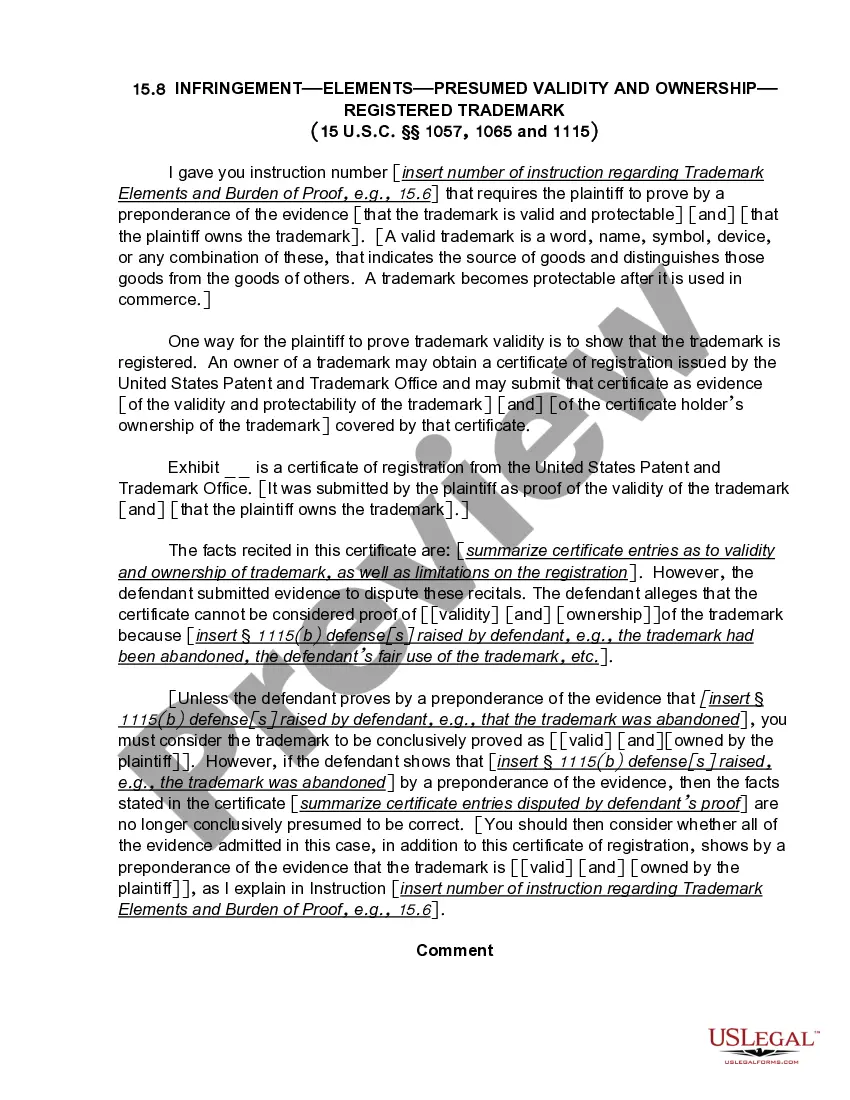
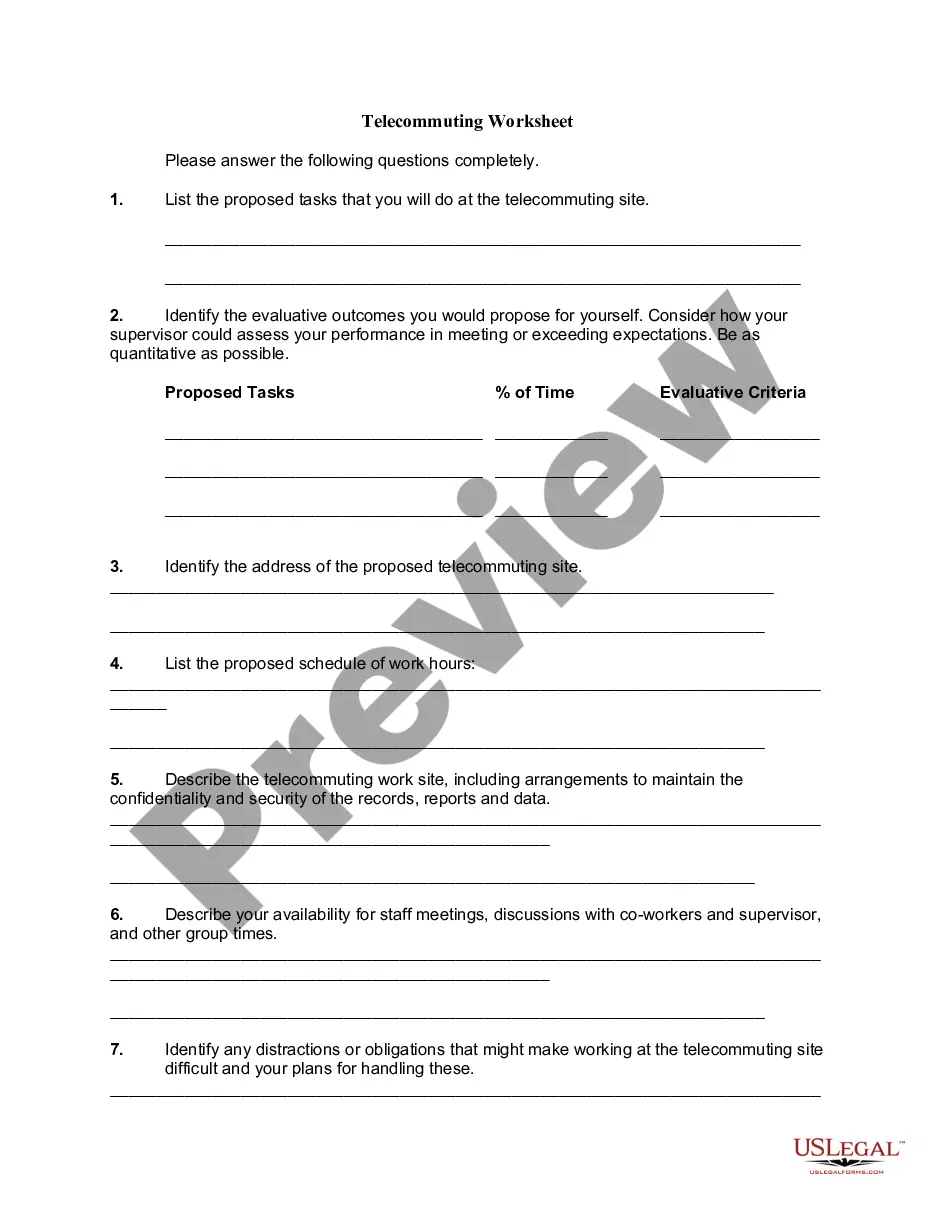
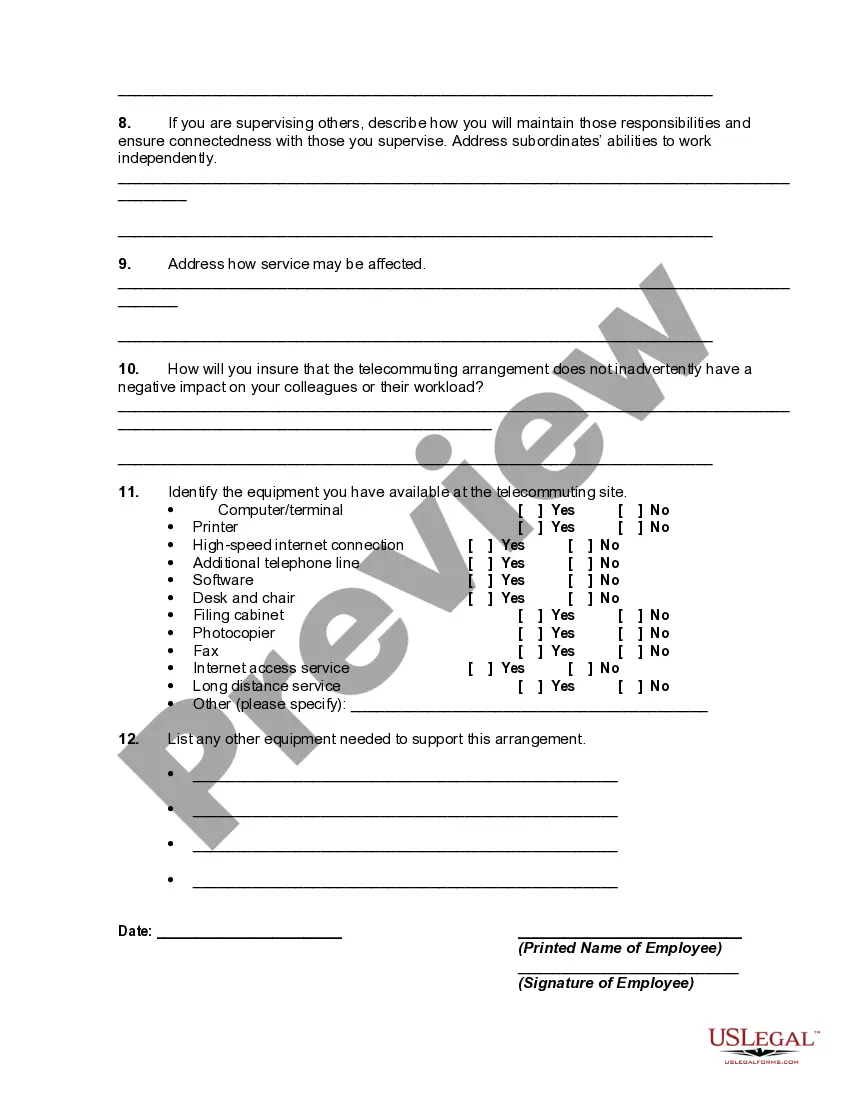
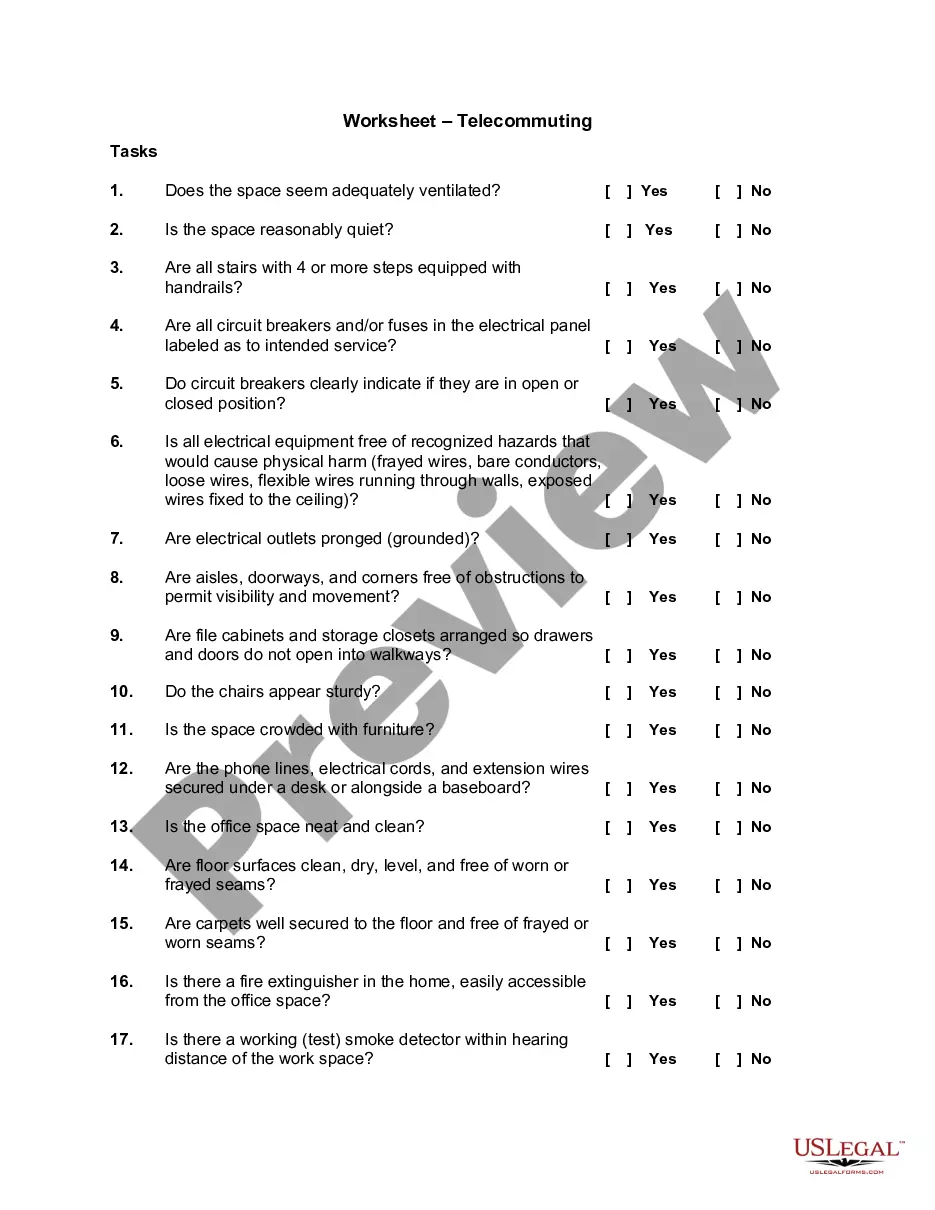
Utah Telecommuting Worksheet
Description

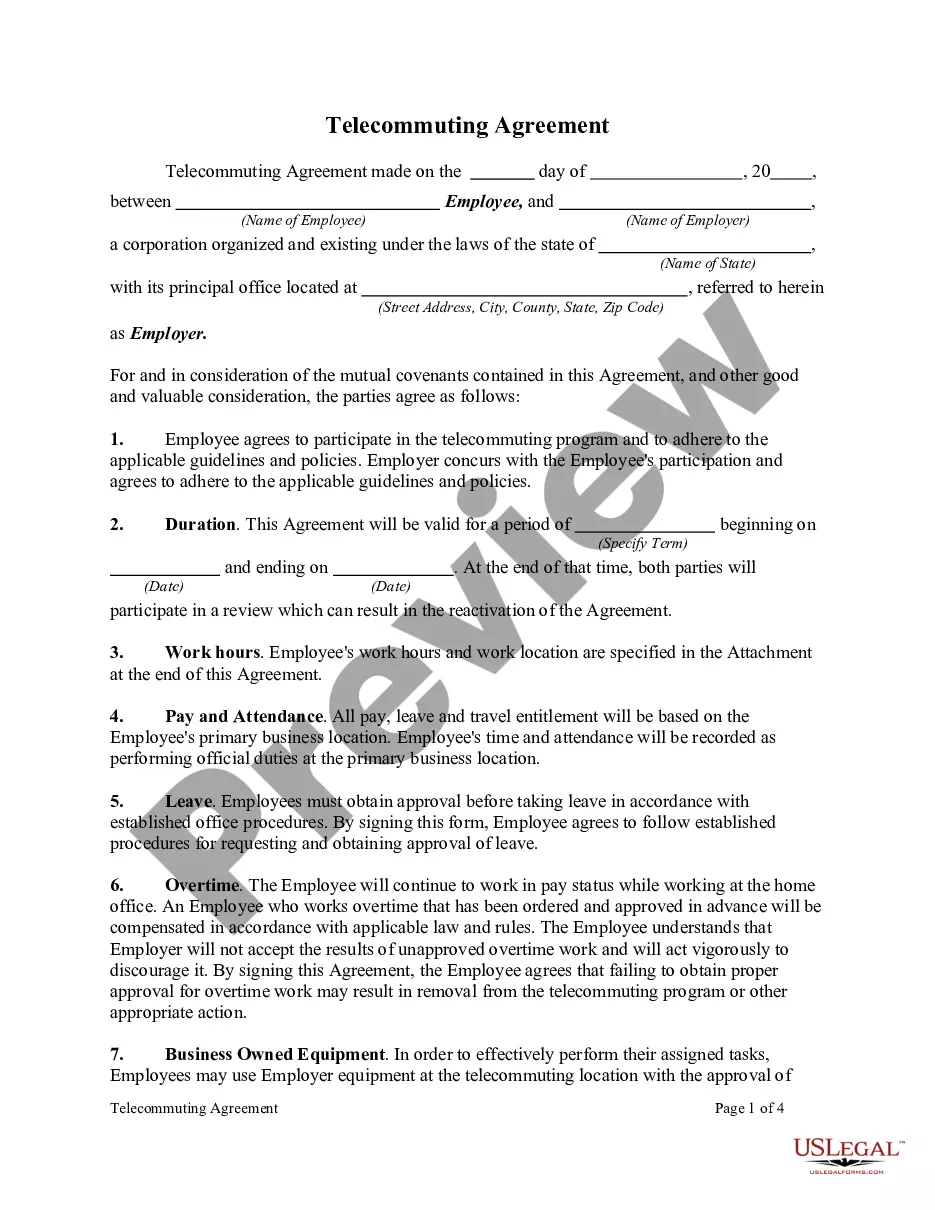
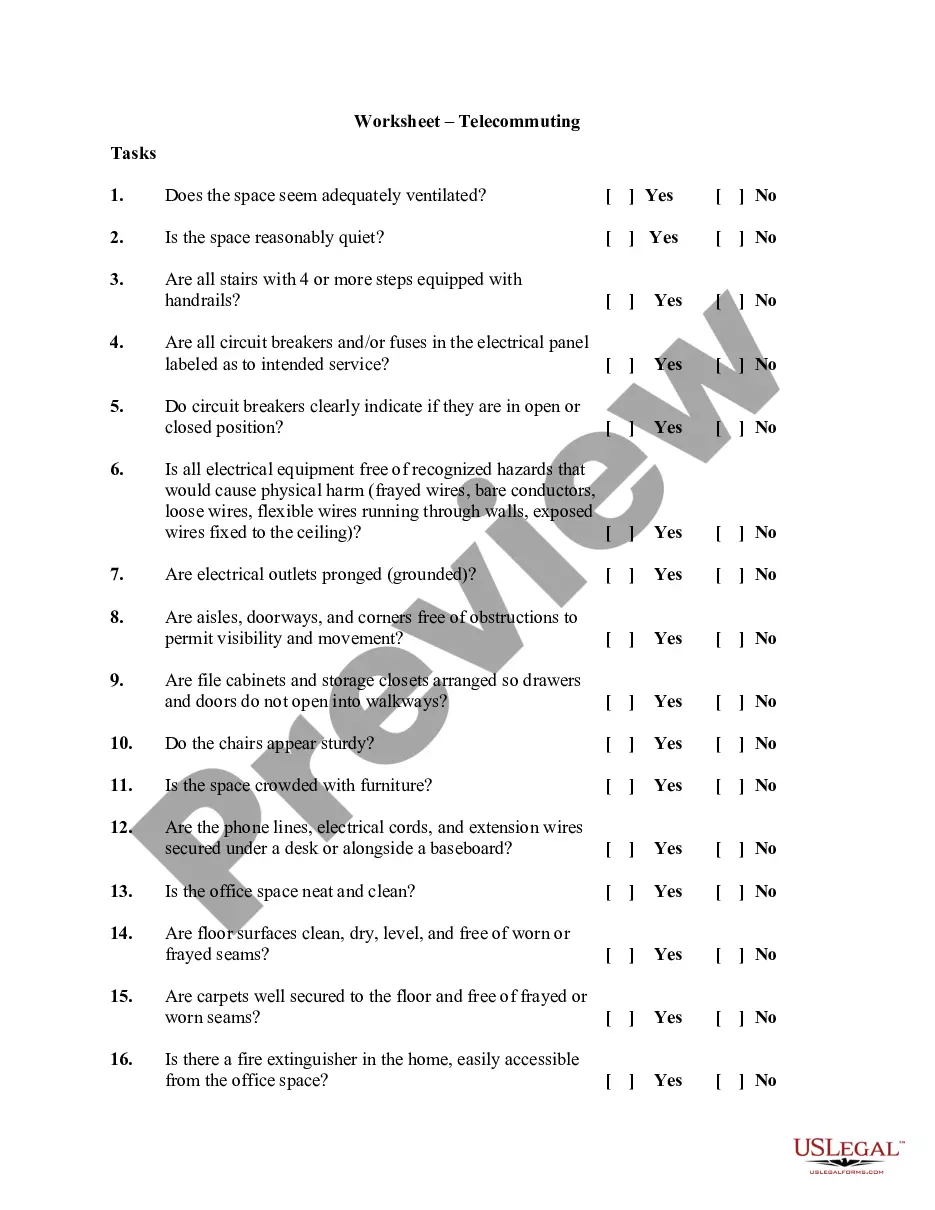
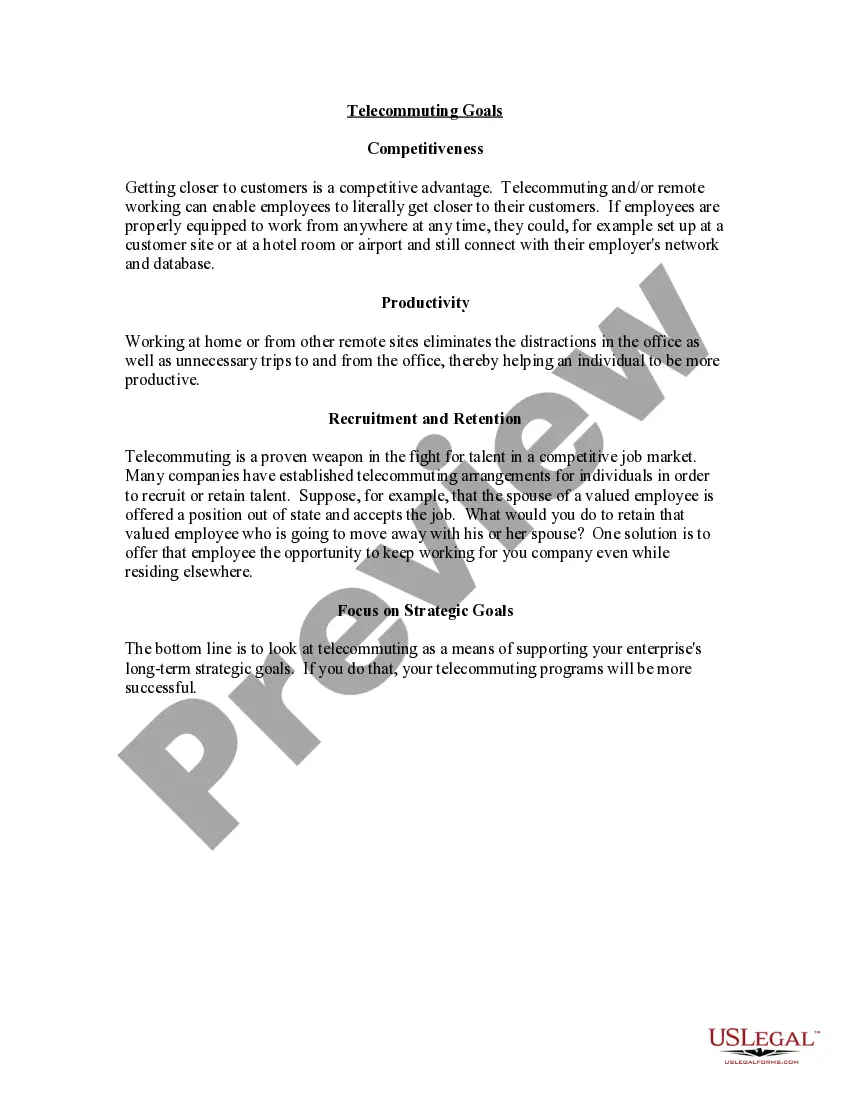

Get your form ready online
Our built-in tools help you complete, sign, share, and store your documents in one place.
Make edits, fill in missing information, and update formatting in US Legal Forms—just like you would in MS Word.
Download a copy, print it, send it by email, or mail it via USPS—whatever works best for your next step.
Sign and collect signatures with our SignNow integration. Send to multiple recipients, set reminders, and more. Go Premium to unlock E-Sign.
If this form requires notarization, complete it online through a secure video call—no need to meet a notary in person or wait for an appointment.
We protect your documents and personal data by following strict security and privacy standards.

Make edits, fill in missing information, and update formatting in US Legal Forms—just like you would in MS Word.

Download a copy, print it, send it by email, or mail it via USPS—whatever works best for your next step.

Sign and collect signatures with our SignNow integration. Send to multiple recipients, set reminders, and more. Go Premium to unlock E-Sign.

If this form requires notarization, complete it online through a secure video call—no need to meet a notary in person or wait for an appointment.

We protect your documents and personal data by following strict security and privacy standards.
Looking for another form?
How to fill out Telecommuting Worksheet?
Locating the appropriate approved document template can be a challenge.
Of course, there are numerous templates accessible online, but how can you locate the official document you need.
Utilize the US Legal Forms website. The platform offers thousands of templates, including the Utah Telecommuting Worksheet, which can be utilized for both business and personal purposes.
First, ensure you have chosen the correct document for your city/region. You can explore the form using the Review button and read the form details to confirm it is indeed the one suitable for you.
- All the documents are verified by professionals and comply with federal and state regulations.
- If you are already registered, Log In to your account and click the Obtain button to access the Utah Telecommuting Worksheet.
- Use your account to review the legal documents you may have obtained previously.
- Visit the My documents section of your account and download another copy of the document you need.
- If you are a new user of US Legal Forms, follow the simple instructions below.
Form popularity
FAQ
It should include:Days and hours the employee is expected to be working in the department.Hours the employee is expected to be working and reachable at the telecommuting site.Methods of contact (such as dedicated phone line, voice mail, email, videoconference, etc.)Times and frequency of contact (in both directions)More items...
The self-employed do not qualify as telecommuters because they lack employee status.
5 Key Characteristics of Successful TelecommutersFocus.Collaborative attitude.Adaptabilty.While you may have established a routine that works well for your day-to-day work, it's vital that those working from home are flexible.Trust.Self-starter.
Though often away from the office, a teleworker is different from a remote employee because there occasionally some in-person office attendance required though this is not always the case. Another key difference is that a teleworker is often geographically closer to the main office location than a remote worker.
Telecommuting is the ability for an employee to complete work assignments from outside the traditional workplace by using telecommunications tools such as email, phone, chat and video apps.
If you're having trouble getting started with your telecommuting policy, here's a list of things to include:Define which positions are eligible to work from home.Be specific about the policy.Create an effective power structure.Outline which tools your employees should use.Be open.
Telecommuting is an employment arrangement in which the employee works outside of the employer's office. Often this means working from home or at a location close to home, such as a coffee shop, library, or co-working space.
Teleworking staff must adhere to all departmental and institutional policies including, but not limited to policies regarding confidentiality of information, work schedules, work hours, use of equipment, ethics, performance, leave use and tracking of work hours.
For example, teleworking employees must be able to take telephone calls and participate in online video meetings with minimal distraction and while maintaining appropriate confidentiality.