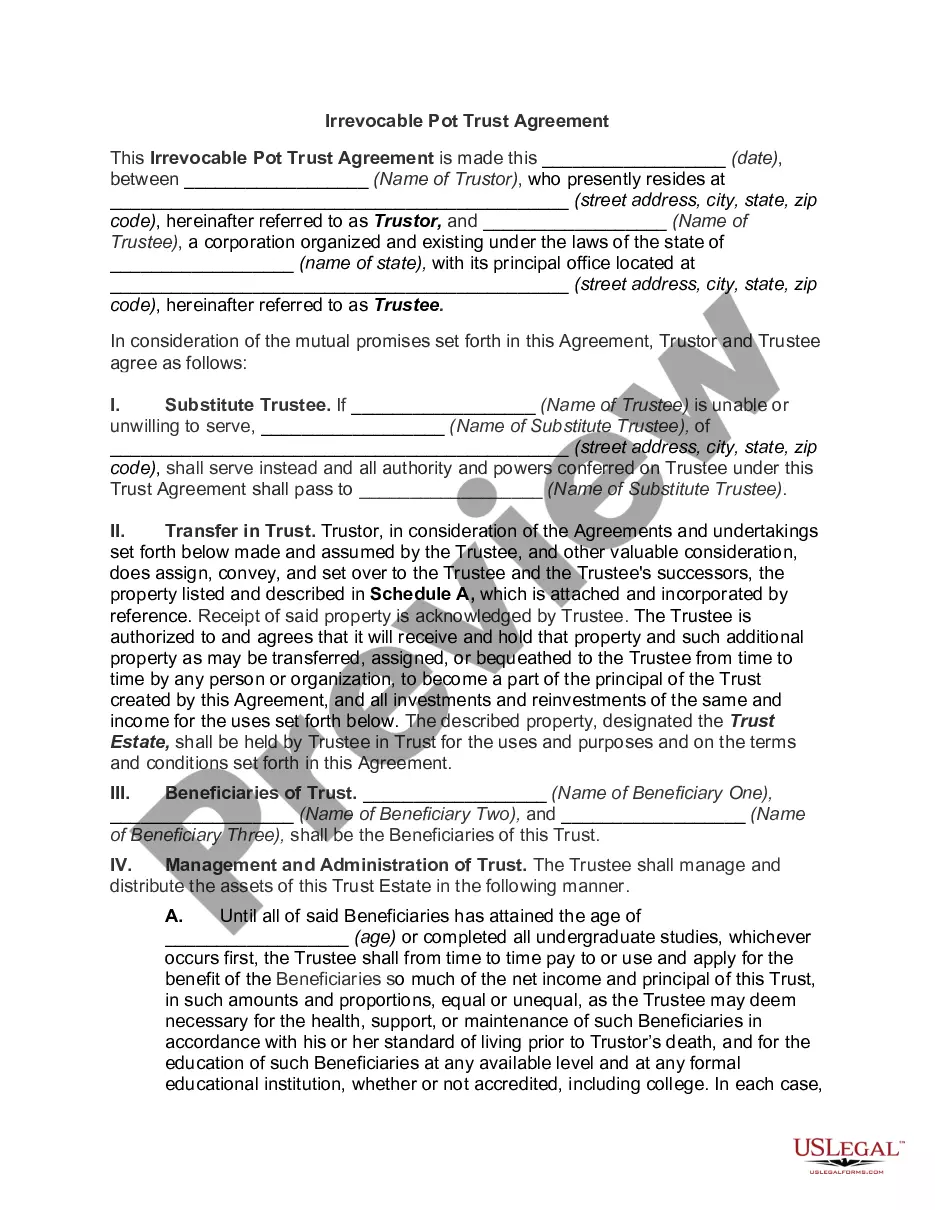
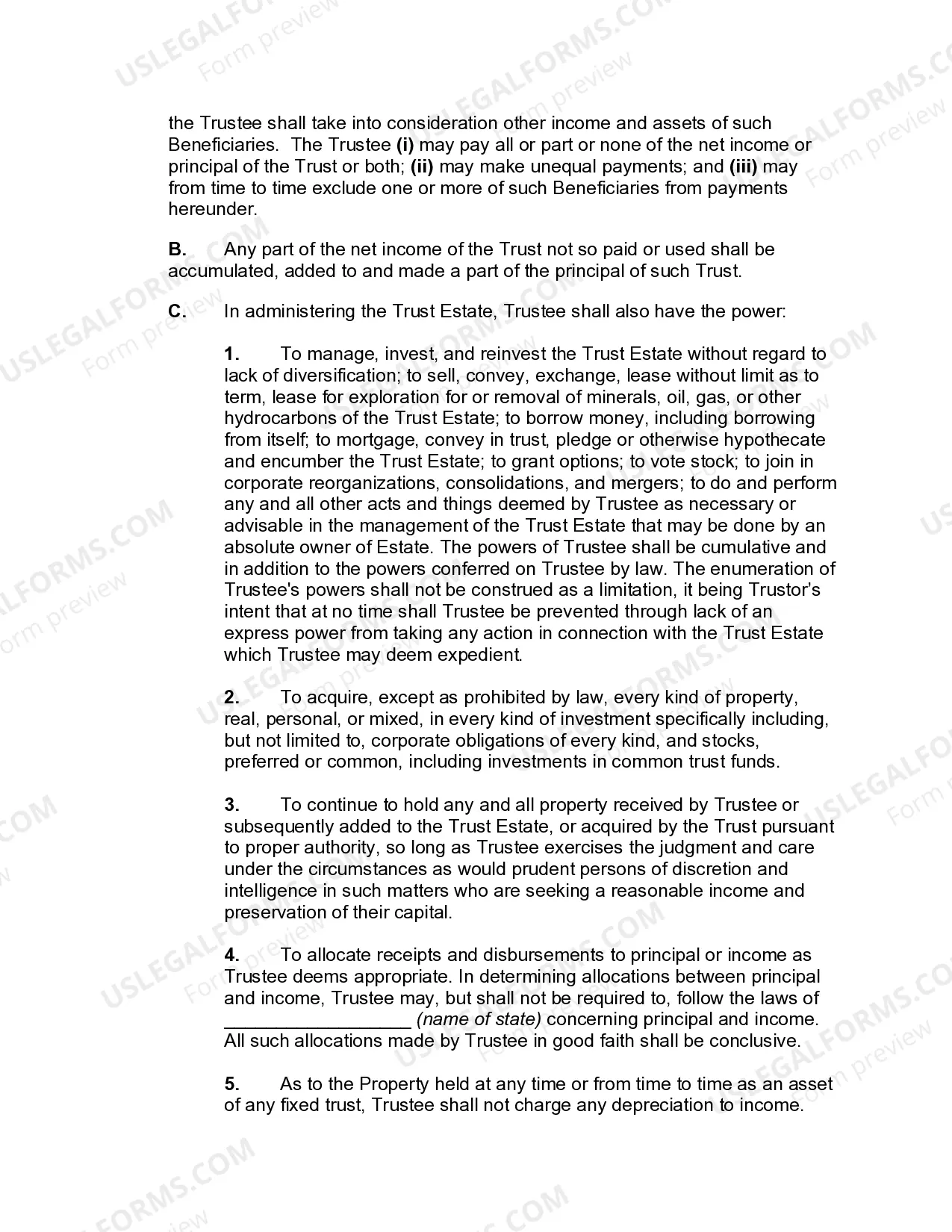
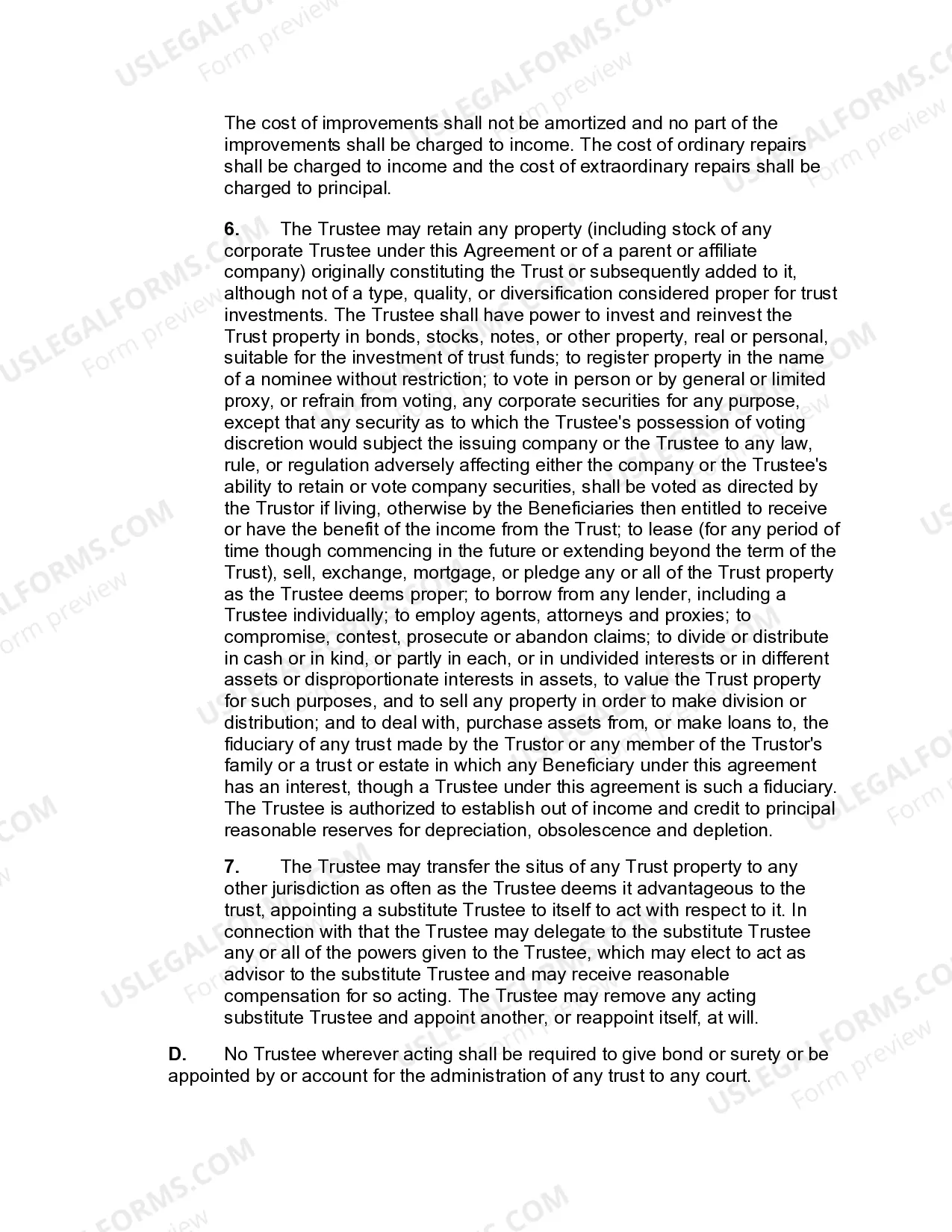
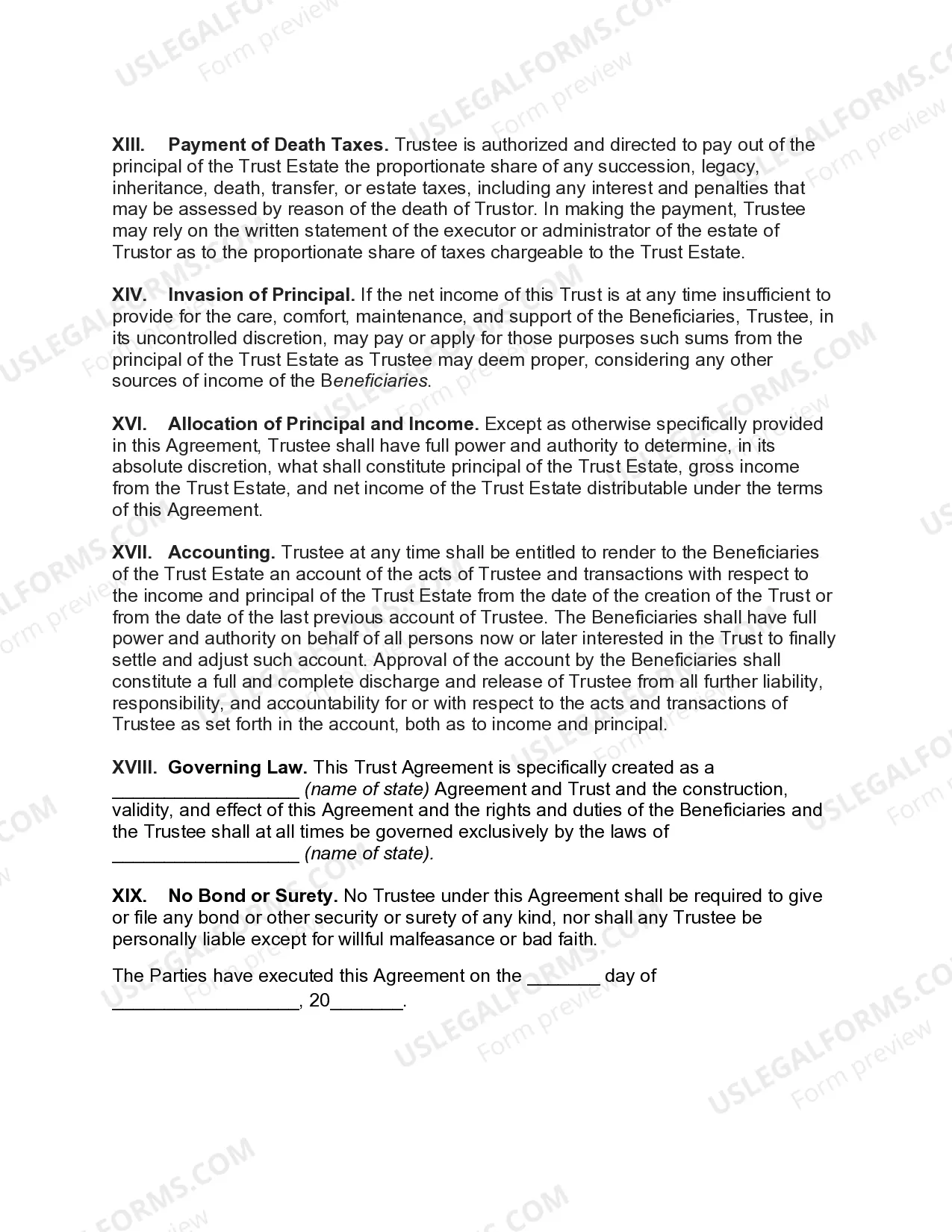
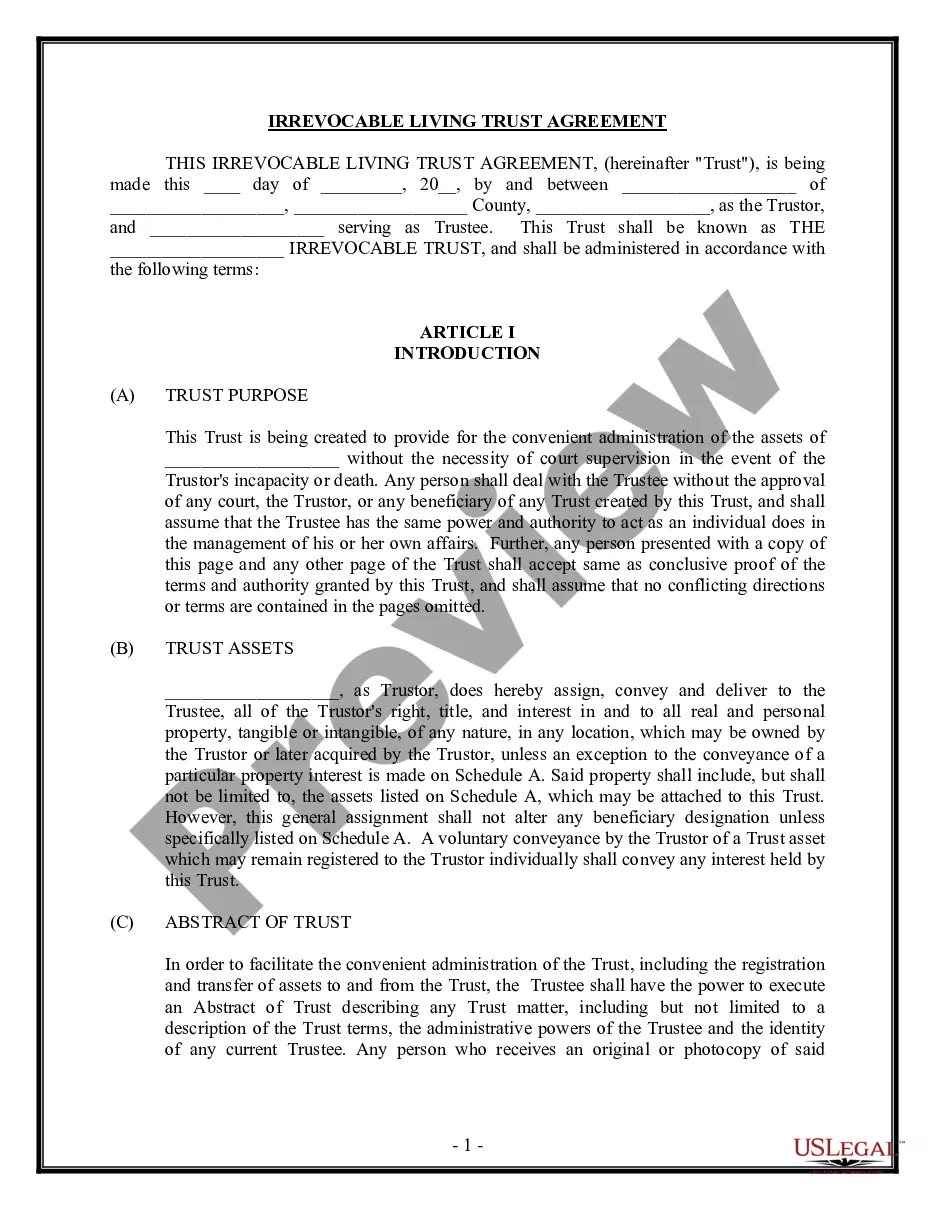
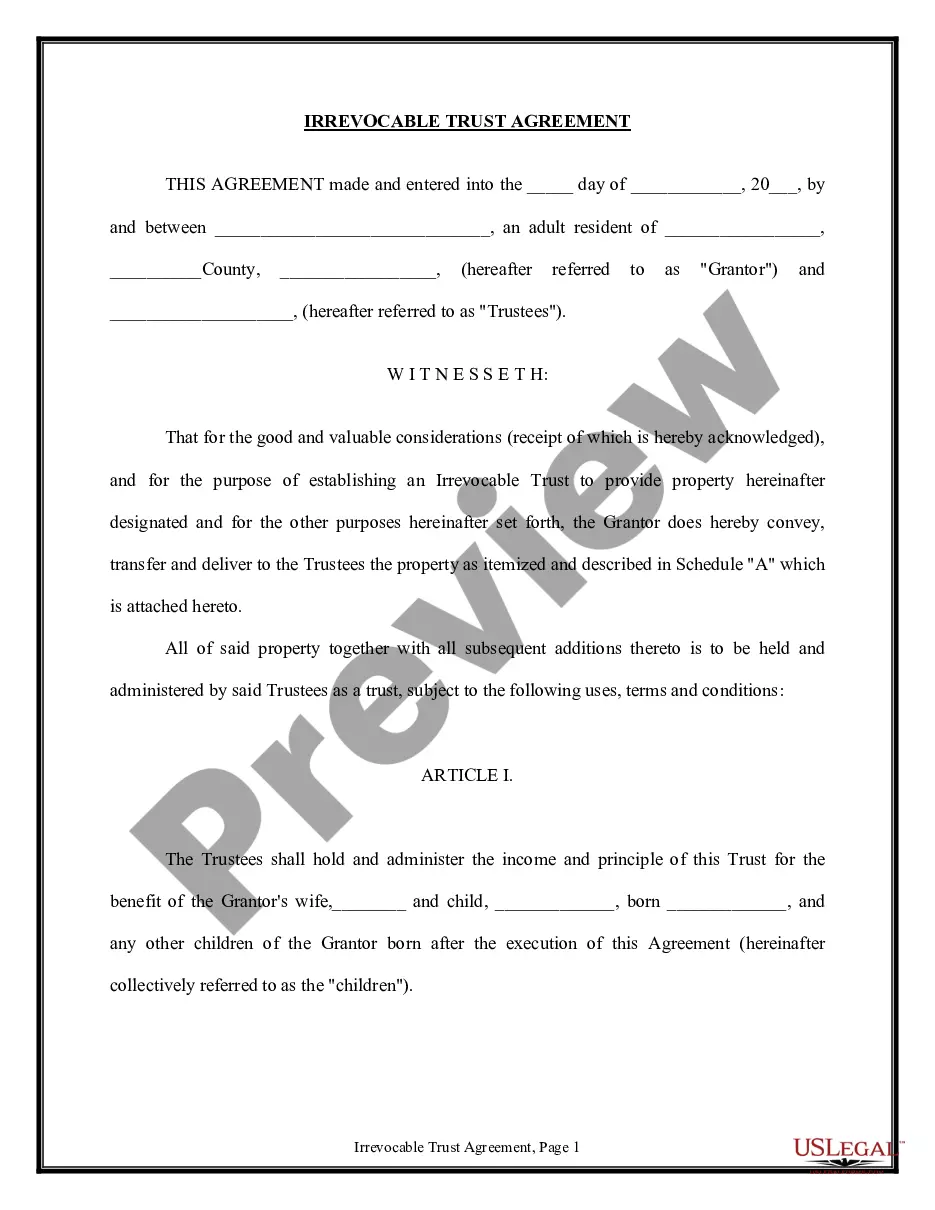
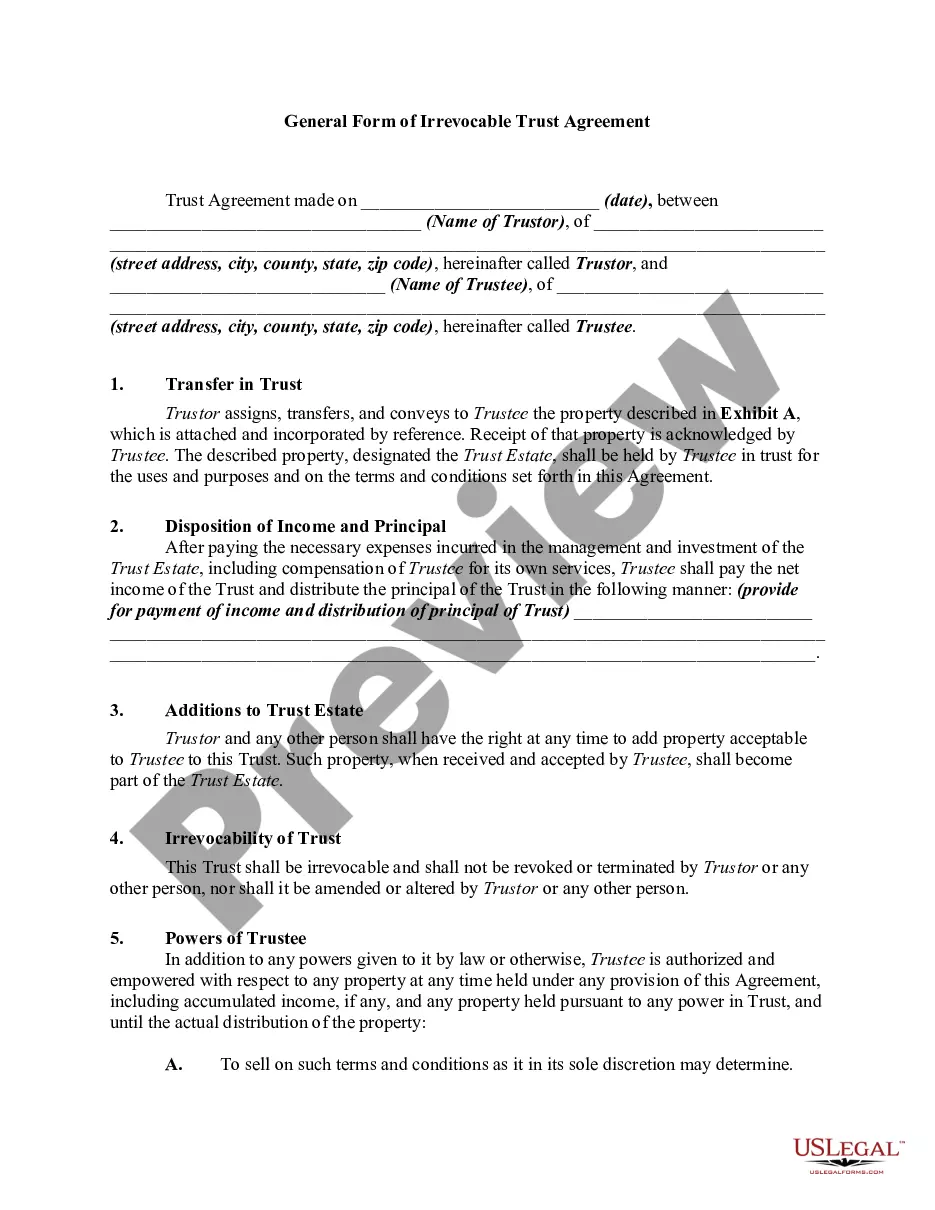
An irrevocable trust is a trust that cannot be modified or terminated without the permission of the beneficiary. In most states, a trust will be deemed irrevocable unless the Trustor specifies otherwise. Once the Trustor has transferred assets into the trust, s/he has no rights of ownership to the assets and the trust. Irrevocable trusts are preferred because it removes all incidents of ownership, thereby effectively removing the trust's assets from the grantor's taxable estate. The Trustor is also relieved of the tax liability on the income generated by the assets. This is the opposite of a "revocable trust", which allows the Trustor to modify the trust.
A Pot Trust is a trust set up for more than one beneficiary, typically children. The purpose of a Pot Trust is to keep the funds in one pot until a later event. For example, at the death of the parents, the assets may be kept in one pot until all the children have graduated from college or reached age 21.
Utah Irrevocable Pot Trust Agreement
Instant download
Description
Free preview



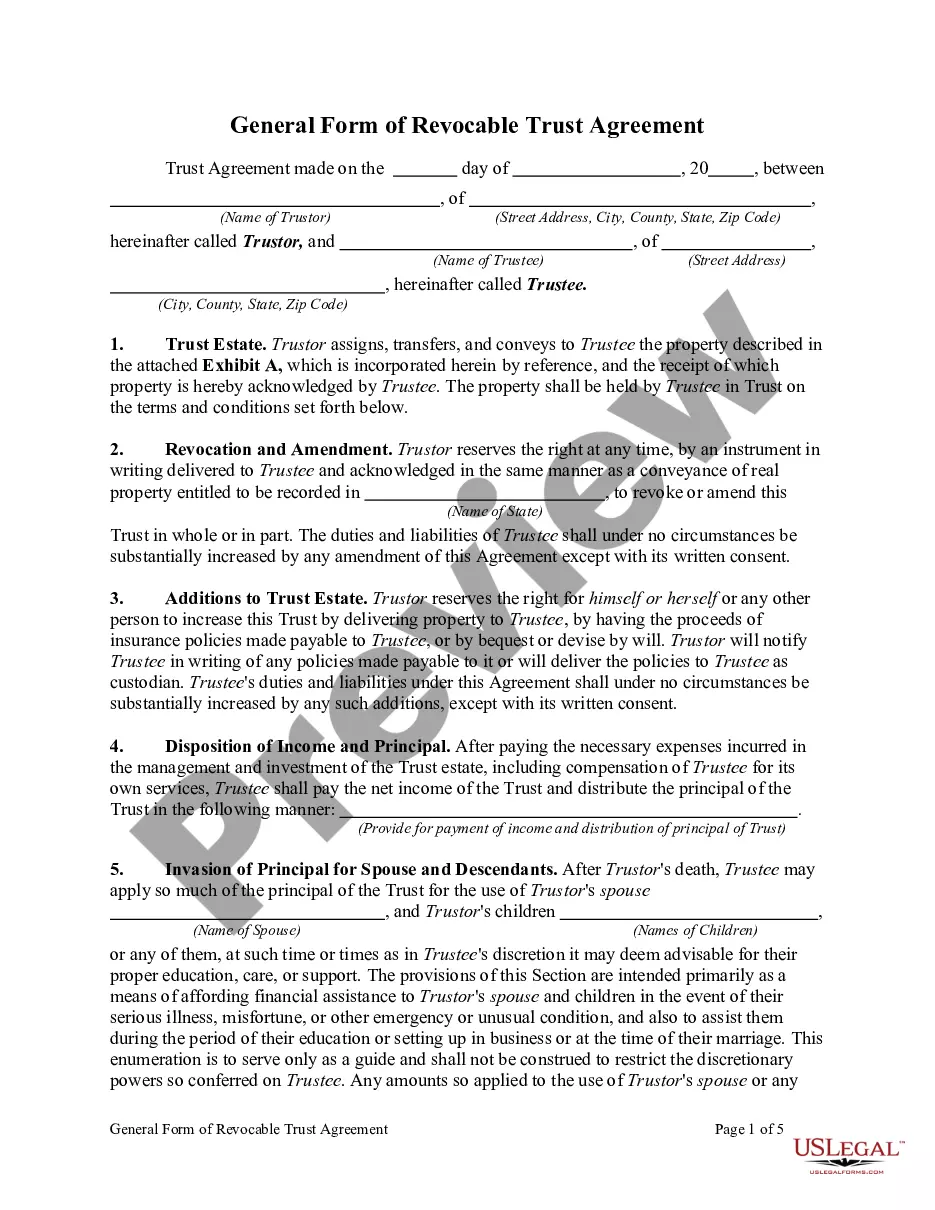


How to fill out Irrevocable Pot Trust Agreement?
US Legal Forms - one of the largest collections of legal documents in the United States - offers a range of legal form templates that you can download or print.
By using the website, you will have access to thousands of forms for business and personal purposes, organized by categories, states, or keywords.
You can find the latest versions of forms like the Utah Irrevocable Pot Trust Agreement in just seconds.
Check the description to ensure you have chosen the right form.
If the form does not meet your needs, use the Search field at the top of the screen to find the one that does.
- If you already have an account, Log In to download the Utah Irrevocable Pot Trust Agreement from the US Legal Forms library.
- The Download button will appear on every form you view.
- You can access all previously saved forms in the My documents section of your account.
- If you are new to US Legal Forms, here are some simple steps to get started.
- Make sure to select the correct form for your city/region.
- Click the Preview button to view the details of the form.
Form popularity
FAQ
The only three times you might want to consider creating an irrevocable trust is when you want to (1) minimize estate taxes, (2) become eligible for government programs, or (3) protect your assets from your creditors.
Putting your house in an irrevocable trust removes it from your estate, reveals NOLO. Unlike placing assets in an revocable trust, your house is safe from creditors and from estate tax. If you use an irrevocable bypass trust, it does the same for your spouse.
Irrevocable trusts are most often used to protect assets from creditors or to obtain certain tax advantages. While it is advisable to enlist the help of an attorney when setting up this type of trust, it is possible to do it yourself.
In an irrevocable trust, all the assets are effectively transferred to a grantee, legally removing ownership rights from the grantor. This means that the terms cannot be changed, modified, or terminated without the named beneficiary's approval.
The downside to irrevocable trusts is that you can't change them. And you can't act as your own trustee either. Once the trust is set up and the assets are transferred, you no longer have control over them.
Potential DisadvantagesEven modest bank or investment accounts named in a valid trust must go through the probate process. Also, after you die, your estate may face more expense, as the trust must file tax returns and value assets, potentially negating the cost savings of avoiding probate.
Irrevocable Trust DisadvantagesInflexible structure. You don't have any wiggle room if you're the grantor of an irrevocable trust, compared to a revocable trust.Loss of control over assets. You have no control to retrieve or even manage your former assets that you assign to an irrevocable trust.Unforeseen changes.
The downside to irrevocable trusts is that you can't change them. And you can't act as your own trustee either. Once the trust is set up and the assets are transferred, you no longer have control over them.
Putting your house in an irrevocable trust removes it from your estate, reveals NOLO. Unlike placing assets in an revocable trust, your house is safe from creditors and from estate tax. If you use an irrevocable bypass trust, it does the same for your spouse.
Under an irrevocable trust, legal ownership of the trust is held by a trustee. At the same time, the grantor gives up certain rights to the trust.