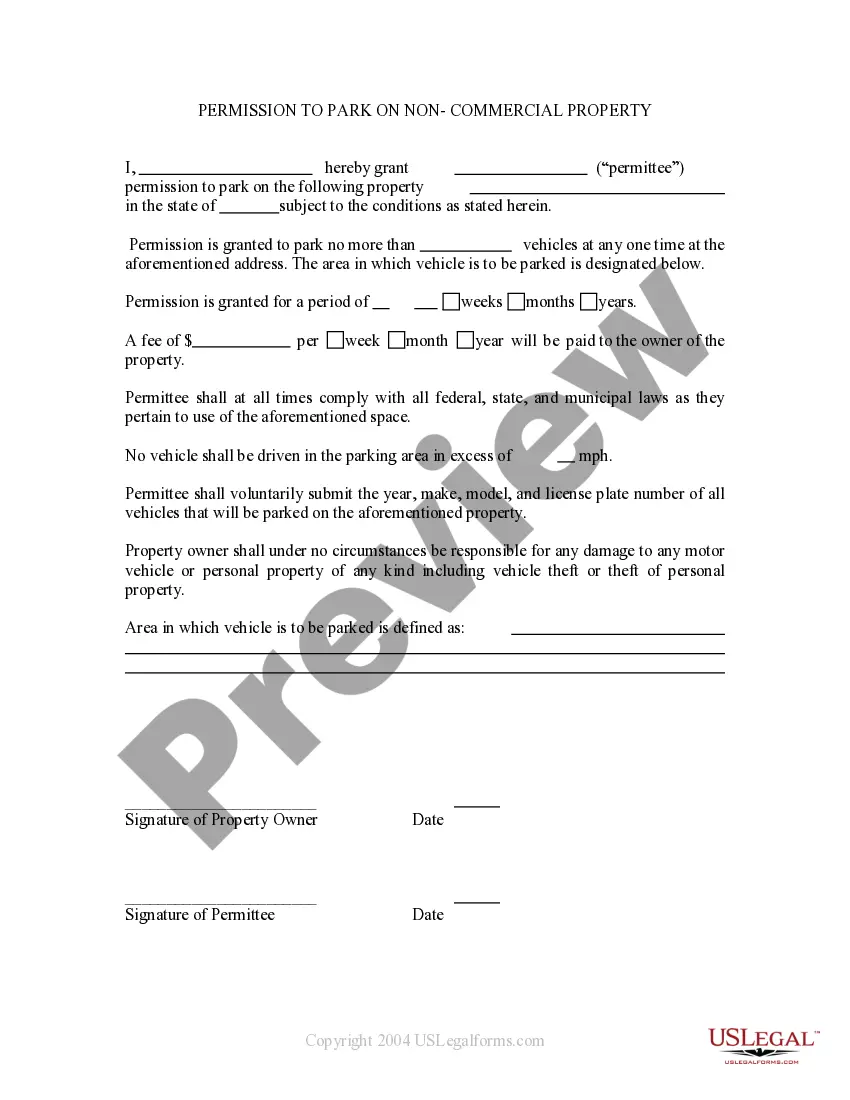
This is a form granting permission to park on another's land for a designated period of time. This form is more conducive to parking on an individual's land as opposed to a commercial parking lot.
Utah Permission To Park On Noncommercial Land
Category:
State:
Multi-State
Control #:
US-PRM-21
Format:
Word;
Rich Text
Instant download
Description
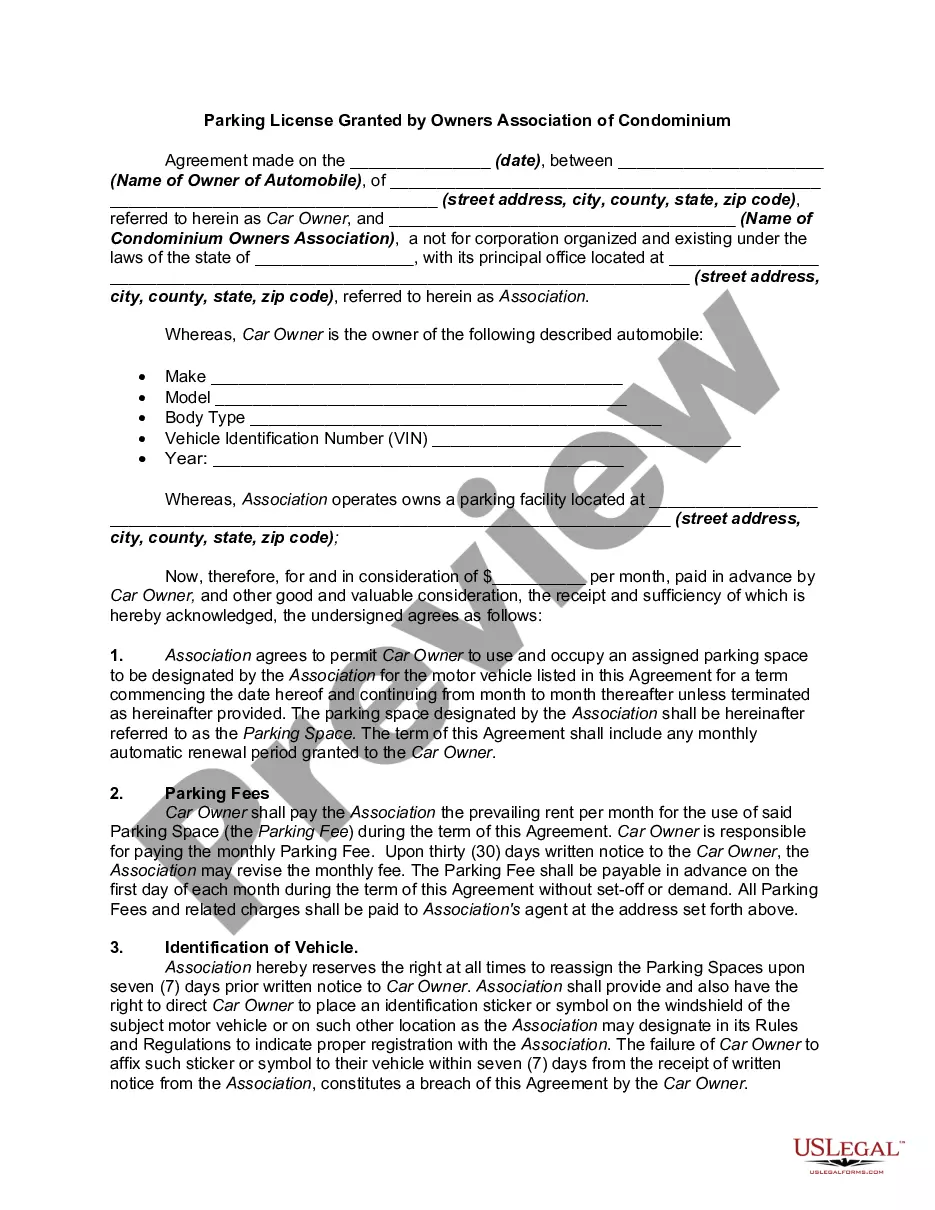
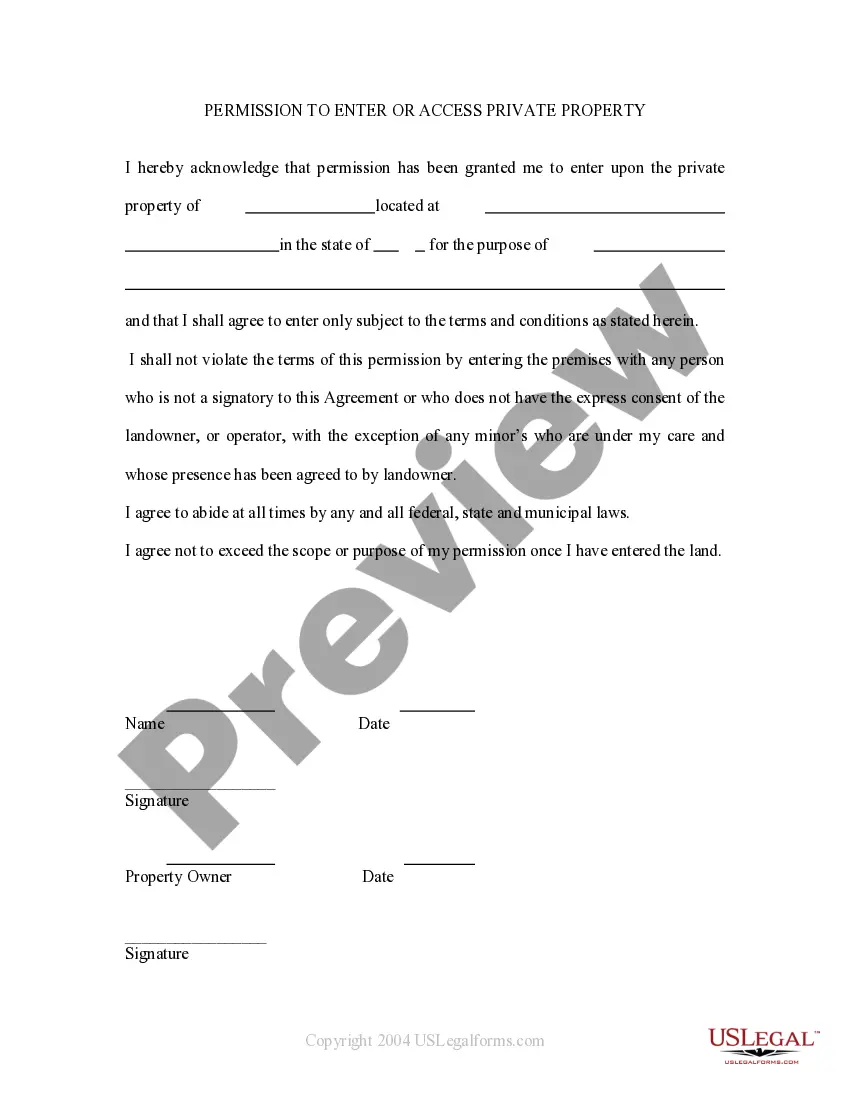
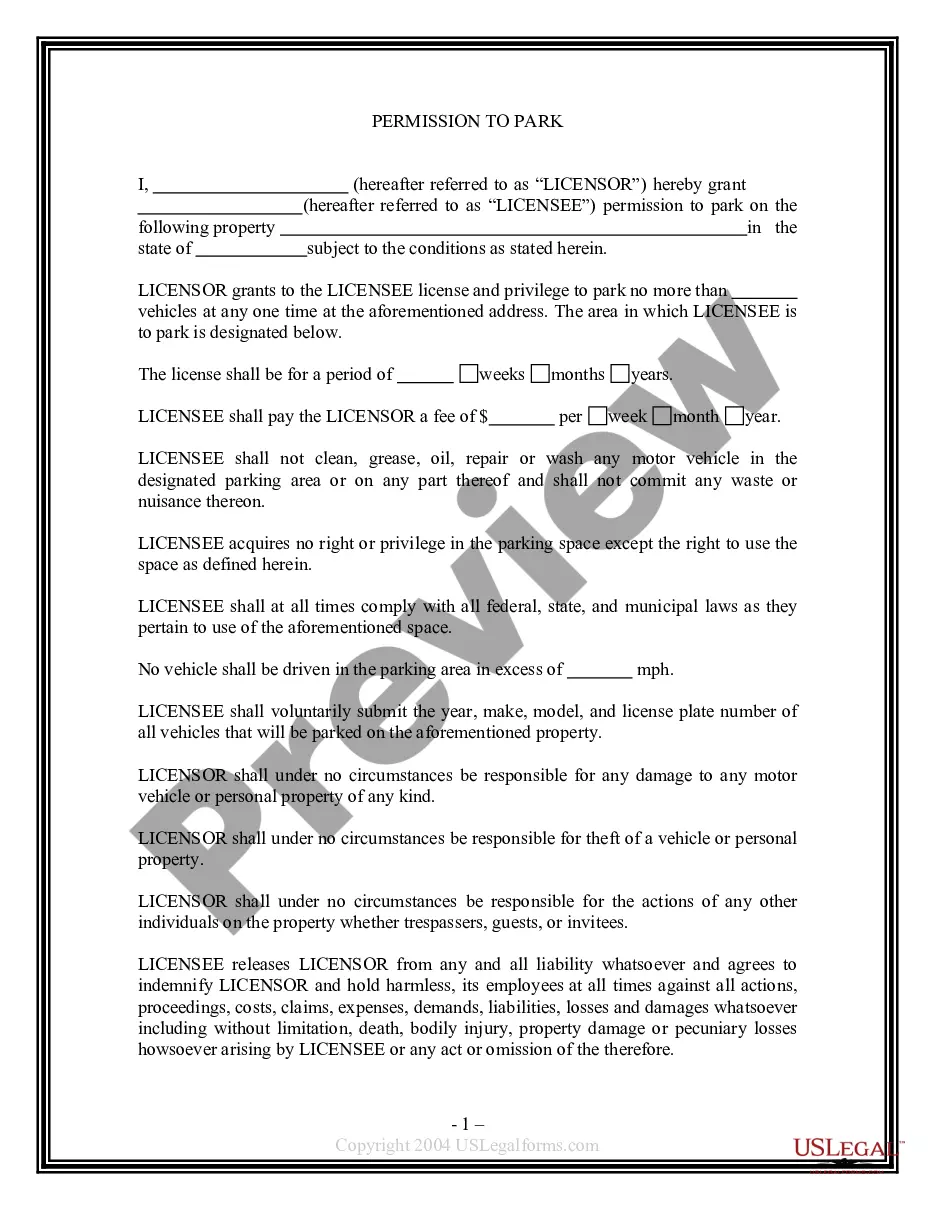
How to fill out Permission To Park On Noncommercial Land?
Are you in the situation where you require documentation for potentially organizational or specific objectives almost daily.
There are numerous legal document templates accessible online, but finding forms you can rely on isn't easy.
US Legal Forms offers a vast array of template forms, such as the Utah Permission To Park On Noncommercial Land, which can be tailored to meet state and federal regulations.
Once you locate the appropriate form, click on Get now.
Choose the pricing plan you prefer, complete the necessary information to create your account, and pay for the order using your PayPal or credit card.
- If you are already familiar with the US Legal Forms website and have an account, simply Log In.
- Then, you can download the Utah Permission To Park On Noncommercial Land template.
- If you do not have an account and wish to start using US Legal Forms, follow these steps.
- Find the form you need and ensure it is for the correct city/region.
- Utilize the Review button to examine the form.
- Check the details to make sure you have selected the right form.
- If the form isn’t what you're looking for, make use of the Search field to find the form that suits your needs and requirements.
Form popularity
FAQ
Camping on Bureau of Land Management (BLM) land in Utah typically does not require a permit, but it is essential to follow specific guidelines. Visitors should respect the land, follow Leave No Trace principles, and check for any restrictions in the area they plan to camp. Understanding the regulations surrounding the Utah Permission To Park On Noncommercial Land can help campers find suitable locations for parking and camping.
Parking on the street in Utah is subject to specific regulations designed to maintain safety and accessibility. Vehicles must not obstruct traffic flow, and parking is prohibited in certain zones, such as near intersections and fire hydrants. To avoid fines and penalties, familiarize yourself with local rules regarding the Utah Permission To Park On Noncommercial Land and street parking regulations.
The code 72 7 105 in Utah pertains to the regulations around parking on noncommercial land. This code outlines the conditions under which property owners can permit parking on their land, ensuring compliance with local laws. Understanding this code is essential for anyone considering the Utah Permission To Park On Noncommercial Land, as it helps clarify legal rights and responsibilities.
The purpose of the R-2 single and two-family residential district is to preserve and protect for single-family dwellings the character of existing neighborhoods which exhibit a mix of single- and two-family dwellings by controlling the concentration of two-family dwelling units.
There are four major types of land use zoning:Functional zoning. The most prevalent form of zoning where land use zones are defined according to their function, such as commercial, residential, or industrial.Form-based zoning.Intensity zoning.Incentive zoning.
Zoning guidelines are statutorily enforceable guidelines used in the preparation of spatial plans such as Structure Plans and Local Plans as well as permitting of development.
How Can I Get Around a Zoning Ordinance? If you own property that is subject to a zoning ordinance and that ordinance is preventing you from using your land the way you intend, you may attempt to circumvent the zoning ordinance through a variance or an amendment or rezoning.
Visit your local district-planning office or have professional town planners review the zoning map for the town or municipal area. The town planners will be able to tell you exactly in which zoning category your property falls and which usage and development permissions are applicable to it.
Single-Family. R-1, single-family residential zoning district; 2. Two-Family.
Where Are Zoning Laws and Ordinances Located? The best place to look for your local laws is at the office of your city or town government. The offices of the mayor, city attorney, or department of housing, are also a good place to start. Some public libraries may also have local ordinance materials.