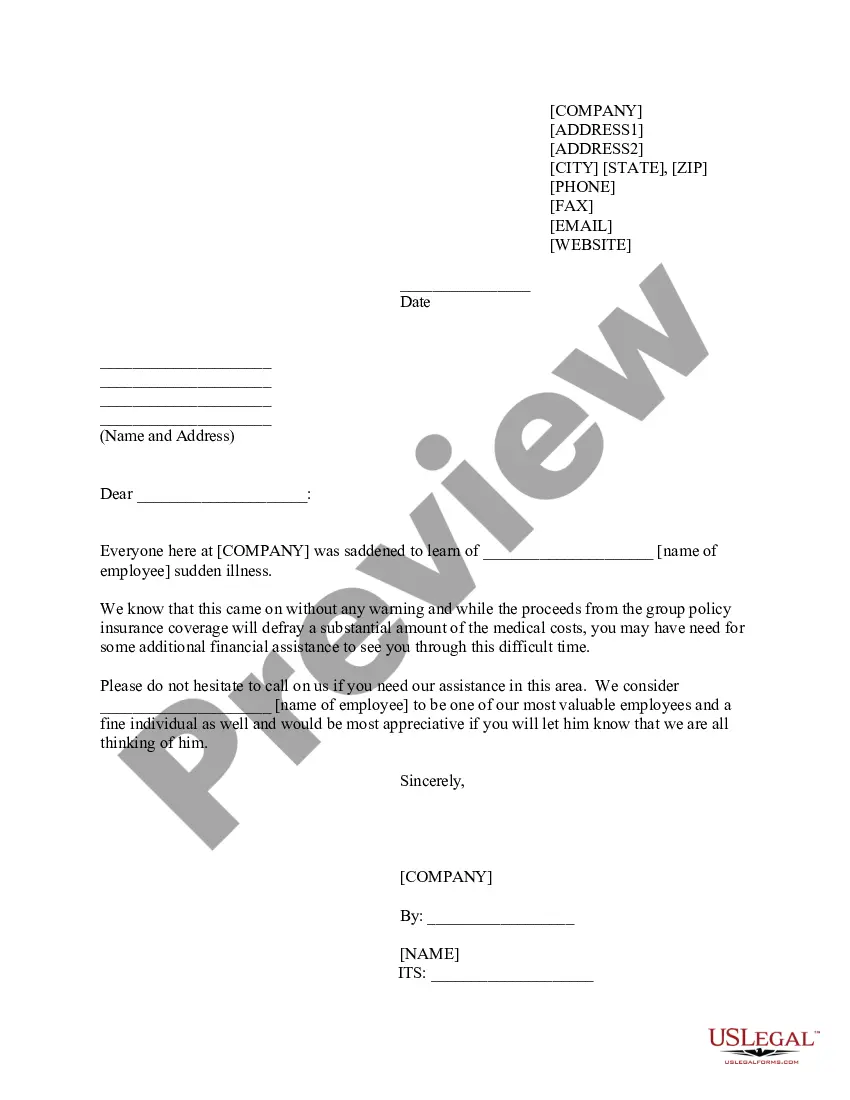
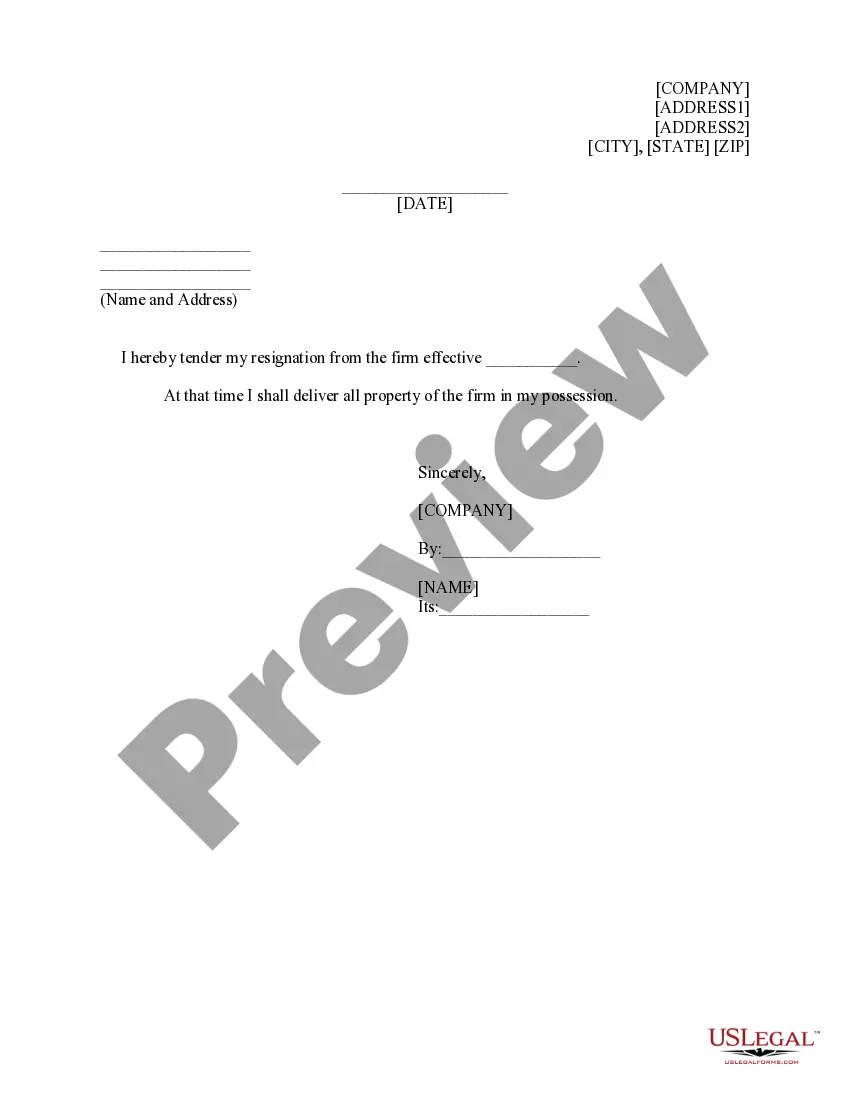
Virginia Land Trust - Quitclaim Deed
What this document covers
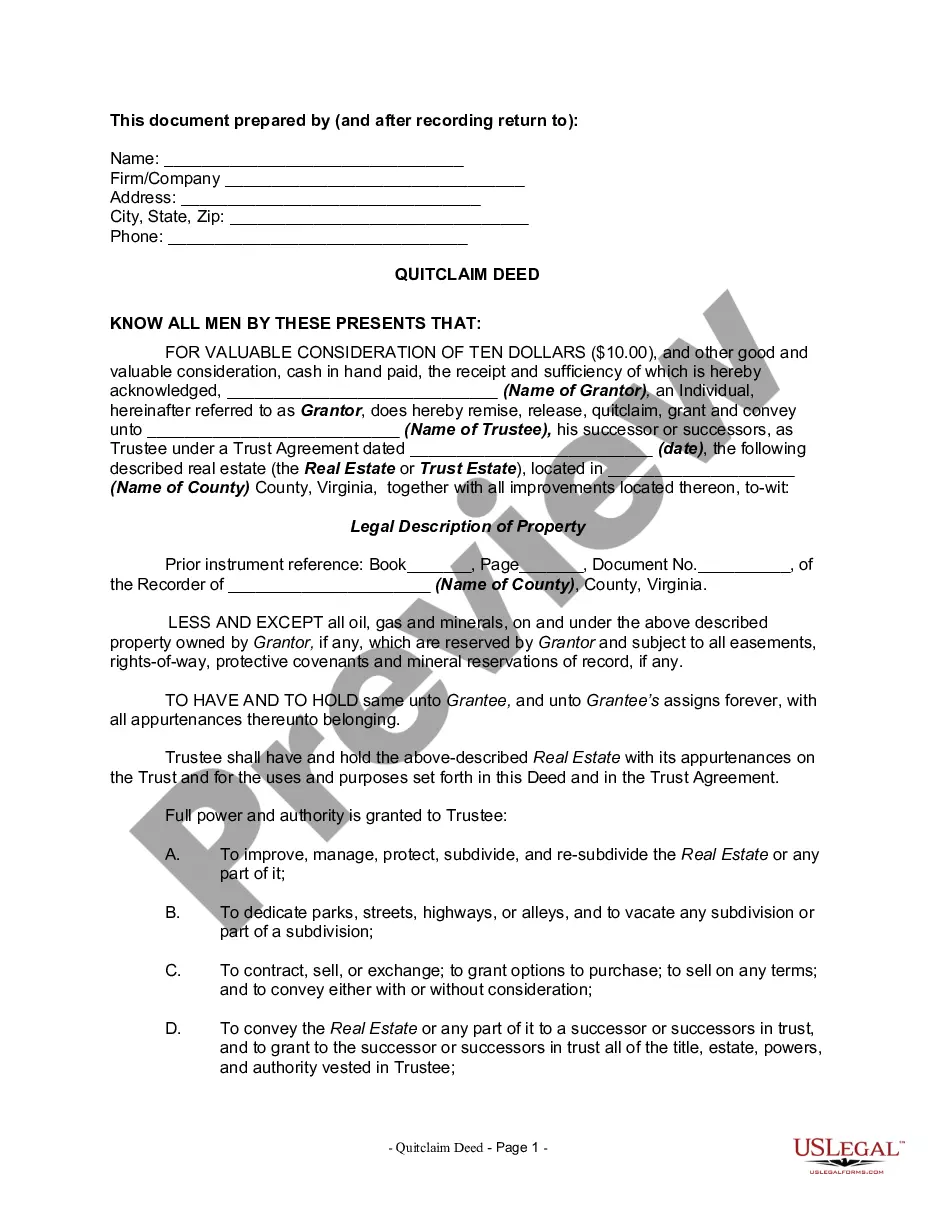
The Virginia Land Trust - Quitclaim Deed is a legal document used to transfer ownership of real estate into a land trust. This form allows the grantor to convey property to a trustee for the benefit of a designated beneficiary. Unlike other deeds, a quitclaim deed does not guarantee that the grantor holds clear title to the property; instead, it serves to relinquish any claim the grantor may have. This type of deed is particularly relevant in Virginia, where specific land trust laws apply, providing unique protections and responsibilities for trustees and beneficiaries.
What’s included in this form
- Name of the grantor and trustee.
- Legal description of the property being conveyed.
- Details regarding the county where the property is located.
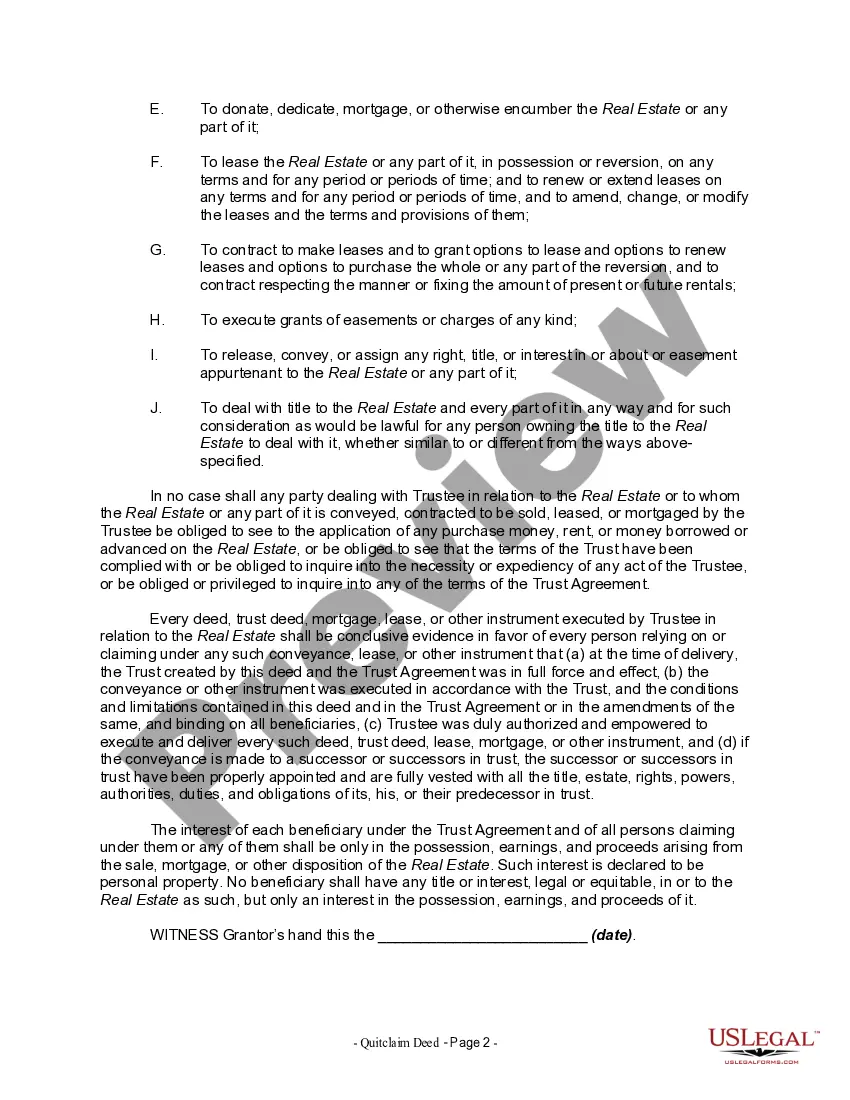
- Authority granted to the trustee for managing the property.
- Provisions for reserving rights to minerals, easements, and other claims.
When this form is needed
This form is necessary when a property owner wishes to transfer their real estate into a land trust in Virginia. It is often used to manage family assets, protect privacy, or facilitate estate planning. The quitclaim deed is particularly useful for property transfers between family members or situations where the grantor acknowledges no warranties regarding the title.
Who should use this form
- Property owners in Virginia looking to place their land into a land trust.
- Individuals or entities designated as trustees of land trusts.
- Estate planners managing real estate assets.
- Family members transferring property among themselves without guaranteeing clear title.
Steps to complete this form
- Identify the parties involved: the grantor and the trustee.
- Clearly describe the property being transferred, including its legal description.
- Fill in the date of the trust agreement.
- Specify the county in Virginia where the property is located.
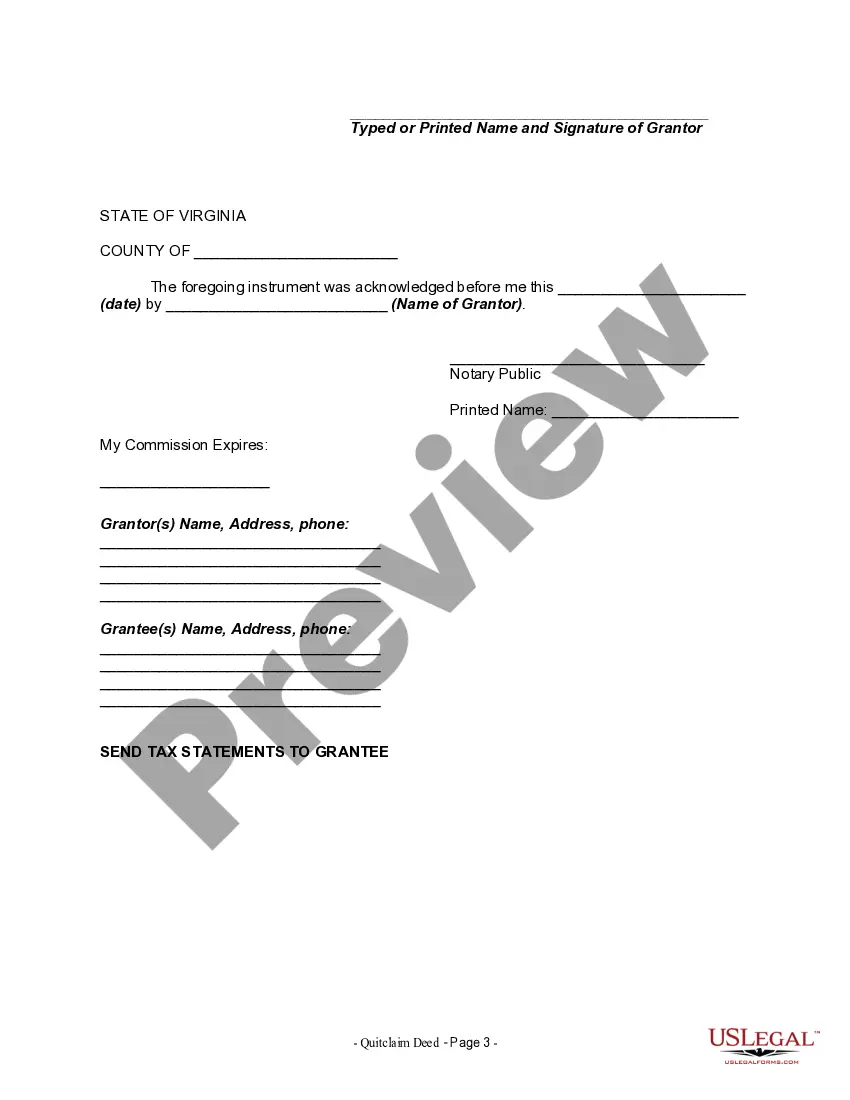
- Ensure all necessary signatures are obtained and dated, including that of a notary public if required.
Notarization requirements for this form
This form needs to be notarized to ensure legal validity. US Legal Forms provides secure online notarization powered by Notarize, allowing you to complete the process through a verified video call, available anytime.
Get your form ready online
Our built-in tools help you complete, sign, share, and store your documents in one place.
Make edits, fill in missing information, and update formatting in US Legal Forms—just like you would in MS Word.
Download a copy, print it, send it by email, or mail it via USPS—whatever works best for your next step.
Sign and collect signatures with our SignNow integration. Send to multiple recipients, set reminders, and more. Go Premium to unlock E-Sign.
If this form requires notarization, complete it online through a secure video call—no need to meet a notary in person or wait for an appointment.
We protect your documents and personal data by following strict security and privacy standards.

Make edits, fill in missing information, and update formatting in US Legal Forms—just like you would in MS Word.

Download a copy, print it, send it by email, or mail it via USPS—whatever works best for your next step.

Sign and collect signatures with our SignNow integration. Send to multiple recipients, set reminders, and more. Go Premium to unlock E-Sign.

If this form requires notarization, complete it online through a secure video call—no need to meet a notary in person or wait for an appointment.

We protect your documents and personal data by following strict security and privacy standards.
Typical mistakes to avoid
- Failing to provide a complete legal description of the property.
- Neglecting to obtain the necessary signatures or notarizations.
- Inaccurate identification of the trustee, which could complicate future property management.
Benefits of completing this form online
- Convenience: Download and fill out from the comfort of your home.
- Editability: Customize the form as needed for your specific situation.
- Reliability: Access a legally vetted template drafted by licensed attorneys.
Legal use & context
- The Quitclaim Deed effectively transfers ownership without warranties, which means the grantor is not responsible for any claims or liens on the property.
- This deed does not confer any title; it only releases the grantor's interest, making it essential to understand the implications for beneficiaries.
What to keep in mind
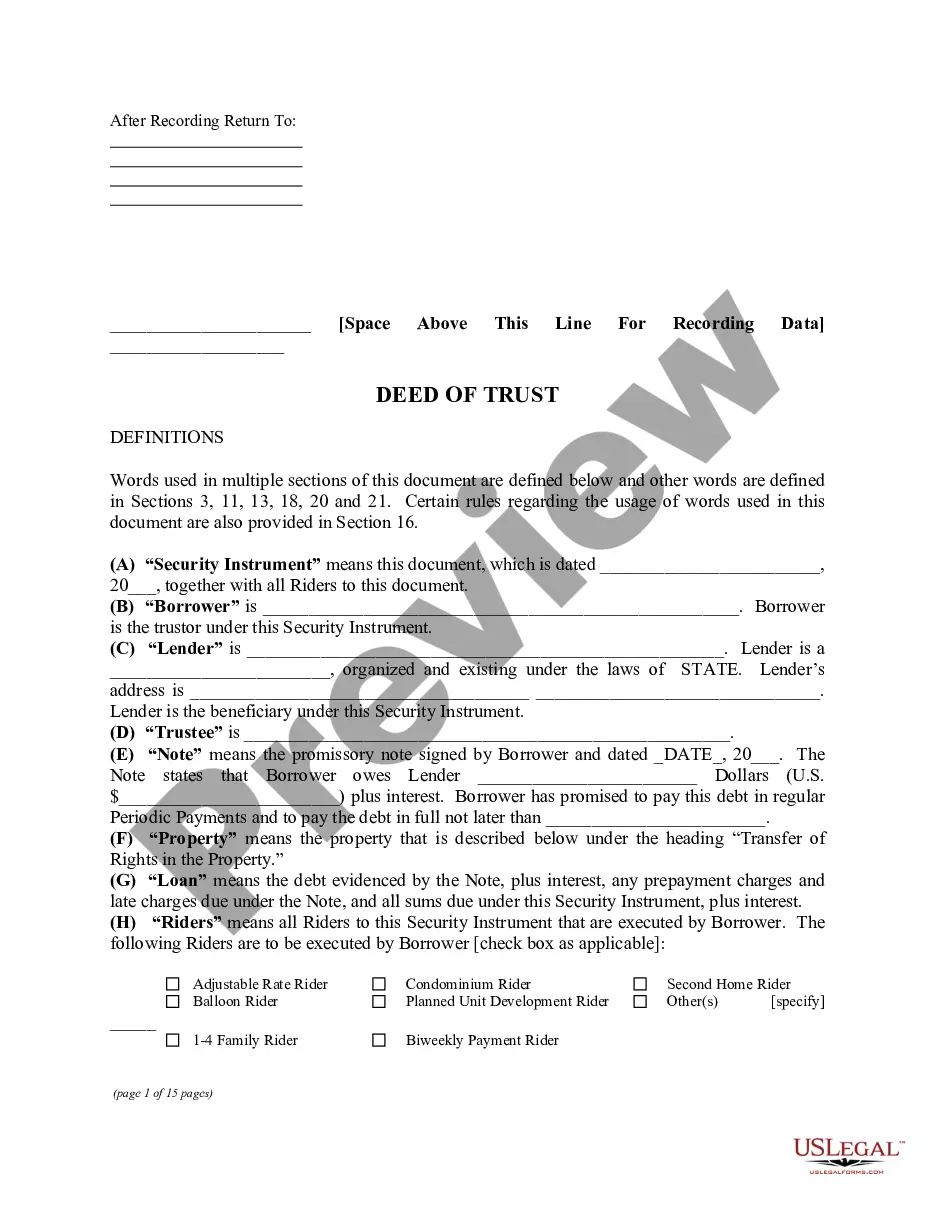
- The Virginia Land Trust - Quitclaim Deed is a specific legal form used to transfer property to a trustee.
- It is imperative to ensure the form is complete and notarized for legal effectiveness.
- The structure of the deed is designed to facilitate easy management of the property according to trust directives.
Looking for another form?

Form popularity
FAQ
Yes, a quit claim deed supercedes the trust. The only thing that can be done is to file a suit in court challenging the deed as the product of fraud and undue influence. A court action like that will cost thousands of dollars, but might be worth it if the house was owned free and clear.
A quitclaim deed can be used to transfer property from a trust, but a Special Warranty Deed seems to be a more common way to do this.
California Property TaxesTransferring real property to yourself as trustee of your own revocable living trust -- or back to yourself -- does not trigger a reassessment for property tax purposes. (Cal. Rev. & Tax Code § 62(d).)
Quitclaim deeds are most often used to transfer property between family members. Examples include when an owner gets married and wants to add a spouse's name to the title or deed, or when the owners get divorced and one spouse's name is removed from the title or deed.
Purpose. This circular provides guidance on the Department of Veterans Affairs (VA) handling of requests for execution of quitclaim deeds.When a holder elects to convey a property to VA following loan termination, the holder typically records a deed to the property in VA's name.
But you might be wondering if an owner can transfer a deed to another person without a real estate lawyer. The answer is yes. Parties to a transaction are always free to prepare their own deeds.A quitclaim deed, for example, is far simpler than a warranty deed.
When you're ready to transfer trust real estate to the beneficiary who is named in the trust document to receive it, you'll need to prepare, sign, and record a deed. That's the document that transfers title to the property from you, the trustee, to the new owner.
CAPITAL LETTERS The Grantor and Grantee must be stated in the first clause/sentence of the document with their names being in capital letters. Laws § 55-96. Recording After signing bring to the Clerk of the Circuit Court along with the required filing fee(s).
In the context of a California mortgage transaction, a trust deed also transfer ownership. Only this time, the title is being placed in the hands of a third-party trustee, who holds the property on behalf of the lender and the homeowner-borrower until the mortgage is paid.