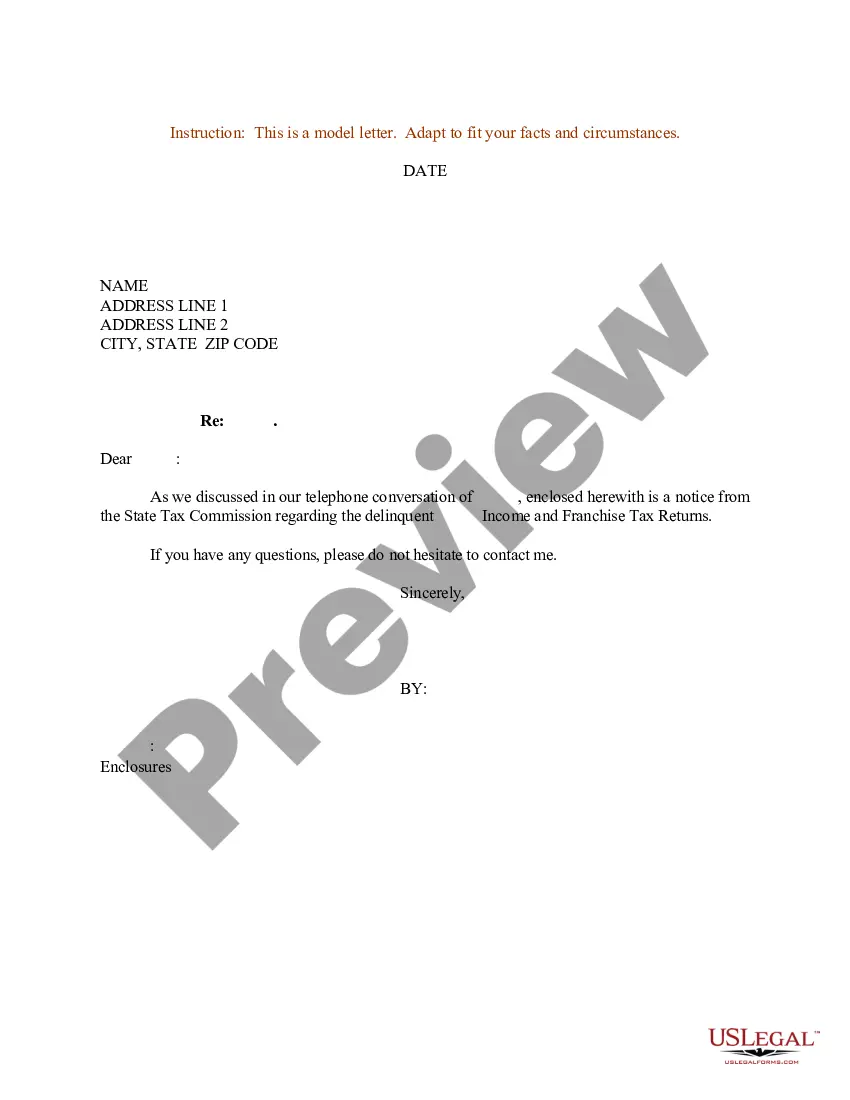
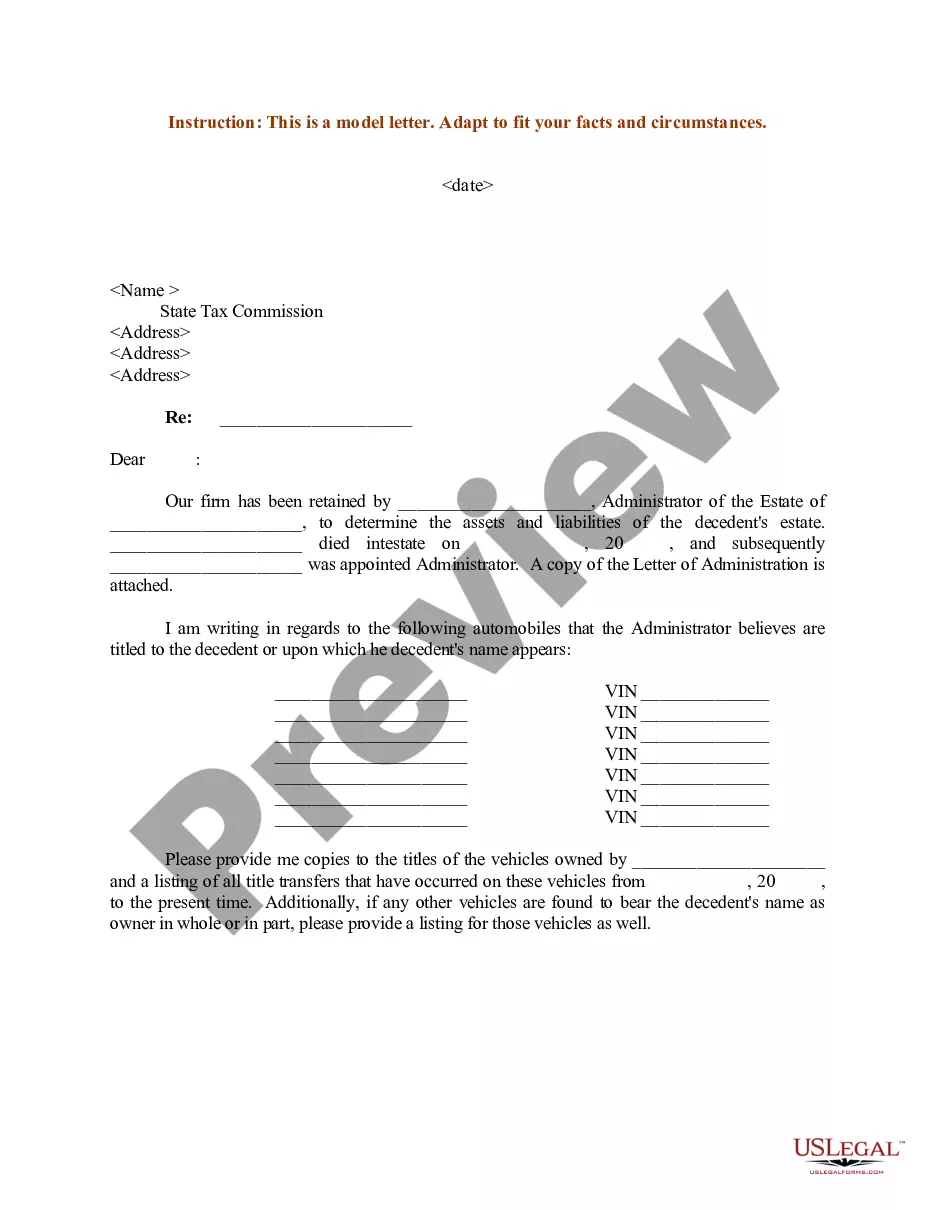
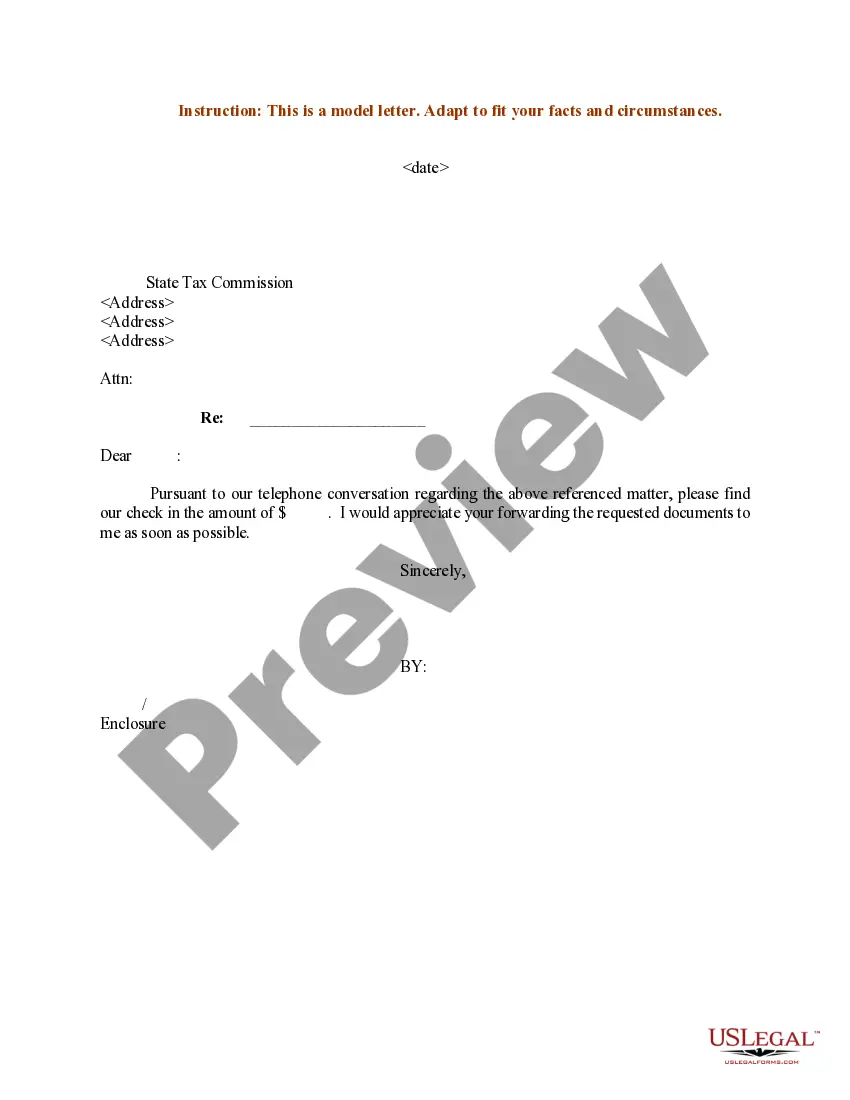
Virginia Sample Letter concerning State Tax Commission Notice
Description
Get your form ready online
Our built-in tools help you complete, sign, share, and store your documents in one place.
Make edits, fill in missing information, and update formatting in US Legal Forms—just like you would in MS Word.
Download a copy, print it, send it by email, or mail it via USPS—whatever works best for your next step.
Sign and collect signatures with our SignNow integration. Send to multiple recipients, set reminders, and more. Go Premium to unlock E-Sign.
If this form requires notarization, complete it online through a secure video call—no need to meet a notary in person or wait for an appointment.
We protect your documents and personal data by following strict security and privacy standards.

Make edits, fill in missing information, and update formatting in US Legal Forms—just like you would in MS Word.

Download a copy, print it, send it by email, or mail it via USPS—whatever works best for your next step.

Sign and collect signatures with our SignNow integration. Send to multiple recipients, set reminders, and more. Go Premium to unlock E-Sign.

If this form requires notarization, complete it online through a secure video call—no need to meet a notary in person or wait for an appointment.

We protect your documents and personal data by following strict security and privacy standards.
Looking for another form?

How to fill out Sample Letter Concerning State Tax Commission Notice?
US Legal Forms - one of the largest collections of legal documents in the USA - provides a vast selection of legal document templates you can obtain or print. By using the website, you can find numerous forms for business and personal purposes, categorized by types, states, or keywords. You can discover the latest versions of forms such as the Virginia Sample Letter regarding State Tax Commission Notice in just minutes.
If you already have a subscription, Log In and download the Virginia Sample Letter regarding State Tax Commission Notice from the US Legal Forms library. The Download button will be visible on each form you view. You can access all previously downloaded forms in the My documents section of your account.
If you want to use US Legal Forms for the first time, here are straightforward instructions to help you get started: Ensure you have selected the right form for your city/region. Click the Preview button to check the form's details. Review the form description to make sure you have chosen the correct form. If the form does not meet your requirements, utilize the Search field at the top of the screen to find one that does. If you are satisfied with the form, confirm your choice by clicking the Purchase now button. Then, select the payment plan you prefer and provide your information to register for an account. Process the purchase. Use your credit card or PayPal account to complete the transaction. Choose the format and download the form to your device. Make modifications. Fill out, edit, print, and sign the downloaded Virginia Sample Letter regarding State Tax Commission Notice. Each template you added to your account has no expiration date and is yours permanently. Therefore, if you wish to download or print another copy, simply go to the My documents section and click on the form you need.
- Access the Virginia Sample Letter regarding State Tax Commission Notice with US Legal Forms, one of the most extensive libraries of legal document templates.
- Utilize thousands of professional and state-specific templates that meet your business or personal requirements and needs.
Form popularity
FAQ
If you can't pay in full, you may be able to set up a payment plan. If you do not resolve your tax bills on time, we may proceed with collections actions, such as wage liens and bank liens. Virginia Tax initiates most collections actions through regular mail delivered by the United States Postal Service.
Consequences of not filing State tax penalties can be just as harsh as those imposed by the IRS. In the most severe cases, the state can even prosecute you for a crime if it believes that your failure to file tax returns was part of a fraudulent scheme. Just like other crimes, the punishment can include time in jail.
The Franchise Tax Board will send a notice or letter to personal taxpayers and business entities for issues that may include but not limited to: You have a balance due. You are due a larger or smaller refund. We need to notify you of delays in processing your return.
Filing Requirements All individuals, estates, and trusts with the following income must file a Virginia income tax return: Single and federal adjusted gross income is greater than or equal to $11,950. Married filing joint and federal adjusted gross income is greater than or equal to $23,900.
If you receive a refund verification letter from us, it doesn't mean you did anything wrong, or that there's anything wrong with your return. We're just being extra careful to rule out identity theft and other problems, and need a little help from you to make sure we send the correct refund to the right person.
If you owe money to a federal agency and you did not pay it on time, you have a delinquent debt. You will receive a letter first from the agency to whom you owe the debt. If you do not pay the agency, the debt then goes to Treasury and we send you a letter about that debt.
In terms of the time limit for the state to collect taxes assessed and due, there is a seven-year statute of limitations. The clock generally starts ticking the day that your return is due, but if you file late, it doesn't start until the day you file.
If you file your return within 6 months after the due date but do not pay the tax due until after that time, your return will be subject to a late payment penalty. Like the late filing penalty, the late payment penalty is assessed at a rate of 6% per month, with a maximum penalty of 30%.