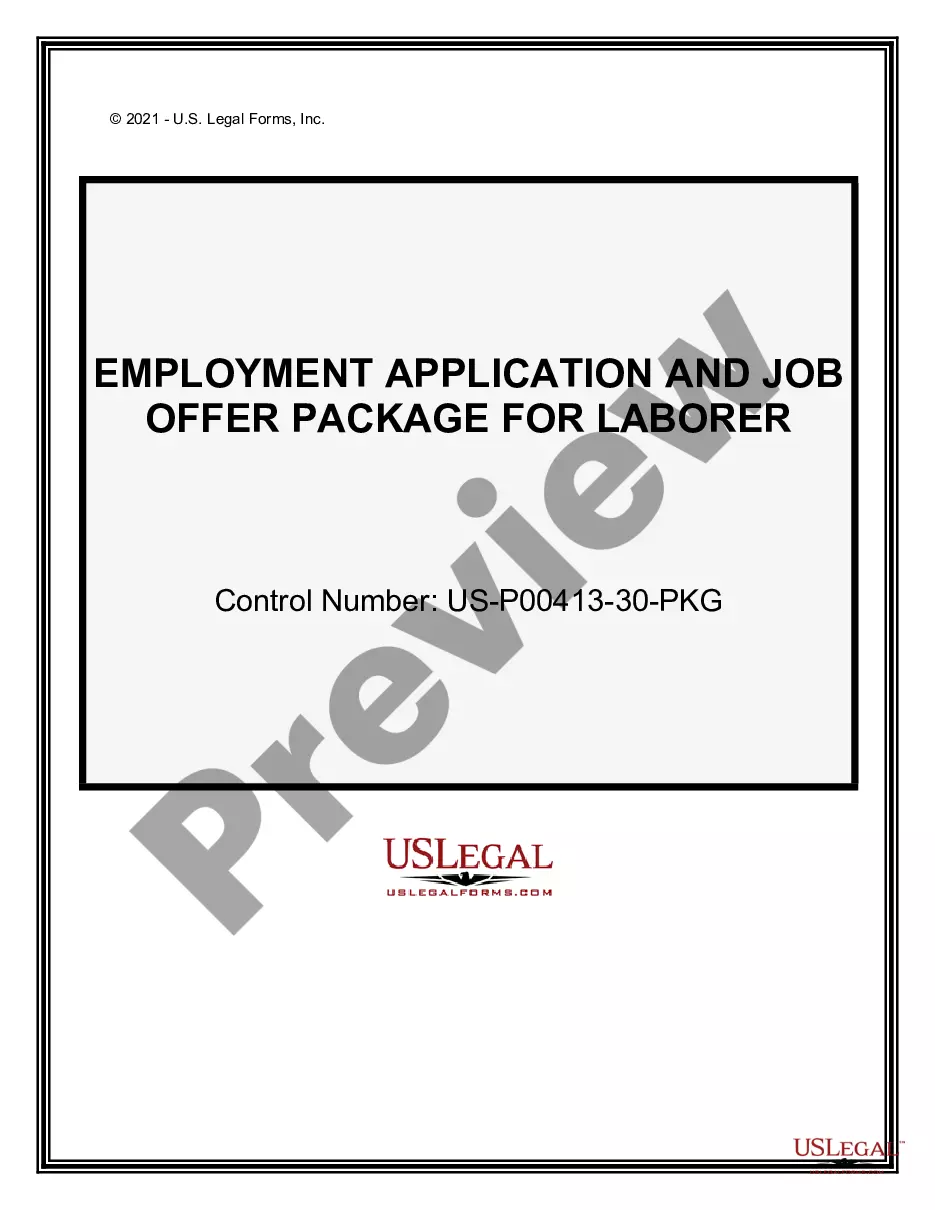
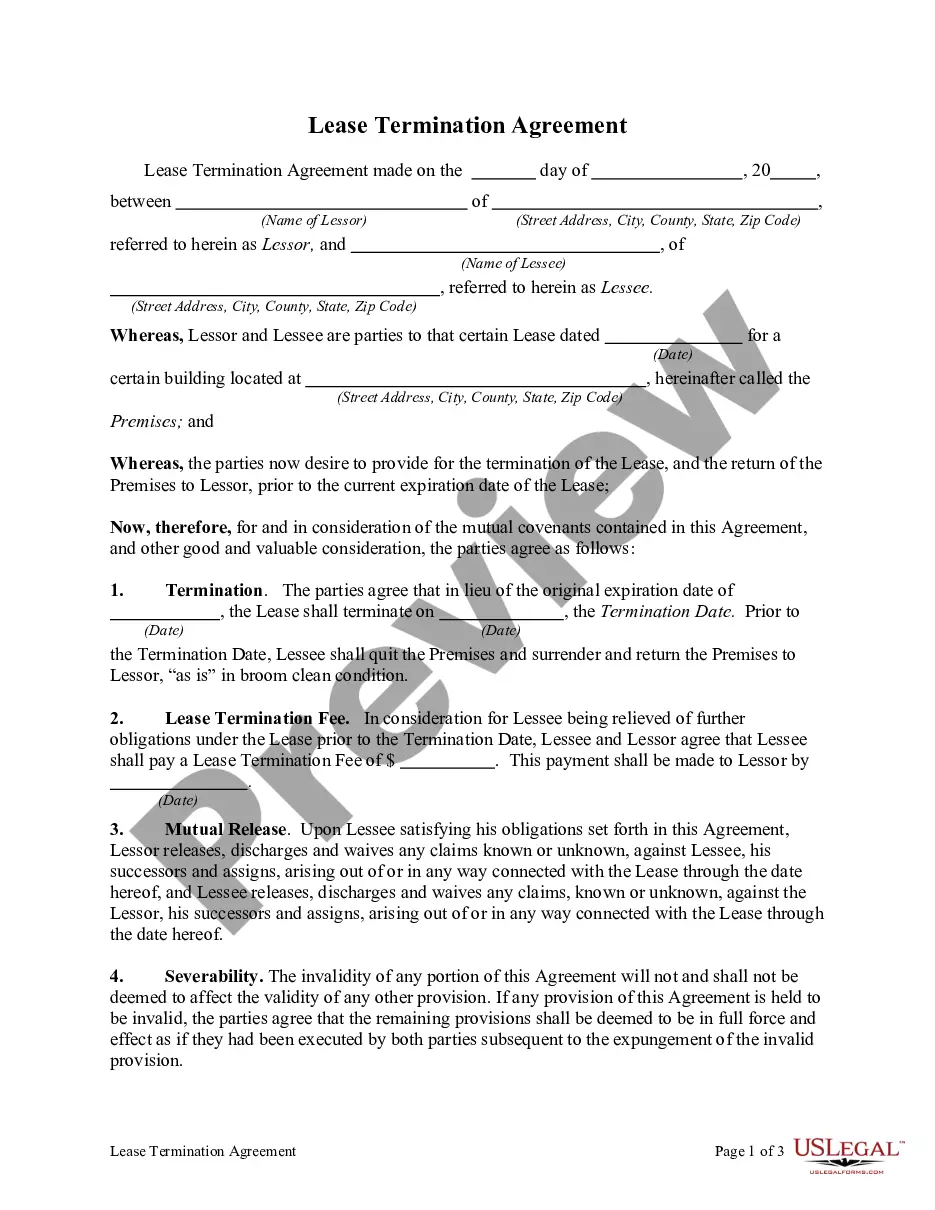
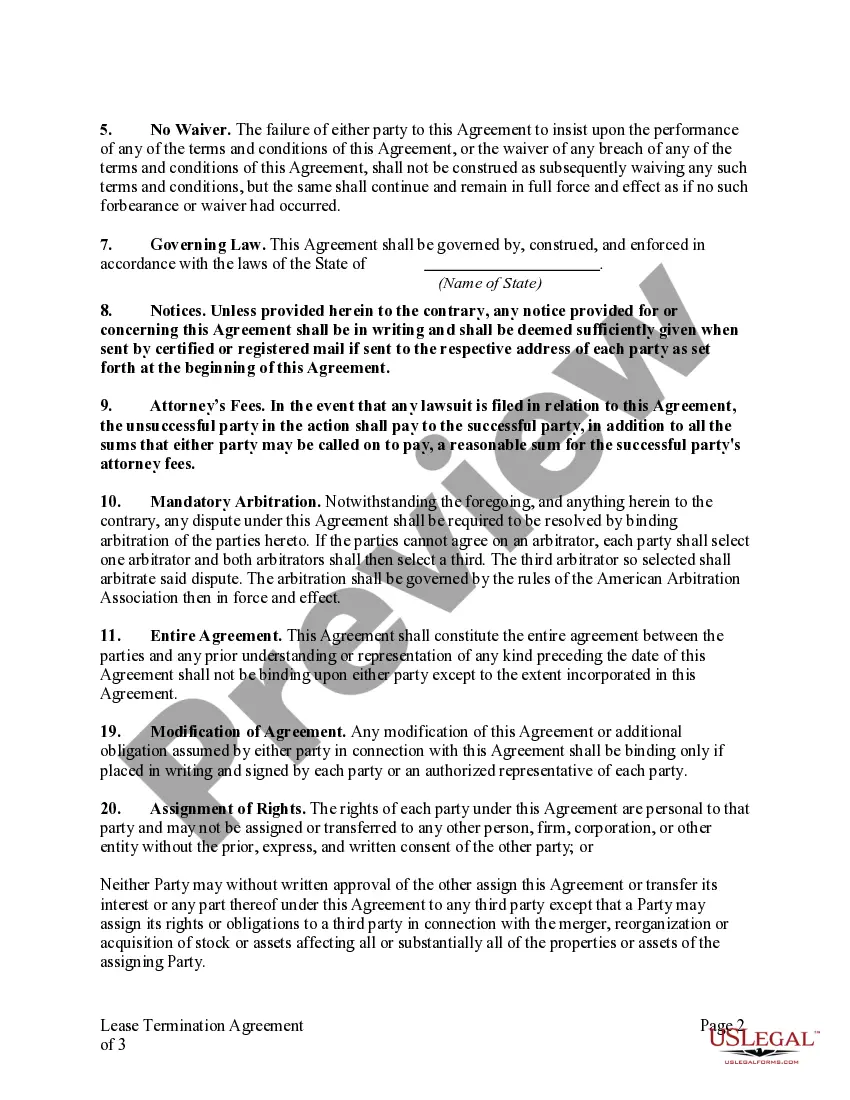
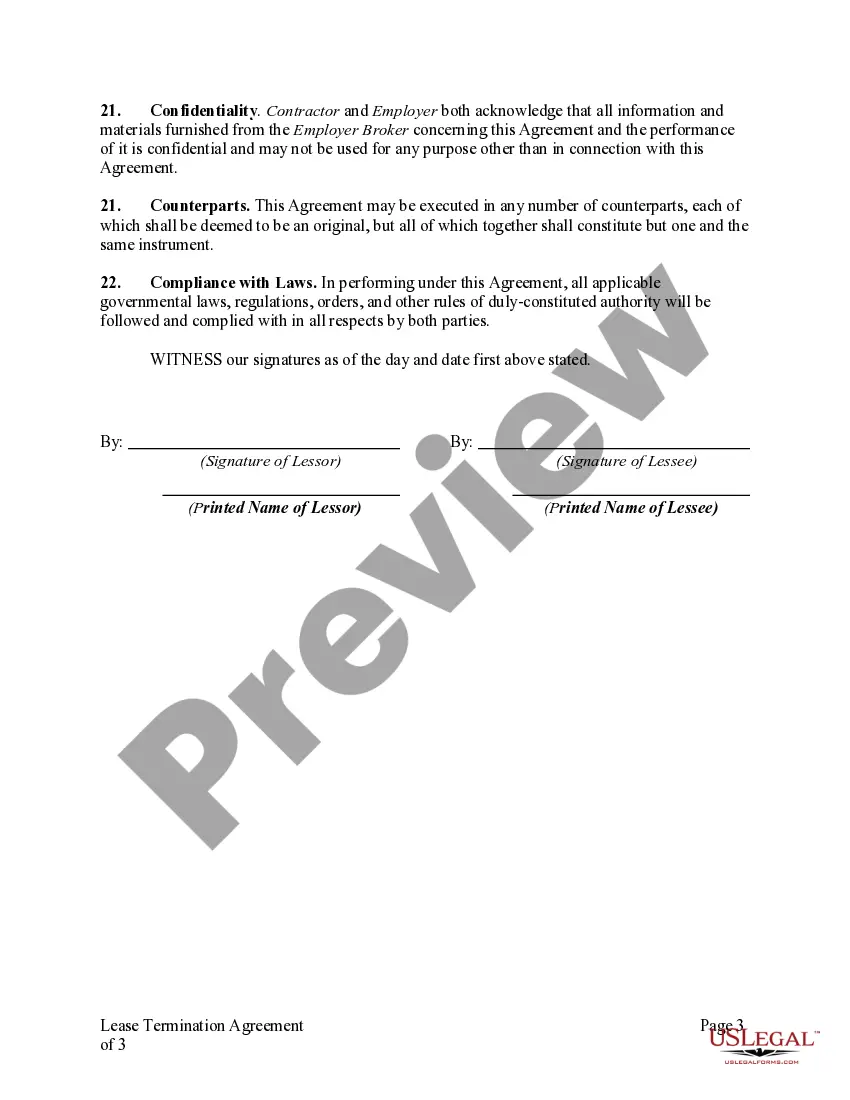
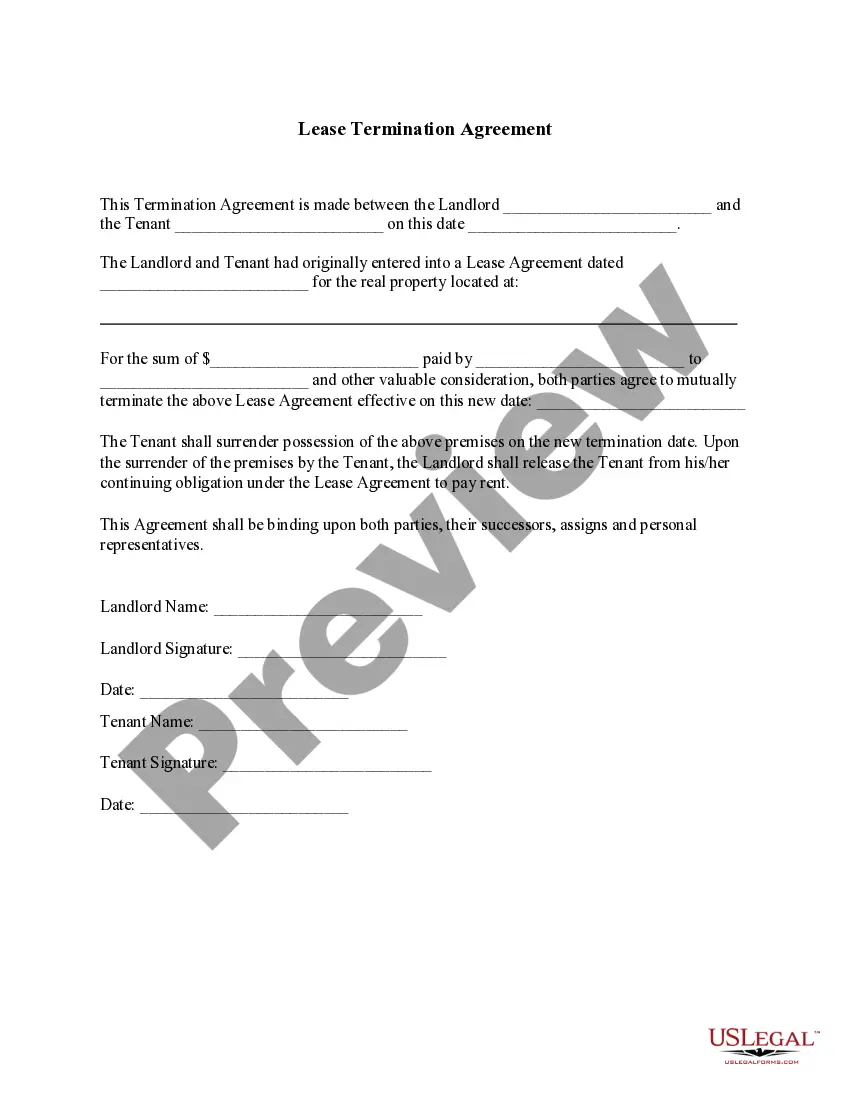
Virginia Lease Termination Agreement
Description
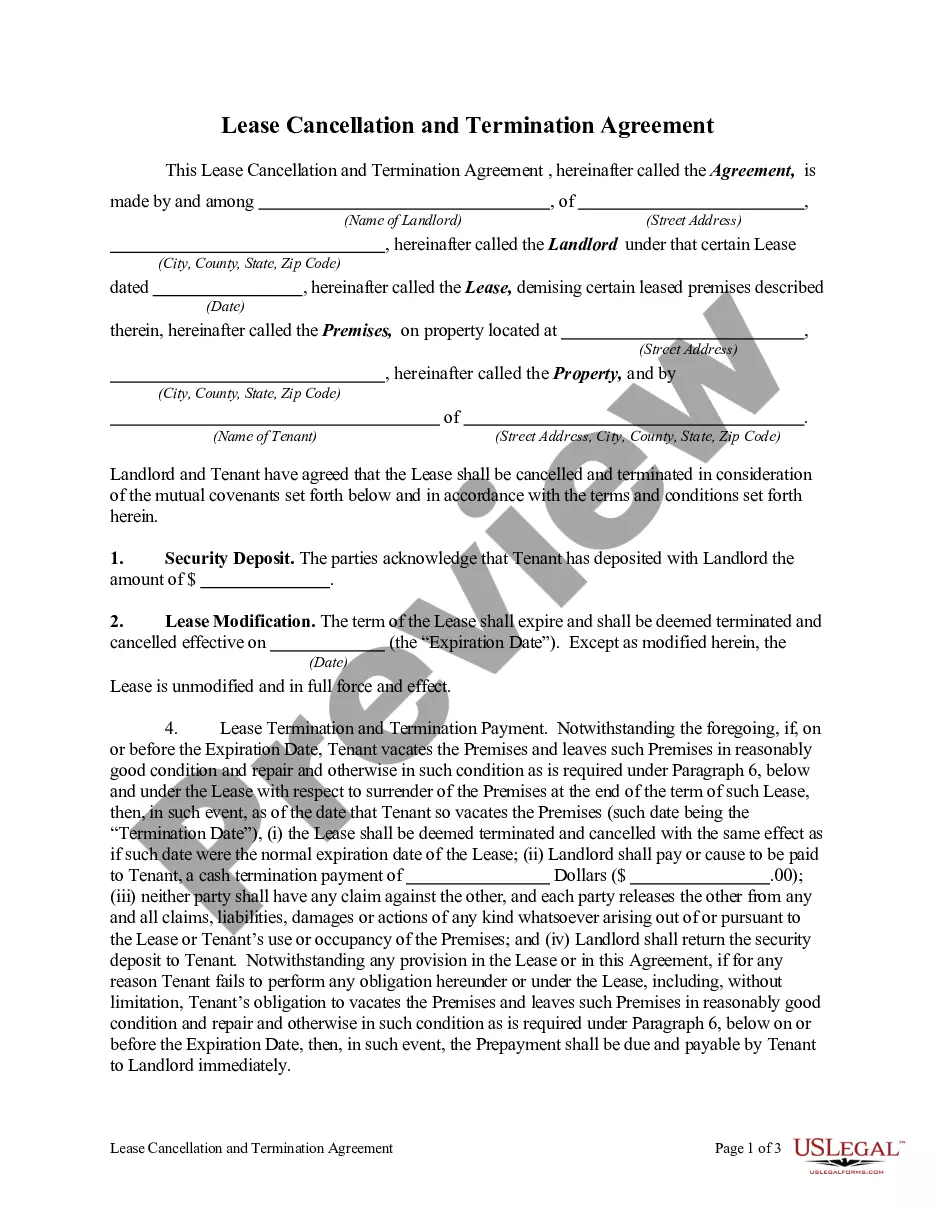
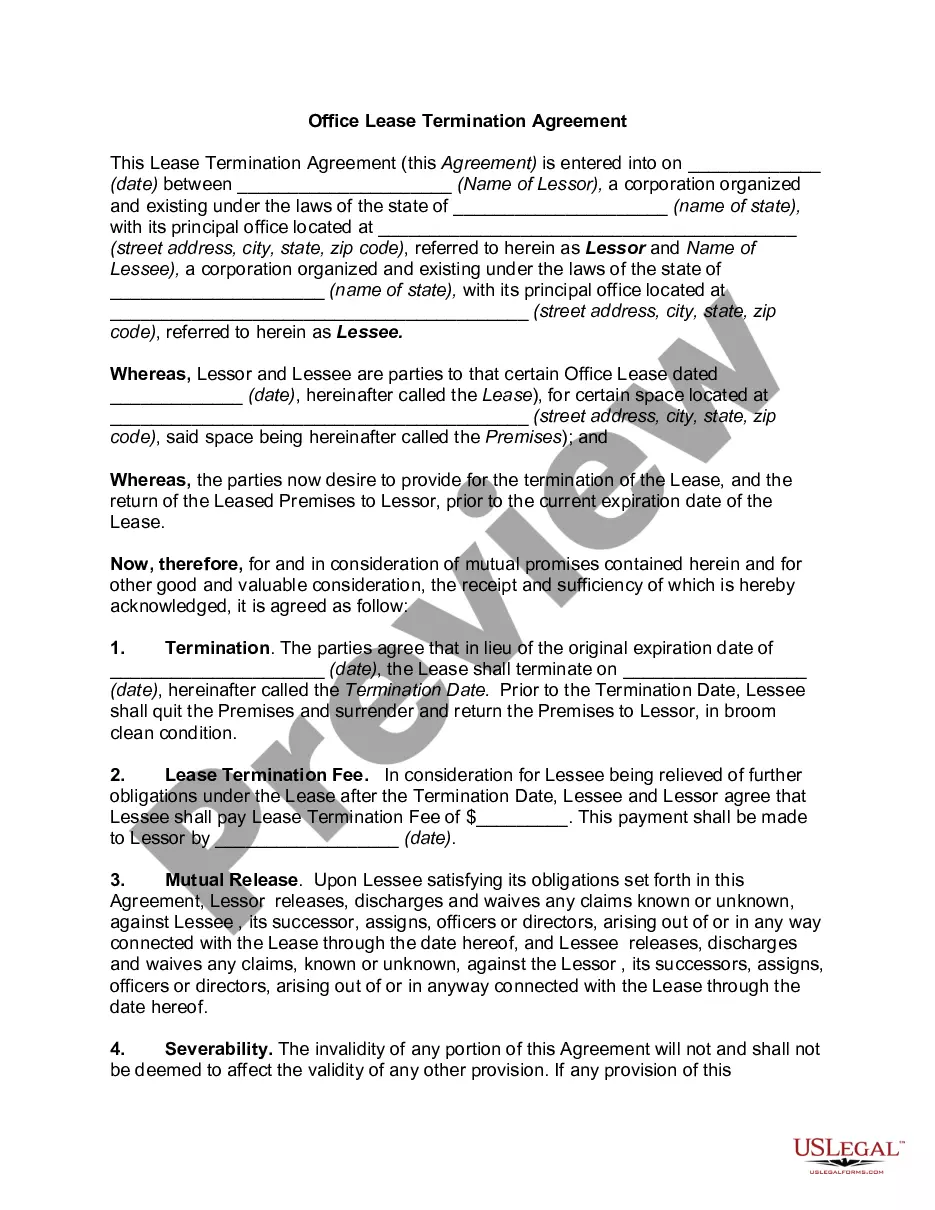
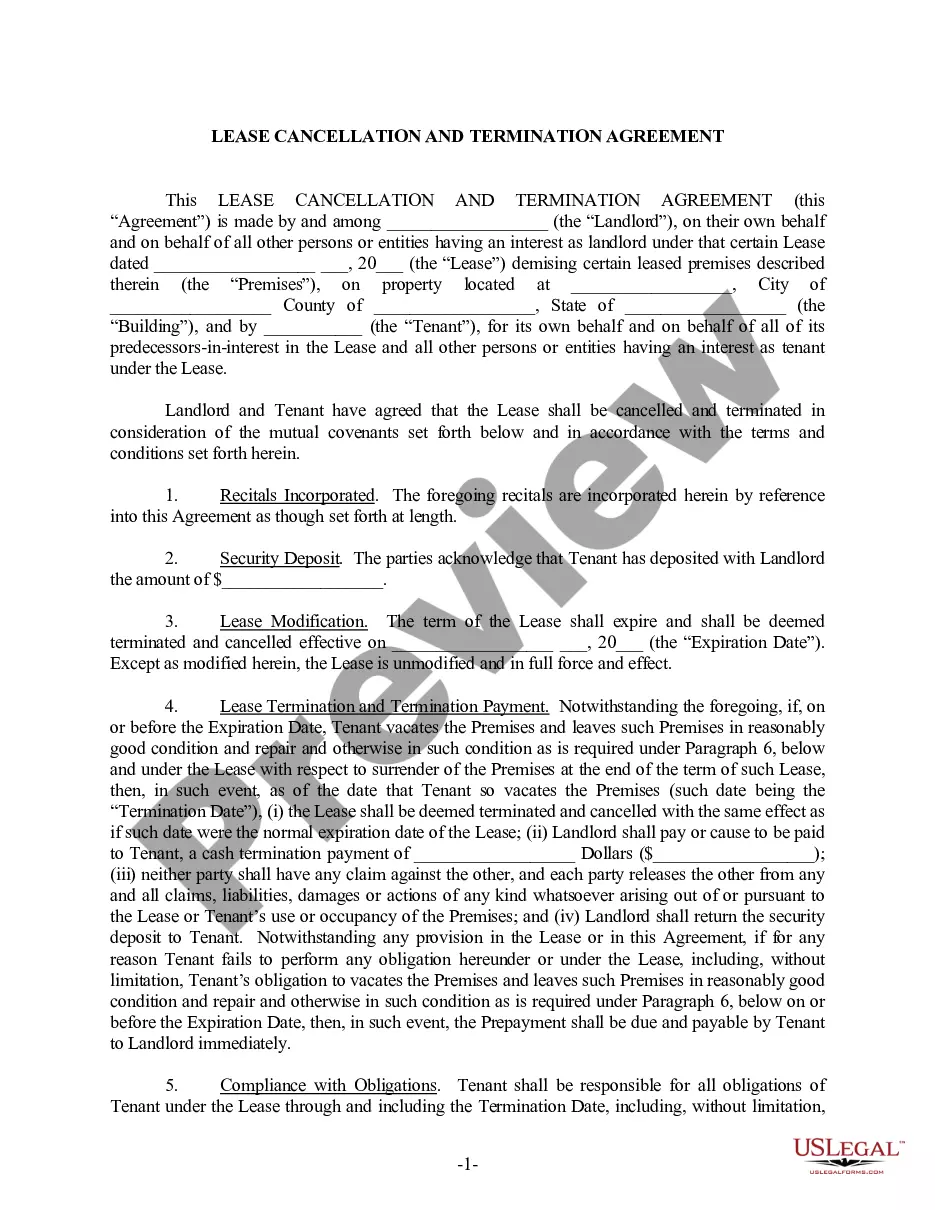
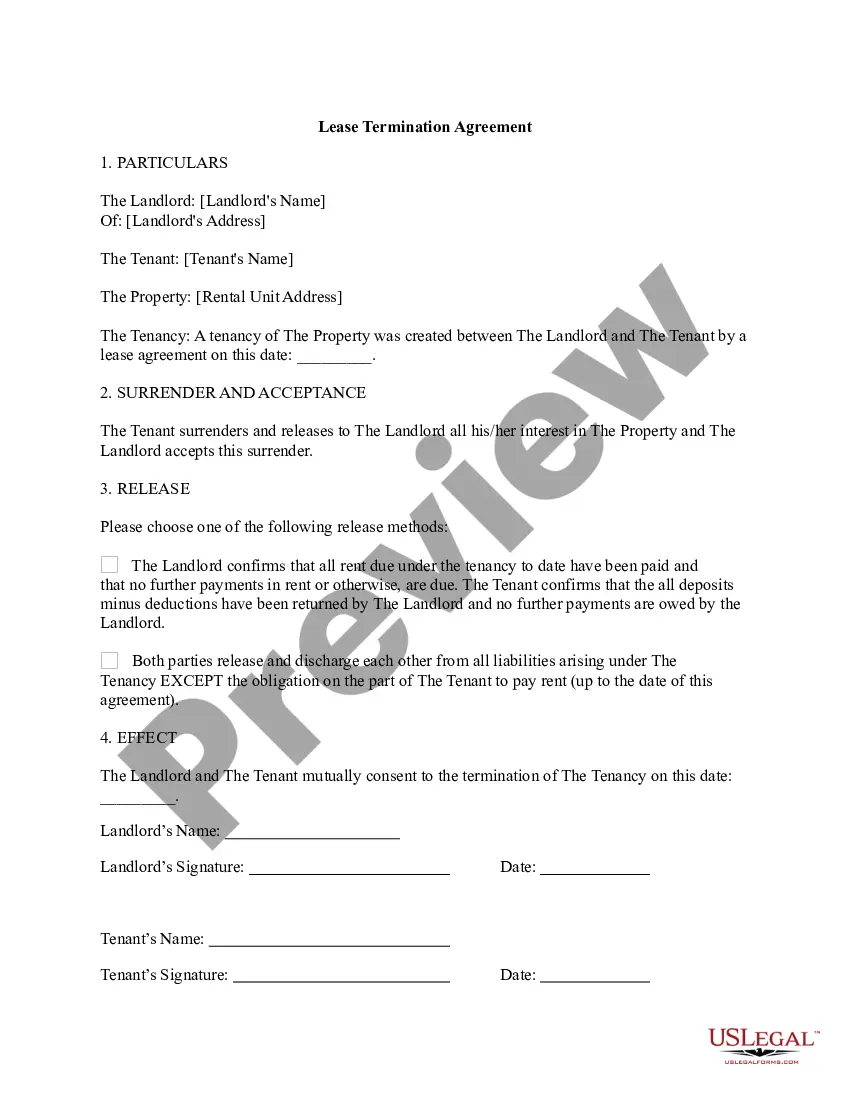
Get your form ready online
Our built-in tools help you complete, sign, share, and store your documents in one place.
Make edits, fill in missing information, and update formatting in US Legal Forms—just like you would in MS Word.
Download a copy, print it, send it by email, or mail it via USPS—whatever works best for your next step.
Sign and collect signatures with our SignNow integration. Send to multiple recipients, set reminders, and more. Go Premium to unlock E-Sign.
If this form requires notarization, complete it online through a secure video call—no need to meet a notary in person or wait for an appointment.
We protect your documents and personal data by following strict security and privacy standards.

Make edits, fill in missing information, and update formatting in US Legal Forms—just like you would in MS Word.

Download a copy, print it, send it by email, or mail it via USPS—whatever works best for your next step.

Sign and collect signatures with our SignNow integration. Send to multiple recipients, set reminders, and more. Go Premium to unlock E-Sign.

If this form requires notarization, complete it online through a secure video call—no need to meet a notary in person or wait for an appointment.

We protect your documents and personal data by following strict security and privacy standards.
Looking for another form?
How to fill out Lease Termination Agreement?
Are you presently in a position where you frequently require documents for business or specific reasons almost daily.
There are numerous legitimate document templates accessible online, yet finding reliable ones can be challenging.
US Legal Forms offers a vast array of form templates, including the Virginia Lease Termination Agreement, which is designed to comply with state and federal regulations.
Once you locate the right form, click on Purchase now.
Choose the pricing plan you want, provide the necessary information to create your account, and complete your order with PayPal or a credit card.
- If you are already familiar with the US Legal Forms website and have an account, simply Log In.
- After that, you can download the Virginia Lease Termination Agreement template.
- If you do not have an account and wish to start using US Legal Forms, follow these steps.
- Find the form you need and ensure it is for the correct state/region.
- Use the Review button to preview the form.
- Check the details to confirm you have selected the correct form.
- If the form does not meet your needs, use the Search field to find a form that matches your requirements.
Form popularity
FAQ
To terminate a lease in Virginia, first review your lease agreement to understand the notice period and any specific conditions. Follow the procedures outlined in your Virginia Lease Termination Agreement, ensuring you provide any required notices. Deliver your termination notice properly to avoid complications. If needed, consider using USLegalForms for helpful templates and guidance during this process.
Writing a 30-day lease termination notice involves a clear and direct approach. Start with the date of the notice, include your contact information, and state your intention to terminate the lease specified in your Virginia Lease Termination Agreement. Clearly mention the date you plan to vacate and any essential details, like forwarding addresses. This communicates your intent effectively.
Terminating a lease can have implications for your rental history or credit report. While a Virginia Lease Termination Agreement itself may not show up publicly, landlords often share lease termination details with credit agencies. This can affect future rental applications. Therefore, it’s wise to manage your lease agreements cautiously and maintain good communication with landlords.
Termination fees are recognized as an expense at the time of lease termination. If you entered into a Virginia Lease Termination Agreement, these fees should be recorded in the financial records immediately. Properly documenting these expenses ensures transparency in your accounting. This practice keeps your records in line with generally accepted accounting principles.
To record a lease termination, you need to remove any remaining lease liabilities and right-of-use assets from your books. If you executed a Virginia Lease Termination Agreement, note any differences due to termination fees or adjustments for depreciation. Ensure that your accounting entries reflect the final settlement amounts. This clarity helps maintain accurate financial statements.
A journal entry for a lease involves recording the lease obligation and asset. You typically recognize lease liabilities and right-of-use assets on your balance sheet. When using a Virginia Lease Termination Agreement, you should also note adjustments if you terminate the lease early. Make sure to consult accounting guidelines specific to your business circumstances.
When a lease comes to an end, you usually have the option to either renew or vacate the property. If you choose to stay, it's essential to discuss the lease terms with your landlord. A Virginia Lease Termination Agreement can help both parties clearly understand what happens next, ensuring a smoother transition.
If your landlord terminates your lease, it means they have decided to end the rental agreement before its official end date. This could be due to several reasons, such as non-payment of rent or violation of terms. Understanding your rights within a Virginia Lease Termination Agreement is crucial for navigating this situation.
In Virginia, tenants typically must provide at least 30 days' notice to terminate a lease, but this can vary based on the lease agreement terms. Always check your contract for specific requirements. A properly executed Virginia Lease Termination Agreement can ensure that both you and your tenant meet the legal notice requirements.
Yes, breaking a lease can significantly impact your rental history. Future landlords often review rental histories to determine if you are a reliable tenant. Utilizing a Virginia Lease Termination Agreement can help you understand your obligations, potentially minimizing negative consequences in future rentals.