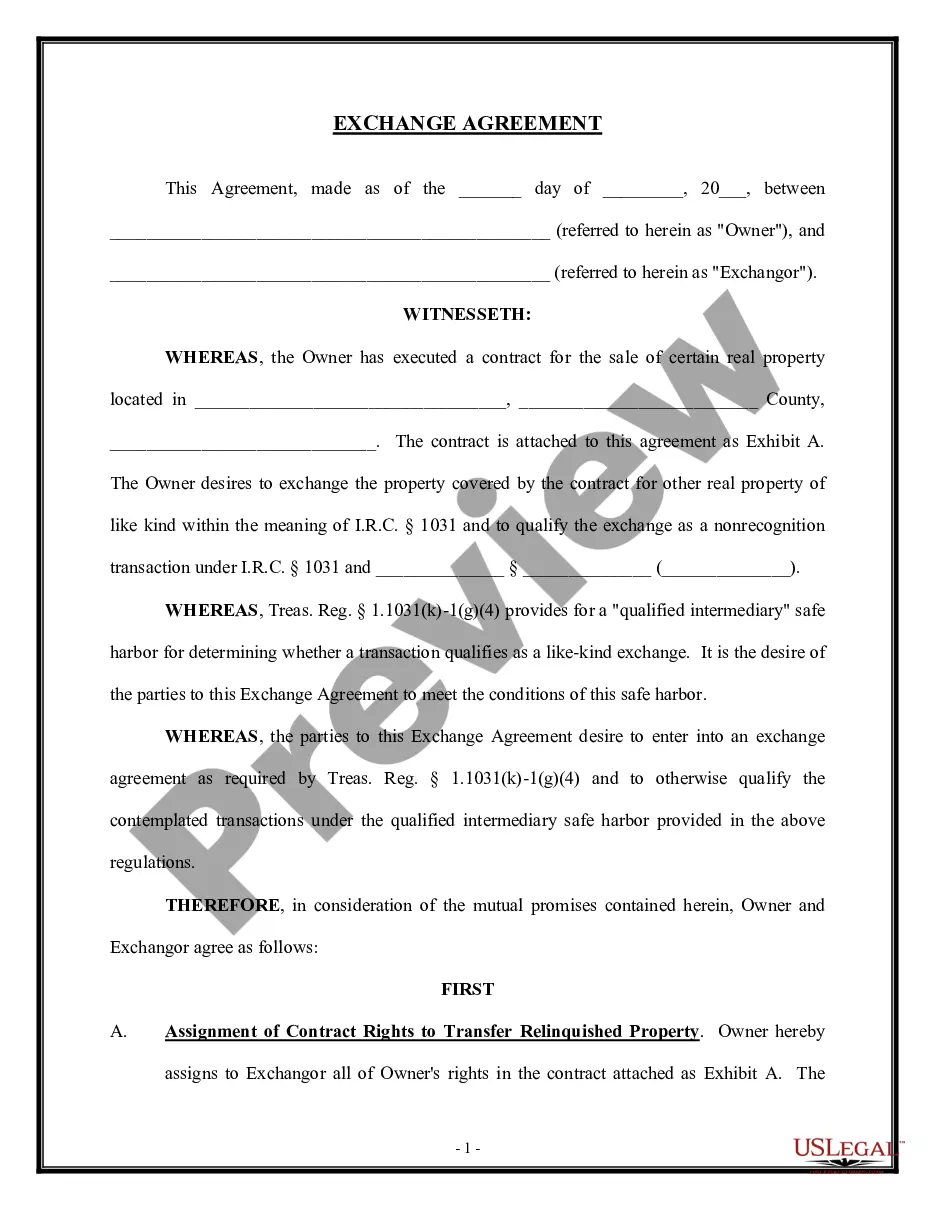
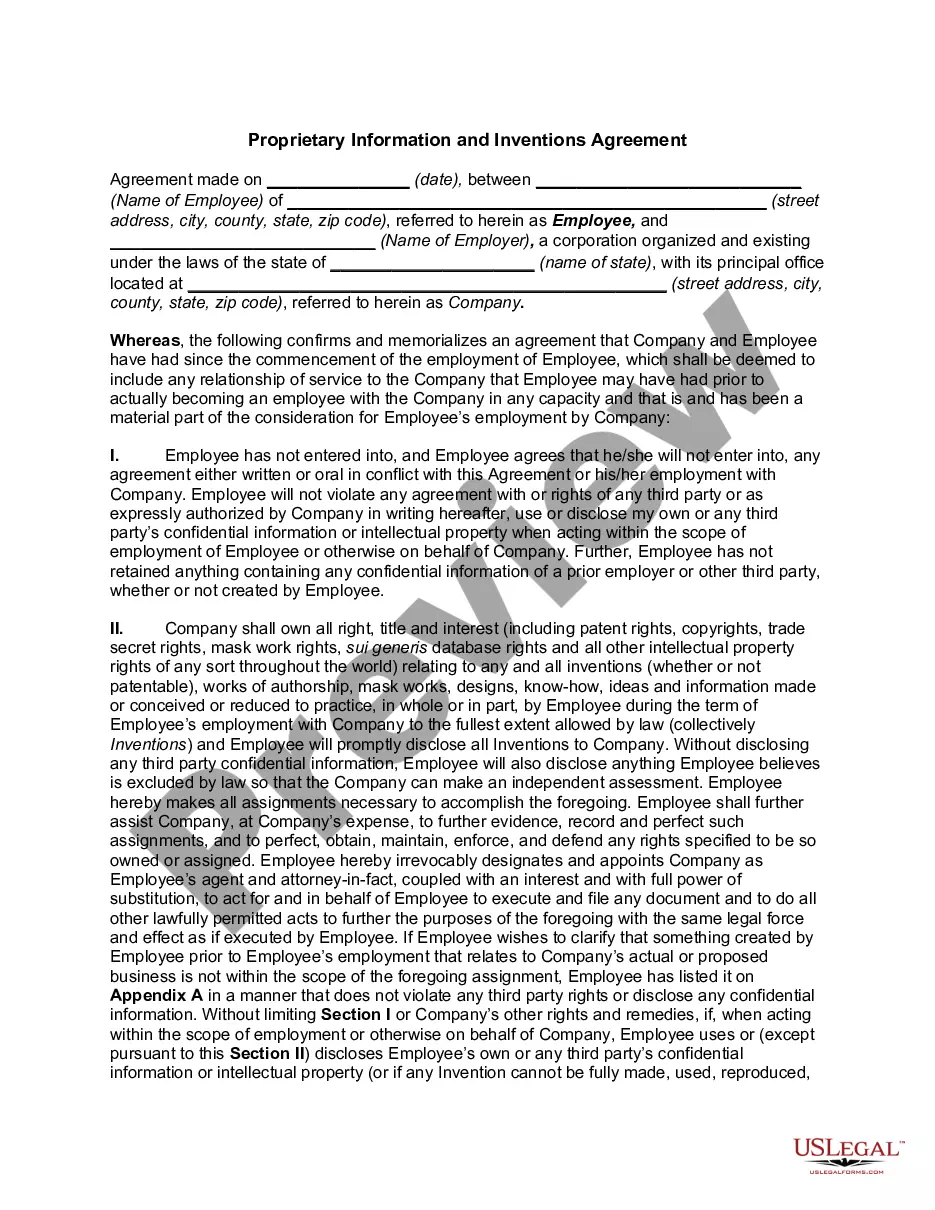
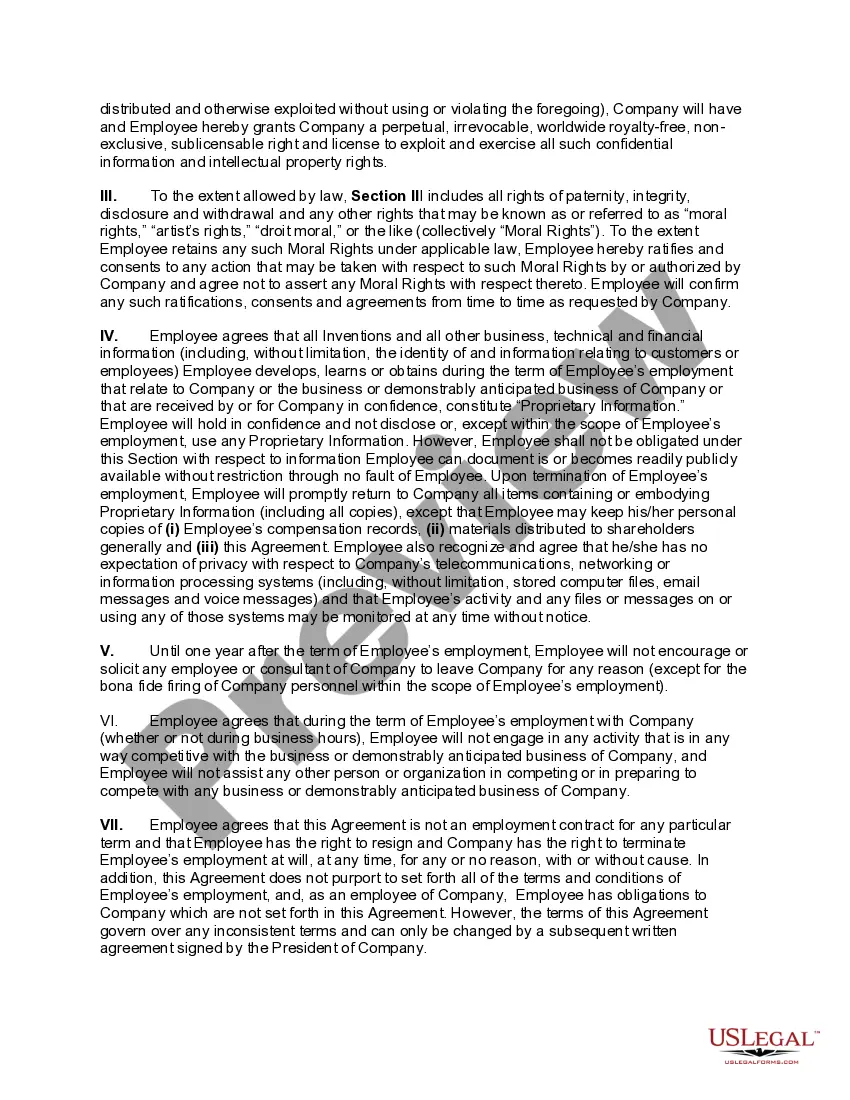
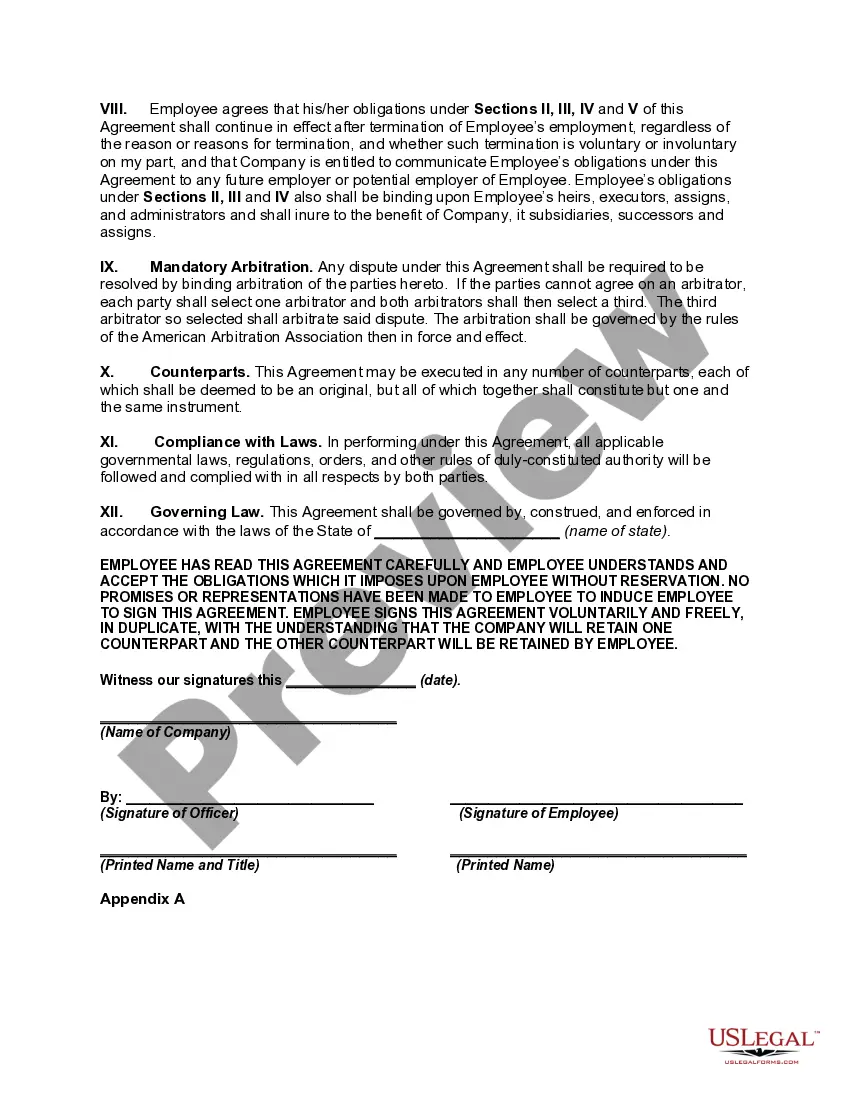
Virginia Proprietary Information and Inventions Agreement
Description
Get your form ready online
Our built-in tools help you complete, sign, share, and store your documents in one place.
Make edits, fill in missing information, and update formatting in US Legal Forms—just like you would in MS Word.
Download a copy, print it, send it by email, or mail it via USPS—whatever works best for your next step.
Sign and collect signatures with our SignNow integration. Send to multiple recipients, set reminders, and more. Go Premium to unlock E-Sign.
If this form requires notarization, complete it online through a secure video call—no need to meet a notary in person or wait for an appointment.
We protect your documents and personal data by following strict security and privacy standards.

Make edits, fill in missing information, and update formatting in US Legal Forms—just like you would in MS Word.

Download a copy, print it, send it by email, or mail it via USPS—whatever works best for your next step.

Sign and collect signatures with our SignNow integration. Send to multiple recipients, set reminders, and more. Go Premium to unlock E-Sign.

If this form requires notarization, complete it online through a secure video call—no need to meet a notary in person or wait for an appointment.

We protect your documents and personal data by following strict security and privacy standards.
Looking for another form?

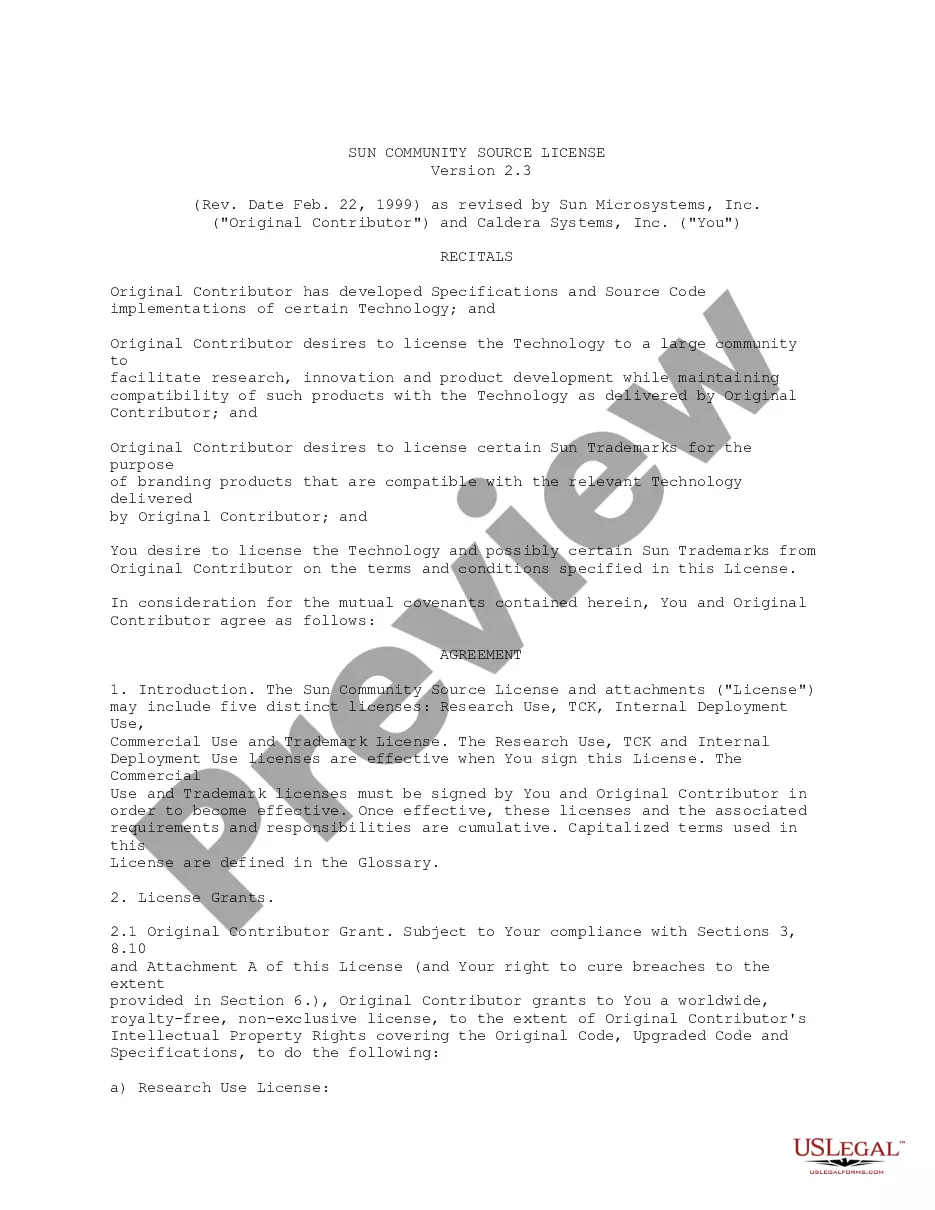
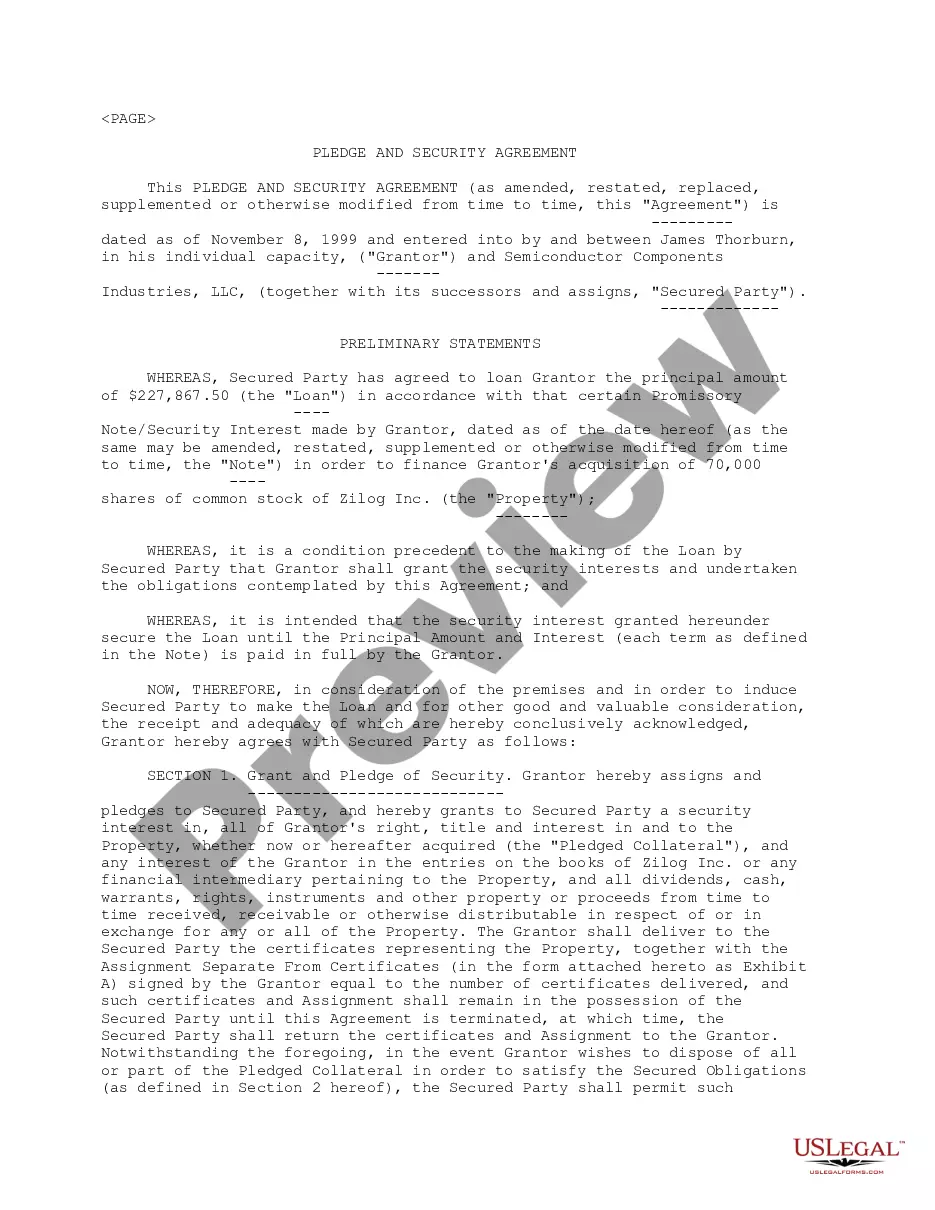
How to fill out Proprietary Information And Inventions Agreement?
If you require to compile, retrieve, or create valid document templates, utilize US Legal Forms, the largest collection of legal forms available online.
Employ the site's straightforward and user-friendly search to find the documents you need.
A range of templates for business and personal uses are organized by categories and states, or keywords.
Step 4. After finding the form you want, click the Purchase now button. Choose your preferred pricing plan and enter your information to sign up for an account.
Step 5. Complete the transaction. You can use your credit card or PayPal account to finalize the transaction. Step 6. Choose the format of your legal form and download it to your device. Step 7. Complete, edit, and print or sign the Virginia Proprietary Information and Inventions Agreement.
- Utilize US Legal Forms to obtain the Virginia Proprietary Information and Inventions Agreement with just a few clicks.
- If you’re already a US Legal Forms user, sign in to your account and click the Download button to acquire the Virginia Proprietary Information and Inventions Agreement.
- You can also access forms you've previously purchased in the My documents tab of your account.
- If you are using US Legal Forms for the first time, follow the steps below.
- Step 1. Ensure you have selected the form for the correct area/state.
- Step 2. Utilize the Preview feature to review the form’s content. Be sure to read the details.
- Step 3. If you are dissatisfied with the form, use the Search box at the top of the screen to locate alternative versions of your legal form template.
Form popularity
FAQ
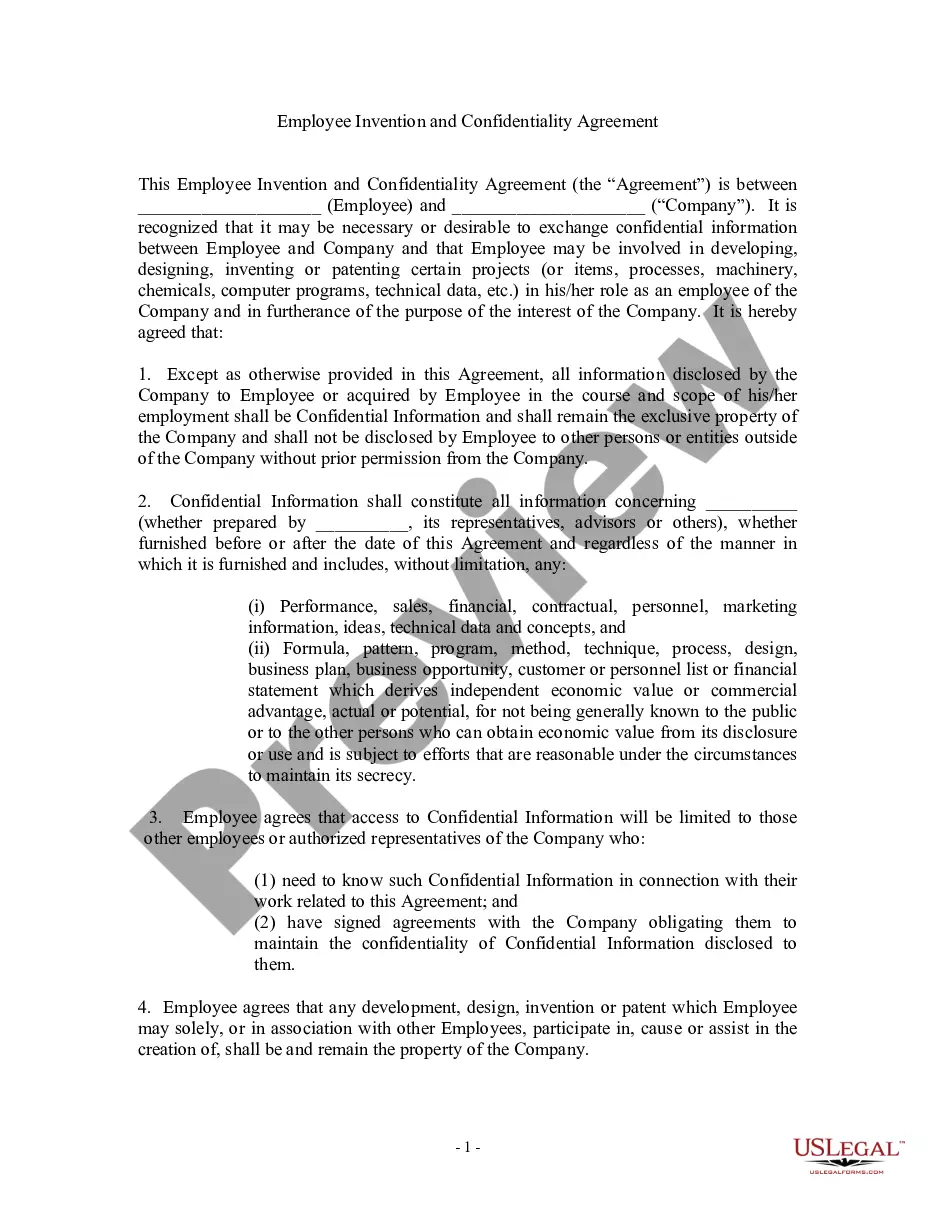
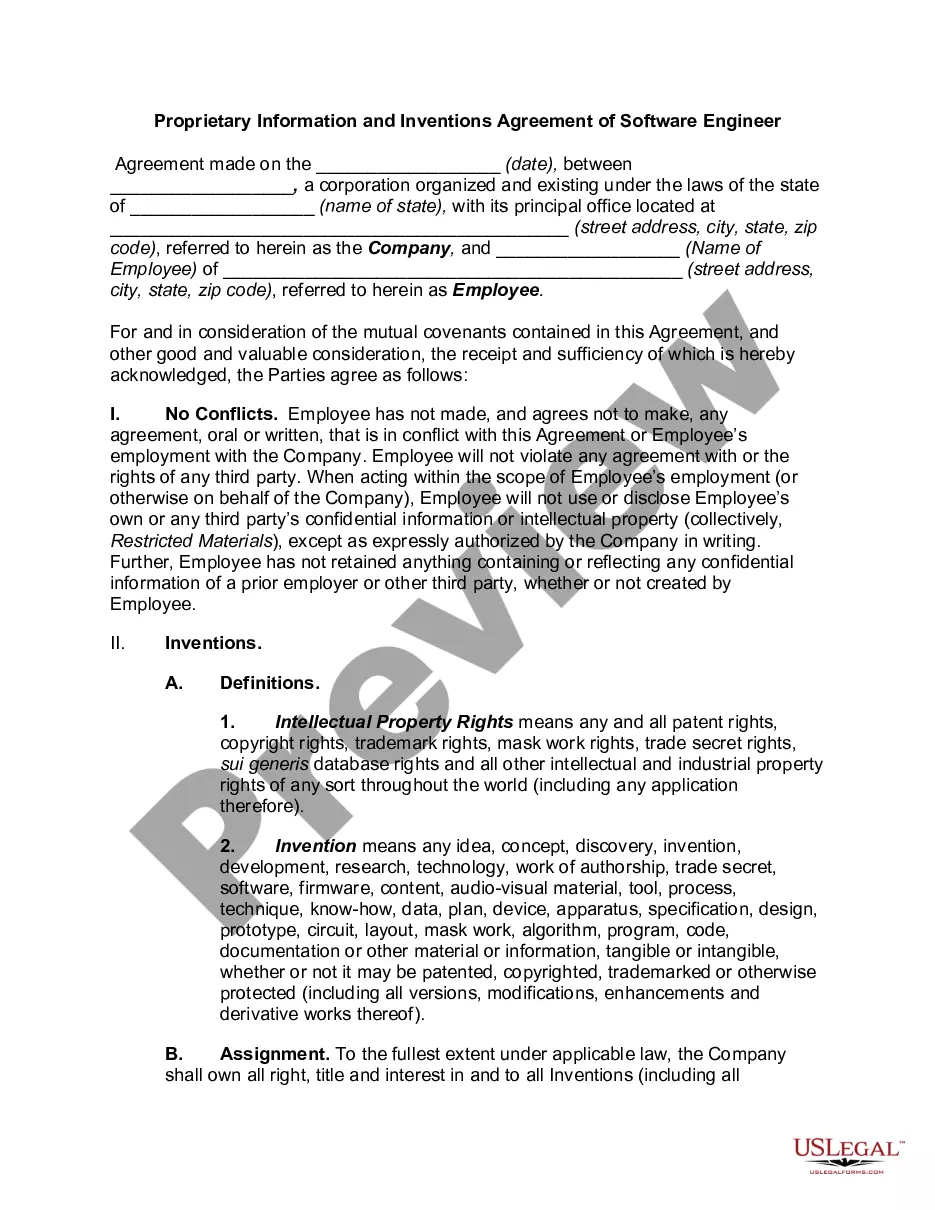
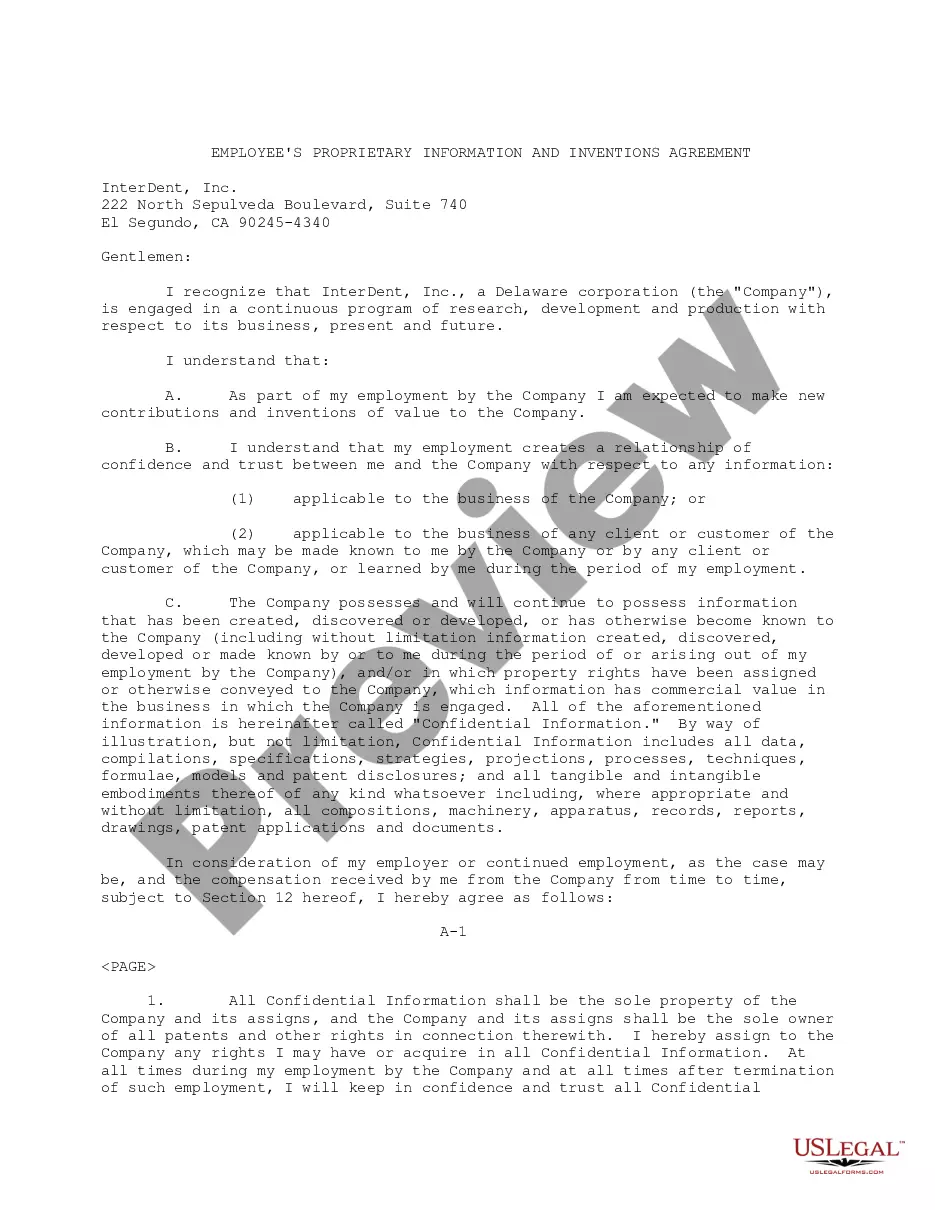
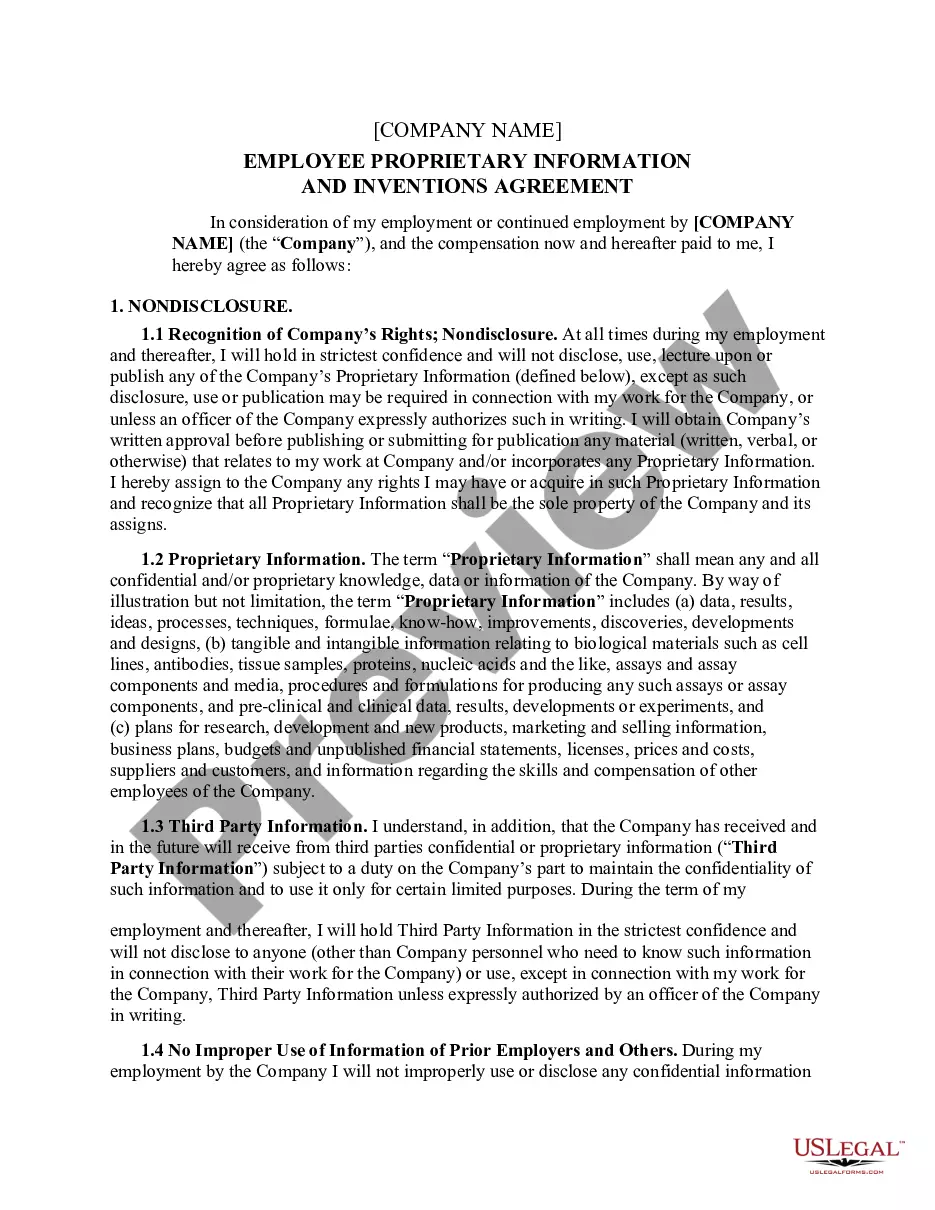
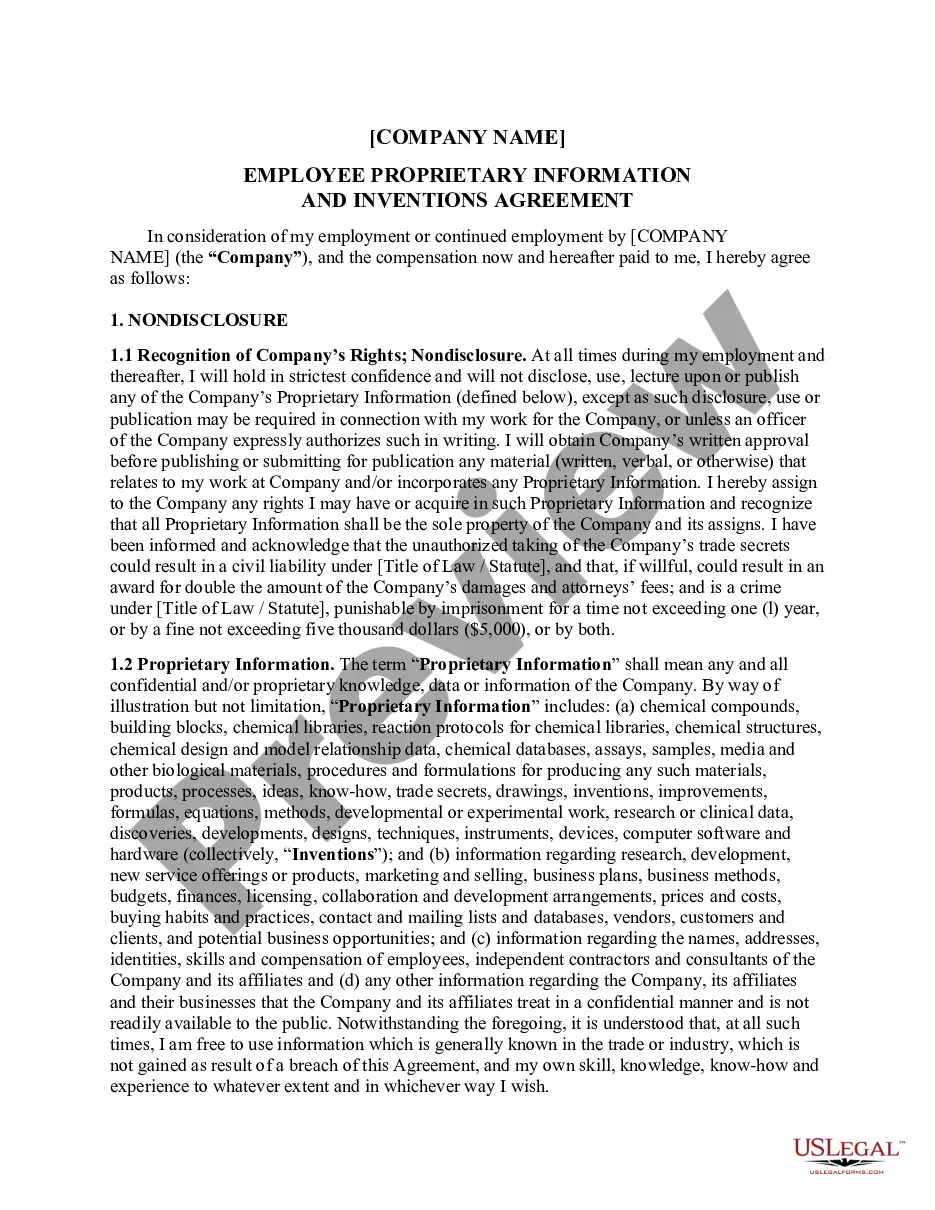
A confidentiality and invention assignment agreement combines elements that protect proprietary information and delegate rights to inventions created by employees. This agreement ensures confidentiality of sensitive information while clarifying that any inventions developed during employment belong to the company. Utilizing a well-drafted agreement like the Virginia Proprietary Information and Inventions Agreement can help businesses maintain control over their intellectual property and foster innovation.
Prior Inventions means all inventions, original works of authorship, developments and improvements which were made by Recipient, alone or jointly with others, prior to Recipient's employment, association or other engagement with the Company or any affiliate thereof.
Proprietary Invention means any Invention I made, conceived, or reduced to practice, either alone or with others, (a) either in the course of performing work for Company or at Company's expense, or (b) that results from tasks assigned to me by Company, or (c) whose creation ordinarily would be associated with my then
Proprietary information is any information that deals with the activities, business or products of a company. More specifically, some things that commonly fall under this umbrella include trade secrets, financial data, product research and development, computer software, business processes and marketing strategies.
Also known as Proprietary Information and Inventions Assignment Agreements (or PIIAAs), Confidential Information and Inventions Assignment Agreements ensure that intellectual property and other proprietary rights created by employees during the course of their employment are assigned to the employer.
Proprietary Documents means any documents of Seller which are confidential or proprietary in nature in that such documents contain trade secrets or other non-public information not customarily used by Seller in the ordinary course of operating the Business.
An invention assignment agreement is a contract in which an employee or independent contractor assigns intellectual property rights for their services to the company. These agreements typically appear in other employment documents such as confidentiality agreements or an independent contractor agreement.
A Proprietary Information Agreement is a legally binding contract that stipulates that a number of parties must not disclose confidential supplies, data, or information as outlined by the contract to a different third party.
What is proprietary relates to ownership and the rights an owner may exercise in regards to his or her property or information. A proprietor is one that possesses, owns, or holds exclusive right to something. Legally, what is proprietary often refers to proprietary information.