Virginia Estate Planning Questionnaire and Worksheets
What is this form?
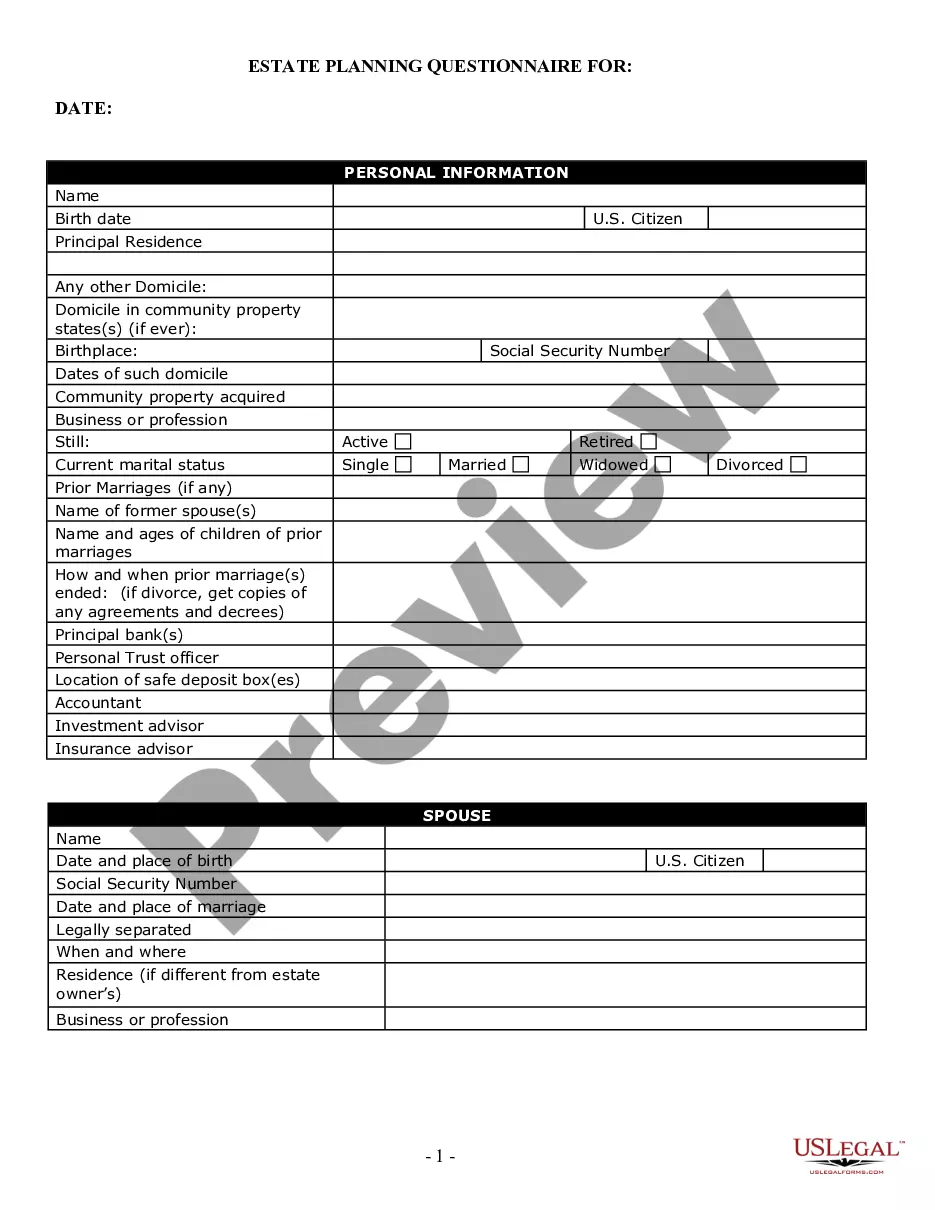
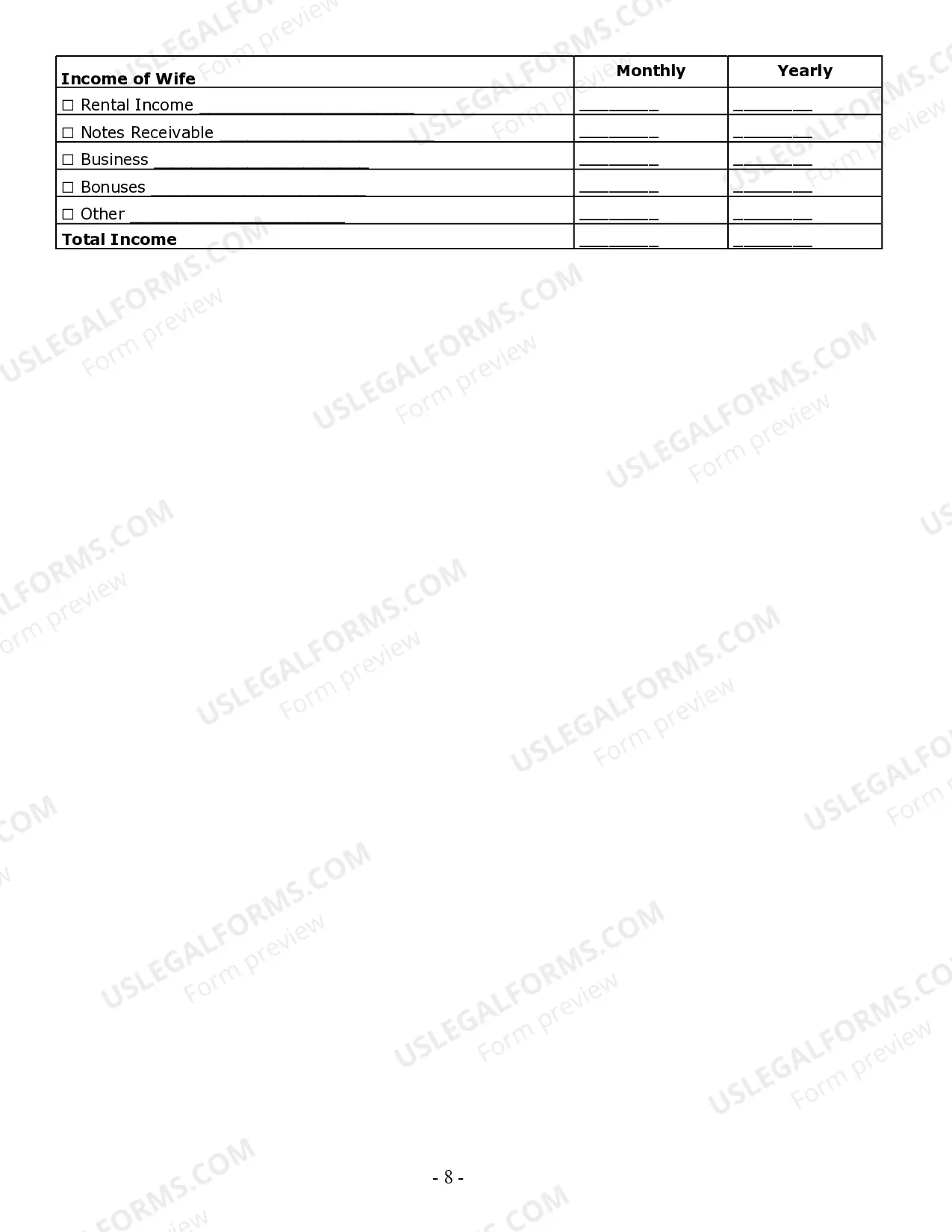
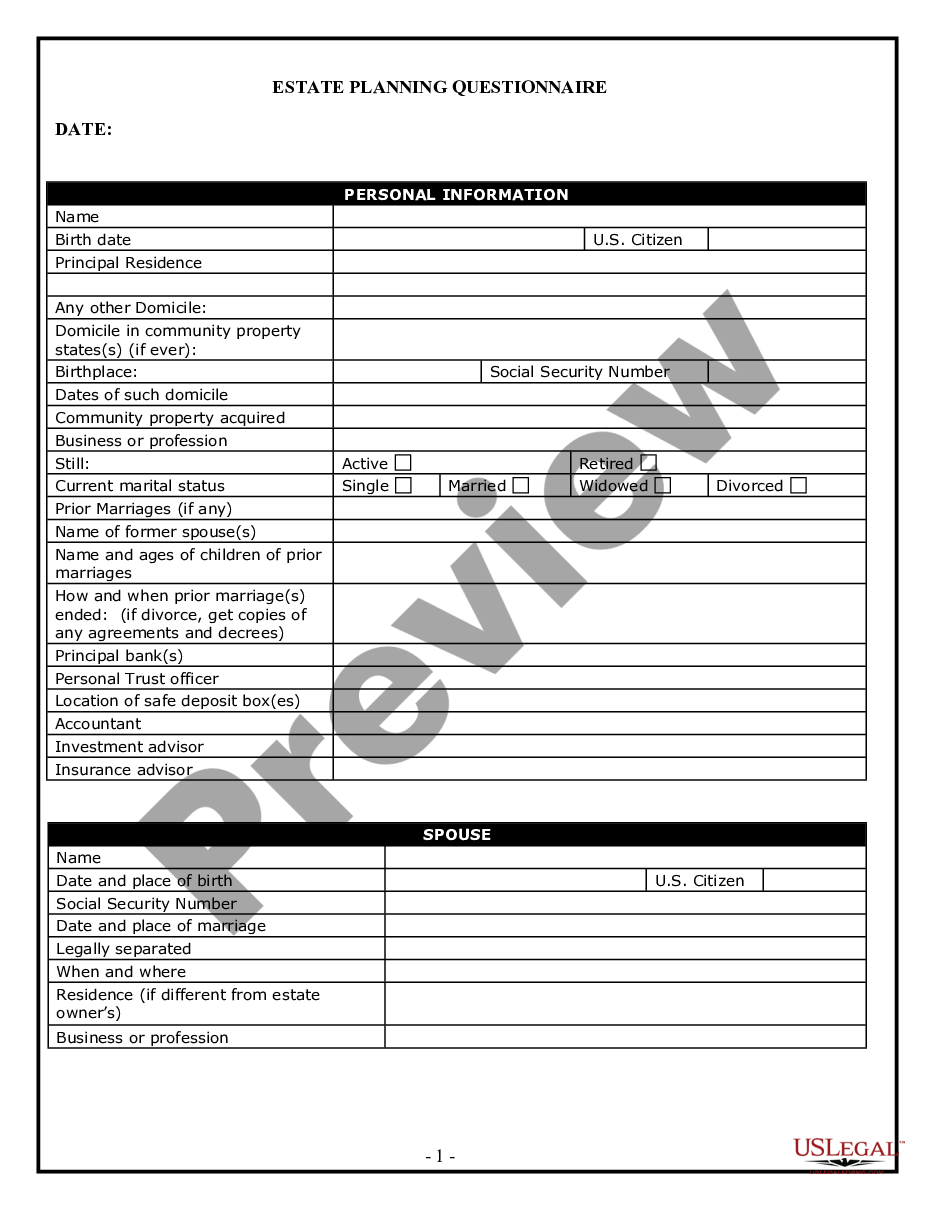
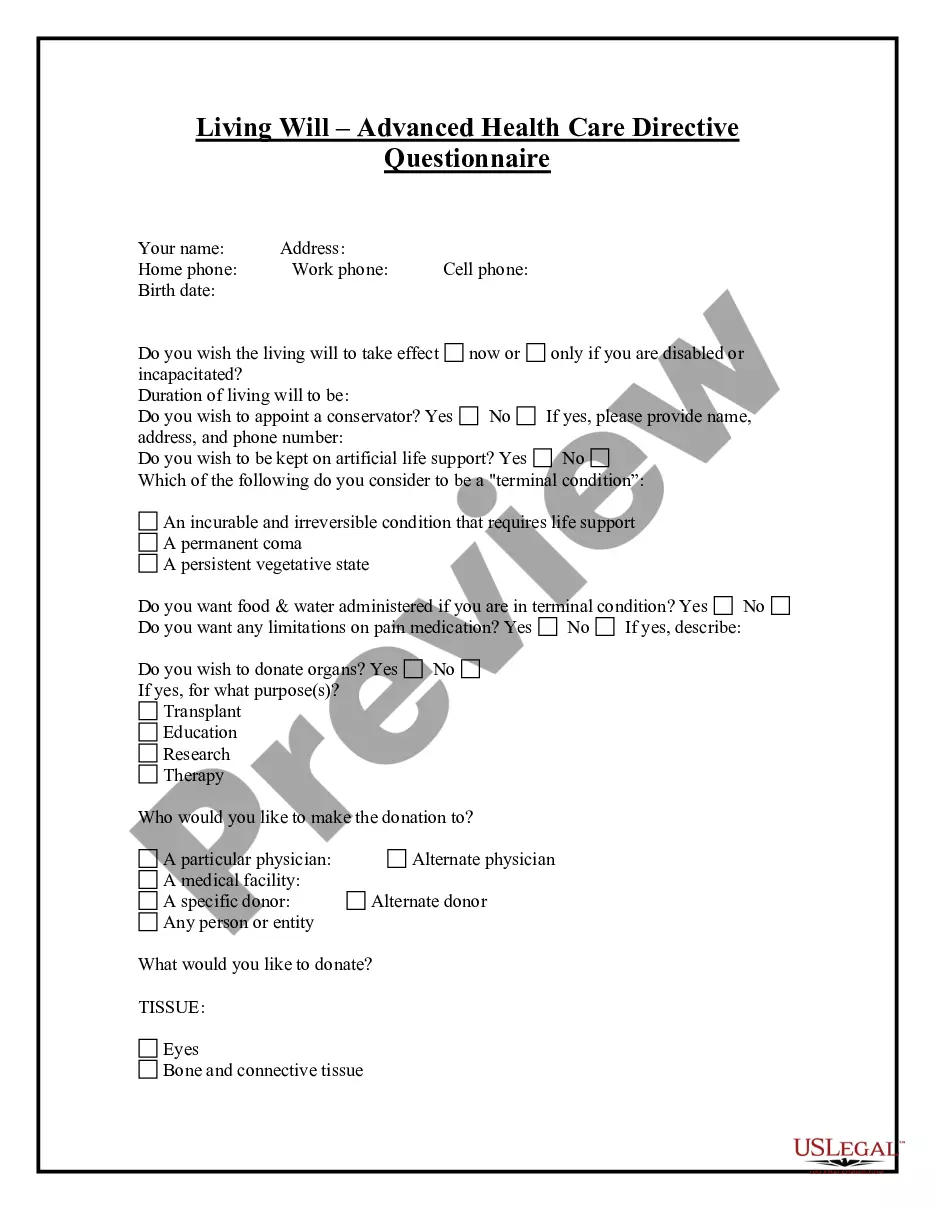
The Estate Planning Questionnaire and Worksheets is a specialized document designed to gather essential personal and financial information relevant to estate planning. This form serves two primary purposes: as a tool for client interviews by legal professionals and as a self-assessment for individuals aiming to understand their financial situation in connection with their estate planning needs. Unlike traditional estate planning documents, this questionnaire focuses on information collection to facilitate the creation of a comprehensive estate plan.
What’s included in this form
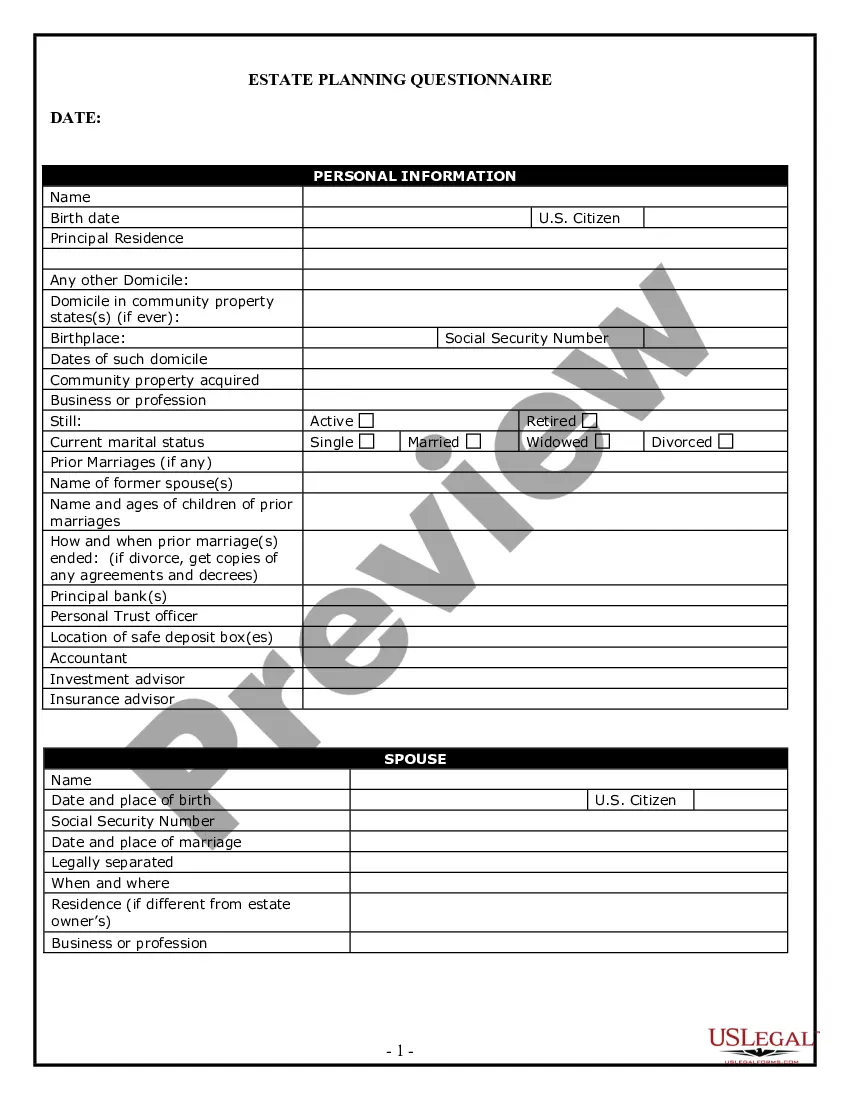
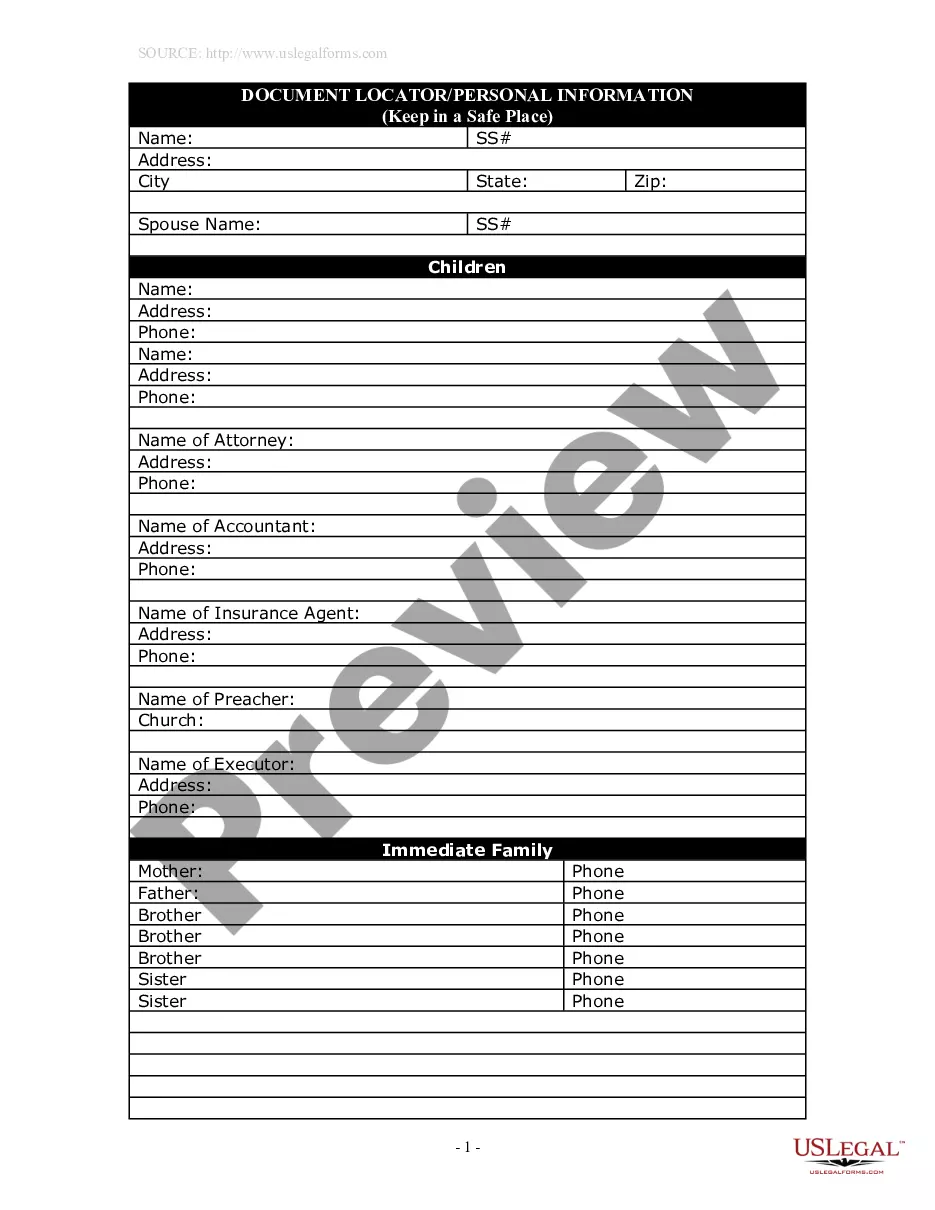
- Personal information section to gather details on the individual and their family.
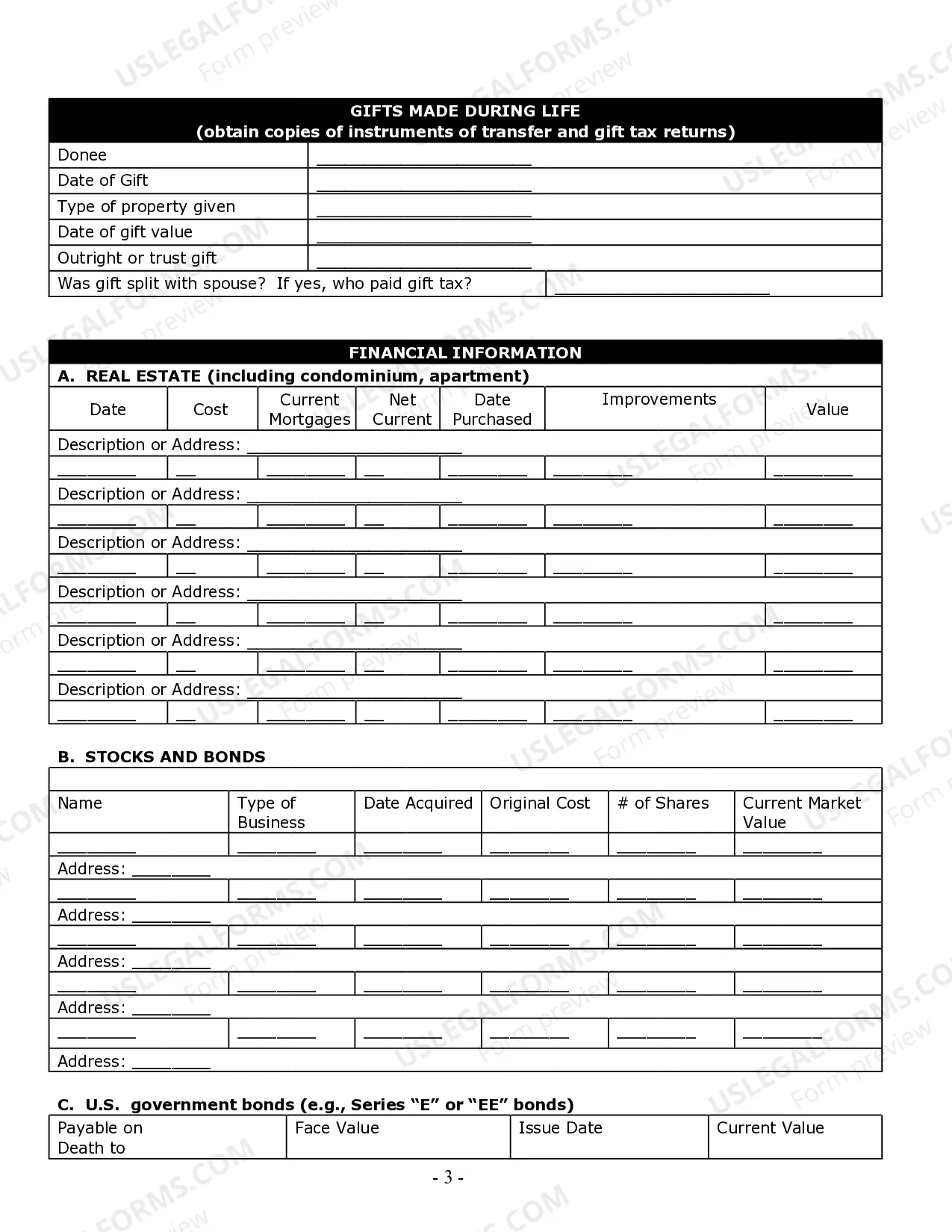
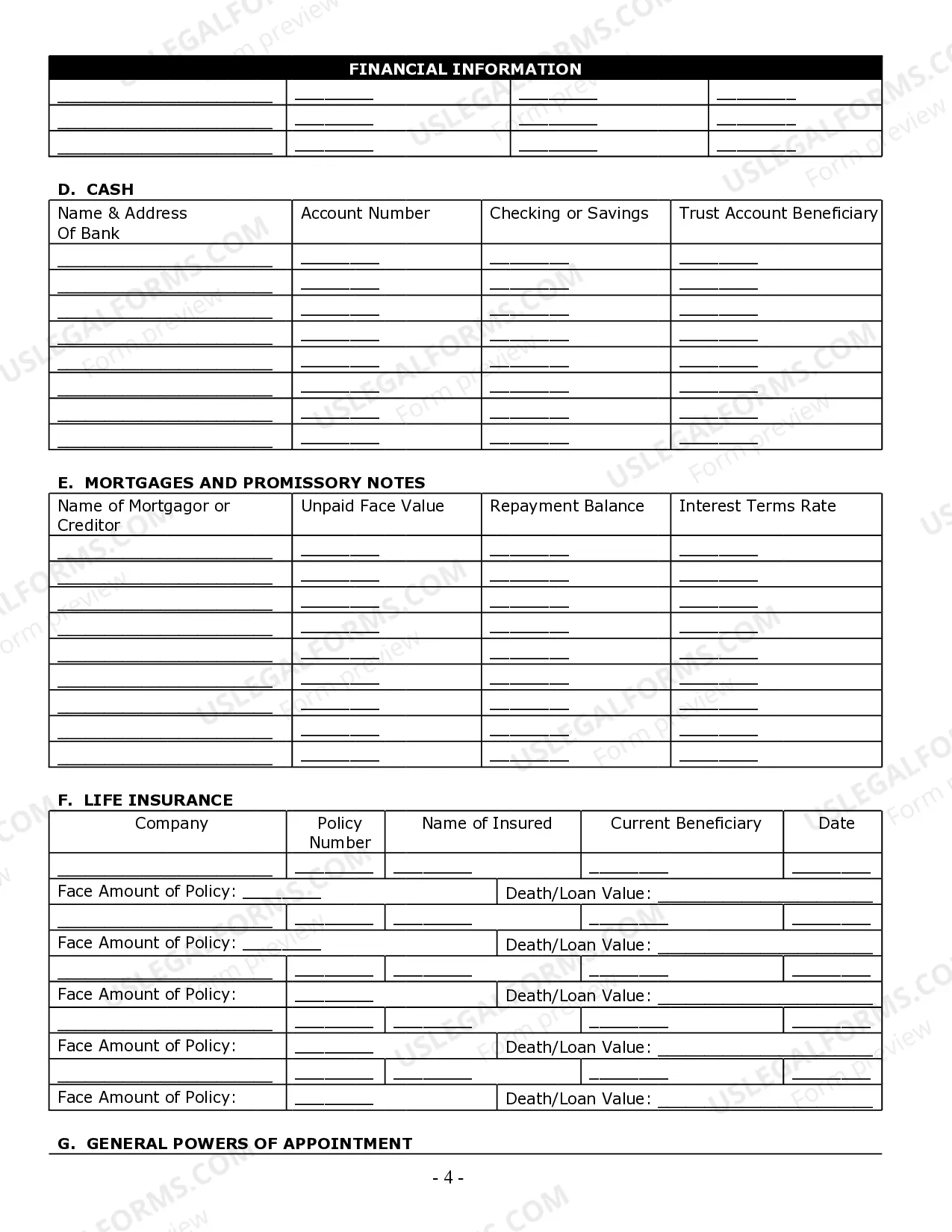
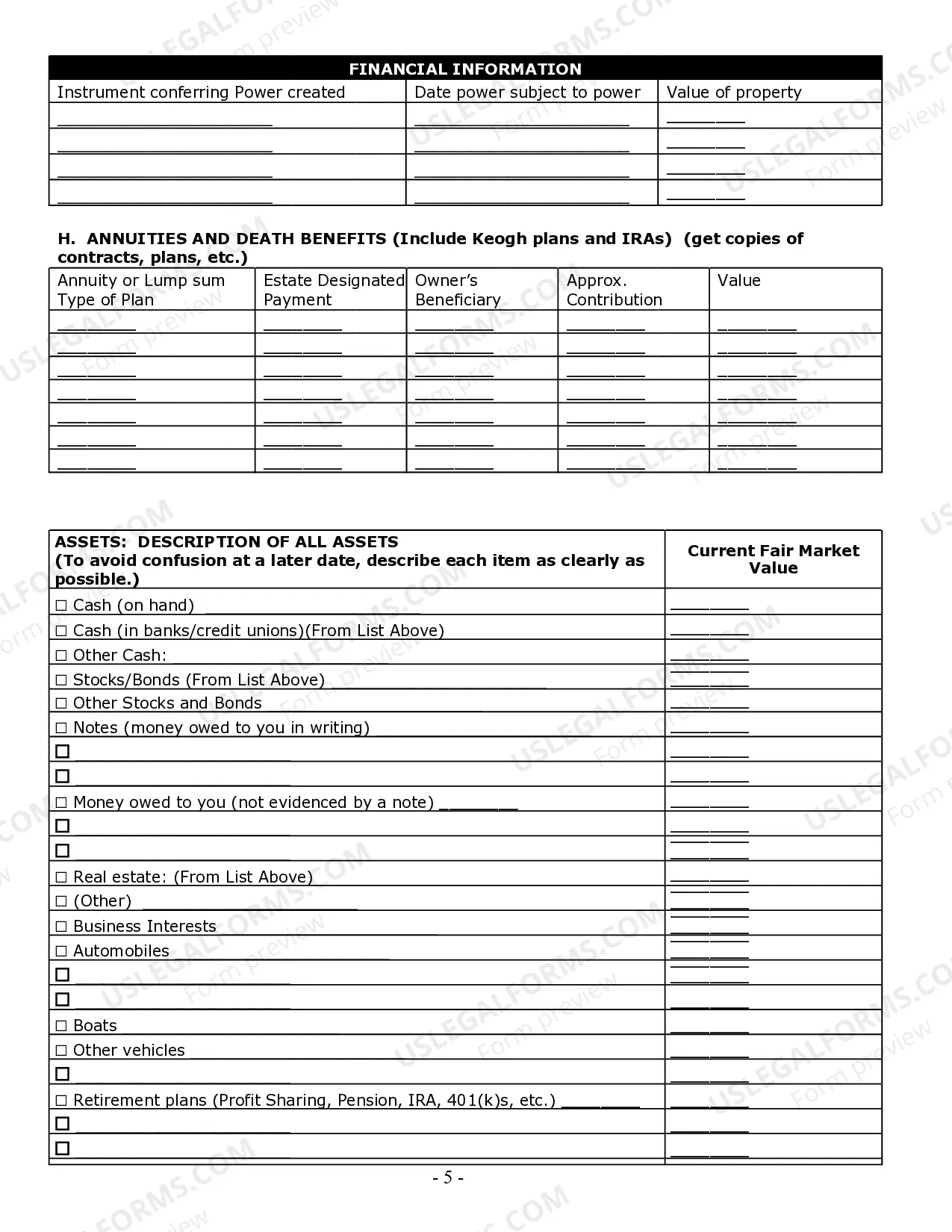
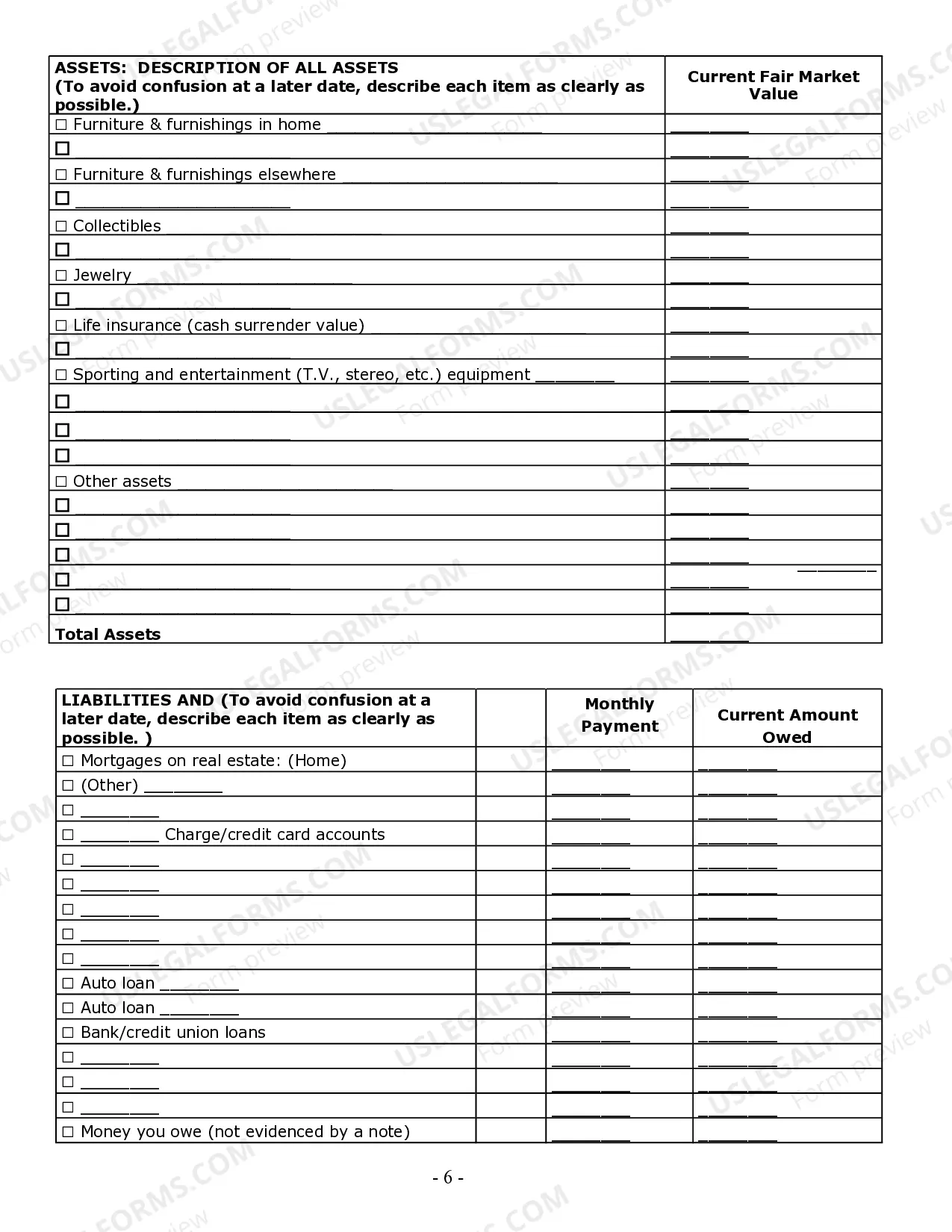
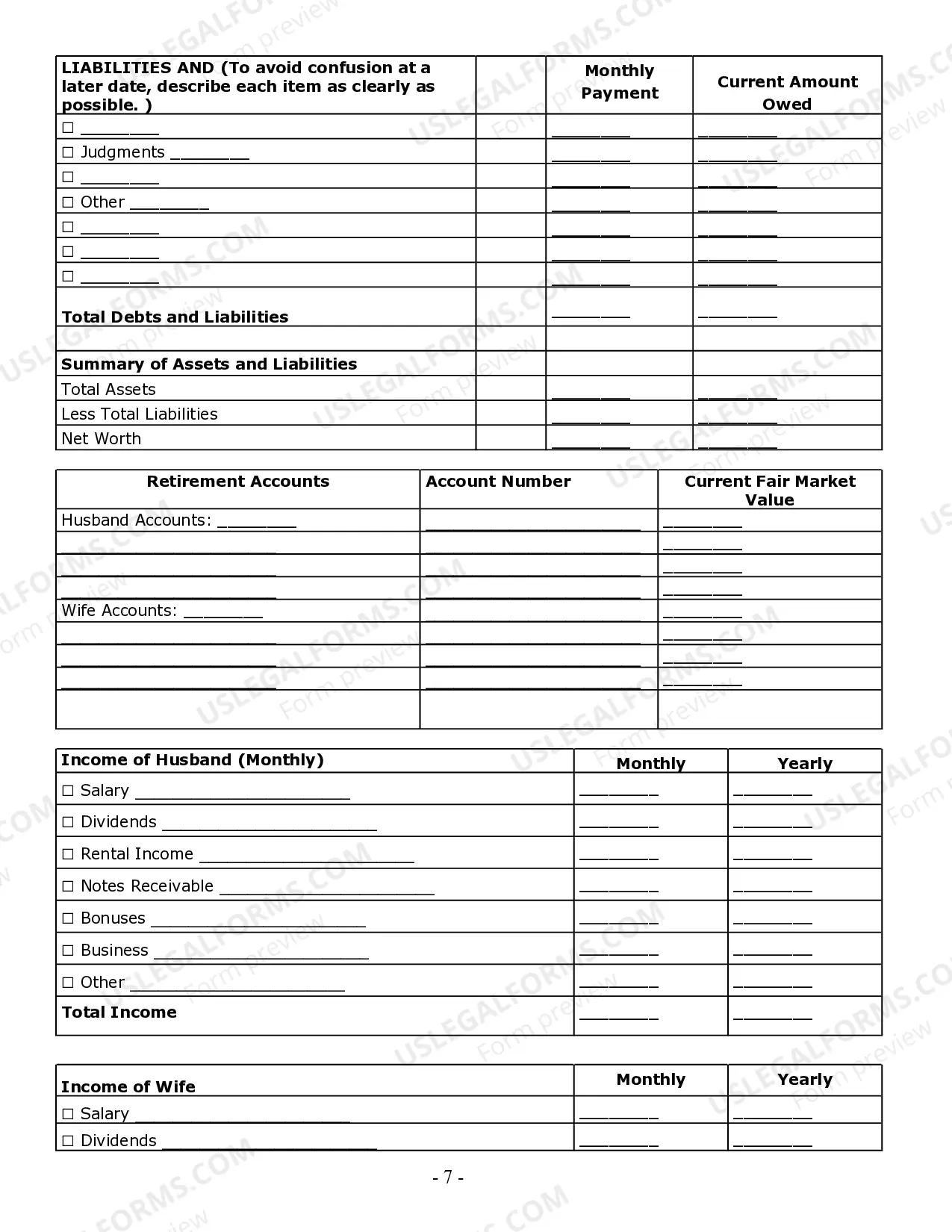
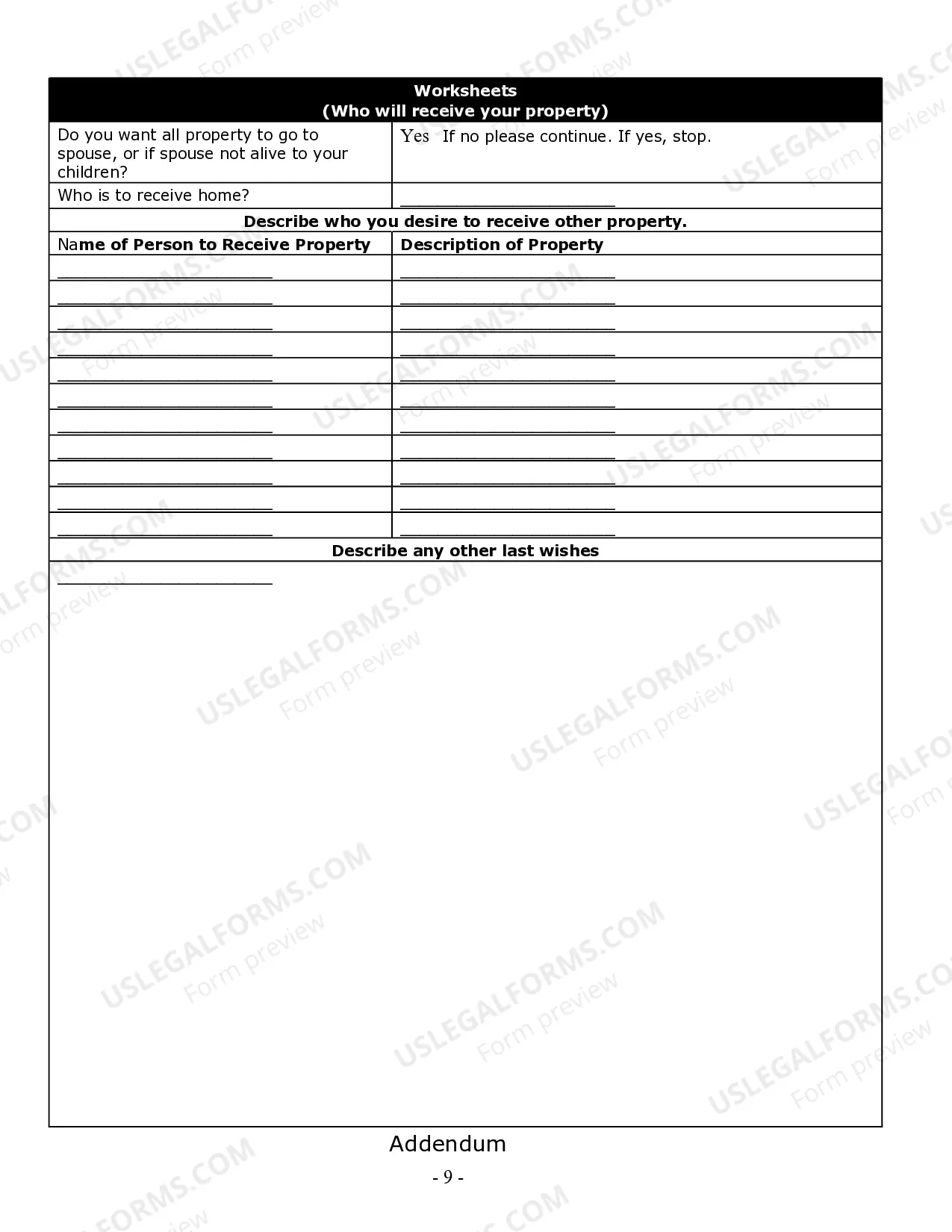
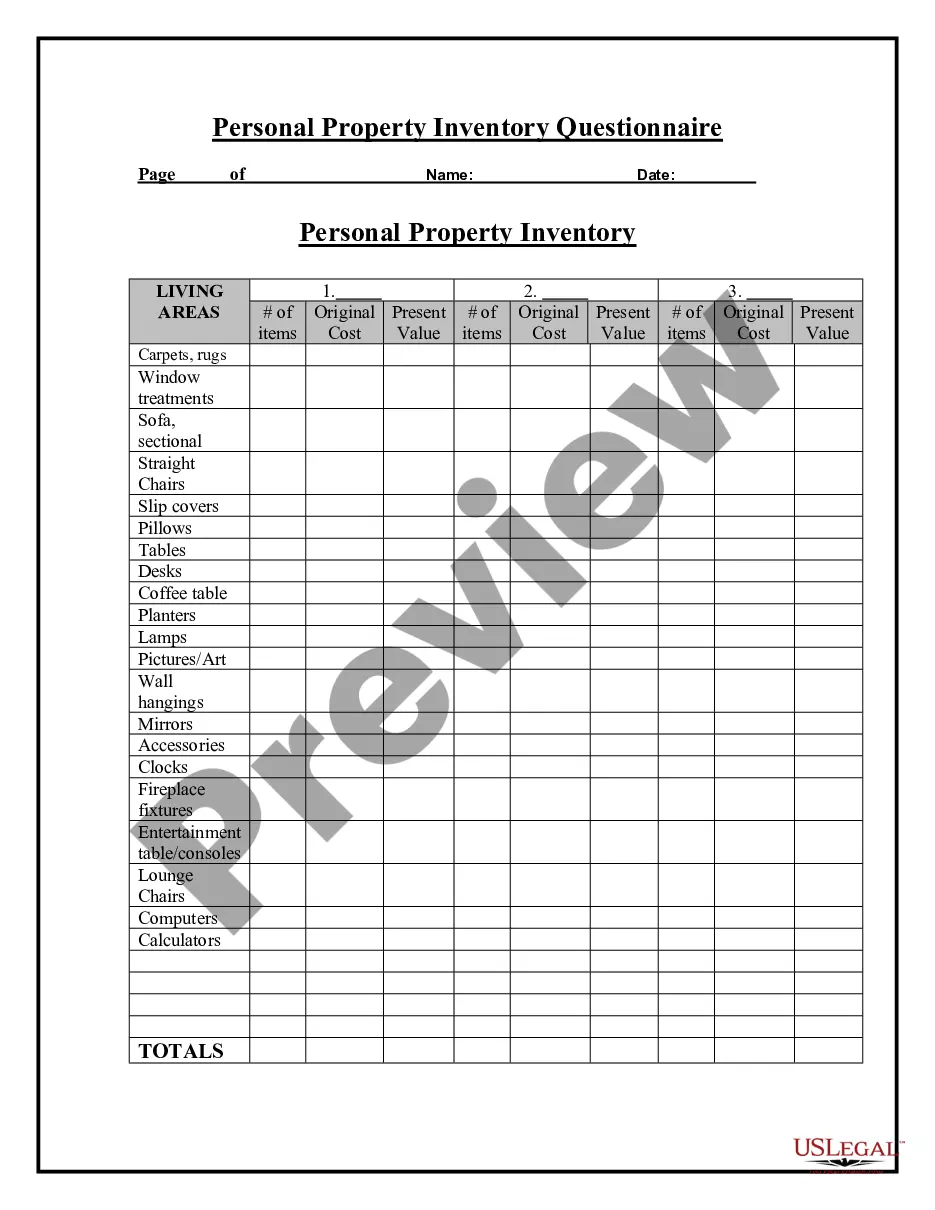
- Financial information section to outline assets, liabilities, and income sources.
- Questions to assess specific estate planning needs, such as guardianship and health care preferences.
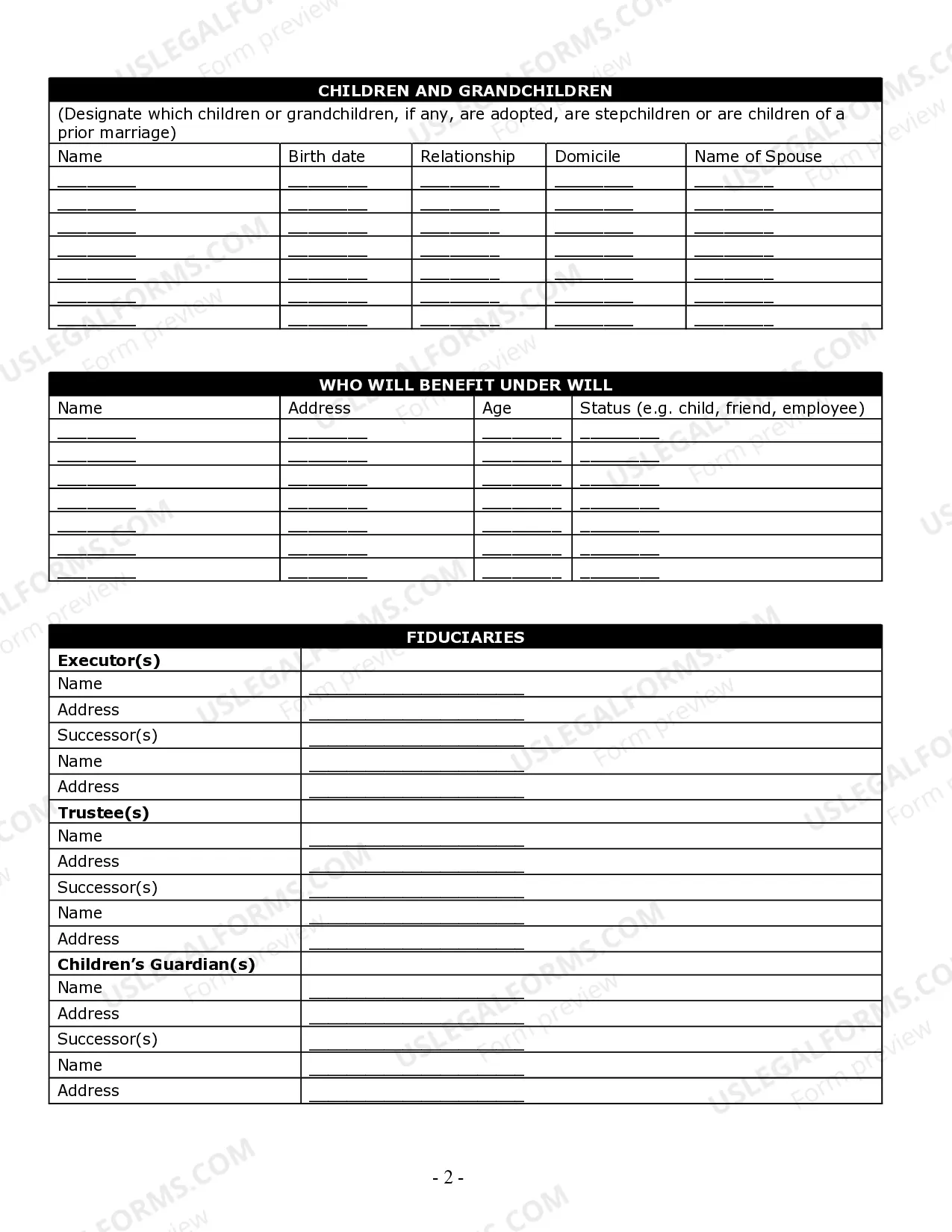
- Sections aimed at identifying desired beneficiaries and their relationship to the individual.
- Guidelines for referencing legal and financial documents that should be included in the planning process.

When to use this form
This form can be used in various scenarios, including when individuals are preparing to meet with an attorney for estate planning, during financial assessments to prepare for major life changes like marriage or retirement, or when someone wants to ensure their estate wishes are clearly articulated. It is also useful for those looking to consolidate their financial information for better management and planning purposes.
Intended users of this form
- Individuals beginning the estate planning process.
- Families wanting to organize their financial information for future planning.
- Legal professionals conducting client interviews regarding estate matters.
- Anyone assessing their overall financial situation in relation to estate planning.
- Those who wish to ensure that their estate wishes are documented and understood.
Steps to complete this form
- Begin by entering personal information, including your name, address, and contact details.
- Provide financial details, such as income, debts, and a list of assets including real estate and investments.
- Answer specific questions regarding your estate planning needs, like guardianship preferences and health care wishes.
- Identify and list desired beneficiaries, detailing your relationship with each one.
- Review your responses to ensure all necessary information has been provided before finalizing the document.
Does this document require notarization?
This form does not typically require notarization to be legally valid. However, some jurisdictions or document types may still require it. US Legal Forms provides secure online notarization powered by Notarize, available 24/7 for added convenience.
Get your form ready online
Our built-in tools help you complete, sign, share, and store your documents in one place.
Make edits, fill in missing information, and update formatting in US Legal Forms—just like you would in MS Word.
Download a copy, print it, send it by email, or mail it via USPS—whatever works best for your next step.
Sign and collect signatures with our SignNow integration. Send to multiple recipients, set reminders, and more. Go Premium to unlock E-Sign.
If this form requires notarization, complete it online through a secure video call—no need to meet a notary in person or wait for an appointment.
We protect your documents and personal data by following strict security and privacy standards.
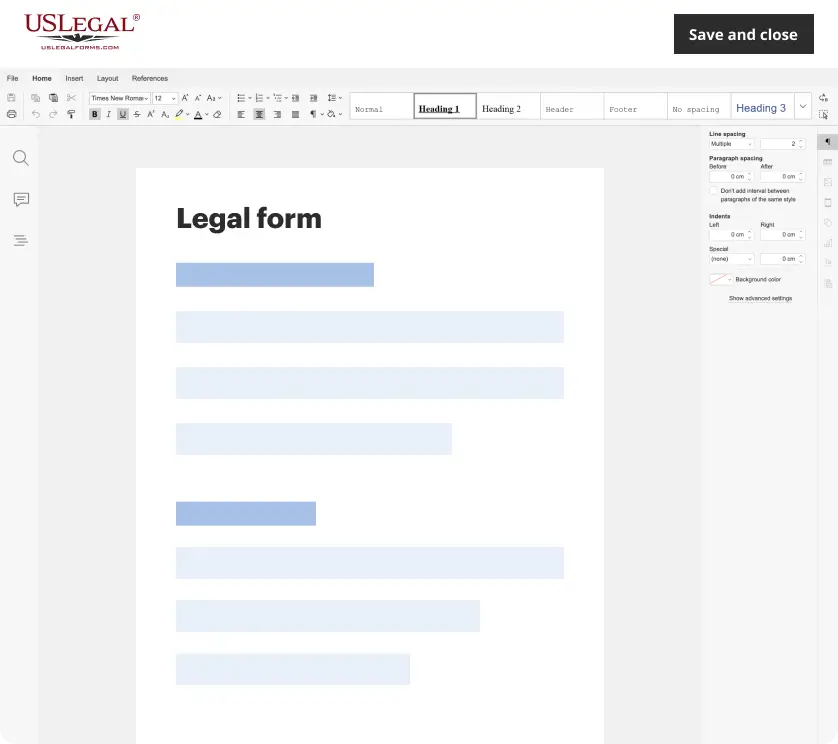
Make edits, fill in missing information, and update formatting in US Legal Forms—just like you would in MS Word.
Download a copy, print it, send it by email, or mail it via USPS—whatever works best for your next step.
Sign and collect signatures with our SignNow integration. Send to multiple recipients, set reminders, and more. Go Premium to unlock E-Sign.

If this form requires notarization, complete it online through a secure video call—no need to meet a notary in person or wait for an appointment.
We protect your documents and personal data by following strict security and privacy standards.
Common mistakes
- Failing to provide complete or accurate financial details.
- Not updating the form as personal or financial situations change.
- Overlooking important questions about guardianship and health care decisions.
- Assuming verbal discussions are adequate; always document decisions.
- Neglecting to consult with legal professionals if unsure about any aspect of the estate planning process.
Why use this form online
- Convenient access from anywhere at any time, allowing for easy information gathering.
- Ability to edit and update your responses as needed, ensuring accuracy over time.
- Confidence in using a form drafted by licensed attorneys familiar with estate planning requirements.
- No need for physical appointments until you're ready, saving time and effort.
Legal use & context
Using this form helps ensure that important financial information is documented, paving the way for effective estate planning. While this questionnaire can guide your planning, final legal documents should be crafted with the help of a qualified attorney to ensure compliance with all applicable laws and regulations.
Quick recap
- The Estate Planning Questionnaire and Worksheets is essential for gathering comprehensive personal and financial information.
- This form is useful for both individuals and legal professionals in the estate planning process.
- Always provide complete and accurate information to facilitate effective planning.
- Consultation with a licensed attorney is recommended for creating final legal documents.
Looking for another form?
Form popularity
FAQ
A Last Will and Testament. When it comes to estate planning, having a last will and testament is likely the first thing that will come to mind. A Document Granting Power of Attorney. An Advance Medical Directive. Revocable Living Trust.
There are four main elements of an estate plan; these include a will, a living will and healthcare power of attorney, a financial power of attorney, and a trust.
Creating an estate plan is a lot like getting into better shape. Step 1: Sign a will. Step 2: Name beneficiaries. Step 3: Dodge estate taxes. Step 4: Leave a letter. Step 5: Draw up a durable power of attorney. Step 6: Create an advance health care directive.
What Property Can Go in a Living Trust? Who Should Be My Trustee? Does a Living Trust Avoid Estate and Probate Taxes? What Are the Benefits of a Living Trust? What Are the Drawbacks of a Living Trust? Do I Still Need a Power of Attorney?
More Than a Last Will. Itemize Your Inventory. Follow with Non-Physical Assets. Assemble a List of Debts. Make a Memberships List. Make Copies of Your Lists. Review Your Retirement Account. Update Your Insurance.
Fill out your attorney's intake questionnaire. Gather your financial documents. Bring copies of your current estate plan documents. Divorce agreements, premarital agreements, and other relevant contracts. Choose your executors and health care agents.
Bank accounts. Brokerage or investment accounts. Retirement accounts and pension plans. A life insurance policy.
Step 1: Create a checklist of important documents (and their locations) Step 2: List the names and contact information of key associates. Step 3: Catalog your digital asset inventory. Step 4: Ensure all documents are organized and accessible.