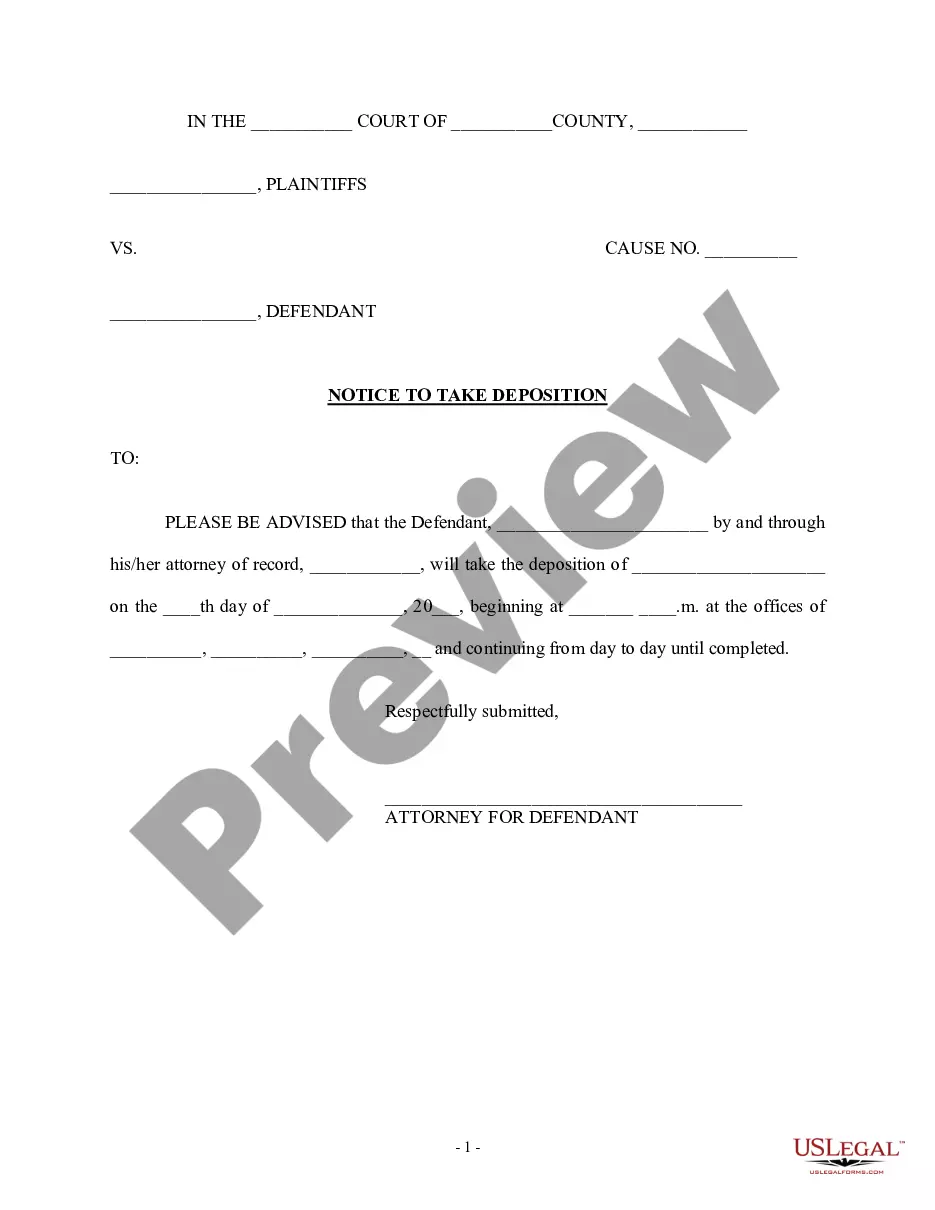
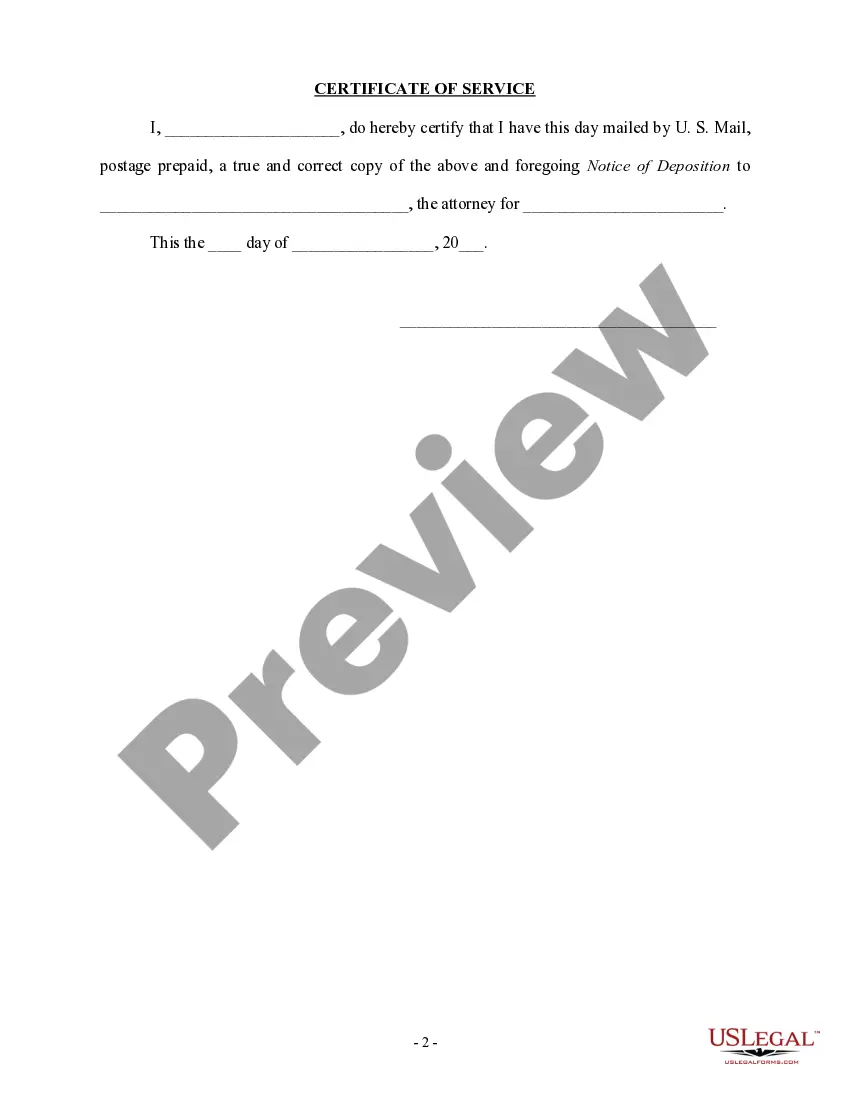
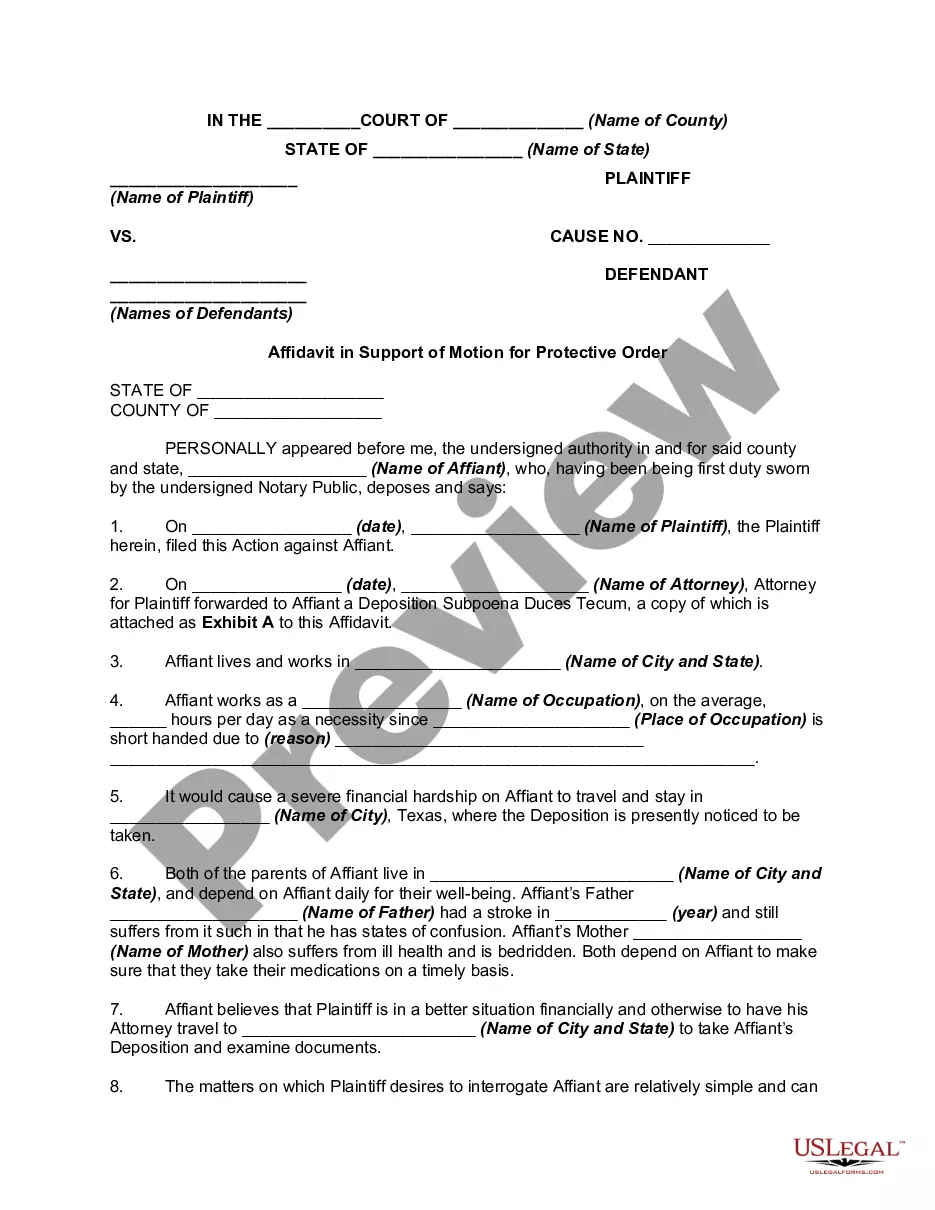
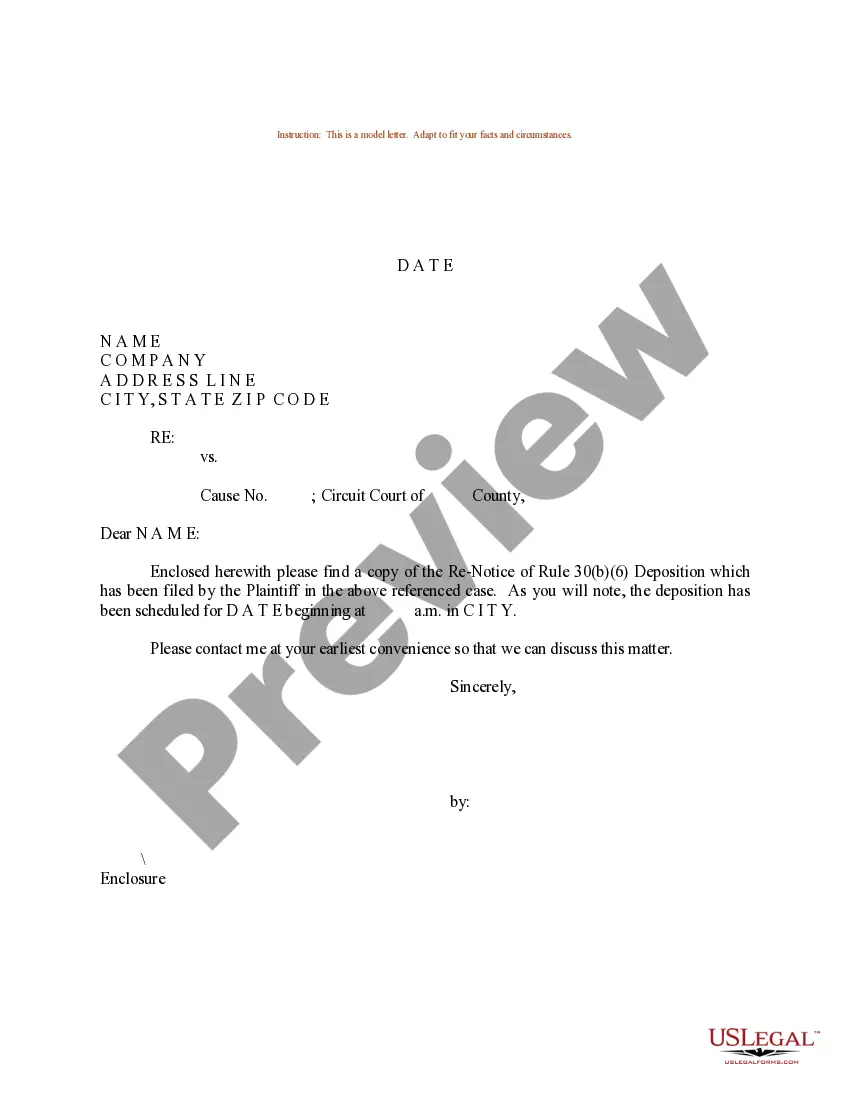
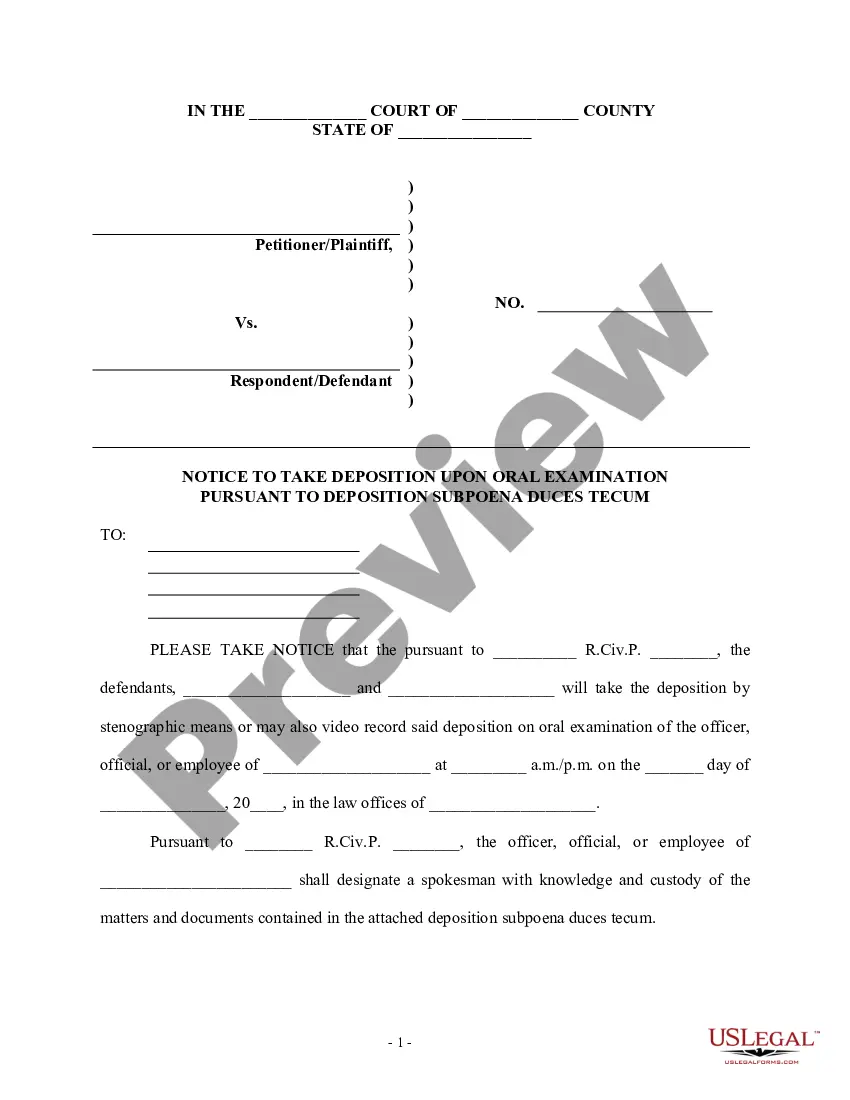
Defendant submits his/her notice to take depositions from day to day until completed. The form also contains a Certificate of Service which states that a true and correct copy of the Notice to Take Deposition was mailed via U.S. Mail and
Virgin Islands Notice to Take Deposition - Discovery
State:
Multi-State
Control #:
US-00904
Format:
Word;
Rich Text
191 downloads
Description
Free preview
Get your form ready online
Our built-in tools help you complete, sign, share, and store your documents in one place.
Built-in online Word editor
Make edits, fill in missing information, and update formatting in US Legal Forms—just like you would in MS Word.
Export easily
Download a copy, print it, send it by email, or mail it via USPS—whatever works best for your next step.
E-sign your document
Sign and collect signatures with our SignNow integration. Send to multiple recipients, set reminders, and more. Go Premium to unlock E-Sign.
Notarize online 24/7
If this form requires notarization, complete it online through a secure video call—no need to meet a notary in person or wait for an appointment.
Store your document securely
We protect your documents and personal data by following strict security and privacy standards.

Make edits, fill in missing information, and update formatting in US Legal Forms—just like you would in MS Word.

Download a copy, print it, send it by email, or mail it via USPS—whatever works best for your next step.

Sign and collect signatures with our SignNow integration. Send to multiple recipients, set reminders, and more. Go Premium to unlock E-Sign.

If this form requires notarization, complete it online through a secure video call—no need to meet a notary in person or wait for an appointment.

We protect your documents and personal data by following strict security and privacy standards.
Looking for another form?
How to fill out Notice To Take Deposition - Discovery?
You can spend hours online searching for the official document template that meets the federal and state requirements you need. US Legal Forms offers thousands of official forms that are reviewed by experts.
It's easy to download or print the Virgin Islands Notice to Take Deposition - Discovery from our services. If you already have a US Legal Forms account, you may Log In and then click the Download button. After that, you can complete, modify, print, or sign the Virgin Islands Notice to Take Deposition - Discovery. Every official document template you obtain is yours permanently.
To get another copy of an acquired form, go to the My documents tab and click the corresponding button. If you're using the US Legal Forms website for the first time, follow the simple instructions below: First, ensure that you have selected the correct document template for the region/city of your choice. Review the form outline to confirm you have selected the right form. If available, use the Review button to browse through the document template as well.
- If you want to find another version of the form, use the Search field to locate the template that fits your requirements.
- Once you have found the template you need, click Buy now to proceed.
- Select the pricing plan you prefer, enter your details, and create an account on US Legal Forms.
- Complete the transaction. You can use your credit card or PayPal account to pay for the official document.
- Choose the format of the document and download it to your device.
- Make changes to your document if necessary. You can complete, edit, sign, and print the Virgin Islands Notice to Take Deposition - Discovery.
- Download and print thousands of document templates using the US Legal Forms site, which offers the largest collection of official forms. Use professional and state-specific templates to address your business or personal needs.
Form popularity
FAQ
At any time during a deposition, the deponent or a party may move to terminate or limit the deposition on the ground that it is being conducted in bad faith or in a manner that unreasonably annoys, embarrasses, or oppresses the deponent or party.
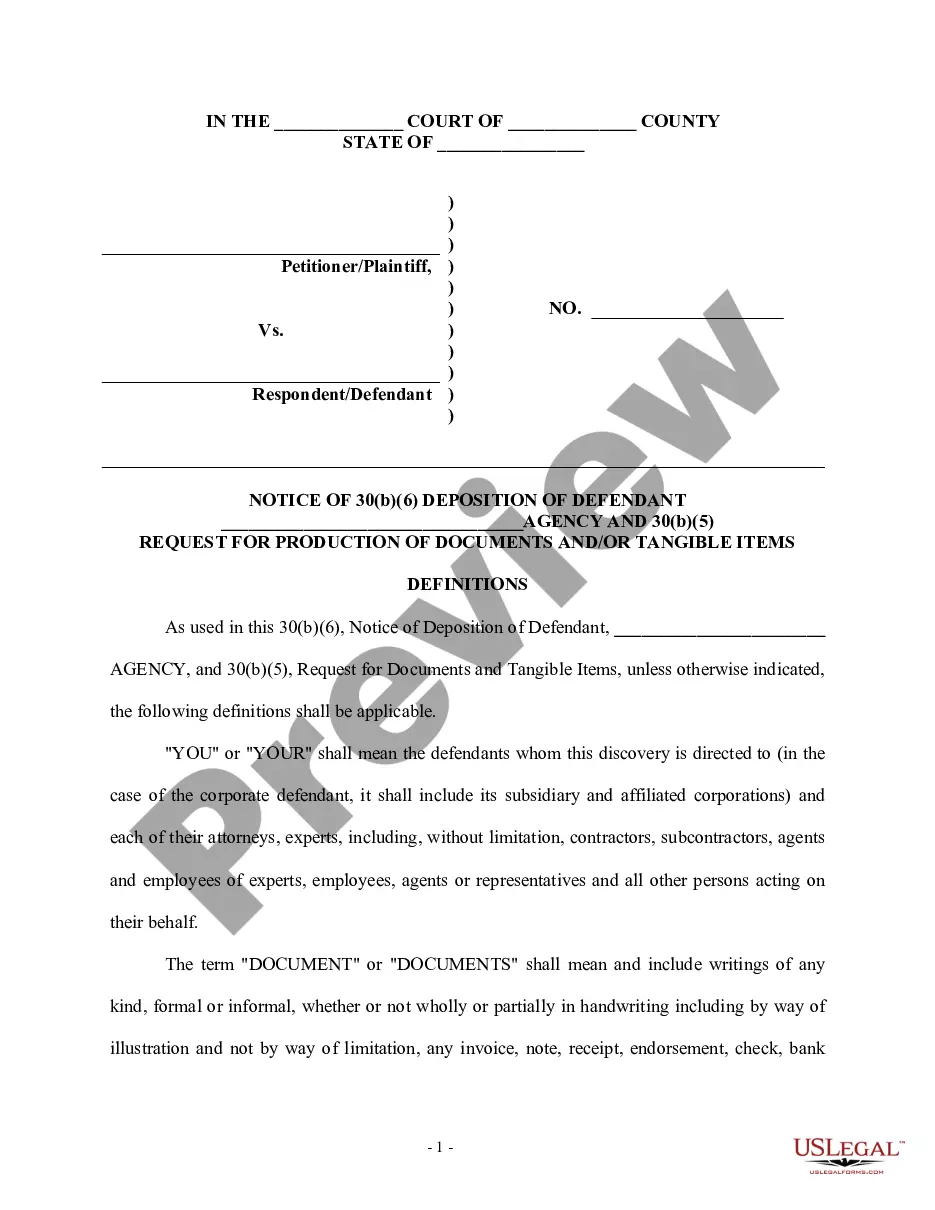
The Rule 30(b)(6) deposition is the process by which a litigant may depose a corporation or other business entity. While it is impossible for a corporation to be deposed in the literal sense, the corporation must designate one or more representatives who will testify on its behalf.
A deposition taken for the sole purpose of preserving a witness's testimony for use at trial when counsel anticipates that the witness will be unavailable for trial (for more information, see Practice Note, Preparing for Trial (Federal): Determine if a Witness is Unavailable).
Unless otherwise stipulated or ordered by the court, a deposition is limited to 1 day of 7 hours. The court must allow additional time consistent with Rule 26(b)(1) and (2) if needed to fairly examine the deponent or if the deponent, another person, or any other circumstance impedes or delays the examination.
The notice shall state the time and place for taking the deposition and the name and address of each person to be examined, if known, and, if the name is not known, a general description sufficient to identify the person or the particular class or group to which the person belongs.
The sanctions may take one of two forms, either the witness may be held in contempt of court for not appearing, or the court may issue a Writ of Bodily Attachment. Basically, a writ of bodily attachment is a ?warrant? of sorts that permits law enforcement to arrest the witness.
Rule 30.04(b) is amended to adopt a specific time limit on depositions. Although parties may agree to a longer deposition and the court can determine that longer examination is appropriate, a deposition is made subject to a limit of one day lasting seven hours.
In conclusion, unlike English law, the British Virgin Islands Evidence Act 2006 provides for an express mechanism as to the factors which a court is required to assess in order to decide whether illegally obtained evidence should be admitted.