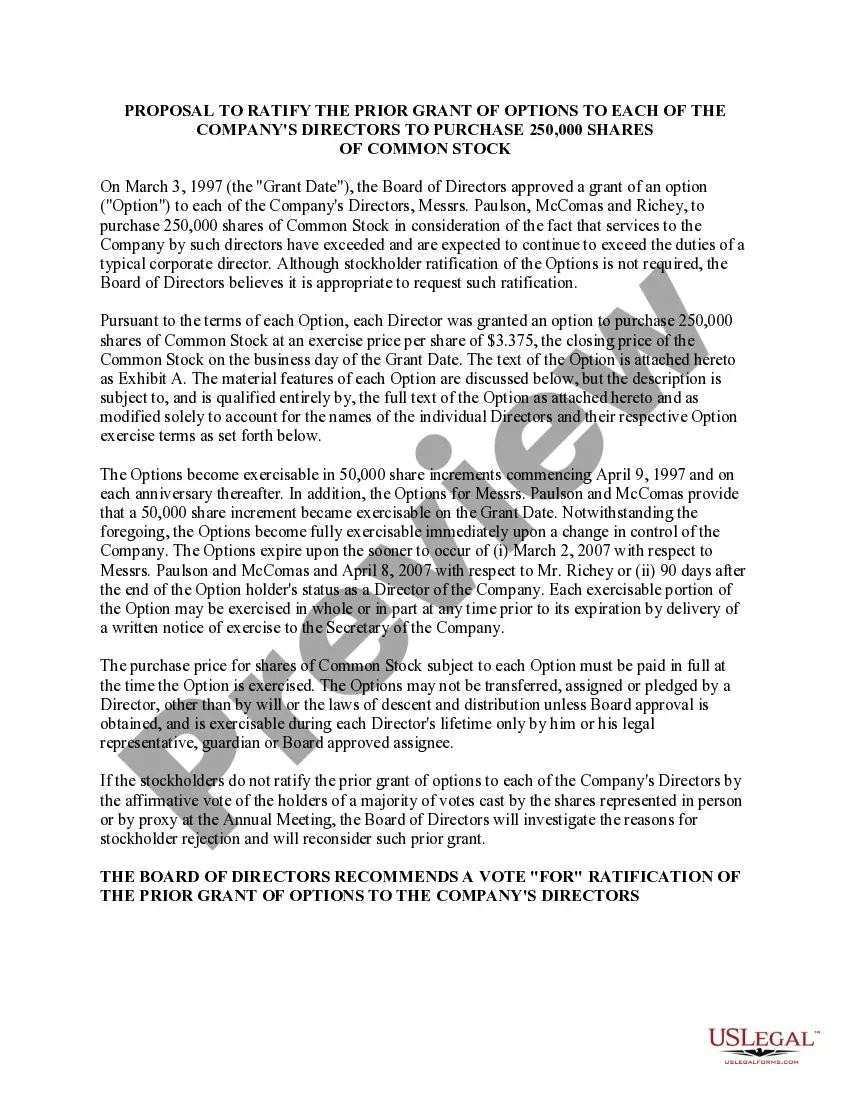
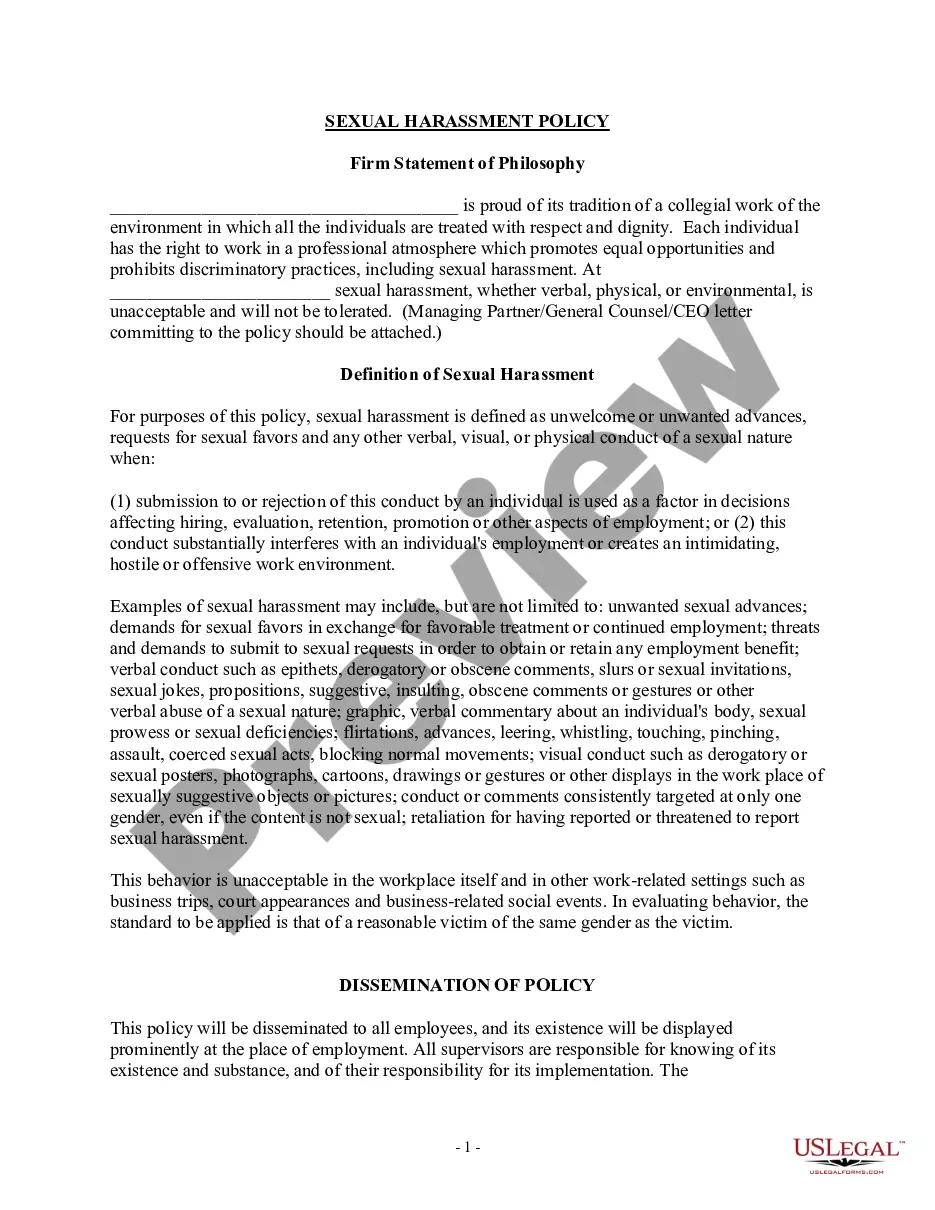
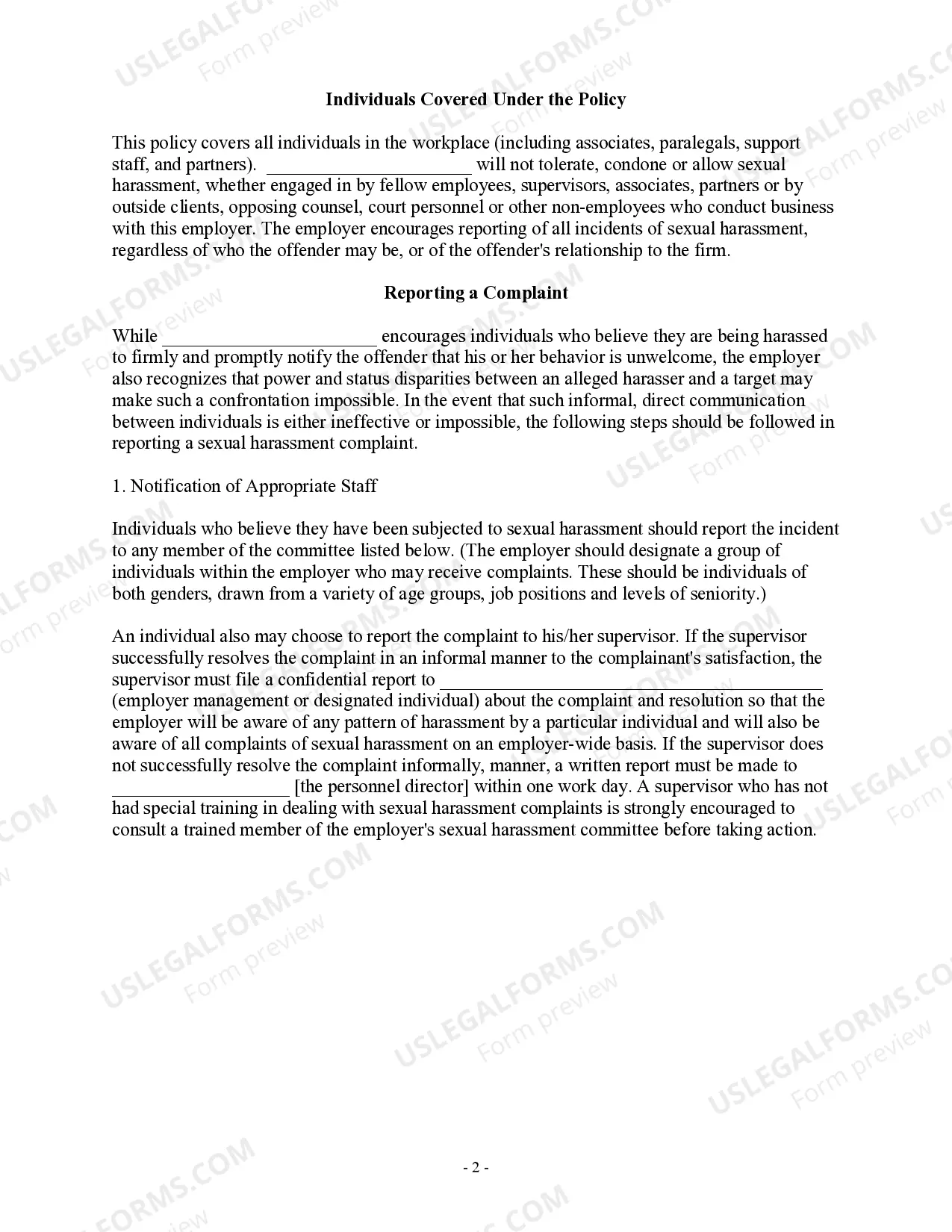
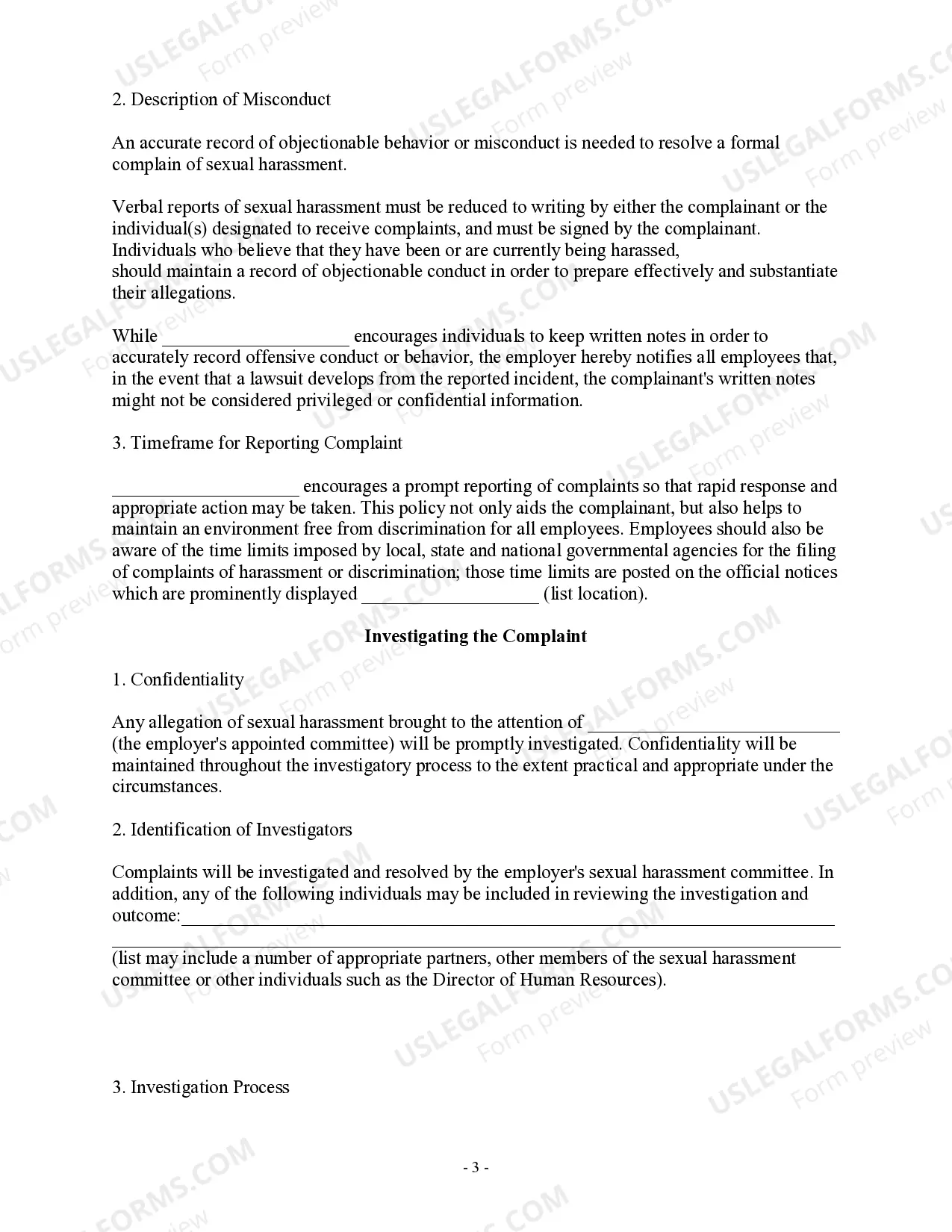
Virgin Islands Sexual Harassment Policy - Workplace
Description
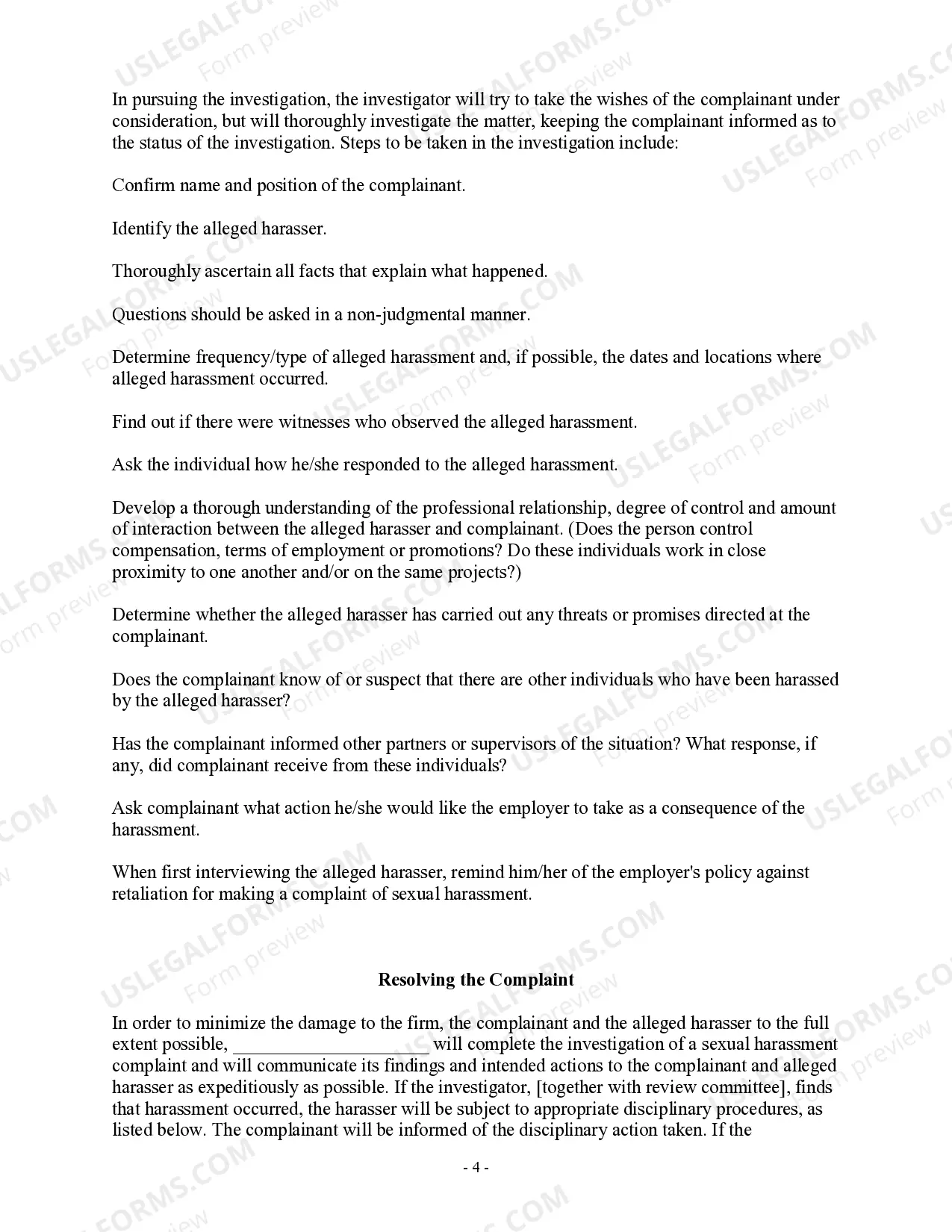
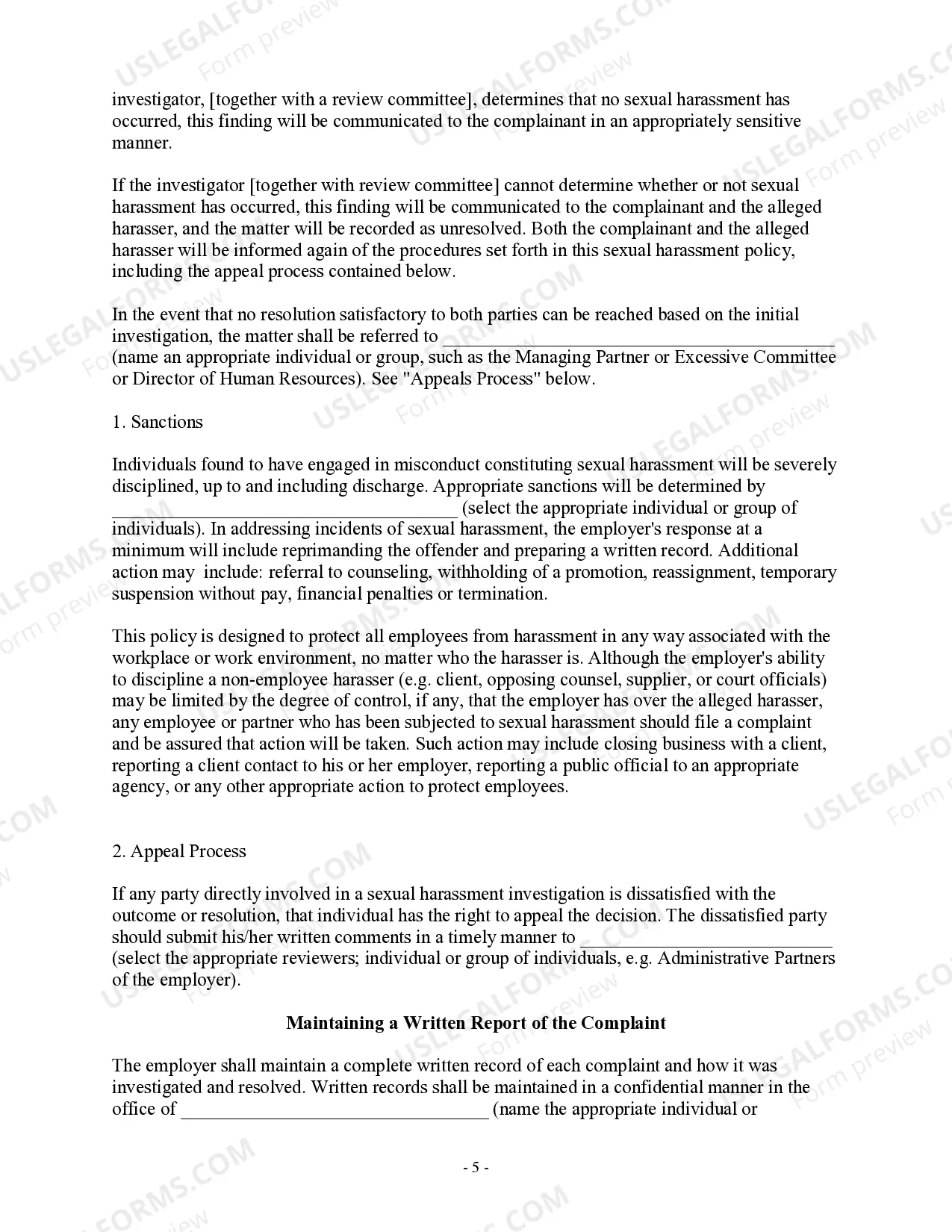
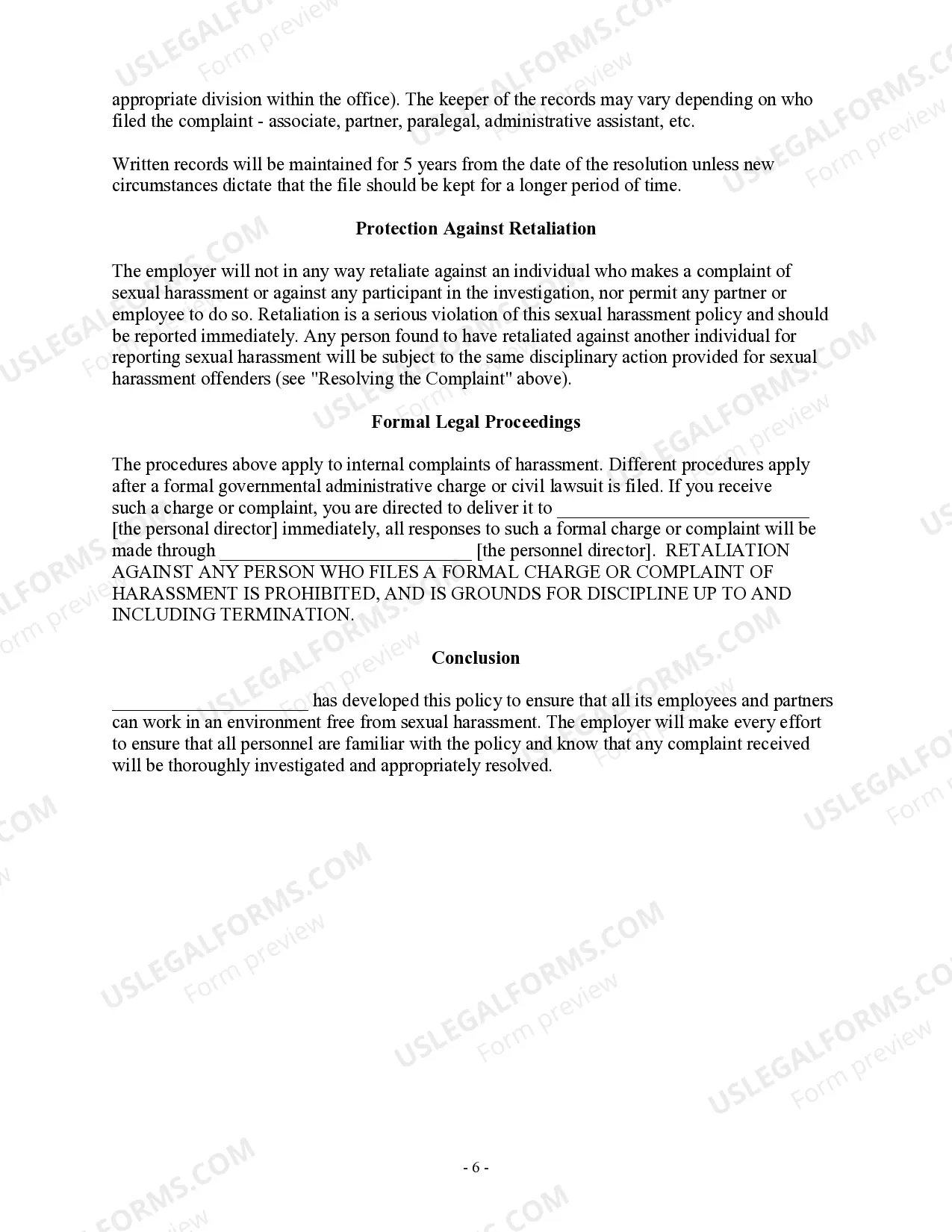
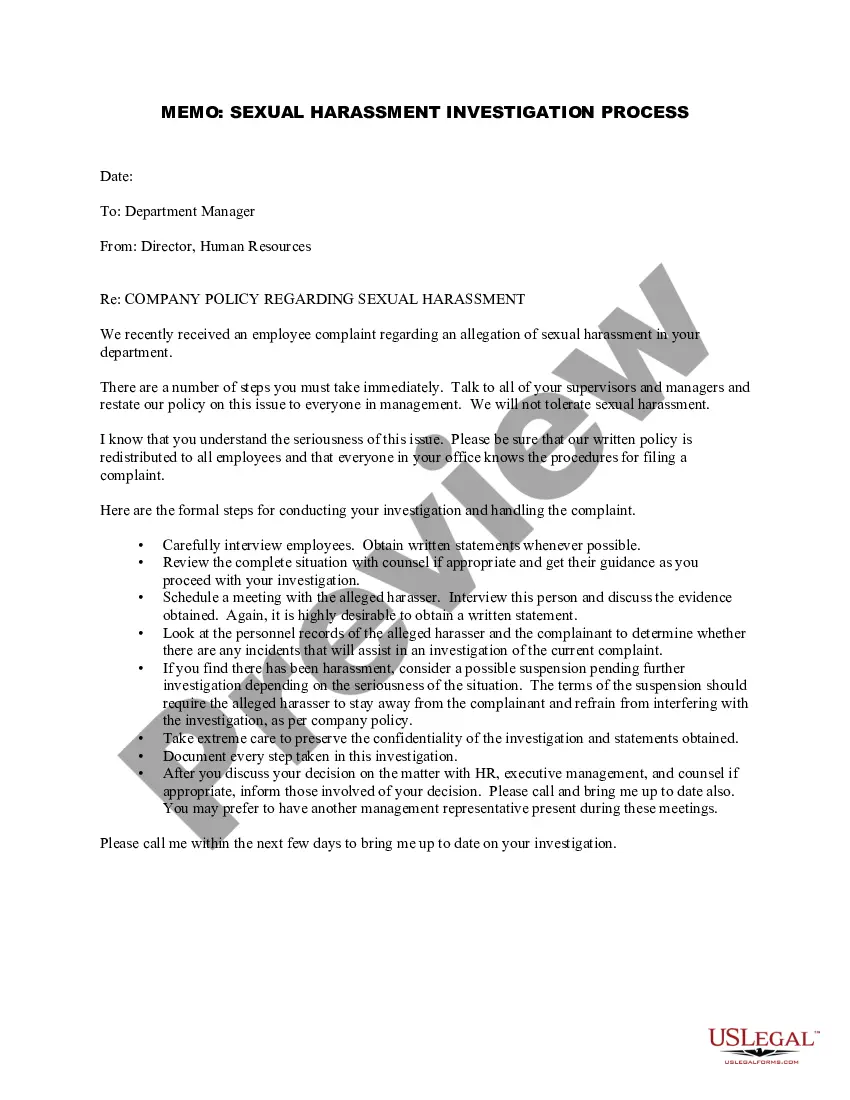
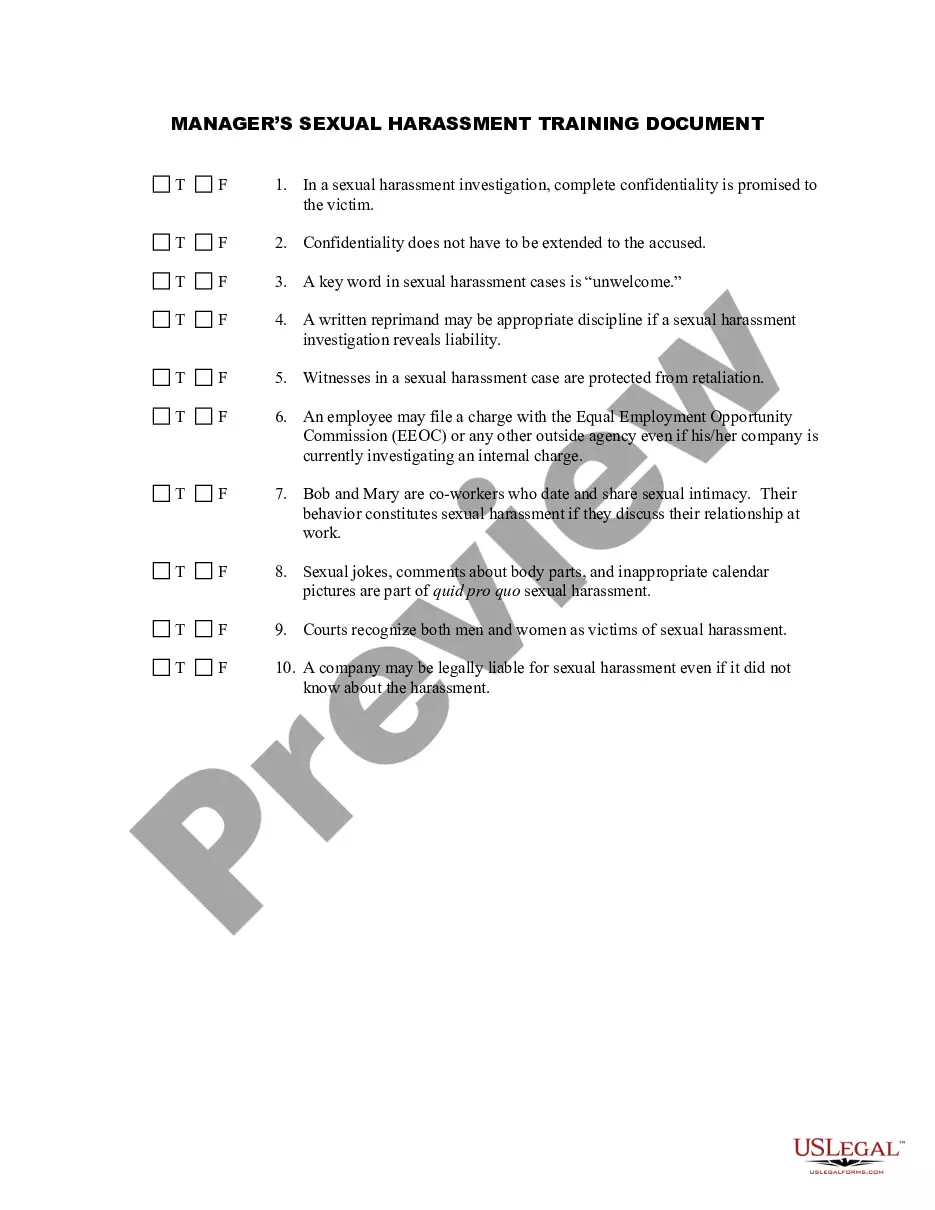
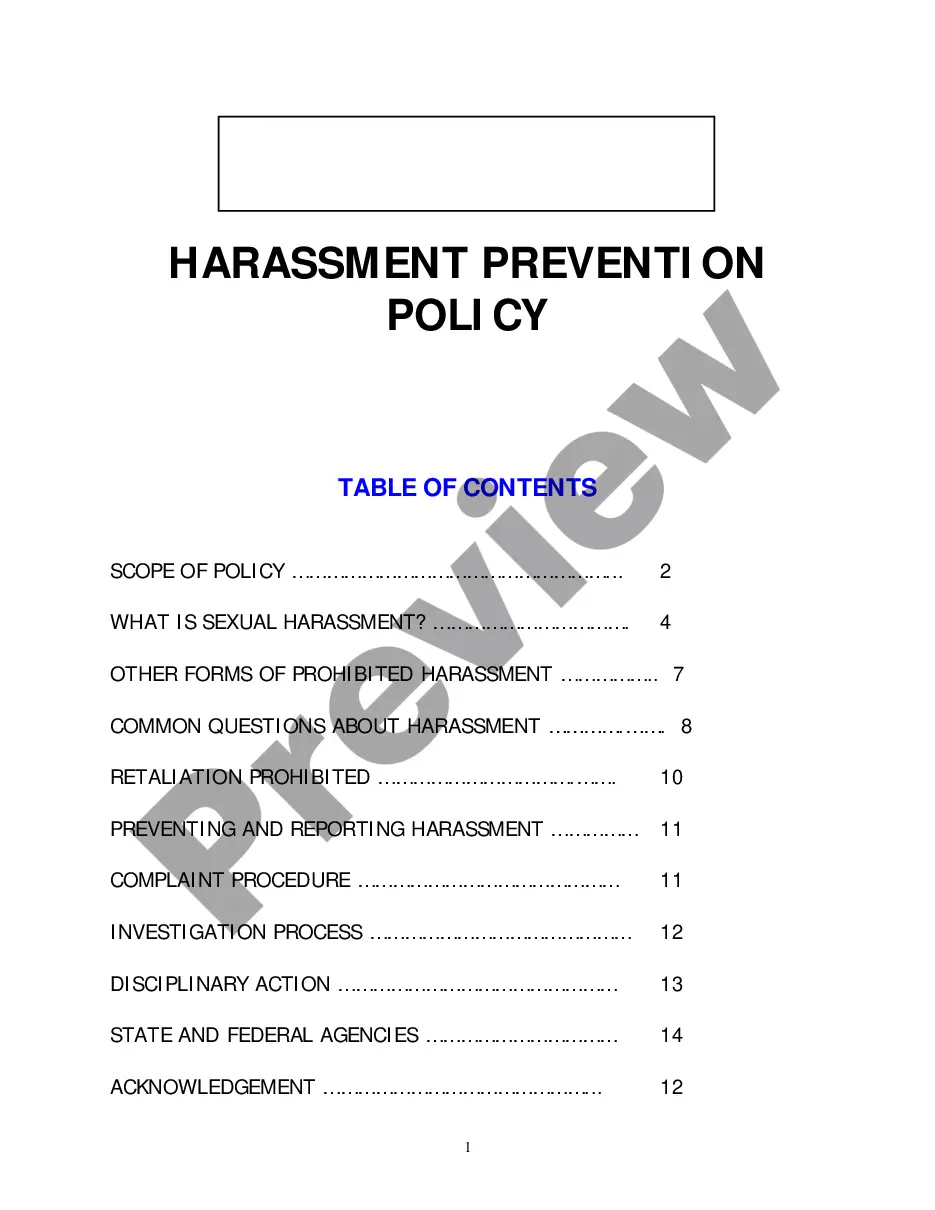
Get your form ready online
Our built-in tools help you complete, sign, share, and store your documents in one place.
Make edits, fill in missing information, and update formatting in US Legal Forms—just like you would in MS Word.
Download a copy, print it, send it by email, or mail it via USPS—whatever works best for your next step.
Sign and collect signatures with our SignNow integration. Send to multiple recipients, set reminders, and more. Go Premium to unlock E-Sign.
If this form requires notarization, complete it online through a secure video call—no need to meet a notary in person or wait for an appointment.
We protect your documents and personal data by following strict security and privacy standards.

Make edits, fill in missing information, and update formatting in US Legal Forms—just like you would in MS Word.

Download a copy, print it, send it by email, or mail it via USPS—whatever works best for your next step.

Sign and collect signatures with our SignNow integration. Send to multiple recipients, set reminders, and more. Go Premium to unlock E-Sign.

If this form requires notarization, complete it online through a secure video call—no need to meet a notary in person or wait for an appointment.

We protect your documents and personal data by following strict security and privacy standards.
Looking for another form?
How to fill out Sexual Harassment Policy - Workplace?
If you require thorough, acquire, or generate legal document templates, utilize US Legal Forms, the largest collection of legal forms available online.
Utilize the site’s user-friendly and efficient search to locate the documents you require.
A range of templates for business and individual purposes are organized by categories and states, or keywords.
- Utilize US Legal Forms to obtain the Virgin Islands Sexual Harassment Policy - Workplace within a few clicks.
- If you are already a US Legal Forms customer, Log In to your account and click the Download button to access the Virgin Islands Sexual Harassment Policy - Workplace.
- You can also find forms you previously downloaded in the My documents tab of your account.
- If you are using US Legal Forms for the first time, follow the instructions below.
- Step 1. Ensure you have selected the form for the correct city/state.
- Step 2. Use the Preview option to review the form’s details. Don’t forget to read the description.
Form popularity
FAQ
The Equal Employment Opportunity Commission (EEOC) defines harassment as unwelcome verbal or physical behavior that is based on race, color, religion, sex (including pregnancy), gender/gender identity, nationality, age (40 or older), physical or mental disability, or genetic information.
The policy must include a list of resources for the employees to utilize, including the contact information of the federal Equal Employment Opportunity Commission, the state human rights commission, and local advocacy groups that focus on preventing sexual harassment and sexual assault.
Such training should explain: the types of conduct that violate the agency's anti-harassment policy; the seriousness of the policy; the responsibilities of supervisors and managers when they learn of alleged harassment; and the prohibition against retaliation.
Inform the employee that you need to know immediately about any retaliation, purported retaliation, or ongoing harassment the employee experiences. Ask the employee to tell you the whole story in his or her own words. Listen with care; take notes to document the conversation thoroughly.
7 keys to a strong sexual harassment policyOutline reporting procedures.Provide a safe, confidential platform.Explain the investigation process.Document receipt.Get additional help.
Prohibited workplace harassment, which includes bullying, offensive comments/conduct, or discrimination, based on race, color, religion, sex (including sexual harassment and pregnancy discrimination), sexual orientation, gender identity, national origin; age (40 years of age and over), genetic information, or
Employees have a right to: Not be harassed or discriminated against (treated less favorably) because of race, color, religion, sex (including pregnancy, sexual orientation, or gender identity), national origin, disability, age (40 or older) or genetic information (including family medical history).
Physical or verbal assaults, including threats, intimidation, or ridicule; OR. Personal insults, objects or pictures that are offensive in nature, and any other conduct that directly interferes with an employee's work performance.
Types of Workplace HarassmentAbuse of Power. A manager can make unreasonable demands of an employee.Psychological Harassment. Psychological harassment can be overt or subtle.Online Bullying.Retaliation.
An effective sexual harassment policy lays out what will happen if the investigation reveals that harassment has occurred. The policy should include measures to determine a fitting punishment which may be anything from termination, to a probation period, to mediation, depending on the severity of the offense.