Vermont Interrogatories to Plaintiff for Motor Vehicle Occurrence
What is this form?
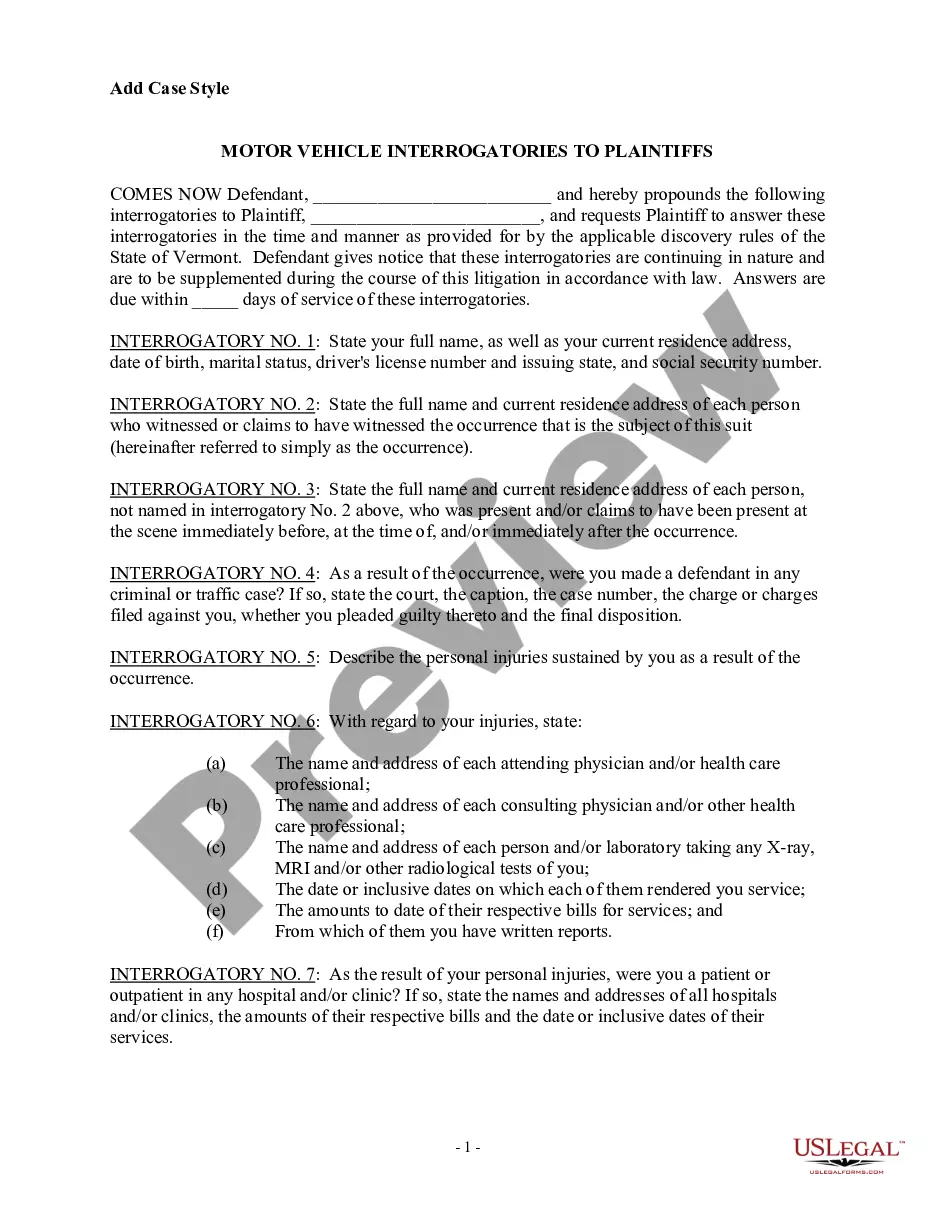
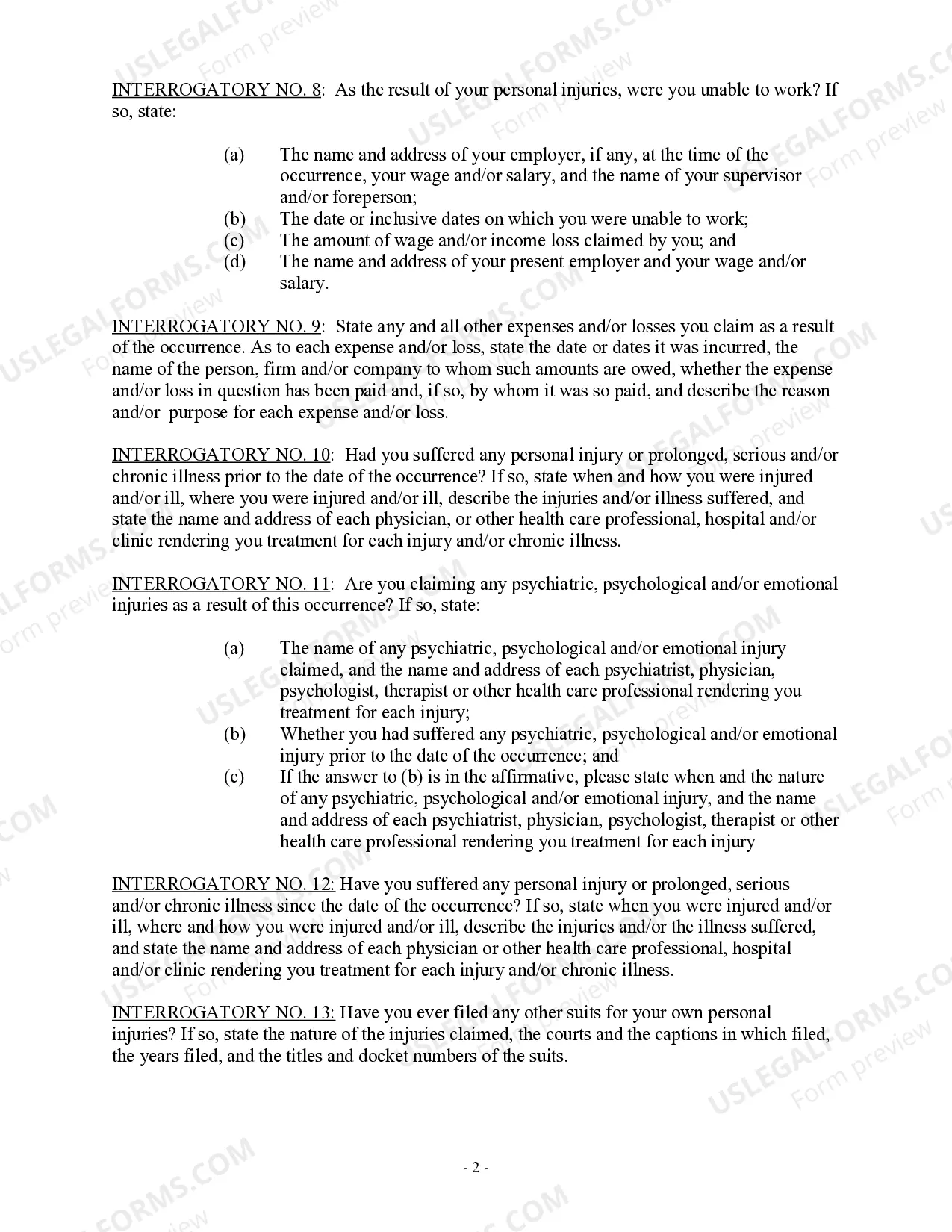
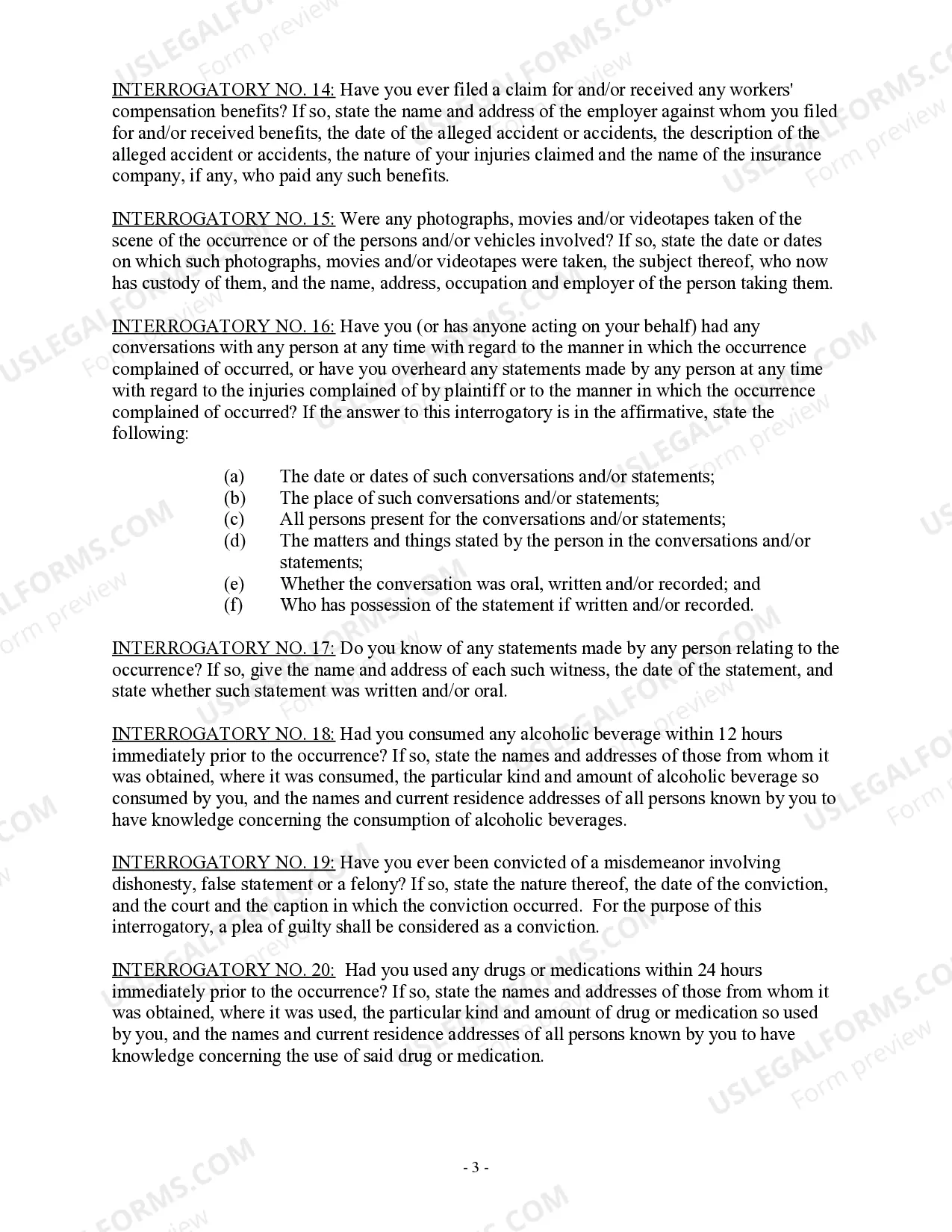
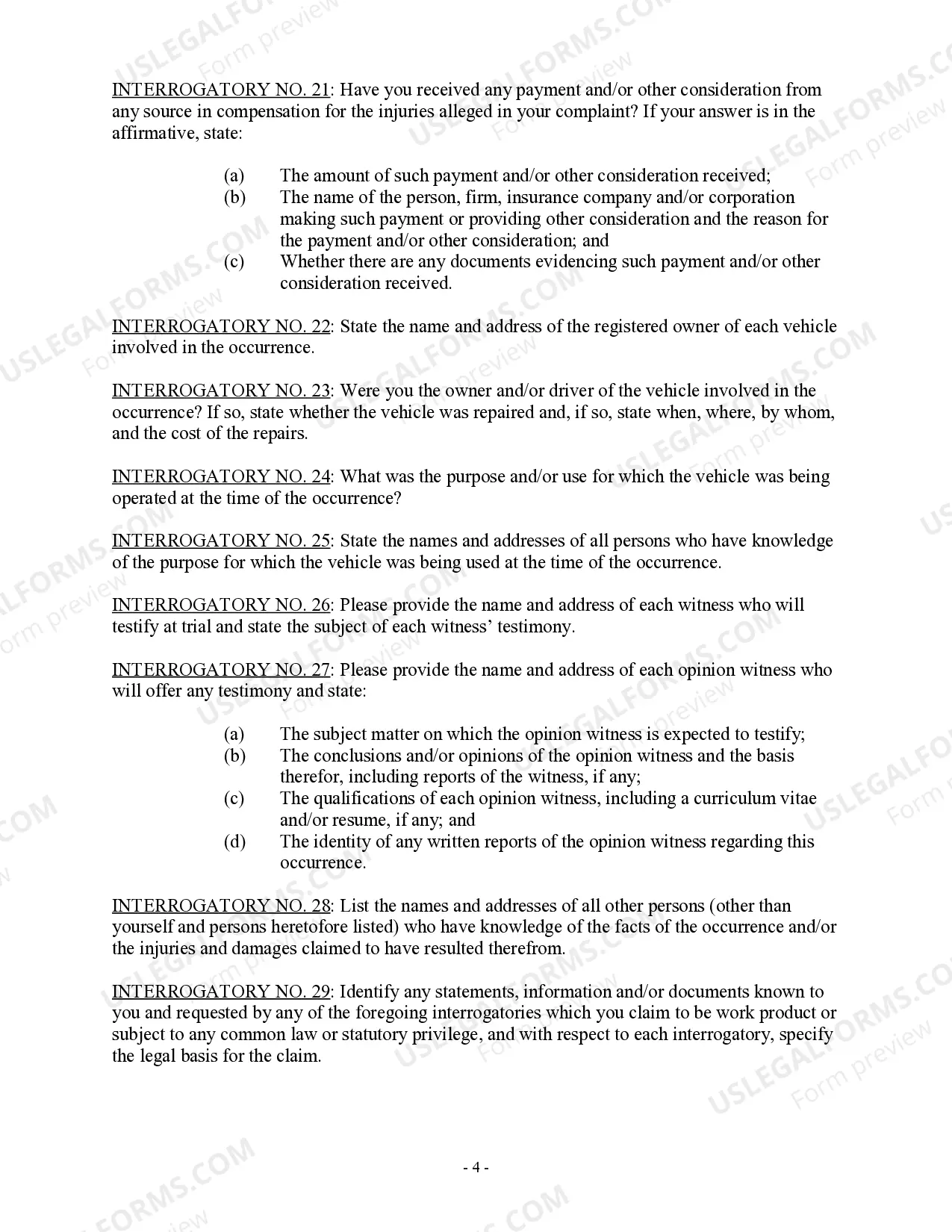
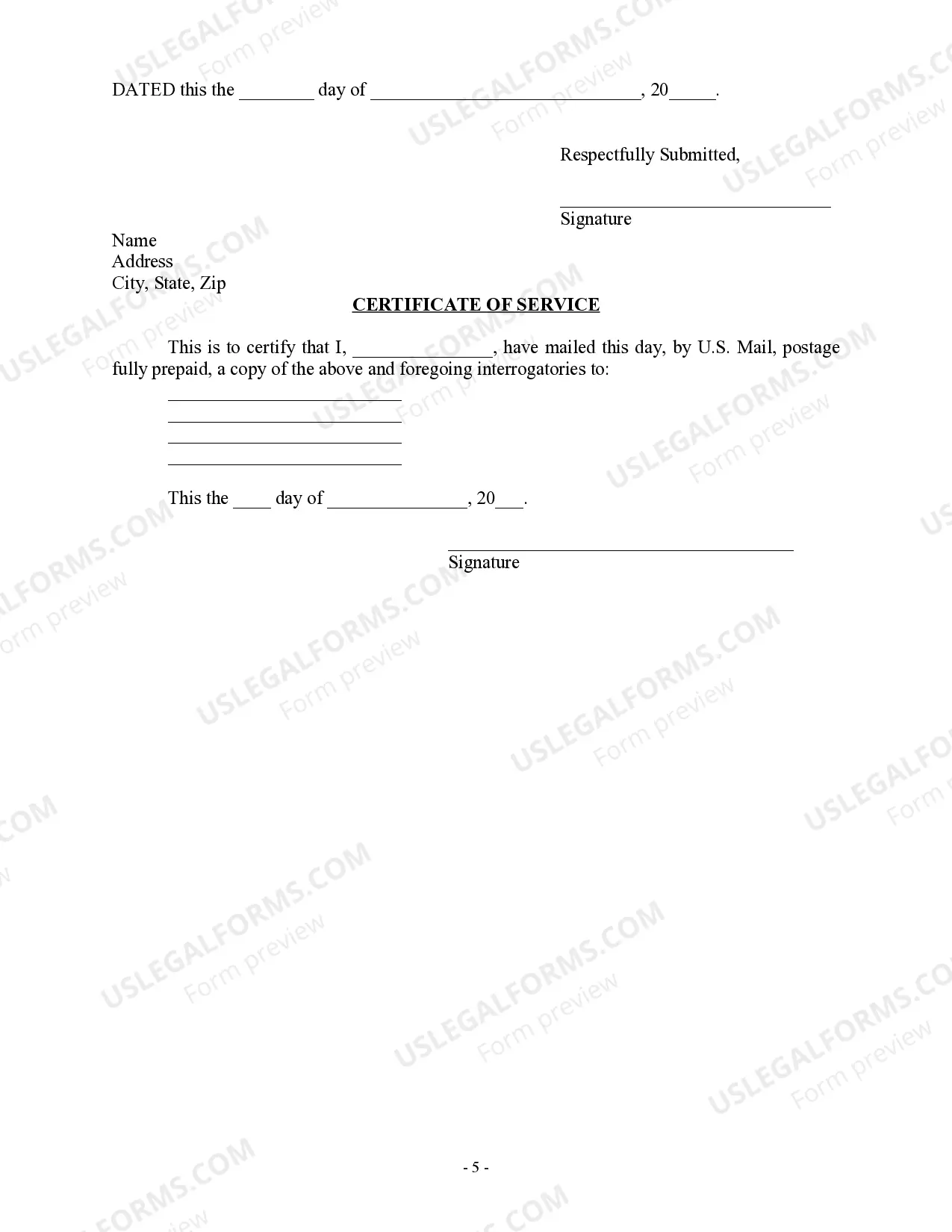
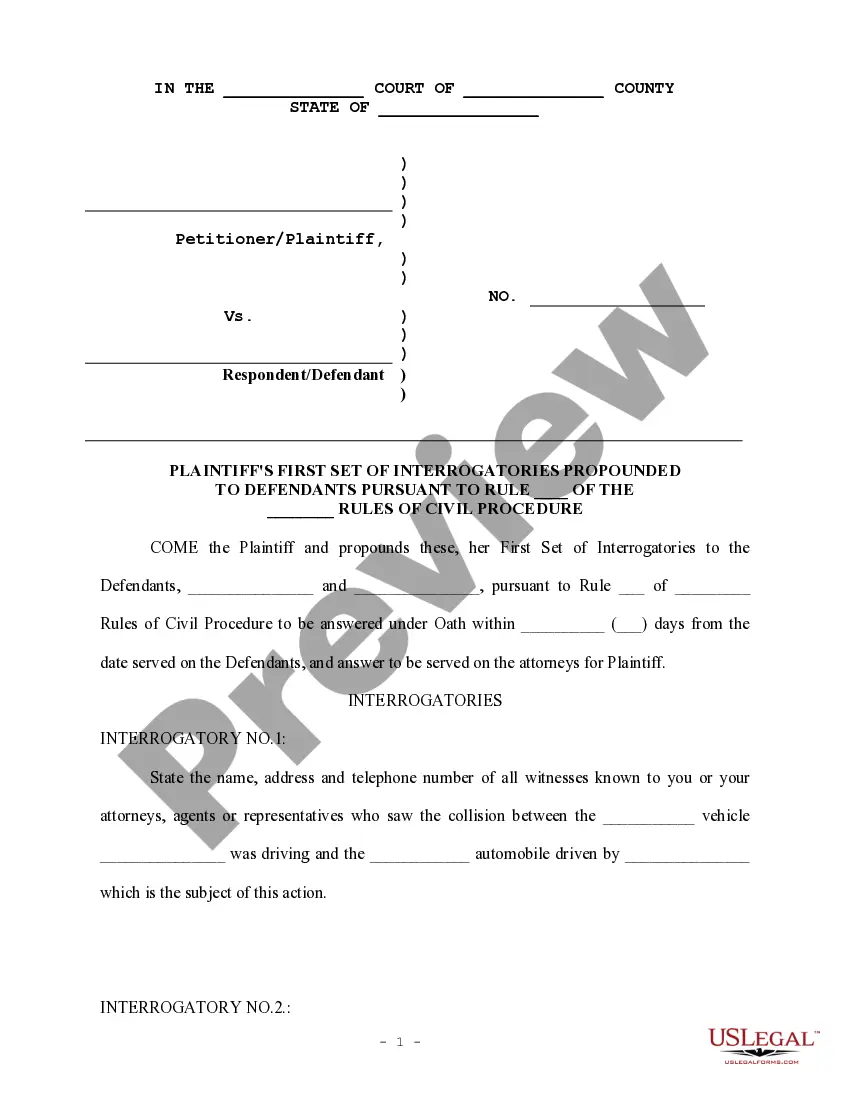
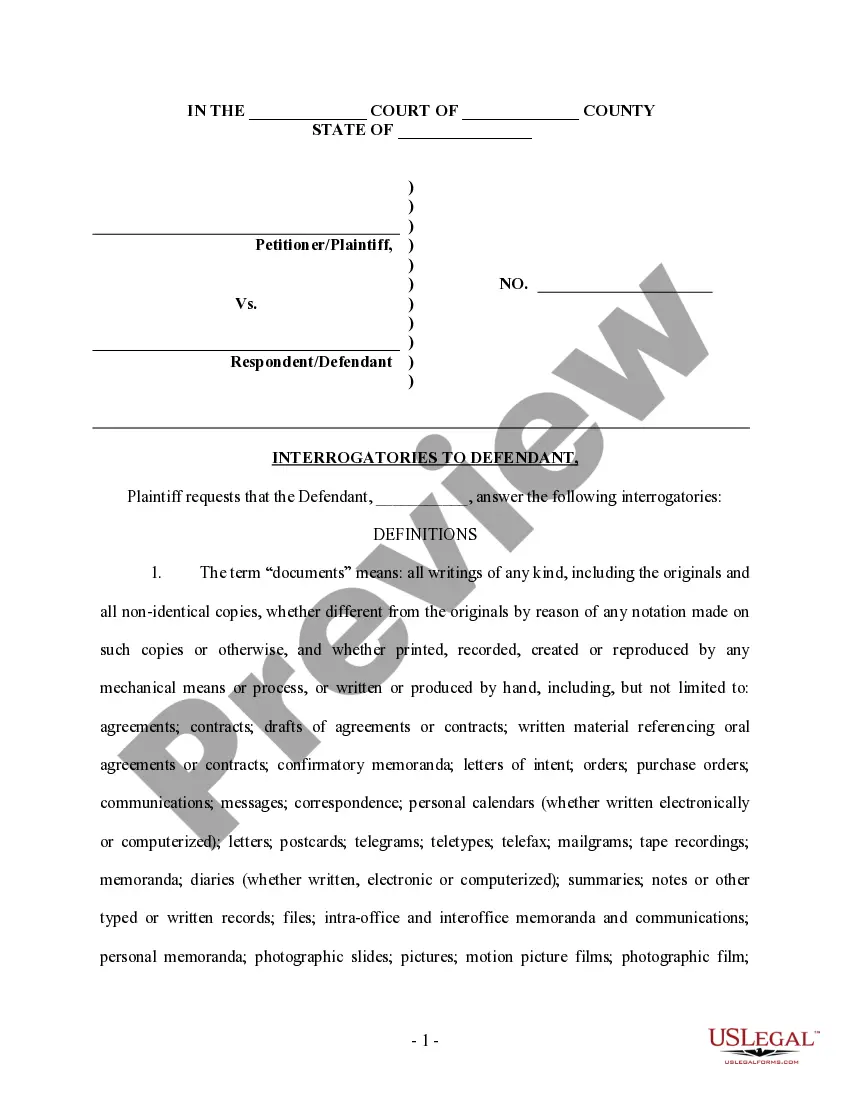
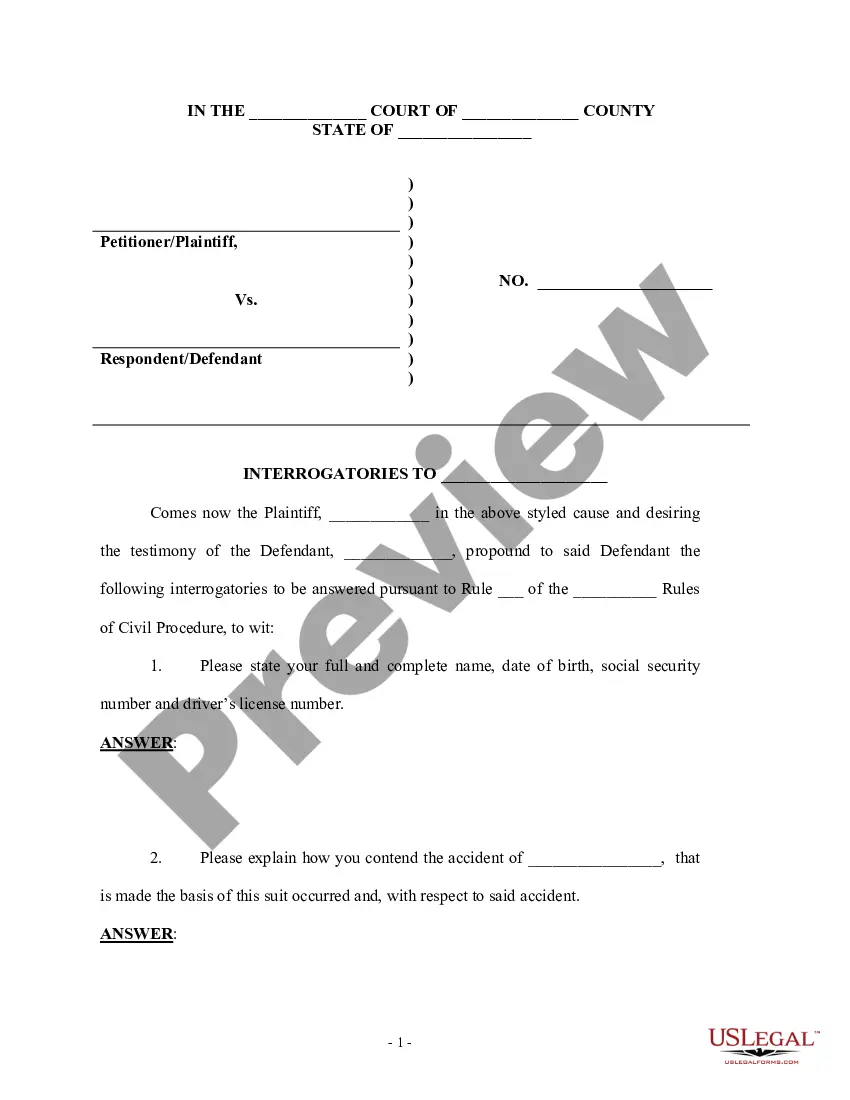
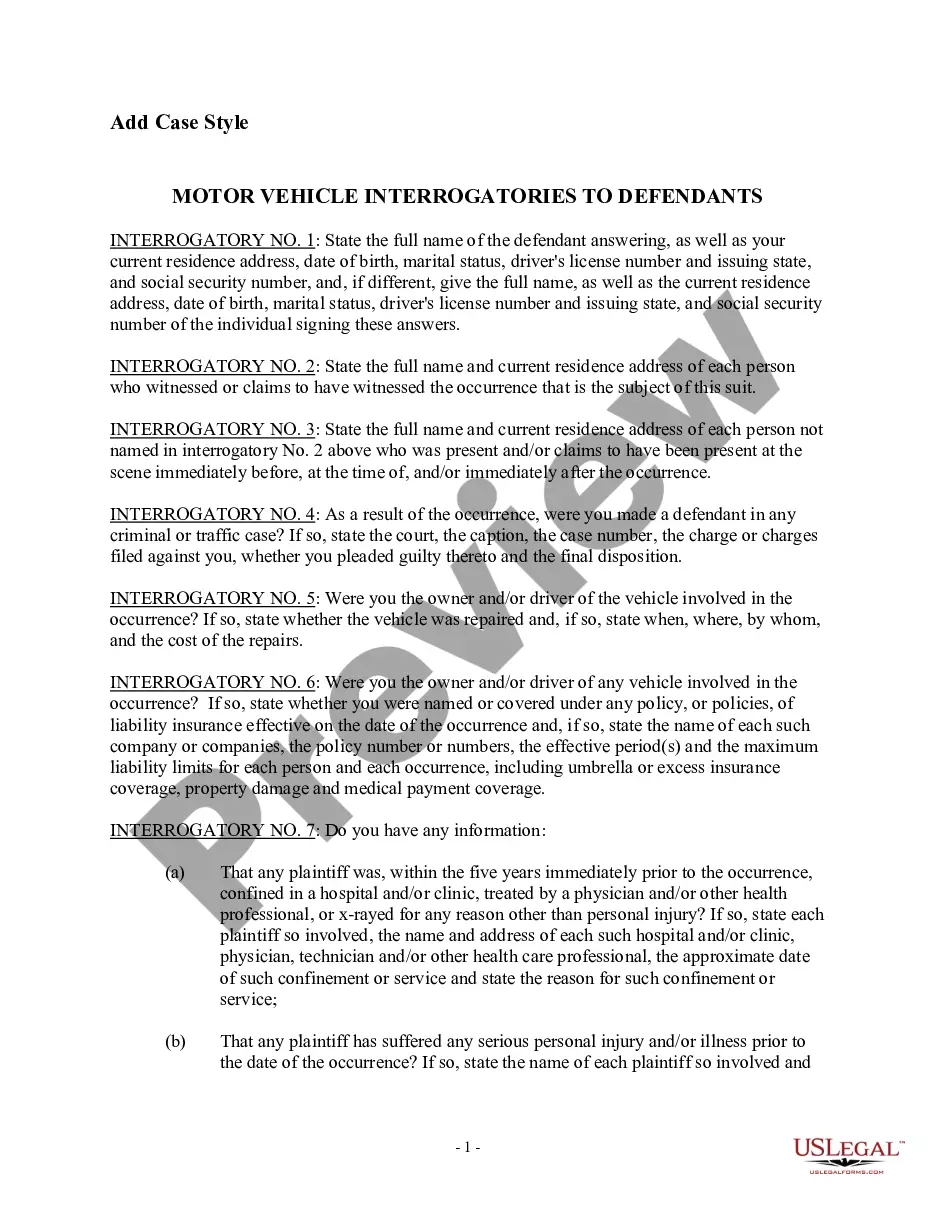
The Interrogatories to Plaintiff for Motor Vehicle Occurrence is a legal document used by the defendant in a vehicle incident case, such as an automobile accident. This form includes a series of questions that the defendant can pose to the plaintiff, aimed at gathering detailed information about the accident, claims, injuries, and any other pertinent facts. This form is designed to facilitate the discovery process, which allows parties to obtain necessary information before trial.
Form components explained
- Full identification details of the plaintiff, including name, address, and social security number.
- Information regarding witnesses and their contact details related to the incident.
- Questions about prior injuries or illnesses that may affect the current claim.
- Details on medical treatment received, including providers, bills, and dates of service.
- Financial implications of the injuries, including lost wages and other expenses incurred.
- Inquiries regarding any previous legal claims for personal injuries.
Situations where this form applies
This form should be used in the aftermath of a motor vehicle accident when the defendant seeks to gather information from the plaintiff in preparation for litigation. It is particularly useful when the plaintiff has filed a lawsuit claiming injuries or damages resulting from the accident. The interrogatories can help clarify the details of the case and ensure that all relevant facts are considered in the legal process.
Who needs this form
- Defendants involved in a motor vehicle accident litigation.
- Attorneys representing defendants seeking to gather detailed information from plaintiffs.
- Individuals preparing for a legal dispute stemming from a vehicle incident.
How to complete this form
- Identify the parties involved by entering the full names of both the defendant and the plaintiff.
- Answer each interrogatory accurately and completely, providing all requested information.
- Specify any witnesses or expert opinions that may be relevant to the case.
- List all medical professionals and expenses associated with the injuries claimed by the plaintiff.
- Submit the completed interrogatories to the plaintiff within the required timeframe set by state law.
Does this document require notarization?
In most cases, this form does not require notarization. However, some jurisdictions or signing circumstances might. US Legal Forms offers online notarization powered by Notarize, accessible 24/7 for a quick, remote process.
Get your form ready online
Our built-in tools help you complete, sign, share, and store your documents in one place.
Make edits, fill in missing information, and update formatting in US Legal Forms—just like you would in MS Word.
Download a copy, print it, send it by email, or mail it via USPS—whatever works best for your next step.
Sign and collect signatures with our SignNow integration. Send to multiple recipients, set reminders, and more. Go Premium to unlock E-Sign.
If this form requires notarization, complete it online through a secure video call—no need to meet a notary in person or wait for an appointment.
We protect your documents and personal data by following strict security and privacy standards.

Make edits, fill in missing information, and update formatting in US Legal Forms—just like you would in MS Word.

Download a copy, print it, send it by email, or mail it via USPS—whatever works best for your next step.

Sign and collect signatures with our SignNow integration. Send to multiple recipients, set reminders, and more. Go Premium to unlock E-Sign.

If this form requires notarization, complete it online through a secure video call—no need to meet a notary in person or wait for an appointment.

We protect your documents and personal data by following strict security and privacy standards.
Typical mistakes to avoid
- Failing to provide complete answers to all interrogatories.
- Not including all relevant witnesses or evidence.
- Missing deadlines for submitting responses.
- Neglecting to clarify ambiguous questions that may require further explanation.
Advantages of online completion
- Easy access to a professionally drafted template tailored for legal use.
- Convenience of downloading and completing the form at your own pace.
- Ability to customize interrogatories based on specific case needs.
- Confidence in using a form designed by licensed attorneys to ensure legal compliance.
Key takeaways
- The Interrogatories to Plaintiff for Motor Vehicle Occurrence is crucial for gathering information in vehicle accident cases.
- Answering each question truthfully and thoroughly is vital for a successful legal process.
- The form must be tailored to suit the specifics of your case while adhering to state law.
Looking for another form?
Form popularity
FAQ
You can object to an interrogatory if the information sought is known by the requesting party or available to both parties equally. For example, you should raise this objection if the answers are publicly available or in a third-party's custody or control.
You must mail the original verification page with the interrogatories back to the other side. Your answers to the interrogatories should usually be short, clear, and direct and should answer only the question that is being asked. This is not the time to set out your entire case or defense to the other side.
Personal/Corporate information of opposing party. Identifying information of witnesses. Contact information & background of expert witnesses. Insurance information.
Make it a lead-off general objection. Object to anything that is not relevant to the subject matter (no longer the standard) or not likely to lead to admissible evidence (no longer the standard). Don't say if anything is being withheld on the basis of the objection. Use boilerplate wording from form files.
Interrogatories Interrogatories are written questions that are sent by one party to another. Generally speaking, the party who receives these questions has 30 days to answer them.If the other party fails to respond on time, within 30 days, then the questions are deemed admitted.
So, can you refuse to answer interrogatories? The answer is, no, you may not.That answer must either permit inspection of the requested information or object to the production of the information for a specific reason.
Contention interrogatories can be characterized as: any question that asks another party to indicate what it contends . . . a question asking another party whether it makes some specified contention . . . a question asking an opposing party to state all facts on which it bases some specified contention . . .
Responding to Form InterrogatoriesAnswer each question, being careful to answer each subpart, if one exists. Read the question carefully, and answer only what it asks. You may attach exhibits, if necessary. The response must be verified, meaning you must swear that the responses given are true.
The purpose of interrogatories is to learn a great deal of general information about a party in a lawsuit. For example, the defendant in a personal injury lawsuit about a car accident might send you interrogatories asking you to disclose things like: Where you live.