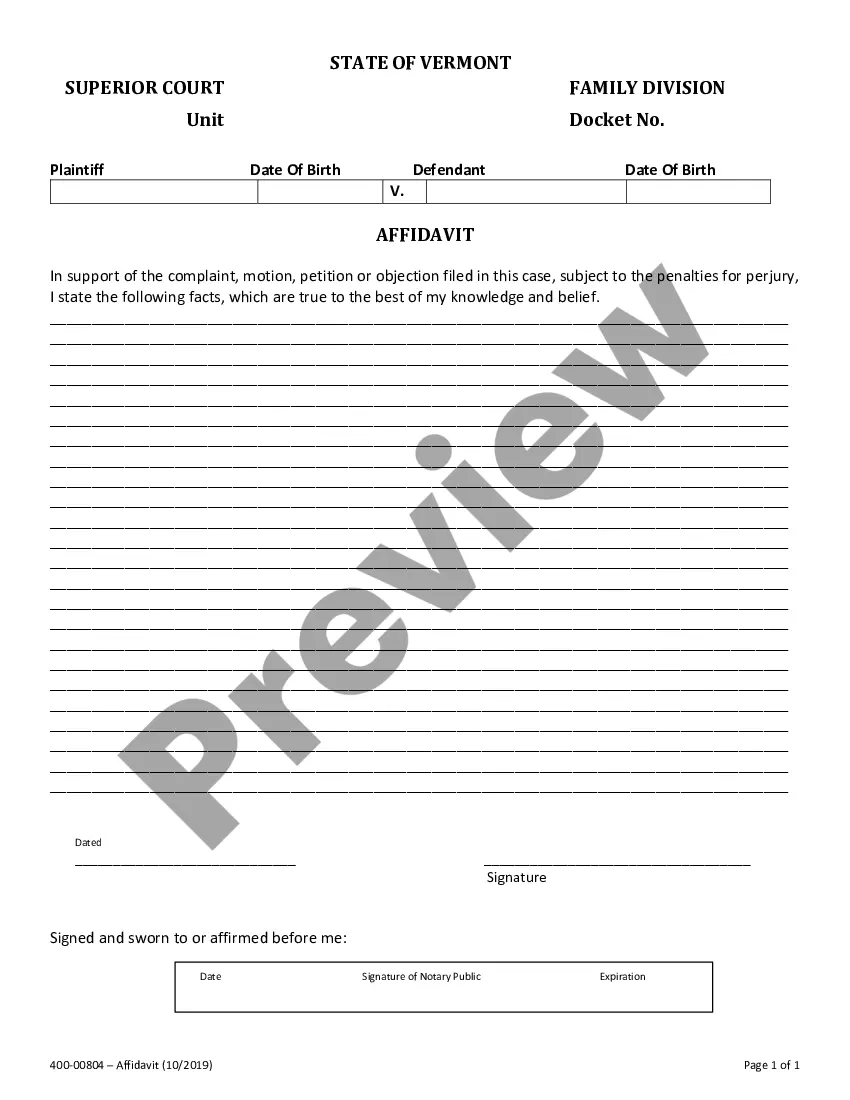
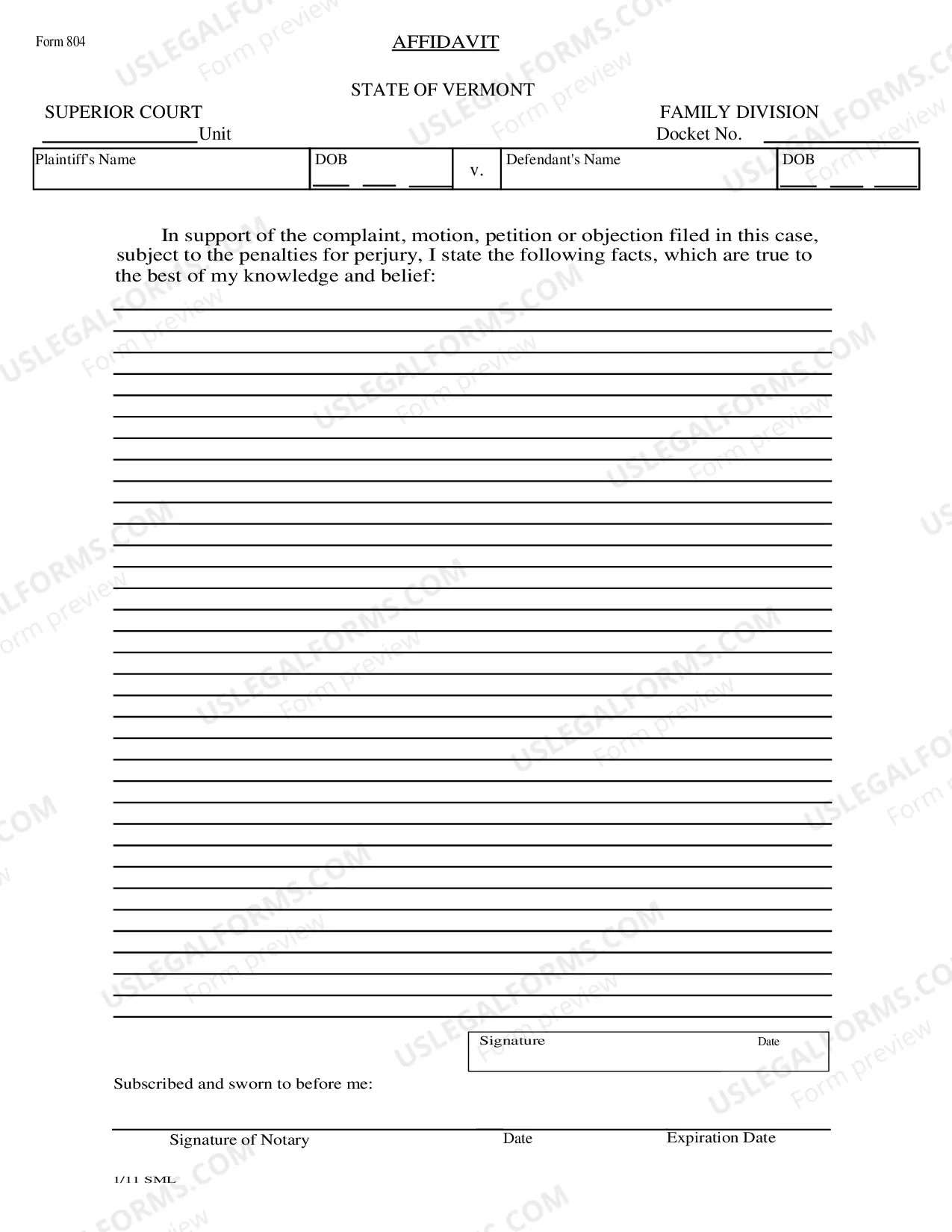
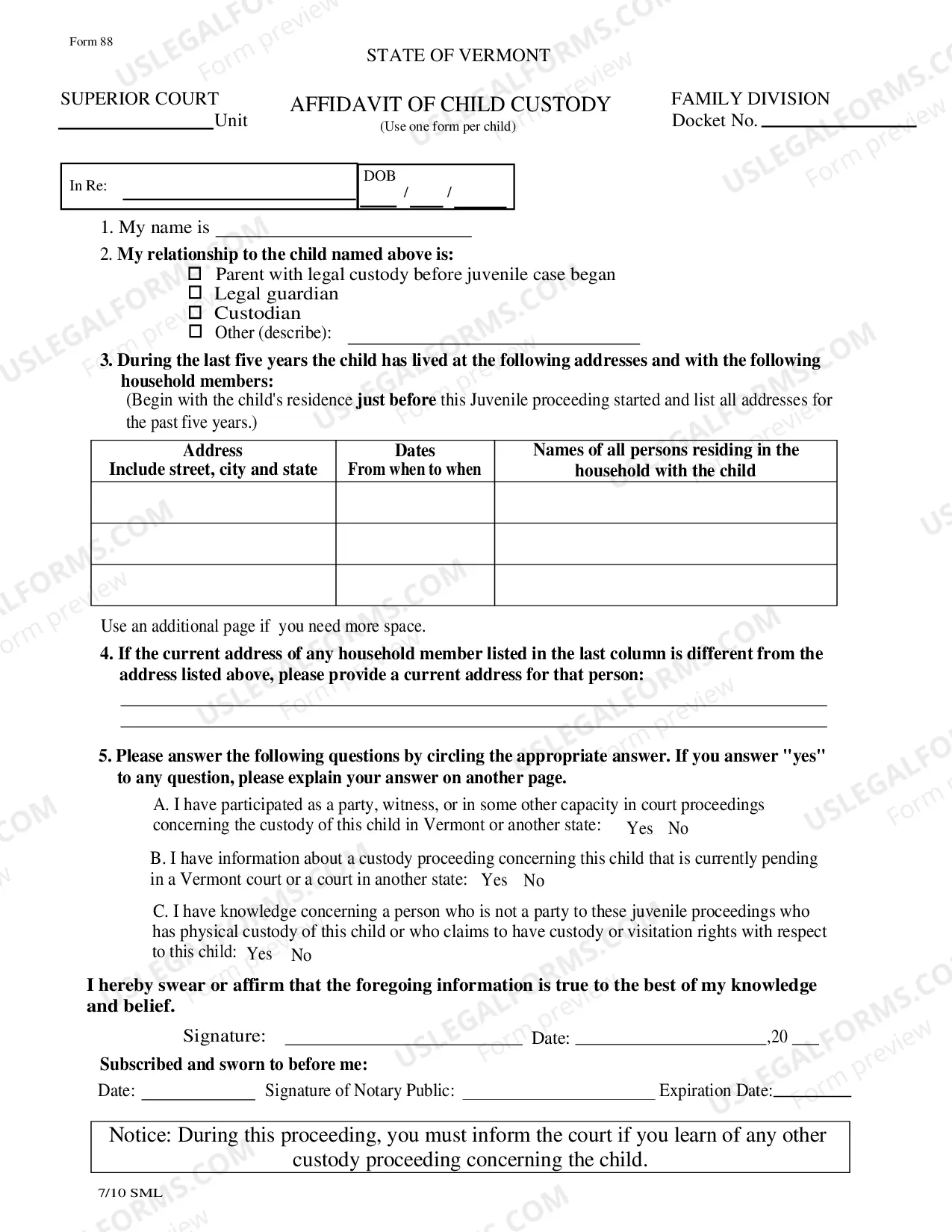
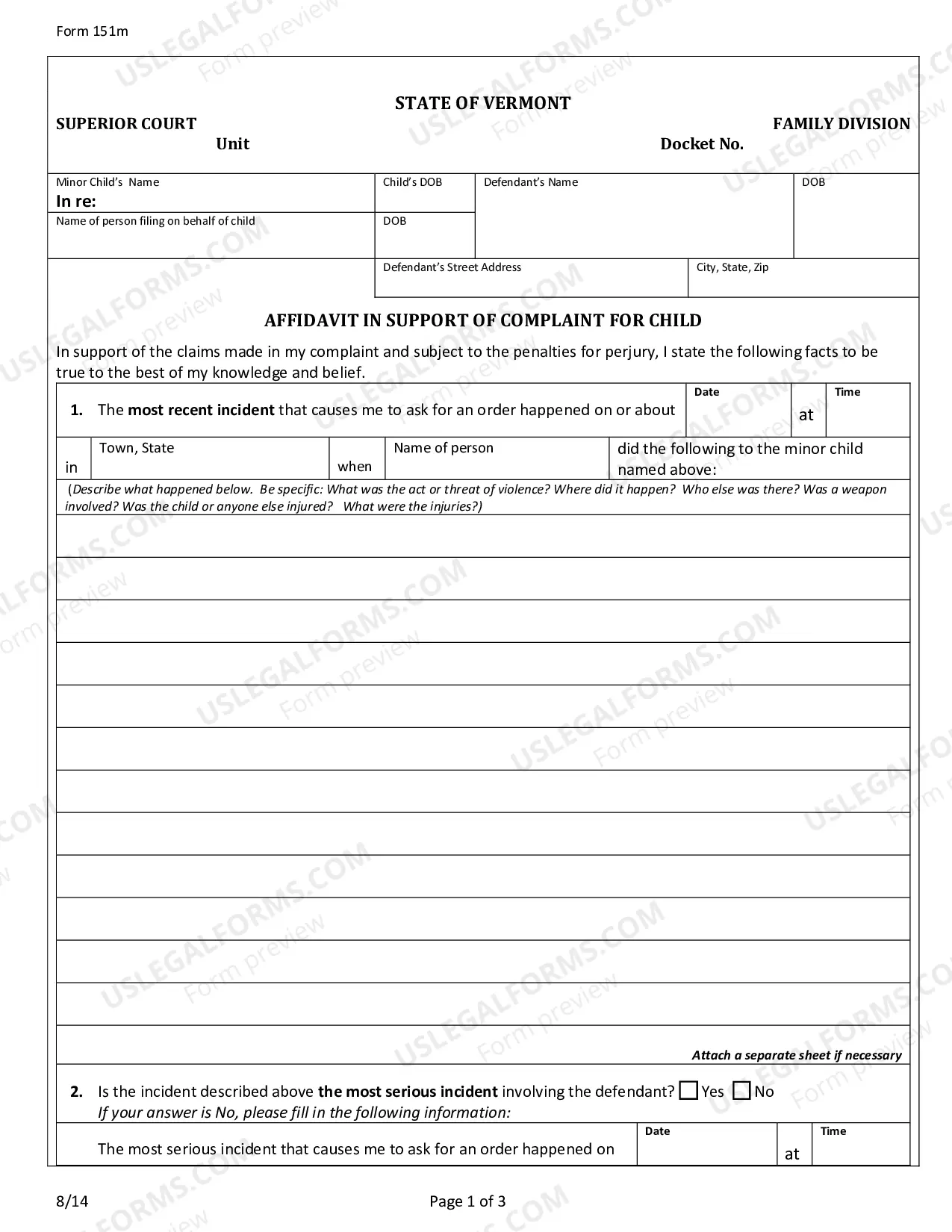
Vermont Affidavit - Family Court
Description
Get your form ready online
Our built-in tools help you complete, sign, share, and store your documents in one place.
Make edits, fill in missing information, and update formatting in US Legal Forms—just like you would in MS Word.
Download a copy, print it, send it by email, or mail it via USPS—whatever works best for your next step.
Sign and collect signatures with our SignNow integration. Send to multiple recipients, set reminders, and more. Go Premium to unlock E-Sign.
If this form requires notarization, complete it online through a secure video call—no need to meet a notary in person or wait for an appointment.
We protect your documents and personal data by following strict security and privacy standards.

Make edits, fill in missing information, and update formatting in US Legal Forms—just like you would in MS Word.

Download a copy, print it, send it by email, or mail it via USPS—whatever works best for your next step.

Sign and collect signatures with our SignNow integration. Send to multiple recipients, set reminders, and more. Go Premium to unlock E-Sign.

If this form requires notarization, complete it online through a secure video call—no need to meet a notary in person or wait for an appointment.

We protect your documents and personal data by following strict security and privacy standards.
Looking for another form?
How to fill out Vermont Affidavit - Family Court?
Looking for a Vermont Affidavit - Family Court online might be stressful. All too often, you see files which you think are alright to use, but discover afterwards they are not. US Legal Forms offers over 85,000 state-specific legal and tax forms drafted by professional legal professionals in accordance with state requirements. Have any form you’re searching for within minutes, hassle-free.
If you already have the US Legal Forms subscription, merely log in and download the sample. It will automatically be included in your My Forms section. If you don’t have an account, you have to sign-up and pick a subscription plan first.
Follow the step-by-step instructions listed below to download Vermont Affidavit - Family Court from our website:
- Read the document description and click Preview (if available) to check if the template meets your expectations or not.
- If the form is not what you need, find others with the help of Search field or the listed recommendations.
- If it is right, click Buy Now.
- Choose a subscription plan and create an account.
- Pay via credit card or PayPal and download the document in a preferable format.
- After getting it, you can fill it out, sign and print it.
Get access to 85,000 legal templates straight from our US Legal Forms catalogue. In addition to professionally drafted samples, users may also be supported with step-by-step instructions regarding how to get, download, and complete forms.
Form popularity
FAQ
In cases where parents can't agree, a judge will decide visitation and custody based on the child's best interests.Both parents are bound by the terms of a custody order. If your child refuses to go to visits with the other parent, you could still be on the hook for failing to comply with a custody order.
The court orders a flat percentage of 25% of the non-custodial parent's income to be paid in child support to the custodial parent.
Although the law specifically permits children at least 14-years-old to express an opinion, there is no specific age when a judge will listen to a child's opinion. California statutes also permit a child younger than 14 years old to testify regarding a custodial preference, unless the court decides it's not in the
You can achieve a legal separation by filing a petition (request) with the court, which allows the judge to divide your marital property, establish child support and alimony, and create a parenting plan for your children.
Thankfully, at least for the most part, your obligation to pay taxes stops after you die. But, dying won't get you out of support payments.
Generally, the obligation ends when the child reaches 18 years of age or graduates from high school, whichever occurs later. A child will also automatically be ineligible for child support if that child marries, is no longer disabled as determined by the court, or the child dies.
1 attorney answer Although a child's wishes are one factor among many the court must consider in determining the child's best interests, a minor child never gets to "decide" which parent to live with.
When Will the Court Consider a Child's Preference? When a child has reached the age of 14 in Vermont, the child can choose his or her guardian, subject to the court's approval. Children who are younger than 14 don't have the right to select the parent who they would like to have custody.
13 ANSWERS The child can not dictate who he or she will live with. You will need to have your child's preferences considered through a Guardian ad Litem.