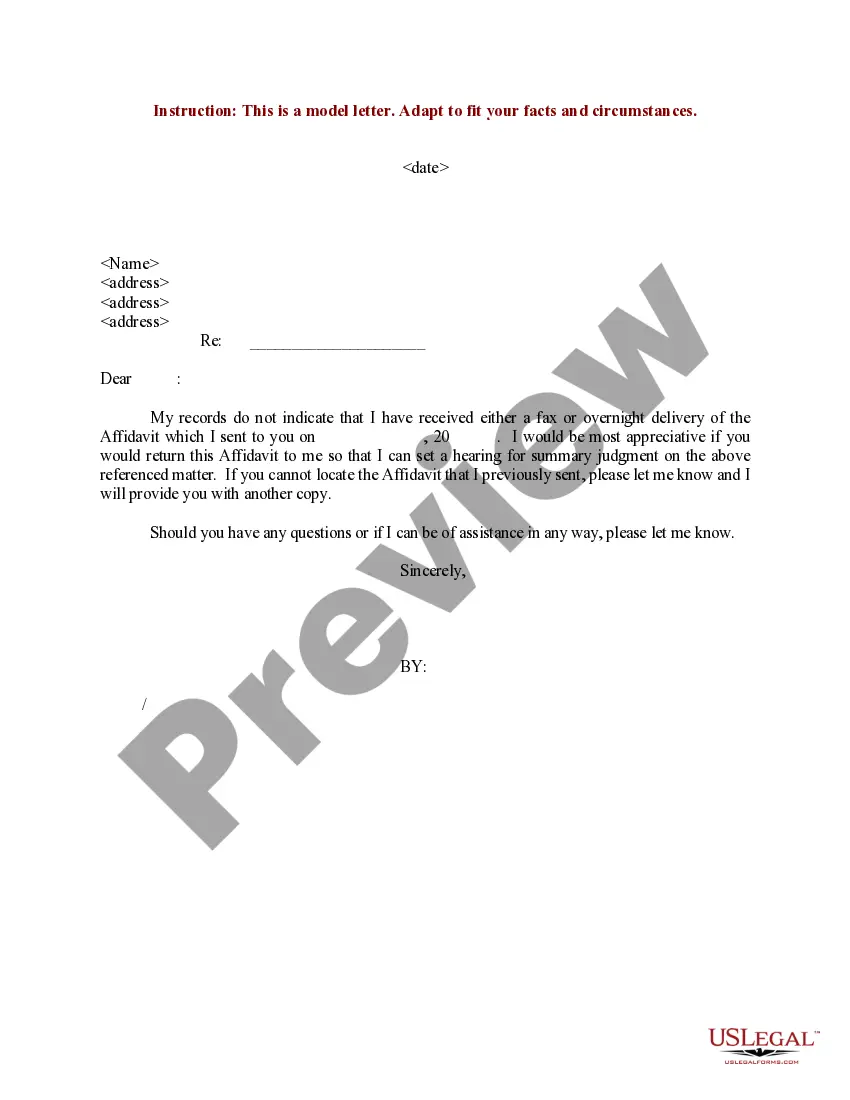
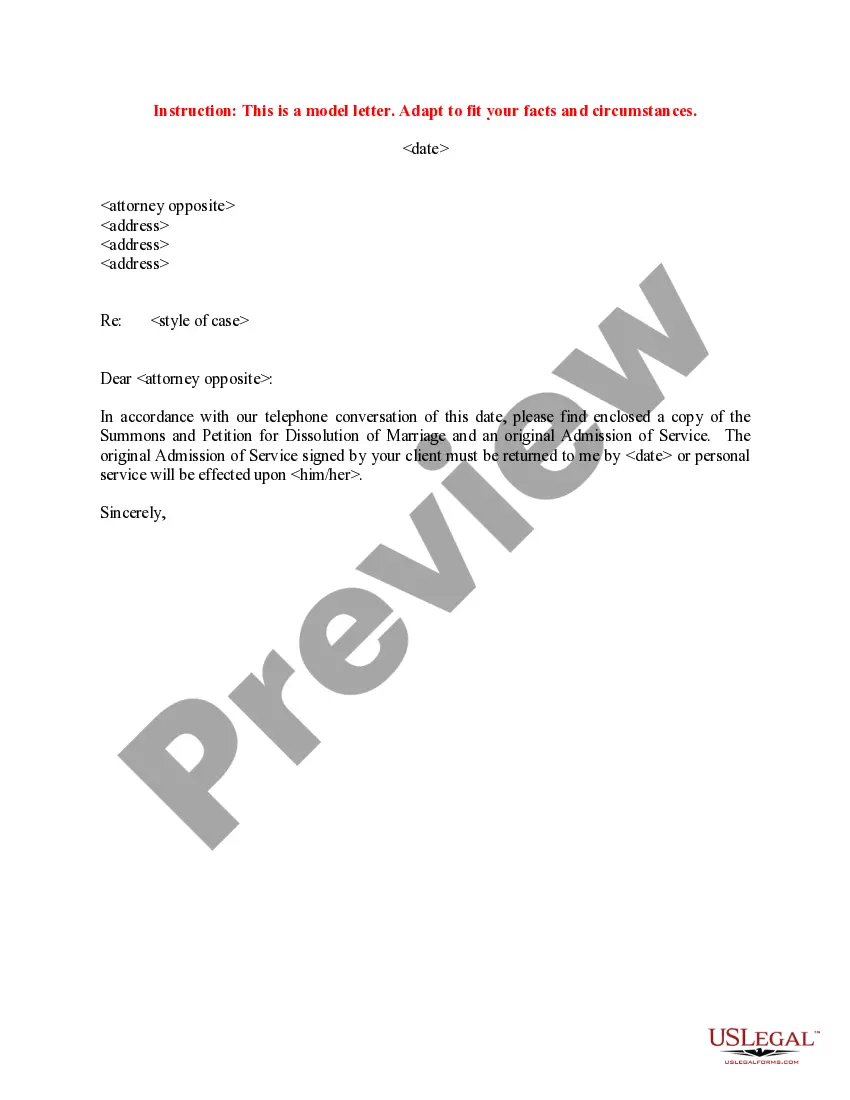
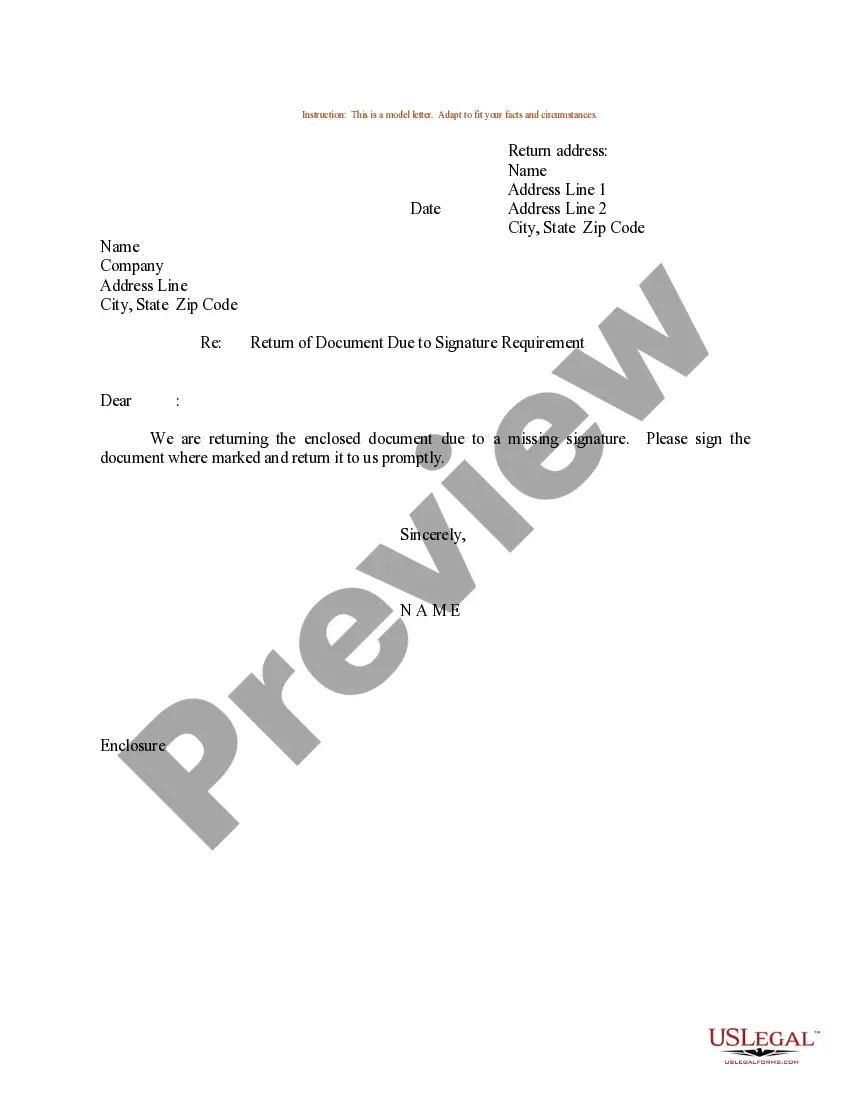
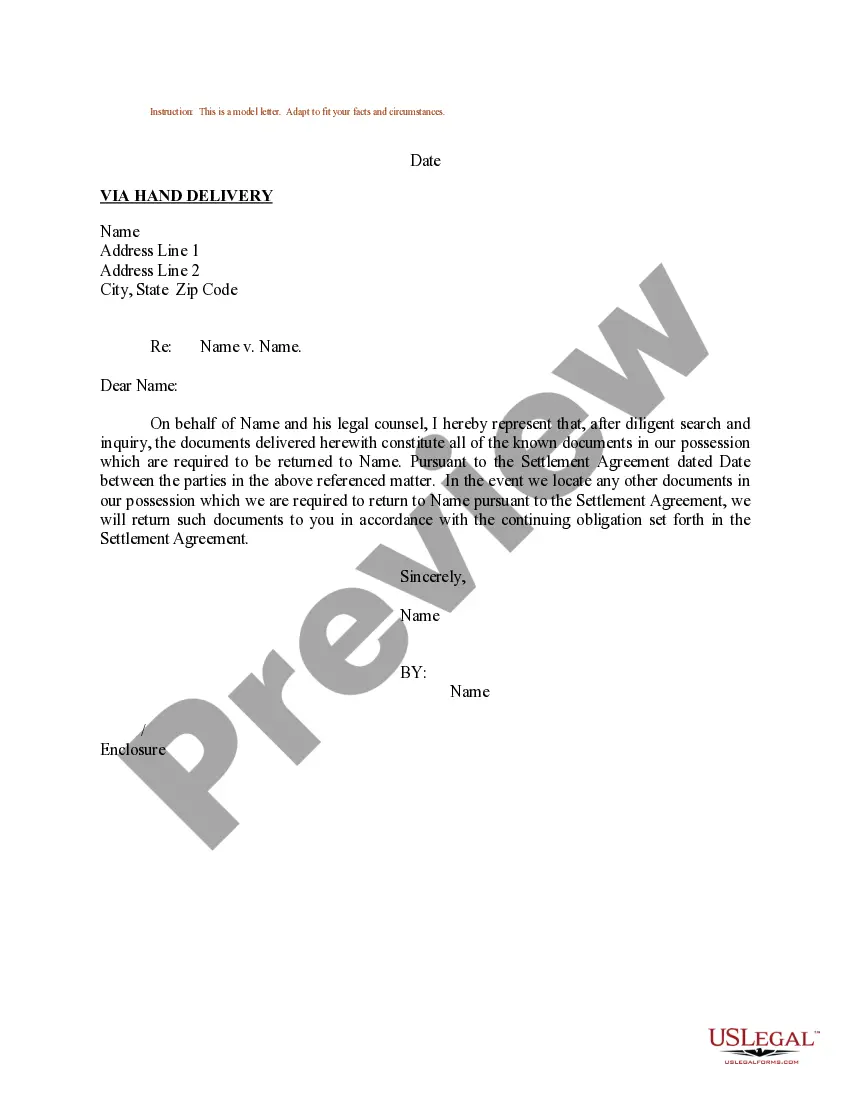
This form is a sample letter in Word format covering the subject matter of the title of the form.
Vermont Sample Letter for Return of Affidavit
Category:
State:
Multi-State
Control #:
US-0008LTR
Format:
Word;
Rich Text
Instant download
Description
Get your form ready online
Our built-in tools help you complete, sign, share, and store your documents in one place.
Built-in online Word editor
Make edits, fill in missing information, and update formatting in US Legal Forms—just like you would in MS Word.
Export easily
Download a copy, print it, send it by email, or mail it via USPS—whatever works best for your next step.
E-sign your document
Sign and collect signatures with our SignNow integration. Send to multiple recipients, set reminders, and more. Go Premium to unlock E-Sign.
Notarize online 24/7
If this form requires notarization, complete it online through a secure video call—no need to meet a notary in person or wait for an appointment.
Store your document securely
We protect your documents and personal data by following strict security and privacy standards.

Make edits, fill in missing information, and update formatting in US Legal Forms—just like you would in MS Word.

Download a copy, print it, send it by email, or mail it via USPS—whatever works best for your next step.

Sign and collect signatures with our SignNow integration. Send to multiple recipients, set reminders, and more. Go Premium to unlock E-Sign.

If this form requires notarization, complete it online through a secure video call—no need to meet a notary in person or wait for an appointment.

We protect your documents and personal data by following strict security and privacy standards.
Looking for another form?


How to fill out Sample Letter For Return Of Affidavit?
If you need to finalize, acquire, or print legal document templates, utilize US Legal Forms, the best assortment of legal forms available online. Take advantage of the site’s straightforward and convenient search feature to find the documents you require. Various templates for business and personal uses are categorized by types and claims, or keywords.
Use US Legal Forms to access the Vermont Sample Letter for Return of Affidavit in just a few clicks. If you are already a US Legal Forms customer, Log In to your account and click the Acquire button to obtain the Vermont Sample Letter for Return of Affidavit. You can also access forms you have previously downloaded from the My documents tab of your account.
If you are using US Legal Forms for the first time, follow the guidelines below: Step 1. Ensure you have selected the form for the correct state/country. Step 2. Use the Review option to verify the form’s content. Don’t forget to read the summary. Step 3. If you are not satisfied with the form, utilize the Search area at the top of the screen to find other versions of the legal form template. Step 4. Once you have located the form you need, click the Get now button. Choose the payment plan you prefer and enter your details to register for an account. Step 5. Process the payment. You can use your credit card or PayPal account to complete the transaction. Step 6. Select the format of the legal form and download it to your device. Step 7. Fill out, modify, and print or sign the Vermont Sample Letter for Return of Affidavit.
- Every legal document template you download is your property indefinitely.
- You have access to every form you downloaded in your account.
- Click on the My documents section and select a form to print or download again.
- Be proactive and obtain, and print the Vermont Sample Letter for Return of Affidavit with US Legal Forms.
- There are thousands of professional and state-specific forms available for your business or personal needs.
Form popularity
FAQ
Filling out an affidavit correctly involves providing accurate information and ensuring that all sections are completed. Begin by entering your personal details, followed by a clear description of the facts. After you have completed the affidavit, sign it in front of a notary public. Using a Vermont Sample Letter for Return of Affidavit can provide you with a reliable template to follow, ensuring your document meets legal standards.
To write an example of an affidavit, start by stating your full name and address at the top. Then, clearly outline the facts you want to attest to in a straightforward manner. Make sure to include a statement affirming that the contents are true to the best of your knowledge. Utilizing a Vermont Sample Letter for Return of Affidavit can help guide you in structuring your document properly.
Timeline Residency: To file for divorce, you or your spouse must have been a resident of Vermont for six months. ... Grounds for divorce: Vermont allows a no-fault divorce. ... Minor children: If you have minor children, the court usually won't schedule a final divorce hearing until six months after the divorce starts.
Under Vermont divorce laws, a fault-based divorce will be granted for the following reasons: adultery. imprisonment for at least 3 years. intolerable severity (behavior that is a present and imminent danger to the health of the other spouse)
Legal separation involves all the details of a divorce ? asset division, debt division, parenting plan and child support if you have children, and potentially spousal support ? but it does not dissolve the marriage. Therefore, you will not be divorced if filing for legal separation.
Court staff can serve the papers on the other party by mailing them by certified mail, return receipt requested, with delivery restricted. You will need to provide the other party's address. You are responsible for the fee for this type of service unless the court waived your fees and costs of service.
To avoid an impending suspension, please contact the Judicial Bureau directly at 802-295-8869 or 802-652-1900.
Vermont probate follows this general flow: contact the court, get appointed as personal representative, submit will if it exists, inventory and submit valuations of all relevant assets, have the court and beneficiaries approve it, and then distribute the assets to beneficiaries.
The court will divide your property equitably, but that does not necessarily mean a 50/50 split. The court, by law, has to look at these factors when dividing property: The length of the marriage.