Vermont Shared Well Water Agreement
Description
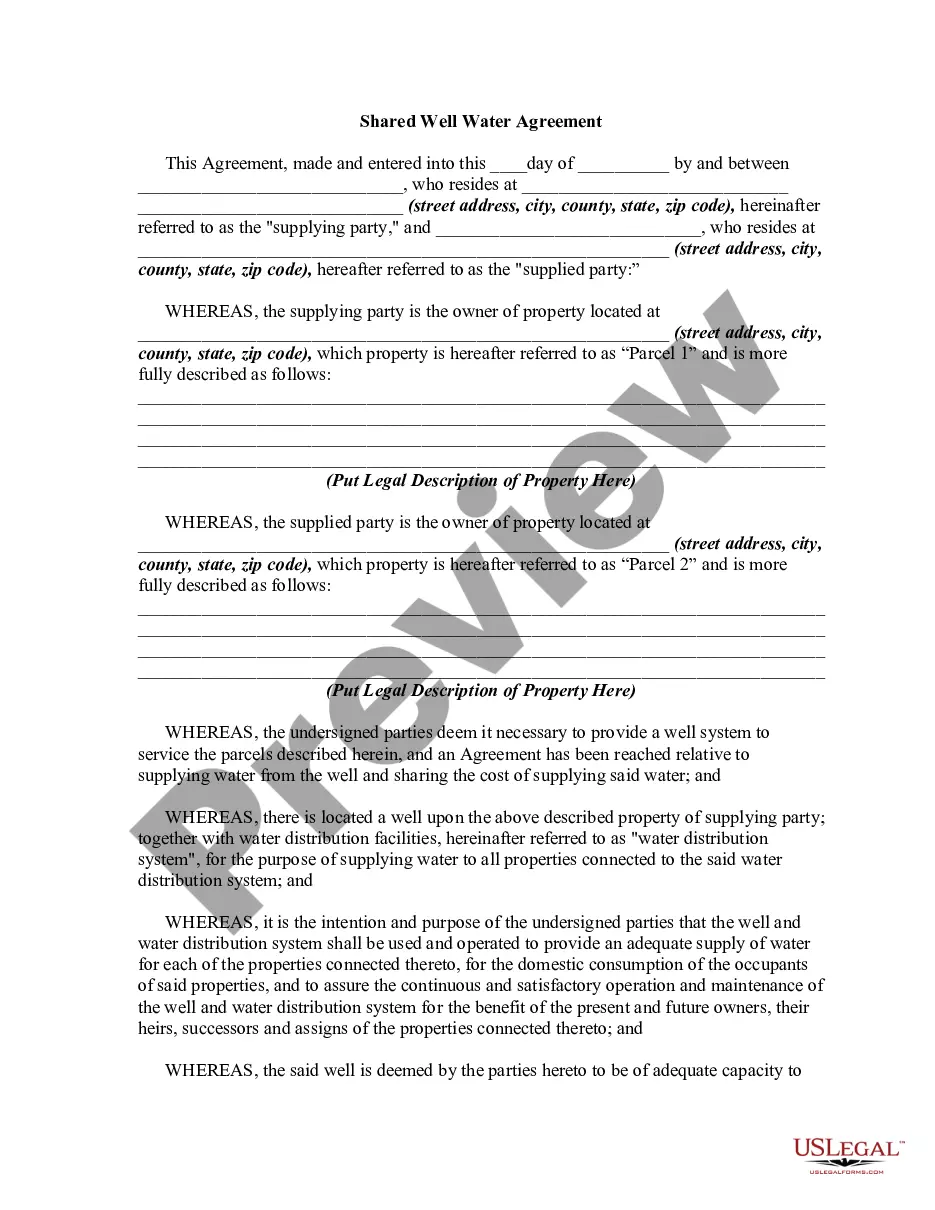
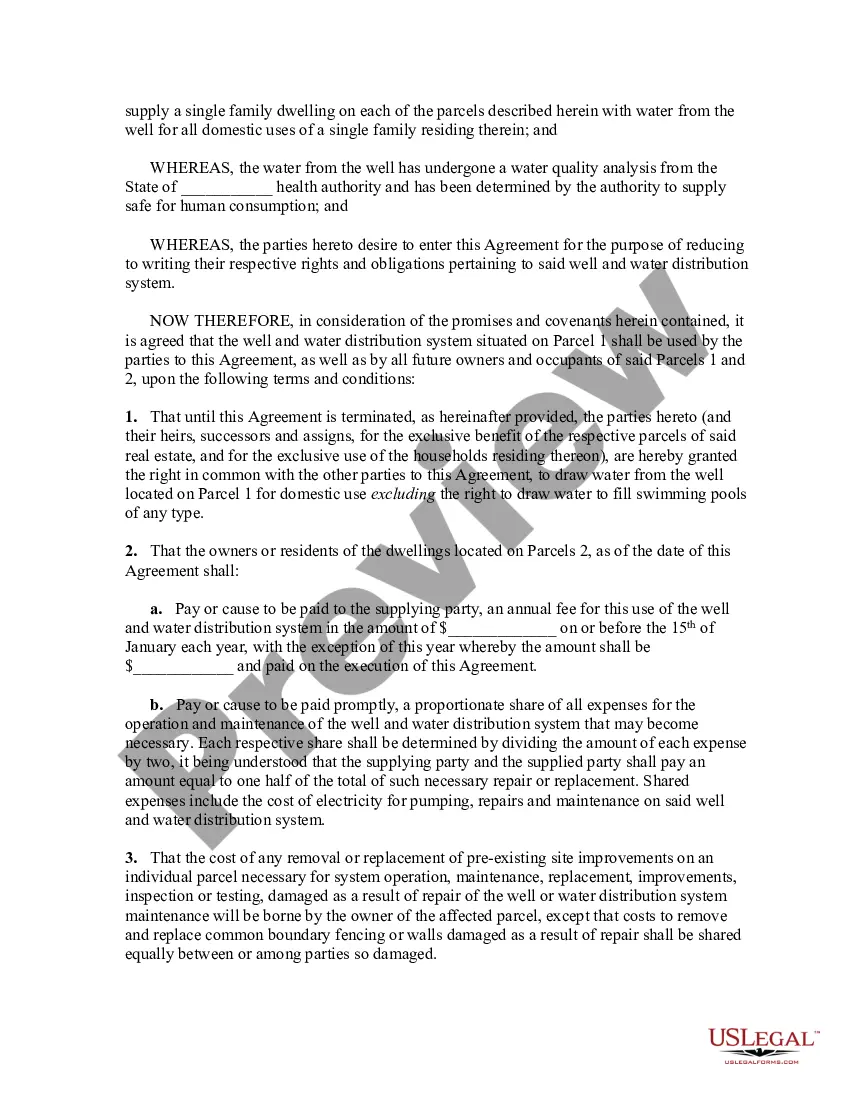
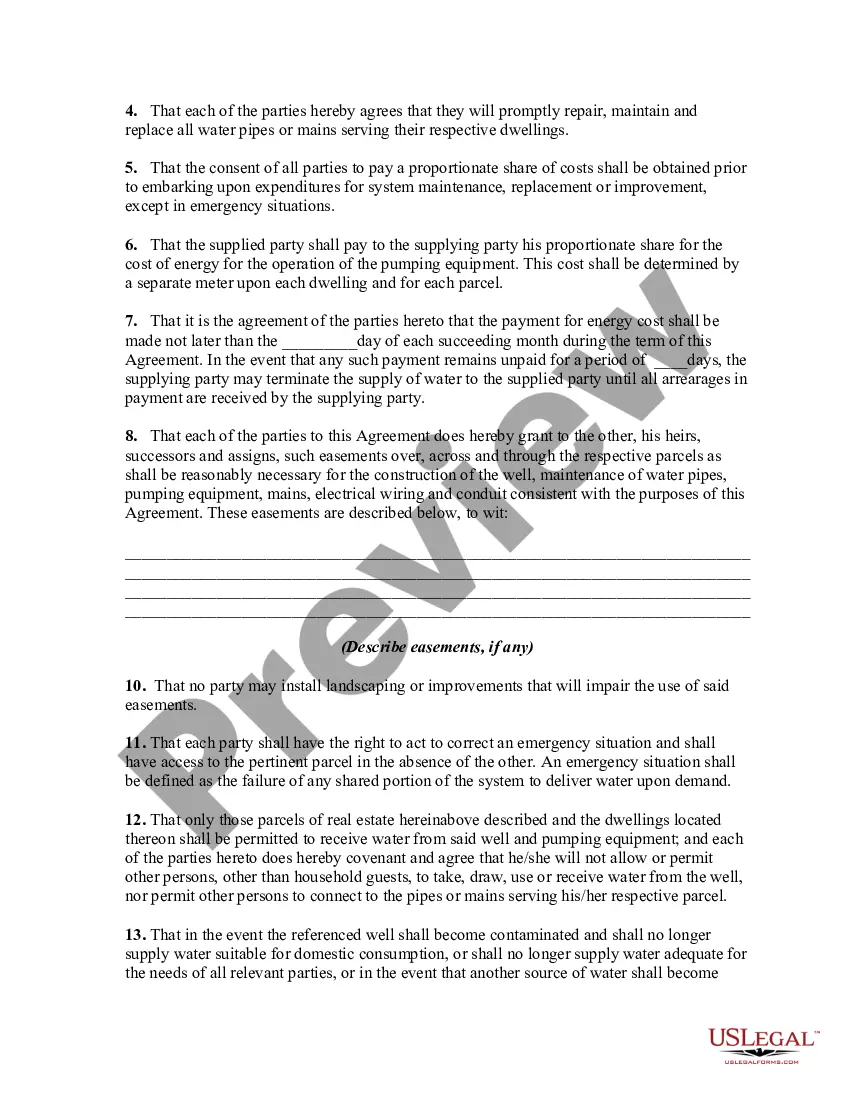
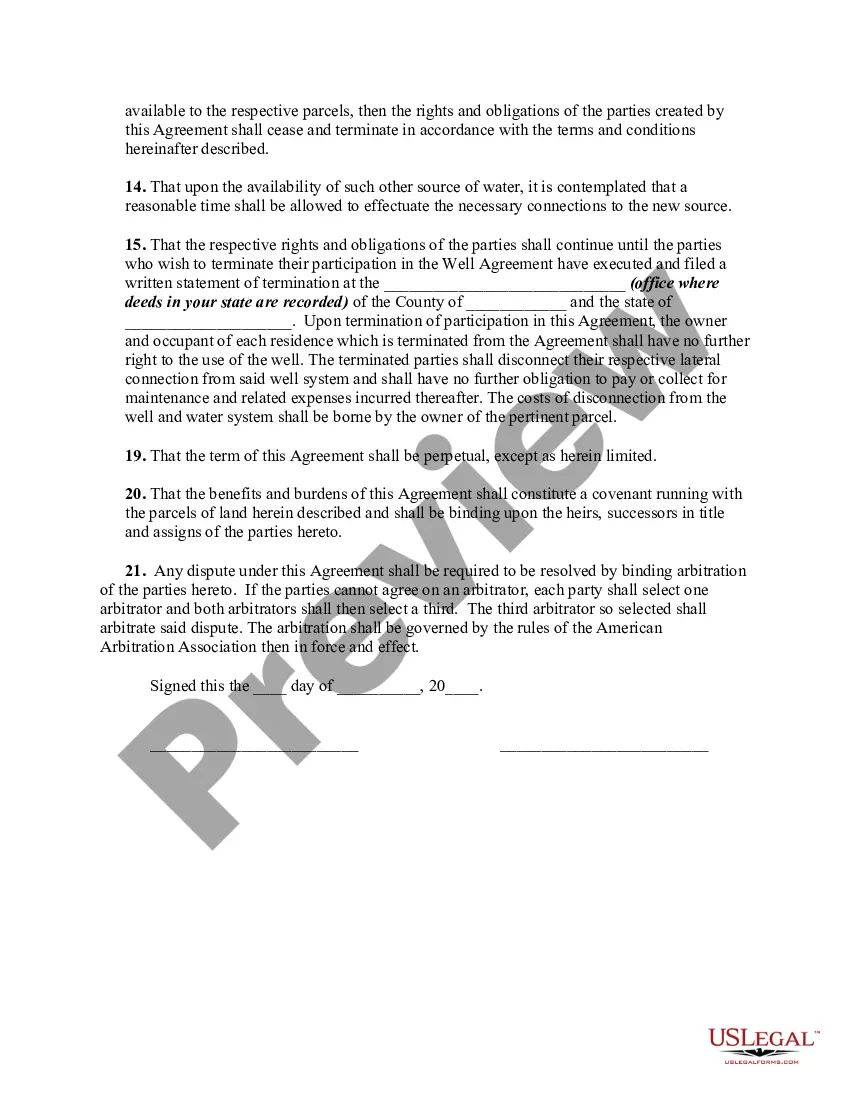
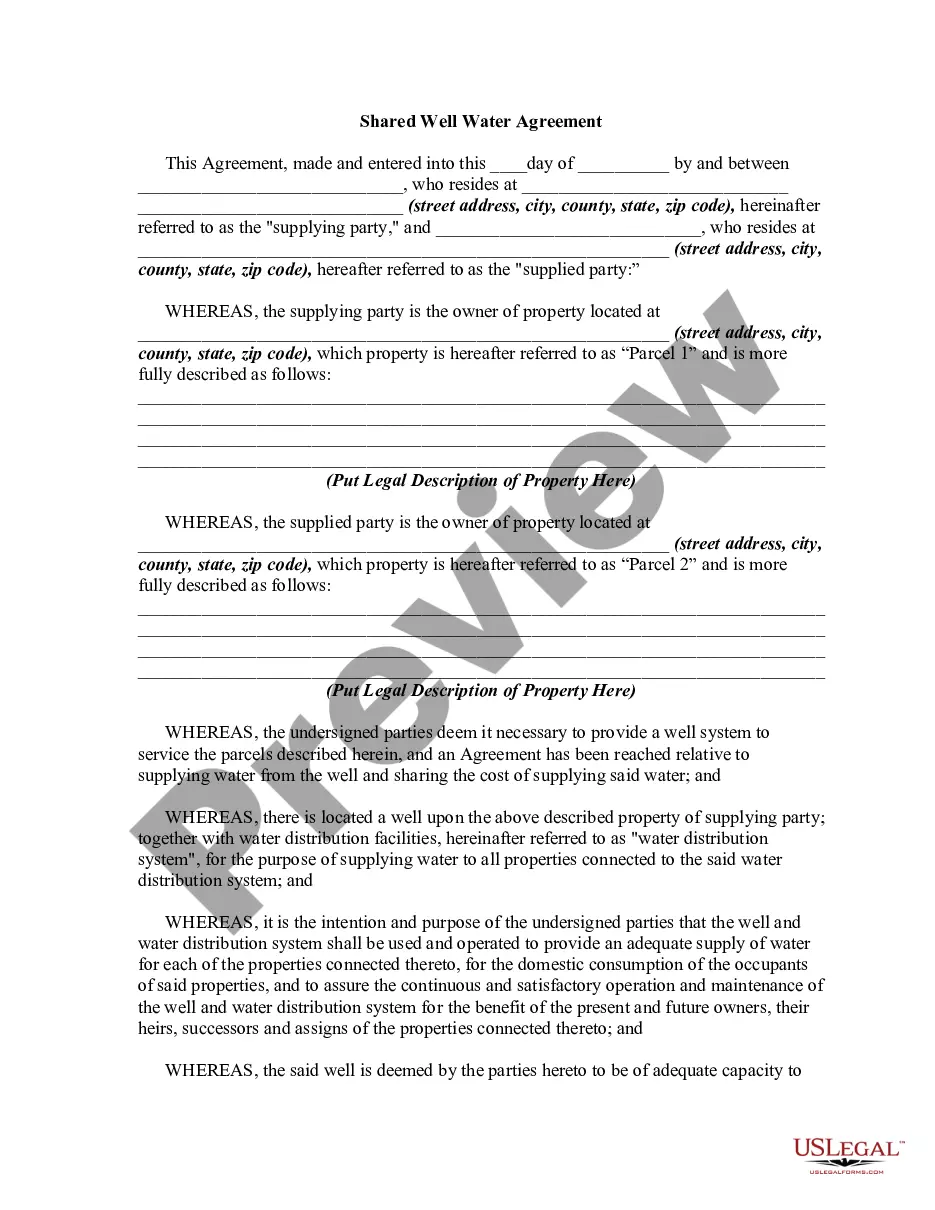
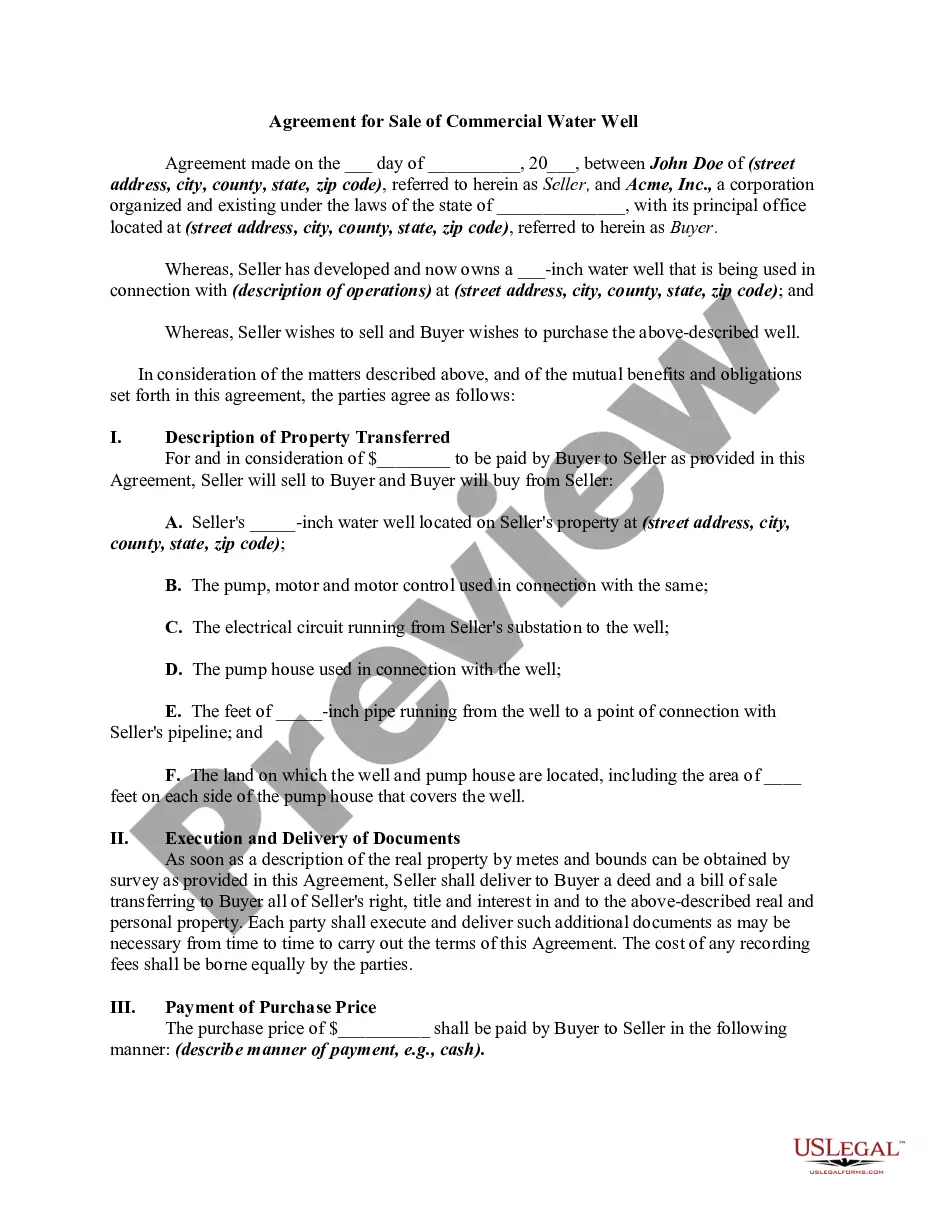
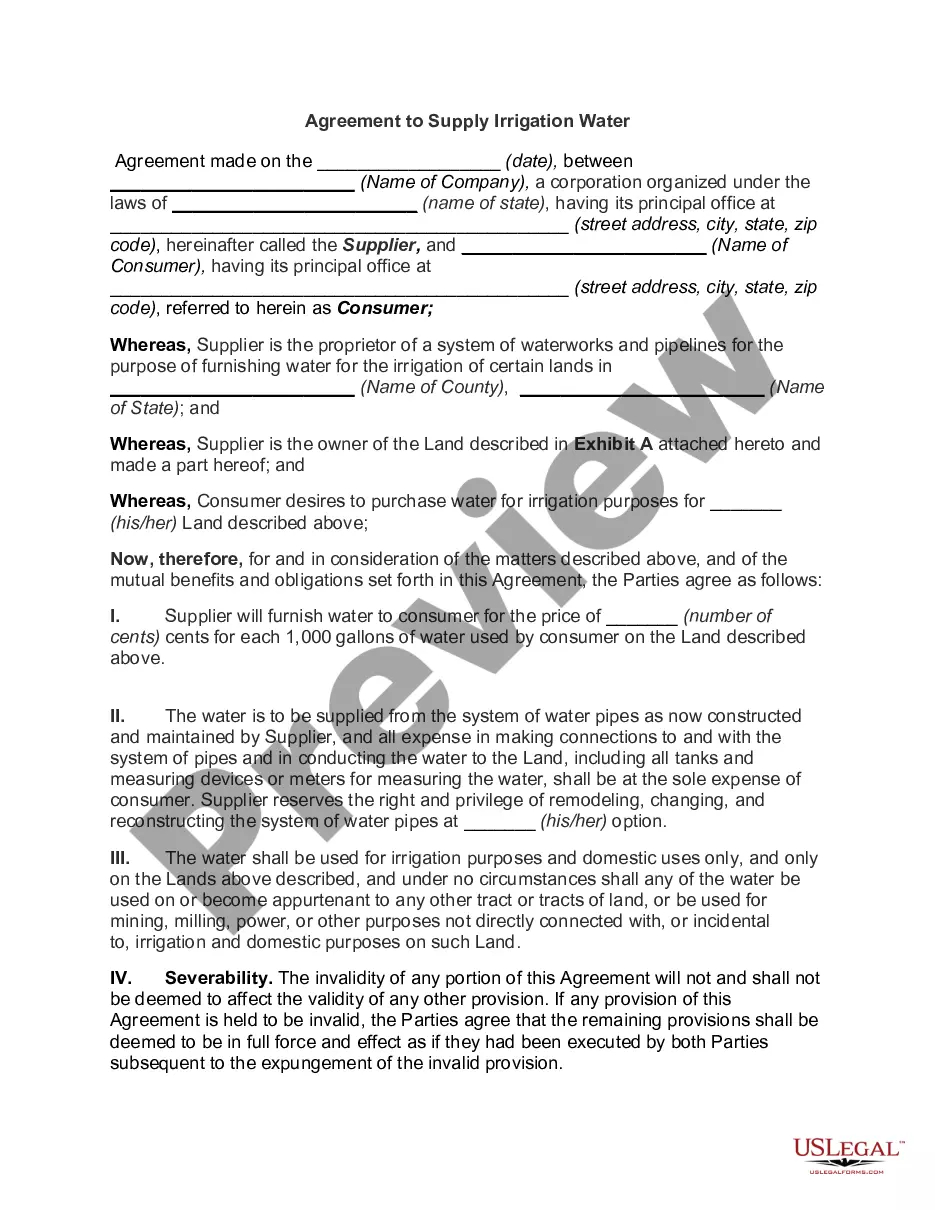

How to fill out Shared Well Water Agreement?
You might spend several hours online attempting to locate the appropriate legal document template that meets the federal and state requirements you need. US Legal Forms provides thousands of legal forms that have been reviewed by experts.
You can easily download or print the Vermont Shared Well Water Agreement from our service. If you already have a US Legal Forms account, you can Log In and click the Obtain button. After that, you can complete, modify, print, or sign the Vermont Shared Well Water Agreement. Each legal document template you acquire is yours indefinitely.
To obtain another copy of a purchased form, navigate to the My documents tab and click the relevant button. If you are using the US Legal Forms site for the first time, follow the simple instructions below: First, make sure you have selected the correct document template for the area/city you have chosen. Review the form description to ensure you have selected the right form. If available, use the Review button to examine the document template as well.
Avoid altering or removing any HTML tags. Only synonymize plain text outside of the HTML tags.
- If you wish to find another version of the form, use the Search field to locate the template that suits your needs and requirements.
- Once you have found the template you want, click Acquire now to proceed.
- Select the pricing plan you prefer, enter your credentials, and register for an account on US Legal Forms.
- Complete the transaction. You can use your credit card or PayPal account to pay for the legal document.
- Choose the format of the document and download it to your device.
- Make changes to the document if possible. You can complete, edit, sign, and print the Vermont Shared Well Water Agreement.
- Obtain and print thousands of document templates using the US Legal Forms website, which offers the largest collection of legal forms. Use professional and state-specific templates to meet your business or personal needs.
Form popularity
FAQ
And the deeper the technician must dig to get to your broken or otherwise compromised line, the higher the cost. The nationwide average water service line depth is 4.58 feet but, in California, these lines are buried just 3.17 feet deep on average.
For instance, sand has a greater insulating property then soil with a high clay content. Therefore sand is the preferred backfill material when it comes to shallow water lines. Using sand as backfill will greatly help prevent pipes from freezing that are buried, and shallow.
The International Plumbing Code states that ?Exterior water supply system piping shall be installed not less than 6 inches (152 mm) below the frost line and not less than 12 inches (305 mm) below grade.? Above the frost line, the ground can heave up, shifting whatever is in it, or freeze the pipes' contents.
The standard depth for water lines in the U.S. is around 36 inches, but this can vary from location to location.
Yes, shared water wells are legal in Texas, but you need to be very careful here. ing to the TCEQ, the Texas Commission on Environmental Quality, a shared water well can service up to 25 people or 15 service connections.
The nationwide average water service line depth is 4.58 feet. In Vermont, these lines aren't buried quite as deep ? at only 4.0 feet on average.
Depending on the conditions of the weather, ground and water depth as well as drilling conditions, it typically takes 1 to 3 days, sometimes longer, to drill a well. You should keep in mind that these factors vary from one site to another and from one well to another.
Well water is water that comes from a hole dug deep into the ground, which reaches groundwater from an aquifer (a layer of water-bearing rock or sediment) far below the surface. This groundwater is the well water's supply, and it's brought up to homes using a pump or bucket.