Vermont Motion in Limine
Description

How to fill out Motion In Limine?
Finding the appropriate valid document template can be a challenge. Of course, there are numerous templates accessible online, but how do you locate the correct form you require? Utilize the US Legal Forms website. The platform offers a vast array of templates, including the Vermont Motion in Limine, which you can utilize for business and personal purposes. All of the forms are verified by professionals and comply with state and federal regulations.
If you are currently registered, Log In to your account and click the Download button to access the Vermont Motion in Limine. Use your account to search through the legal forms you may have purchased previously. Navigate to the My documents section of your account and obtain another copy of the document you need.
If you are a new user of US Legal Forms, here are simple steps for you to follow: First, ensure you have selected the correct form for your city/region. You can review the form using the Review button and examine the form summary to confirm it is suitable for you. If the form does not meet your requirements, use the Search field to find the appropriate form. Once you are confident the form is suitable, click the Get now button to obtain the form.
Ensure you avoid altering or removing any HTML tags. Only synonymize plain text outside of the HTML tags.
- Choose the pricing plan you want and enter the required details.
- Create your account and complete your purchase using your PayPal account or Visa or Mastercard.
- Select the file format and download the legal document template to your device.
- Complete, modify, print, and sign the obtained Vermont Motion in Limine.
- US Legal Forms is the largest repository of legal forms where you can find various document templates.
- Utilize the service to download professionally drafted documents that adhere to state requirements.
Form popularity
FAQ
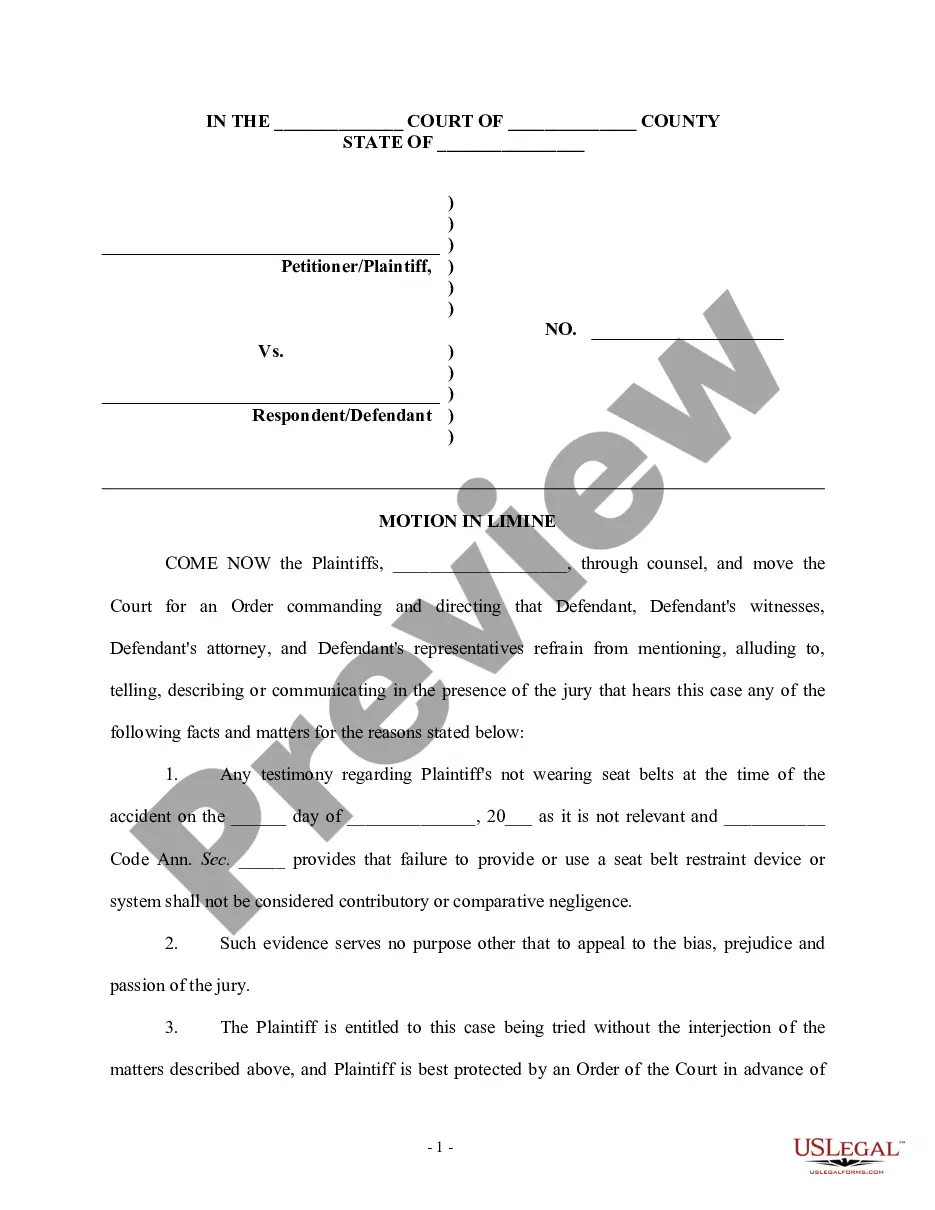
Importantly, motions in limine are generally made before a trial begins, and always argued outside the presence of the jury. Thus, a motion in limine allows key evidentiary questions to be decided without the jury present and, if the motion is granted, will preclude the jury from ever learning of the disputed evidence.
Motions in limine (?on or at the threshold? or ?in the beginning?) can be a useful tool in a trial lawyer's hands. Used strategically and prophylactically, they can ?eliminate the noise surrounding? a trial by preventing an opposing party from placing inadmissible evidence before the jury.
Any party opposed to the granting of a written motion shall file a memorandum in opposition thereto, not more than 14 days after service of the motion, unless otherwise ordered by the court.
Your motion in limine should be broken into two sections: (1) Factual Background and (2) Argument. The ?Factual Background? section of your Memorandum should include all of the facts necessary for the judge to resolve every issue raised in your motion. appropriate, include procedural posture, as well.
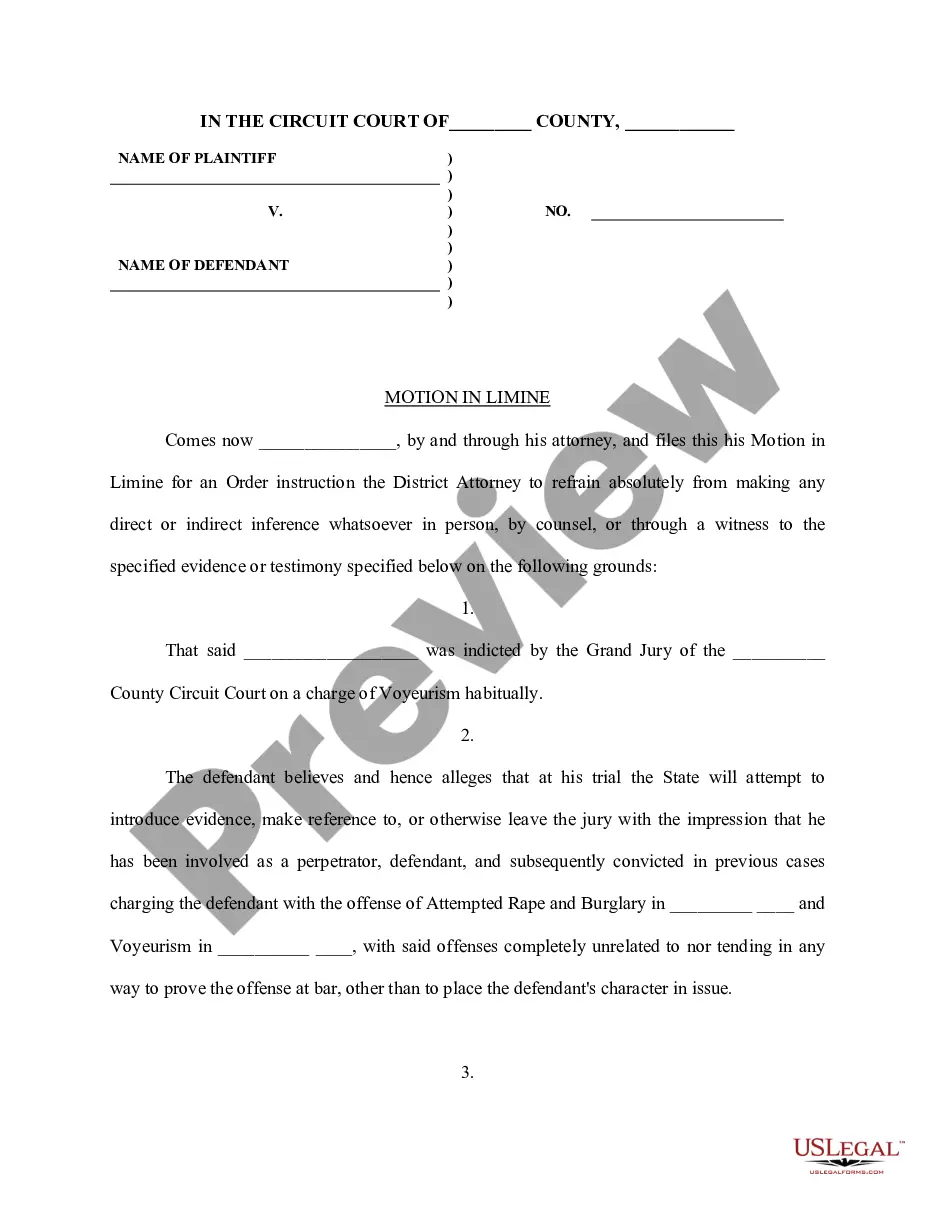
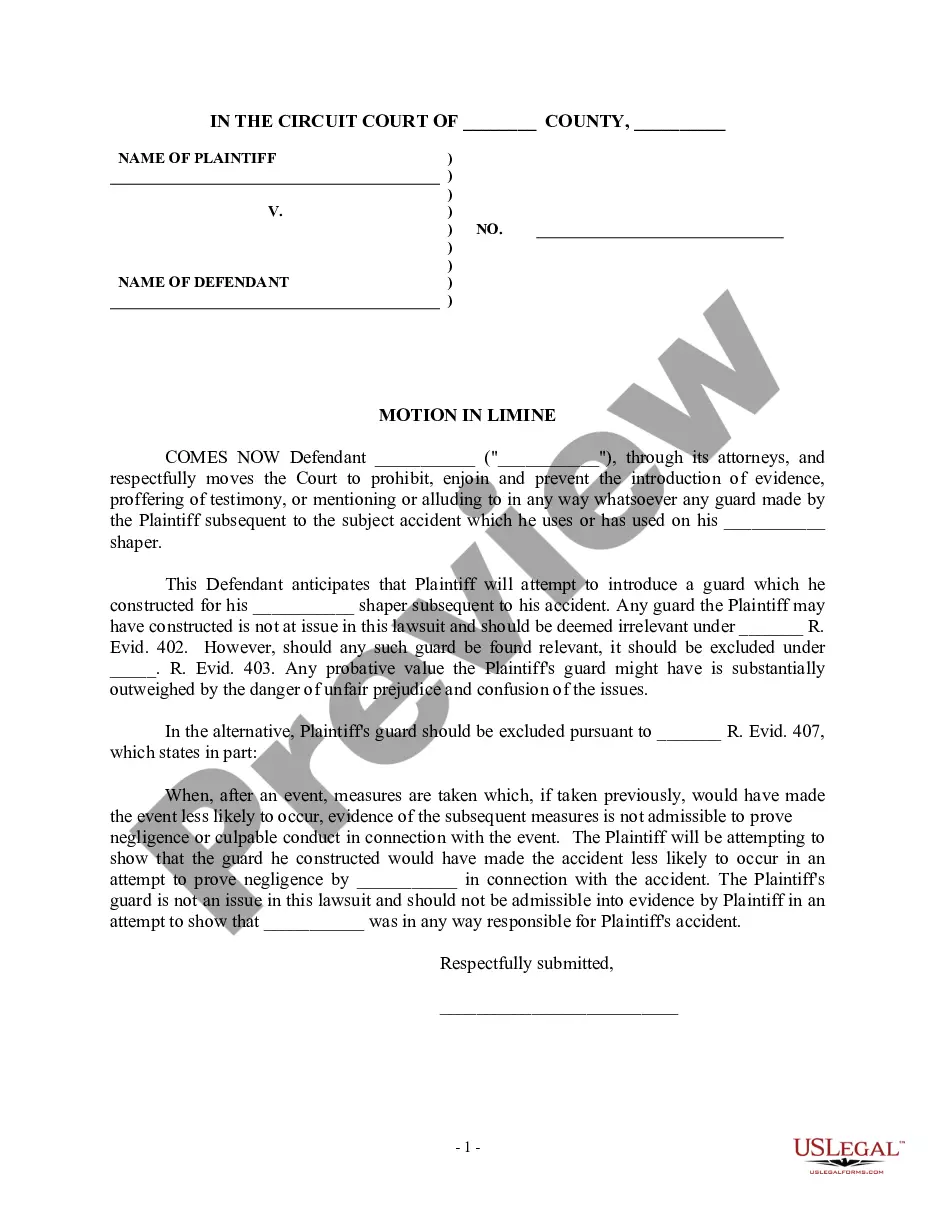
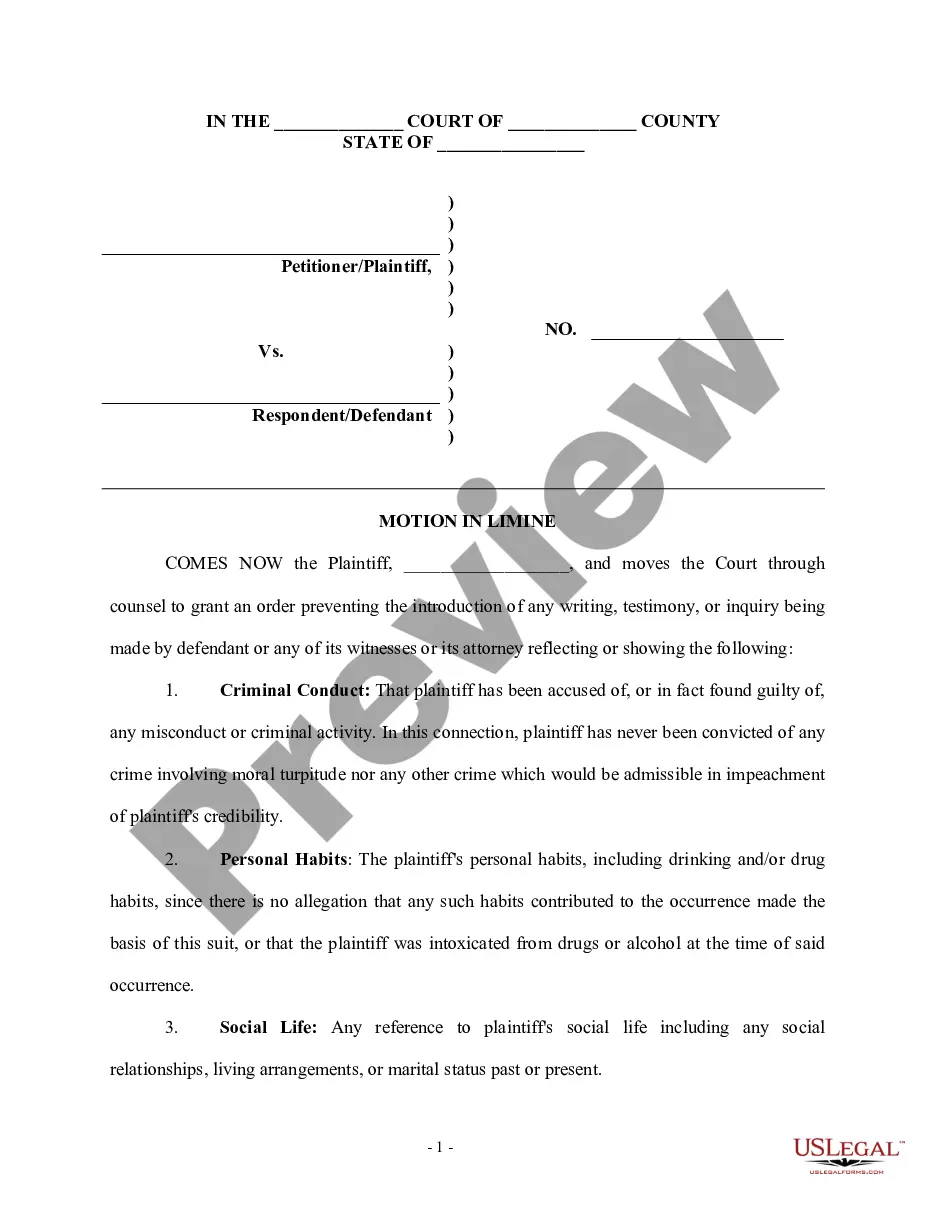
Examples of motions in limine would be that the attorney for the defendant may ask the judge to refuse to admit into evidence any personal information, or medical, criminal or financial records, using the legal grounds that these records are irrelevant, immaterial, unreliable, or unduly prejudicial, and/or that their ...
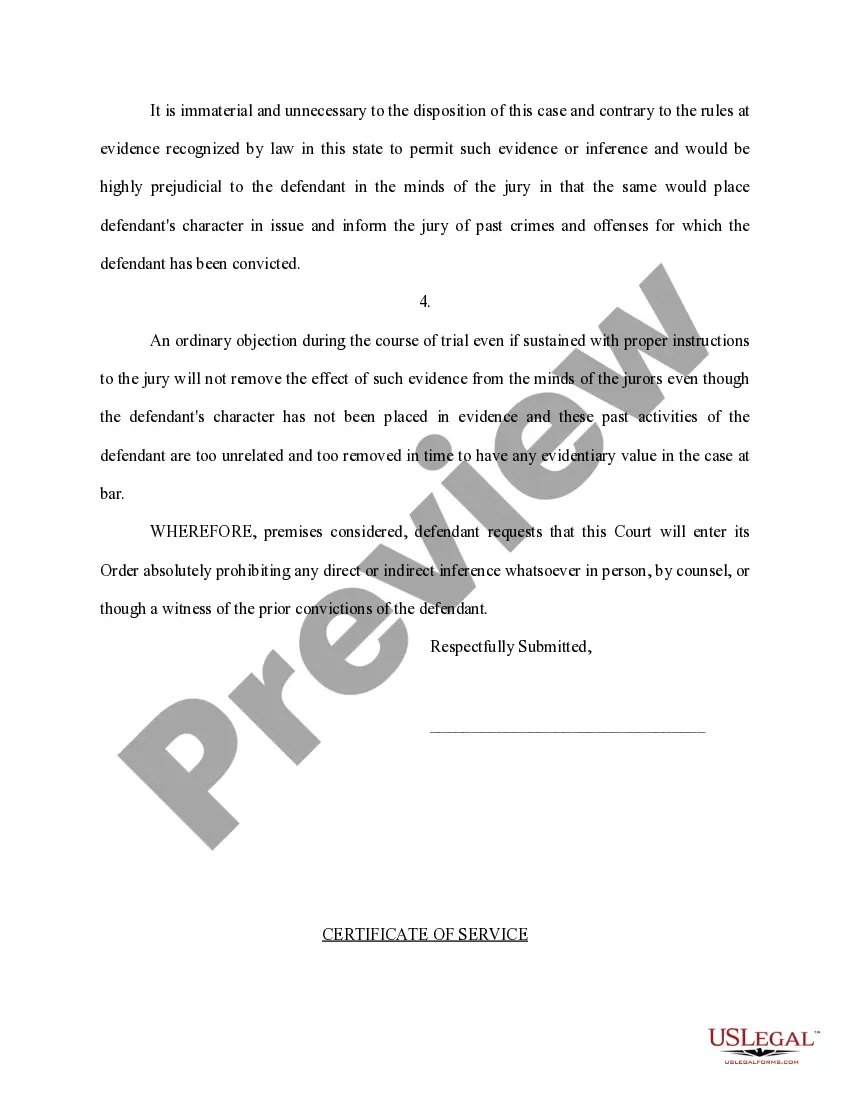
The most common use of the in limine motion is to exclude irrelevant and/or prejudicial evidence.
Defense Motions in Limine Preclude doctor testifying against a nurse. Preclude expert testifying about future surgeries. Preclude evidence defendant driver was underinsured or even mentioning the uninsured motorist carrier. Motion to exclude videos depicting a below-knee amputation.
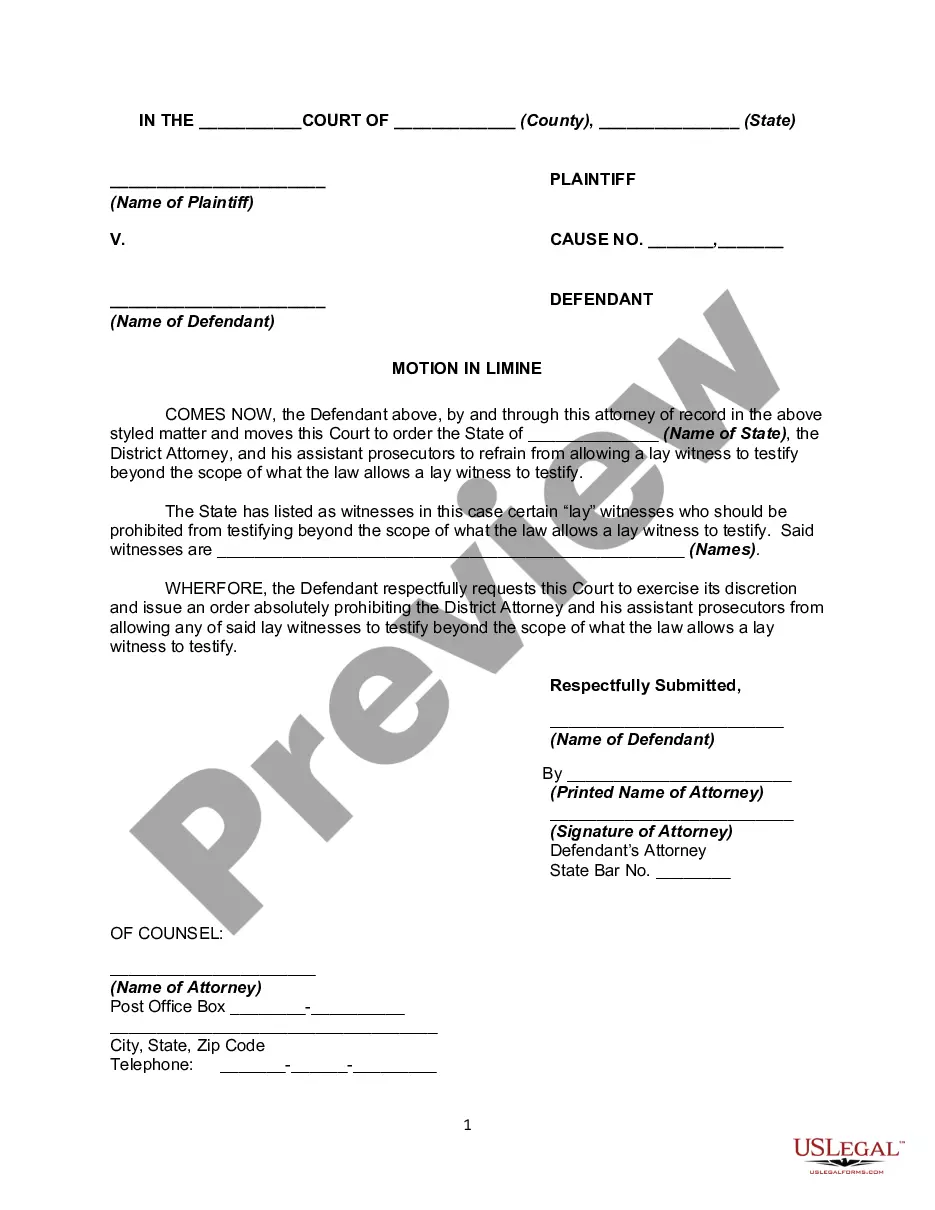
Most motions in limine are filed by a party to limit or prevent certain evidence from being presented by opposing counsel at the time of trial. The purpose of a motion in limine is to prevent the introduction of matters at trial which are irrelevant, inadmissible or prejudicial.