Vermont Complaint based on Open Account, Breach of Contract, Unjust Enrichment
Description
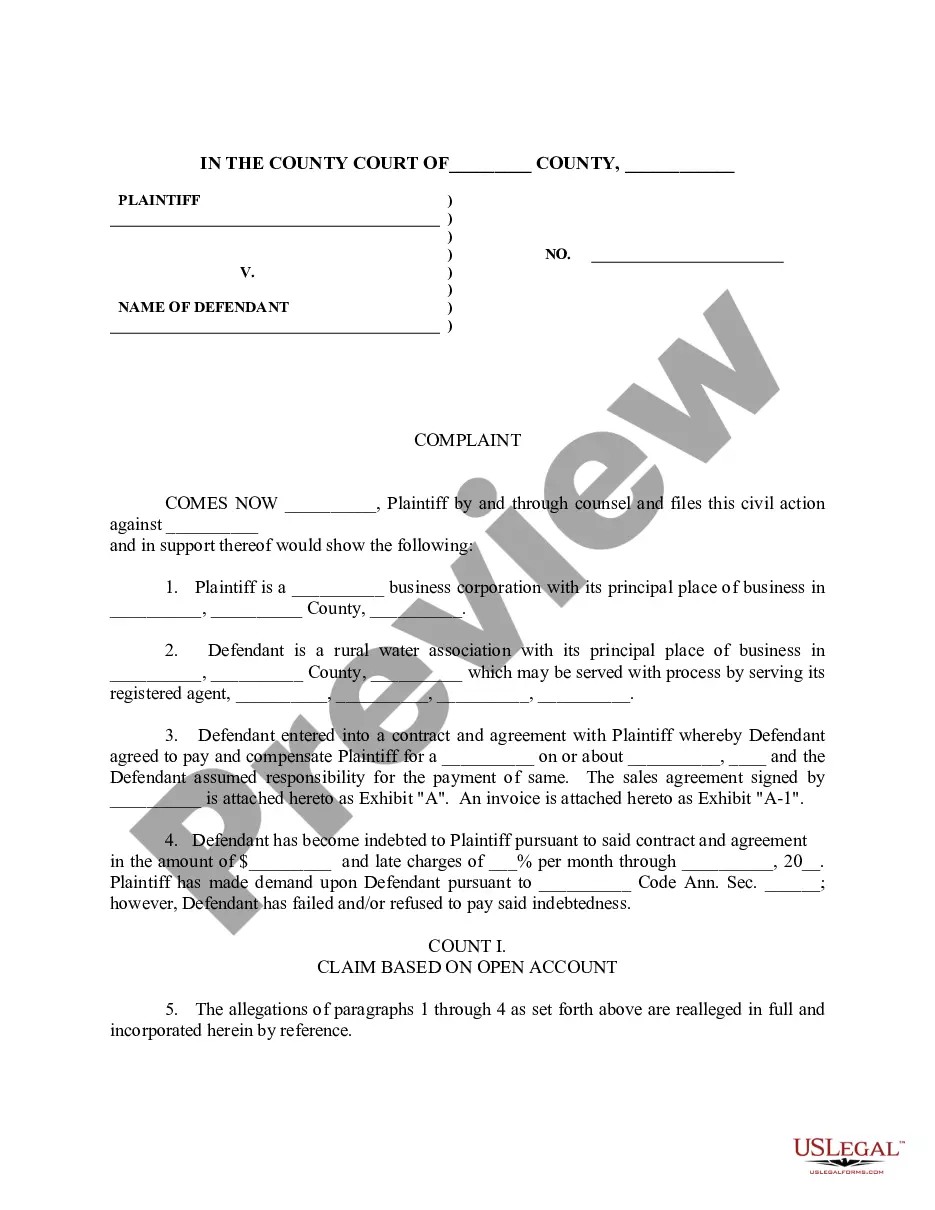
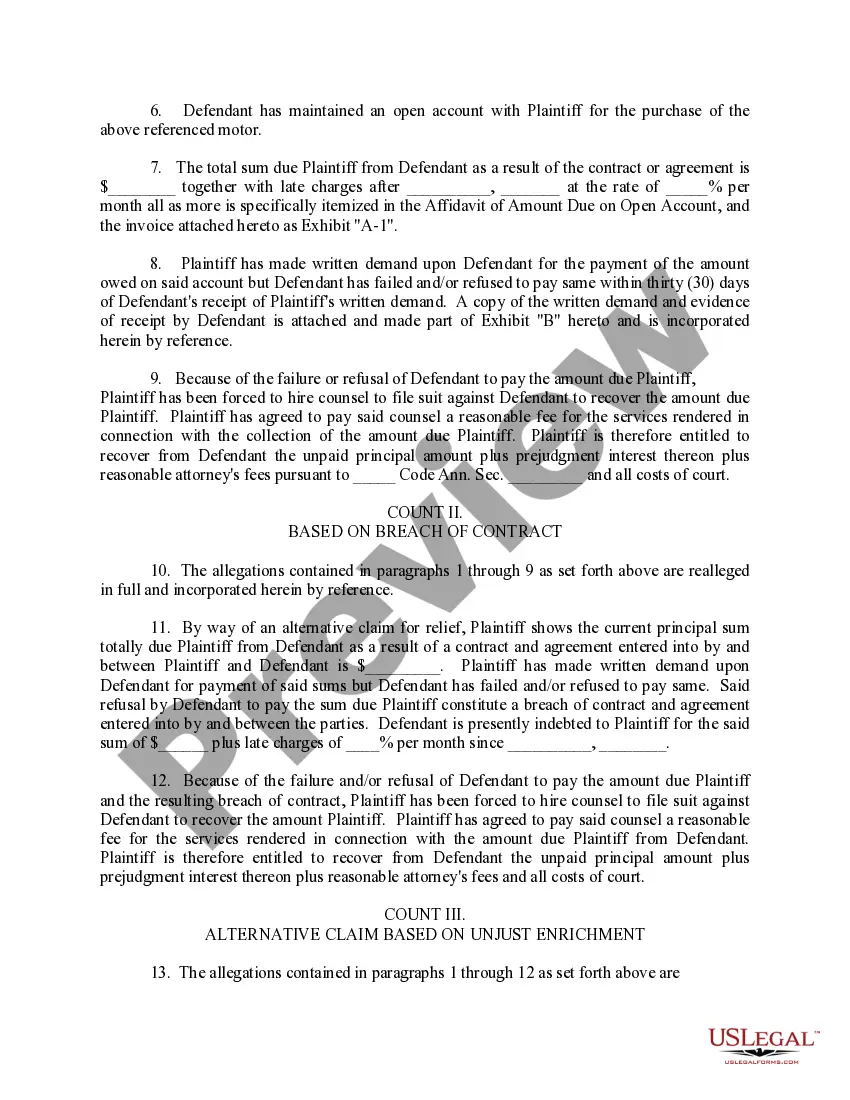
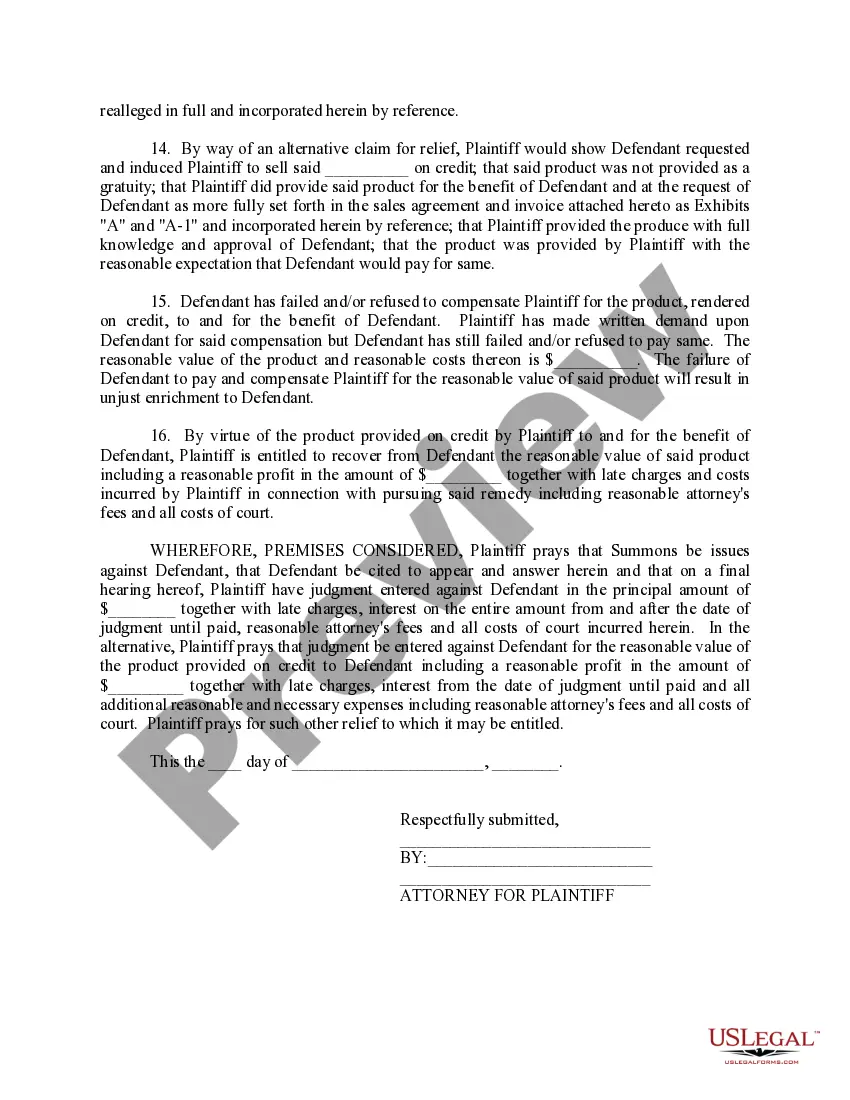
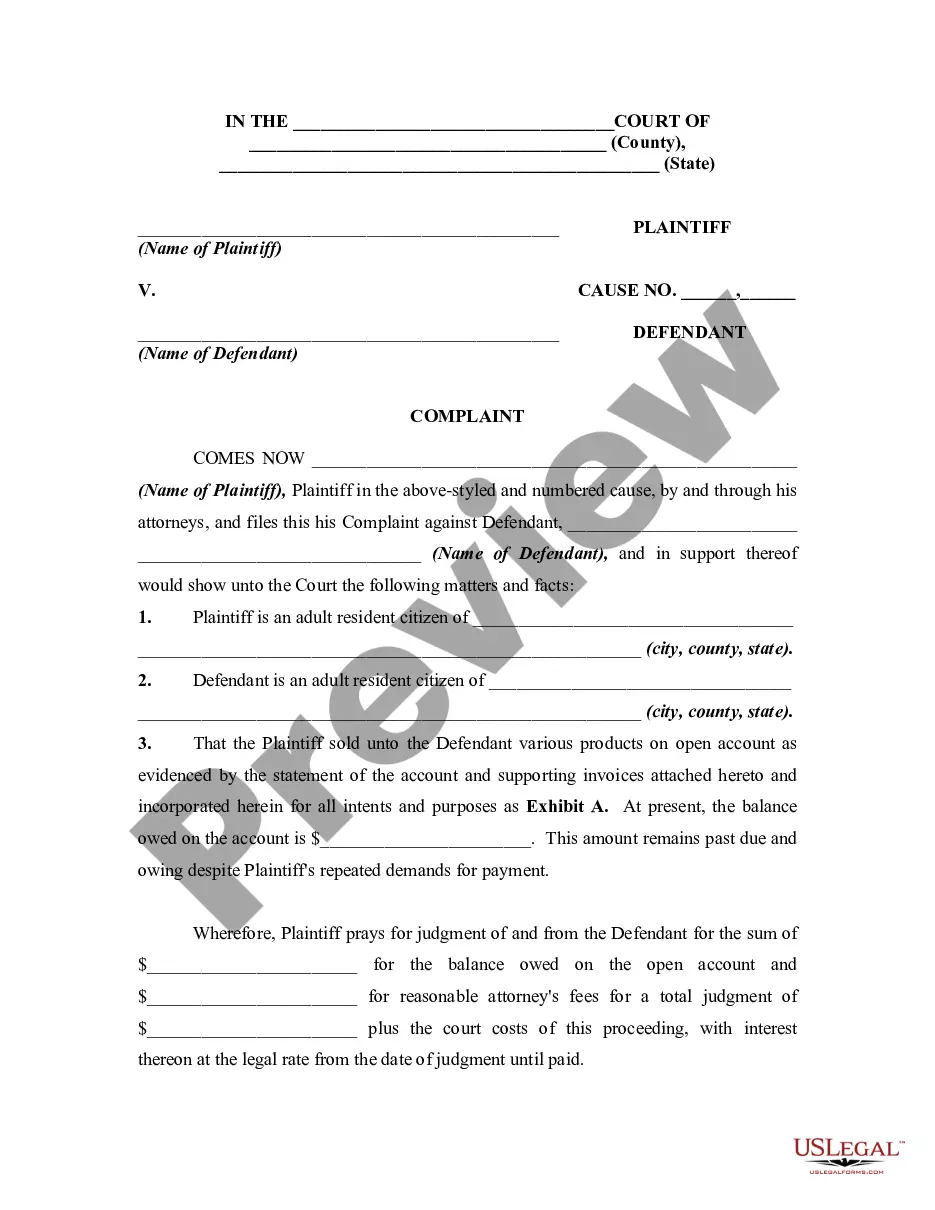
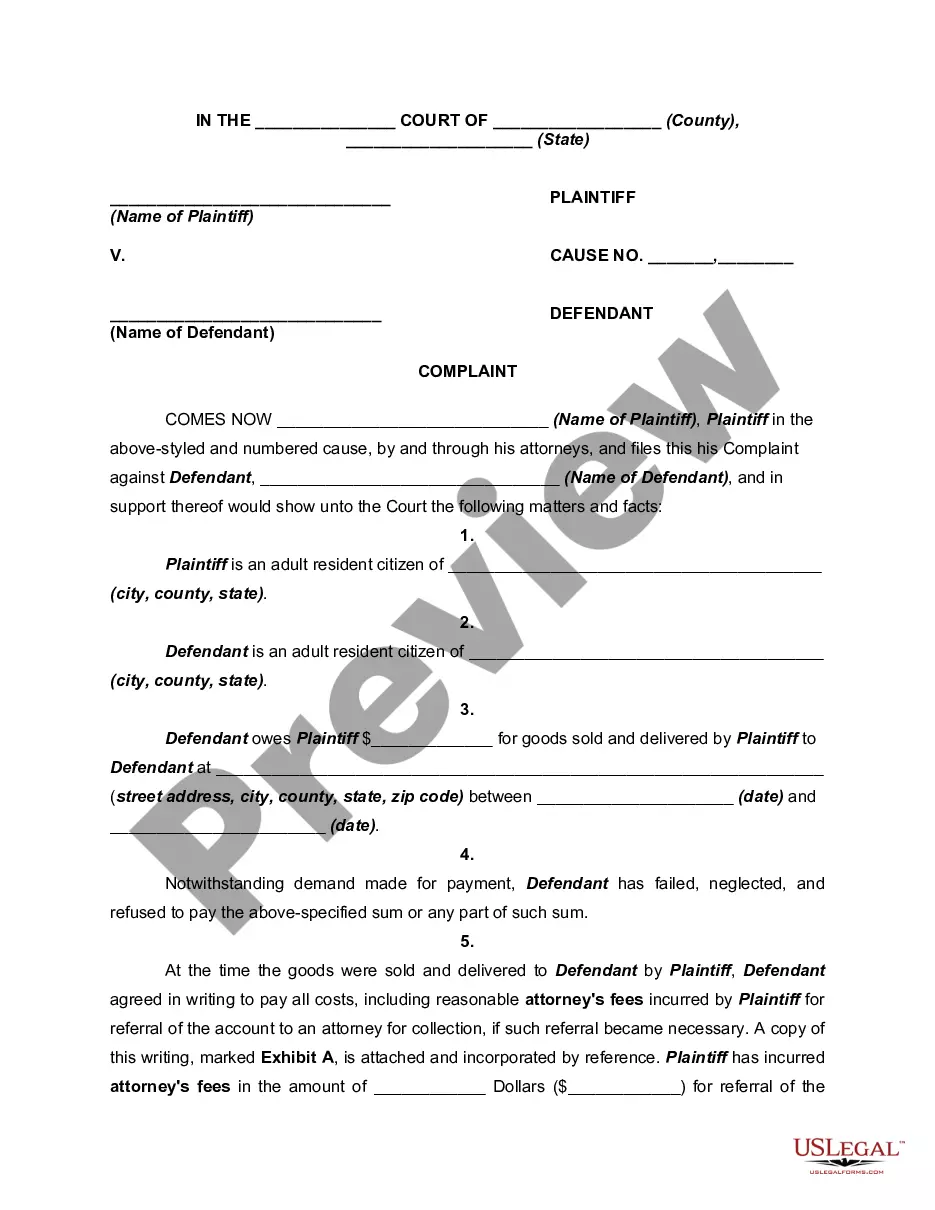
How to fill out Complaint Based On Open Account, Breach Of Contract, Unjust Enrichment?
US Legal Forms - one of the largest collections of legal documents in the USA - offers a selection of legal document templates you can download or print. By using the website, you can access thousands of forms for business and personal purposes, organized by categories, states, or keywords. You can find the most recent versions of documents such as the Vermont Complaint based on Open Account, Breach of Contract, Unjust Enrichment within moments.
If you hold a subscription, Log In and download the Vermont Complaint based on Open Account, Breach of Contract, Unjust Enrichment from the US Legal Forms collection. The Download button will appear on each form you view. You have access to all previously downloaded forms from the My documents section of your account.
To utilize US Legal Forms for the first time, here are simple instructions to help you begin: Ensure you have selected the correct form for your city/state. Click on the Review button to examine the form’s content. Check the form description to confirm you have chosen the correct form. If the form does not meet your needs, use the Search field at the top of the screen to find the one that does. If you are satisfied with the form, confirm your selection by clicking the Buy now button. Then, choose the payment plan you prefer and provide your details to register for an account. Complete the transaction. Use your credit card or PayPal account to finalize the purchase. Choose the format and download the form to your device. Make adjustments. Fill out, modify, print, and sign the downloaded Vermont Complaint based on Open Account, Breach of Contract, Unjust Enrichment.
- Each template you add to your account has no expiration date and belongs to you indefinitely.
- So, if you need to download or print another copy, simply go to the My documents section and click on the form you need.
- Access the Vermont Complaint based on Open Account, Breach of Contract, Unjust Enrichment with US Legal Forms, one of the most comprehensive libraries of legal document templates.
- Utilize thousands of professional and state-specific templates that meet your business or personal requirements and needs.
Form popularity
FAQ
?A mistaken payment is generally regarded as the central example of an unjust enrichment. The unjust factor is the mistake which negatives the voluntariness of the payor. The enrichment is the money, which is an incontrovertible benefit.
Overview. Unjust enrichment occurs when Party A confers a benefit upon Party B without Party A receiving the proper restitution required by law. This typically occurs in a contractual agreement when Party A fulfills his/her part of the agreement and Party B does not fulfill his/her part of the agreement.
An award of compensatory damages is the most common of the legal remedies for breach of contract. The calculation of compensatory damages is based on the actual losses you have sustained as a result of the breach of contract. They typically fall into two categories: expectation damages and consequential damages.
Unjust enrichment is a legitimate legal argument in California. Although California courts differ on whether unjust enrichment is a legitimate claim, the courts view the claim as equivalent to restitution and accept it in cases when the contract was obtained via fraud or is otherwise void or ineffective.
Unjust Enrichment ¶ 16. To support a claim for unjust enrichment, plaintiff must show that: ?(1) a benefit was conferred on defendant; (2) defendant accepted that benefit; and (3) it would be inequitable for defendant not to compensate? plaintiff for the value of the benefit. Unifund CCR Partners v. VT 8, ¶ 8, 185 Vt.
3 Elements of a Claim for Unjust Enrichment The defendant received a benefit; At the plaintiff's expense; and, Under circumstances that would make it unjust for the defendant to retain the benefit without commensurate compensation.
Damages are usually awarded to an injured party for losses suffered as a result of the defaulting party's actions or non-actions. The purpose of an award of damages for breach of contract is to put the injured party in the position it would have been in had the contract been performed.
You Either Have Breach of Contract, or Unjust Enrichment. You Can't Have Both. Simply put, as a claimant you must decide from the get-go whether your claim is based upon the breach of a valid written contract, or whether your claim is grounded in quasi-contract, i.e., to seek recovery on an strictly equitable basis.