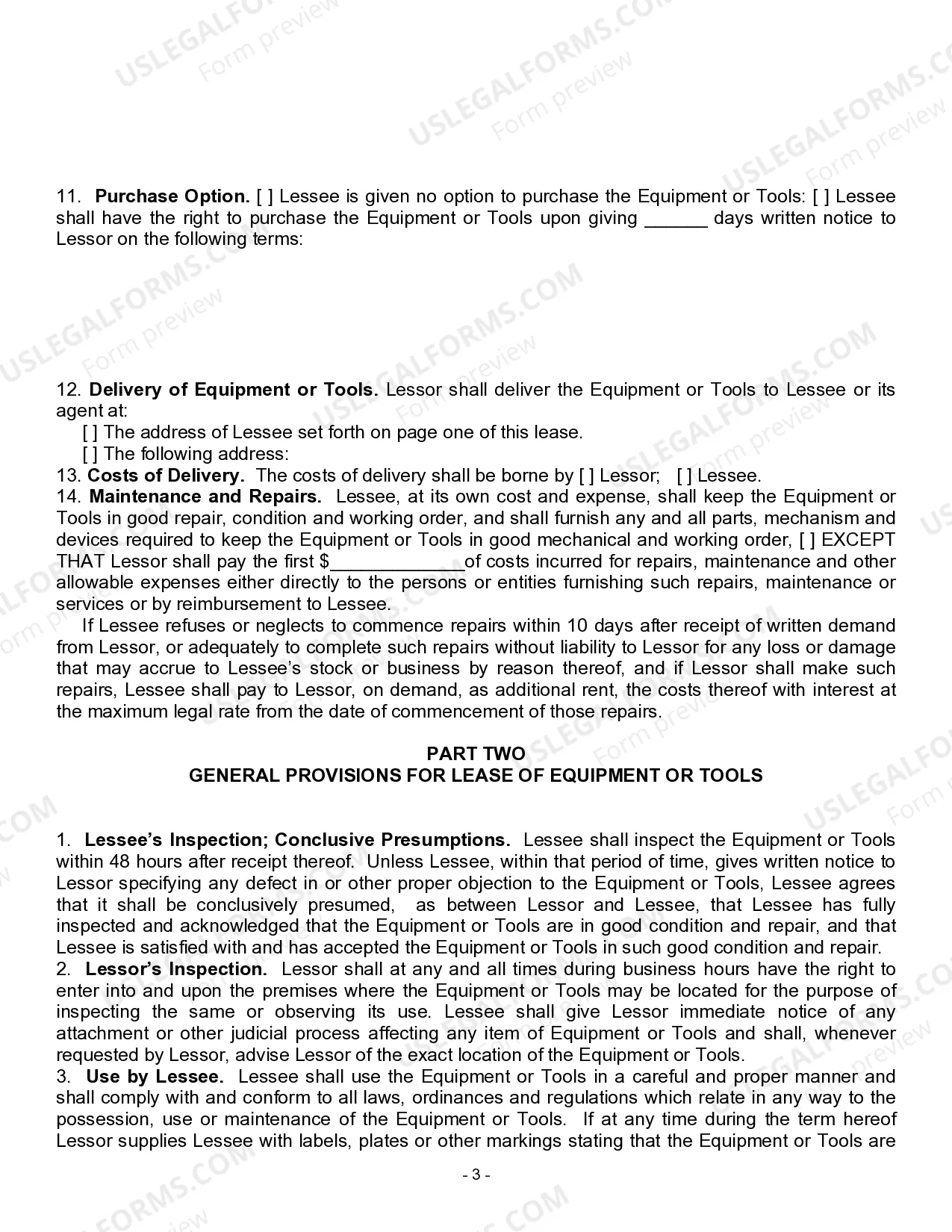
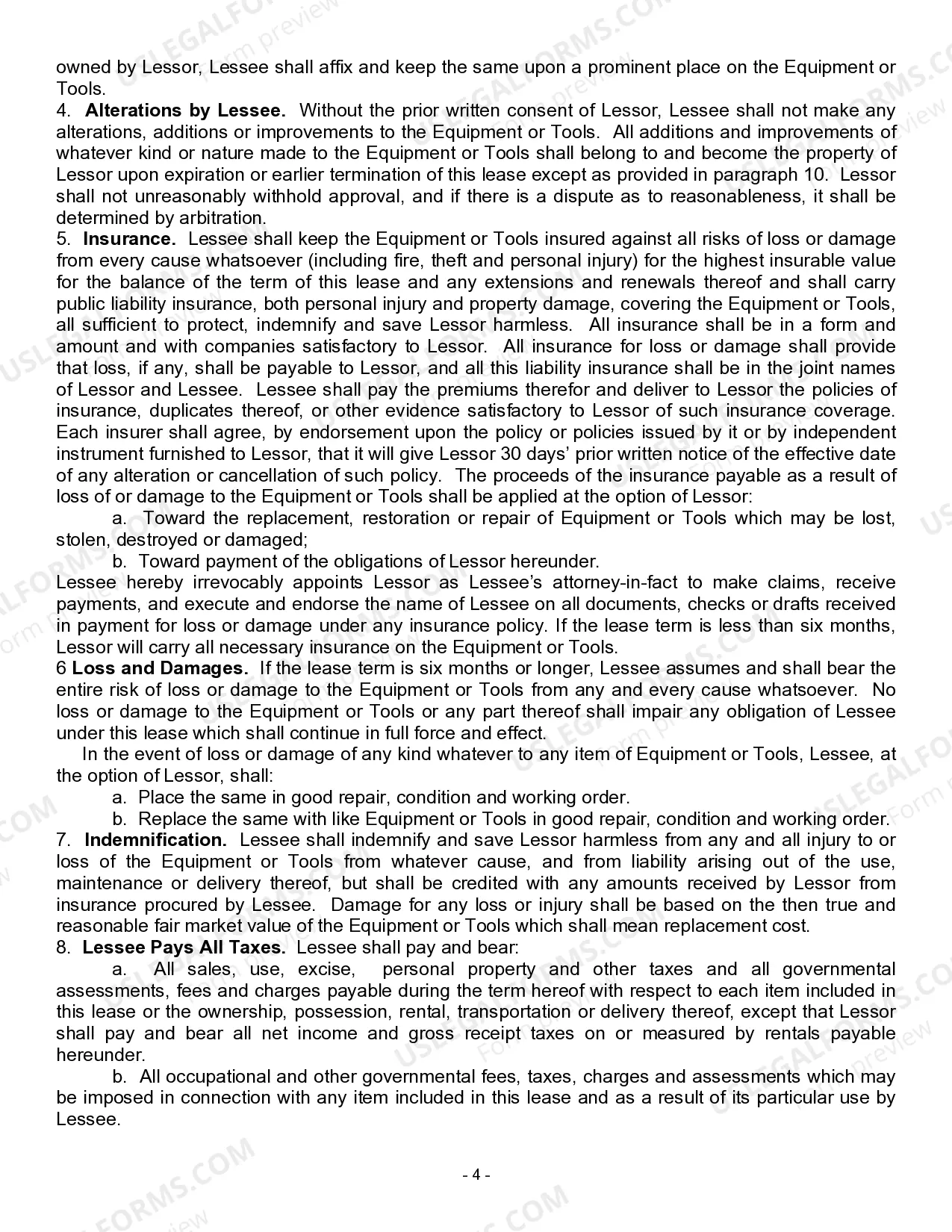
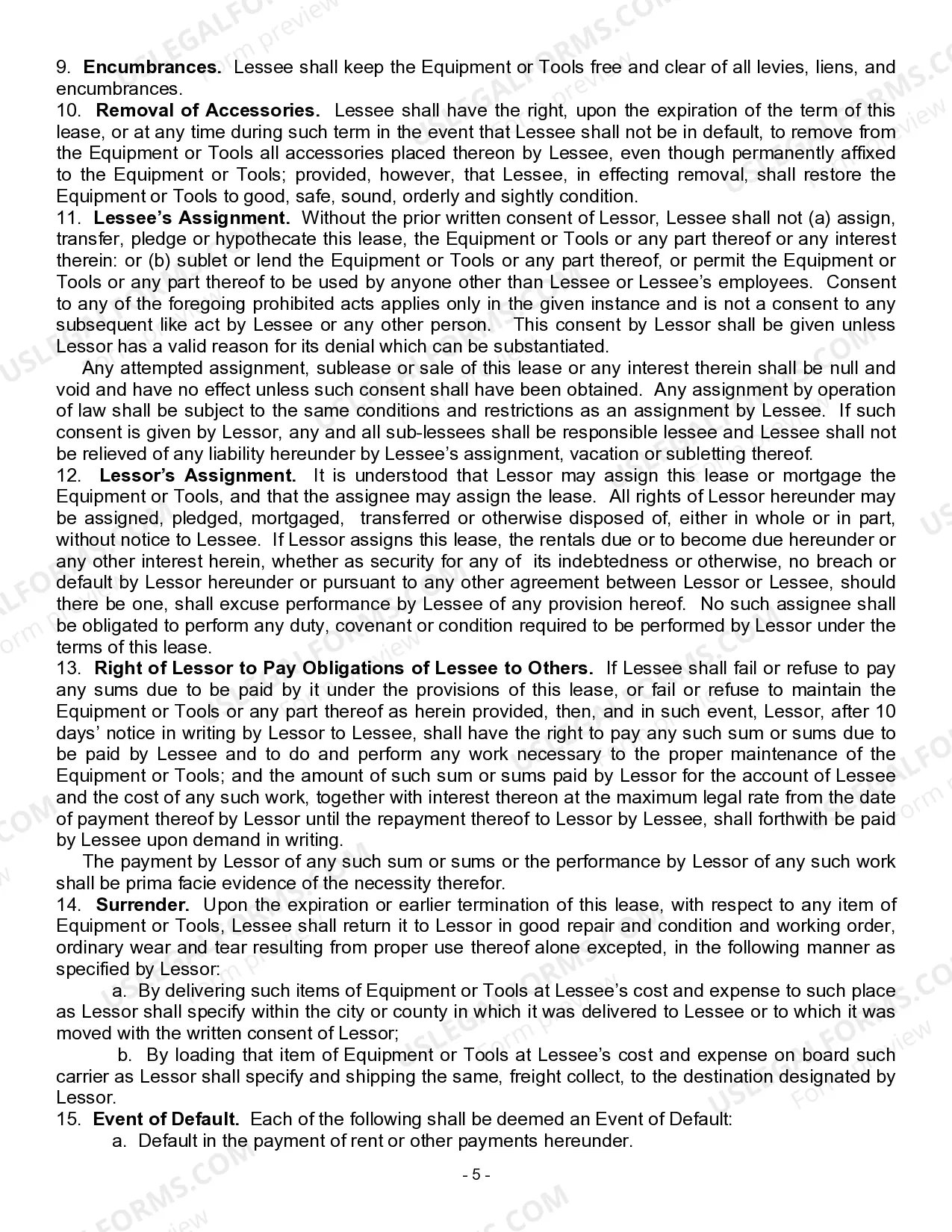
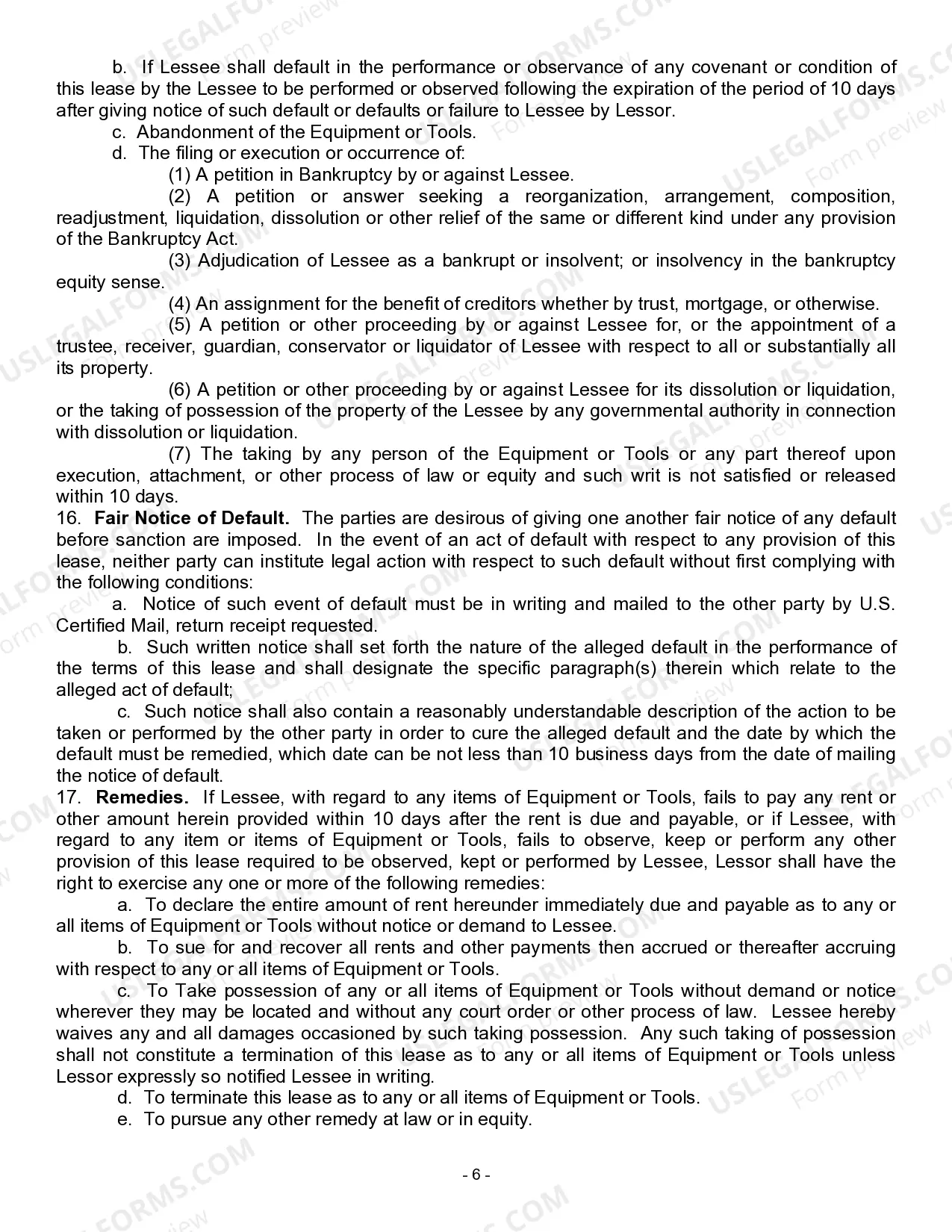
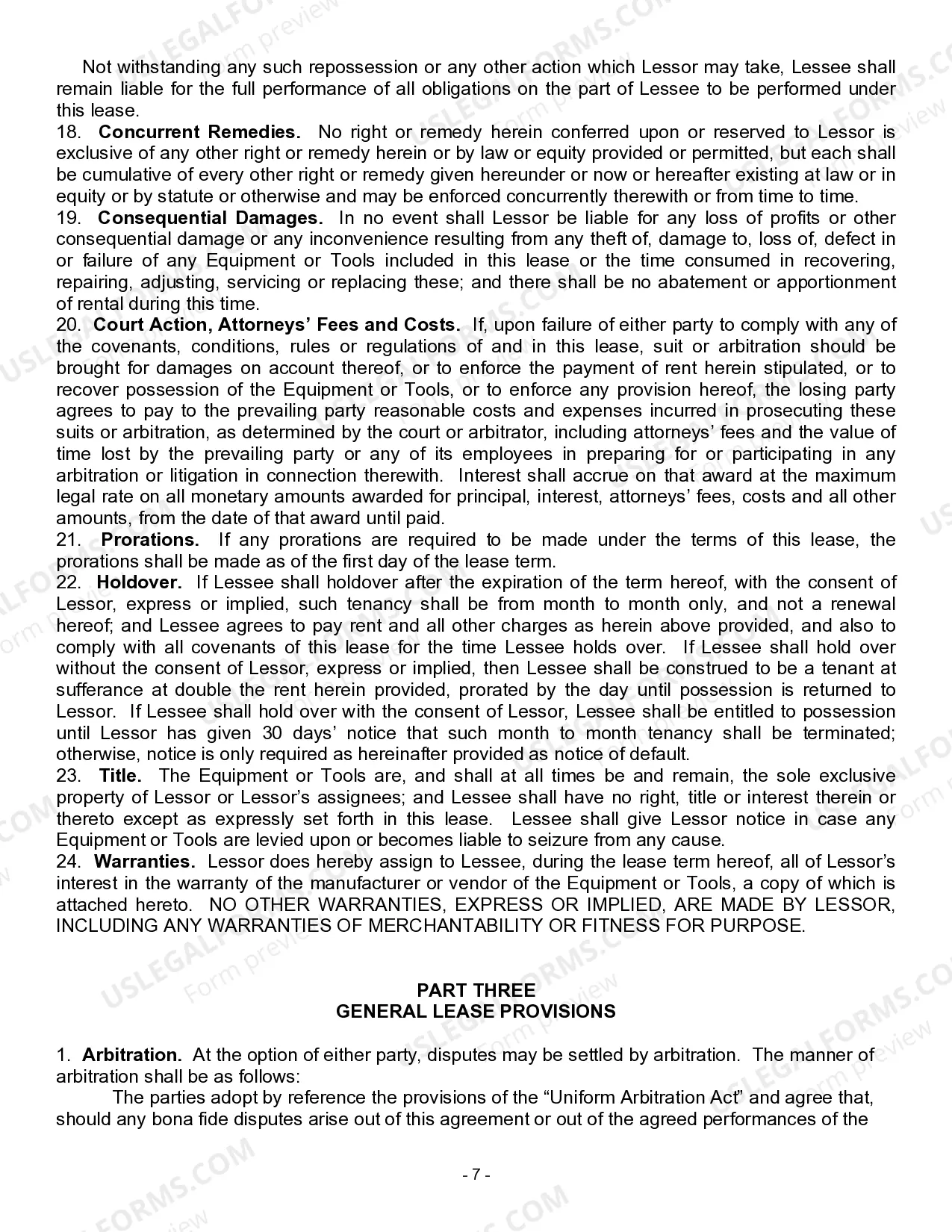
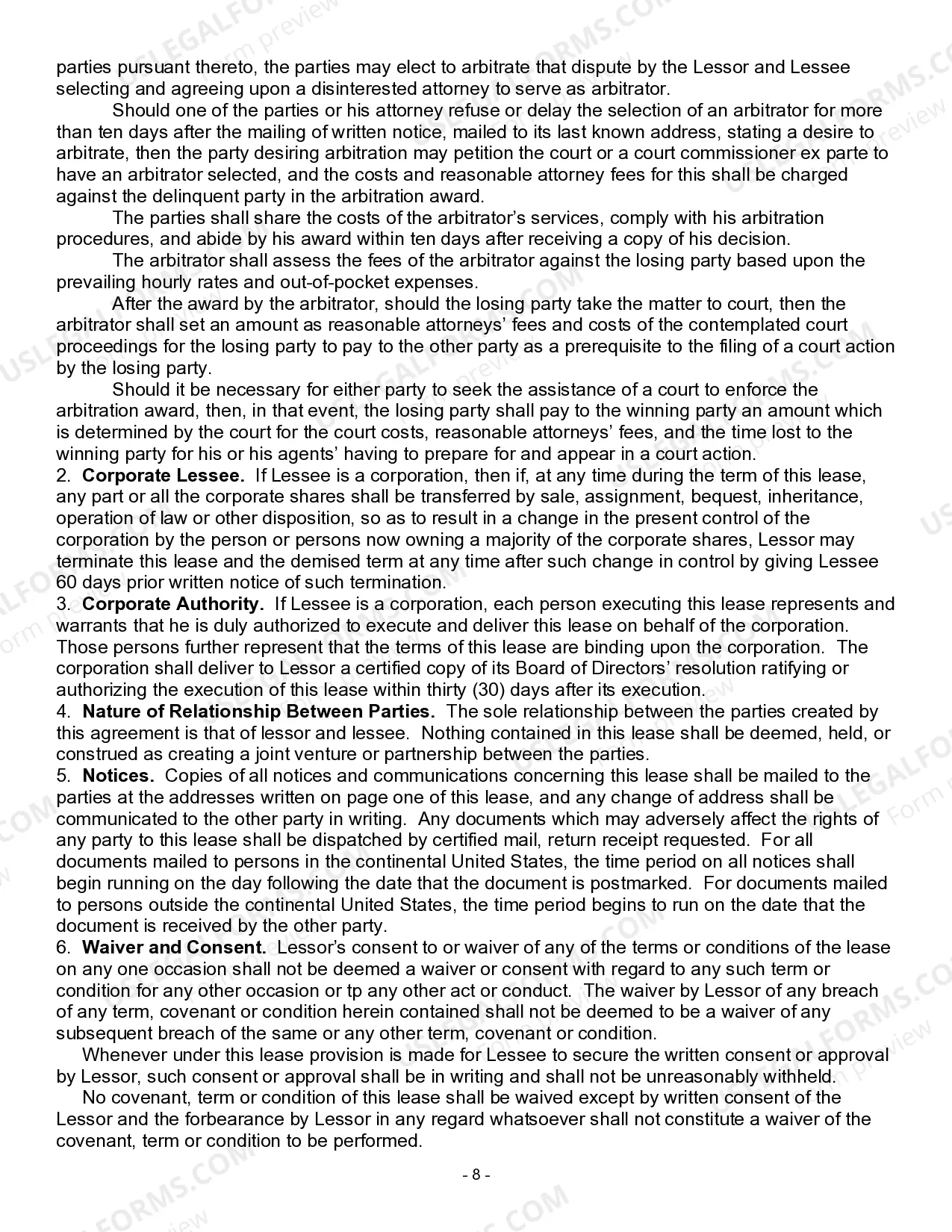
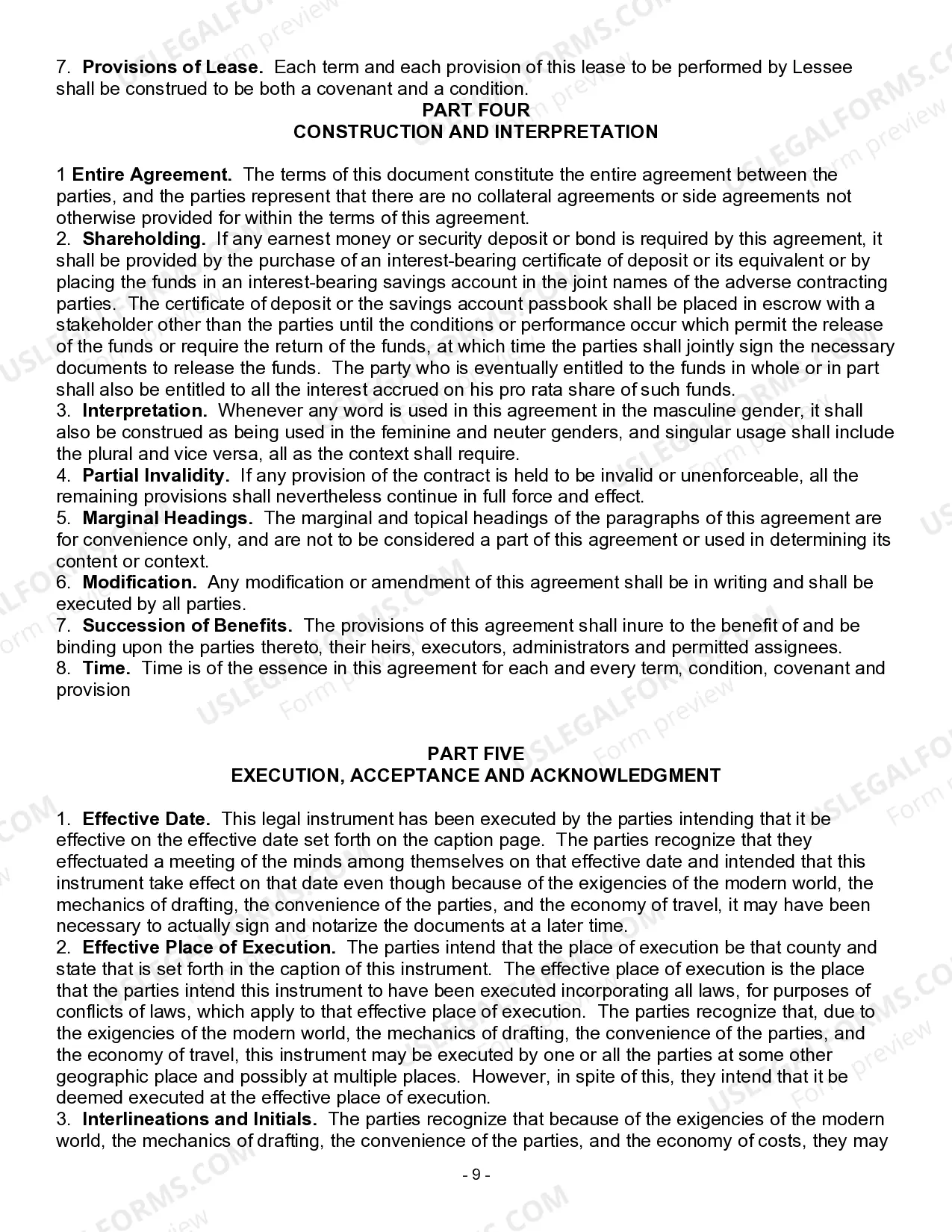
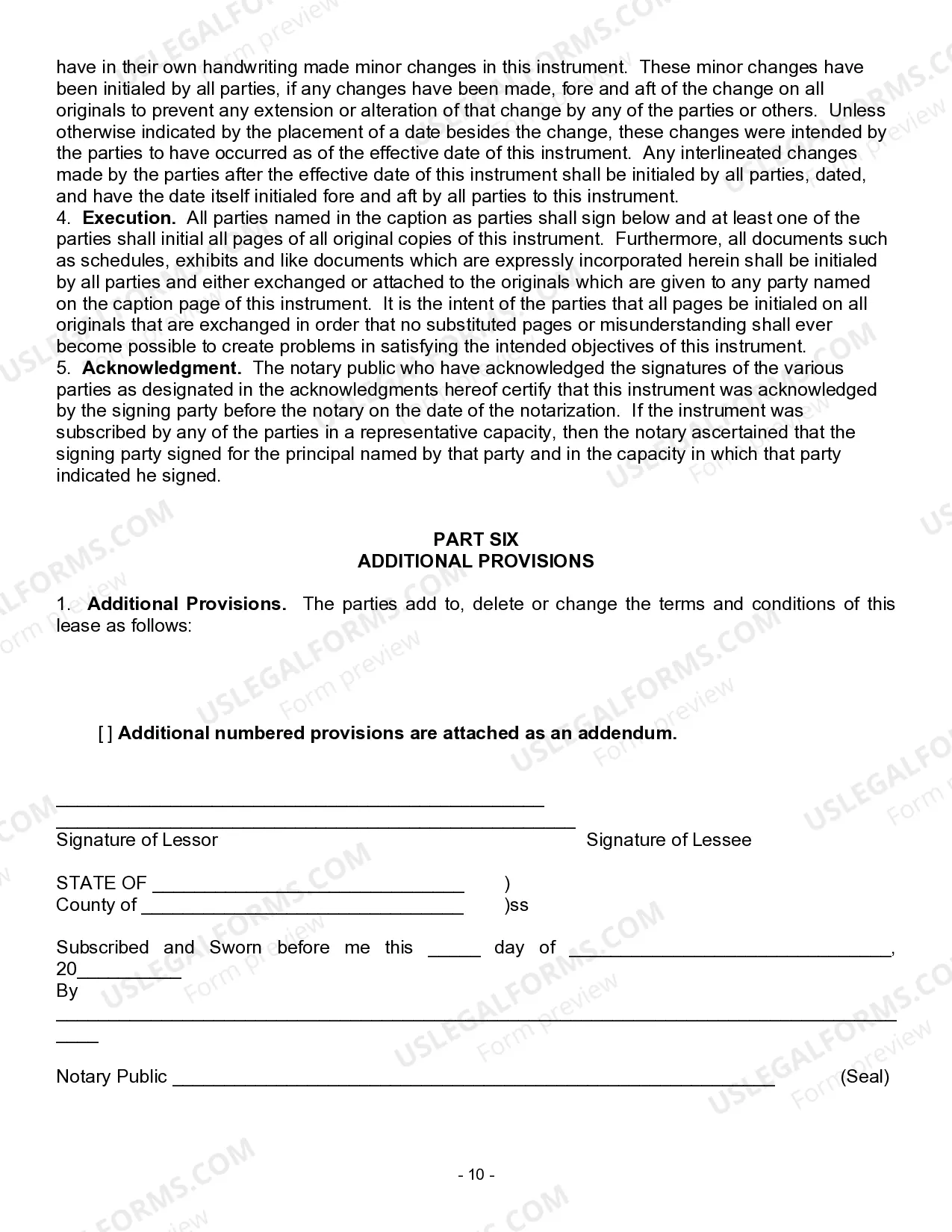
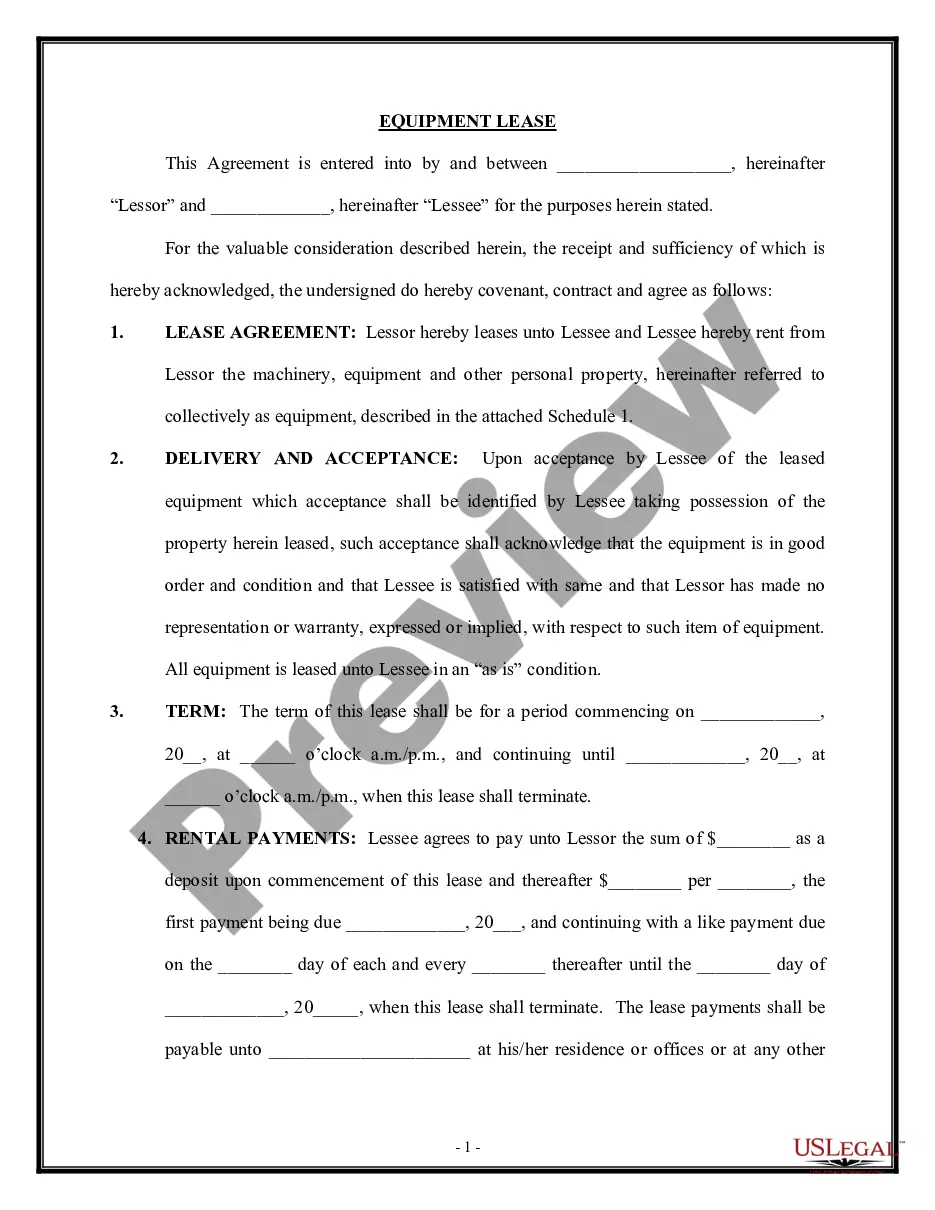
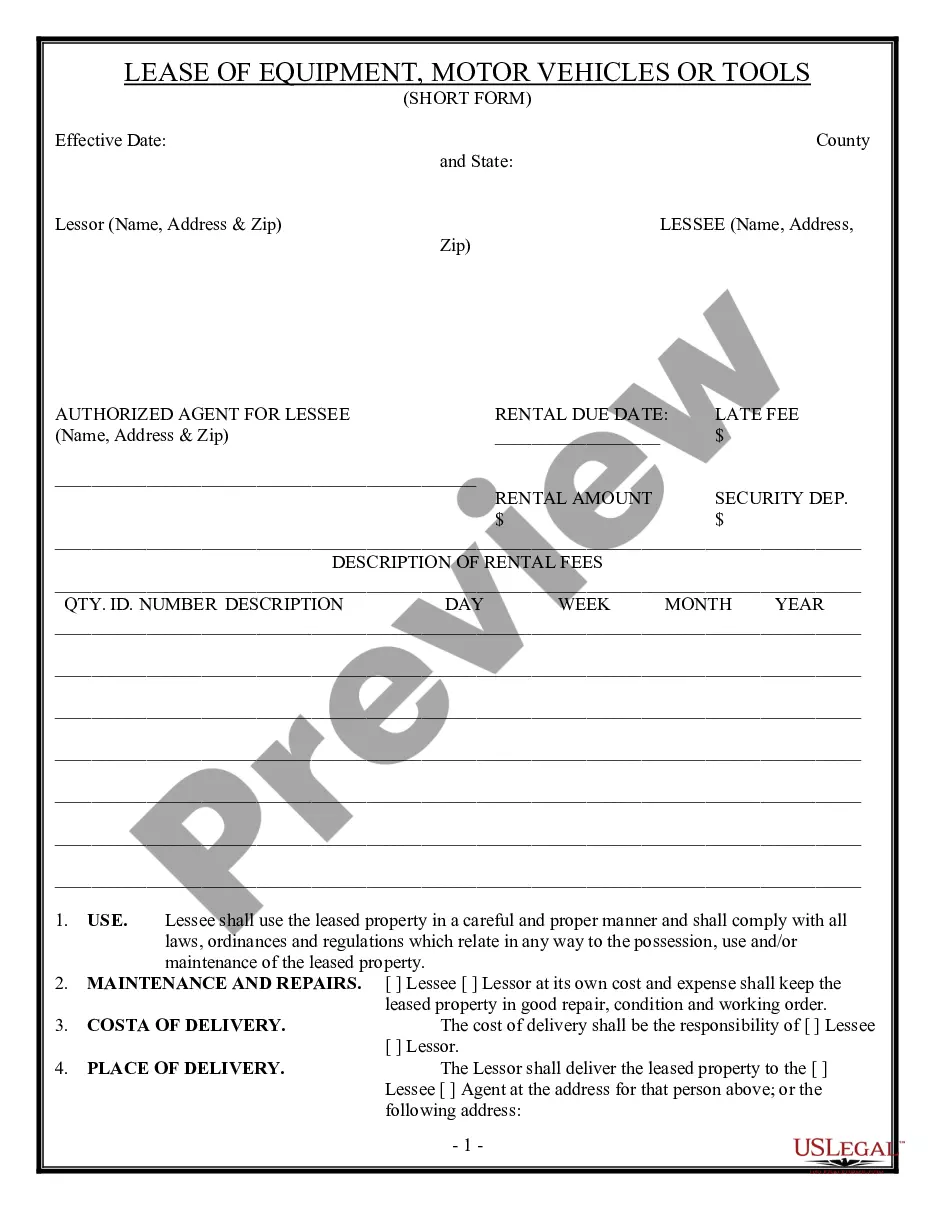
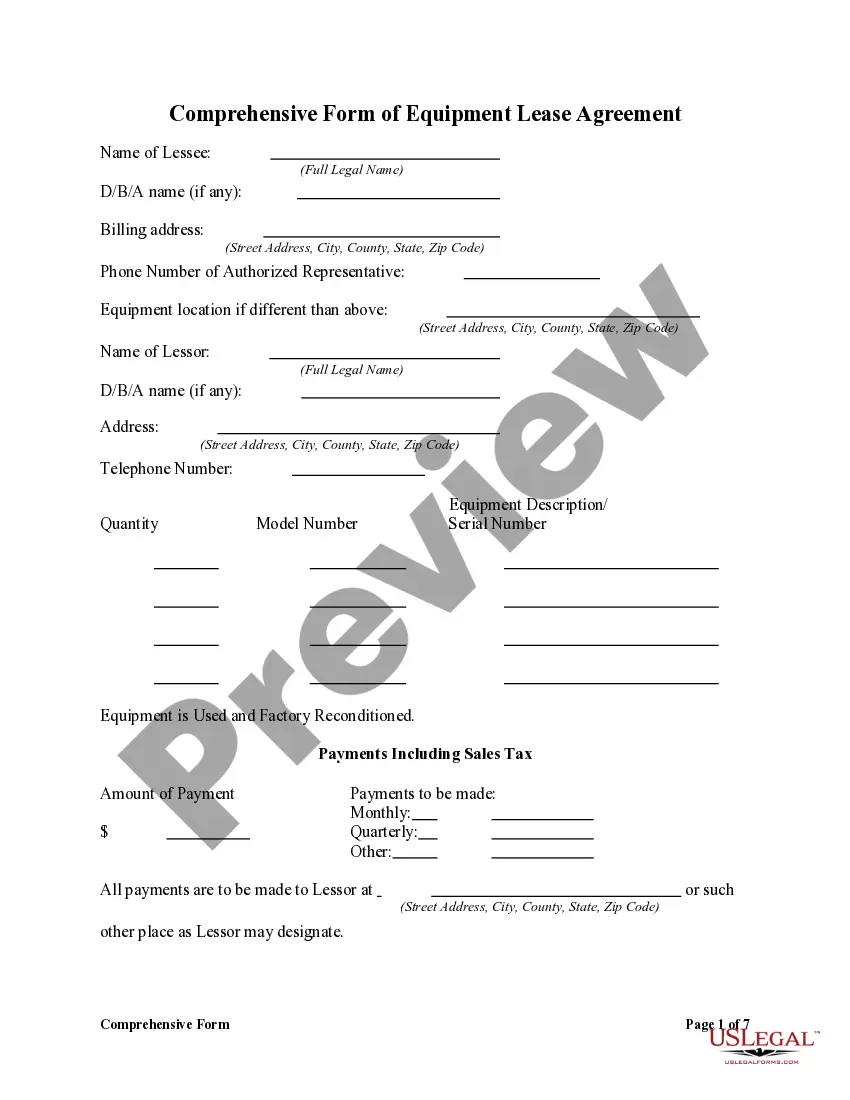
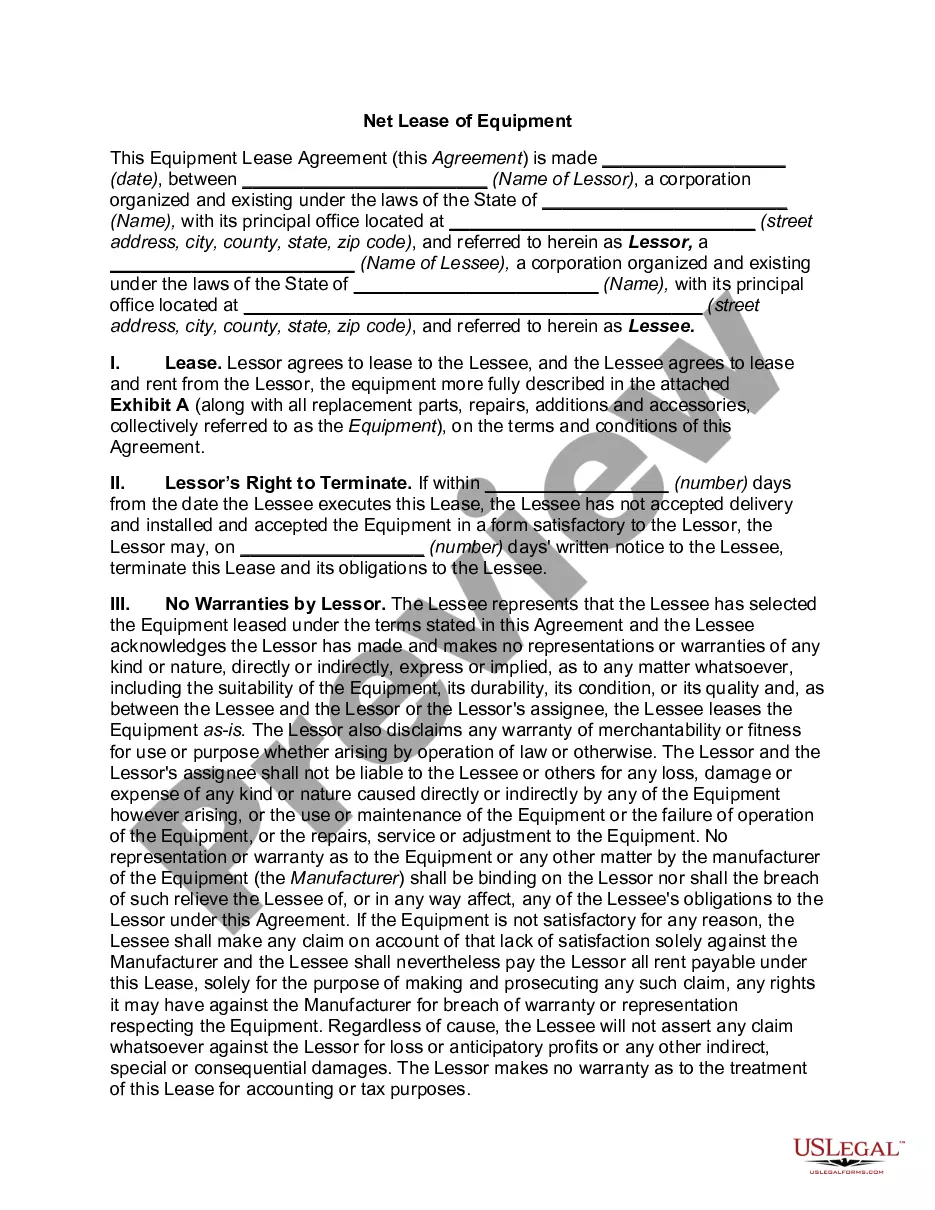
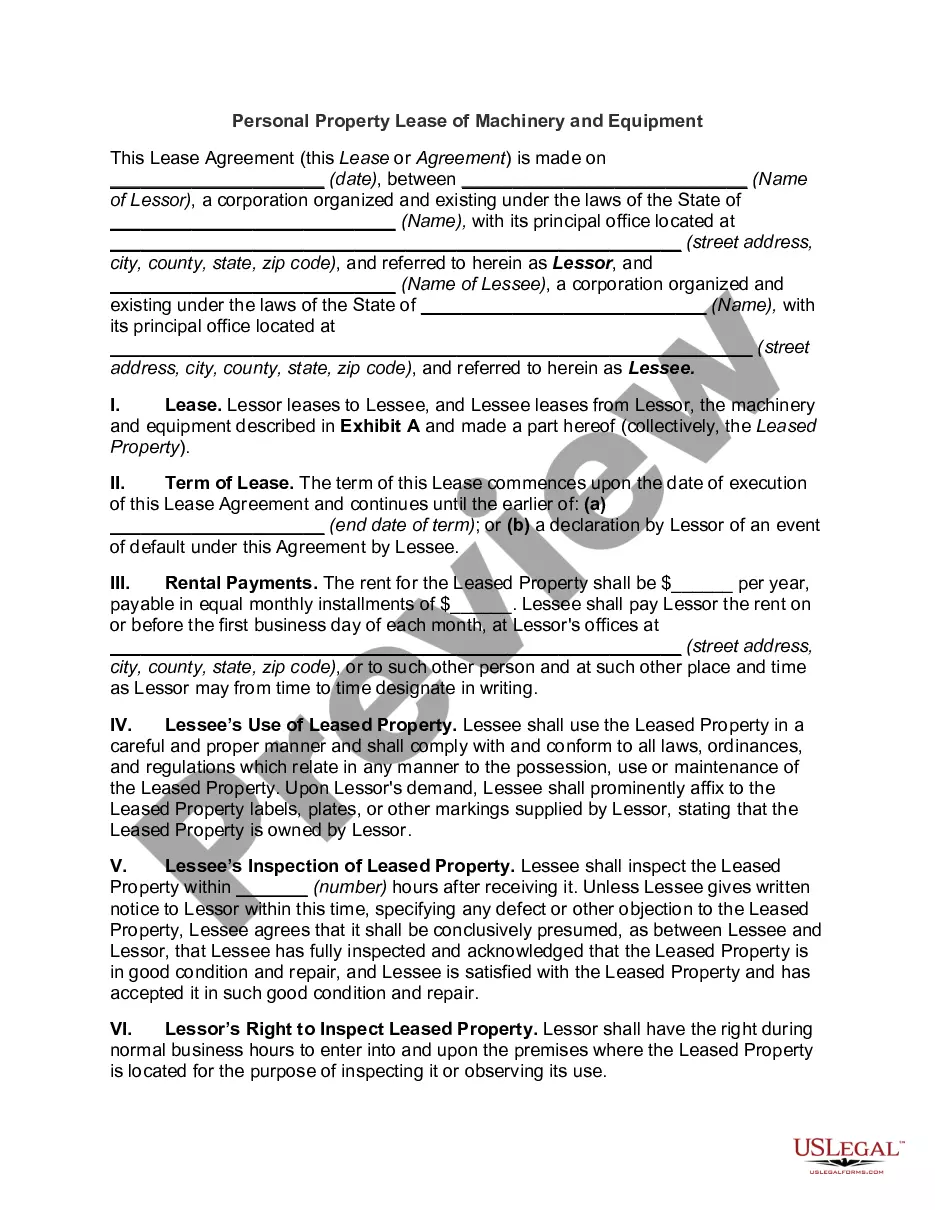
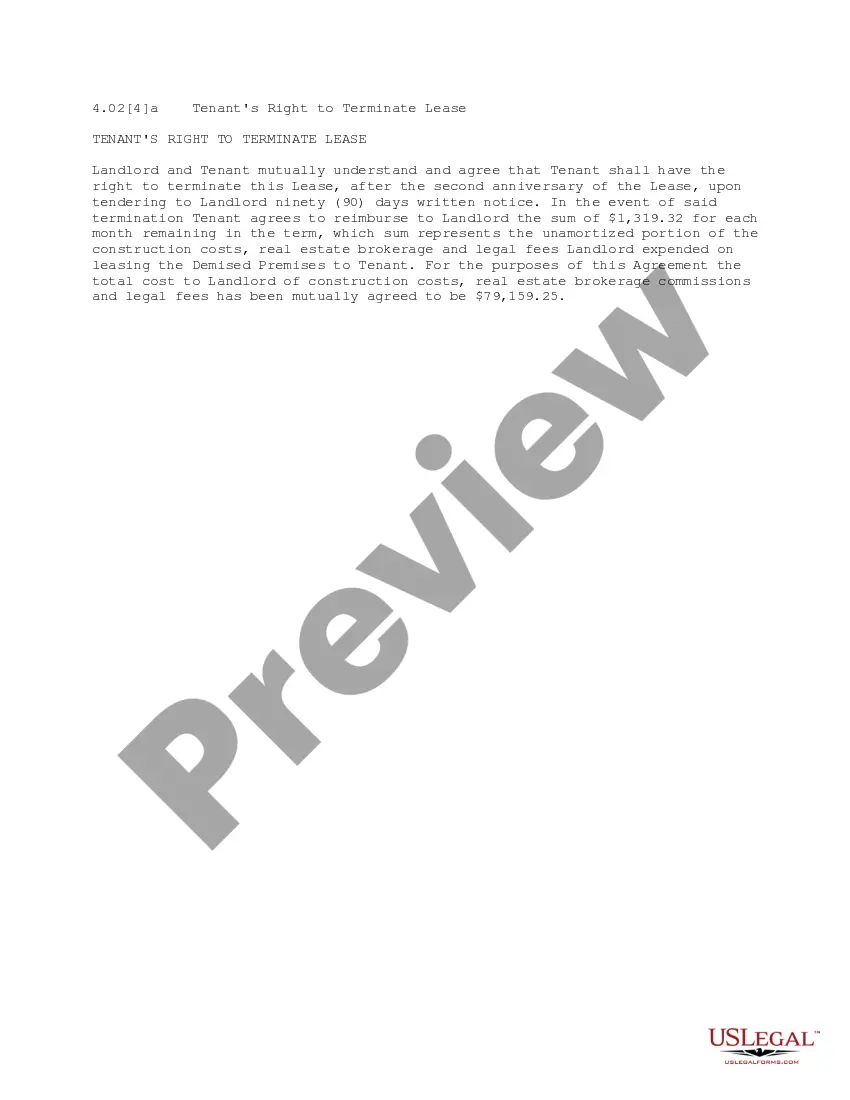
This form provides for the lease of equipment, motor vehicles, or tools. It is also understood that the lessor may assign this lease or mortgage, the equipment or tools, and that the assignee may assign the lease. All rights of the lessor may be assigned, pledged, mortgaged, transferred or otherwise disposed of, either in whole or in part, without notice to the lessee.
Vermont Equipment Lease - Detailed
Instant download
Description
Free preview
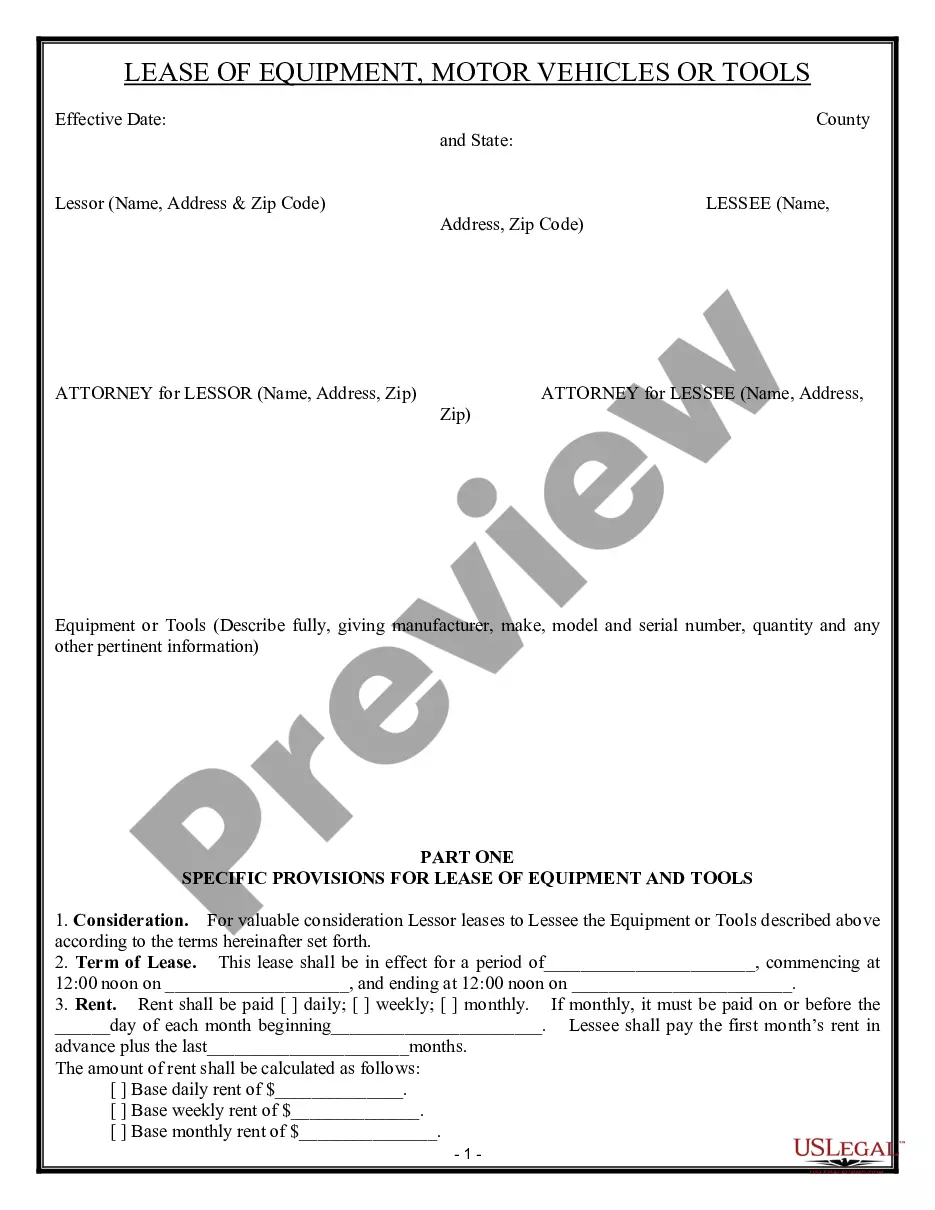
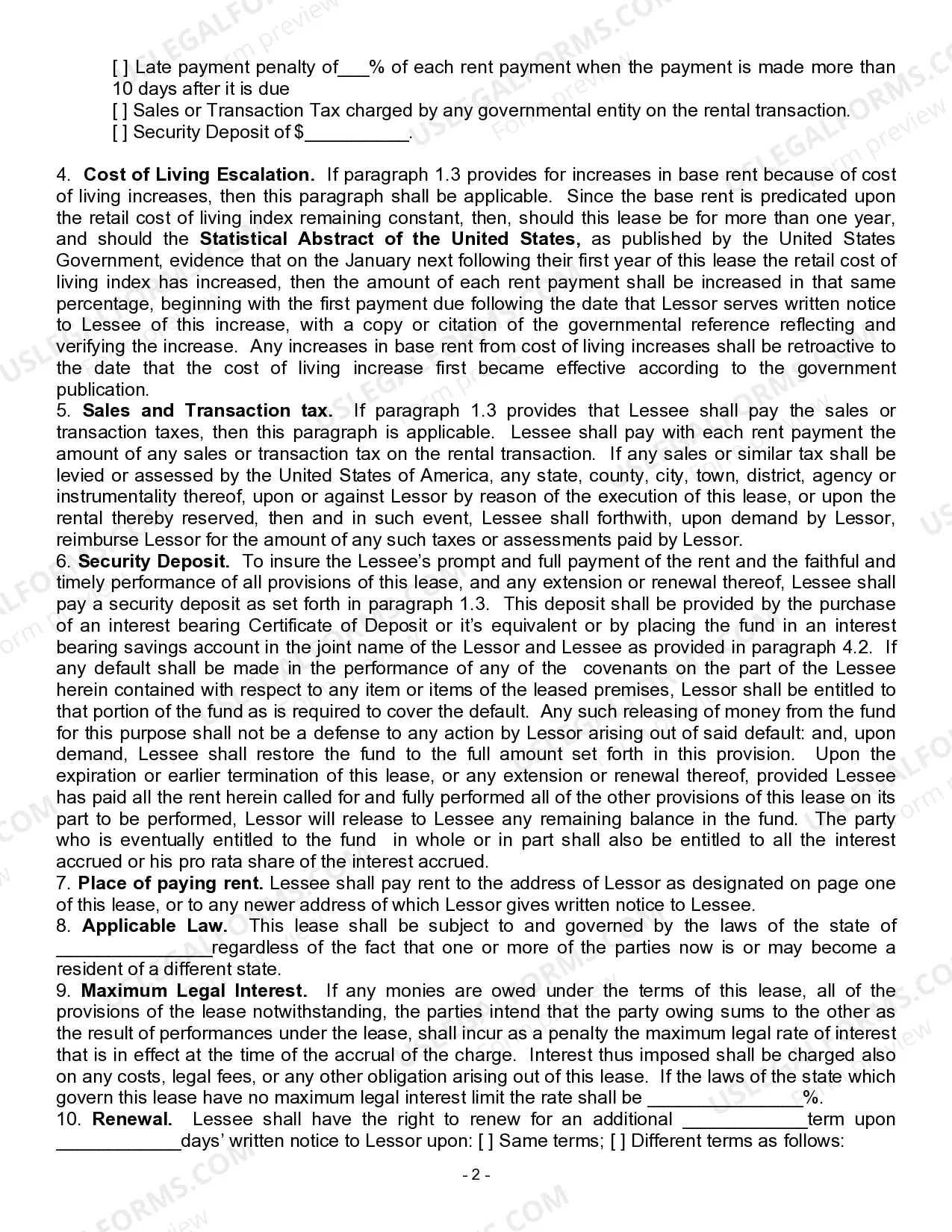



How to fill out Equipment Lease - Detailed?
Are you currently in a circumstance where you require documents for either business or personal purposes almost every day.
There are numerous official document templates available online, but finding forms you can trust isn't straightforward.
US Legal Forms provides a vast collection of form templates, such as the Vermont Equipment Lease - Detailed, that comply with federal and state requirements.
If you find the right form, click Acquire now.
Choose the pricing plan you want, provide the necessary information to create your account, and complete the transaction using your PayPal or credit card.
- If you are already familiar with the US Legal Forms website and have an account, simply Log In.
- After that, you can download the Vermont Equipment Lease - Detailed template.
- If you do not have an account and wish to start using US Legal Forms, follow these steps.
- Find the form you need and ensure it is for the correct city/state.
- Use the Preview button to review the form.
- Check the details to ensure you have selected the right form.
- If the form isn't what you're looking for, use the Search box to locate the form that meets your needs and requirements.
Form popularity
FAQ
The structure of equipment leasing generally consists of a lessee (you) and a lessor (the leasing company). In a Vermont Equipment Lease - Detailed, you agree to use the equipment for a set time, making regular payment installments while the lessor retains ownership. This structure offers businesses a clear understanding of costs while keeping essential equipment available.
A good equipment lease rate typically ranges between 4% to 10% of the equipment's value per year, depending on various factors. Your rate may vary based on credit history, lease term, and equipment type in your Vermont Equipment Lease - Detailed. It is vital to compare offers from multiple leasing companies to ensure you secure a competitive rate that aligns with your budget.
A reasonable lease term often falls between three to five years, allowing businesses to balance their equipment needs and budget. A Vermont Equipment Lease - Detailed emphasizes selecting a term that fits your operational strategy. Considering factors like equipment depreciation and your business cycle can enhance your leasing decision.
111 income tax is the income tax for residents and non-residents earning income in Vermont. When engaging in a Vermont Equipment Lease - Detailed, you should familiarize yourself with your tax obligations under this system. Properly reporting income generated from your equipment lease will ensure you meet state requirements and avoid future complications.
The tax form for 111 in Vermont is the Vermont Income Tax Return, commonly known as the Form IN-111. If you are leasing equipment through a Vermont Equipment Lease - Detailed, your income from these leases must be reported on this form. Completing Form IN-111 accurately ensures compliance with state tax regulations and helps you avoid any tax issues.
111 tax refers to the Vermont income tax imposed on individuals, trusts, and estates. When dealing with a Vermont Equipment Lease - Detailed, it's important to account for the potential impact of 111 tax on your overall financial strategy. Understanding how this tax works can lead to better planning and management of your lease agreements.
VT Form 113 is the Vermont Estate Tax Return, which every estate with a gross value exceeding a certain threshold must file. If you're involved in a Vermont Equipment Lease - Detailed, it's vital to understand how these forms relate to your lease agreements. Completing this form accurately is essential for compliance and avoiding potential penalties.
To avoid Vermont estate tax, consider giving gifts to family members while you are alive, and stay informed about the estate tax limits. Additionally, using a Vermont Equipment Lease - Detailed can help you manage your assets more effectively, allowing for strategic planning that minimizes tax liabilities. Working with a tax advisor can also provide personalized advice tailored to your situation.
Yes, equipment rental is generally taxable in Vermont, as it falls under the state's sales tax regulations. When you enter into a Vermont Equipment Lease - Detailed, it's essential to consider applicable taxes to avoid any surprises. Knowing the tax implications of your rental agreements can significantly impact your overall costs.
In Vermont, certain items are exempt from taxation, including specific food items, prescription medications, and some types of machinery. Understanding these exemptions can be crucial when considering a Vermont Equipment Lease - Detailed, as it may influence your leasing decisions. Familiarizing yourself with Vermont's tax structure helps you strategize your financial planning effectively.