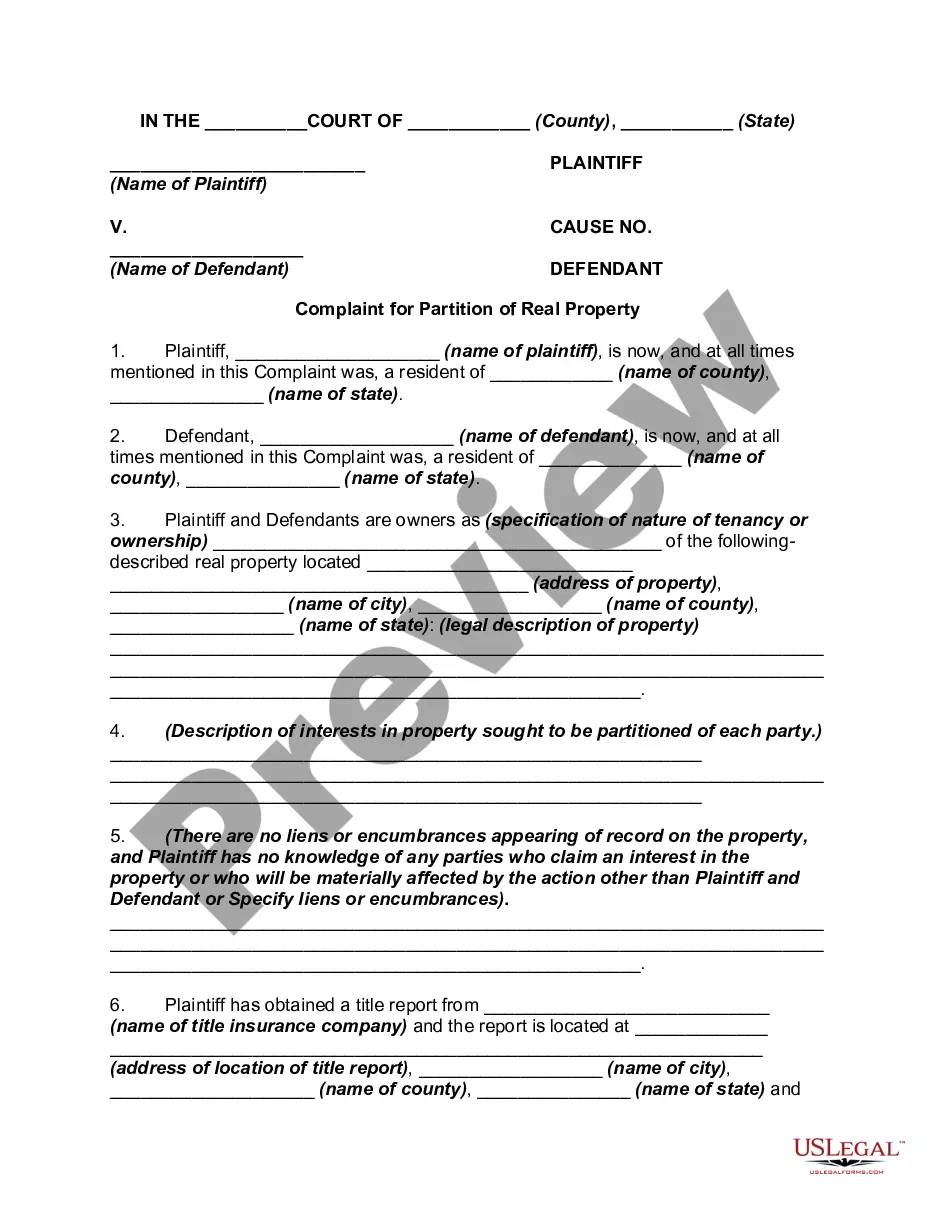
An action for partition usually arises when there is a dispute as to how to divide property, or in a dispute as to whether property should be sold. One co-owner of real property can file to get a court order requiring the sale of the property and division of the profits.
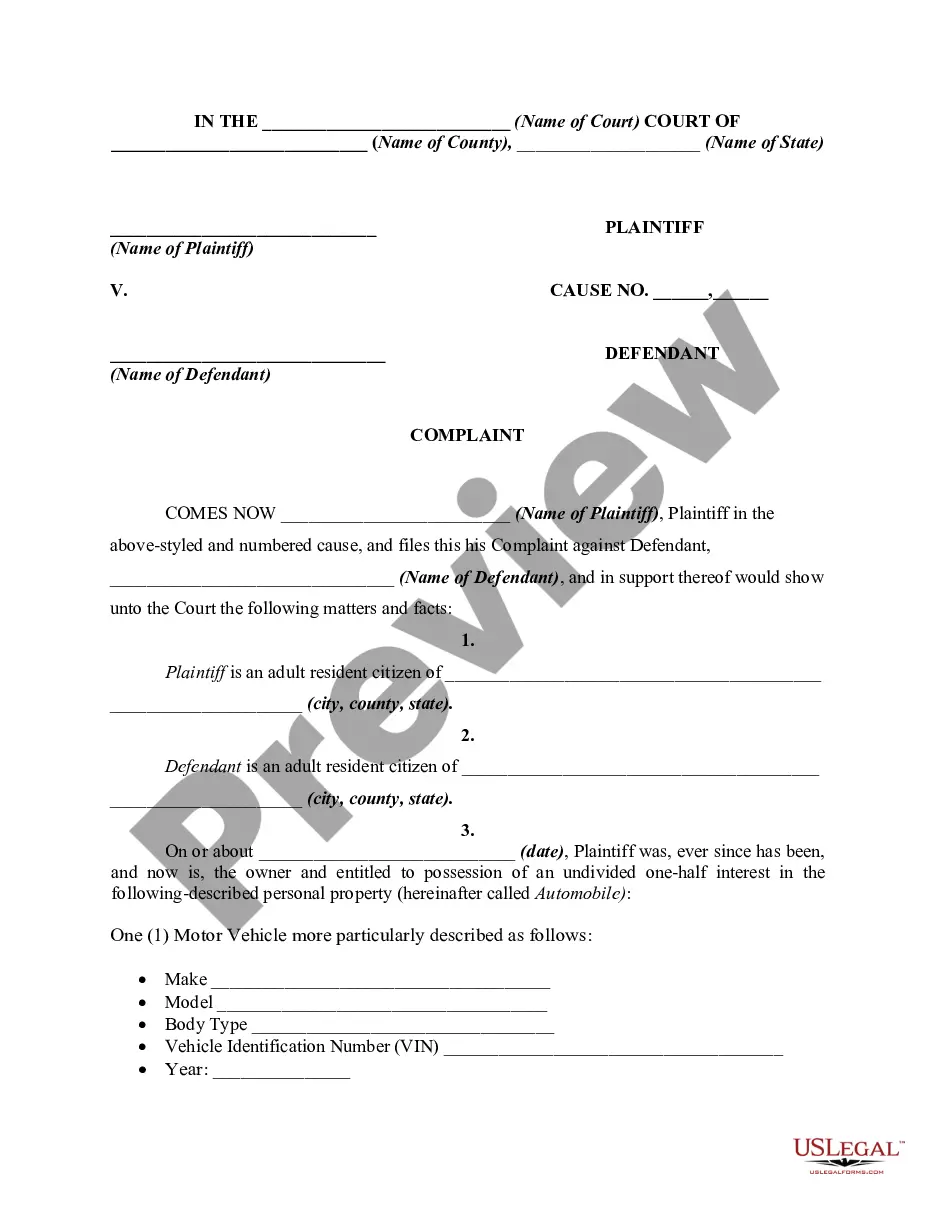
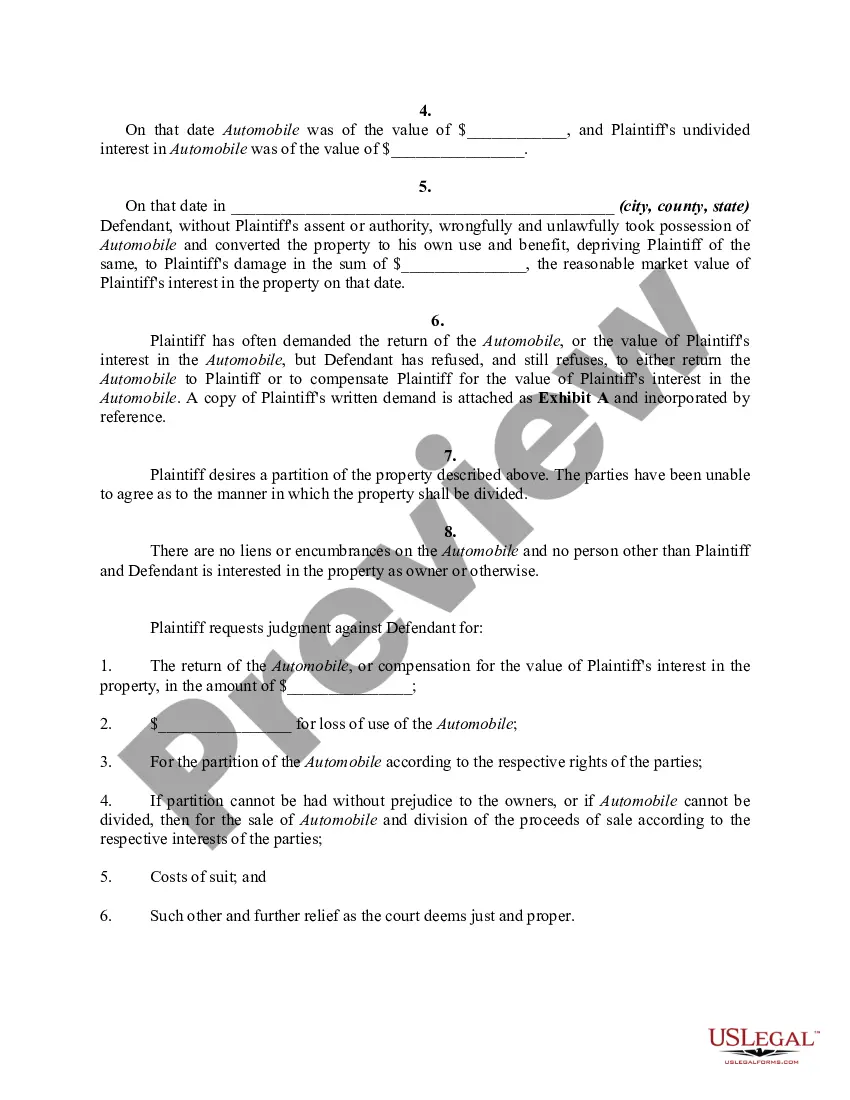
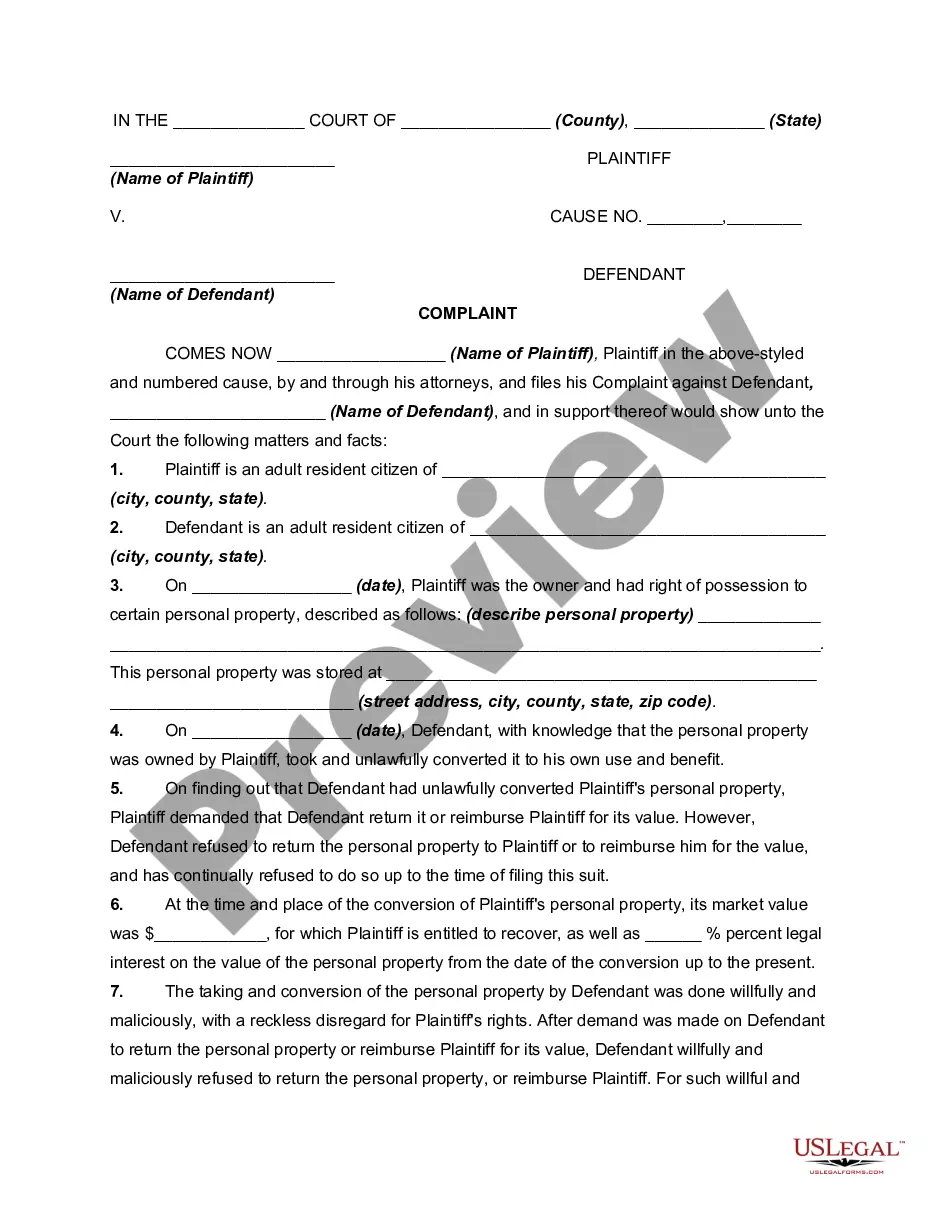
Vermont Complaint for Conversion of Personal Property by Co-Owner and Request for Partition
Category:
State:
Multi-State
Control #:
US-01705BG
Format:
Word;
Rich Text
Instant download
Description
Conversion is when someone wrongfully uses property of another for their own purposes or alters or destroys it. In an action for conversion, the taking of the property may be lawful, but the retaining of the property is unlawful. To succeed in the action, the plaintiff must prove that he or she demanded the property returned and the defendant refused to do so.
Free preview
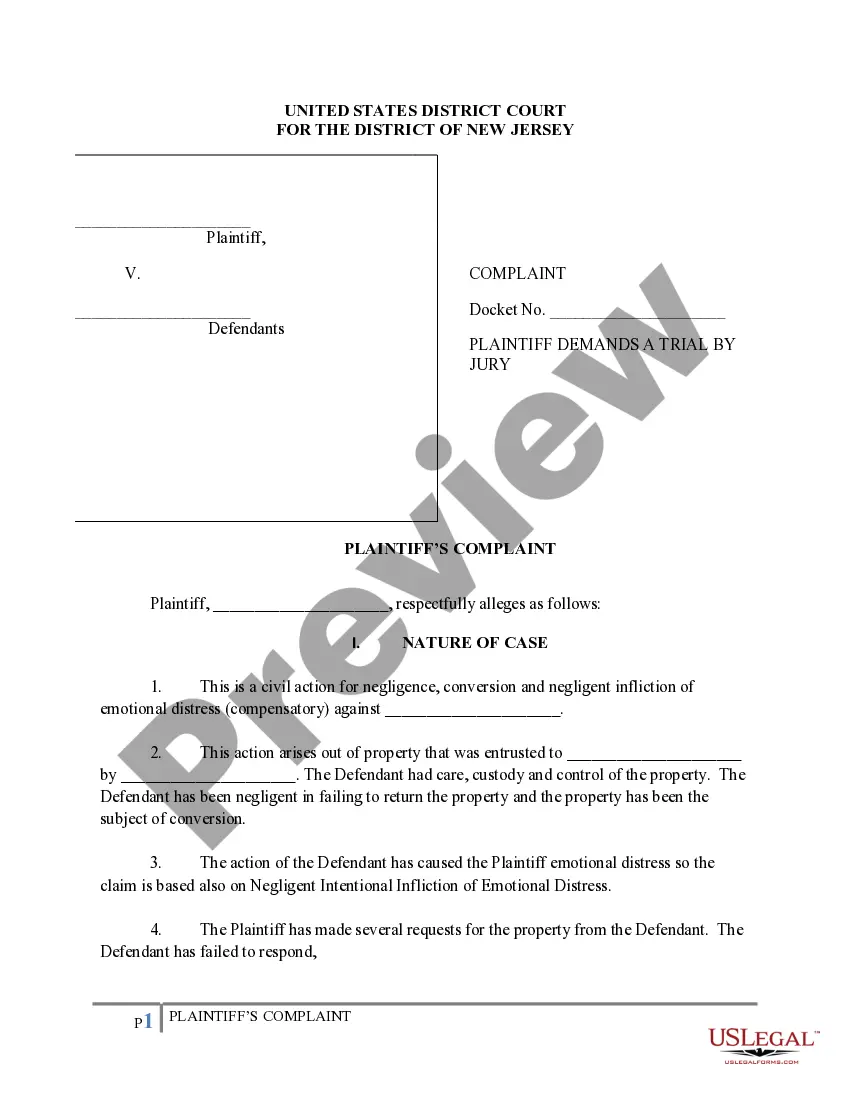
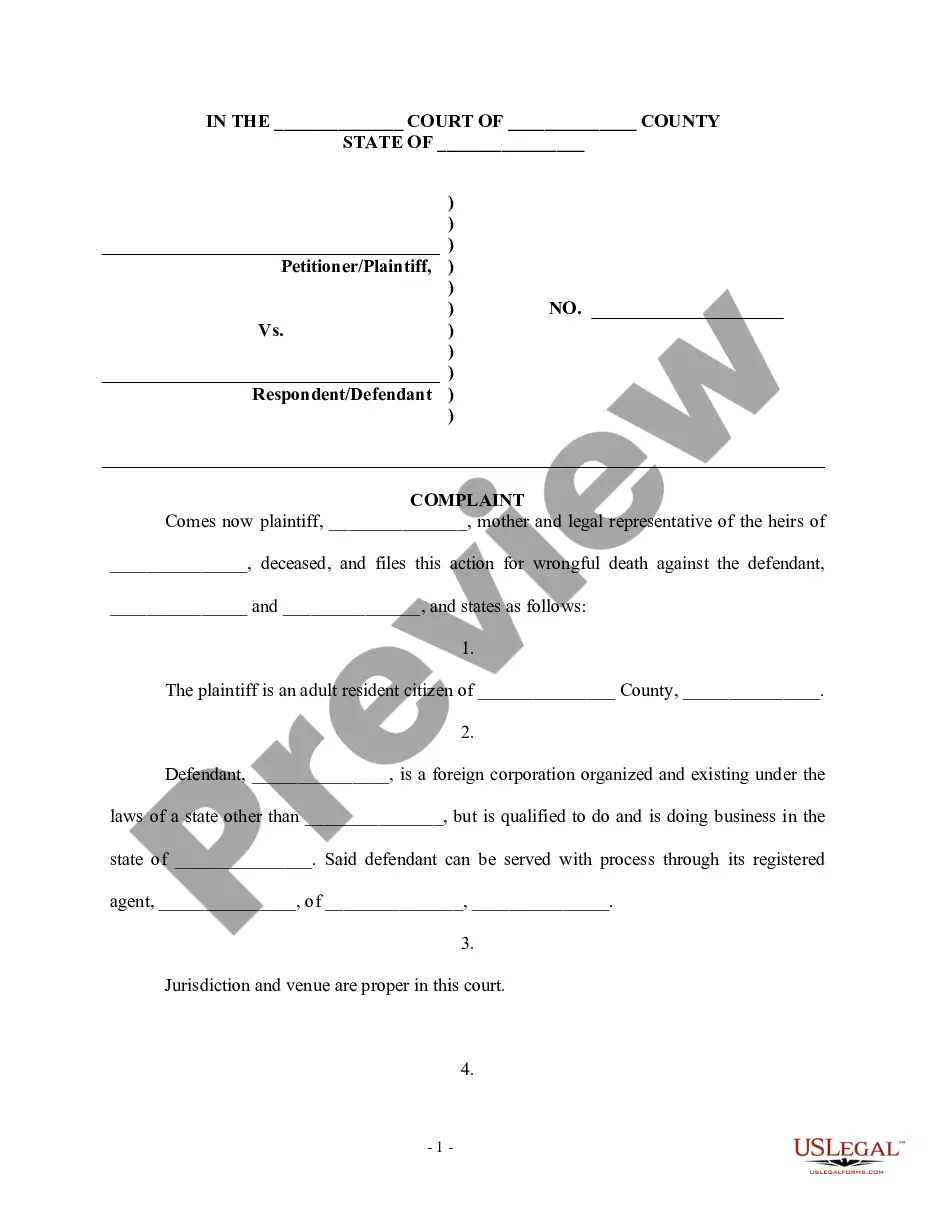
How to fill out Complaint For Conversion Of Personal Property By Co-Owner And Request For Partition?
You can spend hours online searching for the proper legal document template that meets the state and federal requirements you need. US Legal Forms offers thousands of legal forms that are verified by professionals.
You can download or print the Vermont Complaint for Conversion of Personal Property by Co-Owner and Request for Partition from my service.
If you already have a US Legal Forms account, you can Log In and click on the Download button. After that, you can complete, modify, print, or sign the Vermont Complaint for Conversion of Personal Property by Co-Owner and Request for Partition. Each legal document template you obtain is yours indefinitely.
Select the pricing plan you want, enter your details, and register for a free account on US Legal Forms. Complete the transaction. You can use your credit card or PayPal account to pay for the legal form. Choose the format of the document and download it to your device. Make modifications to your document if necessary. You can complete, edit, sign, and print the Vermont Complaint for Conversion of Personal Property by Co-Owner and Request for Partition. Download and print thousands of document templates using the US Legal Forms website, which offers the largest selection of legal forms. Utilize professional and state-specific templates to address your business or personal needs.
- To acquire another copy of a purchased form, go to the My documents tab and click on the corresponding button.
- If you are using the US Legal Forms website for the first time, follow the simple instructions below.
- First, ensure that you have selected the correct document template for the area/region of your choice.
- Review the form description to confirm you have chosen the right form.
- If available, utilize the Review button to look through the document template as well.
- If you want to find another version of the form, use the Search field to locate the template that suits your needs and requirements.
- Once you have identified the template you need, click Get now to proceed.
Form popularity
FAQ
How to Stop a Partition Action Forced Appraised Buyout under the Partition of Real Property Act (previously the Uniform Partition of Heirs Property Act) ... Request Determination of Offsets and Reimbursements. ... Challenging a Plaintiff's Ownership Interest (Standing to Bring a Partition Action) ... Waiver of Right to Partition.
A partition suit is an incident attached to the jointly held property and is a running cause of action when a co-owner doesn't want to keep his share undivided with the other co-owners. However, the limitation Act provides for limitation after a right to sue accrues through any event in dispute.
In a recent landmark judgment, the Supreme Court of India held that in a suit for partition of joint property, every interested party is deemed a plaintiff. This means that each co-sharer has the right to initiate and pursue a partition suit, and no one co-sharer can prevent another from doing so.
In a recent development, a Division Bench of the Supreme Court, made an important observation that in a suit for partition, every interested party is considered to be a plaintiff. Further, law does not prohibit passing of numerous preliminary decrees.
The limitation period for a partition suit in India is 12 years from the date when the right to sue accrued.