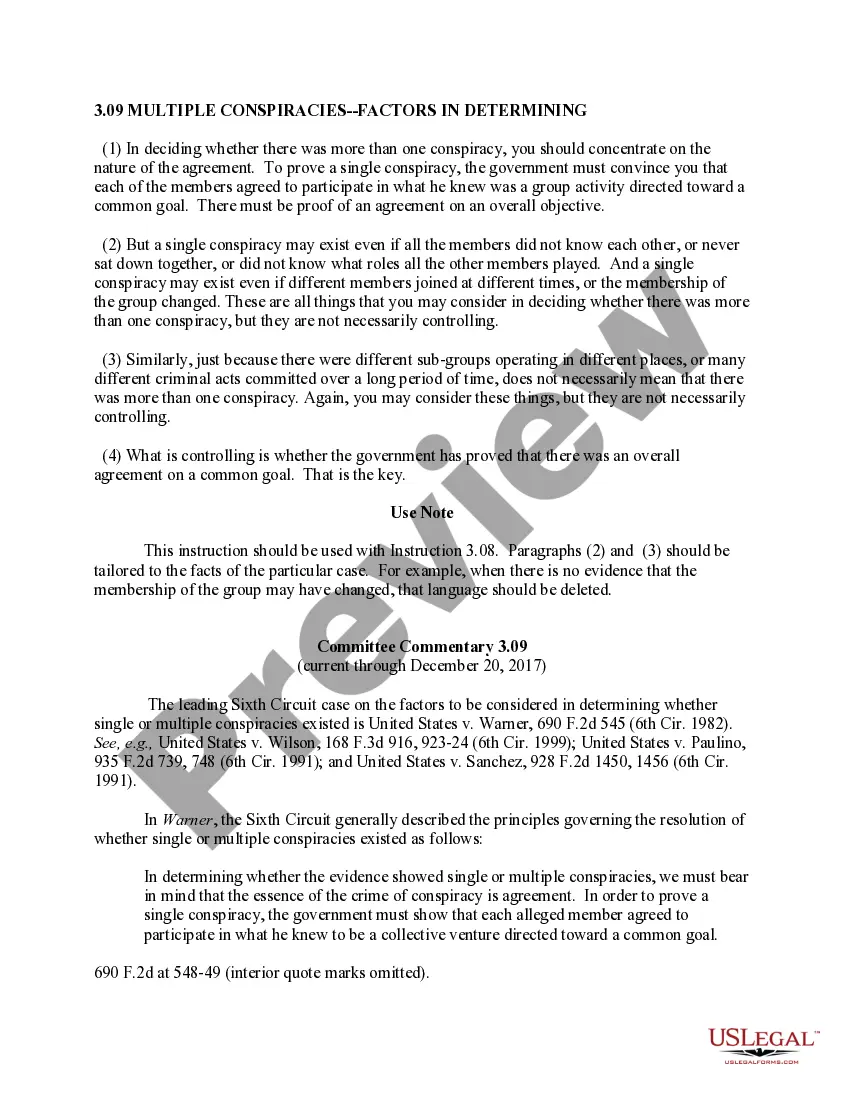
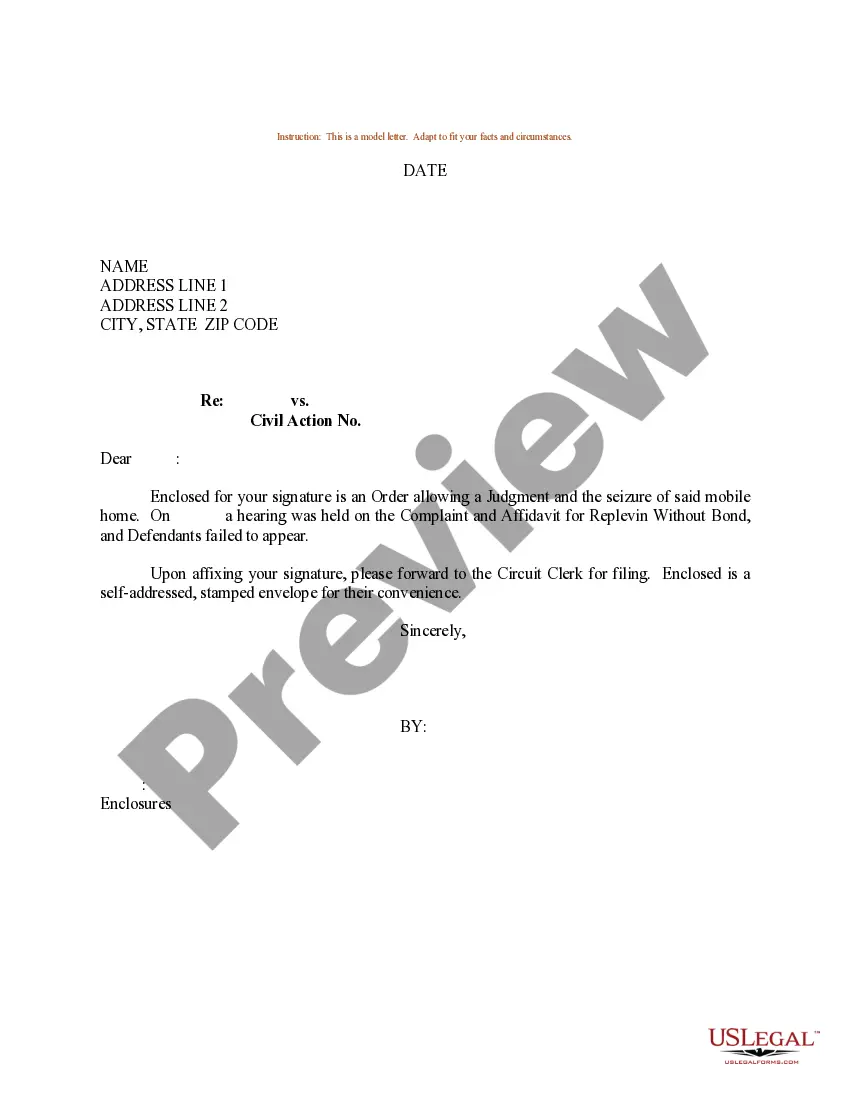
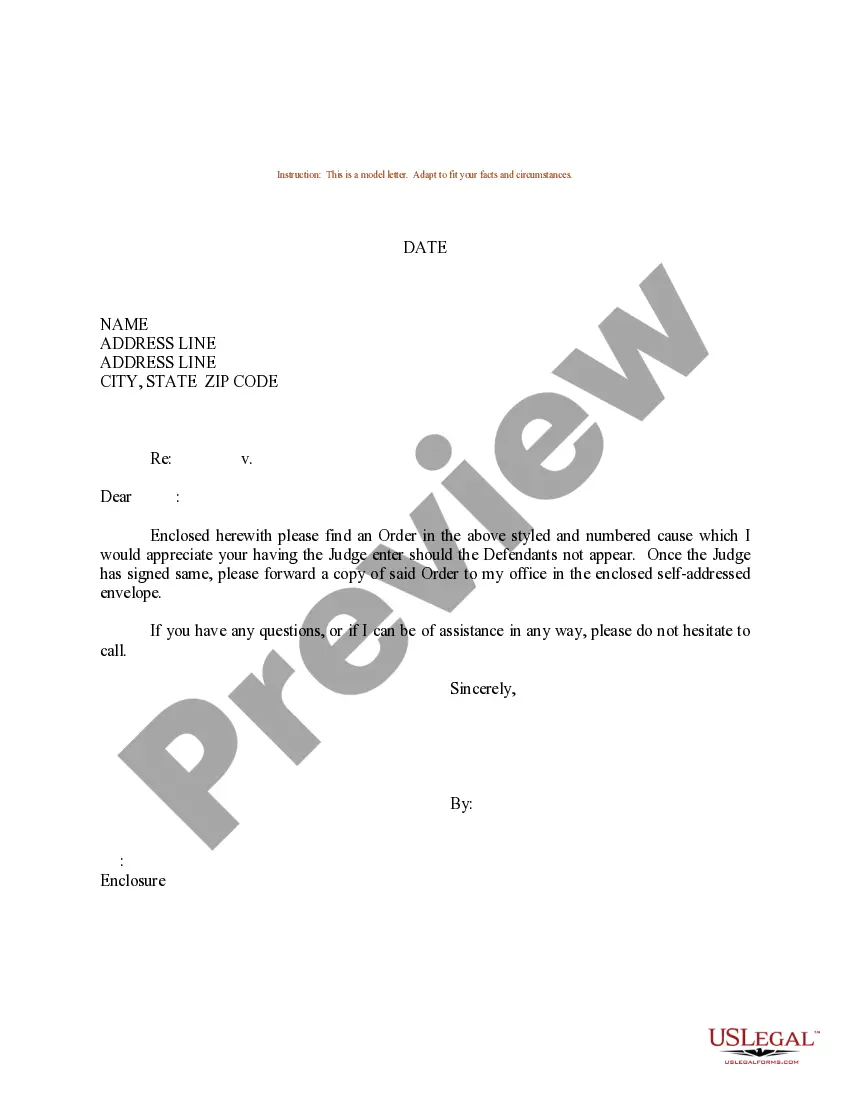
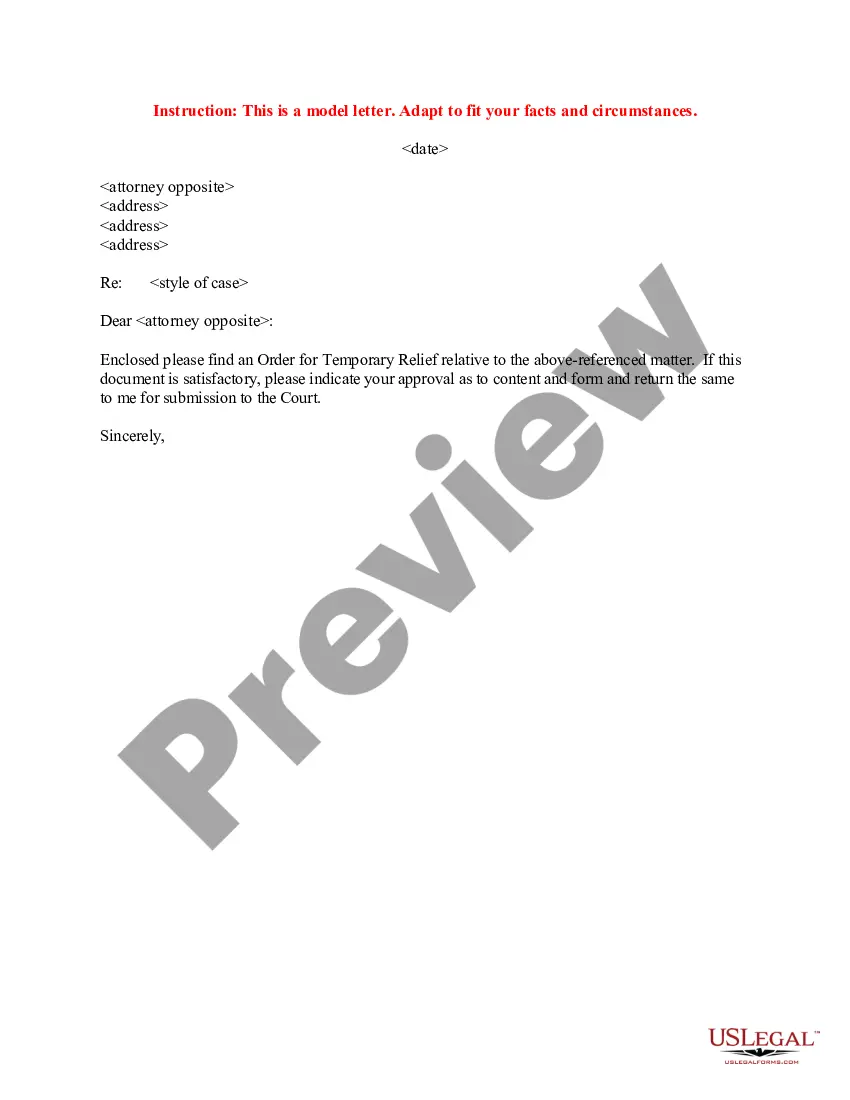
Vermont Sample Letter to Judge concerning Order for Seizure of a Mobile
Description


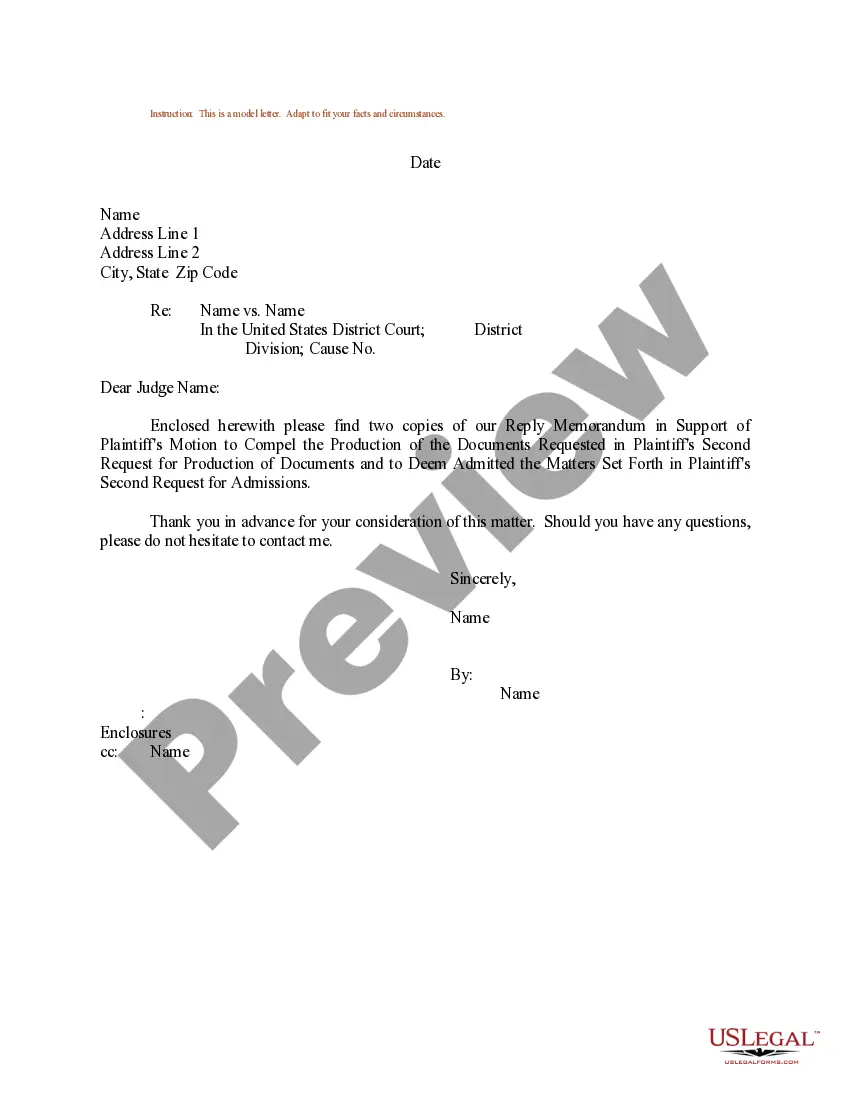

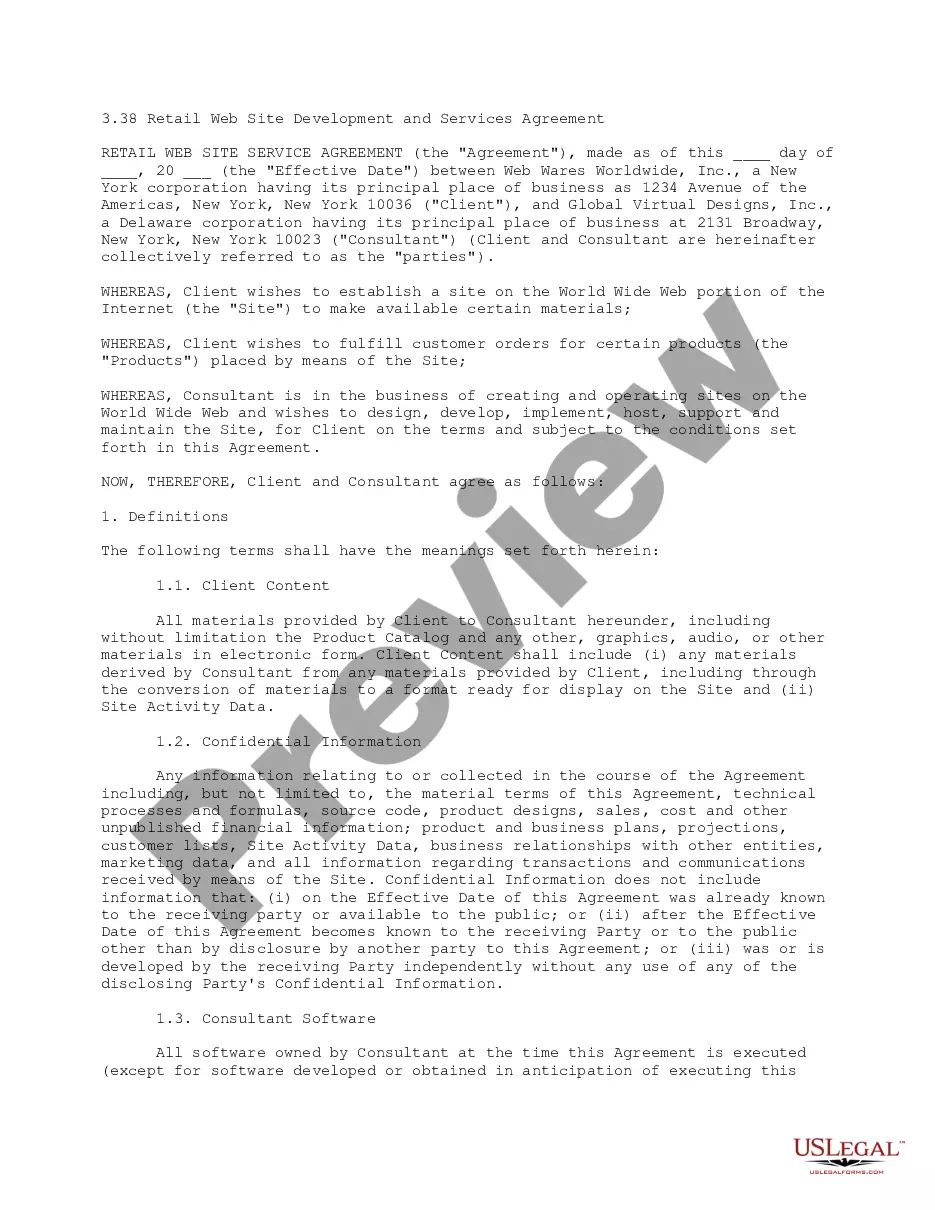





How to fill out Sample Letter To Judge Concerning Order For Seizure Of A Mobile?
Selecting the most suitable legal document template can be a challenge. Indeed, there are numerous formats accessible online, but how can you find the legal form you require? Utilize the US Legal Forms website. The service offers thousands of templates, including the Vermont Sample Letter to Judge regarding Order for Seizure of a Mobile, that you can apply for both business and personal purposes. All of the forms are reviewed by experts and comply with state and federal regulations.
If you are already registered, Log In to your account and click the Obtain button to retrieve the Vermont Sample Letter to Judge regarding Order for Seizure of a Mobile. Use your account to browse the legal forms you have previously purchased. Visit the My documents tab in your account and download another copy of the document you require.
If you are a new user of US Legal Forms, here are simple instructions that you can follow: First, ensure you have selected the correct form for the area/state. You can review the form using the Review button and read the form description to confirm it is suitable for you. If the form does not meet your needs, use the Search area to find the appropriate form. Once you are certain that the form is correct, click the Acquire now button to obtain the form. Choose the pricing plan you want and enter the necessary information. Create your account and finalize the purchase using your PayPal account or credit card. Select the document format and download the legal document template to your device. Complete, edit, and print and sign the received Vermont Sample Letter to Judge regarding Order for Seizure of a Mobile.
- US Legal Forms boasts the largest collection of legal forms where you can find a variety of document templates.
- Utilize the service to obtain professionally crafted paperwork that adheres to state regulations.
- Explore numerous options for all your legal documentation needs.
- Access forms that are specifically designed to meet different legal requirements.
- Find templates that can simplify your legal drafting process.
- Benefit from expert-reviewed forms to ensure compliance and accuracy.
Form popularity
FAQ
A party may file a motion for summary judgment at any time until within 30 days after the close of all discovery, unless a different time is set by stipulation or court order. An adverse party may file its opposition to the motion within 30 days after the service of the motion.
If a plaintiff who has once dismissed an action in any court commences an action based upon or including the same claim against the same defendant, the court may make such order for the payment of costs of the action previously dismissed as it may deem proper and may stay the proceedings in the action until the ...
Warrant Requirement A search or seizure is generally considered to be unreasonable without a warrant, subject to only a few exceptions. To obtain a search warrant or arrest warrant, the law enforcement officer must demonstrate probable cause that a search or seizure is justified.
The circumstances under which a warrantless search, seizure, or arrest is deemed reasonable generally fall within seven categories: Felony Arrest in a Public Place. ... Searches Directly Related to a Lawful Arrest. ... Traffic Stops for Reasonable Suspicion. ... Suspects of Ongoing Criminal Activity. ... Exigent Circumstances.
Rule 3 - Arrest Without A Warrant; Citation to Appear (a) Arrest Without a Warrant for a Felony Offense. A law enforcement officer may arrest without warrant a person whom the officer has probable cause to believe has committed or is committing a felony.
Rule 41 - Search and Seizure (a) Authority to Issue Warrant. A search warrant authorized by this rule may be issued only by a judicial officer upon request of a law enforcement officer, an attorney for the state, or any other person authorized by law.
The officer or other person shall execute the attachment by taking into possession or otherwise encumbering nonexempt goods, chattels, real estate, or other property of the defendant in the manner provided by statute. Any writ of attachment shall be executed within 30 days after the date of its issuance by the clerk.
A search or seizure is reasonable if the police have a warrant from a judge based on probable cause to believe that a suspect has committed a crime. Also, a search may be reasonable without a warrant if an exception applies under the circumstances.