Vermont License Agreement Regarding Rights Under Patent Applications or Patents That May Be Issued
Description
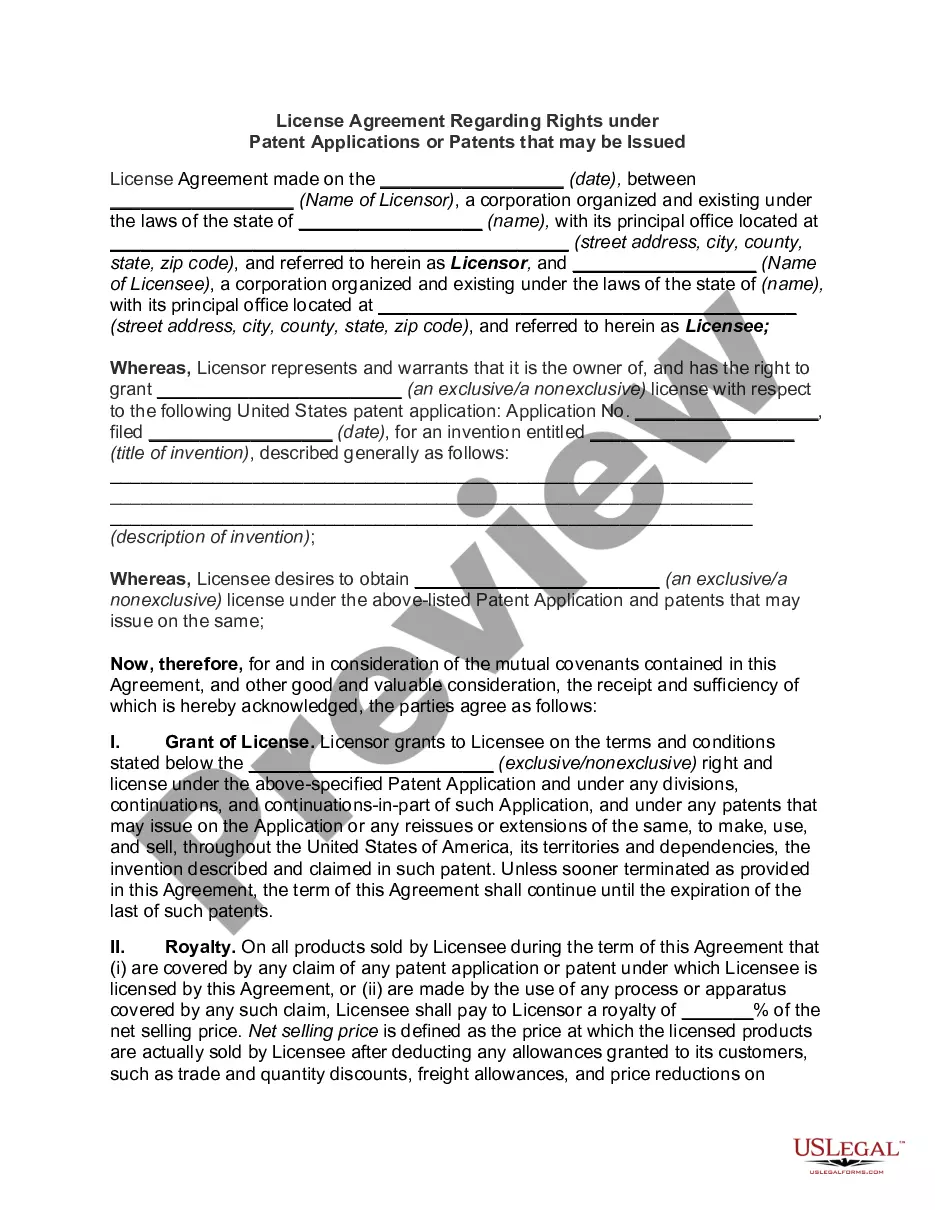
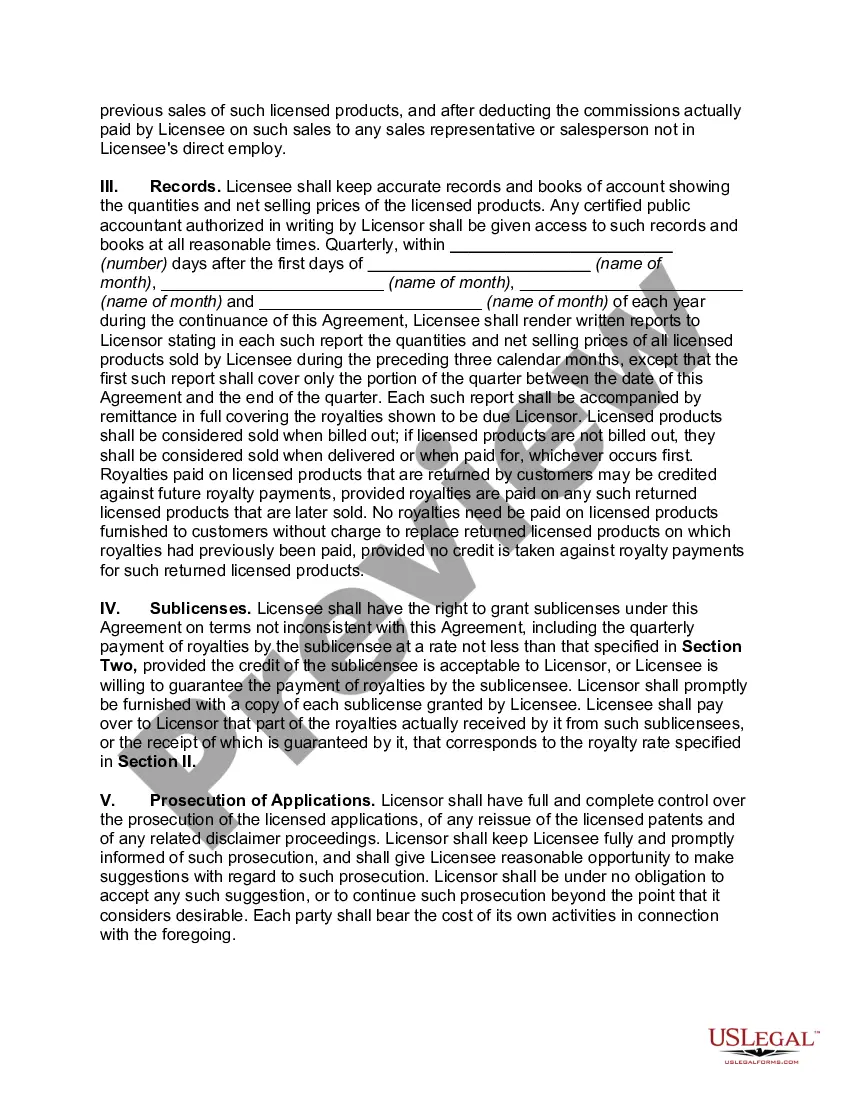
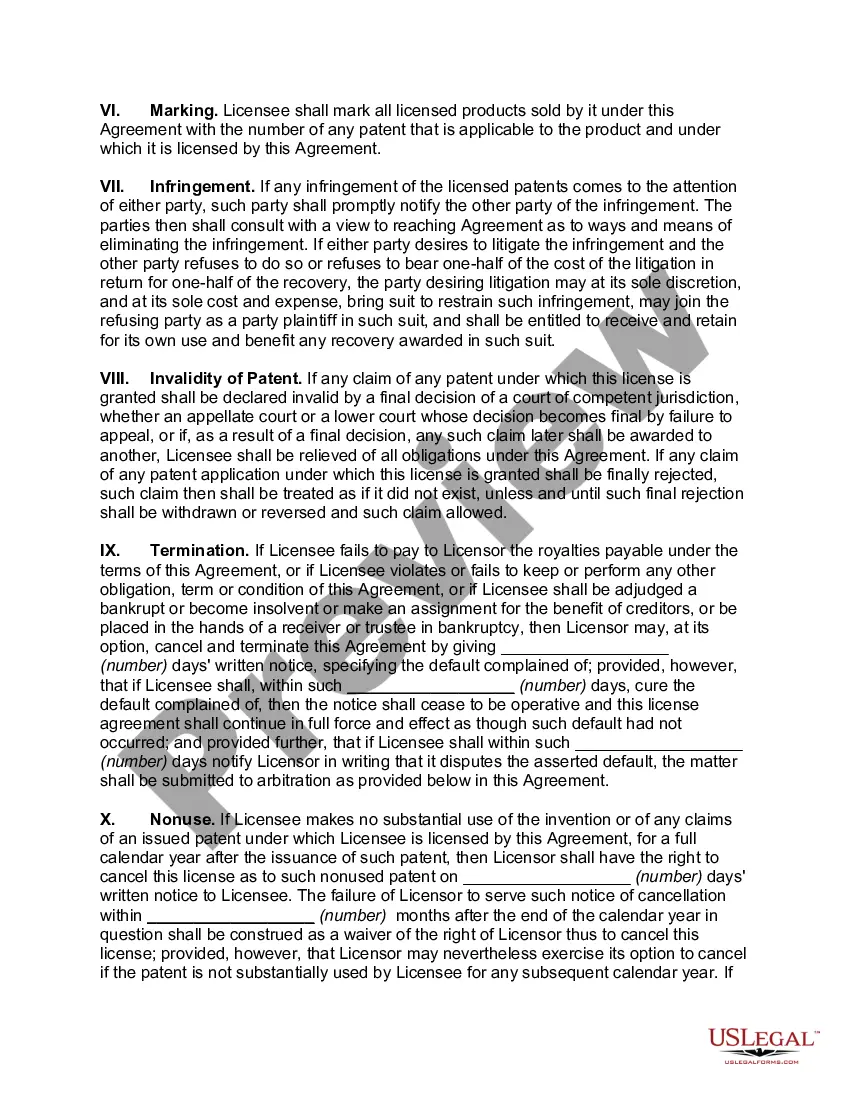
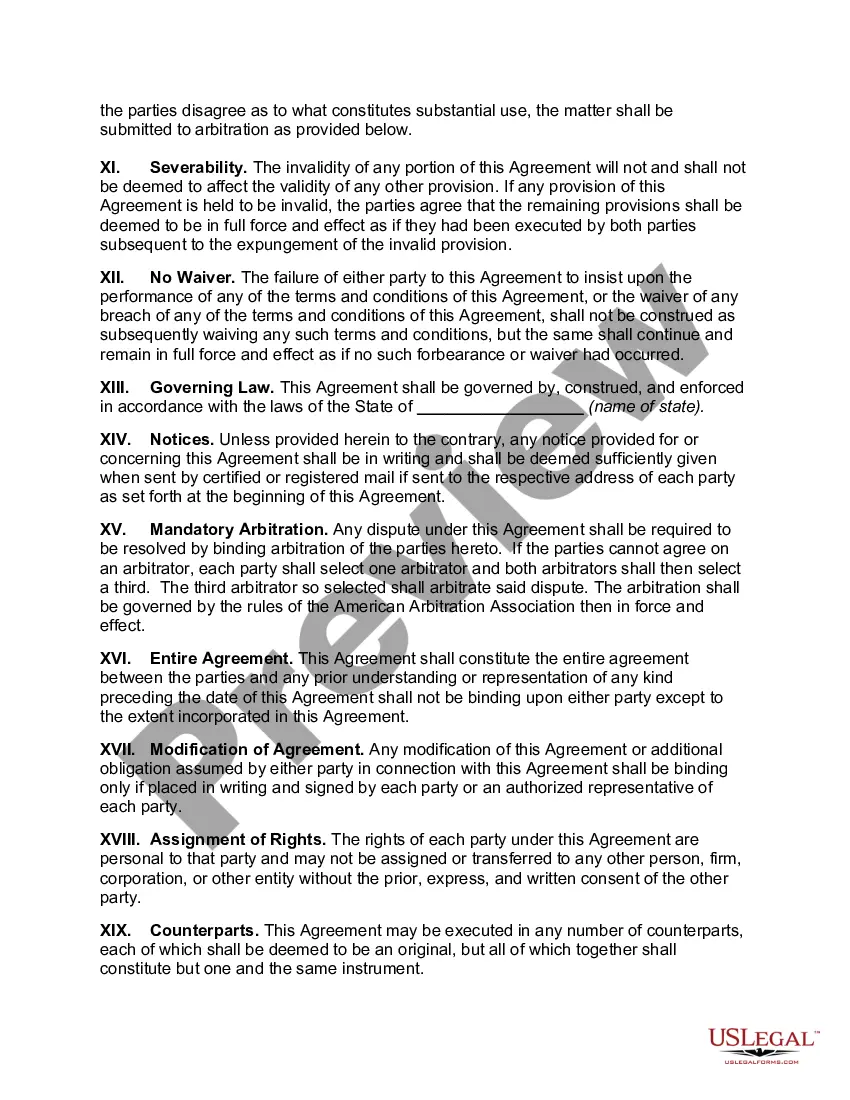
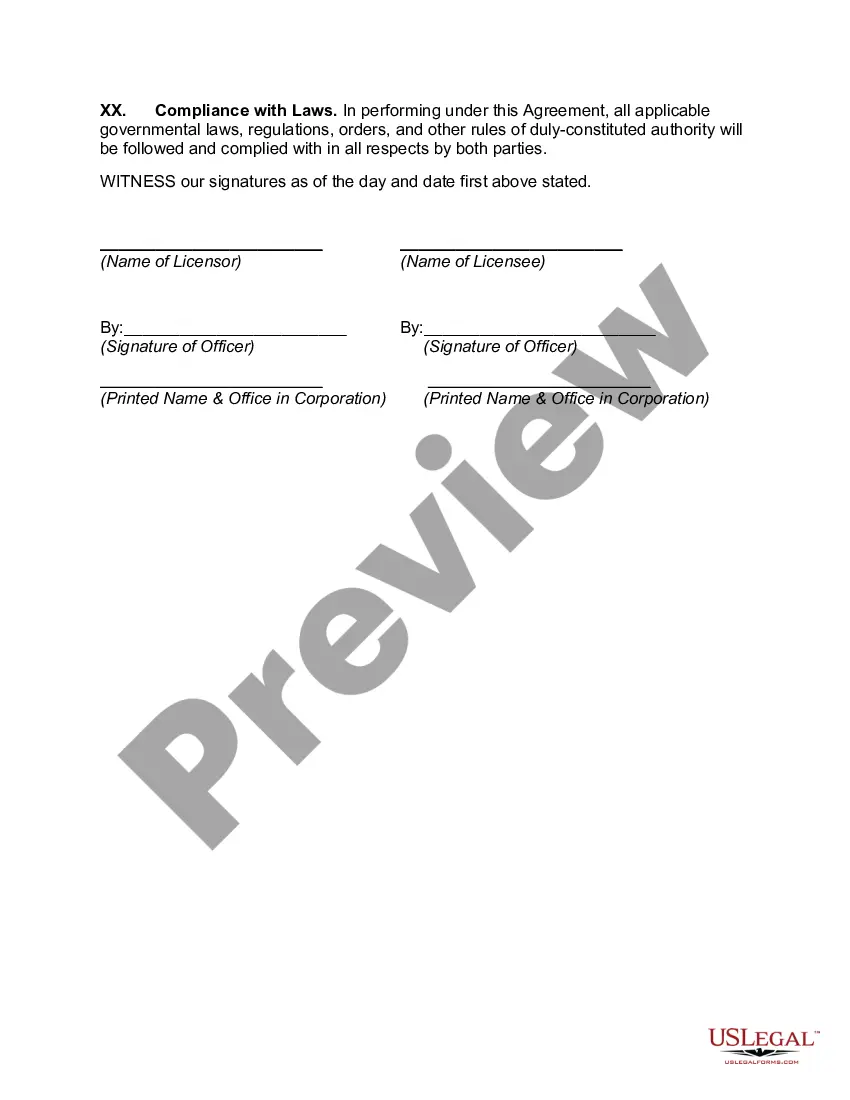
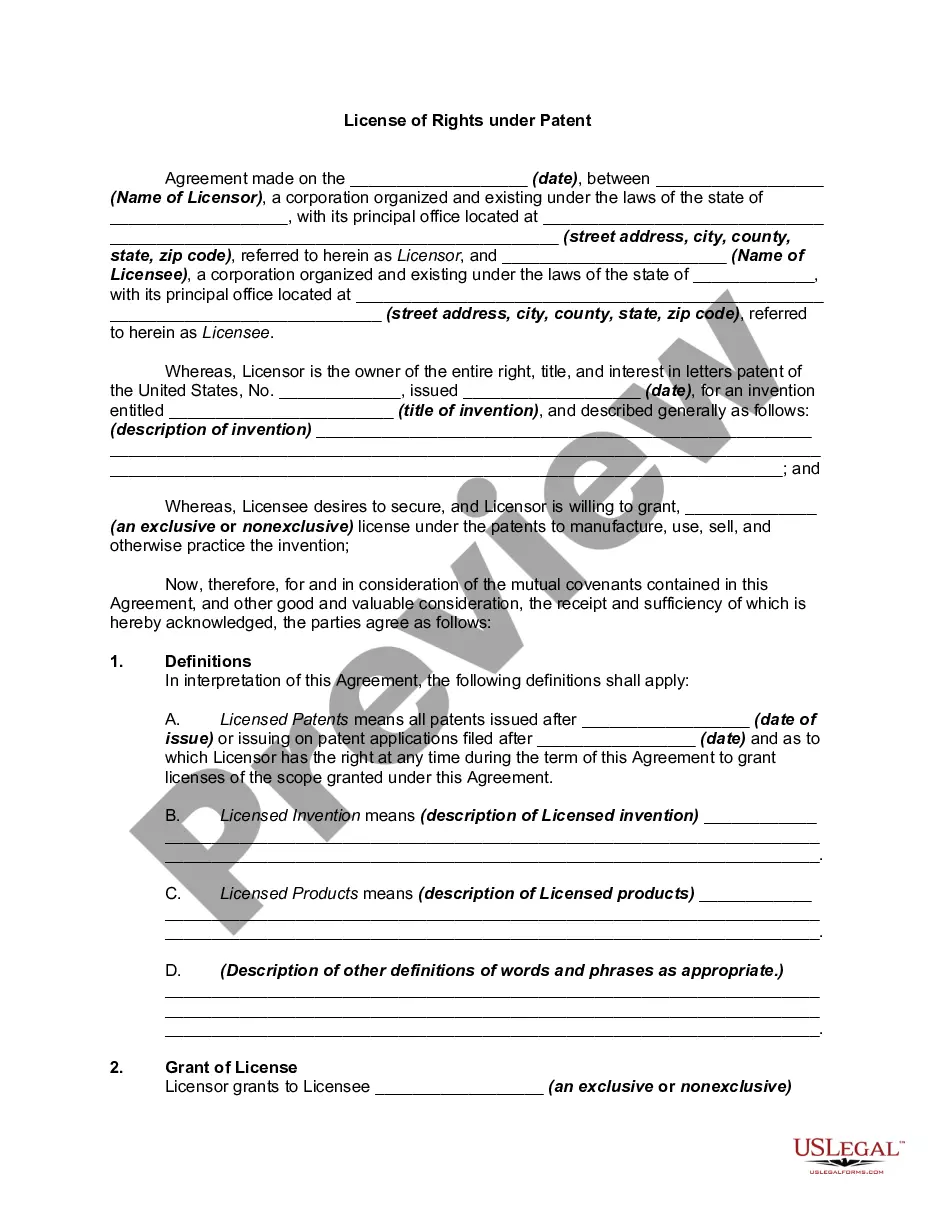
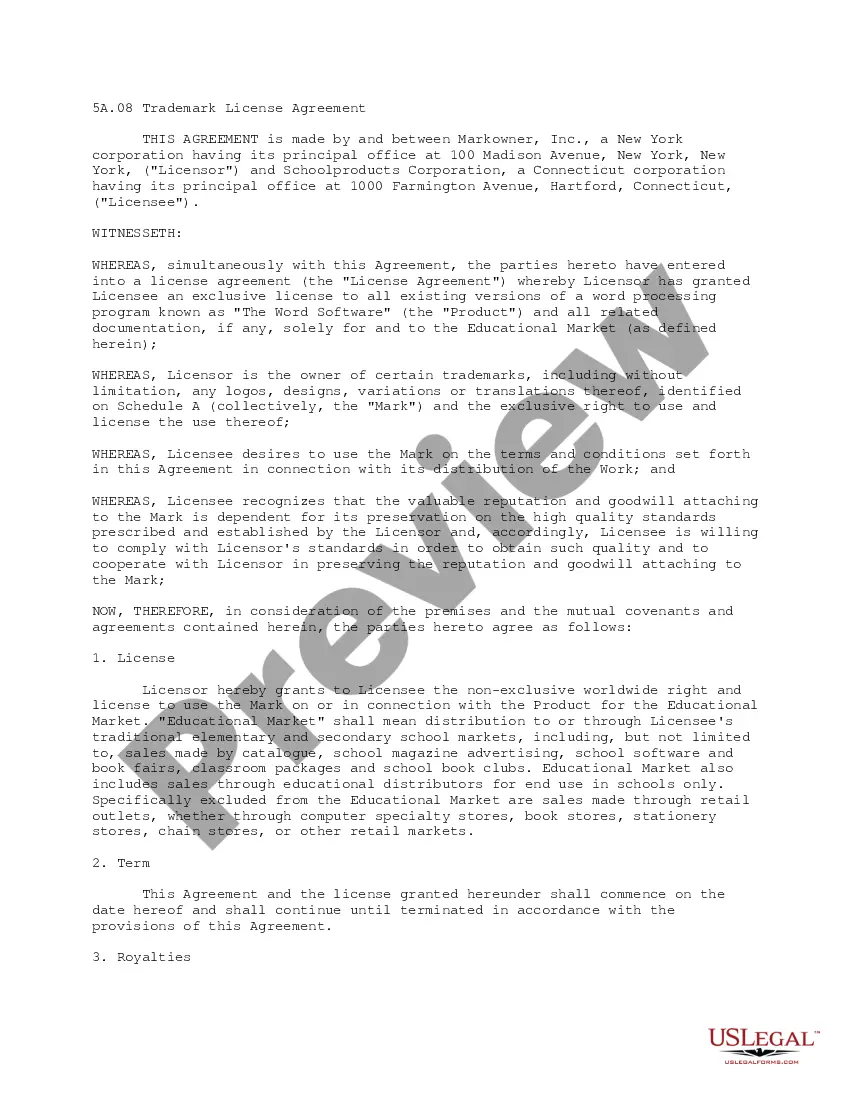


How to fill out License Agreement Regarding Rights Under Patent Applications Or Patents That May Be Issued?
Are you presently in a position that requires you to obtain documents for various business or personal tasks almost daily.
There are numerous trustworthy document templates available online, but finding formats you can trust is challenging.
US Legal Forms offers a large collection of document templates, such as the Vermont License Agreement Regarding Rights Under Patent Applications or Patents That May Be Issued, which can be drafted to fulfill federal and state regulations.
Select a convenient document format and download your copy.
Access all the document templates you have purchased under the My documents menu. You can obtain an additional copy of the Vermont License Agreement Regarding Rights Under Patent Applications or Patents That May Be Issued whenever necessary. Just select the required form to download or print the document template.
- If you are already acquainted with the US Legal Forms website and have an account, simply Log In.
- Then, you can download the Vermont License Agreement Regarding Rights Under Patent Applications or Patents That May Be Issued template.
- If you do not have an account and wish to use US Legal Forms, follow these steps.
- Find the form you need and confirm it is for the appropriate city/state.
- Utilize the Preview button to review the form.
- Check the description to ensure you have selected the correct document.
- If the document is not what you seek, use the Search field to find the form that matches your requirements.
- Once you locate the correct document, click Get now.
- Choose the pricing plan you prefer, fill in the required information to create your account, and complete your purchase using PayPal or credit card.
Form popularity
FAQ
Exclusive license allows a licensor to share intellectual property with a licensee for a specific period of time that usually binds the licensor to not share the property with anyone else.
Patent applications must satisfy the following three criteria:Novelty. This means that your invention must not have been made public not even by yourself before the date of the application.Inventive step. This means that your product or process must be an inventive solution.Industrial applicability.
An exclusive license is one in which all the rights of the patent is transferred to the licensee, but the title. In such case, the licensee has all the rights as of the patent owner except of transferring the patent to another person.
Examples of common licensing agreements include: A sports team allowing another company to produce t-shirts with the team's logo. A movie company that allows another company to create a toy based on a character the movie company owns.
In Voluntary Licensing, patent owner can license his patented invention to other parties on exclusive or non-exclusive basis and give right to manufacture, import or distribute a pharmaceutical product. According to the agreement, licensee can sale and distribute the product in a market.
A copyright exclusive license is one in which ownership in one or more rights is transferred by the copyright owner. A copyright nonexclusive license occurs when the owner retains ownership of the copyright and/or may license the same right to others.
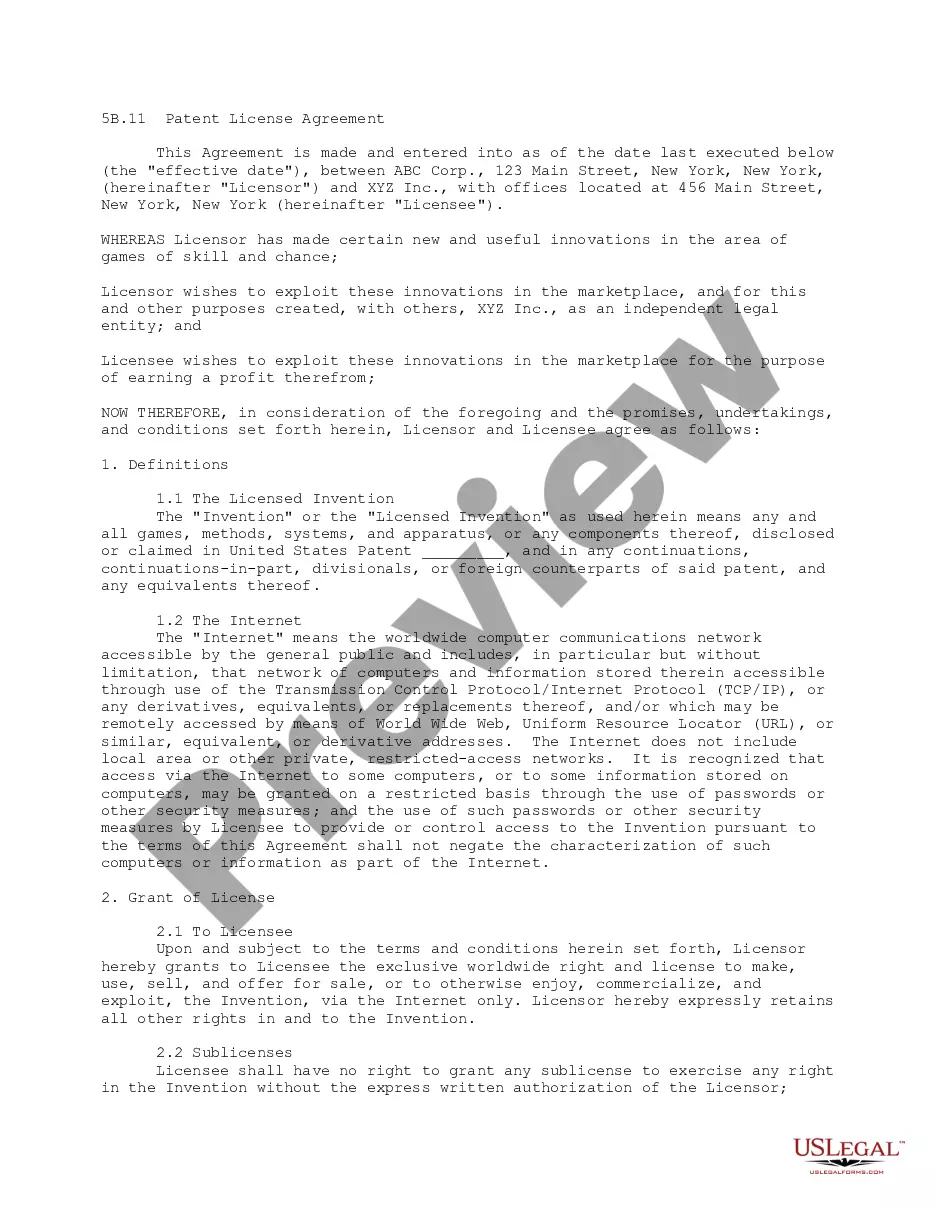
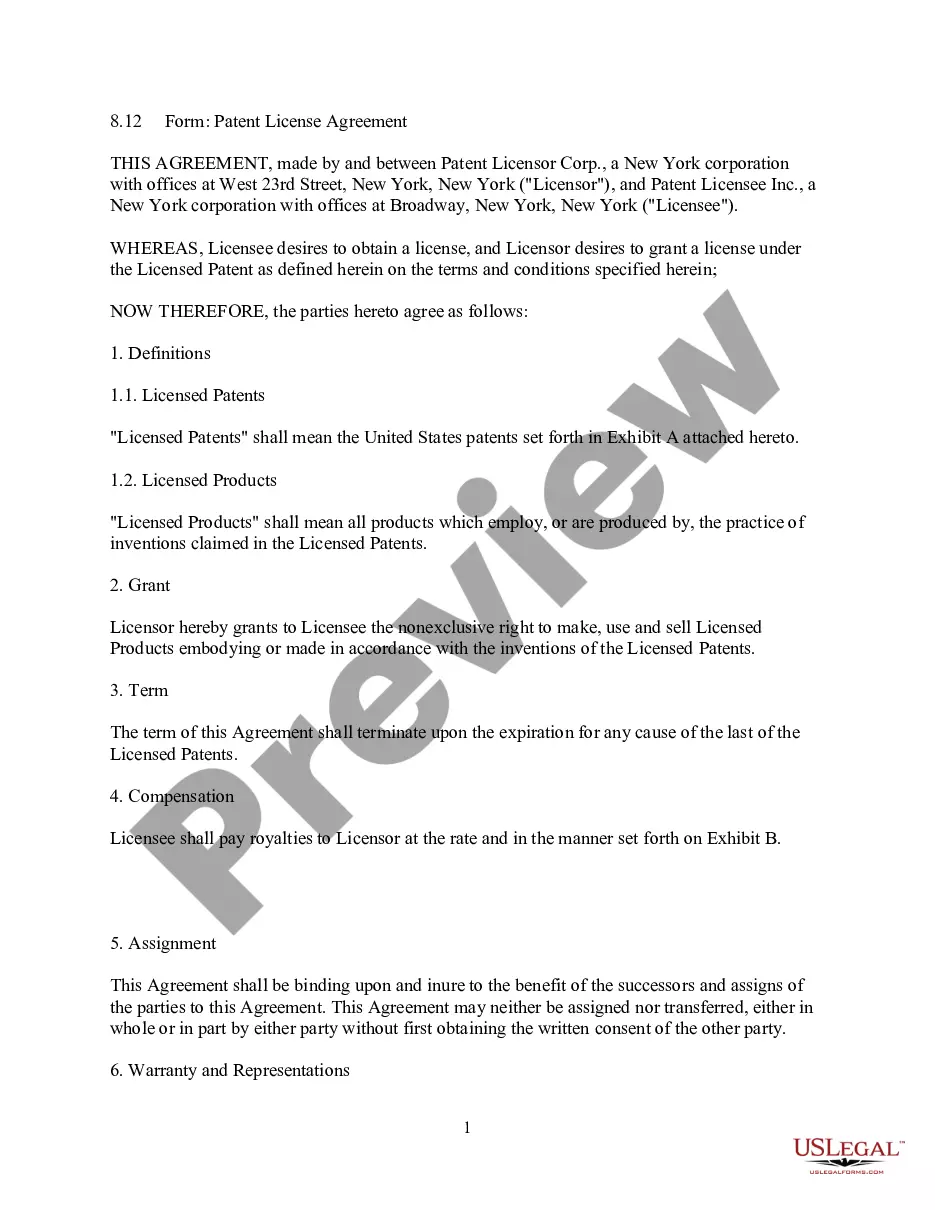
In short, a patent license agreement is a legal contract created to define the terms under which a licensee may create, sell, and use a patented invention from a licensor (or patent owner). This agreement also spells out how royalties will be paid to the licensor/patent owner.
An exclusive licensee can partici- pate in such a suit only if the patent owner has granted it sufficient rights beyond the license itself to confer standing. And in order to sue without joining the patent owner, the licensee must hold ''all substantial rights'' in the patent.
A licensing agreement allows one party (the licensee) to use and/or earn revenue from the property of the owner (the licensor). Licensing agreements generate revenues, called royalties, earned by a company for allowing its copyrighted or patented material to be used by another company.
A patent license is an agreement that lets someone else commercially make, use, and sell your invention for a specified period. The owner of the invention (patent) is the 'licensor,' and the person who is receiving the license is the 'licensee. ' Licensing deals involve payment for the license.