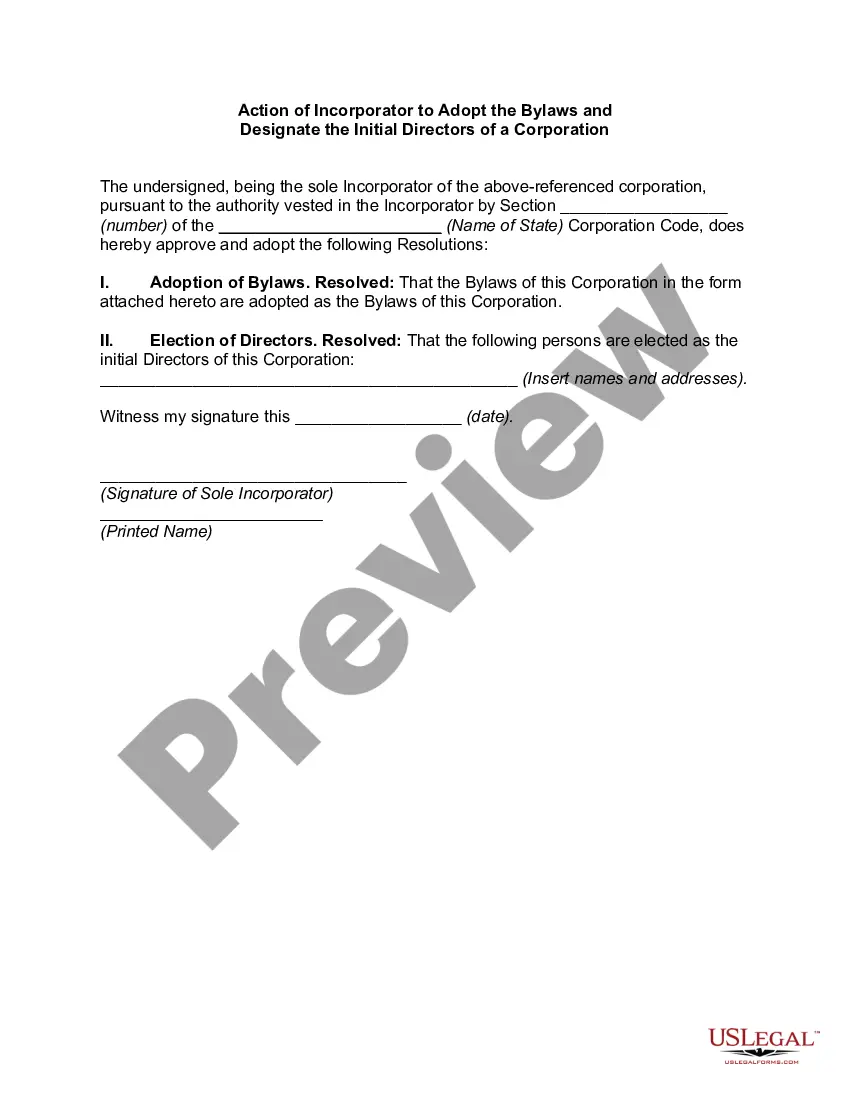
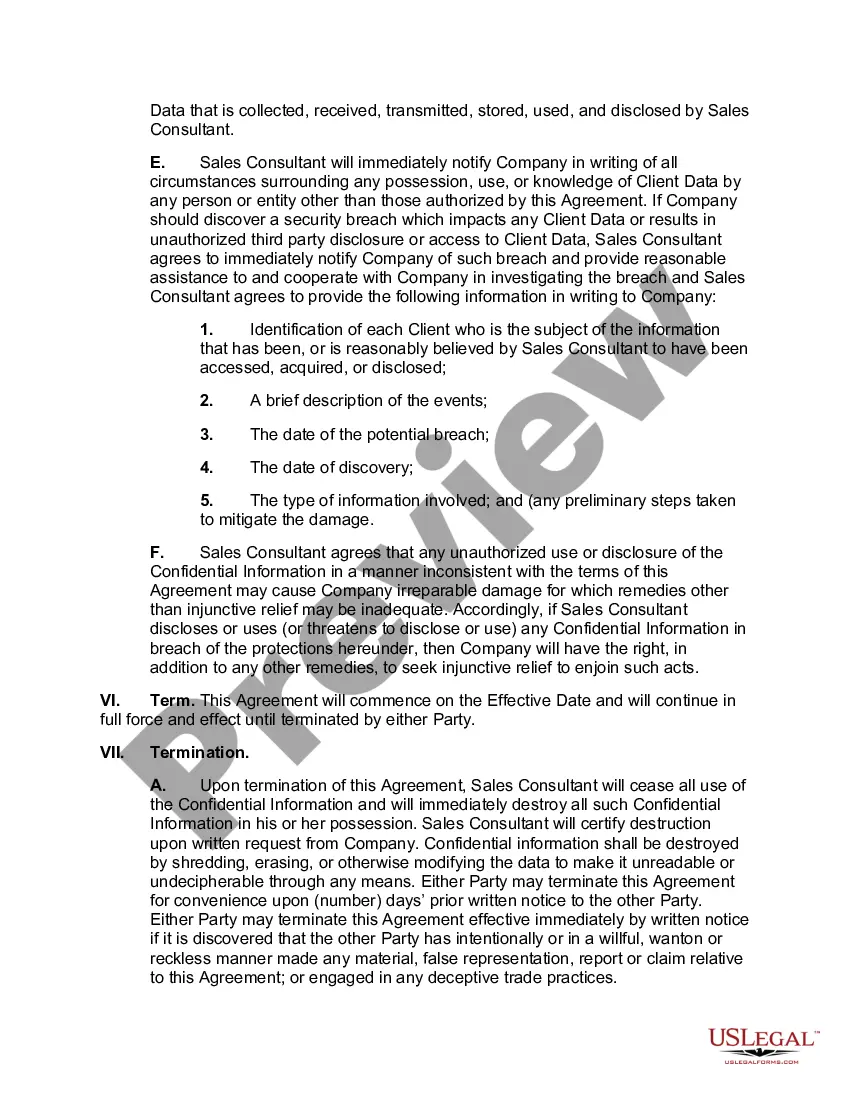
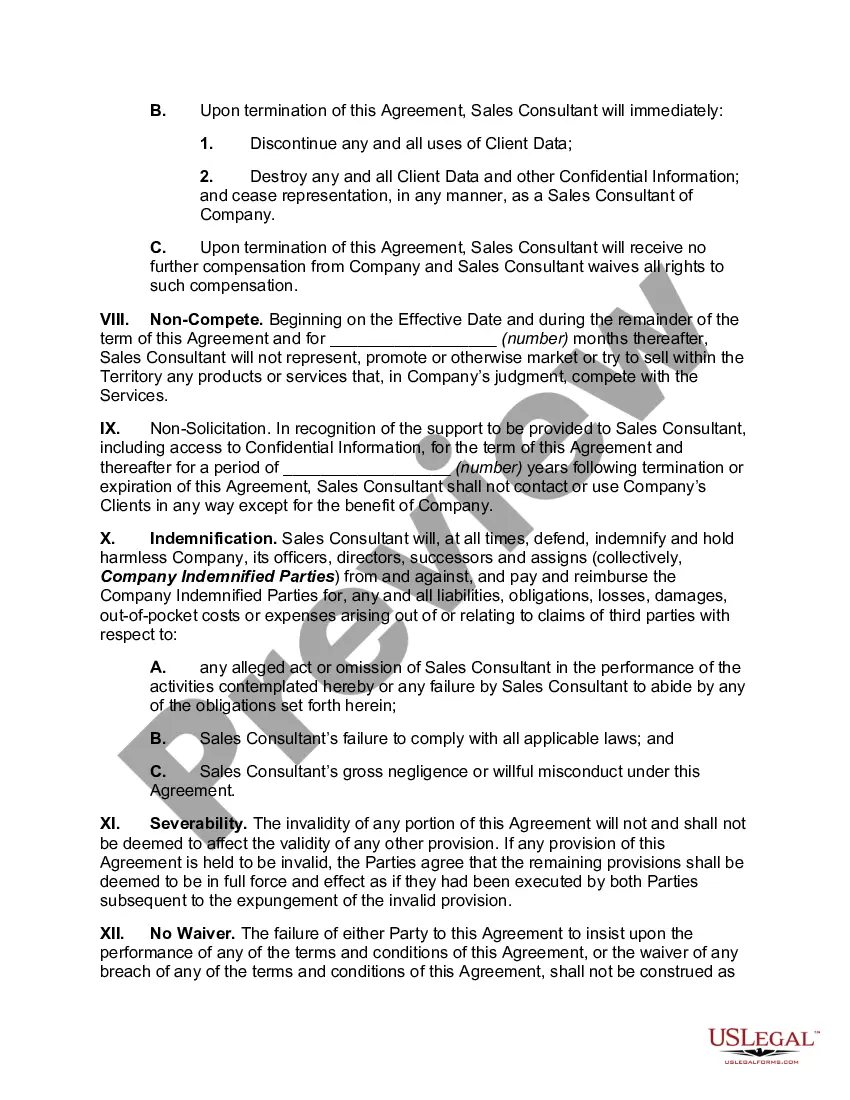
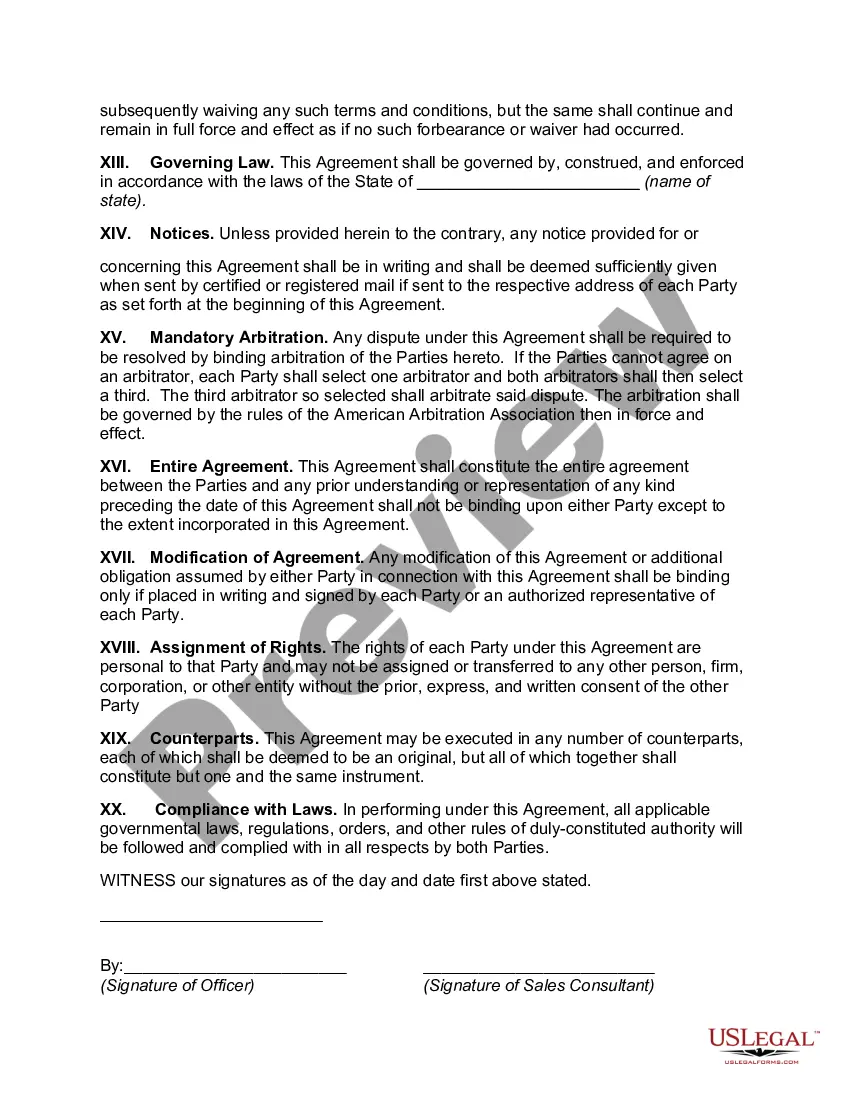
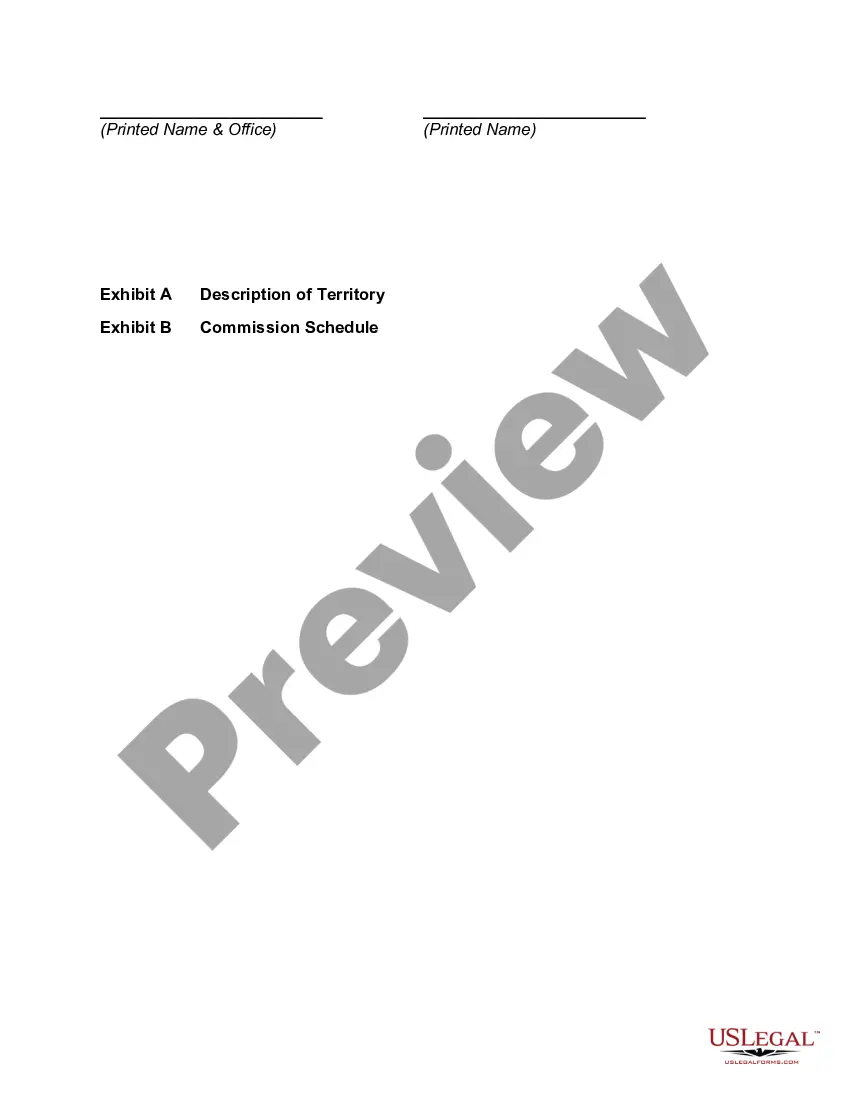
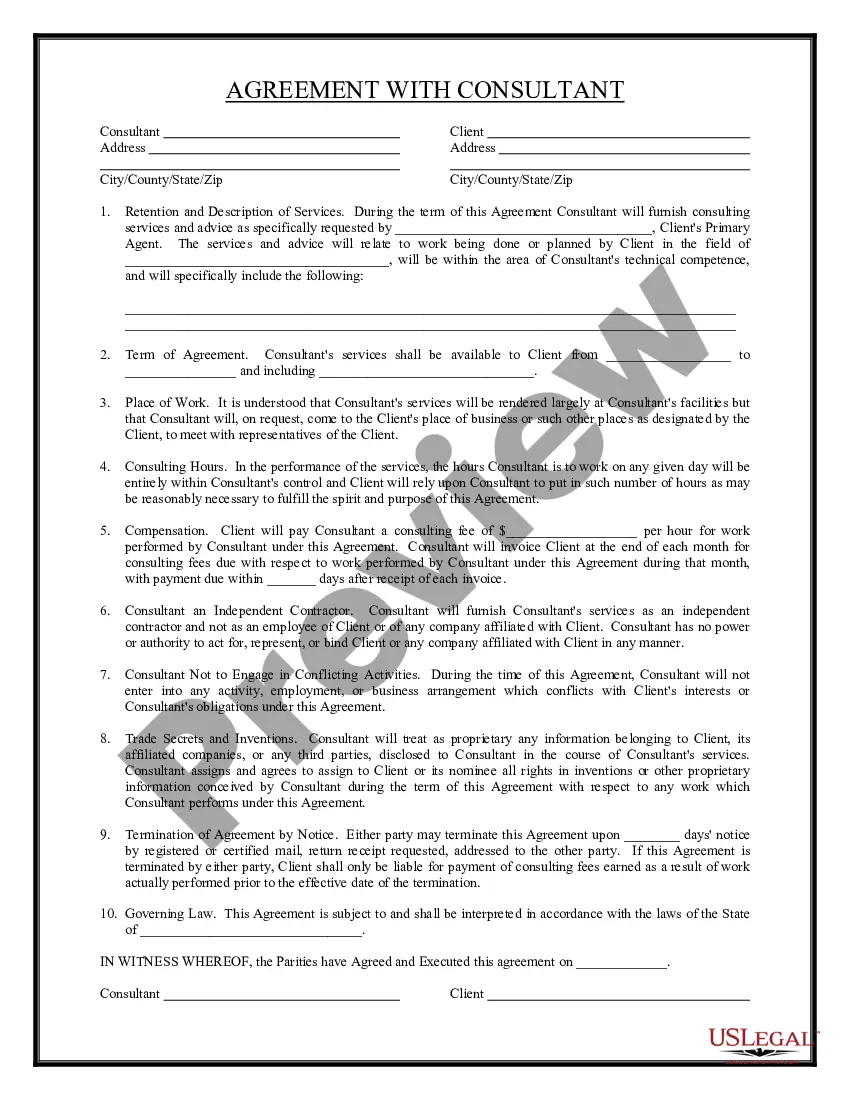
Vermont Sales Consultant Agreement with Consultant Operating as Independent Contractor in a Defined Territory
Description
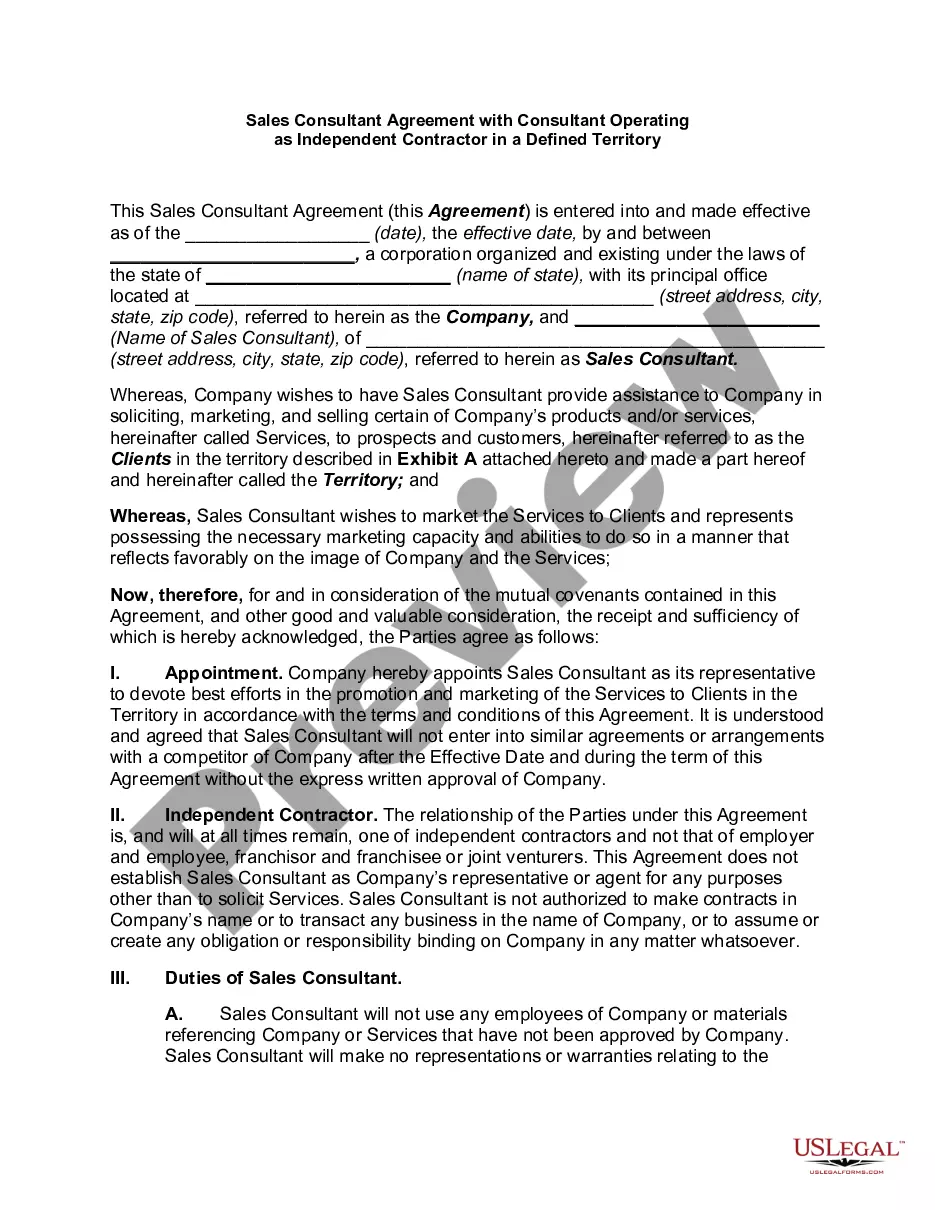
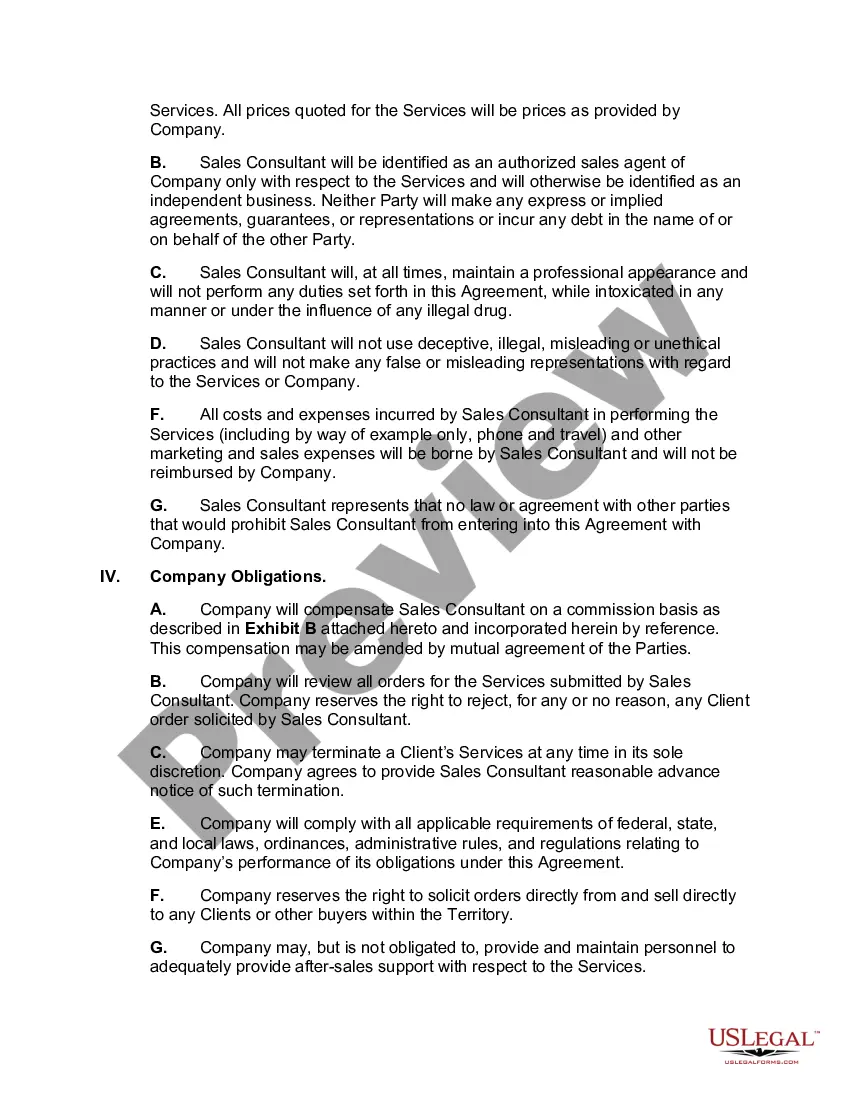
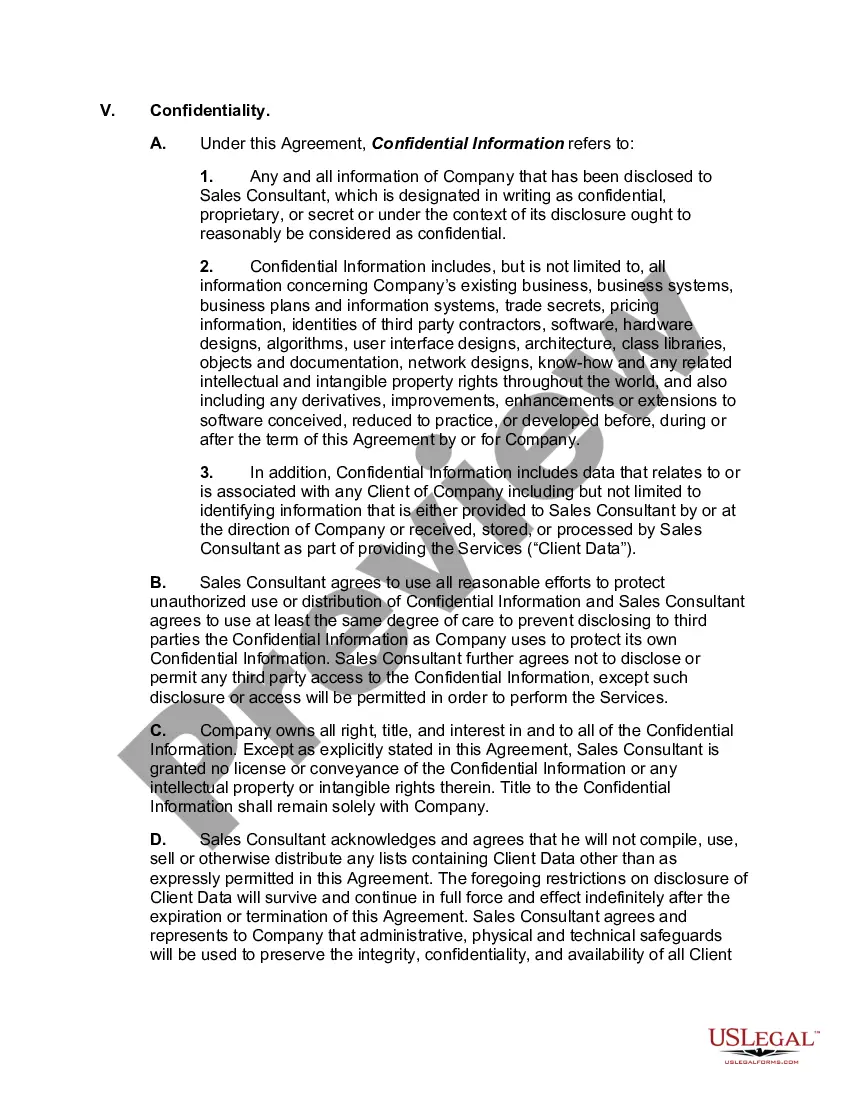
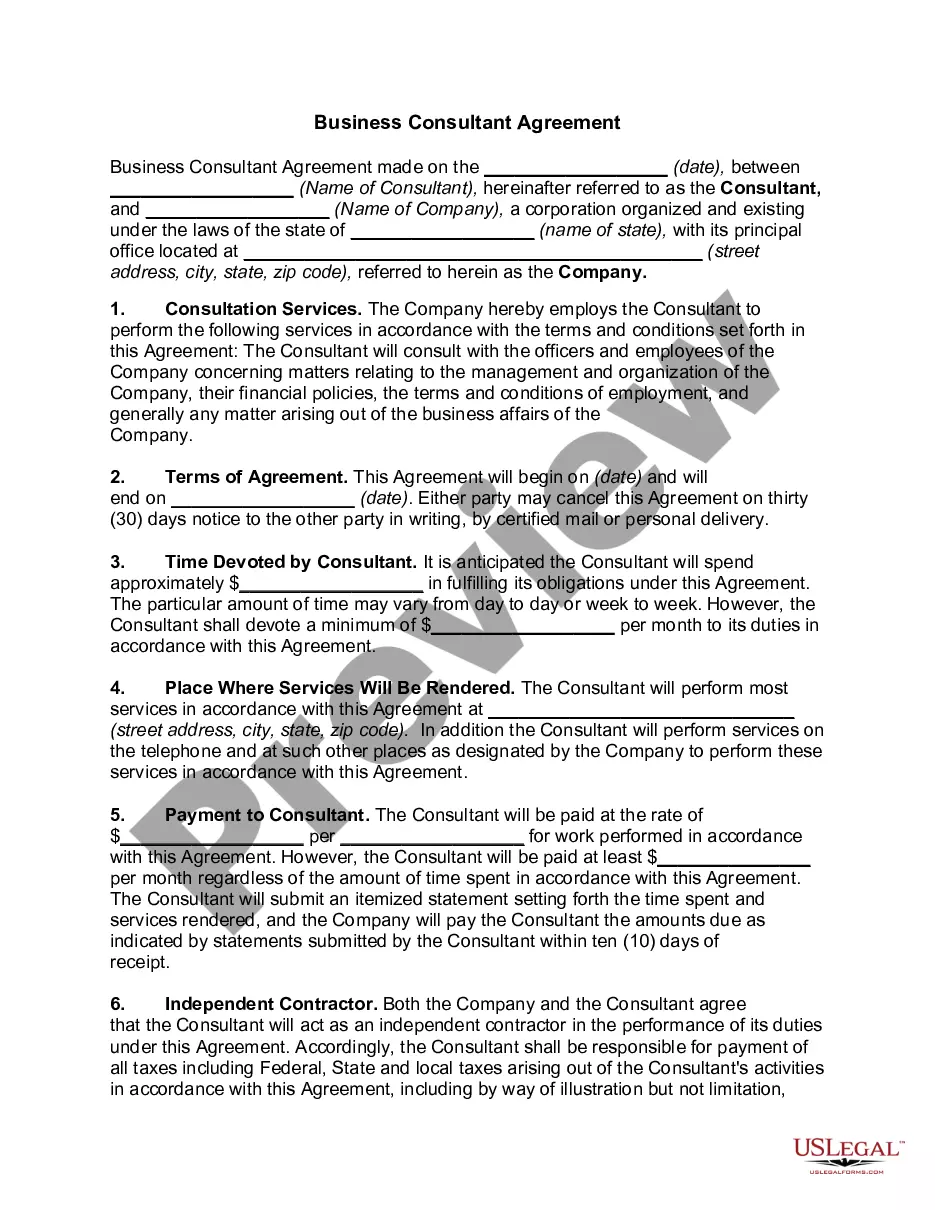
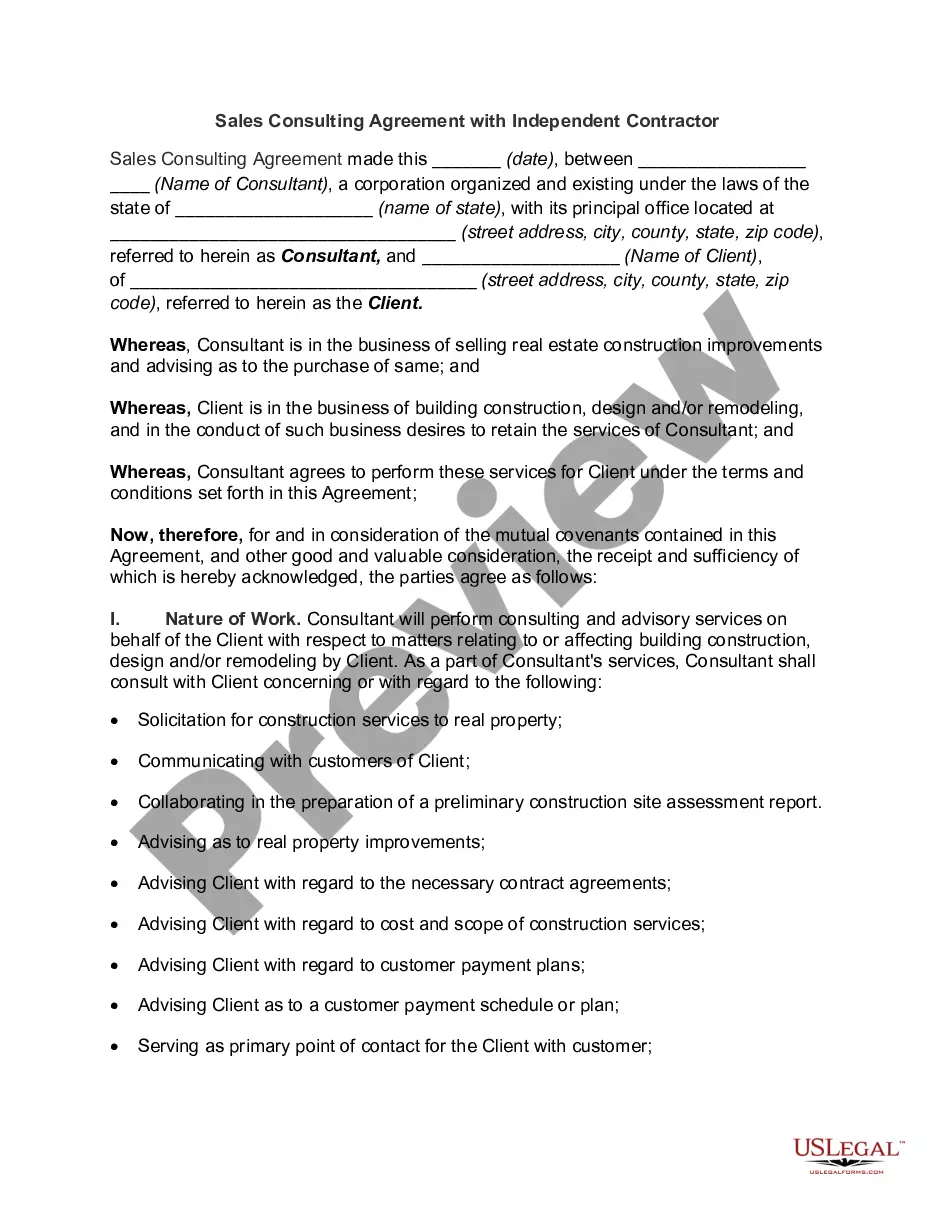
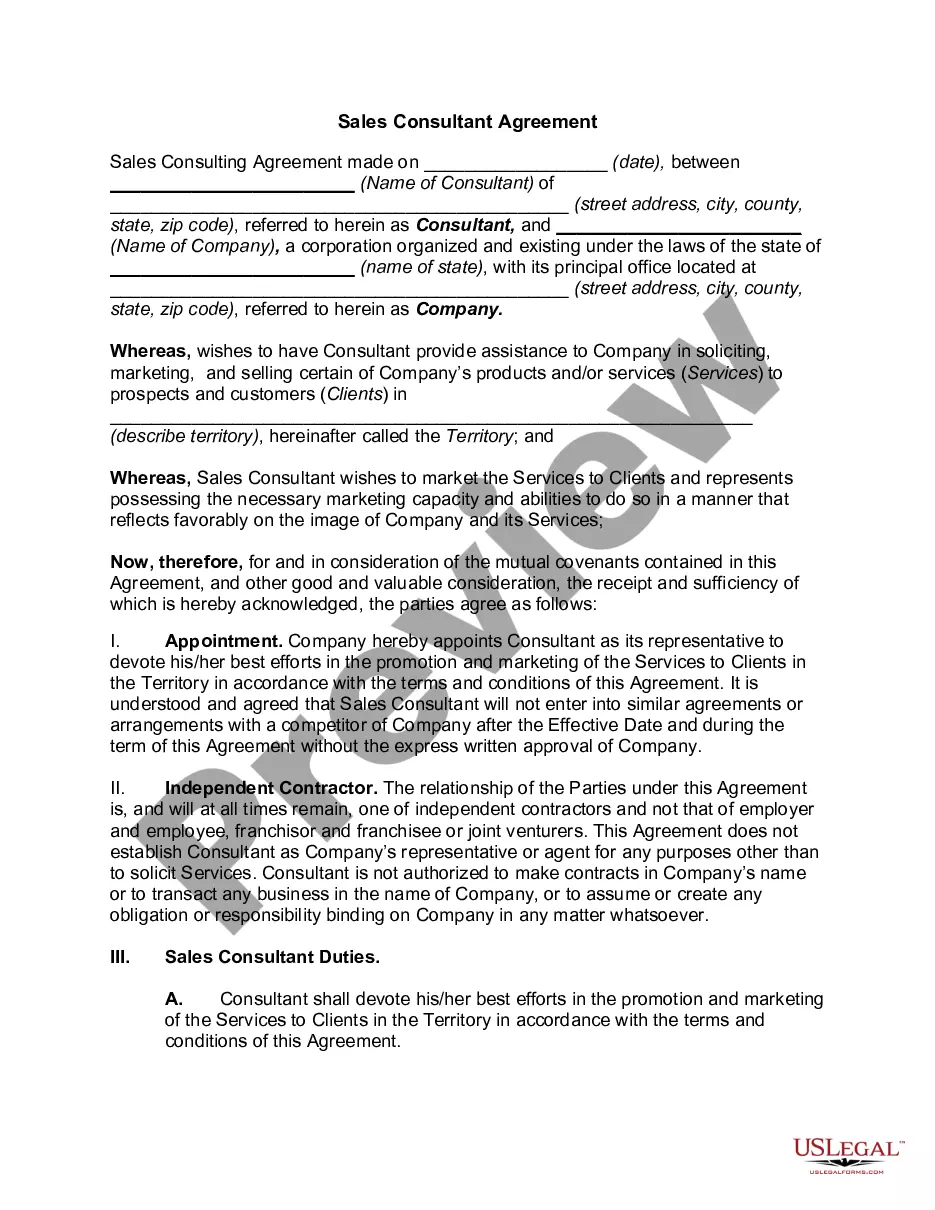
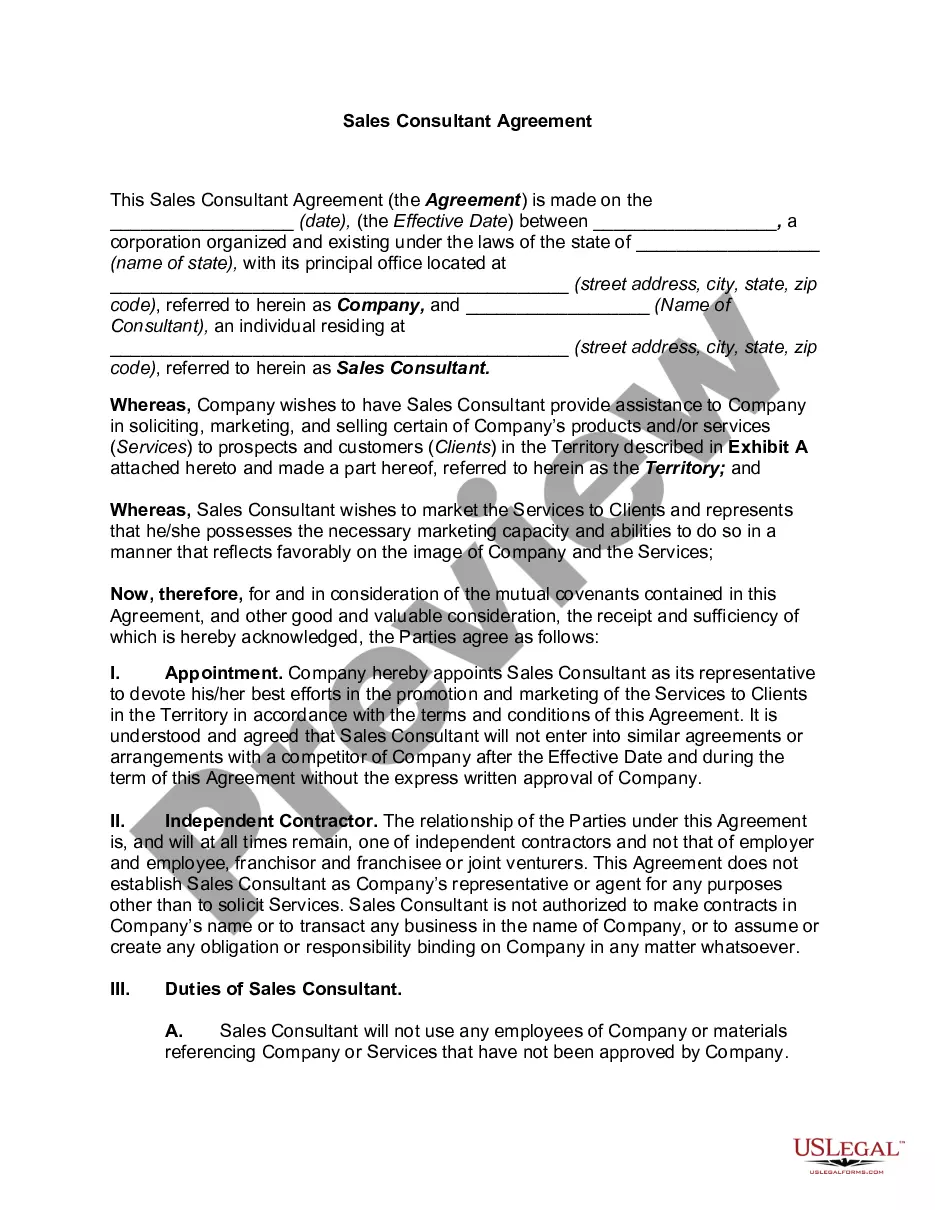

How to fill out Sales Consultant Agreement With Consultant Operating As Independent Contractor In A Defined Territory?
Are you presently in a position where you need documentation for either business or personal reasons almost all the time.
There are numerous legal document templates available online, but locating forms you can trust isn’t straightforward.
US Legal Forms offers thousands of form templates, such as the Vermont Sales Consultant Agreement with Consultant Operating as Independent Contractor in a Defined Territory, specifically designed to comply with state and federal regulations.
Select a preferred file format and download your version.
Find all the document templates you have purchased in the My documents menu. You can obtain another version of the Vermont Sales Consultant Agreement with Consultant Operating as Independent Contractor in a Defined Territory anytime, as needed. Just select the desired form to download or print the document template.
- If you are already familiar with the US Legal Forms website and have an account, simply Log In.
- Then, you can download the Vermont Sales Consultant Agreement with Consultant Operating as Independent Contractor in a Defined Territory template.
- If you do not have an account and wish to start using US Legal Forms, follow these steps.
- Find the form you need and ensure it is for your specific city/state.
- Utilize the Preview option to review the form.
- Examine the summary to confirm you have selected the correct form.
- If the form isn’t what you're looking for, use the Search field to find a form that fits your needs and specifications.
- Once you locate the appropriate form, click Buy now.
- Choose a payment plan that suits you, enter the required information to create your account, and complete the order using your PayPal or credit card.
Form popularity
FAQ
To write an independent contractor agreement, start by clearly defining the scope of work and the expectations of both parties. Include key details such as payment terms, duration of engagement, and confidentiality clauses. Utilizing a template like the Vermont Sales Consultant Agreement with Consultant Operating as Independent Contractor in a Defined Territory can streamline the process, ensuring you cover all necessary legal aspects.
If you are an independent contractor, then you are self-employed. The earnings of a person who is working as an independent contractor are subject to self-employment tax. To find out what your tax obligations are, visit the Self-Employed Individuals Tax Center.
What is the difference between a Consultant and a Contractor? The short answer is that the Consultants role is evaluate a client's needs and provide expert advice and opinion on what needs to be done while the Contractors role is generally to evaluate the client's needs and actually perform the work.
Consultants Are Usually Self-Employed According to the IRS, you're self-employed if you're a business owner or contractor who provides services to other businesses. To remain a contractor rather than an employee, you must: Have the right to direct or control the work you perform.
Generally, a Consultant is a self-employed independent businessperson who has a special field of expertise or skill.
Freelancers and consultants are known as "independent contractors" in legal terms. An independent contractor (IC) is a person who contracts to perform services for others without having the legal status of an employee.
When you do consulting work in the U.S., you can be paid two different ways: as an employee on a W-2 tax basis, or on a 1099 tax basis as an independent contractor. As a consultant, being paid on a 1099 tax basis is a huge plus for two key reasons: You save more for retirement.
Contractors, freelancers, and consultants are self-employed individuals who work alone or as part of other businesses. These terms cause a great deal of confusion because they are often used interchangeably when discussing self-employment.
Here's a short list of what should be included in every consulting contract:Full names and titles of the people with whom you're doing business. Be sure they're all spelled correctly.Project objectives.Detailed description of the project.List of responsibilities.Fees.Timeline.Page numbers.
In general, the difference is that the consultant's role is to evaluate a client's needs and provide expert advice and opinions on what needs to be done, while the contractors role is generally to evaluate the client's needs and actually perform the work.