Vermont Employee Evaluation Form for Childcare Workers
Description
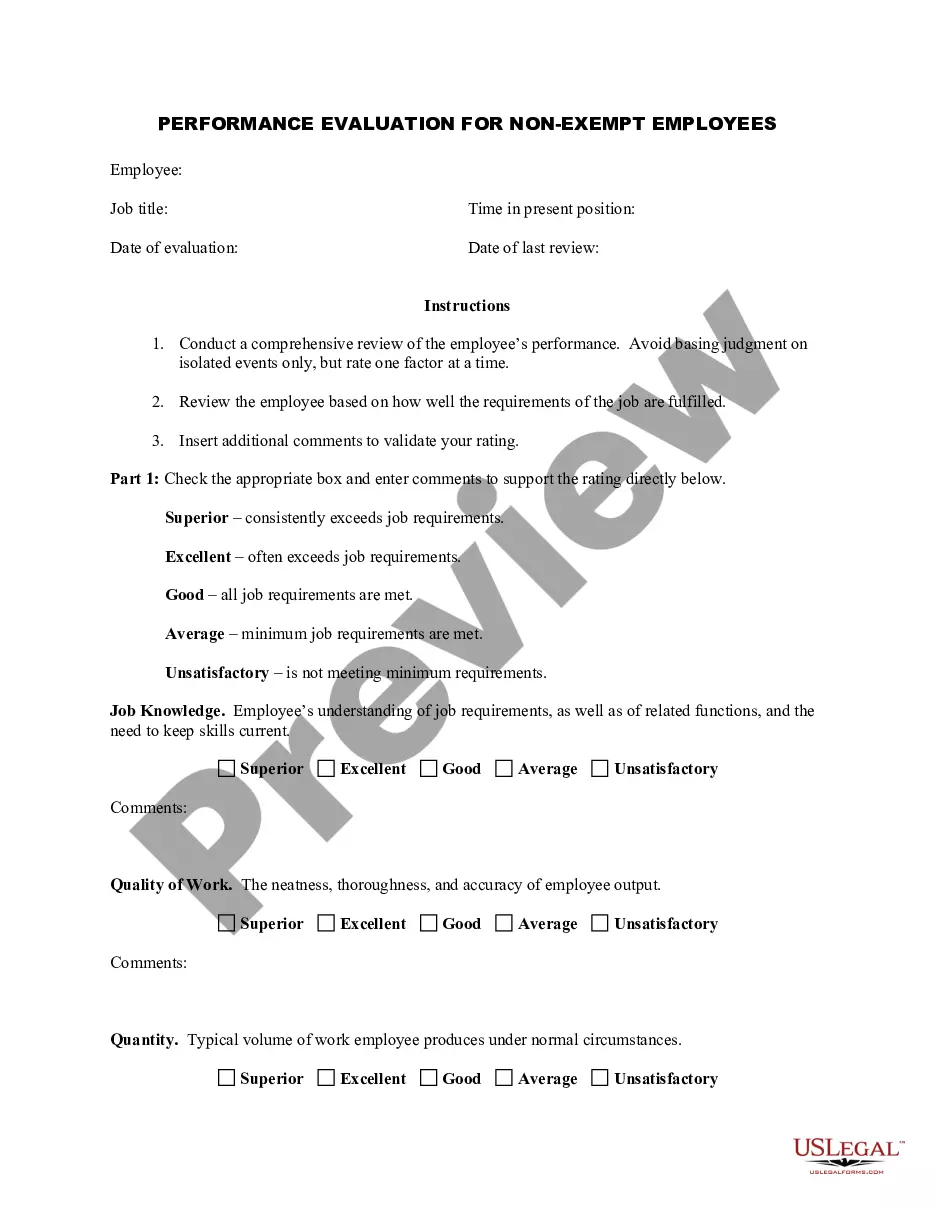
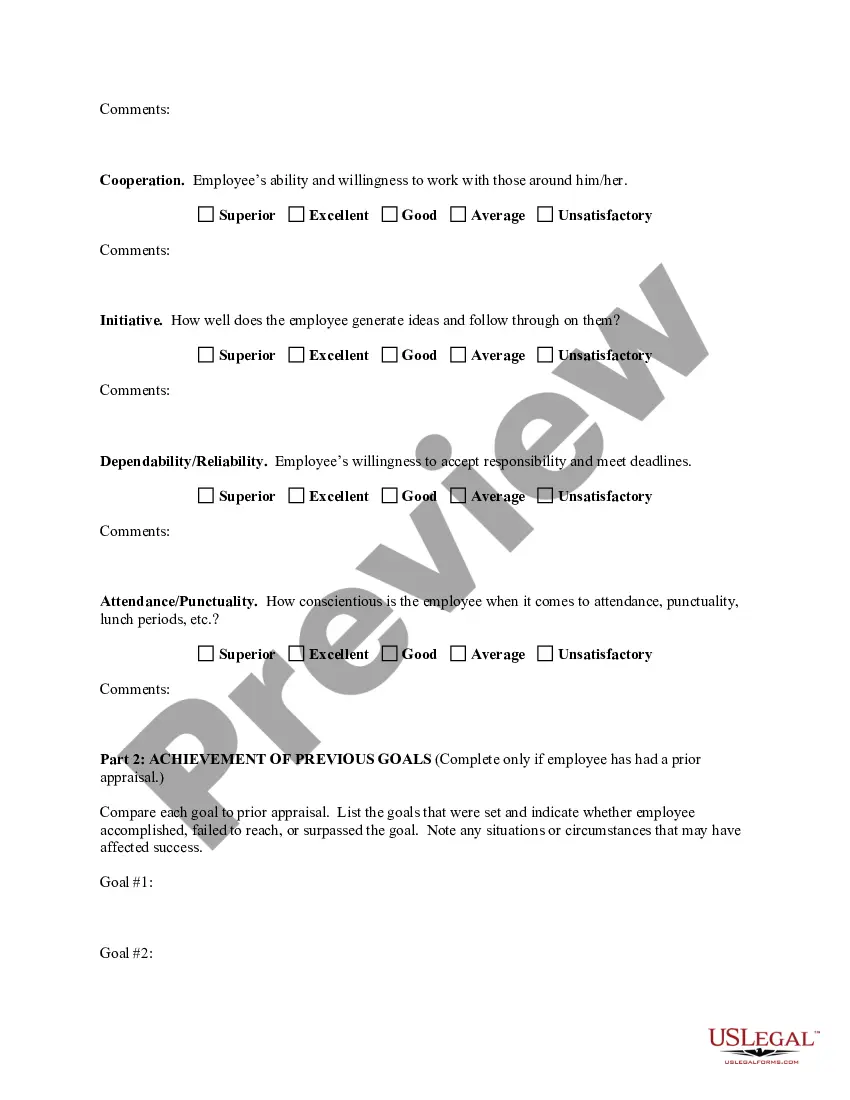
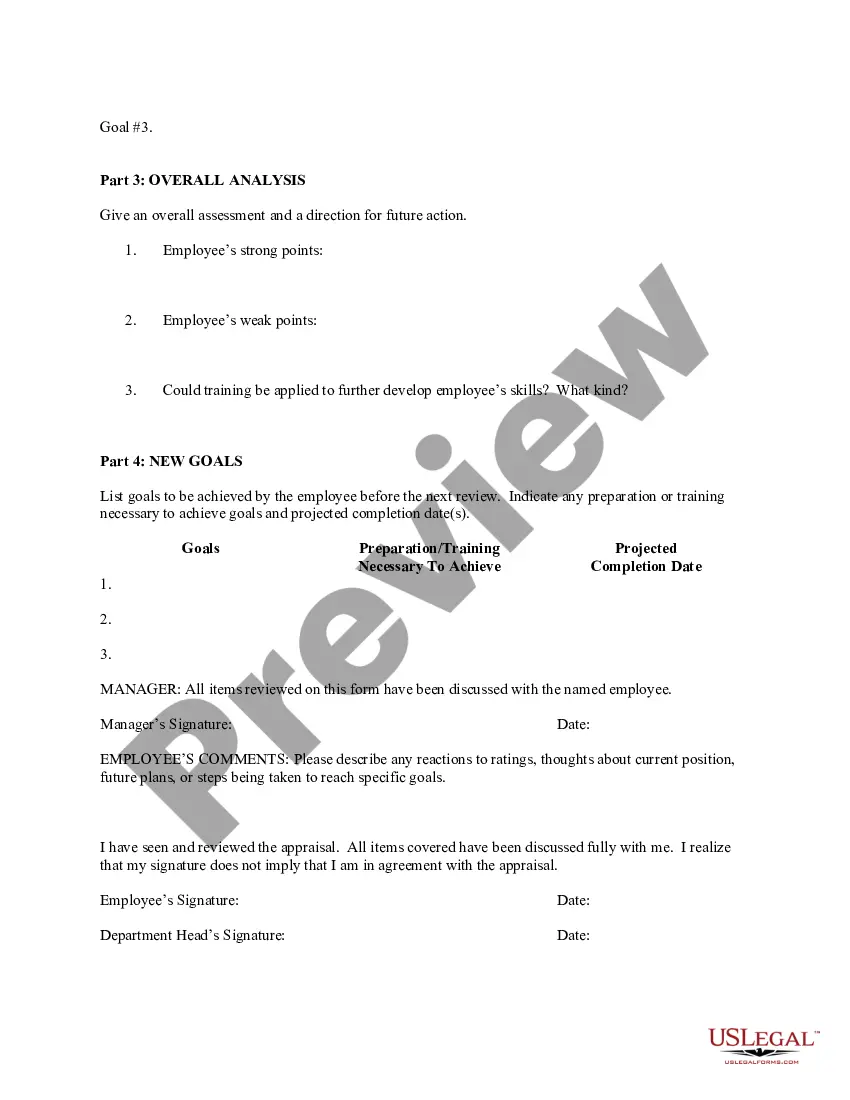
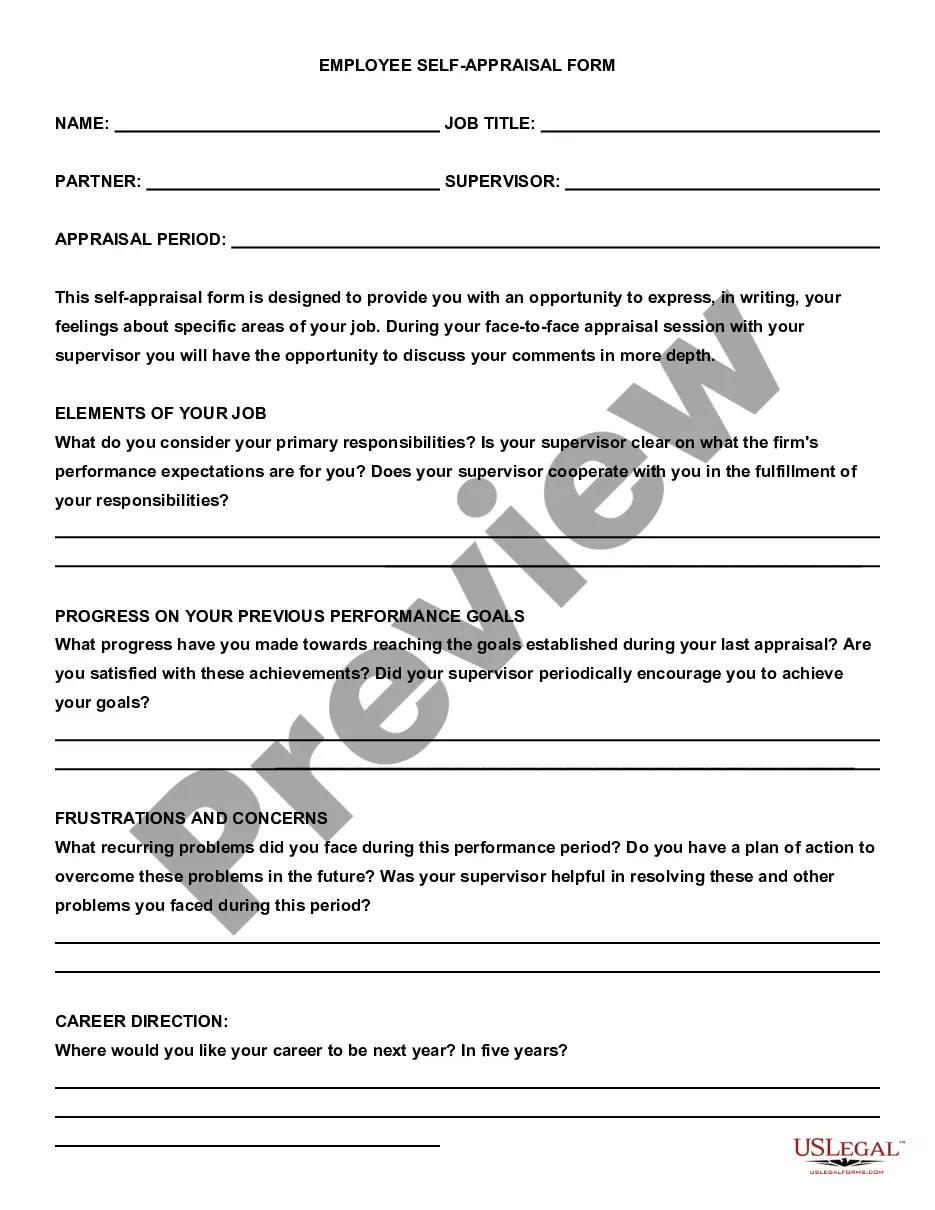
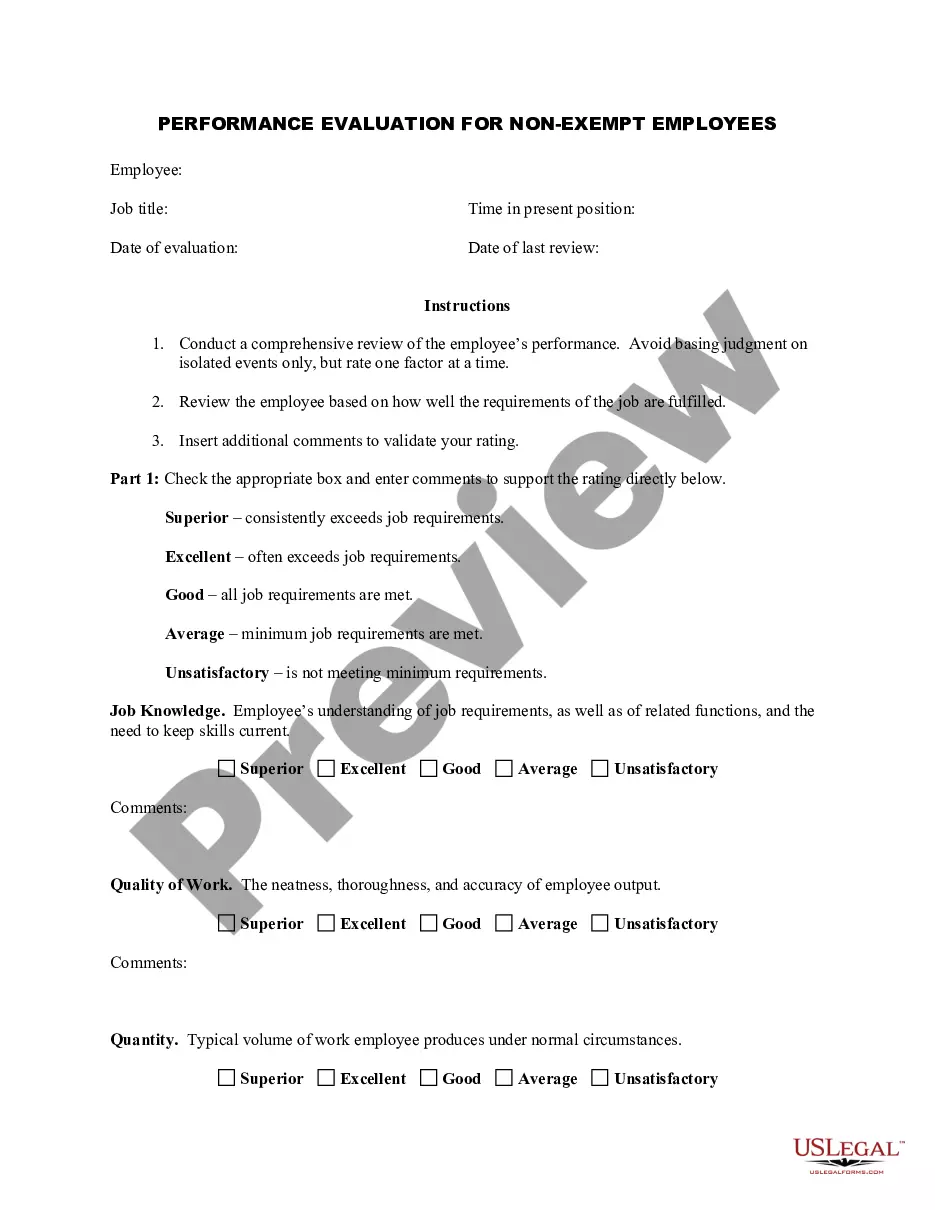
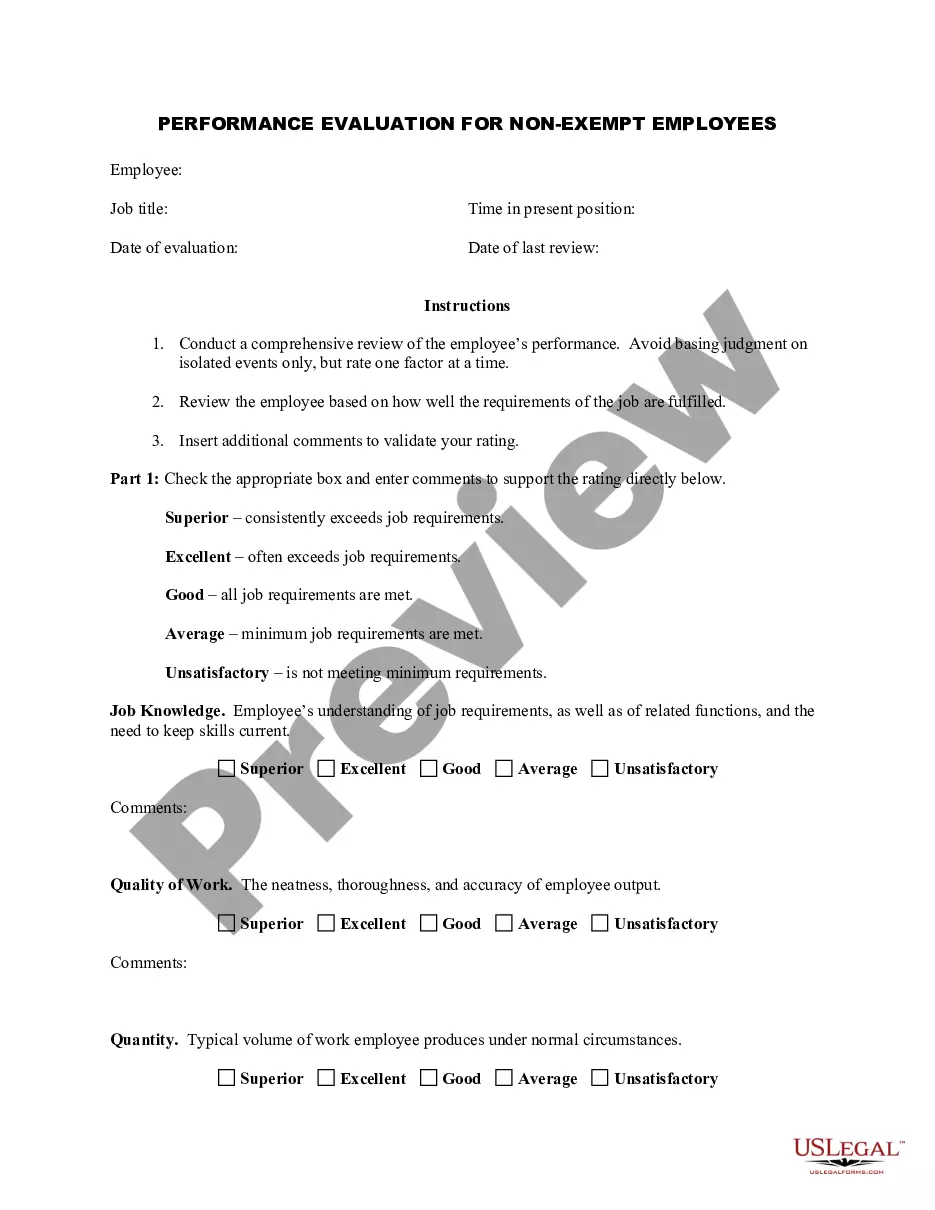
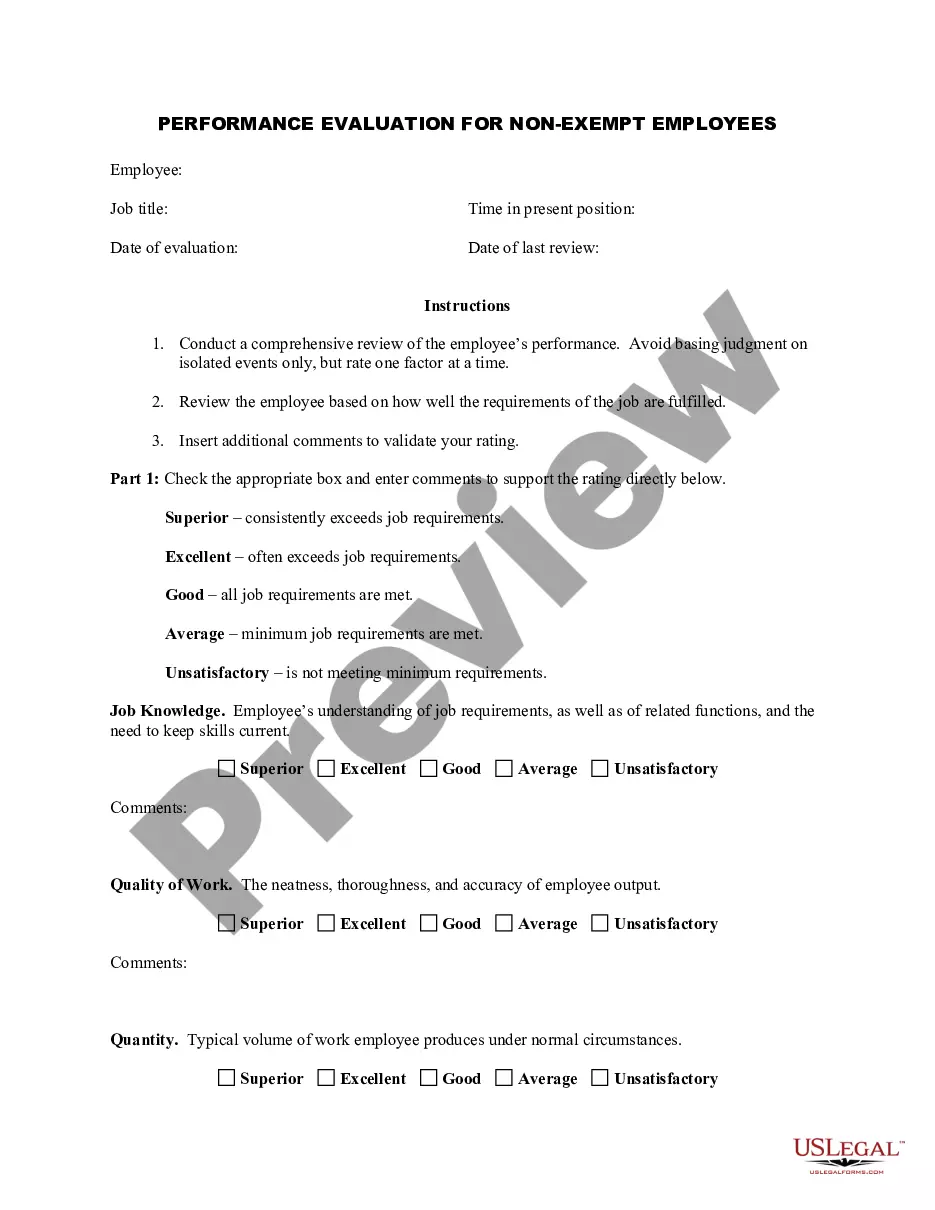
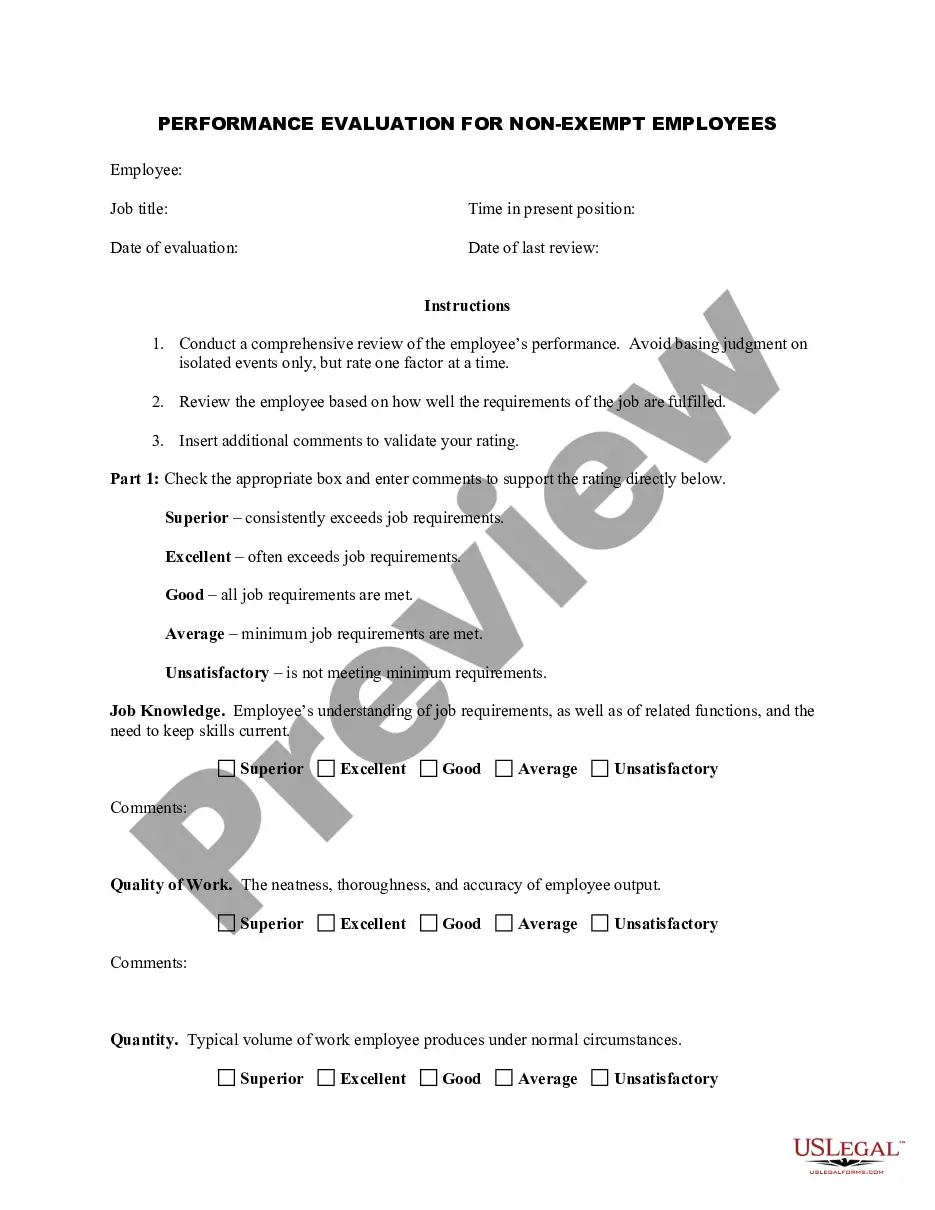


How to fill out Employee Evaluation Form For Childcare Workers?
US Legal Forms - one of the several largest collections of legal documents in the United States - offers a diverse range of legal form templates that you can download or print.
By using the website, you can access thousands of forms for business and personal use, organized by categories, states, or keywords. You can obtain the latest versions of forms such as the Vermont Employee Evaluation Form for Childcare Workers within seconds.
If you already have a subscription, Log In and download the Vermont Employee Evaluation Form for Childcare Workers from your US Legal Forms library. The Download button will appear on each form you view. You can access all previously downloaded forms in the My documents tab of your account.
Choose the format and download the form onto your device.
Make edits. Fill out, modify, and print or sign the downloaded Vermont Employee Evaluation Form for Childcare Workers. Each template you add to your account has no expiration date and is yours permanently. So, if you wish to download or print another copy, simply go to the My documents section and click on the form you need.
Access the Vermont Employee Evaluation Form for Childcare Workers with US Legal Forms, one of the most comprehensive libraries of legal document templates. Utilize thousands of professional and state-specific templates that satisfy your business or personal requirements and specifications.
- Ensure you have selected the correct form for your city/region. Click the Preview button to review the form's content.
- Examine the form summary to verify that you have chosen the correct form.
- If the form doesn't meet your requirements, use the Search field at the top of the screen to find one that does.
- Once you are satisfied with the form, confirm your choice by clicking the Download now button.
- Then, select the pricing plan you prefer and provide your details to create an account.
- Complete the payment. Use your credit card or PayPal account to finalize the transaction.
Form popularity
FAQ
Childcare contributions for Vermont employees typically refer to the financial support provided by employers to assist with childcare expenses. In many cases, this may include tax credits, reimbursements, or direct subsidies to help caregivers balance work and family responsibilities. When completing a Vermont Employee Evaluation Form for Childcare Workers, it’s crucial to address how well the workplace offers these contributions, as it enhances employee satisfaction and retention.
As such, the quality of an early childhood program is dependent on the following three key factors.Interpersonal interactions. The learning environment created by a teacher is critical to the quality of an early childhood program.Physical environment.Program support structure.Professional and stable teacher workforce.
Registering a Formal ComplaintCall the Child Care Consumer Line at 1-800-649-2642; or.Email the Child Care Consumer Line at ahs.dcfcddchildcarelicensing@vermont.gov; or.File a complaint online using the Bright Futures Information System.
Decisions are often made based on the special needs and/or age of the child and family preferences. For a child with special needs, parents are restricted to options that can meet those needs. Priorities for the family must also be met. Cost is nearly always important.
The 13 indicators are the following: child abuse reporting and clearances, proper immunizations, staff:child ratio and group size, director and teacher qualifications (two indicators), staff training, supervision/discipline, fire drills, administration of medication, emergency contact/plan, outdoor playground safety,
7 Things to Consider When Choosing a DaycareProgram and curriculum. No matter how young your little one may be, it's never too early to begin age-appropriate learning.School environment.Facilities and materials.Teacher and student interaction.Recommendations.First impression.
Here's a list of what your family should review every few months regarding your childcare needs.Is Your Child Happy?Is Your Child's Caregiver Passionate About Kids?Is Your Child's Care Environment Safe?Are You Pleased With Your Child's Growth and Learning at Child Care?More items...?
How to choose a day careDo your research. Get recommendations from other parents (at work and among friends) and your pediatrician.Interview centers.Check the center out in person.Check references.Drop by unannounced.Ask about their accreditation.
Why is assessment important? Assessment provides educators, parents, and families with critical information about a child's development and growth. Assessment can: Provide a record of growth in all developmental areas: cognitive, physical/motor, language, social-emotional, and approaches to learning.
It looks at the child's strengths and needs. It may examine cognitive, academic, behavioral, physical, and other developmental factors. Evaluation includes information provided by the parents. The information gathered through evaluation is used to: determine whether a child has a disability.