Vermont Last Will and Testament for Civil Union Partner with Minor Children from Prior Marriage
Overview of this form
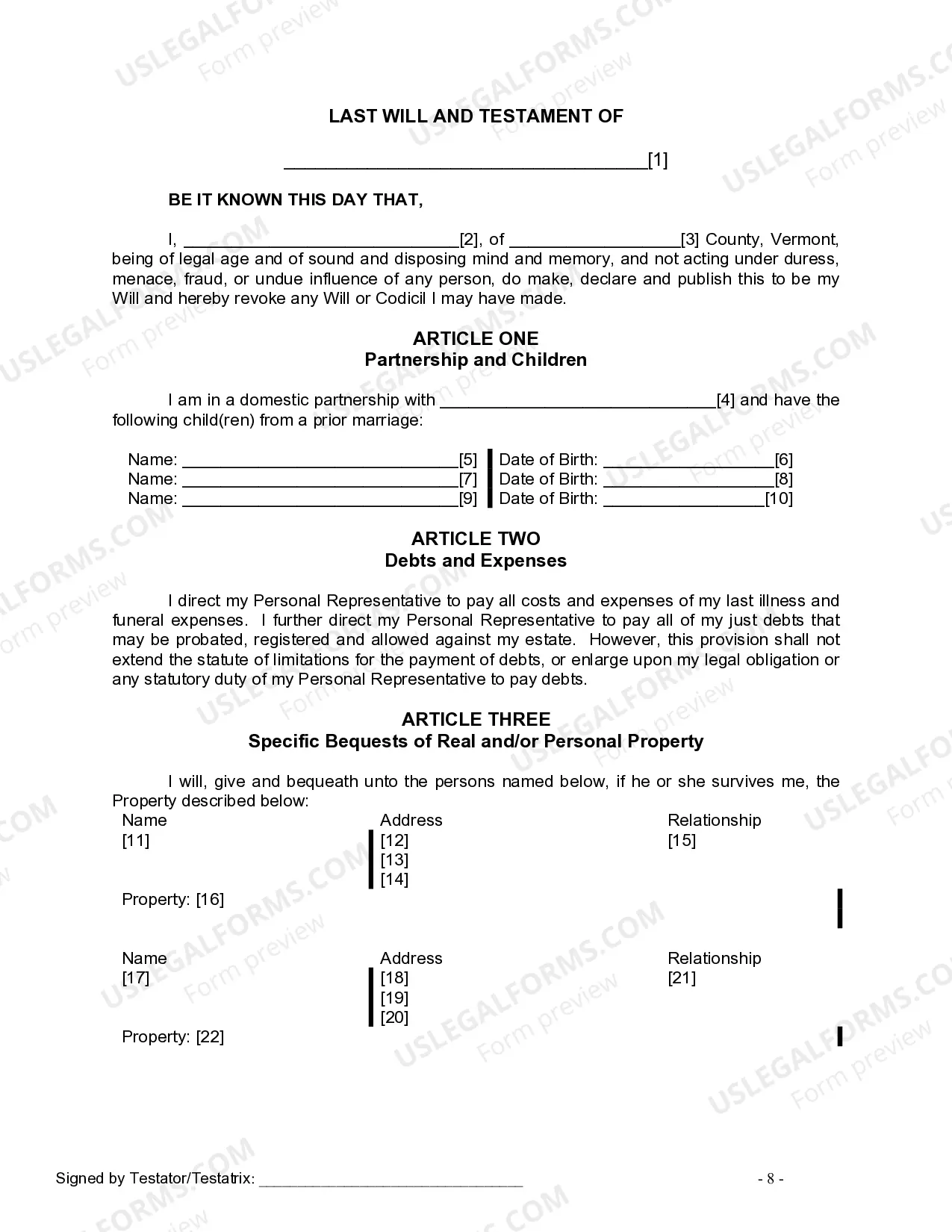
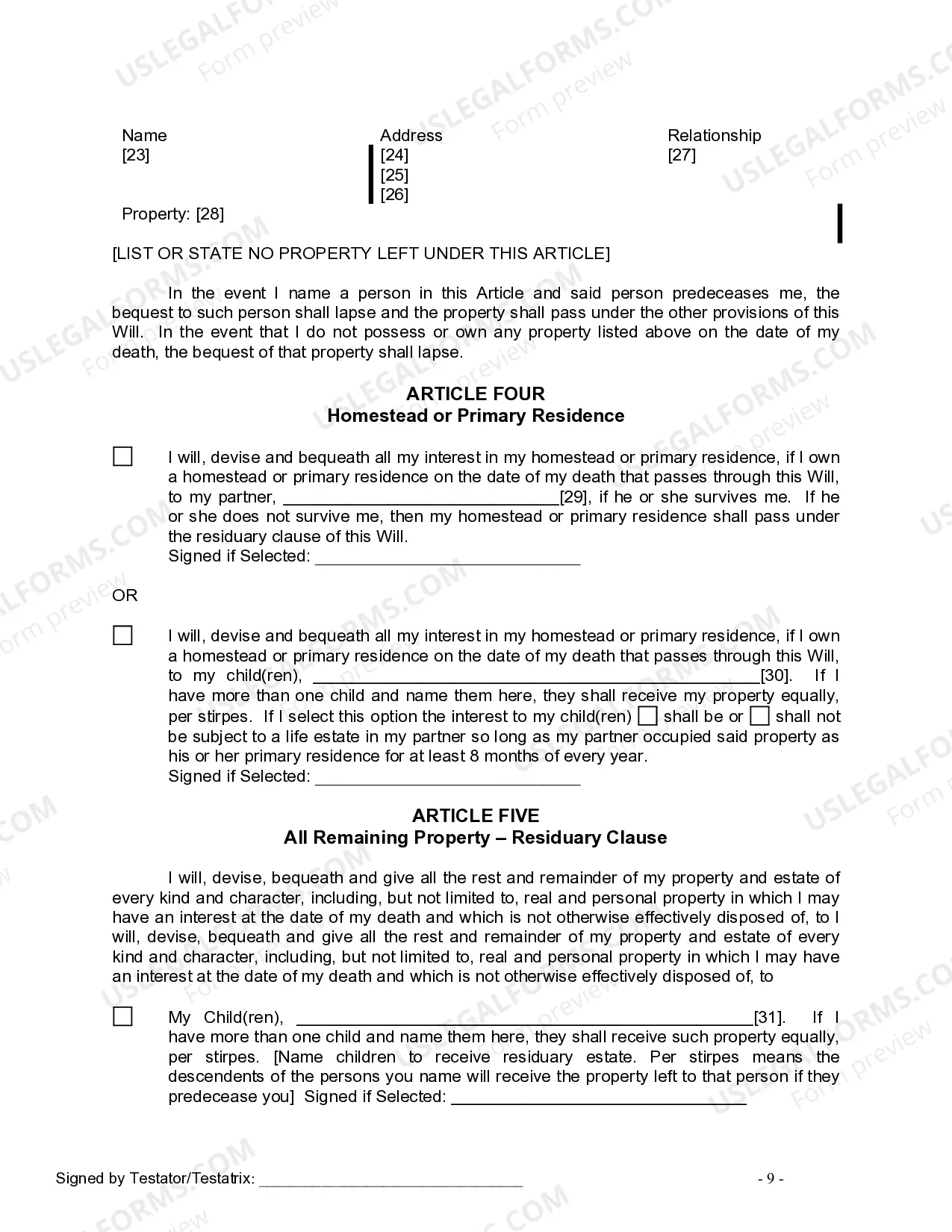
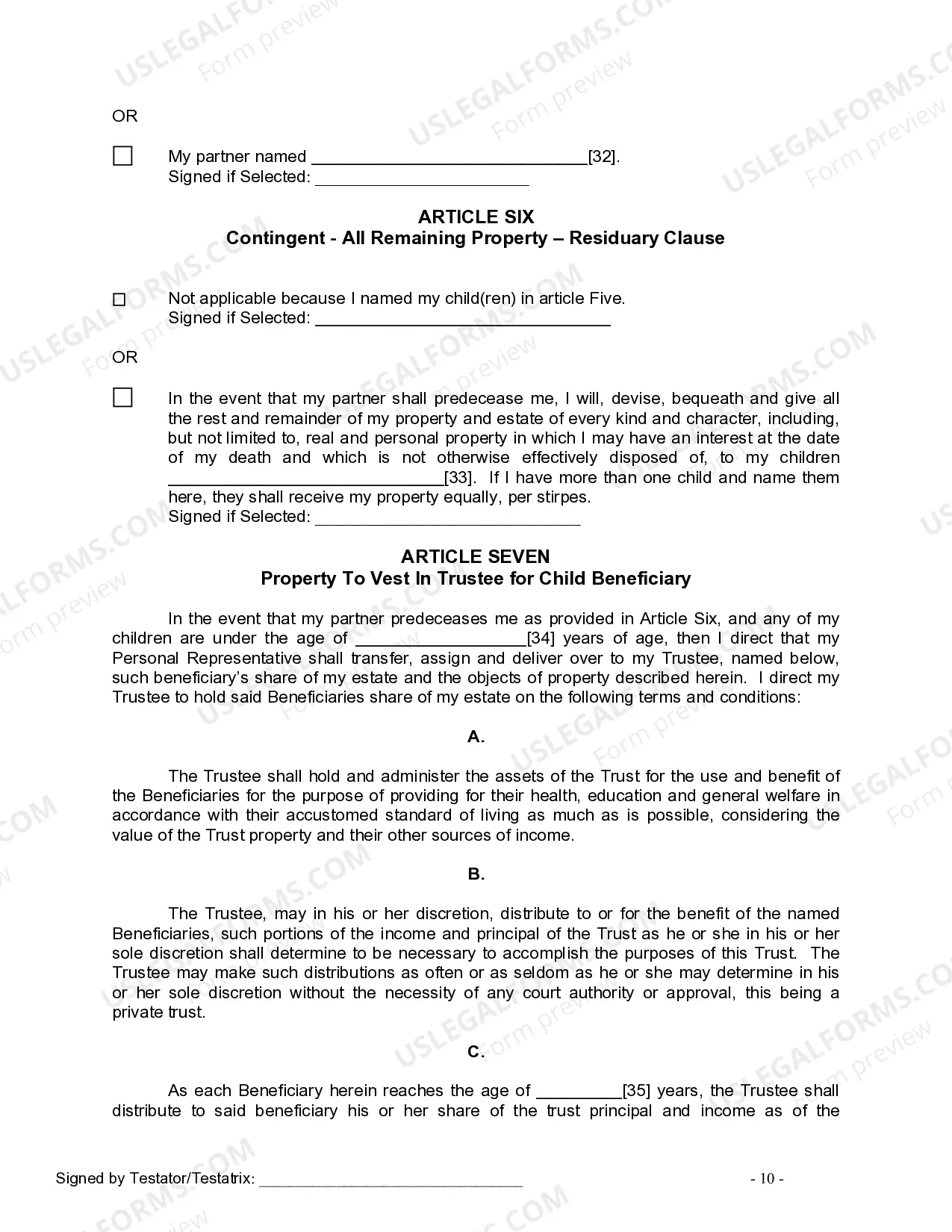
This form is a Last Will and Testament specifically designed for a civil union partner with minor children from a prior marriage. It allows individuals to clearly outline their wishes regarding property distribution, appointment of guardians, and the management of assets for minor beneficiaries. This Will is tailored to address unique family situations, helping ensure that both partners and their children are provided for after one's passing.
Main sections of this form
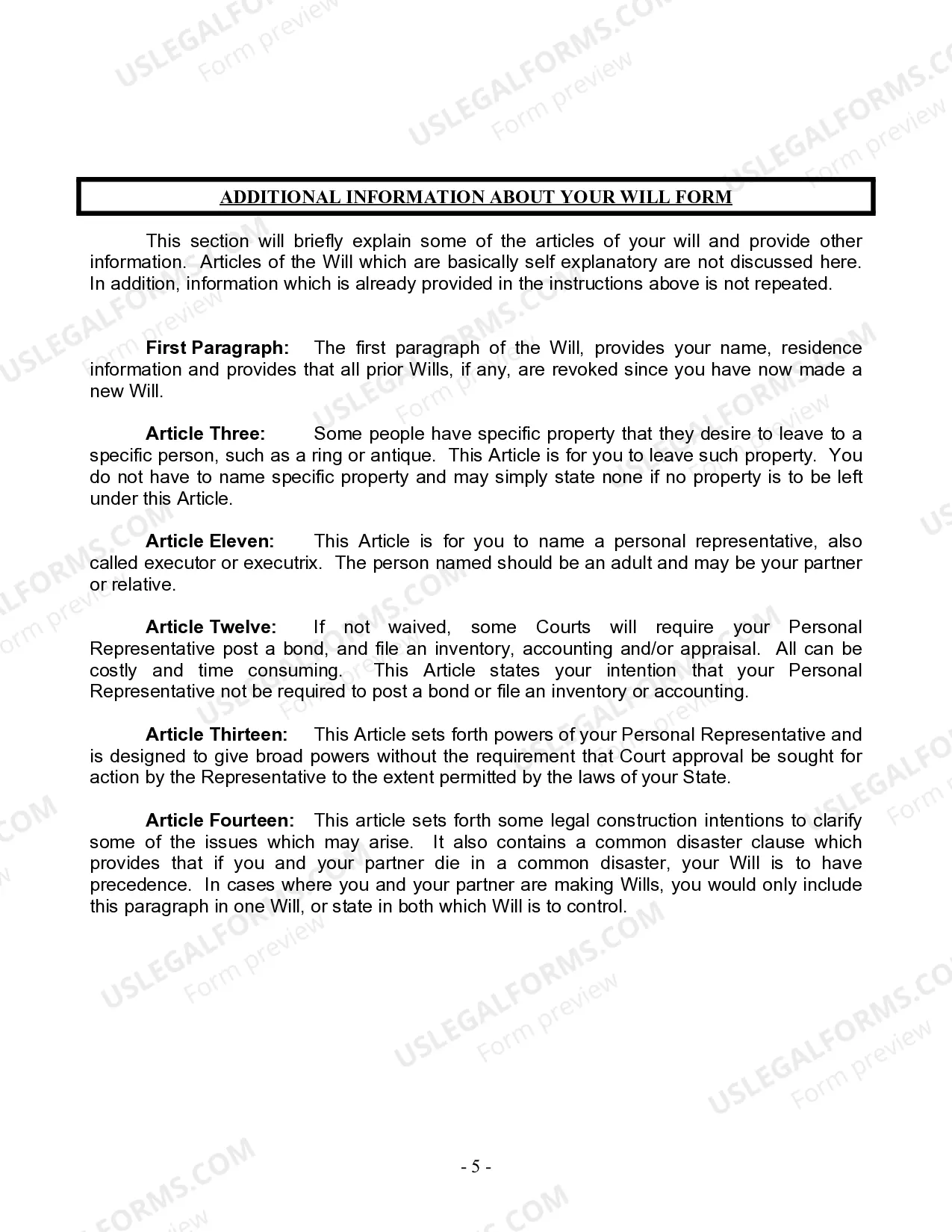
- Personal representative appointment for estate administration.
- Specific bequests of property to named beneficiaries.
- Trust provisions for assets designated for minor children.
- Appointment of a guardian for minor children.
- Residuary clause detailing distribution of remaining assets.


Common use cases
This form should be utilized when an individual in a civil union has minor children from a previous marriage and wants to ensure their estate is distributed according to their wishes after death. It is especially important for those who wish to appoint a personal representative and specify guardianship for their children, as well as establish a trust for their care.
Who needs this form
- Individuals in a civil union who have minor children from a previous marriage.
- Anyone who wants to specify the distribution of their property after death.
- Those seeking to appoint a guardian for their minor children.
- Individuals looking to establish a trust for assets intended for minor beneficiaries.
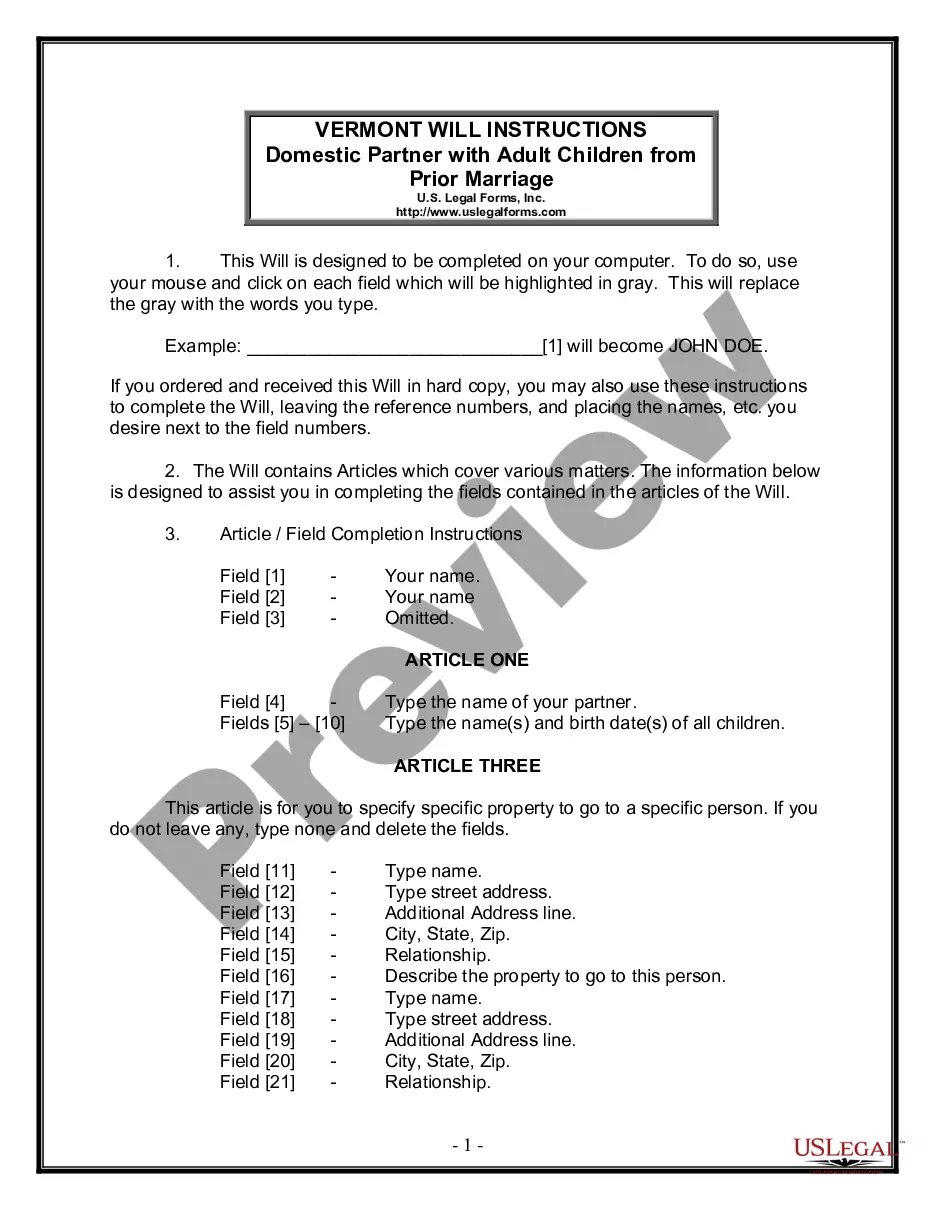
Steps to complete this form
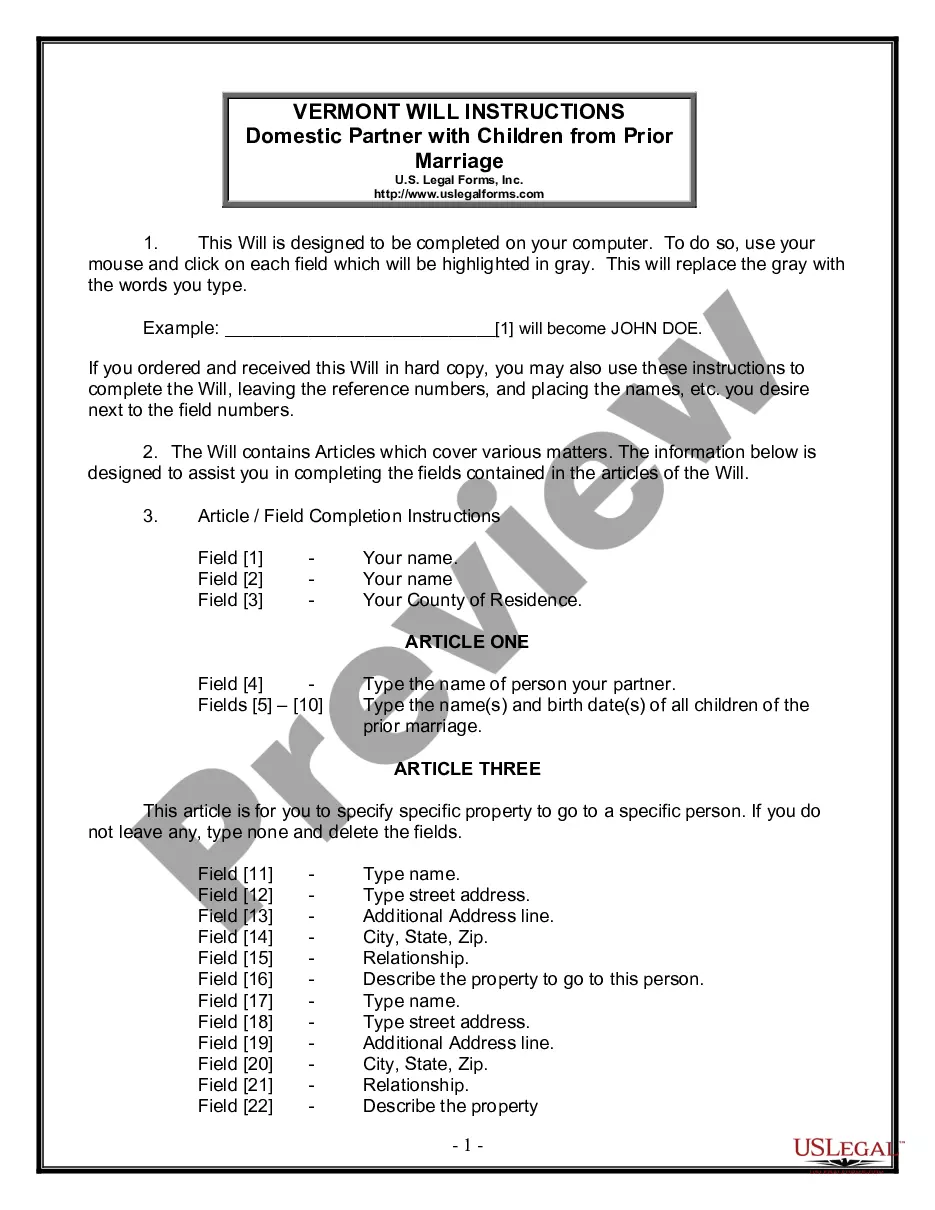
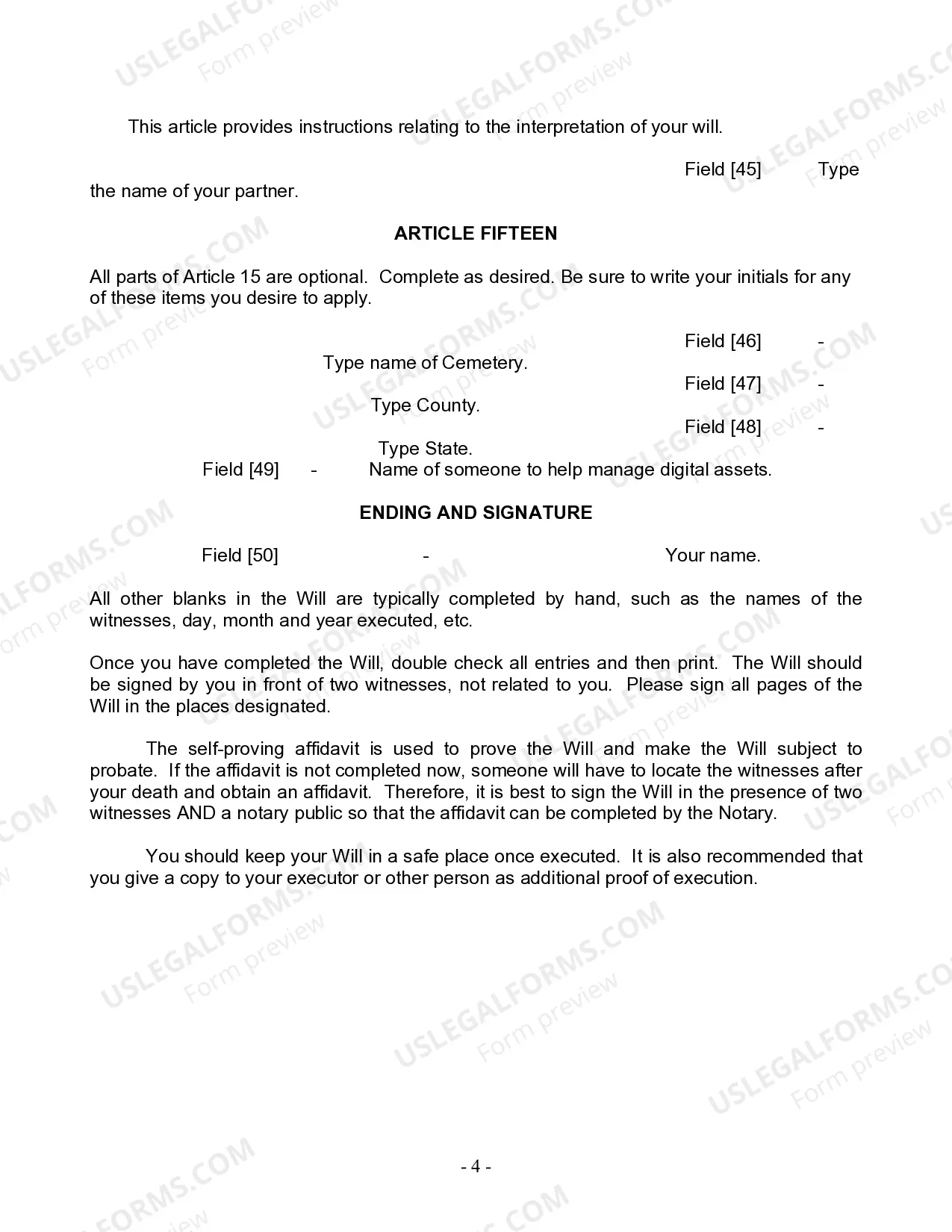
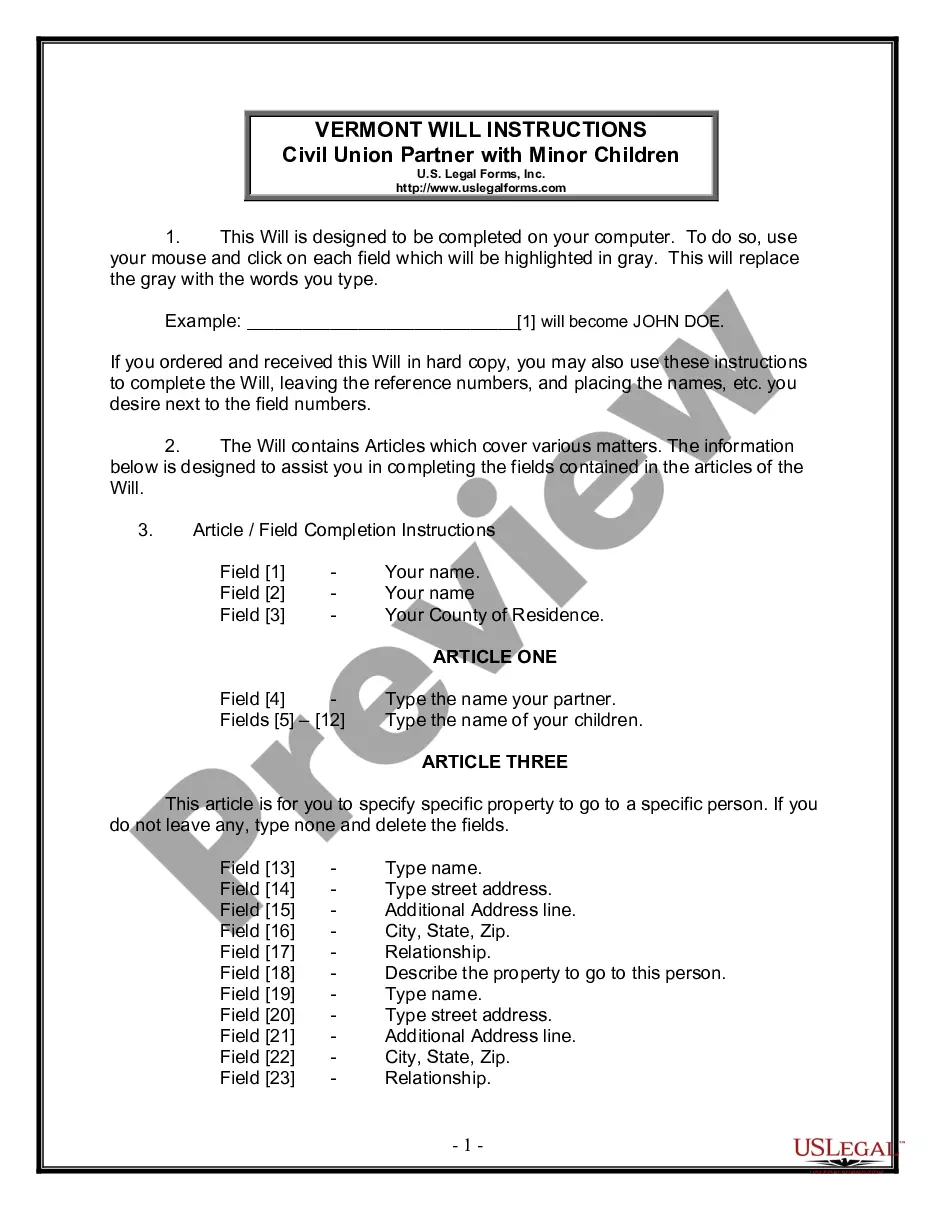
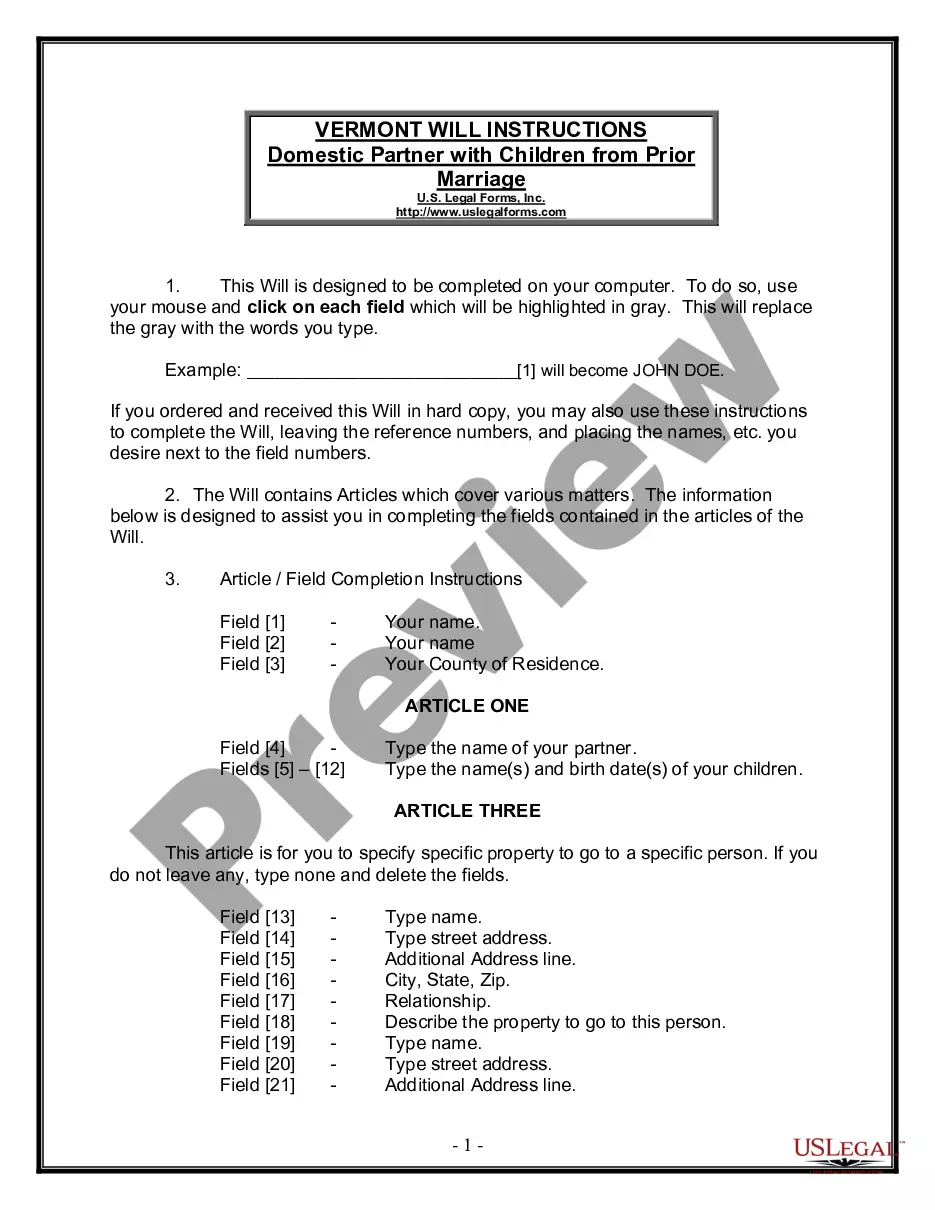
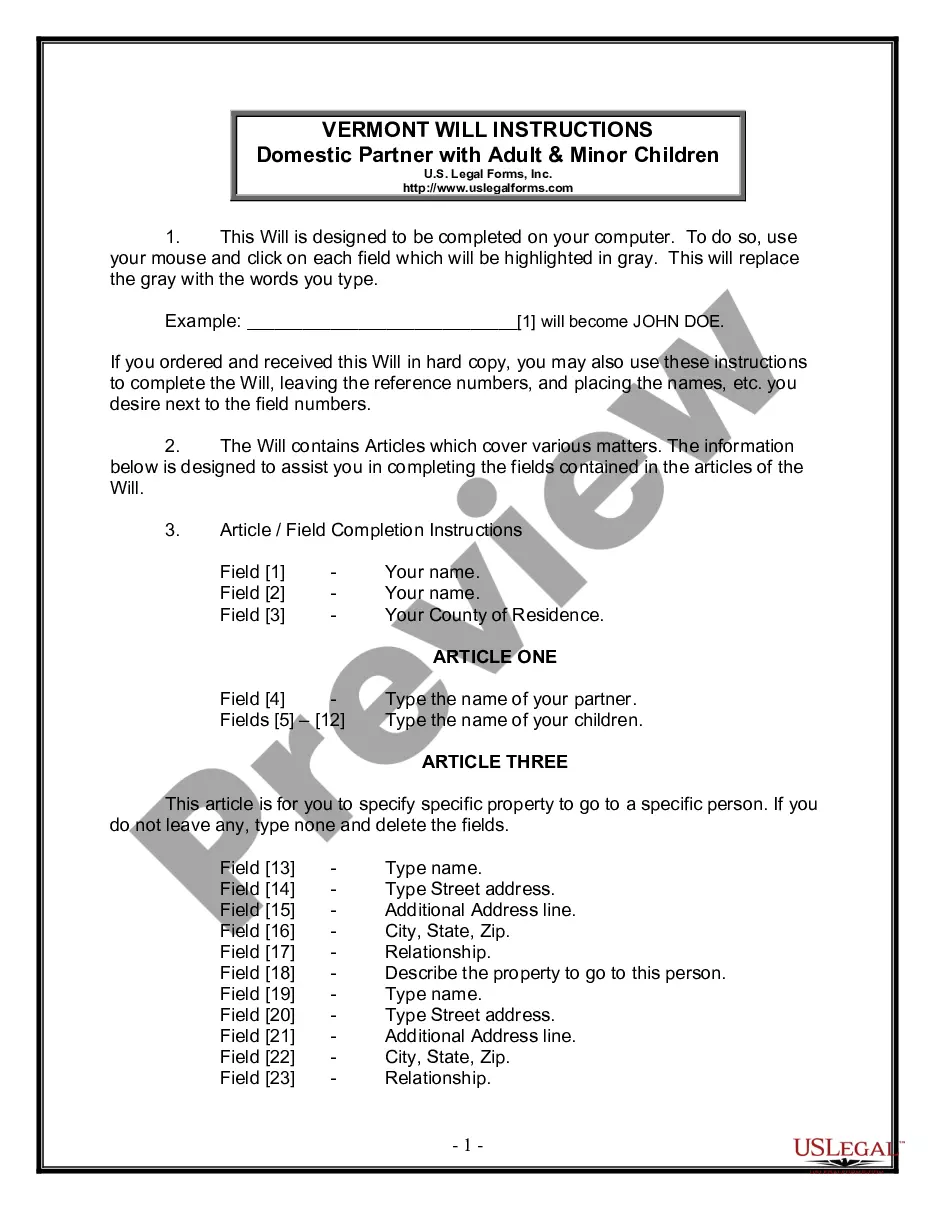
- Enter your full name and county of residence at the beginning of the Will.
- Specify the name of your civil union partner and list all minor children from your prior marriage.
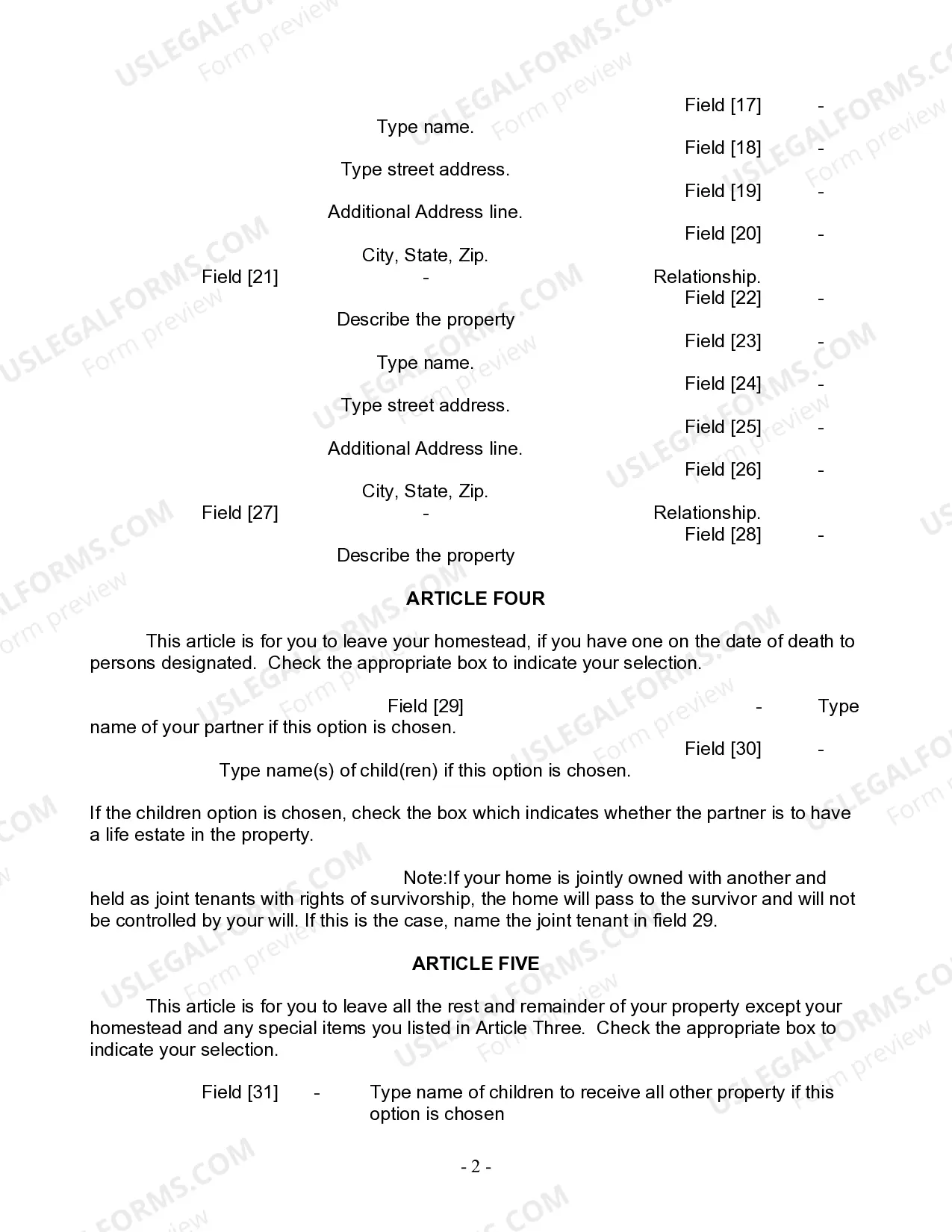
- Designate specific assets to be bequeathed to individuals and describe each property clearly.
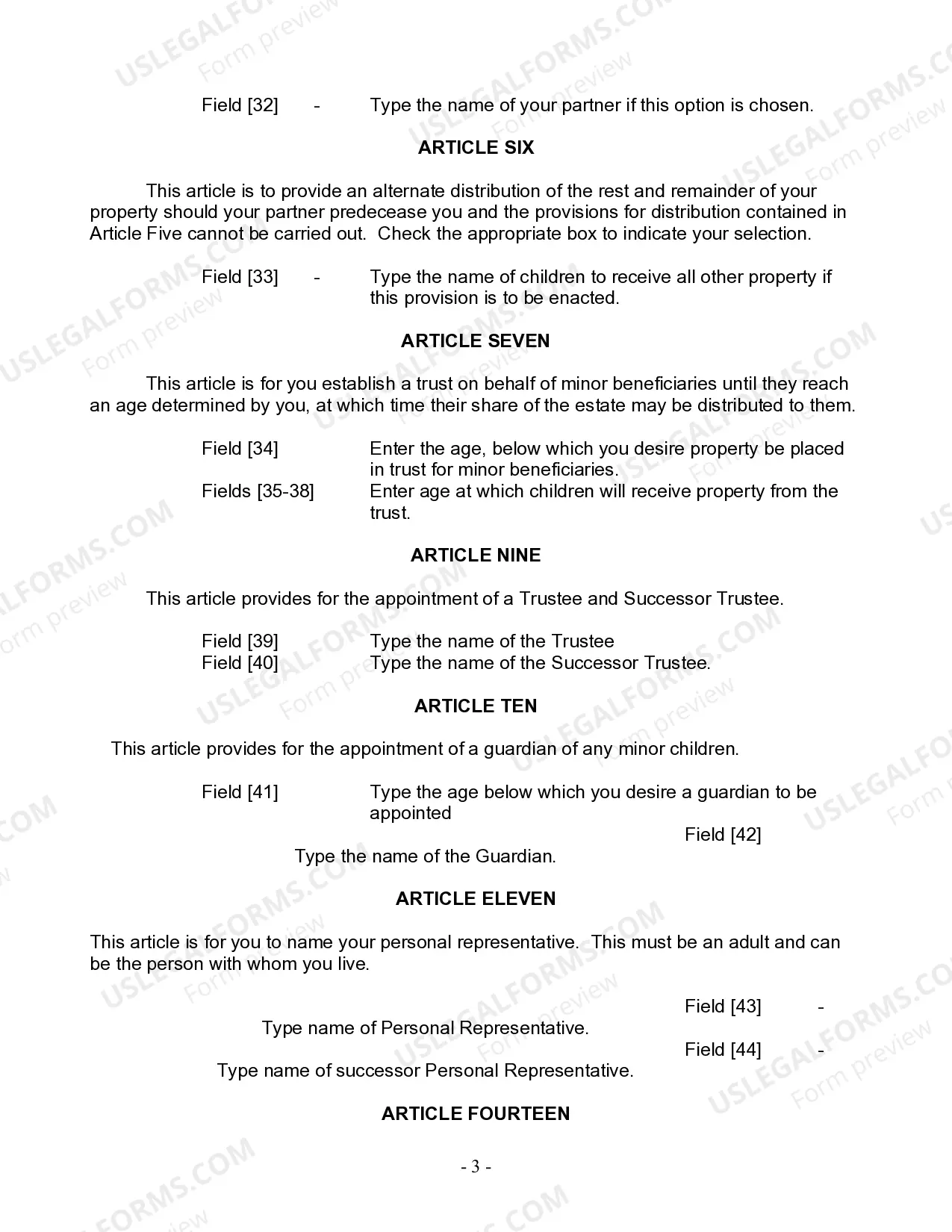
- Appoint a personal representative and a guardian for minor children.
- Have the completed Will signed in the presence of two witnesses and a notary if a self-proving affidavit is included.
Is notarization required?
To make this form legally binding, it must be notarized. Our online notarization service, powered by Notarize, lets you verify and sign documents remotely through an encrypted video session.
Get your form ready online
Our built-in tools help you complete, sign, share, and store your documents in one place.
Make edits, fill in missing information, and update formatting in US Legal Forms—just like you would in MS Word.
Download a copy, print it, send it by email, or mail it via USPS—whatever works best for your next step.
Sign and collect signatures with our SignNow integration. Send to multiple recipients, set reminders, and more. Go Premium to unlock E-Sign.
If this form requires notarization, complete it online through a secure video call—no need to meet a notary in person or wait for an appointment.
We protect your documents and personal data by following strict security and privacy standards.

Make edits, fill in missing information, and update formatting in US Legal Forms—just like you would in MS Word.

Download a copy, print it, send it by email, or mail it via USPS—whatever works best for your next step.

Sign and collect signatures with our SignNow integration. Send to multiple recipients, set reminders, and more. Go Premium to unlock E-Sign.

If this form requires notarization, complete it online through a secure video call—no need to meet a notary in person or wait for an appointment.

We protect your documents and personal data by following strict security and privacy standards.
Typical mistakes to avoid
- Failing to have the Will signed by two witnesses who are not beneficiaries.
- Not clearly specifying the trust terms for minor beneficiaries.
- Leaving out the appointment of a guardian for minor children.
- Not reviewing and updating the Will after significant life changes.
Benefits of using this form online
- Conviniently complete the form from home or any location.
- Easily edit and customize the Will to fit personal needs.
- Access legal templates drafted by licensed attorneys to ensure compliance.
- Save time and avoid potential mistakes by following guided instructions.
Looking for another form?
Form popularity
FAQ
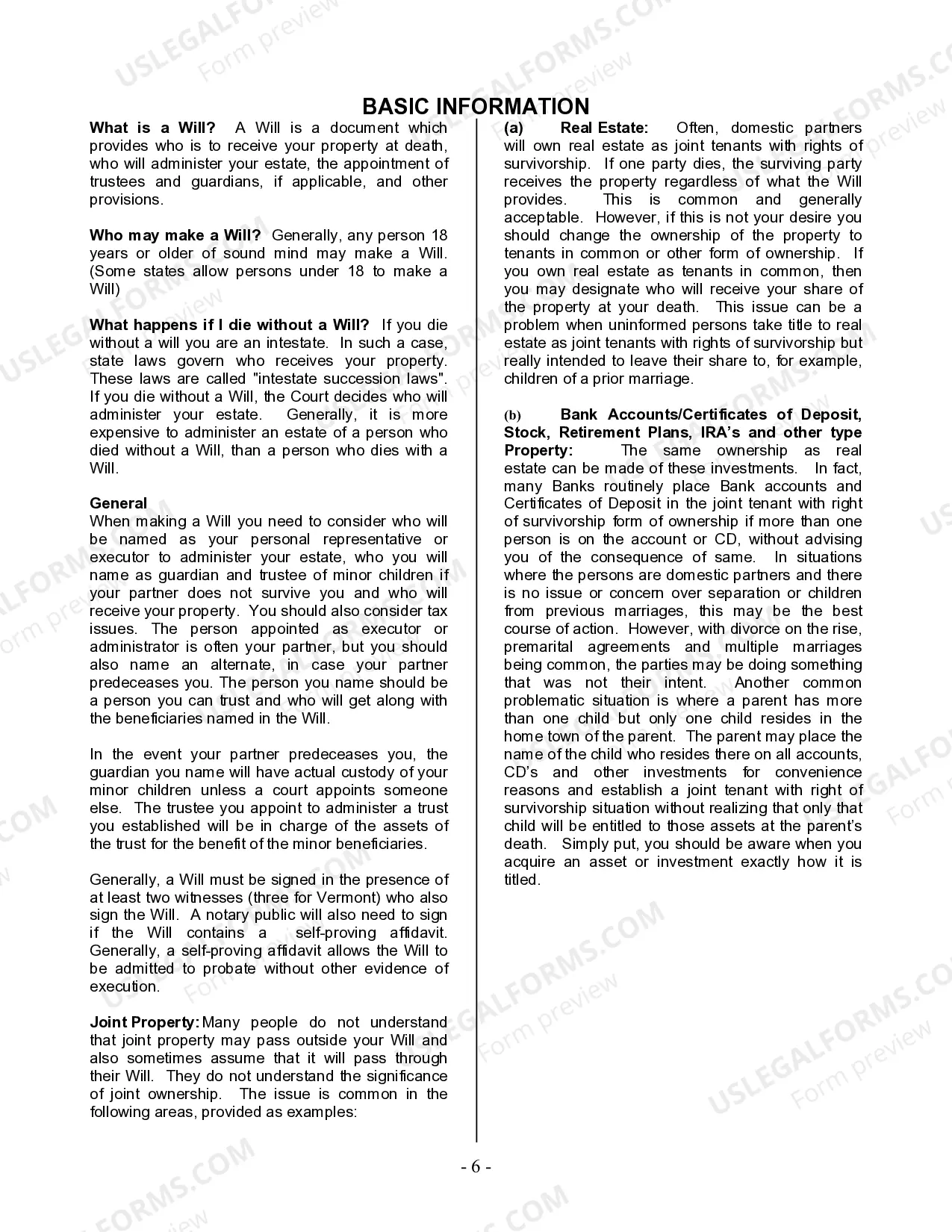
In Vermont, you can make a living trust to avoid probate for virtually any asset you own -- real estate, bank accounts, vehicles, and so on. You need to create a trust document (it's similar to a will), naming someone to take over as trustee after your death (called a successor trustee).
The testator or person making the will must be at least 18 years of age; 2022 the testator must be of sound mind; 2022 the will must be in writing; 2022 the will must be signed by the testator or the testator's name is written by another person in the testator's presence and at the testator's express direction; 2022 the
Common law marriages in Vermont are not recognized, as is the case in all but ten states and Washington D.C. If you enter into this relationship in another state, you will need to consider getting formally married if you move. Your common law marriage in VT is not valid.
Common law marriage - the reality Many couples believe that moving in together creates a common law marriage, giving you the same rights as if you were married.In reality, moving in together does not give you automatic rights to each other's property, no matter how long you live together.
Children - if there is no surviving married or civil partner If there is no surviving partner, the children of a person who has died without leaving a will inherit the whole estate. This applies however much the estate is worth. If there are two or more children, the estate will be divided equally between them.
Even if you don't have capacity to marry at the point that you start living with someone, you can still end up in a common law marriage.Once established, a common law marriage is just as valid and binding as a formalized marriage. It lasts until a court grants a divorce or one partner dies.
Where is common-law marriage allowed? Here are the places that recognize common-law marriage: Colorado, Iowa, Kansas, Montana, New Hampshire (for inheritance purposes only), Oklahoma, Rhode Island, South Carolina, Texas, Utah and the District of Columbia.
Dying Without a Will in VermontIf you die without a valid will, you'll lose control over what happens to your assets after your death.If there isn't a will, the probate court must appoint someone to serve as the executor or personal representative. Usually the surviving spouse or adult child is chosen for this role.
A civil union is a legal relationship between two people that provides legal protections to the couple only at the state level. A civil union is not a marriage, though. Civil unions do not provide federal protections, benefits, or responsibilities to couples, and a civil union may not be recognized by all states.