Washington Transfer on Death Quitclaim Deed from Individual to Individual without provision for Successor Beneficiary
What this document covers
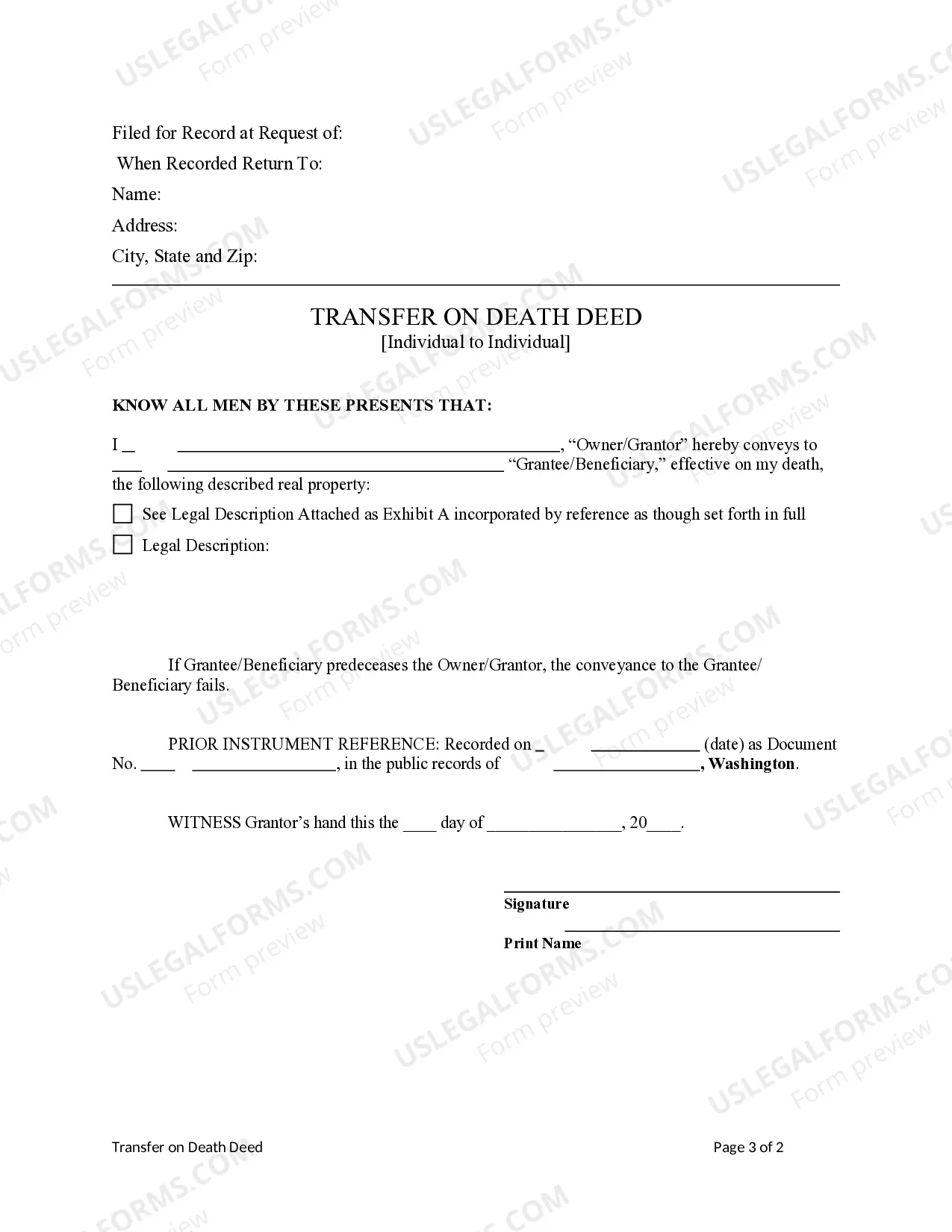
The Transfer on Death Quitclaim Deed allows an individual (the Grantor) to transfer ownership of property to another individual (the Grantee) upon the Grantor's death. Unlike similar forms, this deed does not provide a provision for a successor beneficiary if the primary Grantee does not survive the Grantor. This deed remains revocable, allowing the Grantor to make changes while alive, and is only effective upon death.
Key components of this form
- Grantor and Grantee information: Identify the individual transferring the property and the recipient.
- Property description: Clearly describe the property being transferred.
- Revocation clause: States that the transfer can be revoked by the Grantor at any time before death.
- Signature and date: Requires the Grantorâs signature and the date to validate the deed.
- Recording instructions: Specifies that the deed must be recorded before the Grantor's death.


Common use cases
This form is typically used in estate planning when an individual wants to ensure that their property transfers to a specific person upon their death. It can be suitable for personal residences, vacation homes, or any real estate where the owner wishes to avoid probate, as long as the Grantor may revoke it until death.
Who this form is for
- Individuals who own real estate and wish to pass it to a specific beneficiary after their death.
- Persons looking for a straightforward way to transfer property without going through the probate process.
- Individuals who do not want to name a successor beneficiary for their property transfer.
How to complete this form
- Identify the parties: Fill in the names and details of the Grantor and Grantee.
- Describe the property: Provide a clear legal description of the property to be transferred.
- Enter the date: Specify the date on which the deed is being executed.
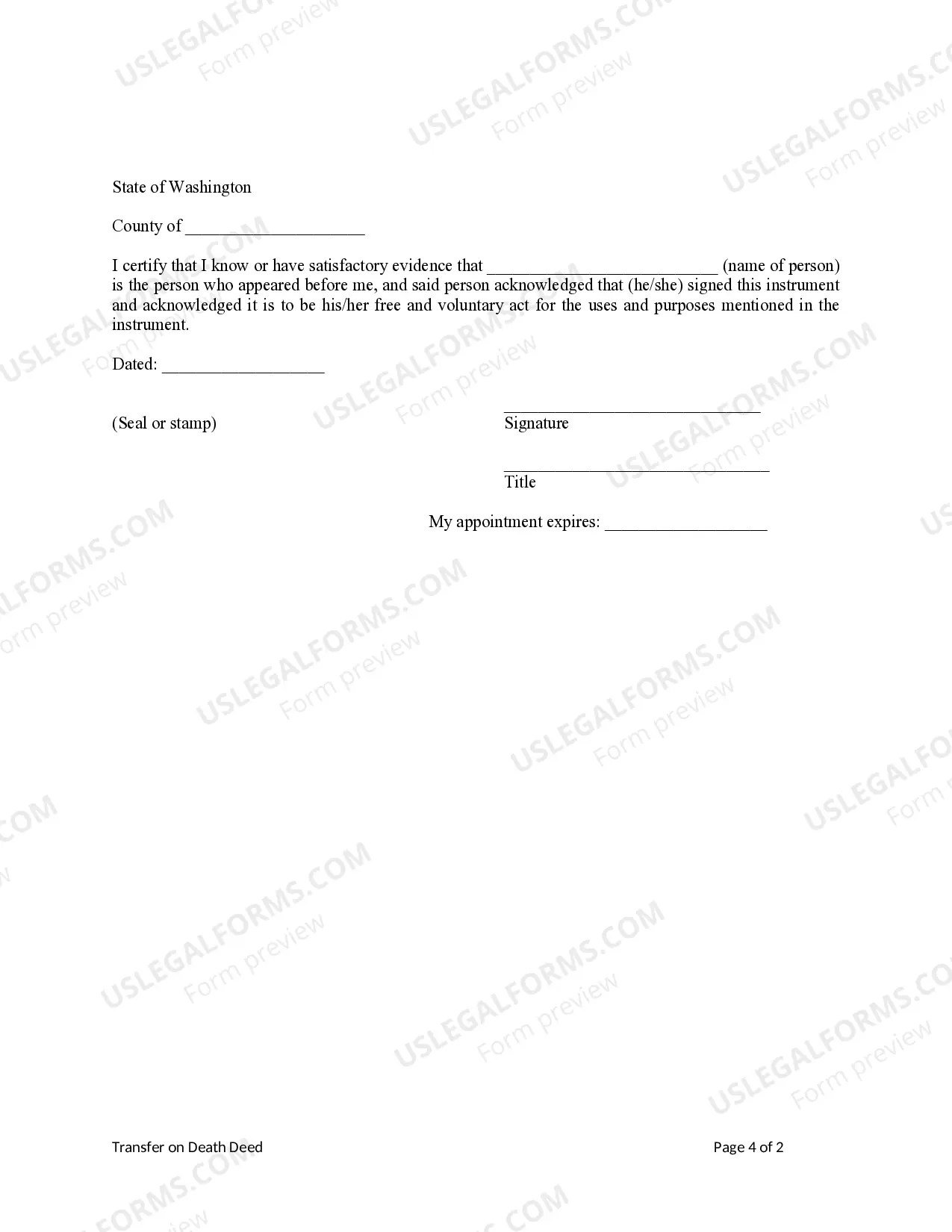
- Sign the form: The Grantor must sign the deed in front of a witness or notary as required.
- Record the deed: File the completed deed with the appropriate county recorder's office before the Grantor's death.
Notarization requirements for this form
This form must be notarized to be legally valid. US Legal Forms provides secure online notarization powered by Notarize, allowing you to complete the process through a verified video call.
Get your form ready online
Our built-in tools help you complete, sign, share, and store your documents in one place.
Make edits, fill in missing information, and update formatting in US Legal Forms—just like you would in MS Word.
Download a copy, print it, send it by email, or mail it via USPS—whatever works best for your next step.
Sign and collect signatures with our SignNow integration. Send to multiple recipients, set reminders, and more. Go Premium to unlock E-Sign.
If this form requires notarization, complete it online through a secure video call—no need to meet a notary in person or wait for an appointment.
We protect your documents and personal data by following strict security and privacy standards.
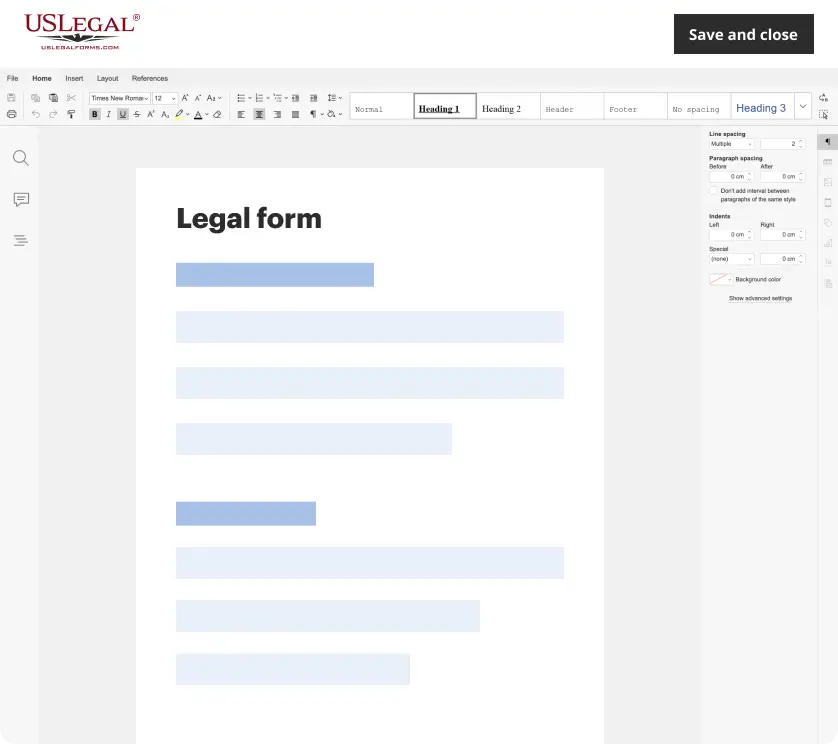
Make edits, fill in missing information, and update formatting in US Legal Forms—just like you would in MS Word.
Download a copy, print it, send it by email, or mail it via USPS—whatever works best for your next step.
Sign and collect signatures with our SignNow integration. Send to multiple recipients, set reminders, and more. Go Premium to unlock E-Sign.

If this form requires notarization, complete it online through a secure video call—no need to meet a notary in person or wait for an appointment.

We protect your documents and personal data by following strict security and privacy standards.
Mistakes to watch out for
- Forgetting to record the deed before the Grantor's death.
- Not providing a complete legal description of the property.
- Failing to sign the deed or provide necessary witness signatures.
Advantages of online completion
- Convenience: Complete the form easily from any device without the need for in-person meetings.
- Editability: Make changes to the form until you are ready to finalize it.
- Reliability: Access forms that are drafted by licensed attorneys committed to compliance with current state laws.
Looking for another form?
Form popularity
FAQ
File a petition in probate court. The first step to transferring the property to the rightful new owners is to open up a case in probate court. Petition the court for sale and convey the property to the purchaser. Next, you must petition the court to sell the property.
So long as the quitclaim deed is valid (properly notarized, etc.) it can be recorded even after the grantor's death, so property owned by the deceased which has been deeded in that quitclaim deed should not need to pass through probate.
If it was inherited, succession law comes into play. Once the beneficiaries and their shares, rights and liabilities are decided, the property has to be transferred in their names. For this you need to apply for property transfer at the sub-registrar's office.
If you'd like to avoid having your property going through the probate process, it's a good idea to look into a transfer on death deed. A transfer on death deed allows you to select a beneficiary who will receive your property, but only when you've passed away.
A revocable TOD deed does not avoid the owner's creditors. Creditors may seek collection against the designated beneficiaries as to secured and unsecured obligations of the original owner.
The Washington transfer-on-death deed form allows property to be automatically transferred to a new owner when the current owner dies, without the need to go through probate. It also gives the current owner retained control over the property, including the right to change his or her mind about the transfer.
A quitclaim deed is sometimes used to avoid probate court by transferring an interest in real property before someone's death. The property is transferred by deed during their life, instead of being transferred by a will after the grantor's death.
If the deceased was sole owner, or co-owned the property without right of survivorship, title passes according to his will. Whoever the will names as the beneficiary to the house inherits it, which requires filing a new deed confirming her title. If the deceased died intestate -- without a will -- state law takes over.
If the property is to be transferred to a beneficiary the Executor or Administrator will need to submit a document called an 'Assent' to the Land Registry, with a copy of the Grant of Representation. The Land Registry will then transfer the property into the name of the new owner.