Washington Assignment to Living Trust
Understanding this form
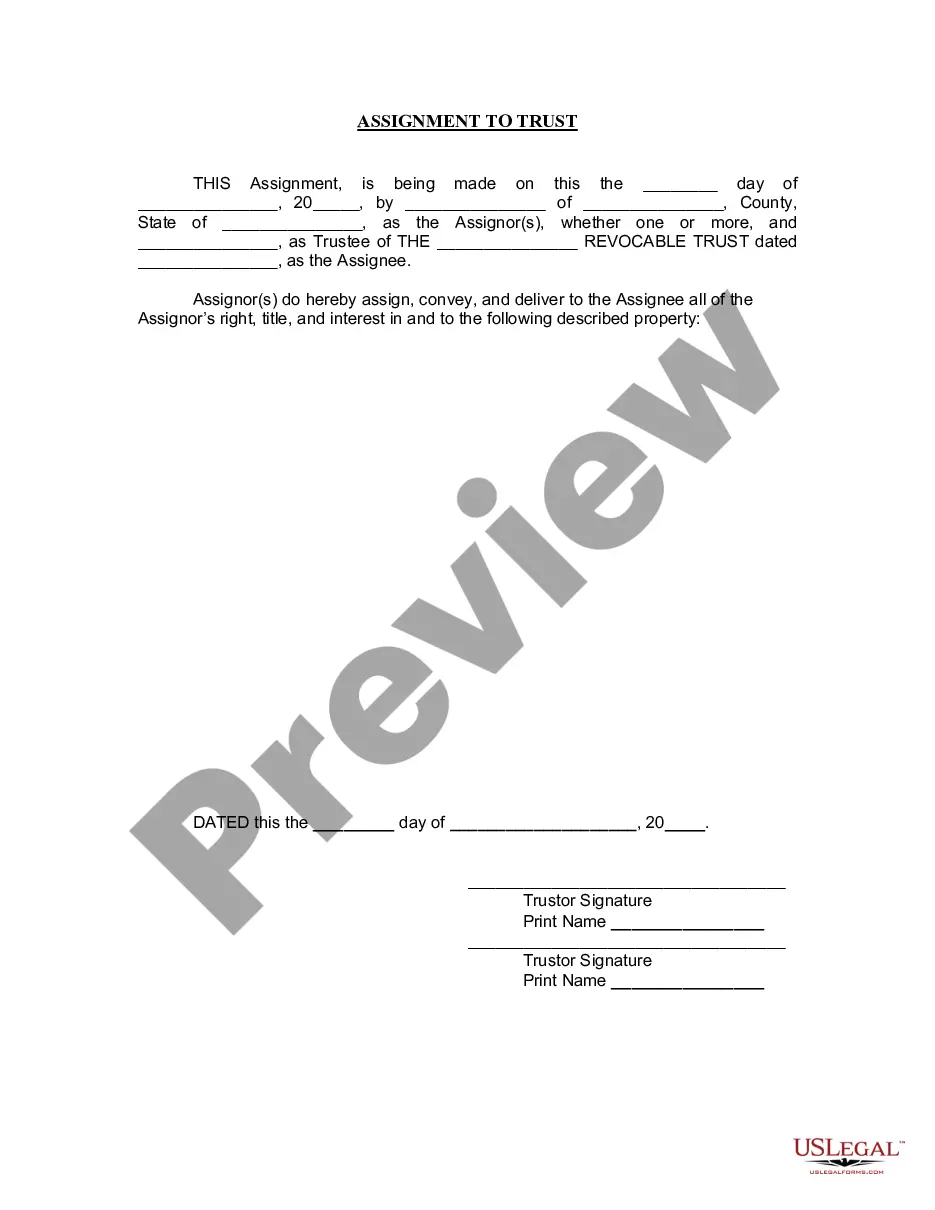
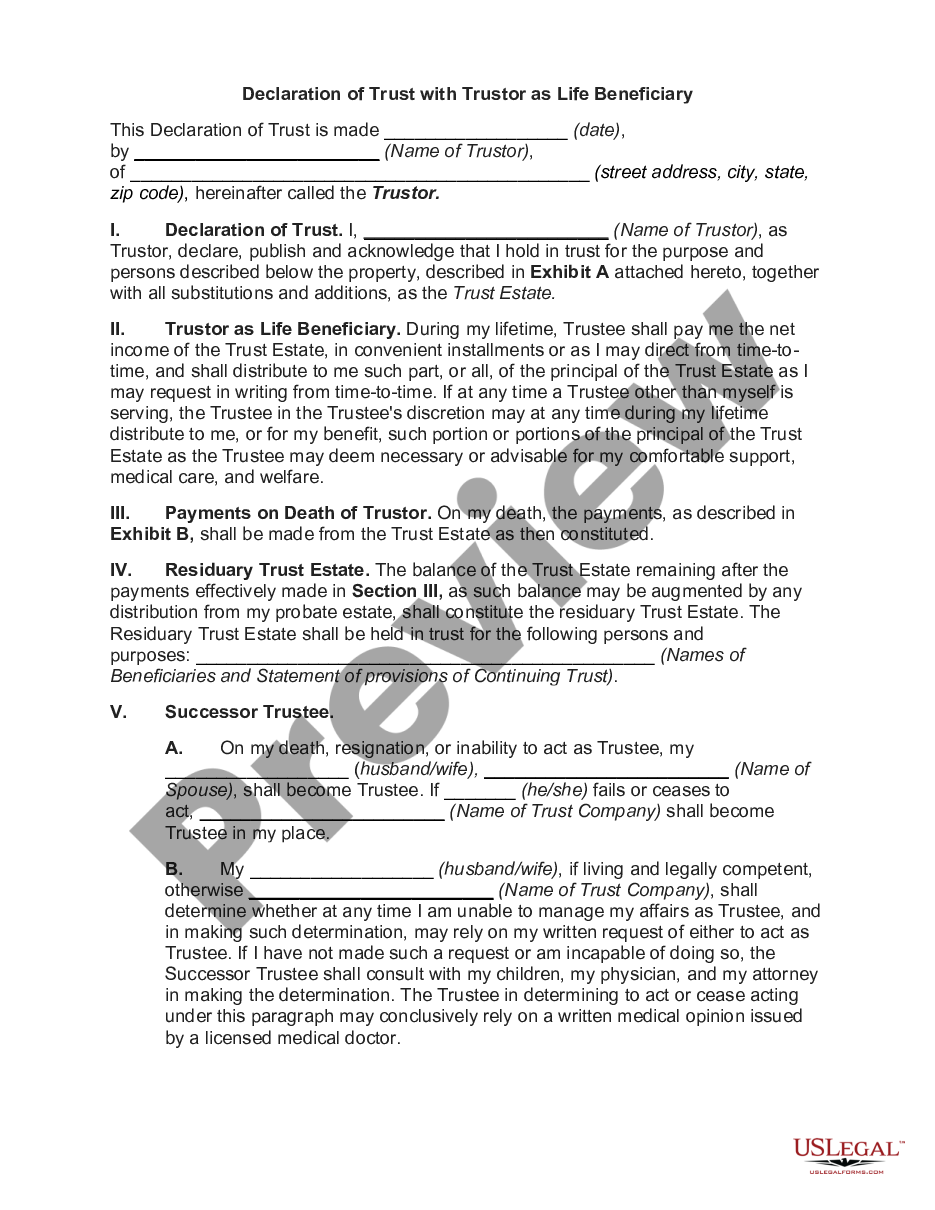
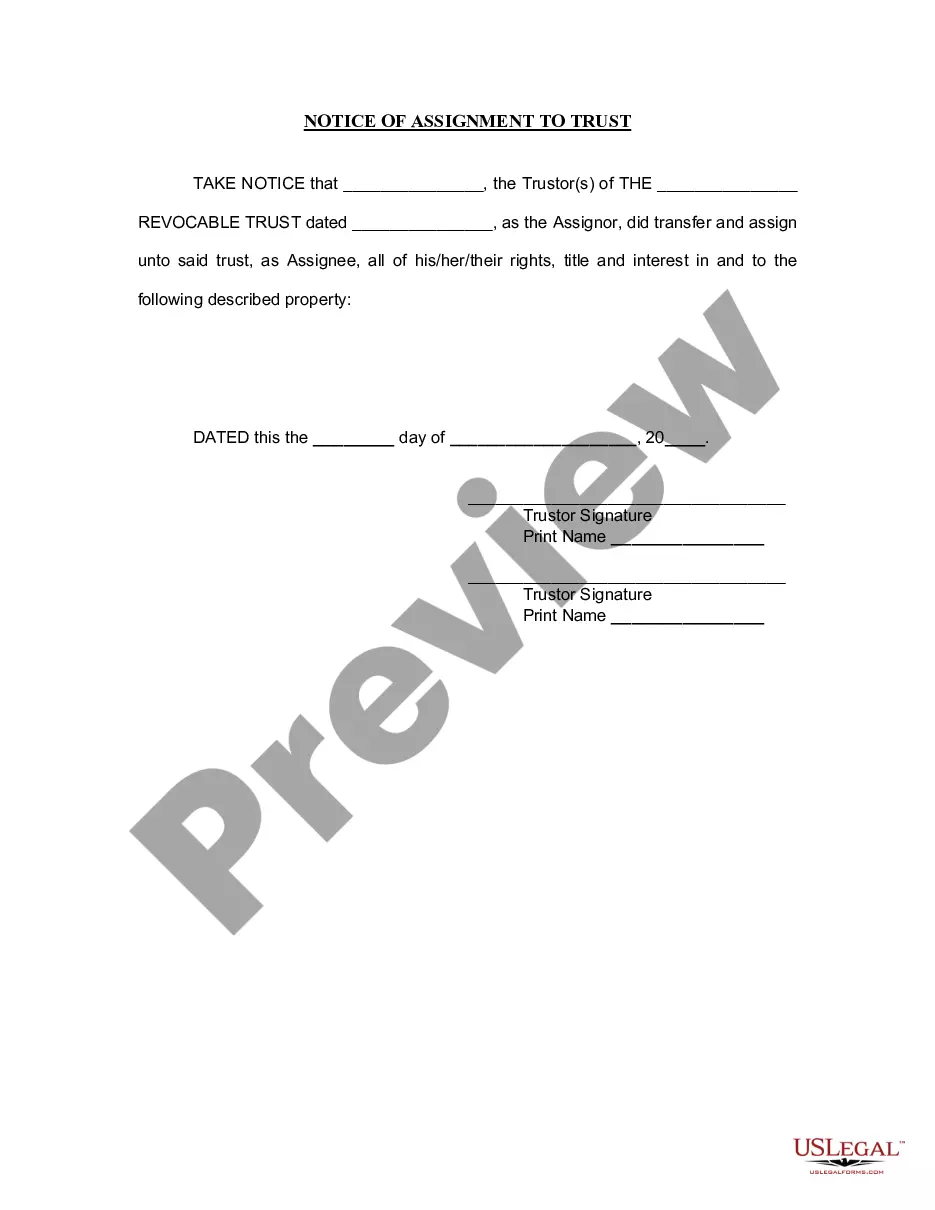
The Assignment to Living Trust form is a legal document used to transfer property ownership into a living trust during your lifetime. This form helps assign all right, title, and interest in specific property to the trust, aiding in estate planning and potentially avoiding probate. Unlike a will, a living trust allows for asset management while you are alive, ensuring that your assets are handled according to your wishes upon your passing.
Main sections of this form
- Date of the assignment
- Name of the Assignor
- Property description being assigned
- Name of the Trustee
- Signature of the Assignor
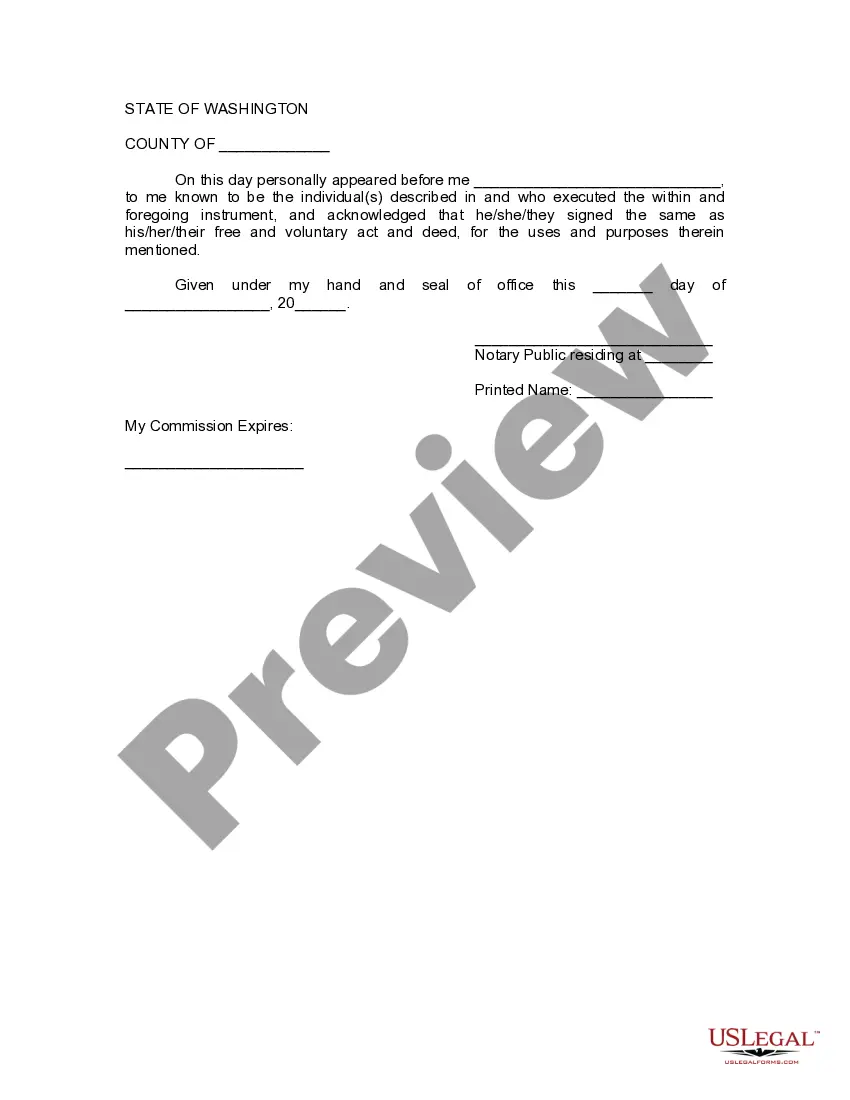
- Notary acknowledgment section

When this form is needed
This form should be used when you wish to transfer ownership of specific assets such as real estate, personal property, or financial accounts into your living trust. It is particularly useful when planning your estate or ensuring that your assets are managed according to your preferences both during your lifetime and after your passing.
Who can use this document
- Individuals creating a living trust for estate planning.
- Property owners who wish to assign their assets to a trust.
- Anyone looking to avoid probate for their assets.
How to prepare this document
- Identify the date of the assignment.
- Enter the name of the Assignor and their address.
- Provide a clear description of the property being transferred.
- Specify the name of the Trustee and the trust details.
- Sign the document in the presence of a notary public.
Notarization guidance
This document requires notarization to meet legal standards. US Legal Forms provides secure online notarization powered by Notarize, allowing you to complete the process through a verified video call, available 24/7.
Get your form ready online
Our built-in tools help you complete, sign, share, and store your documents in one place.
Make edits, fill in missing information, and update formatting in US Legal Forms—just like you would in MS Word.
Download a copy, print it, send it by email, or mail it via USPS—whatever works best for your next step.
Sign and collect signatures with our SignNow integration. Send to multiple recipients, set reminders, and more. Go Premium to unlock E-Sign.
If this form requires notarization, complete it online through a secure video call—no need to meet a notary in person or wait for an appointment.
We protect your documents and personal data by following strict security and privacy standards.

Make edits, fill in missing information, and update formatting in US Legal Forms—just like you would in MS Word.

Download a copy, print it, send it by email, or mail it via USPS—whatever works best for your next step.

Sign and collect signatures with our SignNow integration. Send to multiple recipients, set reminders, and more. Go Premium to unlock E-Sign.

If this form requires notarization, complete it online through a secure video call—no need to meet a notary in person or wait for an appointment.

We protect your documents and personal data by following strict security and privacy standards.
Common mistakes
- Not providing a complete description of the property being assigned.
- Failing to sign the document in front of a notary.
- Using incorrect names or details for the trust or trustee.
Benefits of completing this form online
- Immediate access to legally drafted forms by licensed attorneys.
- Editable templates that allow for customization based on individual needs.
- Convenient download options, eliminating the need for in-person visits.
- Time-saving as you can complete the form at your own pace and convenience.
Summary of main points
- The Assignment to Living Trust form is crucial for transferring property into a living trust.
- Proper completion and notarization are necessary for legal validity.
- This form aids in effective estate planning and asset management.
Looking for another form?
Form popularity
FAQ
A living trust Washington keeps all assets in your trust out of probate, the court procedure that verifies a will and puts it into effect.Your trust allows you to avoid probate in Washington, but also in any other state where you hold property, as long as you include that property in your trust.
Assuming you decide you want a revocable living trust, how much should you expect to pay? If you are willing to do it yourself, it will cost you about $30 for a book, or $70 for living trust software. If you hire a lawyer to do the job for you, get ready to pay between $1,200 and $2,000.
Locate your current deed. Use the proper deed. Check with your title insurance company and lender. Prepare a new deed. Sign in the presence of a notary. Record the deed in the county clerk's office. Locate the deed that's in trust. Use the proper deed.
A living trust is designed to allow for the easy transfer of the trust creator or settlor's assets while bypassing the often complex and expensive legal process of probate. Living trust agreements designate a trustee who holds legal possession of assets and property that flow into the trust.
No, you don't need a lawyer to set up a trust, but it might be a good idea to seek legal advice to ensure the trust is set up correctly and that you have considered all long-term financial and estate planning aspects of the trust.Some living trusts are revocable, which means the trust can be changed at any time.
Determine the Current Title and Vesting to Your Property. Prepare a Deed. Be Aware of Your Lender and Title Insurance. Prepare a Preliminary Change of Ownership Report. Execute Your Deed. Record Your Deed. Wait for the Deed to be Returned. Keep the Property in the Trust.
Pick a type of living trust. If you're married, you'll first need to decide whether you want a single or joint trust. Take stock of your property. Choose a trustee. Draw up the trust document. Sign the trust. Transfer your property to the trust.
The process of funding your living trust by transferring your assets to the trustee is an important part of what helps your loved ones avoid probate court in the event of your death or incapacity. Qualified retirement accounts such as 401(k)s, 403(b)s, IRAs, and annuities, should not be put in a living trust.
Decide what type of trust you need to make. Take stock of your property. Pick a trustee. Create a trust document, either by yourself or with the help an attorney. Sign the trust document in front of a notary. Transfer your property into the trust.