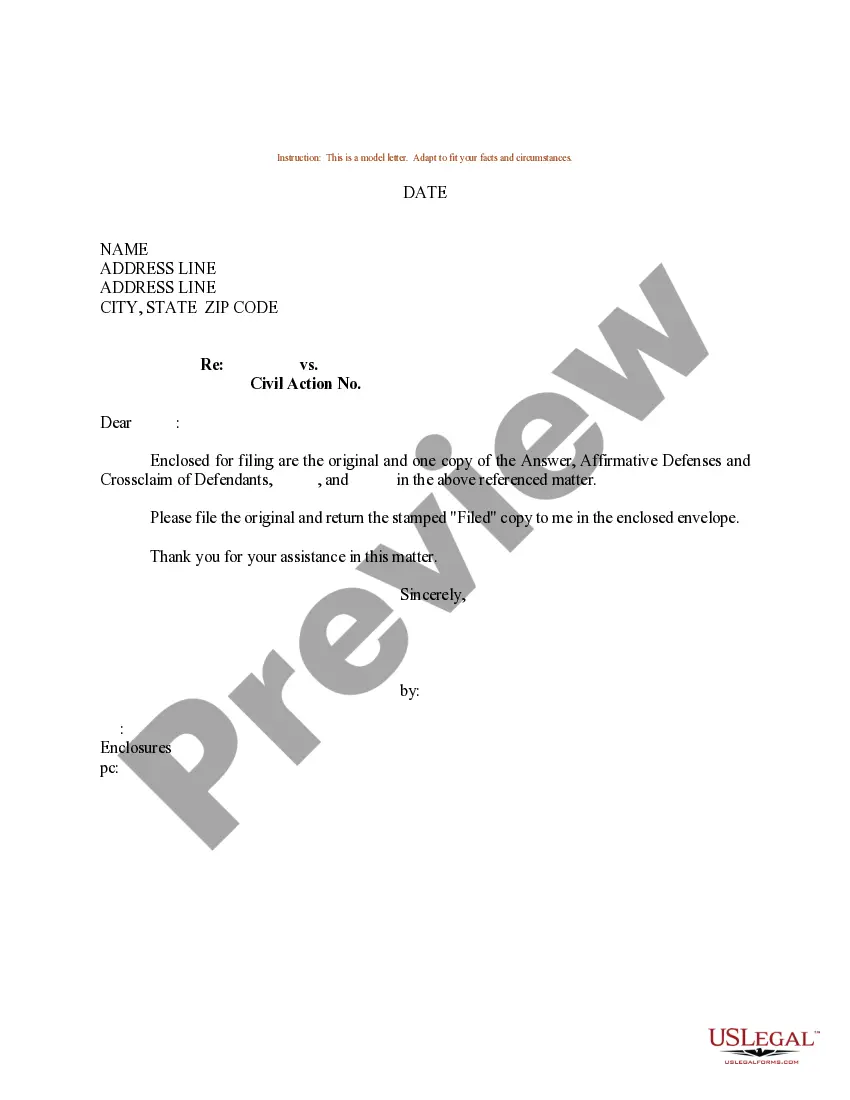
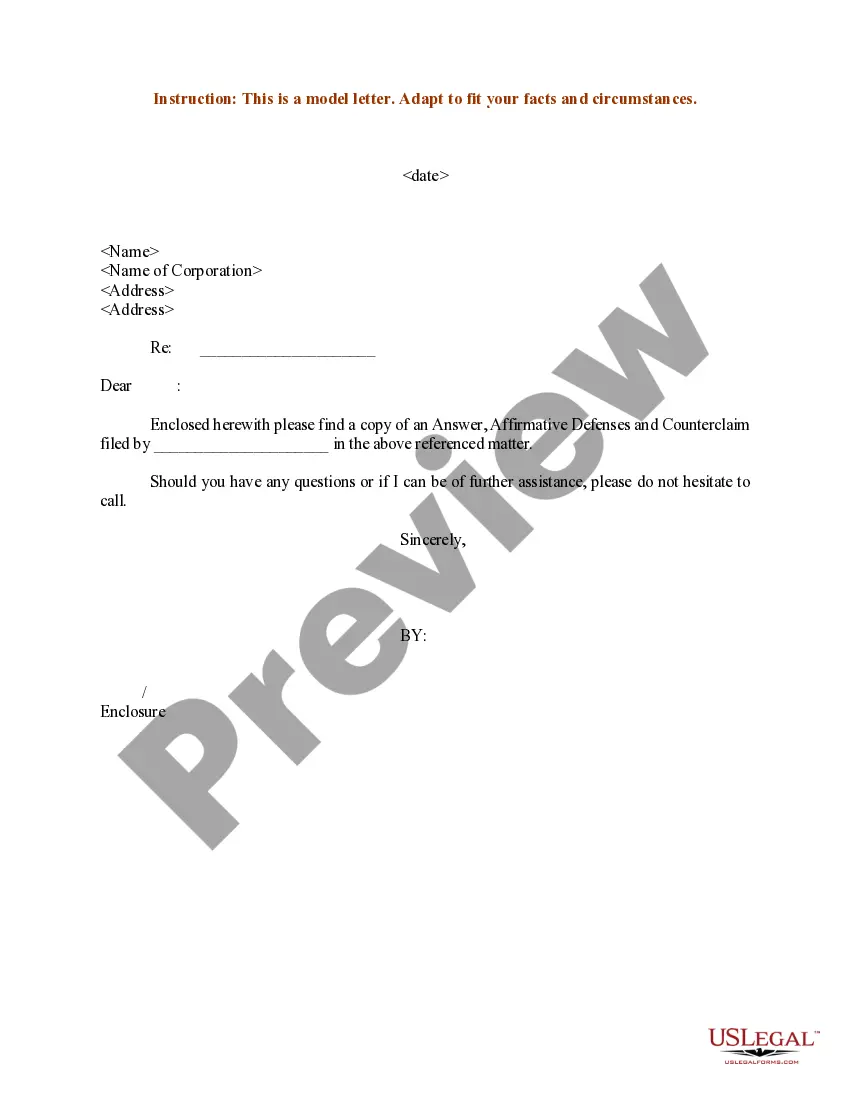
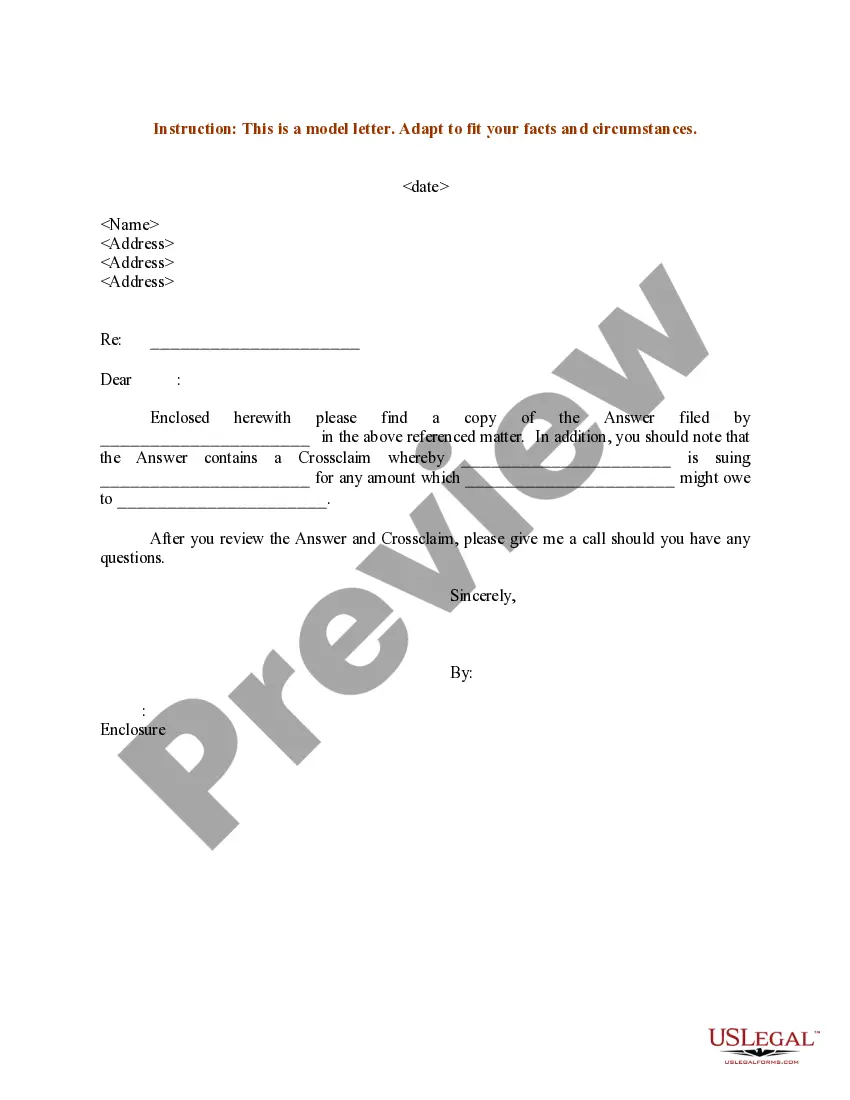
Washington Sample Letter for Copy of Answer, Affirmative Defenses, and Crossclaim
Description
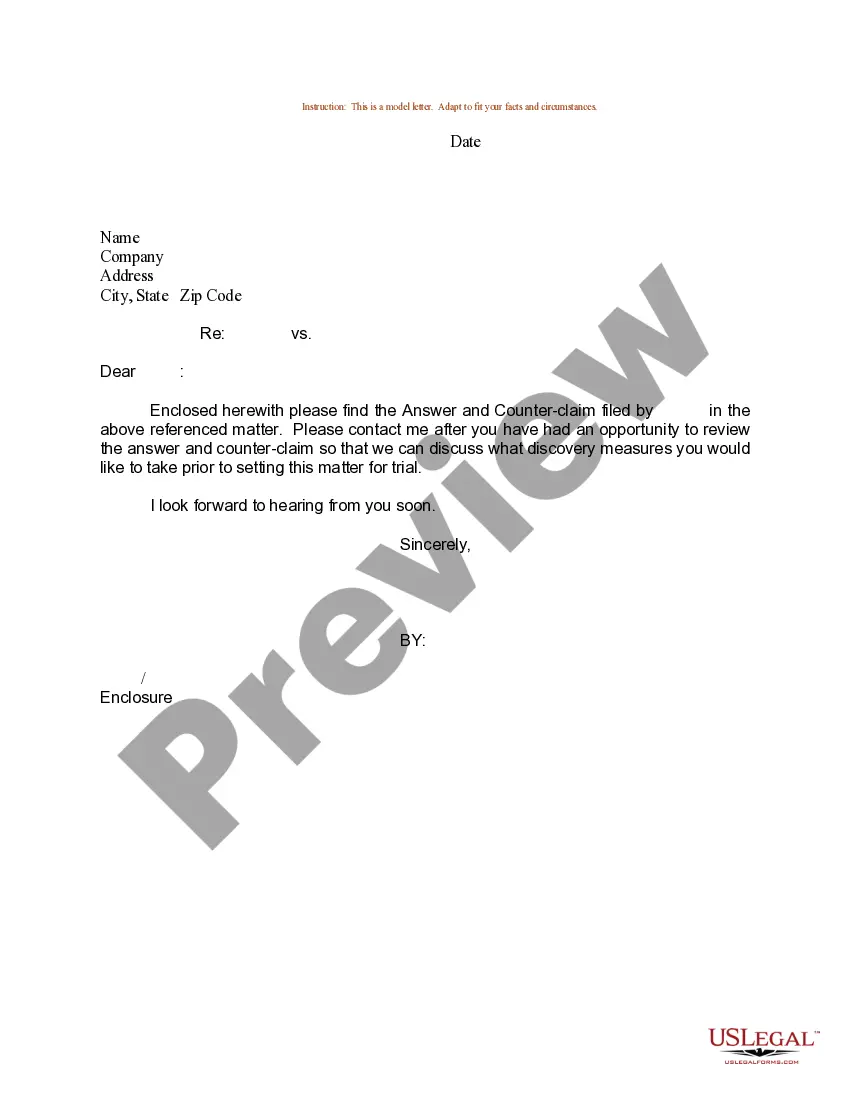
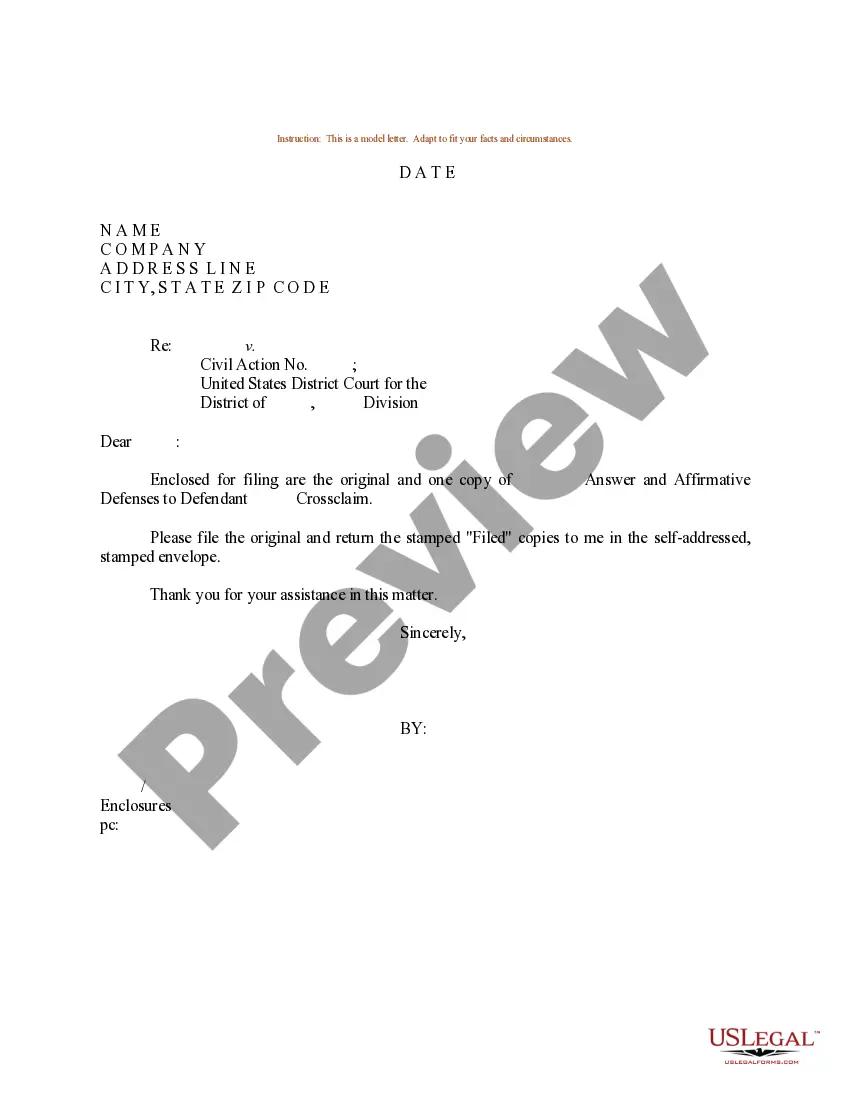
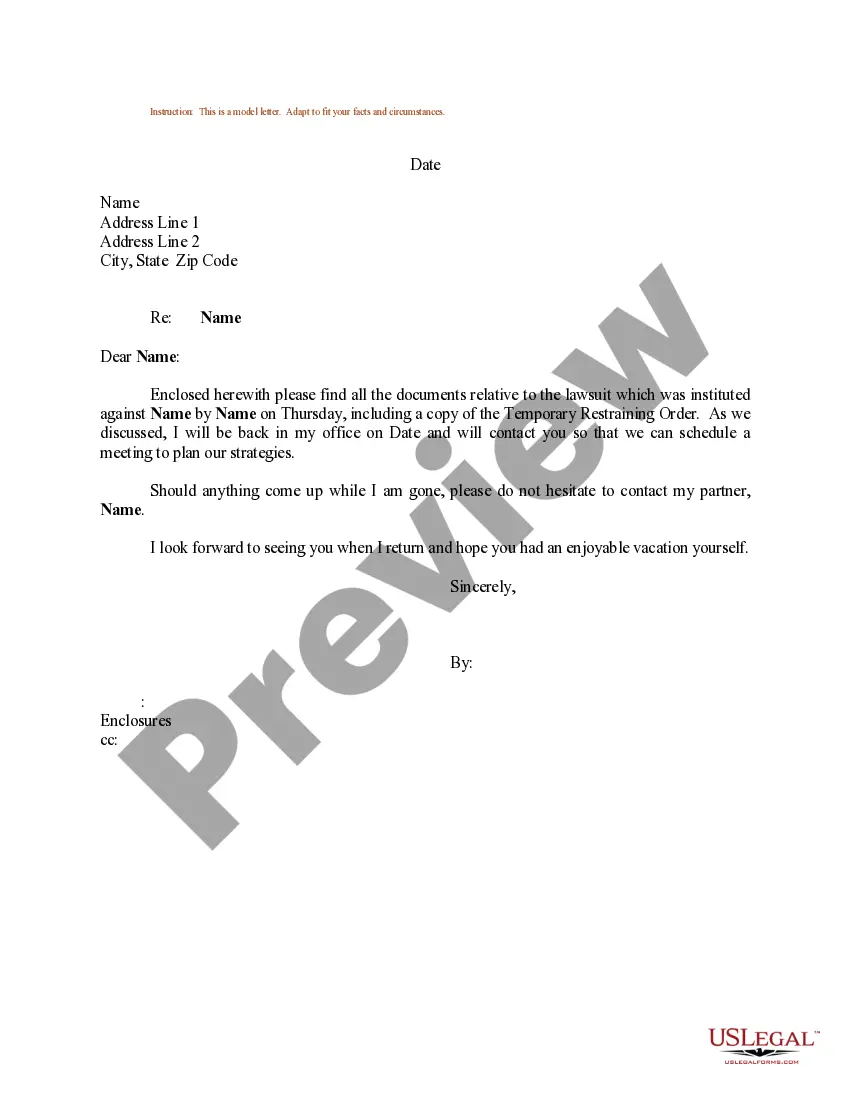
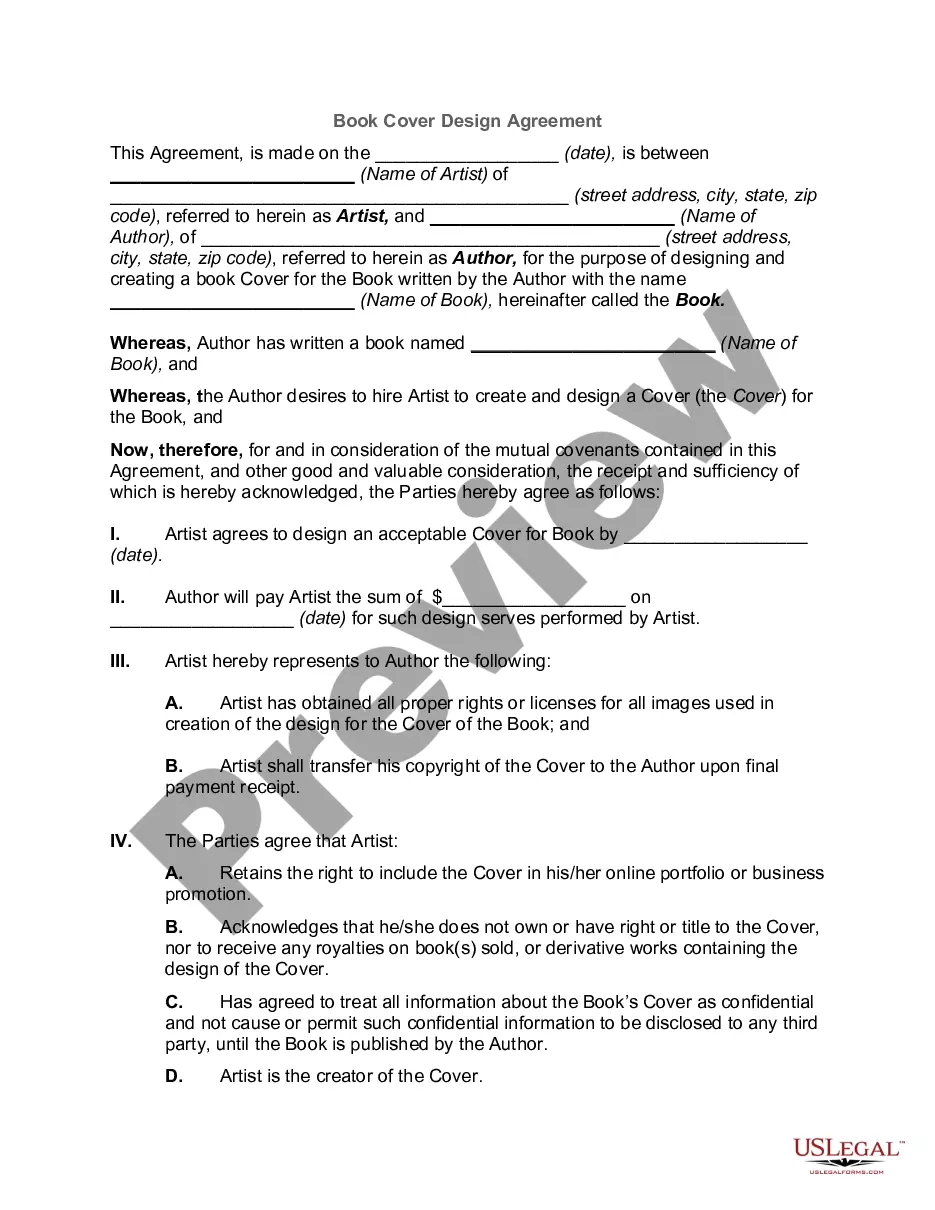
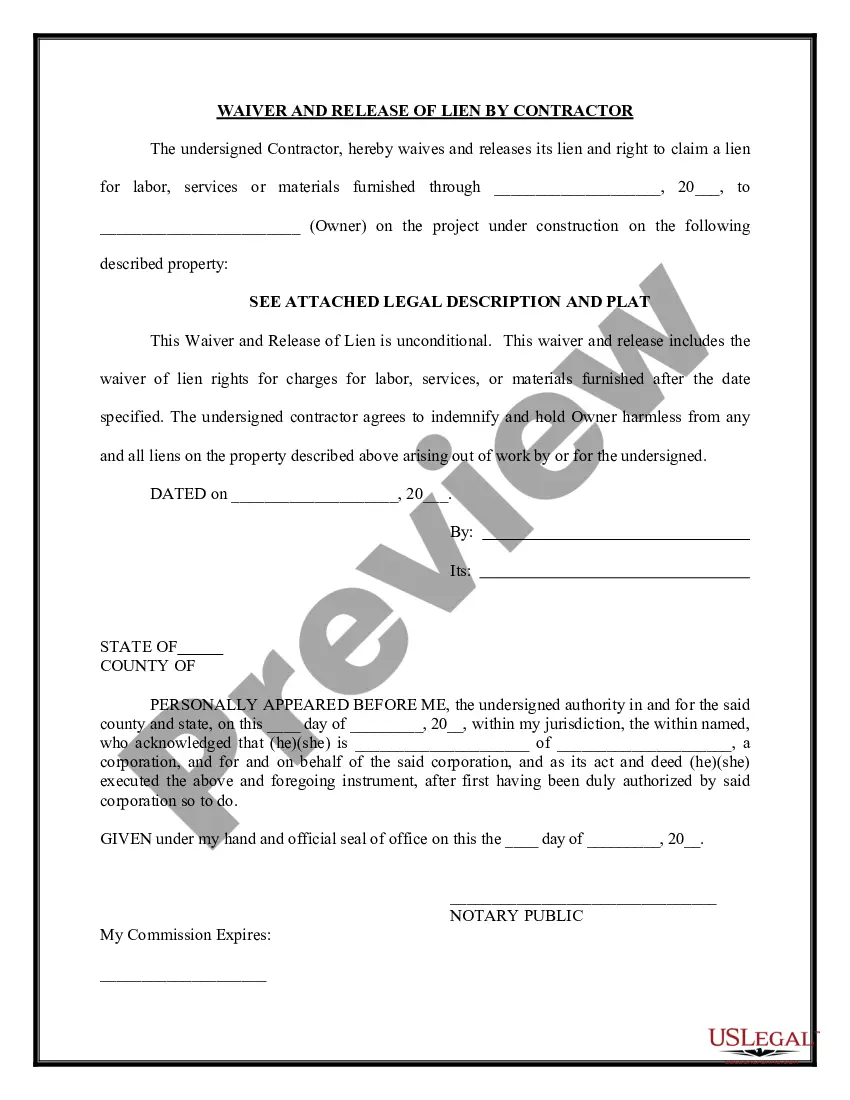
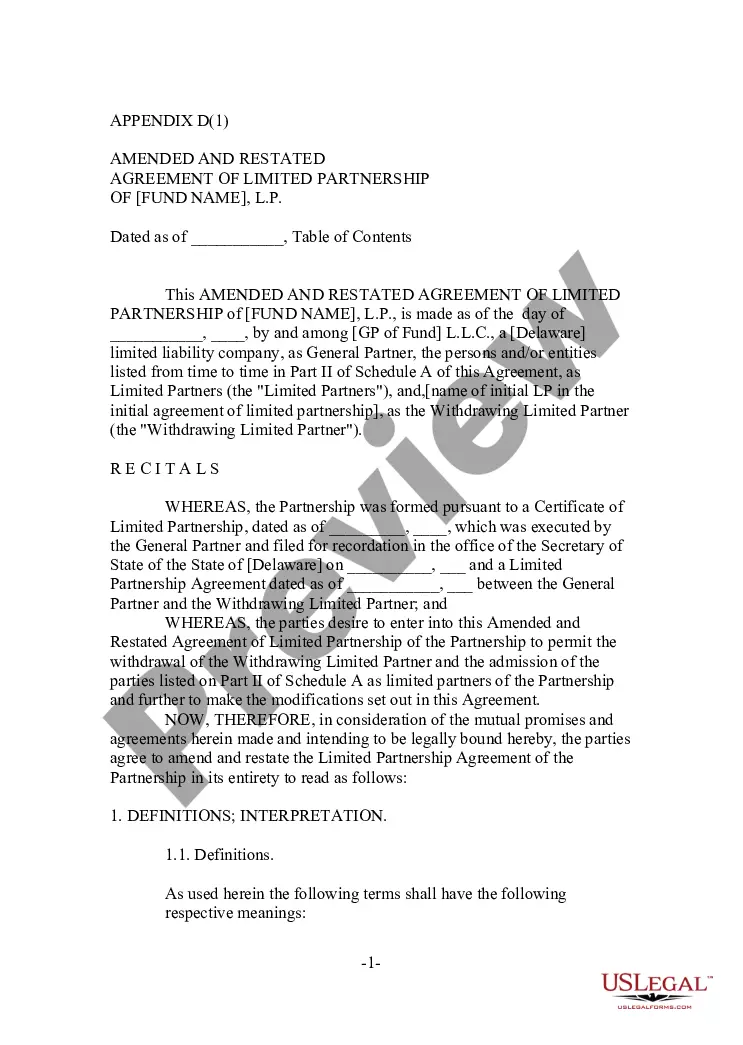
How to fill out Sample Letter For Copy Of Answer, Affirmative Defenses, And Crossclaim?
It is feasible to spend time online trying to locate the legal document template that meets the state and federal requirements you need.
US Legal Forms offers a vast collection of legal forms that can be reviewed by professionals.
You can download or print the Washington Sample Letter for Copy of Answer, Affirmative Defenses, and Crossclaim from our service.
If available, utilize the Review button to view the document template simultaneously. To find another version of your form, use the Search field to locate the template that fits your needs and specifications. Once you have identified the template you want, click Purchase now to continue. Select the pricing plan you prefer, enter your information, and create your account on US Legal Forms. Complete the transaction. You may use your credit card or PayPal account to pay for the legal form. Choose the format of your document and download it to your device. Make adjustments to your document if necessary. You can fill out, edit, and sign as well as print the Washington Sample Letter for Copy of Answer, Affirmative Defenses, and Crossclaim. Obtain and print a multitude of document templates using the US Legal Forms website, which offers the largest selection of legal forms. Utilize professional and state-specific templates to address your business or personal needs.
- If you possess a US Legal Forms account, you can sign in and click the Obtain button.
- Then, you can fill out, modify, print, or sign the Washington Sample Letter for Copy of Answer, Affirmative Defenses, and Crossclaim.
- Every legal document template you purchase belongs to you indefinitely.
- To acquire another copy of any purchased form, visit the My documents section and click the appropriate button.
- If you are using the US Legal Forms website for the first time, follow the simple instructions below.
- First, ensure that you have selected the correct document template for your county/area of preference.
- Review the form description to confirm you have chosen the right form.
Form popularity
FAQ
Self-defense, entrapment, insanity, necessity, and respondeat superior are some examples of affirmative defenses. Under the Federal Rules of Civil Procedure Rule 56, any party may make a motion for summary judgment on an affirmative defense.
When arguing an affirmative defense, a defendant must meet the ?preponderance of the evidence? burden of proof ? a much lower standard. Subsequently, the burden of proof shifts back to the prosecution who must disprove the affirmative defense raised beyond a reasonable doubt.
When drafting an answer, one must: (1) follow the local, state, and federal court rules; (2) research the legal claims in the adversary's complaint; (3) respond to the adversary's factual allegations; and (4) assert affirmative defenses, counterclaims, cross-claims, or third-party claims, if applicable.
A crossclaim seeks affirmative relief against a co-party in the lawsuit such as a co- defendant. Crossclaims are generally permissive in that they may be brought in the same suit if they arise out of the same transaction or occurrence, but some state courts allow cross claims to be brought in a sep- arate suit.
If you want the judge to consider your legal defenses, you must include them in the form you file to respond to the lawsuit (your Answer). Include any possible defense you want the judge to consider in your Answer. You can focus on one, once you've collected more evidence while preparing for your trial.
Description. In an affirmative defense, the defendant may concede that they committed the alleged acts, but they prove other facts which, under the law, either justify or excuse their otherwise wrongful actions, or otherwise overcomes the plaintiff's claim.
Self-defense, entrapment, insanity, necessity, and respondeat superior are some examples of affirmative defenses. Under the Federal Rules of Civil Procedure Rule 56, any party may make a motion for summary judgment on an affirmative defense.
Affirmative defense?Examples On [Date], after making the contract and the alleged breach, and before this action was commenced, defendant paid to the plaintiff the sum of [specify amount], which was accepted by the plaintiff in full satisfaction and discharge of the damages claimed in the petition.