Washington Contractor Agreement
Description


How to fill out Contractor Agreement?
If you want to completely, retrieve, or producing valid document templates, utilize US Legal Forms, the largest selection of lawful forms, that can be accessed online.
Take advantage of the site’s straightforward and user-friendly search feature to find the documents you need.
Various templates for business and personal purposes are organized by categories and states, or keywords.
Step 4. Once you have found the form you need, click the Buy now button. Choose the payment plan you prefer and enter your details to register for an account.
Step 5. Complete the payment. You can use your credit card or PayPal account to finalize the transaction.
- Use US Legal Forms to locate the Washington Contractor Agreement in just a few clicks.
- If you are already a US Legal Forms customer, sign in to your account and click the Download button to find the Washington Contractor Agreement.
- You can also access forms you have previously downloaded in the My documents tab of your account.
- If you are using US Legal Forms for the first time, follow the instructions below.
- Step 1. Confirm that you have chosen the form for the correct city/state.
- Step 2. Use the Review option to examine the form's details. Be sure to read the description.
- Step 3. If you are not satisfied with the form, use the Search field at the top of the screen to find other versions of the legal form type.
Form popularity
FAQ
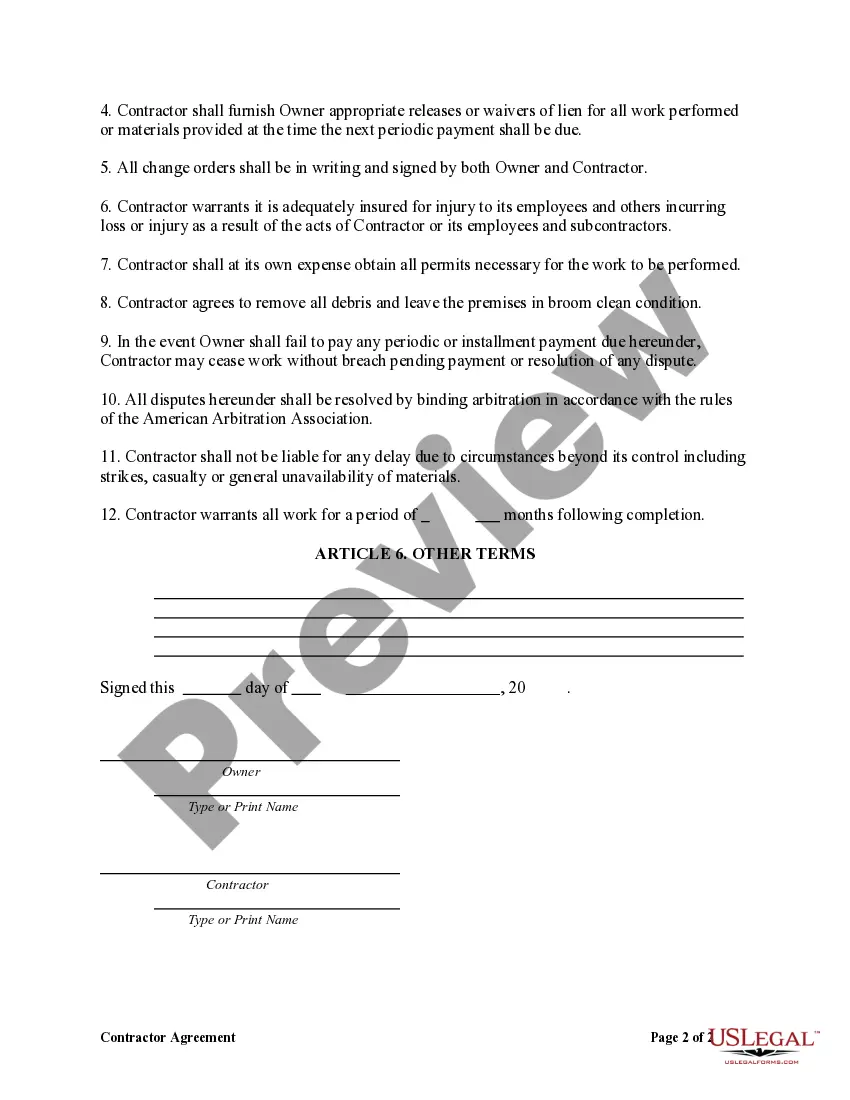
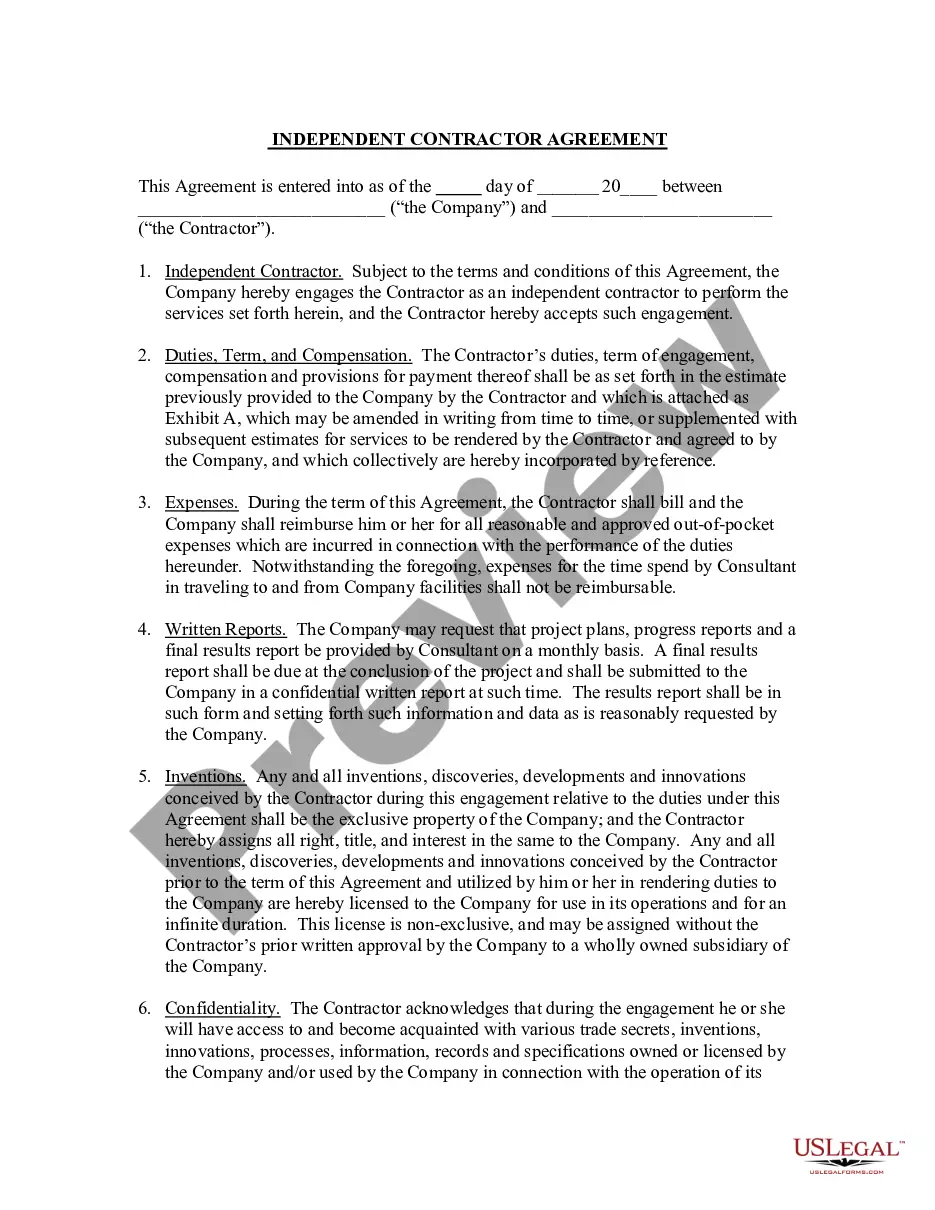
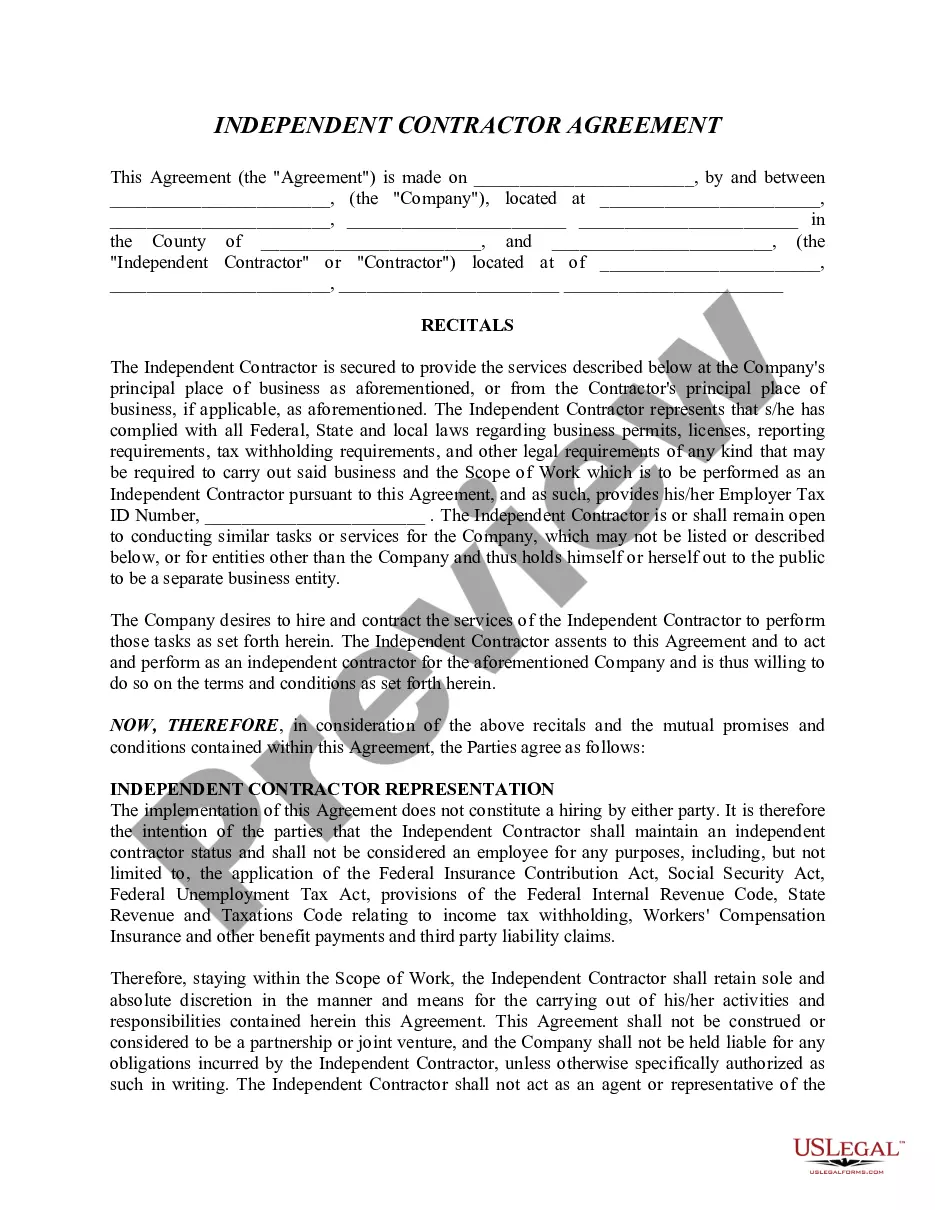
Typically, the independent contractor or the client drafts the independent contractor agreement. You can also seek legal assistance or use templates from platforms like uslegalforms to ensure compliance with local laws. It's important that the Washington Contractor Agreement reflects the expectations and responsibilities of both parties to prevent misunderstandings.
In Washington, a contractor generally has up to 120 days after the completion of work to file a lien. This timeframe is crucial to protect the contractor’s right to seek payment. A well-drafted Washington Contractor Agreement can specify payment terms and help avoid disputes that could lead to filing a lien.
To file a claim against a contractor's bond in Washington, you must first gather evidence of the contractor’s non-compliance with the contract. Next, submit a written claim to the bond company detailing the specific breaches of the Washington Contractor Agreement. It’s essential to comply with the set timeframe for claims, which is usually within a year of the event, to ensure your claim is valid.
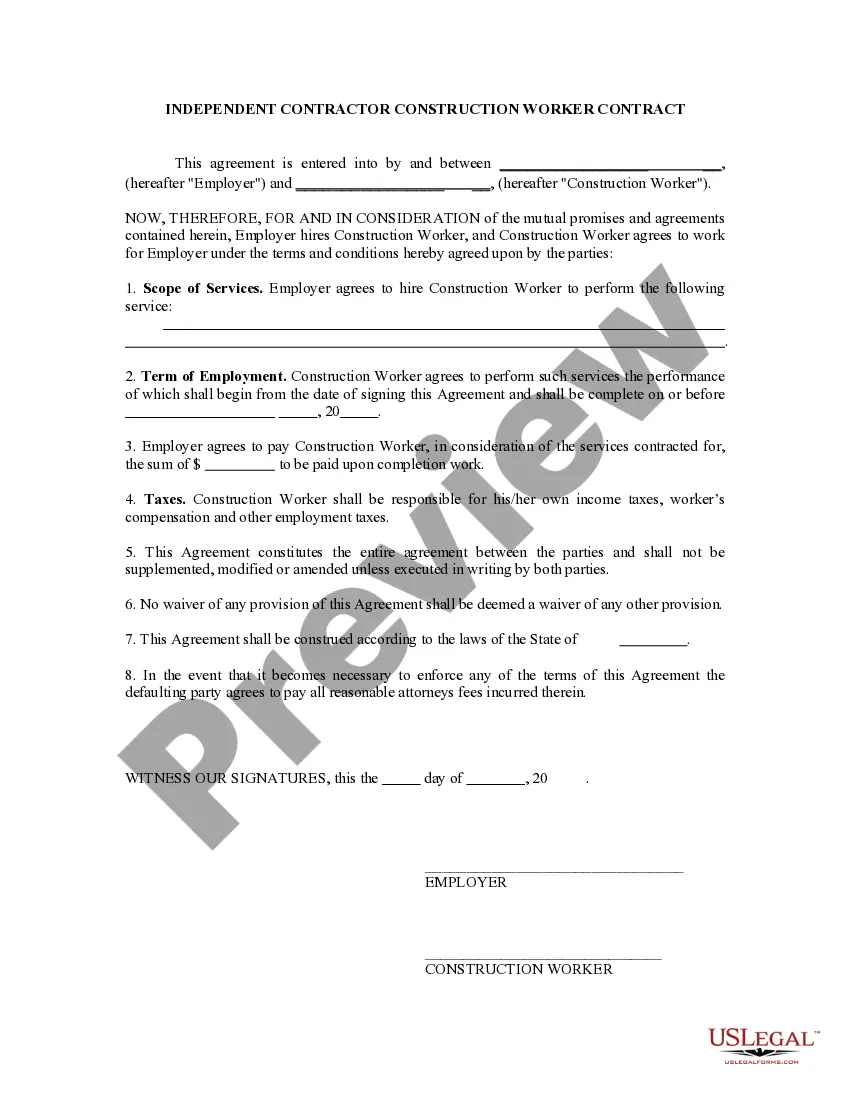
A Washington Contractor Agreement should clearly outline the terms of the project, payment details, and timelines. It must include the scope of work, responsibilities of both parties, and any specific legal requirements for Washington state. Additionally, ensure it contains clauses for dispute resolution and termination conditions to protect everyone's interests.
Yes, Washington state requires most contractors to hold a valid contractor's license. This requirement helps ensure that contractors adhere to state regulations and standards. If you're unsure about your obligations, refer to a Washington Contractor Agreement, which will address essential licensing criteria.
To verify a contractor in Washington state, you can check their license status through the Washington State Department of Labor and Industries website. This resource provides information on their credentials, any complaints, and overall standing. Pairing this information with a well-crafted Washington Contractor Agreement will ensure you choose a trustworthy contractor.
Not all states require contractors to be licensed; however, many do implement licensing to protect consumers and maintain industry standards. Each state has its own laws governing construction work and licensing requirements. For contractors working in Washington, adhering to the standards set in a Washington Contractor Agreement is crucial.
Yes, in Washington state, you need a contractor's license for most construction-related work. This requirement ensures that contractors meet specific standards and legal obligations. It's advisable to familiarize yourself with the rules and regulations outlined in a Washington Contractor Agreement.
Yes, as an independent contractor in Washington, you generally need a business license. This license allows you to operate legally and may offer protection to your business. For comprehensive guidance, consult a Washington Contractor Agreement that outlines the necessary licenses.
To obtain a contractor's license in Washington, you must pass an exam that covers business and law regulations. This ensures that you understand the legal obligations and responsibilities inherent in contractor work. A Washington Contractor Agreement can help guide you through service expectations after obtaining your license.