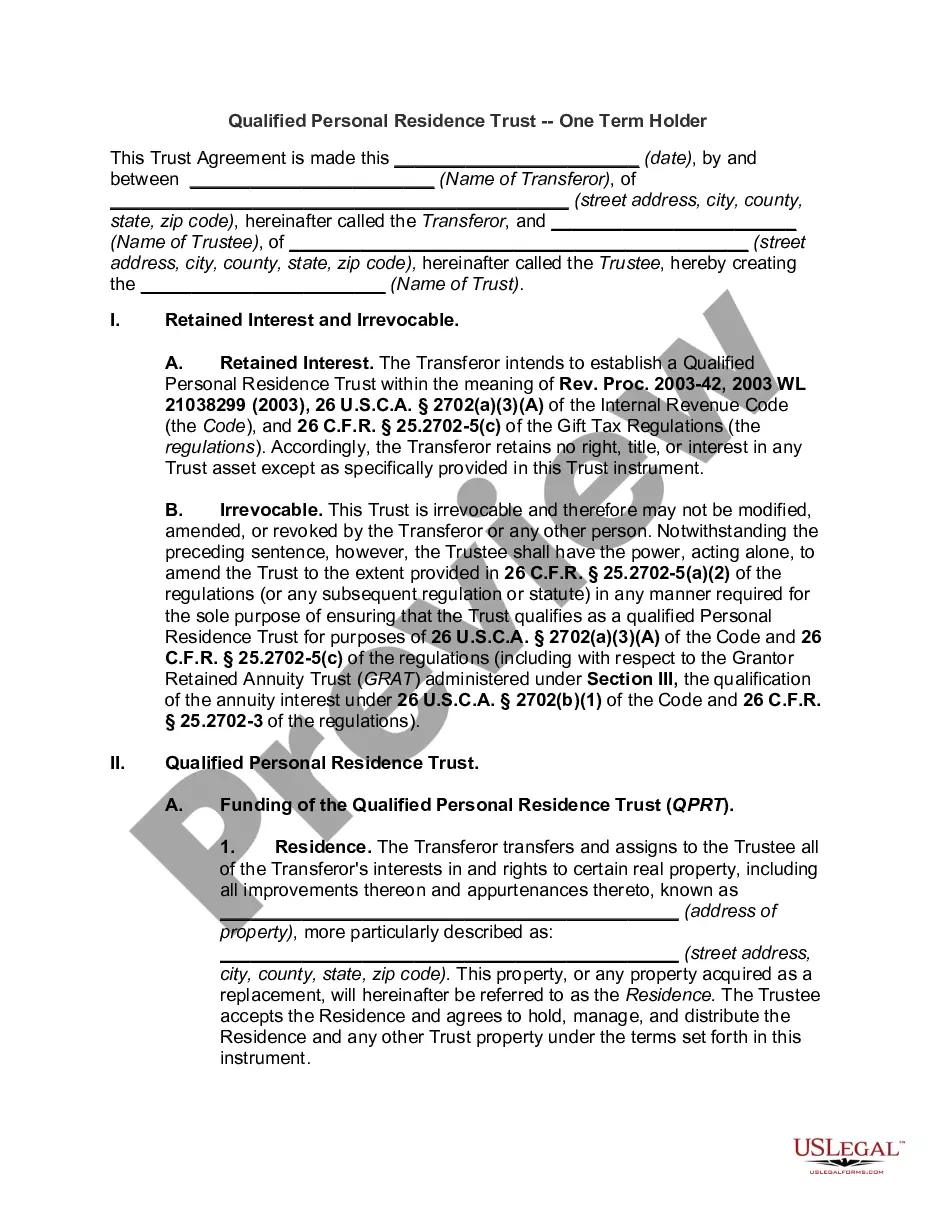
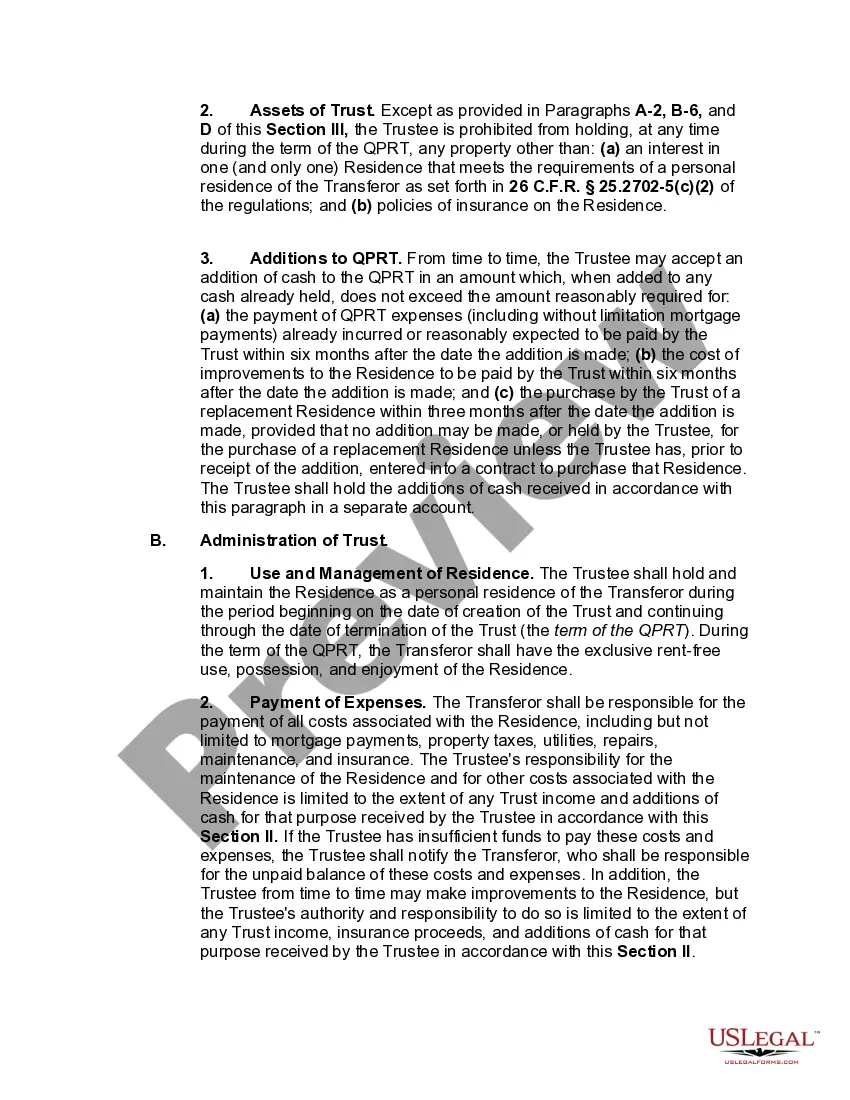
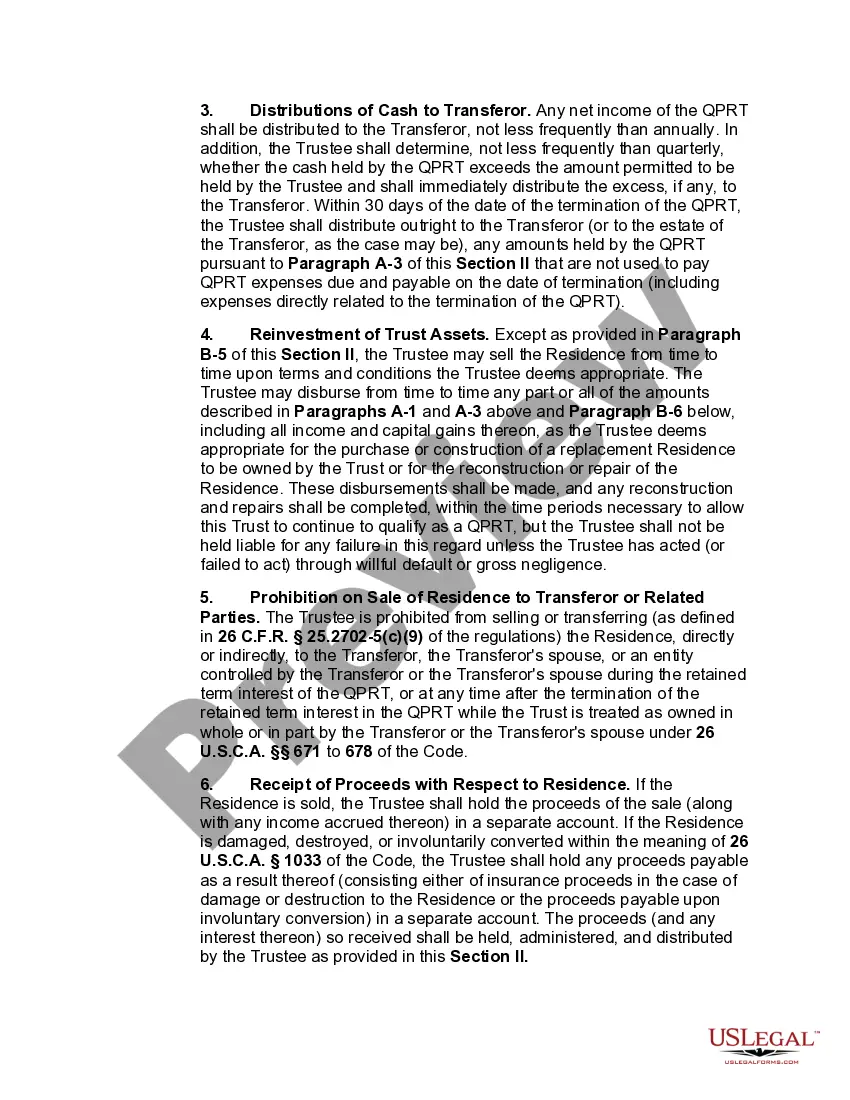
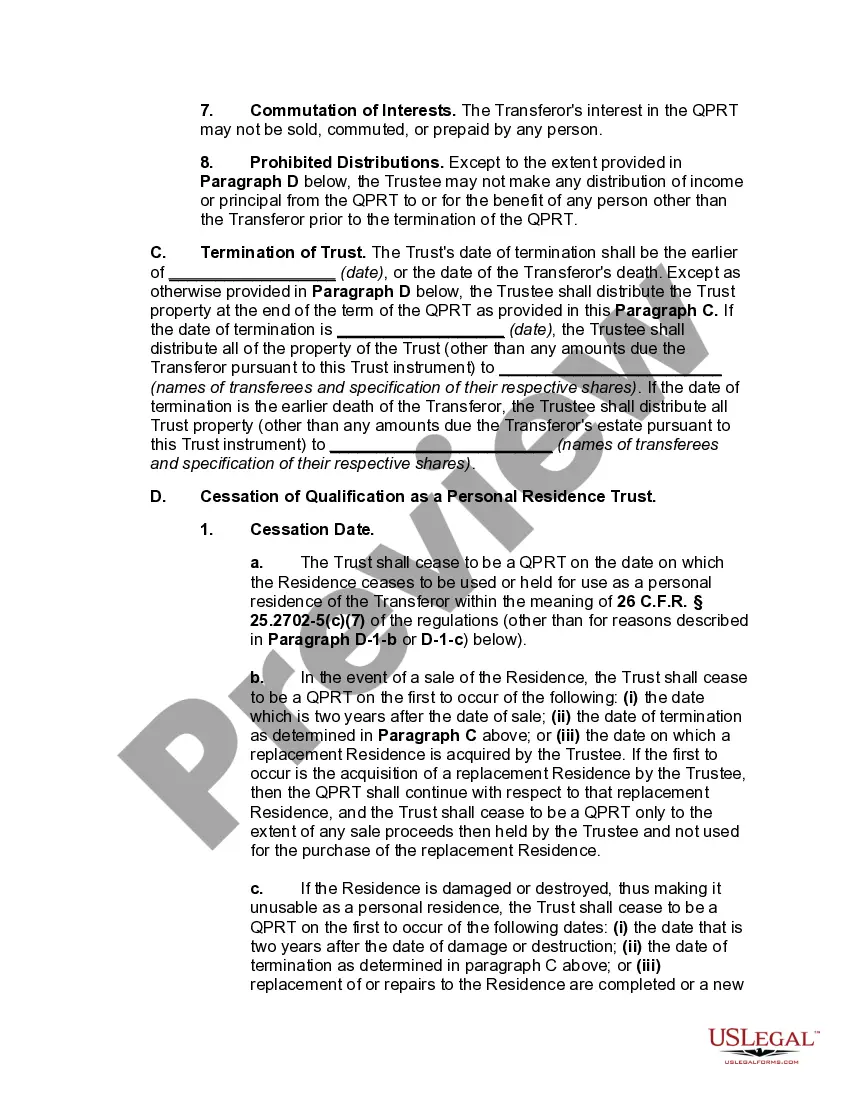
Washington Qualified Personal Residence Trust One Term Holder
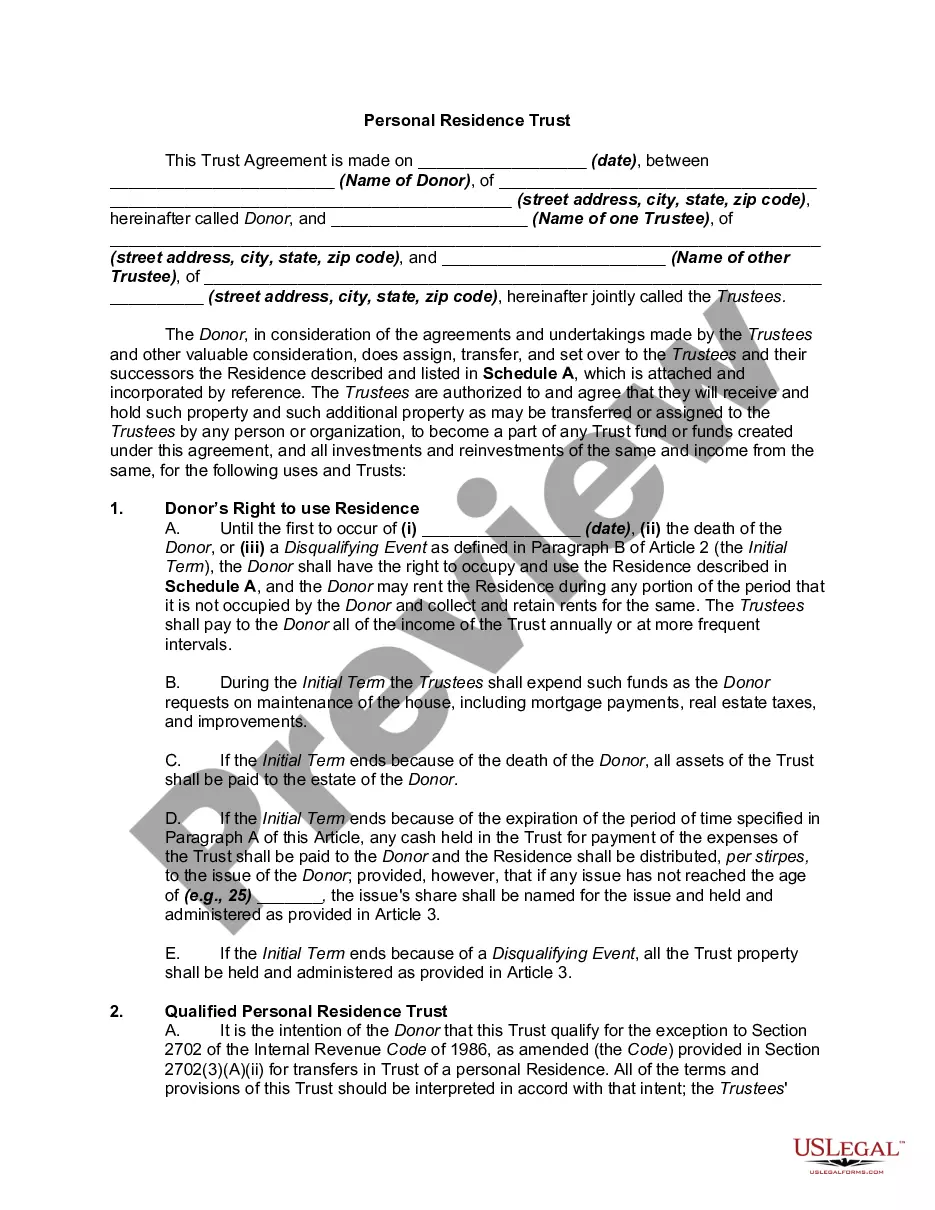
Description
Get your form ready online
Our built-in tools help you complete, sign, share, and store your documents in one place.
Make edits, fill in missing information, and update formatting in US Legal Forms—just like you would in MS Word.
Download a copy, print it, send it by email, or mail it via USPS—whatever works best for your next step.
Sign and collect signatures with our SignNow integration. Send to multiple recipients, set reminders, and more. Go Premium to unlock E-Sign.
If this form requires notarization, complete it online through a secure video call—no need to meet a notary in person or wait for an appointment.
We protect your documents and personal data by following strict security and privacy standards.

Make edits, fill in missing information, and update formatting in US Legal Forms—just like you would in MS Word.

Download a copy, print it, send it by email, or mail it via USPS—whatever works best for your next step.

Sign and collect signatures with our SignNow integration. Send to multiple recipients, set reminders, and more. Go Premium to unlock E-Sign.

If this form requires notarization, complete it online through a secure video call—no need to meet a notary in person or wait for an appointment.

We protect your documents and personal data by following strict security and privacy standards.
Looking for another form?
How to fill out Qualified Personal Residence Trust One Term Holder?
You might spend multiple hours online looking for the legal document template that meets both state and federal requirements you need.
US Legal Forms provides a vast array of legal documents that are examined by experts.
You can conveniently acquire or create the Washington Qualified Personal Residence Trust One Term Holder through our assistance.
If available, use the Review button to examine the document template simultaneously.
- If you possess a US Legal Forms account, you can sign in and then click the Download button.
- Subsequently, you can fill out, modify, create, or sign the Washington Qualified Personal Residence Trust One Term Holder.
- Every legal document template you purchase is yours indefinitely.
- To obtain another copy of any acquired form, navigate to the My documents tab and click the corresponding button.
- If you are using the US Legal Forms website for the first time, follow the simple instructions below.
- First, ensure you have selected the correct document template for your chosen county/city.
- Review the form outline to confirm you have chosen the proper form.
Form popularity
FAQ
The sale of the residence without any reinvestment of the proceeds in a new residence will cause the QPRT status to terminate as to all of the assets.
A qualified personal residence trust (QPRT) is a trust to which a person (called the settlor, donor, or grantor) transfers his personal residence. The grantor reserves the right to live in the house for a period of years; this retained interest reduces the current value of the gift for gift tax purposes.
There are two options upon early termination. The trust agreement may allow that the trust will terminate and the property or its sales proceeds be given back to you.
The biggest benefit of a QPRT is that it removes the value of your primary or second home and its appreciation from your taxable estate. Continued use of the property. With your home in a QPRT, you can still live in the property rent-free and enjoy any income tax deductions associated with it.
A QPRT is typically considered a Grantor Trust for income tax purposes. Most QPRTs do not generate any income and an income tax return is not typically required.
The biggest benefit of a QPRT is that it removes the value of your primary or second home and its appreciation from your taxable estate. Continued use of the property. With your home in a QPRT, you can still live in the property rent-free and enjoy any income tax deductions associated with it. Gift tax benefits.
A life estate with remainder to charity is normally created for one or two lives. However, it may be created for a term of years. Alternatively, it is possible to create a qualified personal residence trust (QPRT) and to create a life estate agreement for a term of years with a remainder to family.
Because there's no limit on how long the QPRT must run, it's not uncommon to see QPRTs that were created 10 to 15 years ago finally expire today.
A qualified personal residence trust (QPRT) is a specific type of irrevocable trust that allows its creator to remove a personal home from their estate for the purpose of reducing the amount of gift tax that is incurred when transferring assets to a beneficiary.
Unwinding a QPRT All you have to do is enter into a lease agreement that pays fair market rent. After the QPRT expiration term, the grantor must pay rent if they continue to reside in the property.