Washington Patent License Agreement
Description
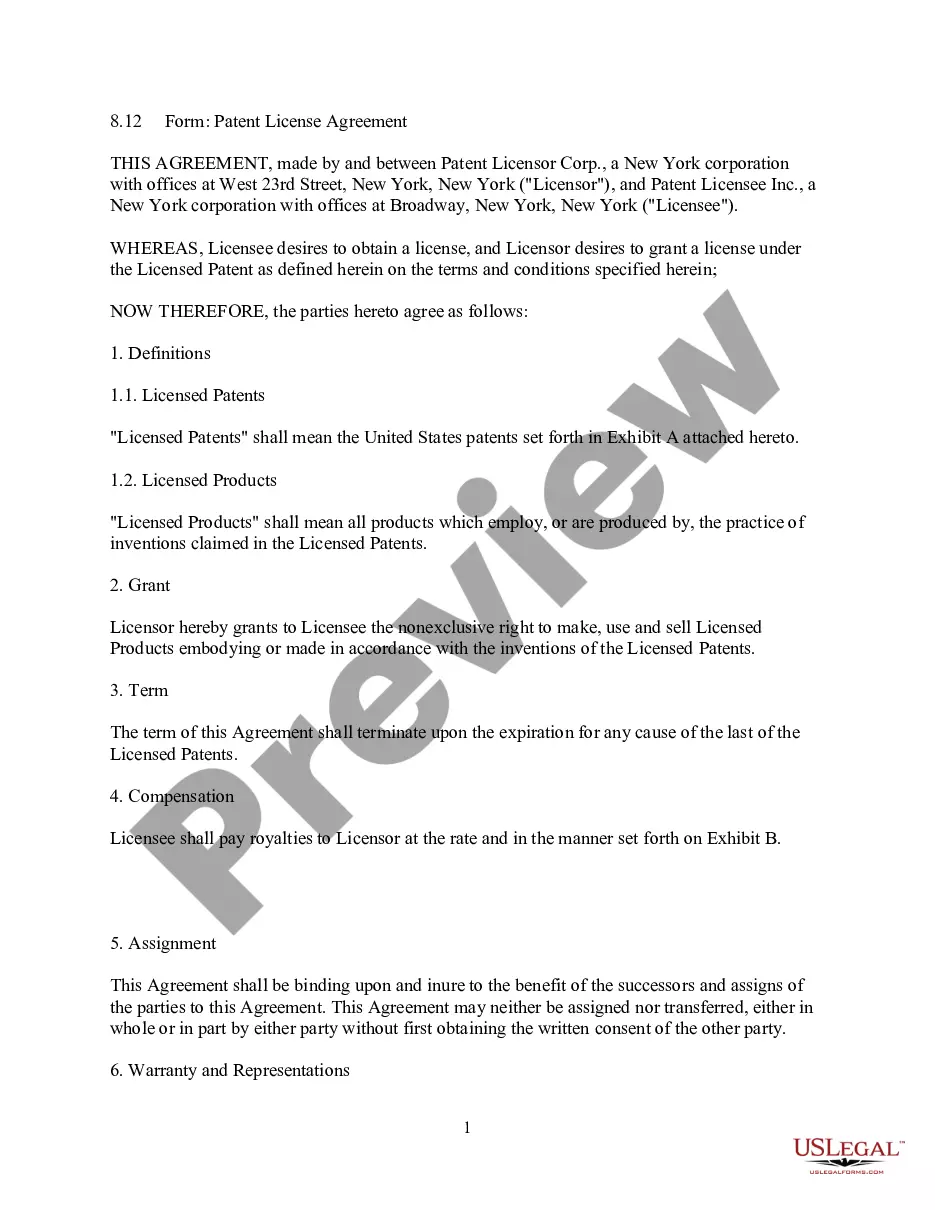
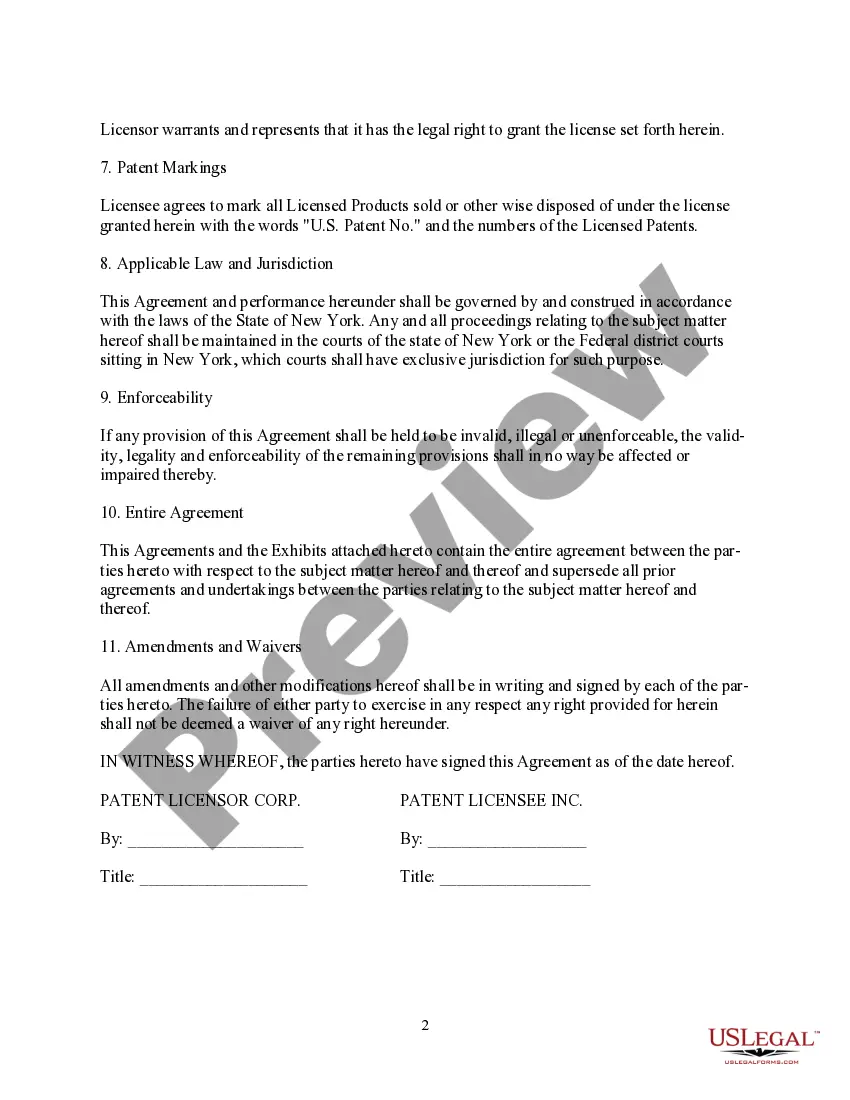
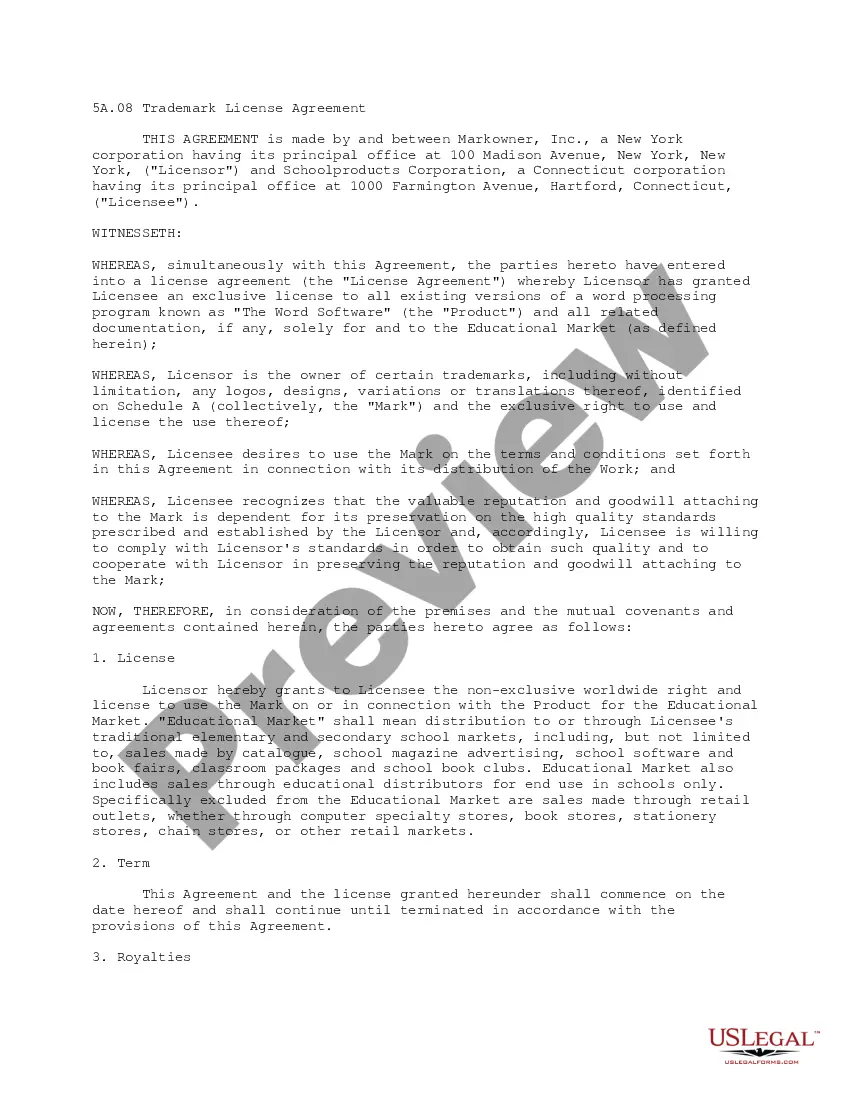
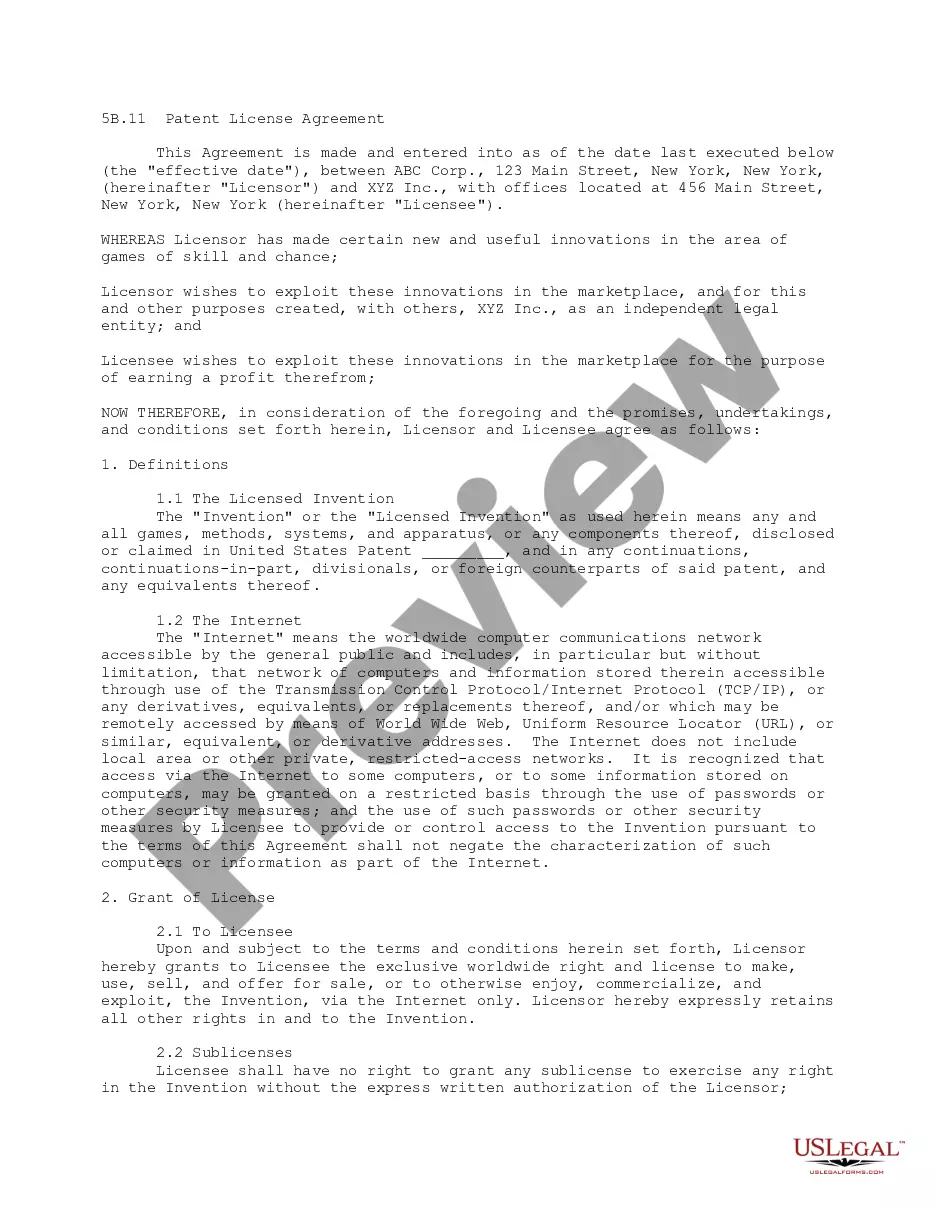
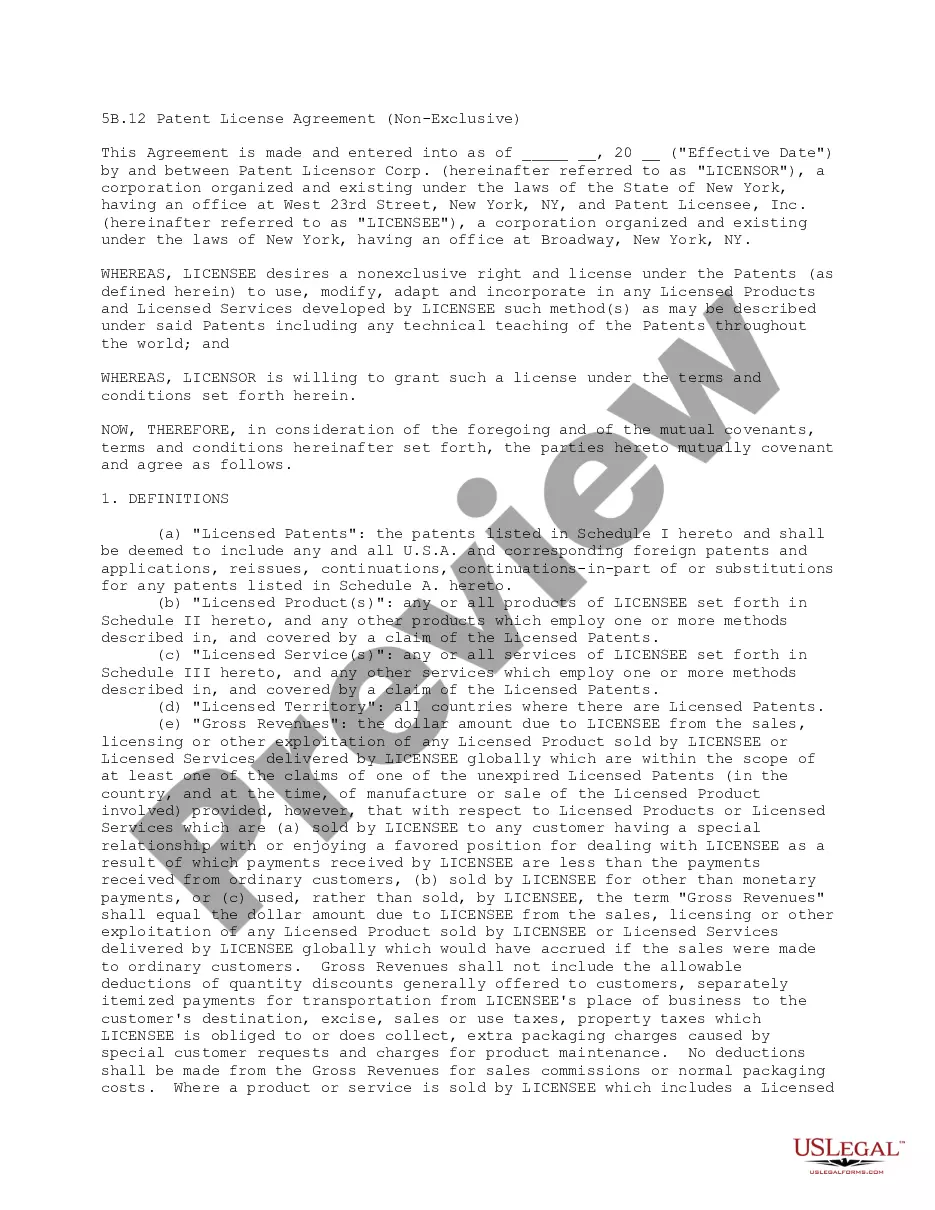
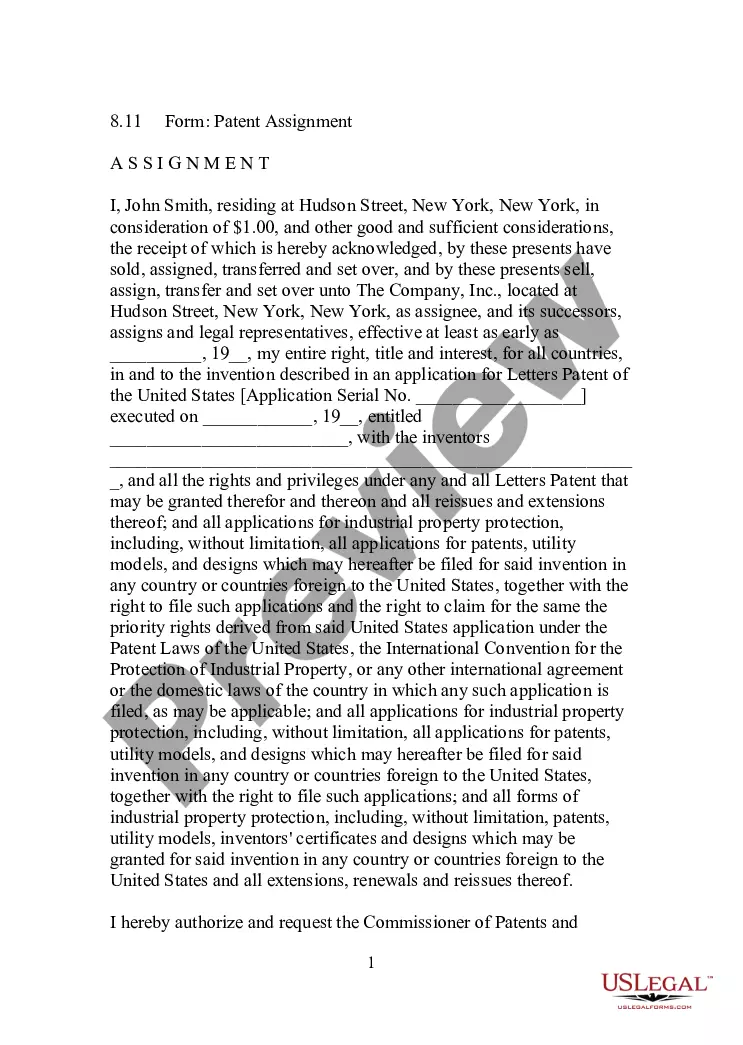
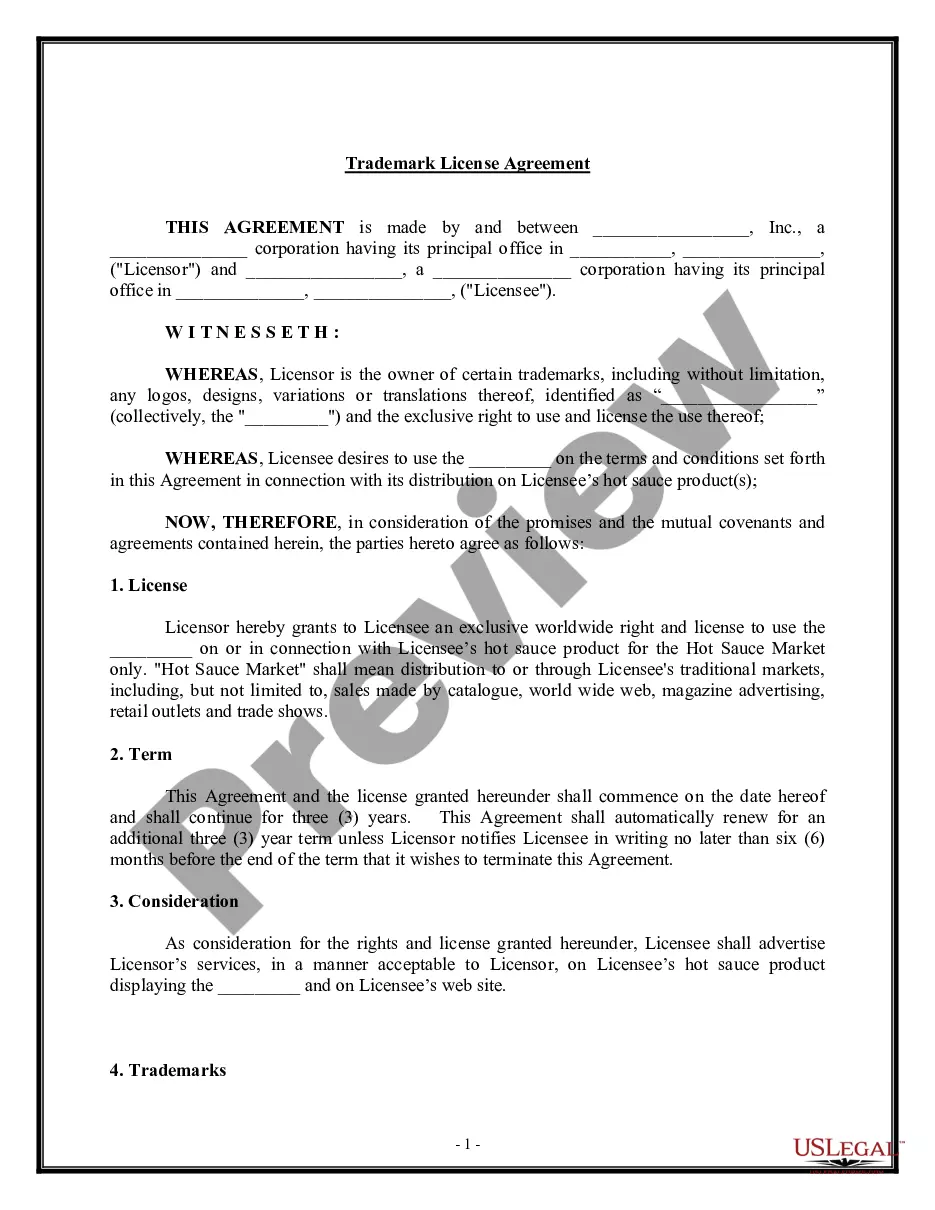
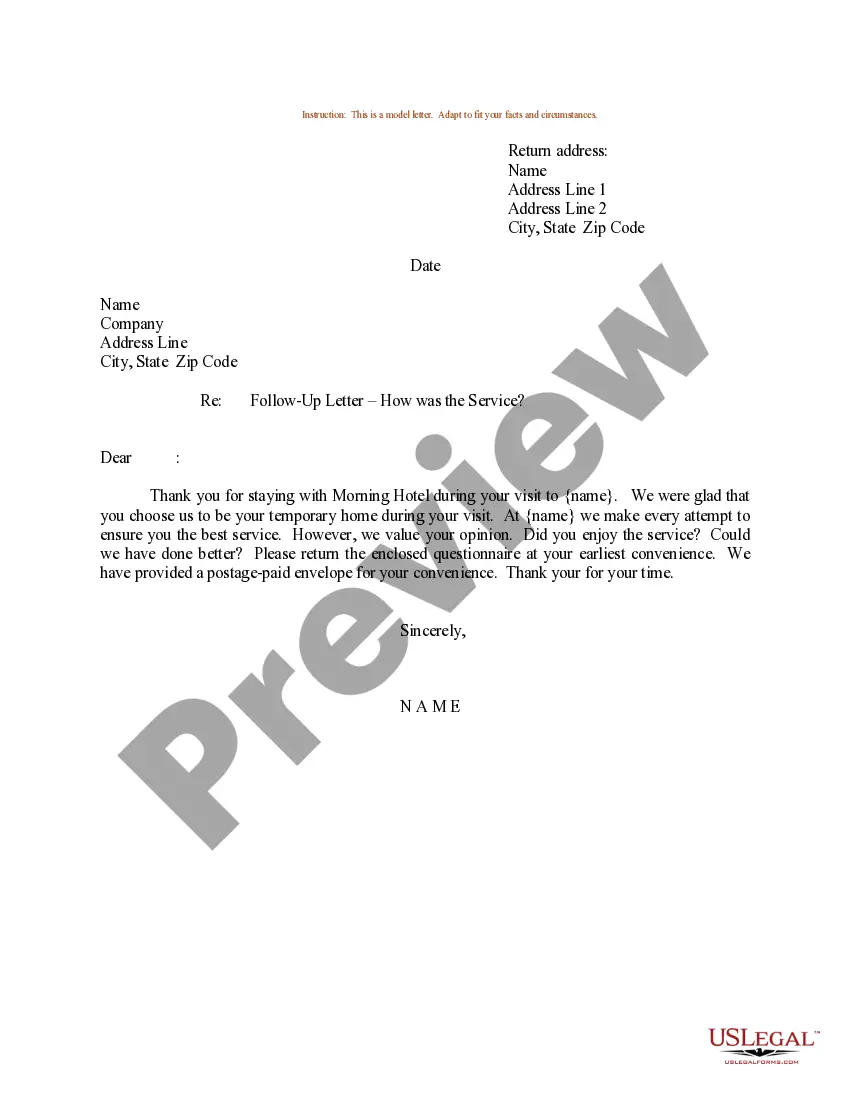

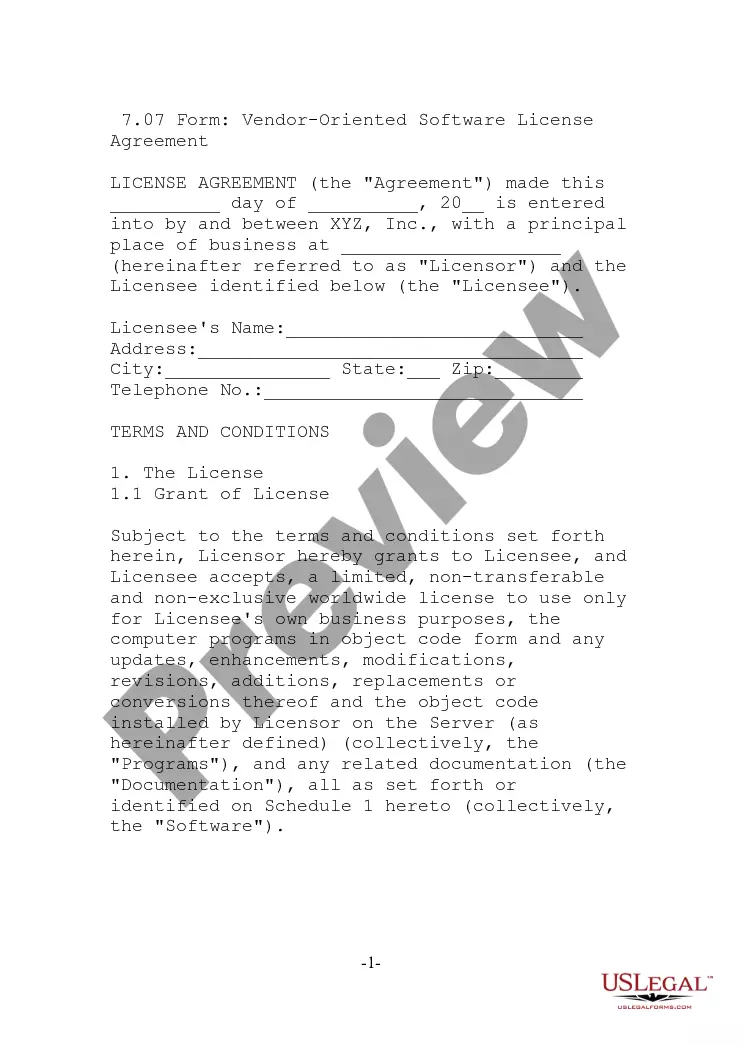
How to fill out Patent License Agreement?
Have you been in a situation the place you need files for both enterprise or individual uses nearly every day? There are plenty of legal papers layouts accessible on the Internet, but locating versions you can rely on is not easy. US Legal Forms provides a large number of kind layouts, just like the Washington Patent License Agreement, that are written to meet state and federal needs.
In case you are presently acquainted with US Legal Forms web site and also have your account, just log in. Afterward, you can obtain the Washington Patent License Agreement web template.
Should you not come with an bank account and want to begin to use US Legal Forms, adopt these measures:
- Discover the kind you will need and ensure it is for your correct city/area.
- Take advantage of the Preview key to examine the form.
- Look at the description to ensure that you have selected the proper kind.
- In the event the kind is not what you are searching for, use the Search discipline to discover the kind that meets your requirements and needs.
- When you discover the correct kind, click on Get now.
- Select the rates strategy you need, fill out the desired information to create your bank account, and purchase the transaction using your PayPal or charge card.
- Pick a handy file file format and obtain your version.
Locate each of the papers layouts you possess bought in the My Forms food list. You can obtain a further version of Washington Patent License Agreement whenever, if necessary. Just click on the essential kind to obtain or printing the papers web template.
Use US Legal Forms, by far the most substantial collection of legal types, to save some time and steer clear of blunders. The services provides professionally created legal papers layouts which you can use for a variety of uses. Produce your account on US Legal Forms and start generating your life a little easier.
Form popularity
FAQ
What Is Patent License? A patent license is an agreement that lets someone else commercially make, use, and sell your invention for a specified period. The owner of the invention (patent) is the 'licensor,' and the person who is receiving the license is the 'licensee. ' Licensing deals involve payment for the license.
What Is the Difference Between a Patent and a Trademark? Patents prevent others from making or selling an invention. Trademarks protect the words, symbols, sounds, or logos used to identify the source of goods or services. This stops its usage by other competitors.
What Is a Royalty Agreement? A royalty agreement is a legal contract between a licensor and a licensee. The agreement grants the licensee the right to use the licensor's intellectual property in exchange for royalty payments.
A pure license doesn't ask for anything in return, it just gives you new rights. Those rights may be conditional, but the conditions are just things you have to do to get new rights. They're not conditions imposed on any existing rights you had. A contract is an agreement between two parties.
A patent is considered as a transferrable property that can be transferred from the original patentee to any other person by assignment or by operation of law. A patent can be licensed or assigned only by the owner of the patent.
A patent license agreement is a contract between a patent owner (licensor) and a licensee that defines the terms under which the licensee may make, sell, and use a patented invention. The agreement also provides how royalties will be paid to the patent owner.
The key difference between a license and an assignment is that an assignment transfers rights away from the original copyright or patent holder. Whereas the licensor retains ownership of the intellectual property rights, the assignor gives up the rights entirely.
A license fee is typically a one-off payment, i.e., a fixed amount paid upfront. A royalty fee (royalties), on the other hand, are usage-based payments, i.e., continuous periodic fee payments.
The owner retains title to the patent, but the license grants the licensee the sole right to practice the invention. In this case, the owner is also restricted from practicing the invention. A non-exclusive license allows the licensee to practice the invention, but in a non-exclusive manner.
Generally, there are three types of licensing agreements: exclusive, sole, or non-exclusive. In an exclusive license, the licensee is only the party that can use the licensed intellectual property.