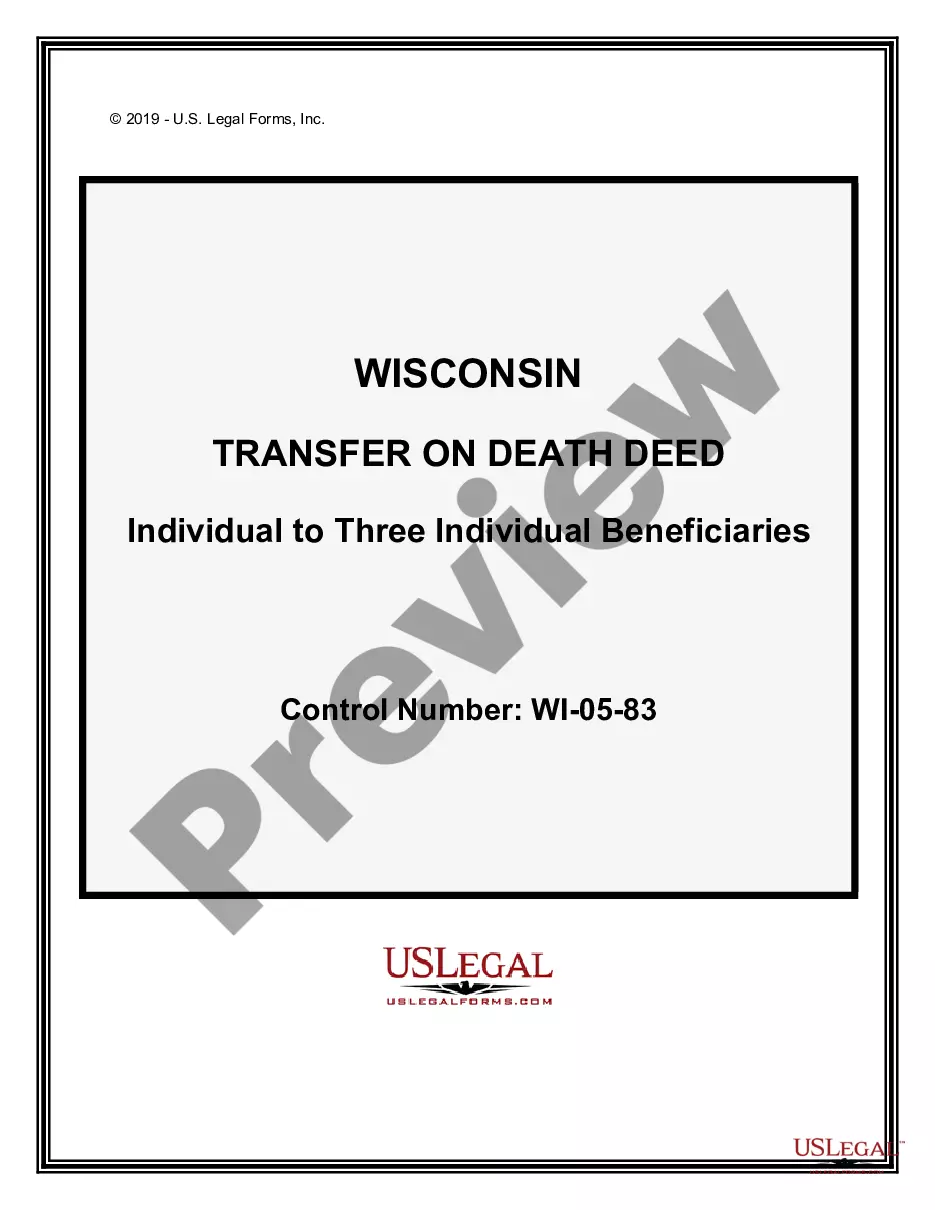
Wisconsin Transfer on Death Deed or TOD - Beneficiary Deed from Individual to Three (3) Individuals does NOT include Alternate Beneficiary Provision
What is this form?
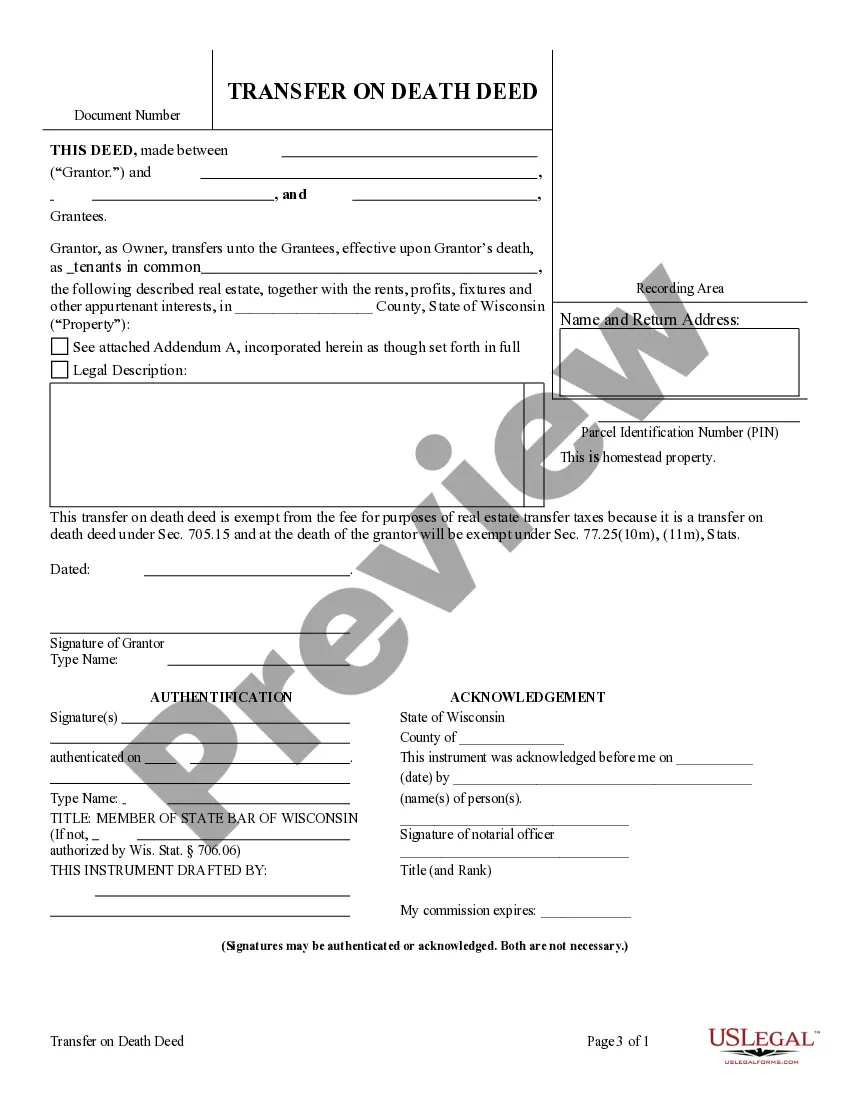
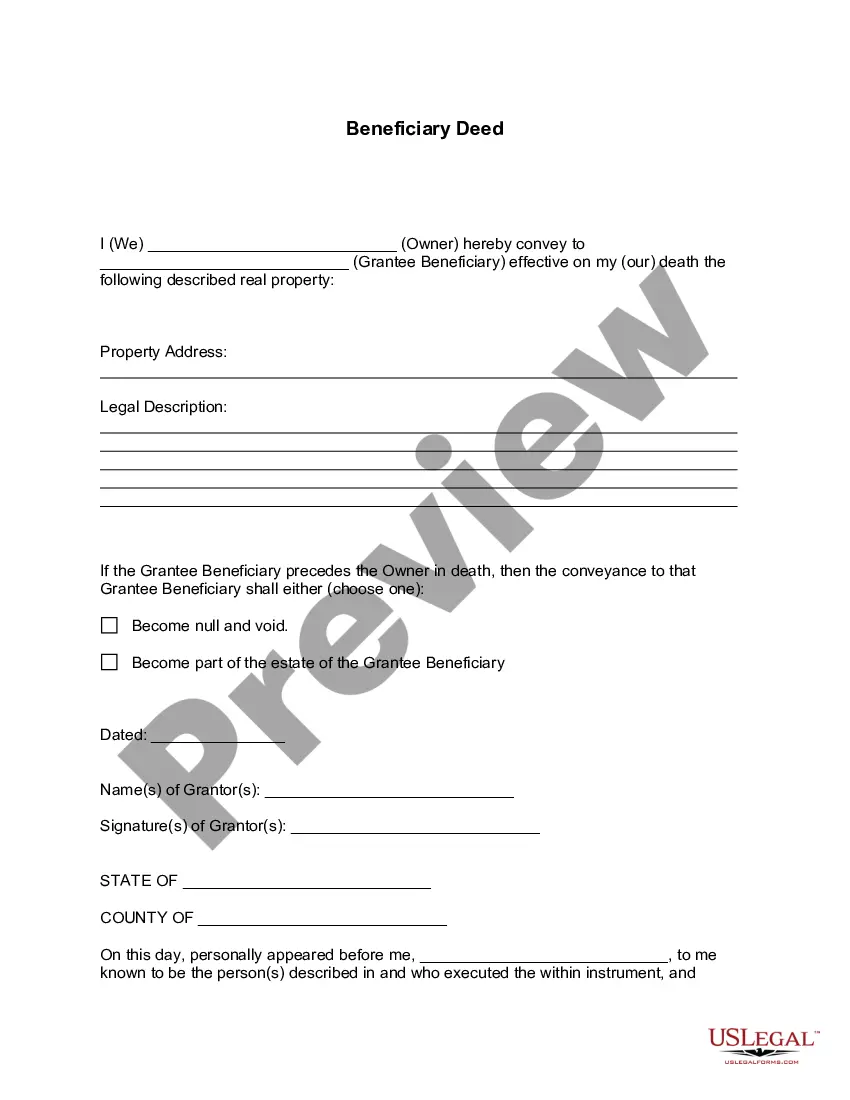
The Transfer on Death Deed (TOD) allows an individual (the Grantor) to designate three individuals (the Grantees) to receive real estate property upon the Grantor's death. This form does not include provisions for alternate or contingent beneficiaries, making it a straightforward option for individuals looking to ensure specific property transfers without undergoing probate. The TOD is revocable until the Grantorâs passing, distinguishing it from permanent deeds, which cannot be changed once executed.
Main sections of this form
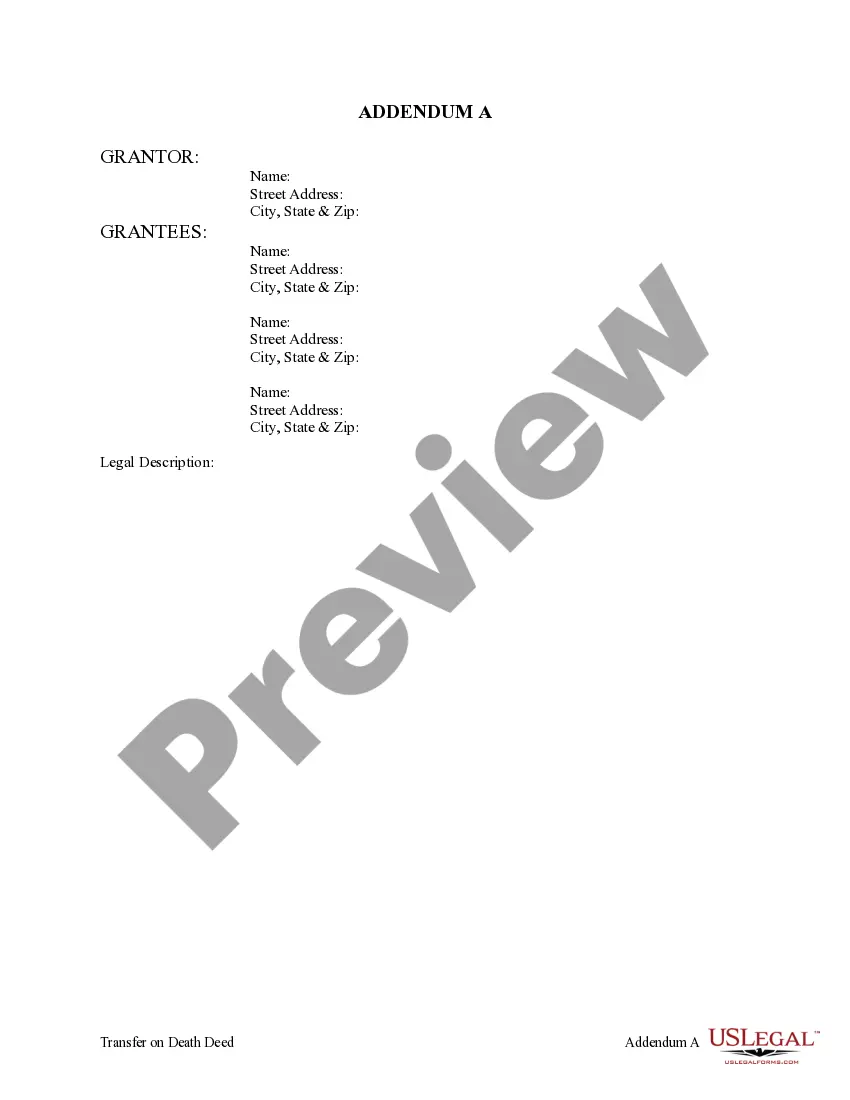
- Identification of the Grantor and Grantees involved in the transfer.
- Description of the property being transferred, including a legal description.
- Revocable nature until the death of the Grantor.
- Absence of alternate or contingent beneficiary provisions.
- Compliance with state statutory laws.

Common use cases
This Transfer on Death Deed should be used when an individual wishes to transfer their real estate asset to three designated individuals after their death, without the complexities of probate. Common situations for using this form include estate planning for single homeowners or individuals who want to ensure their property passes directly to chosen heirs.
Who this form is for
This form is ideal for:
- Individuals who own real estate and wish to designate three beneficiaries for property transfer upon death.
- Those seeking to simplify the inheritance process for their heirs.
- Individuals without dependents or those preferring to grant property to specific people instead of leaving it to a broader estate.
How to complete this form
- Identify the parties involved: the Grantor and the three Grantees.
- Specify the property being transferred with an adequate legal description.
- Fill out the form fields using your computer or by hand.
- Review the completed form for accuracy and completeness.
- Sign the form in accordance with your state's witness or notarization requirements, if necessary.
Does this document require notarization?
This form does not typically require notarization unless specified by local law. However, it is advisable to consult local regulations to confirm any requirements that may apply in your jurisdiction.
Get your form ready online
Our built-in tools help you complete, sign, share, and store your documents in one place.
Make edits, fill in missing information, and update formatting in US Legal Forms—just like you would in MS Word.
Download a copy, print it, send it by email, or mail it via USPS—whatever works best for your next step.
Sign and collect signatures with our SignNow integration. Send to multiple recipients, set reminders, and more. Go Premium to unlock E-Sign.
If this form requires notarization, complete it online through a secure video call—no need to meet a notary in person or wait for an appointment.
We protect your documents and personal data by following strict security and privacy standards.

Make edits, fill in missing information, and update formatting in US Legal Forms—just like you would in MS Word.

Download a copy, print it, send it by email, or mail it via USPS—whatever works best for your next step.

Sign and collect signatures with our SignNow integration. Send to multiple recipients, set reminders, and more. Go Premium to unlock E-Sign.

If this form requires notarization, complete it online through a secure video call—no need to meet a notary in person or wait for an appointment.

We protect your documents and personal data by following strict security and privacy standards.
Typical mistakes to avoid
- Failing to include all necessary details about the property.
- Not listing all three Grantees correctly or omitting anyone.
- Neglecting to sign the form or leaving signature fields blank.
- Misunderstanding the revocable nature of the deed, leading to unintended transfers.
Benefits of completing this form online
- Convenient access: Download and complete the form at your own pace.
- Editability: Easily make changes if needed before finalizing the document.
- Reliability: Forms drafted by licensed attorneys ensure compliance with state laws.
Looking for another form?

Form popularity
FAQ
File an Affidavit of Death form, an original certified death certificate, executor approval for the transfer, a Preliminary Change of Ownership Report form and a transfer tax affidavit. All signed forms should be notarized. Pay all applicable fees to get the title deed, which is the official notice of ownership.
When a joint owner dies, the process is relatively simple you just need to inform the Land Registry of the death. You should complete a 'Deceased joint proprietor' form on the government's website and then send the form to the Land Registry, with an official copy of the death certificate.
File a petition in probate court. The first step to transferring the property to the rightful new owners is to open up a case in probate court. Petition the court for sale and convey the property to the purchaser. Next, you must petition the court to sell the property.
If you'd like to avoid having your property going through the probate process, it's a good idea to look into a transfer on death deed. A transfer on death deed allows you to select a beneficiary who will receive your property, but only when you've passed away.
All you need to do is fill out a simple form, provided by the bank, naming the person you want to inherit the money in the account at your death. As long as you are alive, the person you named to inherit the money in a payable-on-death (POD) account has no rights to it.
Once you obtain a transfer-on-death deed, complete the form to name a beneficiary. The transfer deed will ask you to name the person(s) you wish to inherit your property. You can name multiple people as the beneficiary, as well as an organization. List the beneficiary's complete name and avoid titles.
In most cases, the surviving owner or heir obtains the title to the home, the former owner's death certificate, a notarized affidavit of death, and a preliminary change of ownership report form. When all these are gathered, the transfer gets recorded, the fees are paid, and the county issues a new title deed.
Wisconsin's Transfer on Death Deed. Wisconsin's Transfer on Death Deed (TOD Deed) allows for the non-probate transfer of real property upon death. This seemingly simple law, Wisconsin Statute 705.15, can be used as a powerful estate planning tool, in the right circumstances.
Get a Deed Form or Prepare Your Own. You can buy a state-specific TOD deed form for your state or type up your own document. Name the Beneficiary. Describe the Property. Sign the Deed. Record the Deed.