Wisconsin Full Satisfaction of Claim for Lien by Individual
Understanding this form
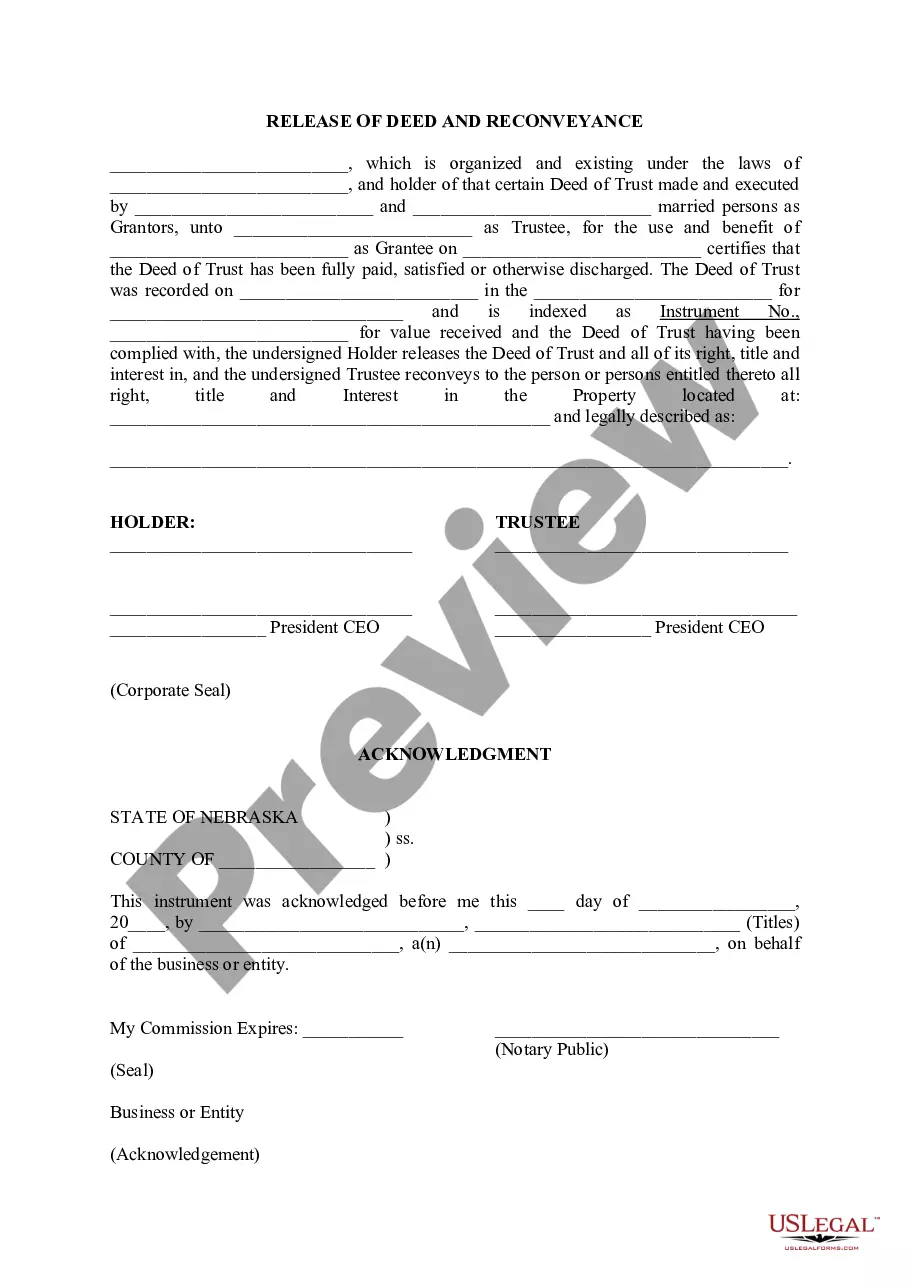
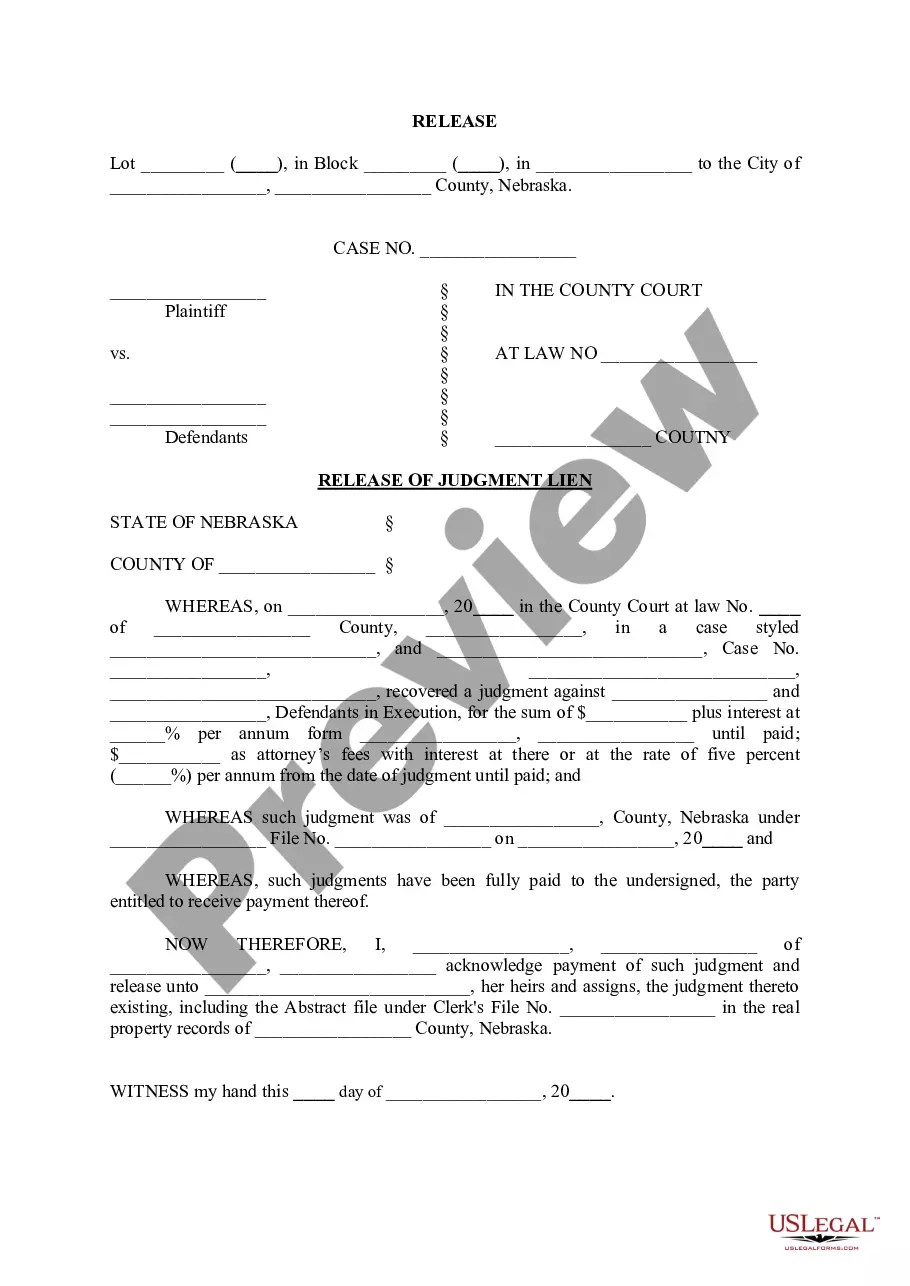
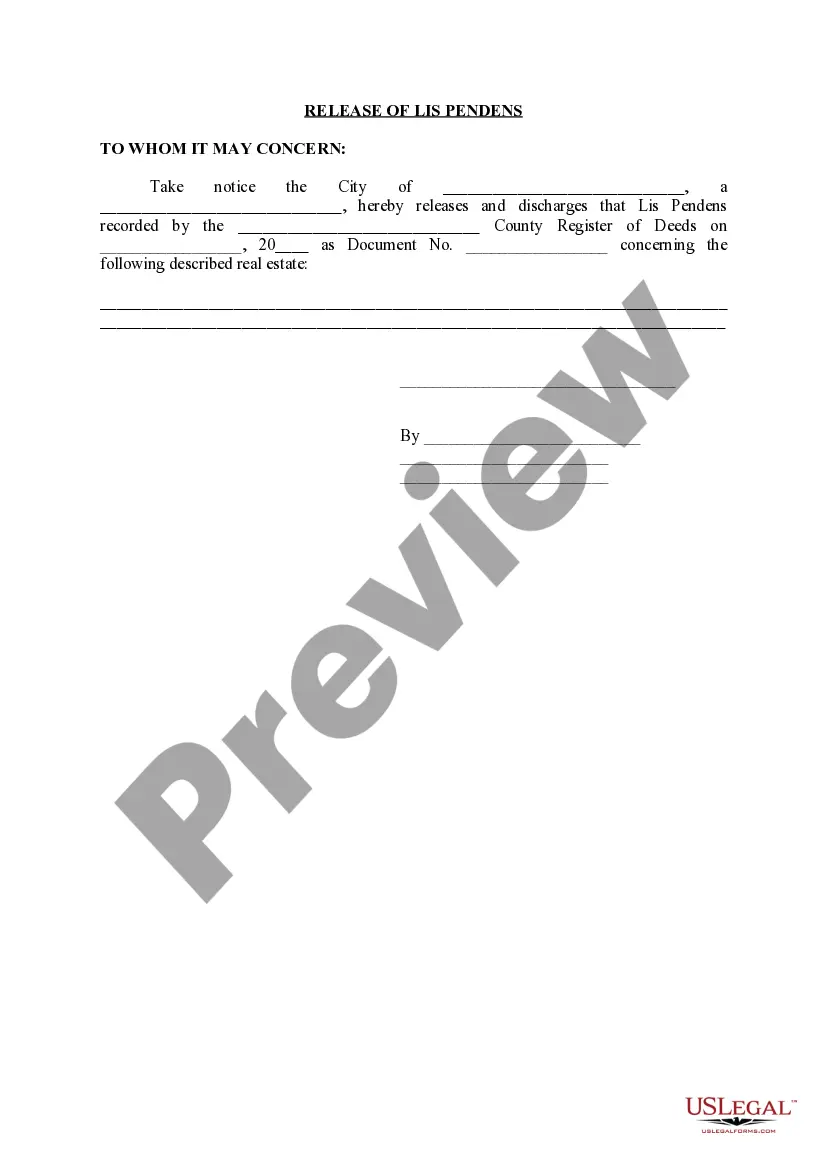
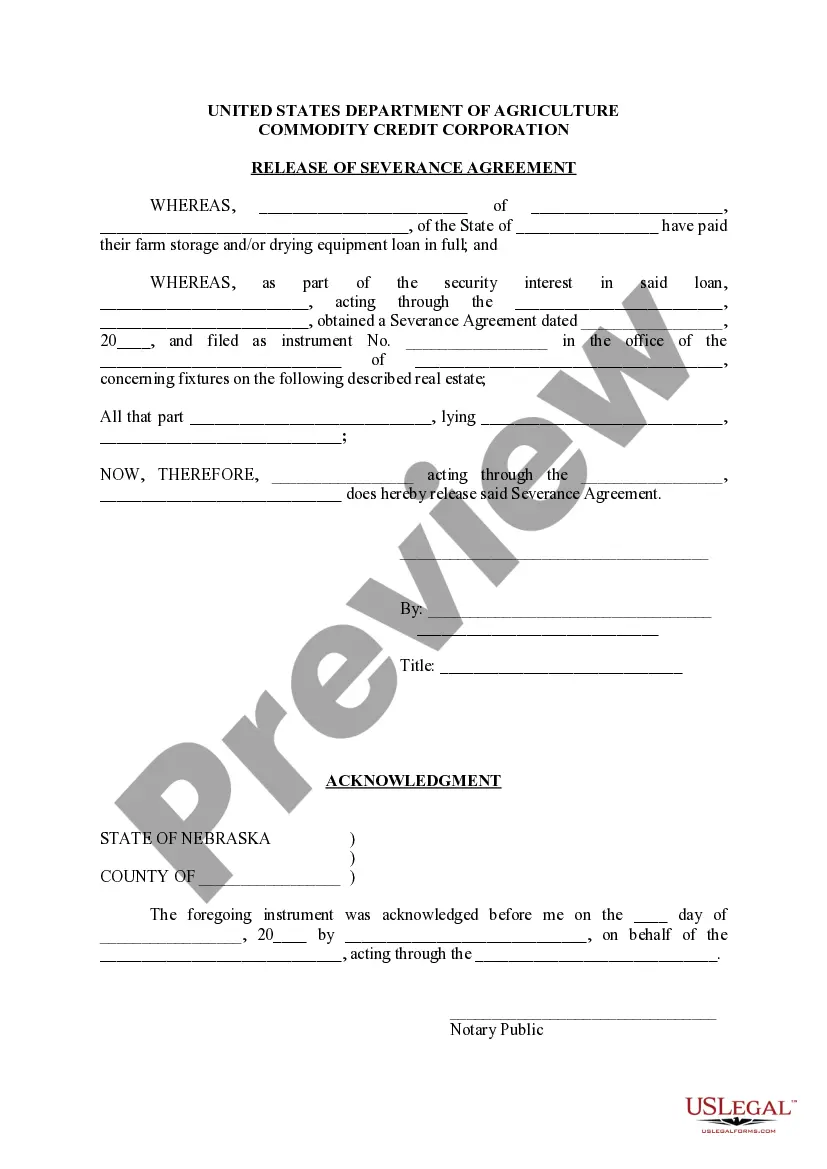
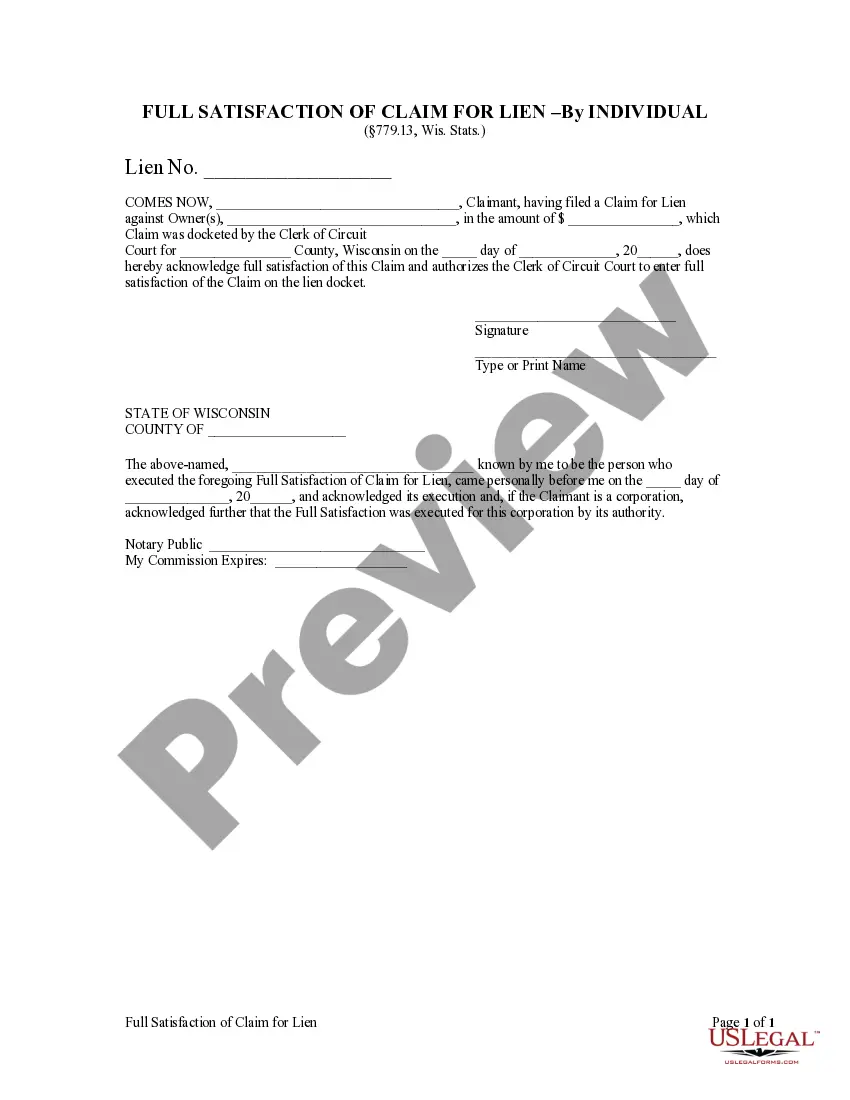
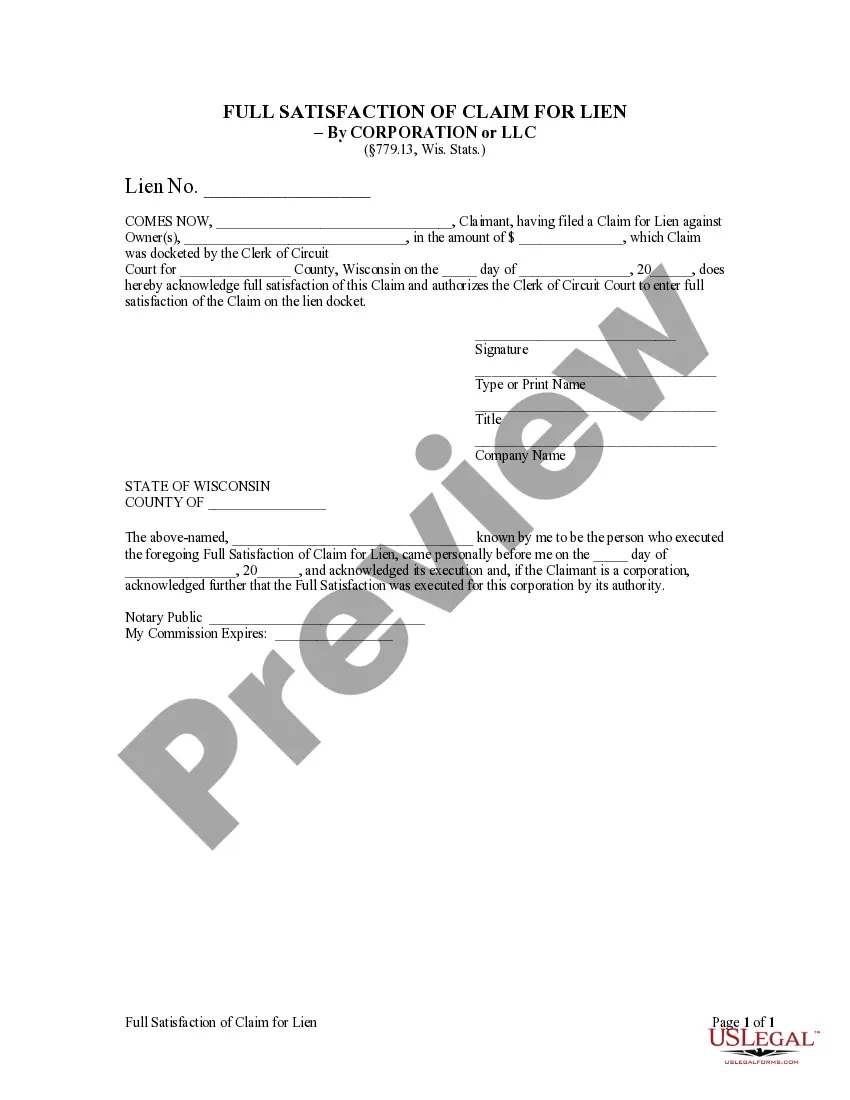
The Full Satisfaction of Claim for Lien by Individual is a legal document used to formally acknowledge that a lien claim has been fully satisfied. This form is essential for releasing any liabilities tied to a lien and differs from other forms in that it specifically addresses claims made by individuals. By completing this form, lien claimants can ensure that their claim is officially marked as satisfied in the legal records, providing protection against lingering claims or liabilities.
Main sections of this form
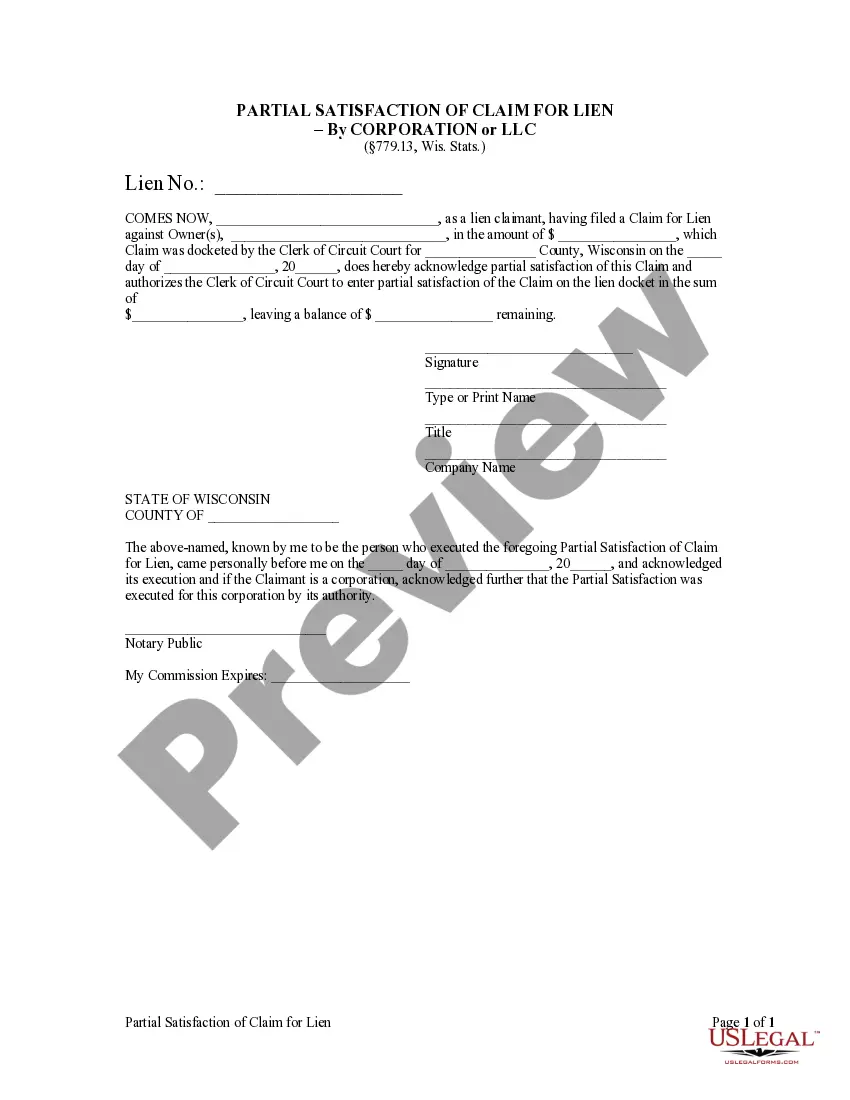
- Claimant information: The individual or attorney who filed the claim for lien.
- Owner details: Identification of the property owner(s) affected by the lien.
- Claim amount: The total amount associated with the claim for lien.
- Date filed: The date the claim for lien was docketed by the Clerk of Circuit Court.
- Signature: Confirmation from the claimant acknowledging satisfaction of the claim.
- Notary acknowledgment: Verification by a notary public of the claimant's identity and signature.
Situations where this form applies
This form should be used when a lien claimant has received full payment or satisfaction of their claim, and they want to formally release the lien against the property. It is typically utilized after the claimant has completed the payment process or resolution of any associated legal action. This ensures that the lien is removed from public records, preventing future complications over ownership and liability.
Who needs this form
This form is suitable for:
- Individuals who have filed a claim for lien against a property.
- Attorneys representing individuals or clients in lien matters.
- Owners of properties who need to confirm the satisfaction of a lien.
Completing this form step by step
- Identify the claimant: Provide the name of the individual or attorney who filed the lien.
- Specify the property owner: Enter the name(s) of the owner(s) of the affected property.
- Enter the claim amount: Fill in the total amount for which the lien was originally filed.
- Include dates: Record the date the claim was filed in court and the date of satisfaction acknowledgment.
- Sign the document: The claimant must sign and print their name at the designated sections.
- Obtain notarization: A notary public must verify the signature unless exempted by local regulations.
Is notarization required?
This form must be notarized to be legally valid. US Legal Forms provides secure online notarization powered by Notarize, allowing you to complete the process through a verified video call.
Get your form ready online
Our built-in tools help you complete, sign, share, and store your documents in one place.
Make edits, fill in missing information, and update formatting in US Legal Forms—just like you would in MS Word.
Download a copy, print it, send it by email, or mail it via USPS—whatever works best for your next step.
Sign and collect signatures with our SignNow integration. Send to multiple recipients, set reminders, and more. Go Premium to unlock E-Sign.
If this form requires notarization, complete it online through a secure video call—no need to meet a notary in person or wait for an appointment.
We protect your documents and personal data by following strict security and privacy standards.

Make edits, fill in missing information, and update formatting in US Legal Forms—just like you would in MS Word.

Download a copy, print it, send it by email, or mail it via USPS—whatever works best for your next step.

Sign and collect signatures with our SignNow integration. Send to multiple recipients, set reminders, and more. Go Premium to unlock E-Sign.

If this form requires notarization, complete it online through a secure video call—no need to meet a notary in person or wait for an appointment.

We protect your documents and personal data by following strict security and privacy standards.
Common mistakes to avoid
- Failing to sign and date the form appropriately.
- Not providing complete information, particularly in claimant or owner sections.
- Forgetting to obtain notarization if required by local law.
- Submitting the form to the incorrect court or office.
Benefits of completing this form online
- Convenient access: Download your form instantly from anywhere.
- Editability: Tailor the form to fit your specific needs before printing.
- Reliability: Ensure compliance with current legal standards set by licensed attorneys.
Legal use & context
- Serving as proof of payment and satisfaction of lien obligations.
- Legally recognized in court for removing any claims against the property.
- Fails to be executed, it may result in liabilities for the claimant.
Quick recap
- This form releases the lien and marks it as satisfied.
- Complete all sections accurately to avoid delays.
- Ensure notarization for legal recognition.
Looking for another form?
Form popularity
FAQ
A document signed by the party who is owed money under a court judgment (called the judgment creditor) stating that the full amount due on the judgment has been paid.
Once a judgment is paid, whether in installments or a lump sum, a judgment creditor (the person who won the case) must acknowledge that the judgment has been paid by filing a Satisfaction of Judgment form with the court clerk.
You will need one original, notarized copy for the judgment debtor. If you recorded an abstract of judgment to place a lien against the debtor's real property, you will need an original, notarized copy of your Acknowledgment of Satisfaction of Judgment (EJ-100) for each county where you placed a lien.
The defendant should ask for a letter confirming that the entire amount of the judgment has been paid. He or she may do so by sending a demand letter to the plaintiff. The release and satisfaction form is filed with the court clerk and entered into the case record.
The Satisfaction of Judgment form should be signed by the judgment creditor when the judgment is paid, and then filed with the court clerk. Don't forget to do this; otherwise, you may have to track down the other party later.
If the judgment creditor does not immediately file an Acknowledgement of Satisfaction of Judgment (EJ-100) when the judgment is satisfied, the judgment debtor may make a formal written demand for the creditor to do so. The judgment creditor has 15 days after receiving the debtor's request to serve the acknowledgement.
Satisfaction of judgment. n. a document signed by a judgment creditor (the party owed the money judgment) stating that the full amount due on the judgment has been paid.
You may ask your judgment creditor to file a satisfaction of judgment form. The length of time gives to the creditor to file the form varies from state to state, but it is usually between 14 and 30 days after your request.