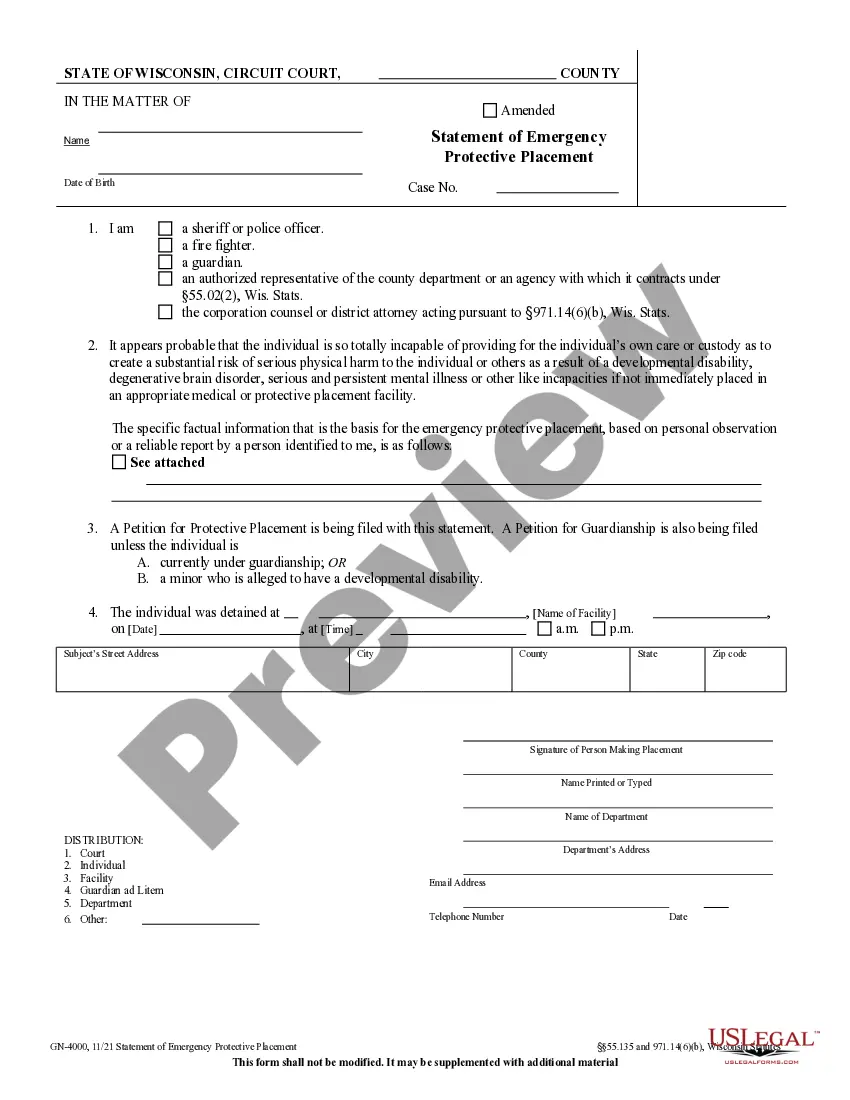
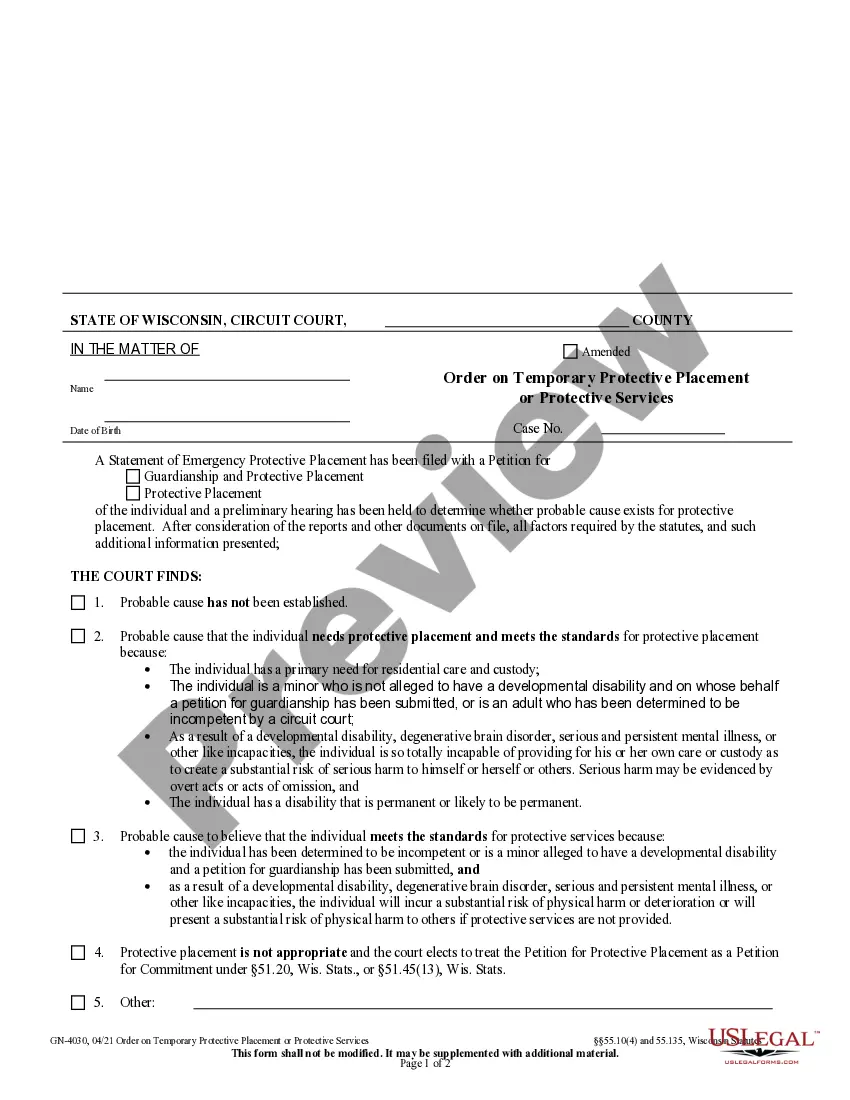
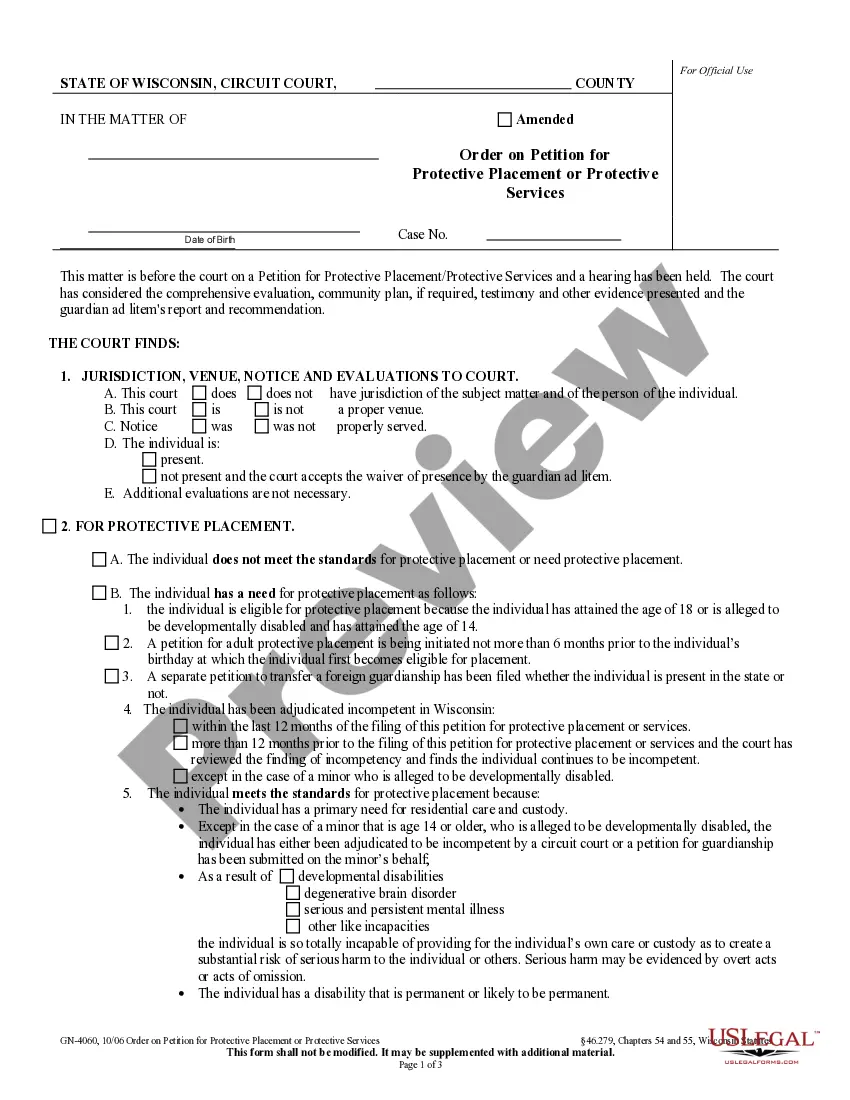
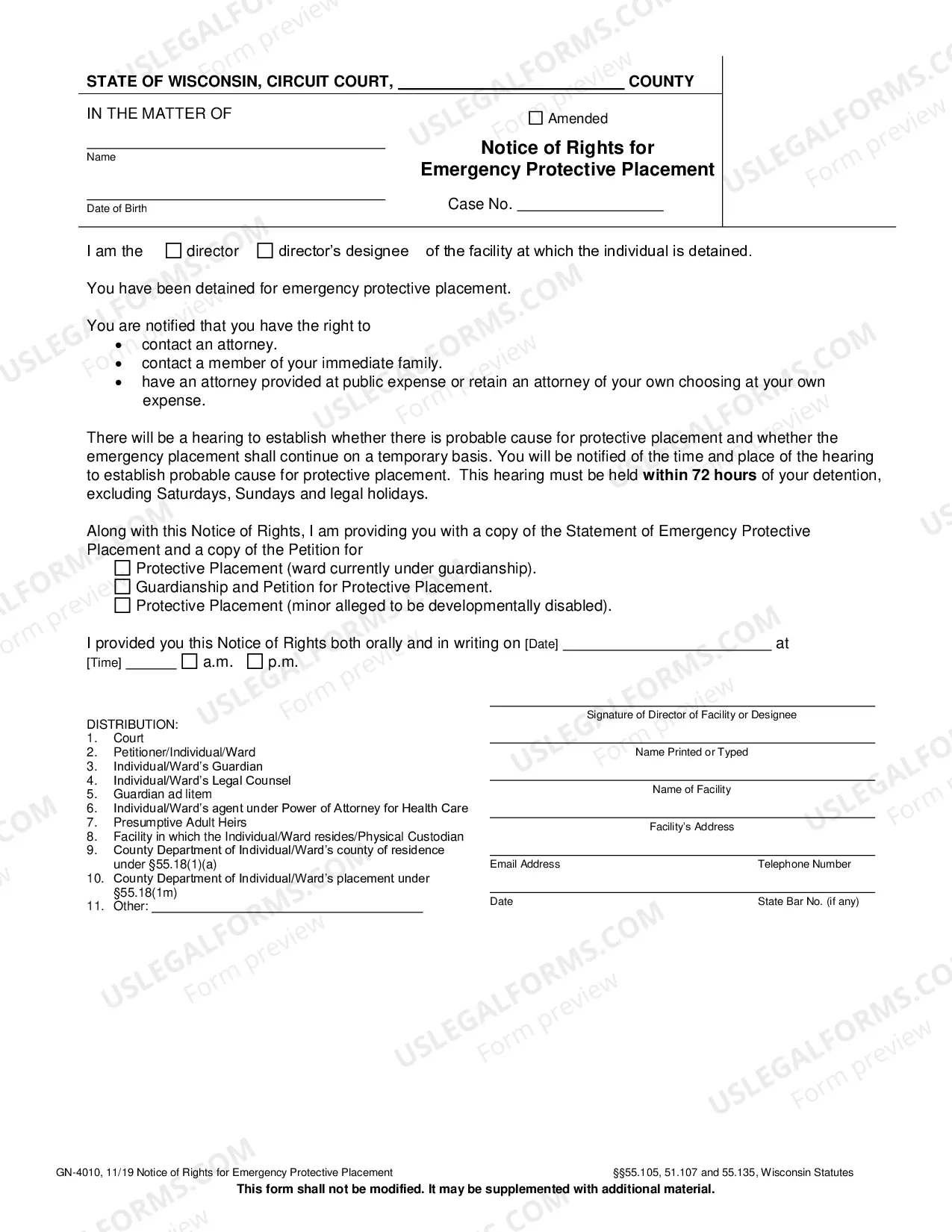
Wisconsin Statement of Emergency Protective Placement
Description
Get your form ready online
Our built-in tools help you complete, sign, share, and store your documents in one place.
Make edits, fill in missing information, and update formatting in US Legal Forms—just like you would in MS Word.
Download a copy, print it, send it by email, or mail it via USPS—whatever works best for your next step.
Sign and collect signatures with our SignNow integration. Send to multiple recipients, set reminders, and more. Go Premium to unlock E-Sign.
If this form requires notarization, complete it online through a secure video call—no need to meet a notary in person or wait for an appointment.
We protect your documents and personal data by following strict security and privacy standards.

Make edits, fill in missing information, and update formatting in US Legal Forms—just like you would in MS Word.

Download a copy, print it, send it by email, or mail it via USPS—whatever works best for your next step.

Sign and collect signatures with our SignNow integration. Send to multiple recipients, set reminders, and more. Go Premium to unlock E-Sign.

If this form requires notarization, complete it online through a secure video call—no need to meet a notary in person or wait for an appointment.

We protect your documents and personal data by following strict security and privacy standards.
Looking for another form?
How to fill out Wisconsin Statement Of Emergency Protective Placement?
Out of the great number of platforms that offer legal samples, US Legal Forms offers the most user-friendly experience and customer journey while previewing forms before buying them. Its comprehensive catalogue of 85,000 samples is categorized by state and use for simplicity. All of the forms on the platform have already been drafted to meet individual state requirements by accredited legal professionals.
If you have a US Legal Forms subscription, just log in, look for the template, click Download and access your Form name from the My Forms; the My Forms tab keeps your downloaded forms.
Follow the tips listed below to obtain the form:
- Once you find a Form name, ensure it is the one for the state you need it to file in.
- Preview the template and read the document description just before downloading the template.
- Look for a new sample using the Search field if the one you’ve already found isn’t appropriate.
- Just click Buy Now and choose a subscription plan.
- Create your own account.
- Pay using a credit card or PayPal and download the document.
After you have downloaded your Form name, it is possible to edit it, fill it out and sign it with an online editor that you pick. Any form you add to your My Forms tab might be reused multiple times, or for as long as it continues to be the most updated version in your state. Our service provides easy and fast access to samples that fit both lawyers and their clients.
Form popularity
FAQ
Emergency detention by law enforcement. Emergency detention by treatment director. 3-party petition.
Chapter 51, Wisconsin Statutes Provides legal procedures for voluntary and involuntary admission, treatment and rehabilitation of individuals (adults and minor children) with mental illness, developmental disability, drug dependency, or alcoholism.
Protective Placement is a court order authorizing the Ward's placement in certain facilities for the primary purpose of providing care and custody.
Involuntary commitment should be limited to persons who pose a serious risk of physical harm to themselves or others in the near future. Under no circumstances should involuntary commitment be imposed upon someone based upon a risk of harm to property or a risk of non-physical harm.
Emergency protective placements are a means of intervening in an emergency situation if it is probable that a person, as a result of an incapacity defined in Chapter 55, is unable to provide for his or her own care or custody.
5150 is the number of the section of the Welfare and Institutions Code, which allows a person with a mental illness to be involuntarily detained for a 72-hour psychiatric hospitalization.
A guardian appointed by the court to represent the interests of Infants, the unborn, or incompetent persons in legal actions. Guardians are adults who are legally responsible for protecting the well-being and interests of their ward, who is usually a minor.
Mental HealthYes, a minor may refuse treatment for mental health because the minor and the parent/guardian must consent to admission.