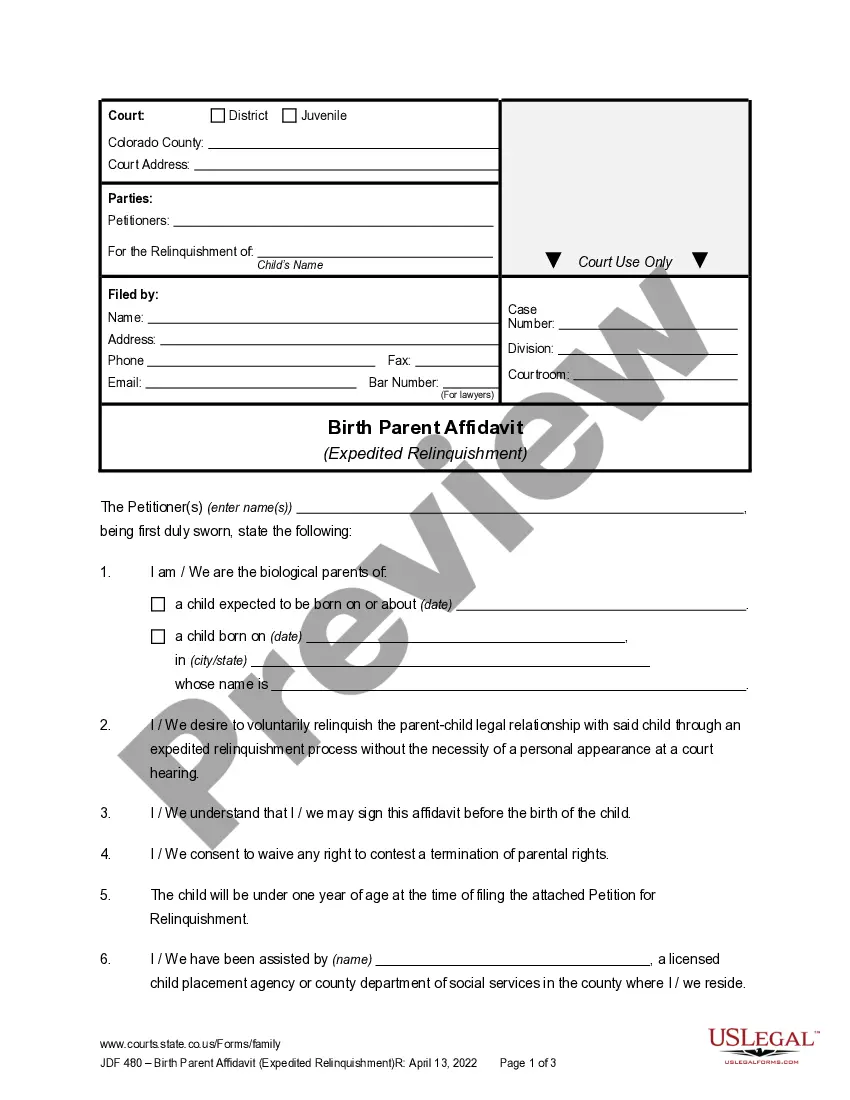
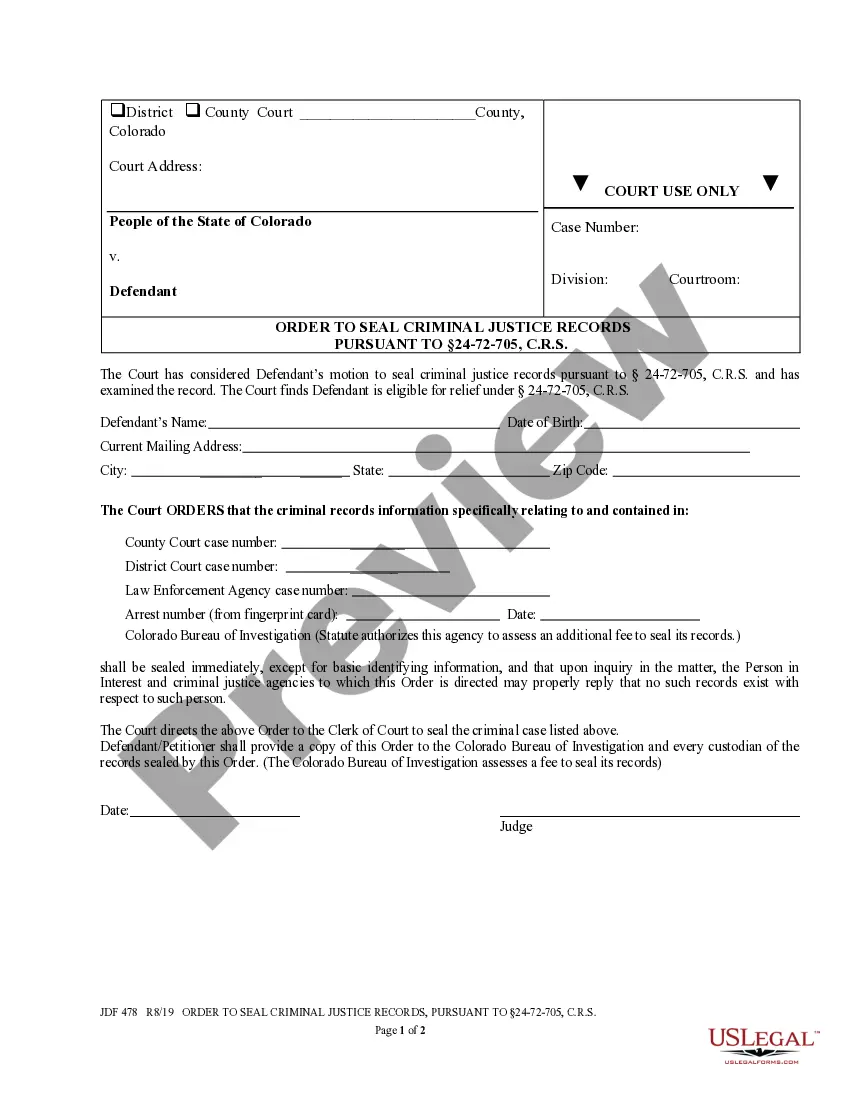
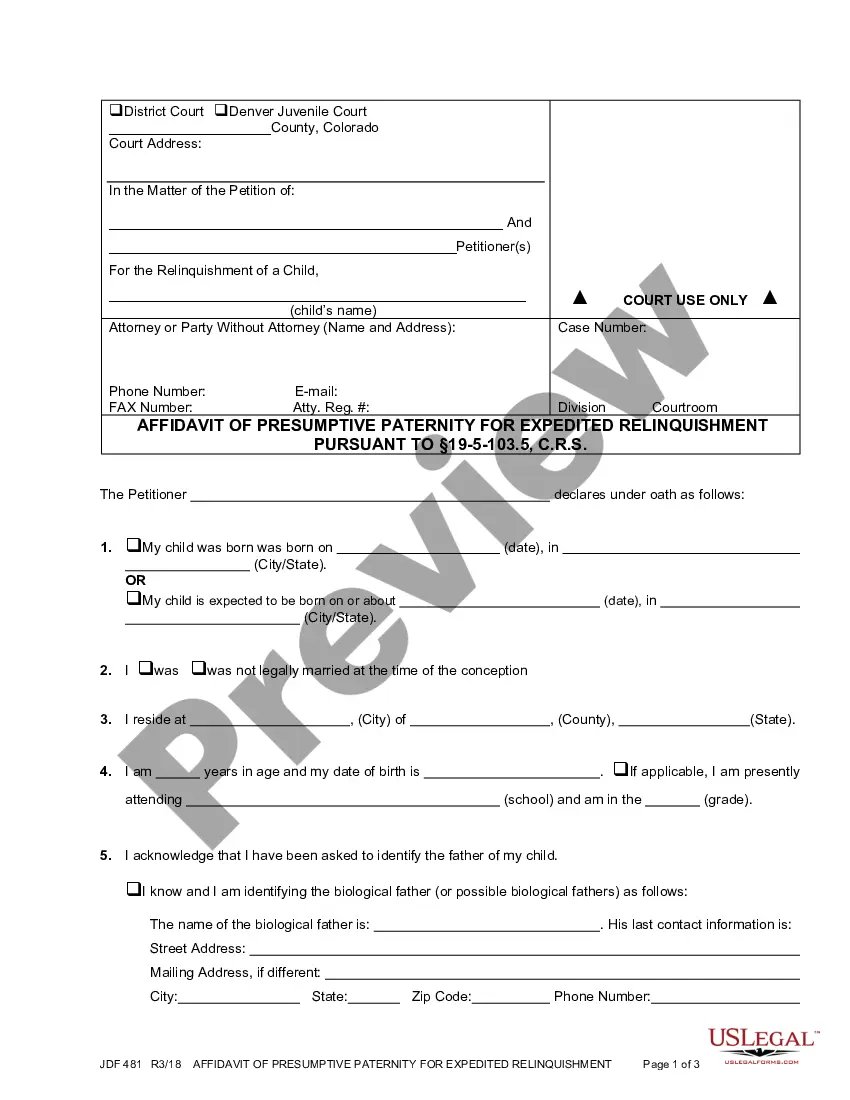
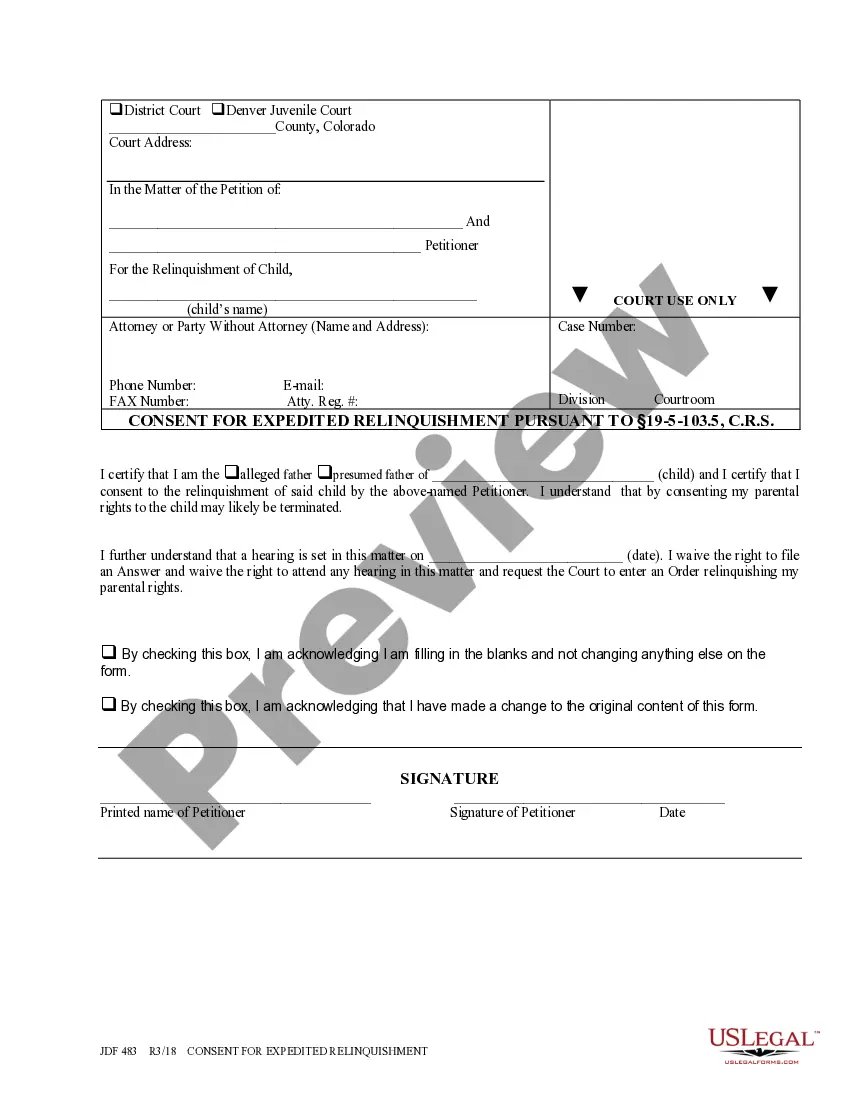
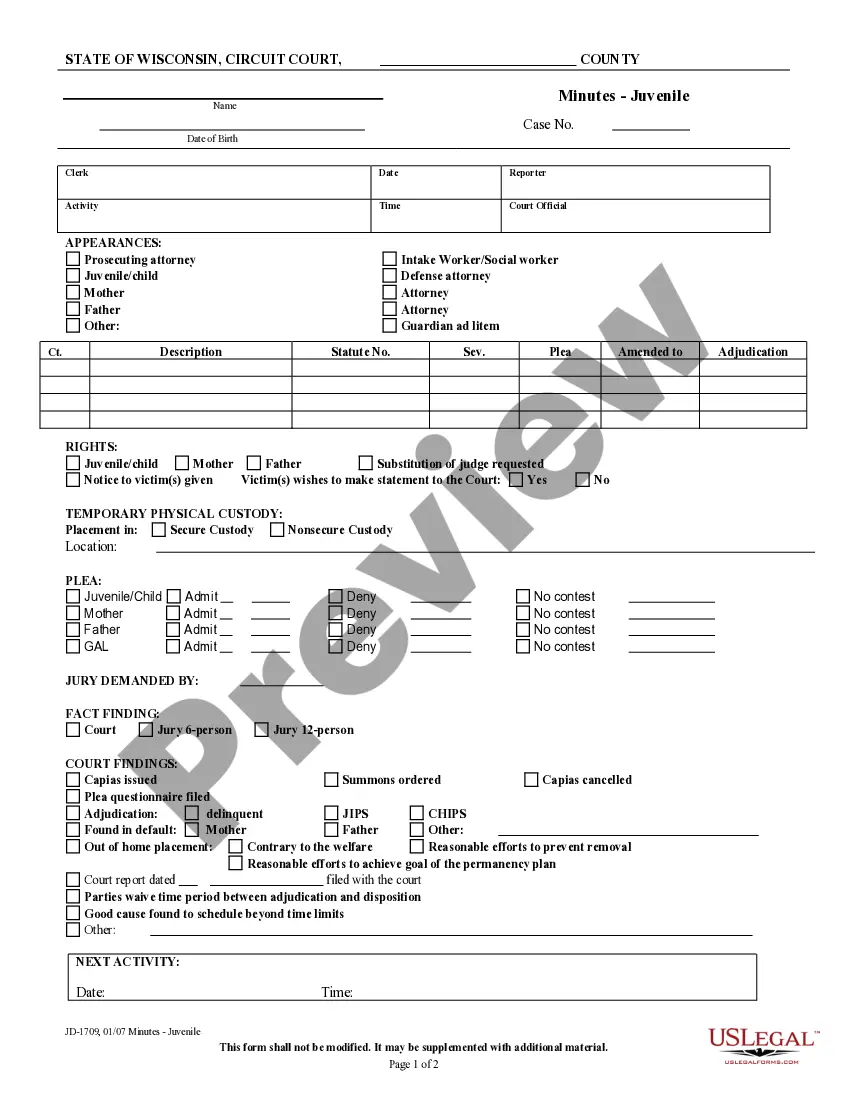
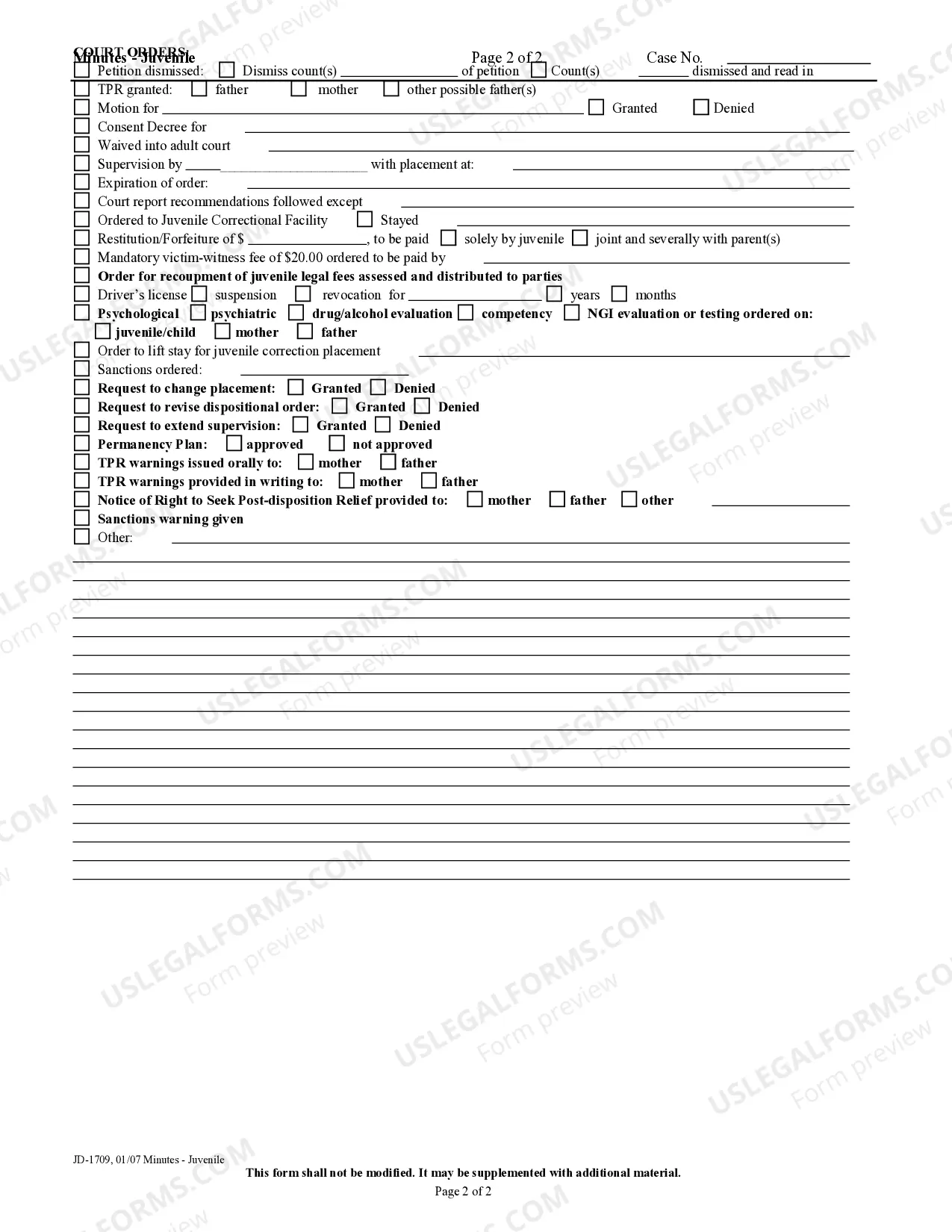
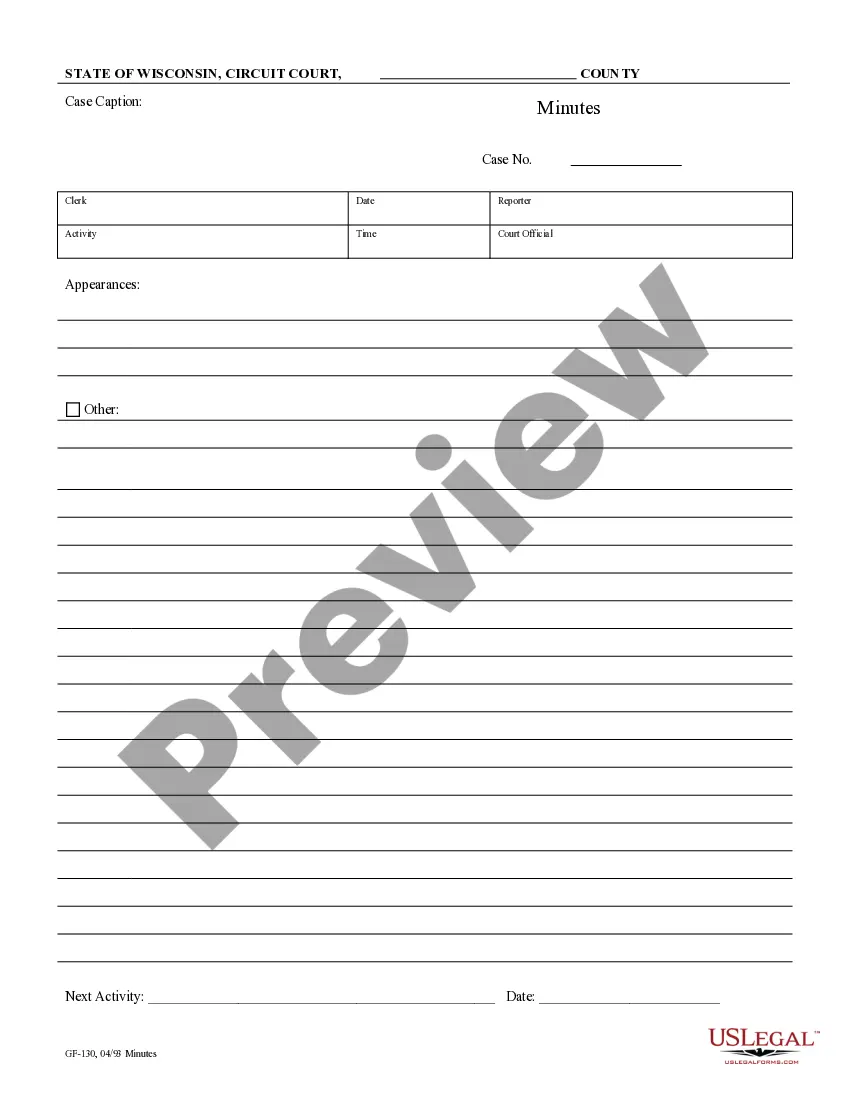
These are Juvenile Court Minutes, to be used by the Courts in the State of Wisconsin. This form is used to give an outline for one who must take notes/minutes, during a juvenile court proceeding.
Wisconsin Juvenile Court Minutes
Category:
State:
Wisconsin
Control #:
WI-JD-1709
Format:
Word;
PDF;
Rich Text
Instant download
This website is not affiliated with any governmental entity
Public form
Description
Free preview
Get your form ready online
Our built-in tools help you complete, sign, share, and store your documents in one place.
Built-in online Word editor
Make edits, fill in missing information, and update formatting in US Legal Forms—just like you would in MS Word.
Export easily
Download a copy, print it, send it by email, or mail it via USPS—whatever works best for your next step.
E-sign your document
Sign and collect signatures with our SignNow integration. Send to multiple recipients, set reminders, and more. Go Premium to unlock E-Sign.
Notarize online 24/7
If this form requires notarization, complete it online through a secure video call—no need to meet a notary in person or wait for an appointment.
Store your document securely
We protect your documents and personal data by following strict security and privacy standards.

Make edits, fill in missing information, and update formatting in US Legal Forms—just like you would in MS Word.

Download a copy, print it, send it by email, or mail it via USPS—whatever works best for your next step.

Sign and collect signatures with our SignNow integration. Send to multiple recipients, set reminders, and more. Go Premium to unlock E-Sign.

If this form requires notarization, complete it online through a secure video call—no need to meet a notary in person or wait for an appointment.

We protect your documents and personal data by following strict security and privacy standards.
Looking for another form?
How to fill out Wisconsin Juvenile Court Minutes?
Out of the great number of platforms that offer legal samples, US Legal Forms provides the most user-friendly experience and customer journey when previewing forms prior to buying them. Its extensive catalogue of 85,000 samples is categorized by state and use for simplicity. All of the documents available on the service have been drafted to meet individual state requirements by licensed lawyers.
If you already have a US Legal Forms subscription, just log in, search for the template, press Download and obtain access to your Form name in the My Forms; the My Forms tab holds all of your saved forms.
Stick to the tips listed below to get the document:
- Once you find a Form name, ensure it’s the one for the state you need it to file in.
- Preview the template and read the document description just before downloading the sample.
- Look for a new template using the Search engine if the one you have already found is not correct.
- Just click Buy Now and select a subscription plan.
- Create your own account.
- Pay using a credit card or PayPal and download the template.
After you’ve downloaded your Form name, you are able to edit it, fill it out and sign it in an web-based editor of your choice. Any form you add to your My Forms tab might be reused many times, or for as long as it continues to be the most updated version in your state. Our service provides quick and easy access to samples that suit both legal professionals as well as their clients.
Form popularity
FAQ
The juvenile justice process involves nine major decision points: (1) arrest, (2) referral to court, (3) diversion, (4) secure detention, (5) judicial waiver to adult criminal court, (6) case petitioning, (7) delinquency finding/adjudication, (8) probation, and (9) residential placement, including confinement in a
Although courts with juvenile jurisdiction handle a variety of cases, including abuse, neglect, adoption, and traffic violations, the Juvenile Court Statistics series focuses on the disposition of delinquency cases and formally pro- cessed status offense cases.
A judge can decide on probation, placement in a foster home, institutionalization, or some other alternative for the youth, such as referral to a treatment program, imposition of a fine, community service, victim-offender mediation, or restitution.
Wisconsin juvenile court proceedings are usually closed to the public.When a juvenile who has previously been adjudicated delinquent (and that judgment remains of record and unreversed) is alleged to have committed a crime that would be considered a felony if committed by an adult, and.
Access to criminal history information can be obtained on the Wisconsin Online Record Check System at http://recordcheck.doj.wi.gov. Adult criminal history information is public record in the State of Wisconsin. Anyone may obtain this information provided they pay the fee established by the Wisconsin Legislature.
Although courts with juvenile jurisdiction handle a variety of cases, including abuse, neglect, adoption, and traffic violations, the Juvenile Court Statistics series focuses on the disposition of delinquency cases and formally pro- cessed status offense cases.
The judge talks about what can happen at the hearing. The judge tells the parents or guardians that they may have to pay for fines or restitution if the minor is ordered to pay. Then the judge asks the minor if the charges are true or false. The minor can decide to not fight the charges.
The juvenile justice process involves nine major decision points: (1) arrest, (2) referral to court, (3) diversion, (4) secure detention, (5) judicial waiver to adult criminal court, (6) case petitioning, (7) delinquency finding/adjudication, (8) probation, and (9) residential placement, including confinement in a
Common Offenses in Juvenile Cases Roughly half of all juvenile arrests are made for theft, simple assault, drug abuse, disorderly conduct, and curfew violations, according to the federal Office of Juvenile Justice and Delinquency Prevention.