Wisconsin Landlord's Lien Waiver
About this form
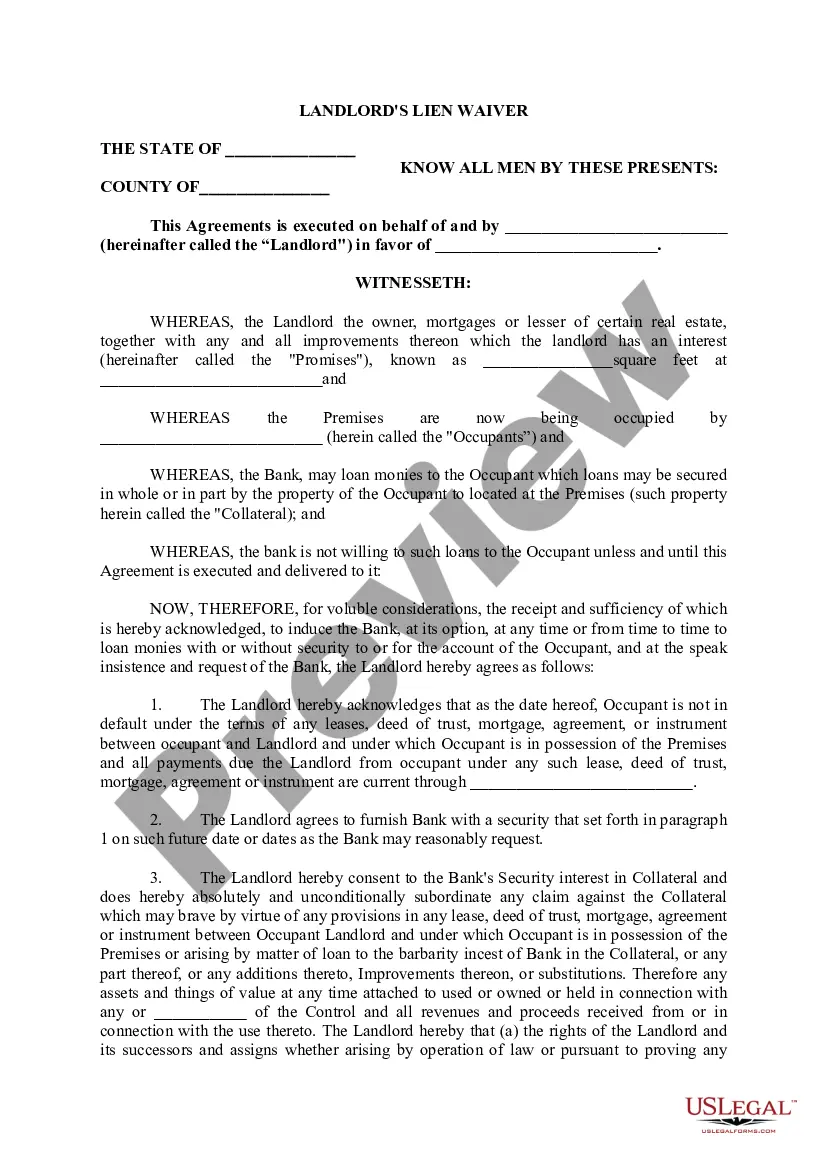
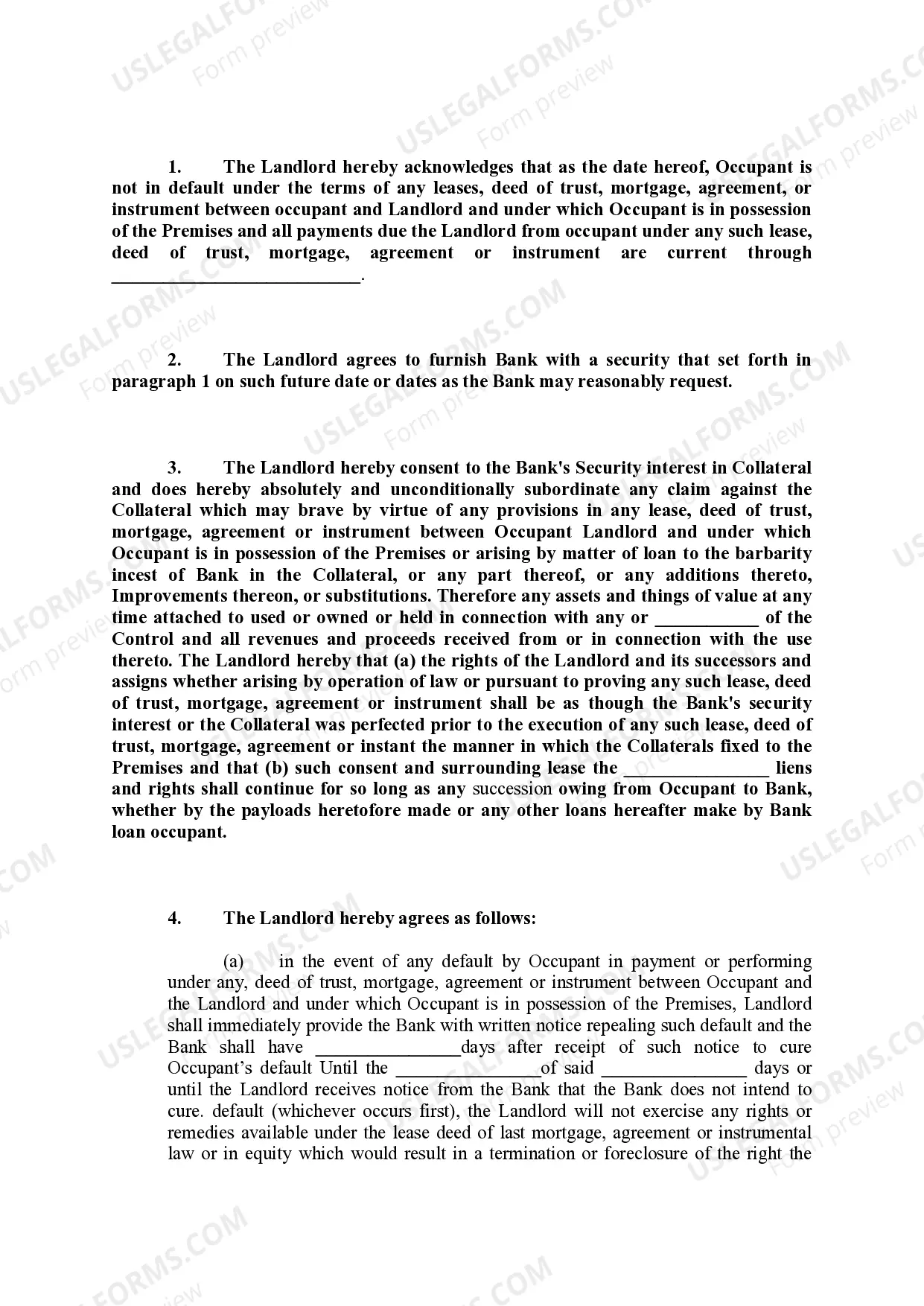
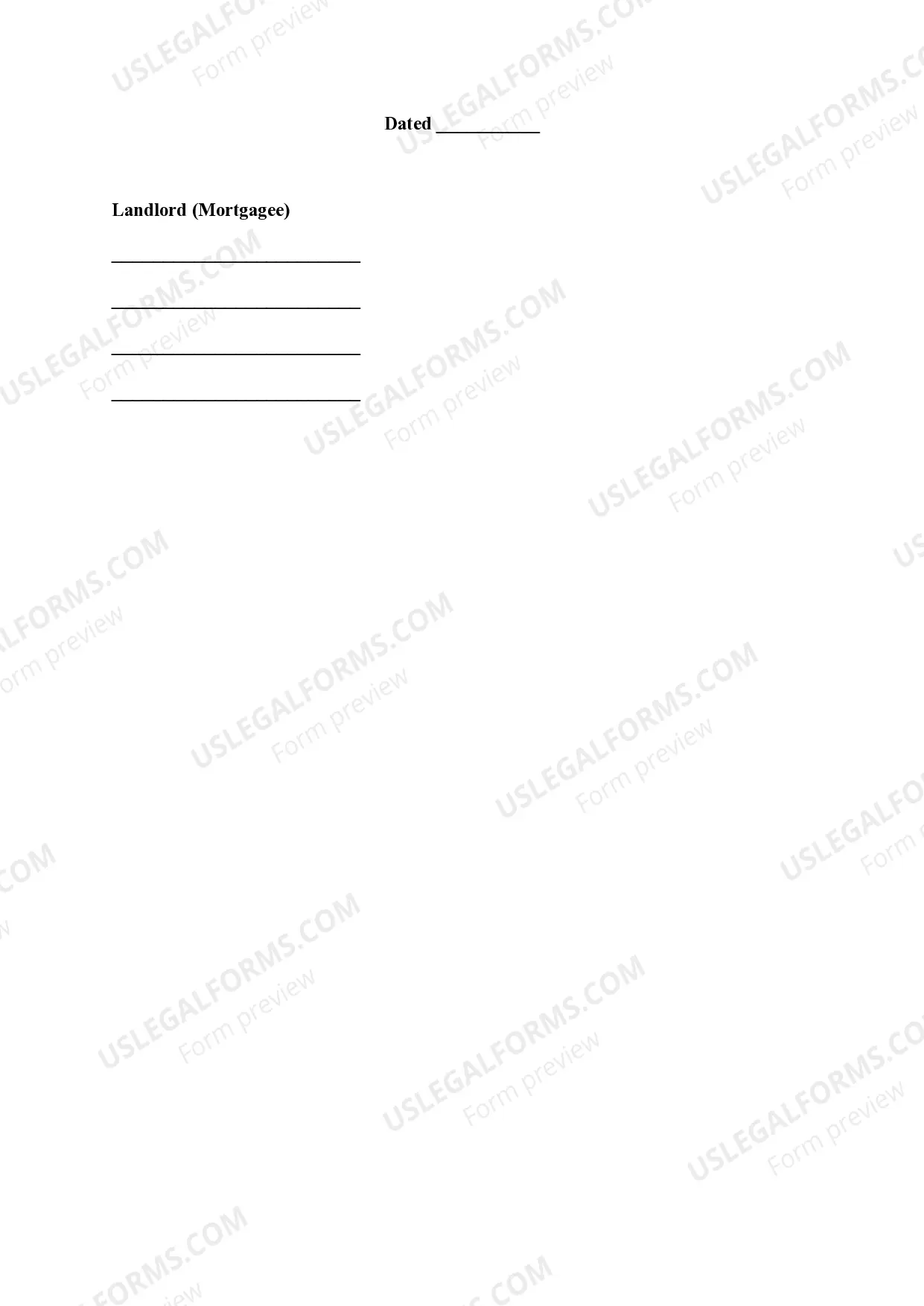
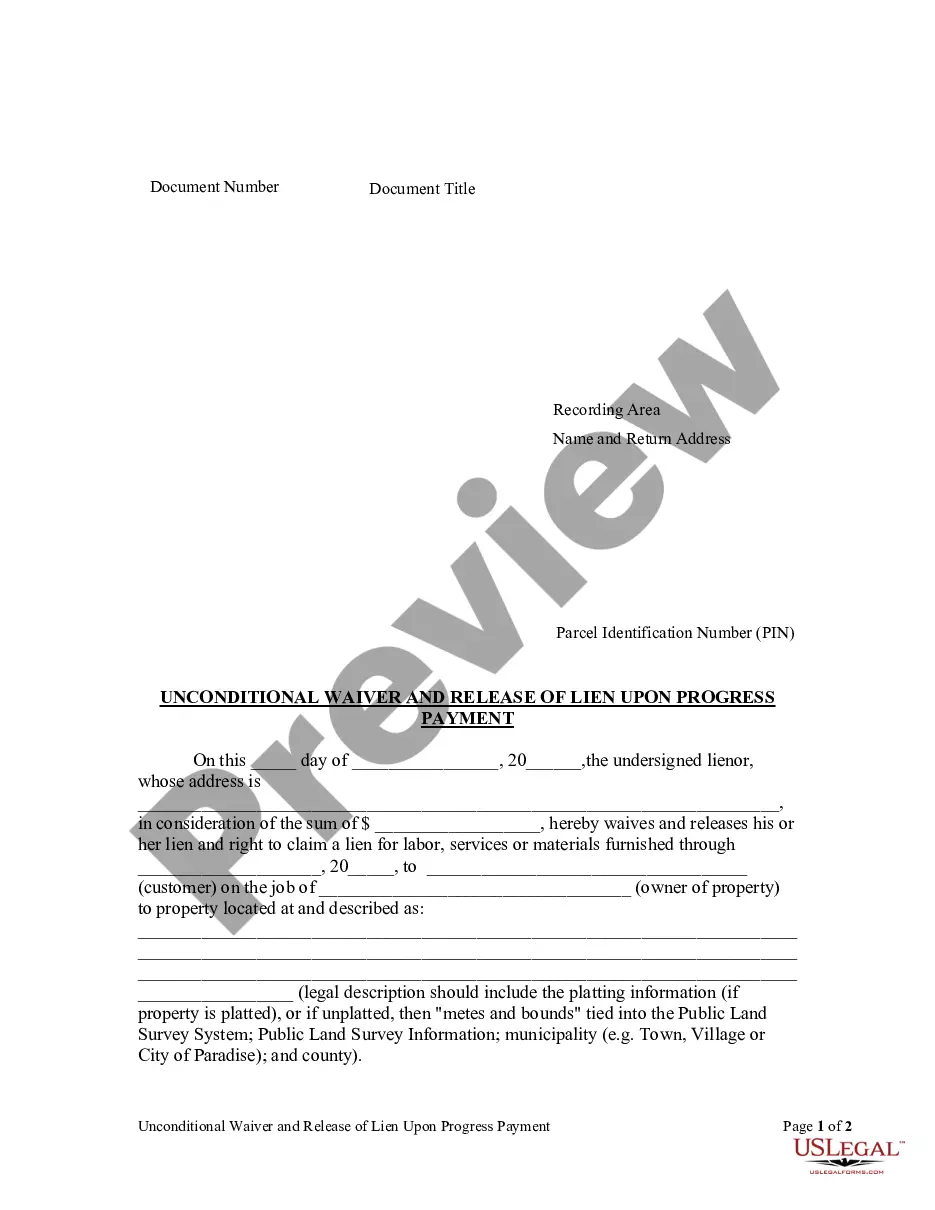
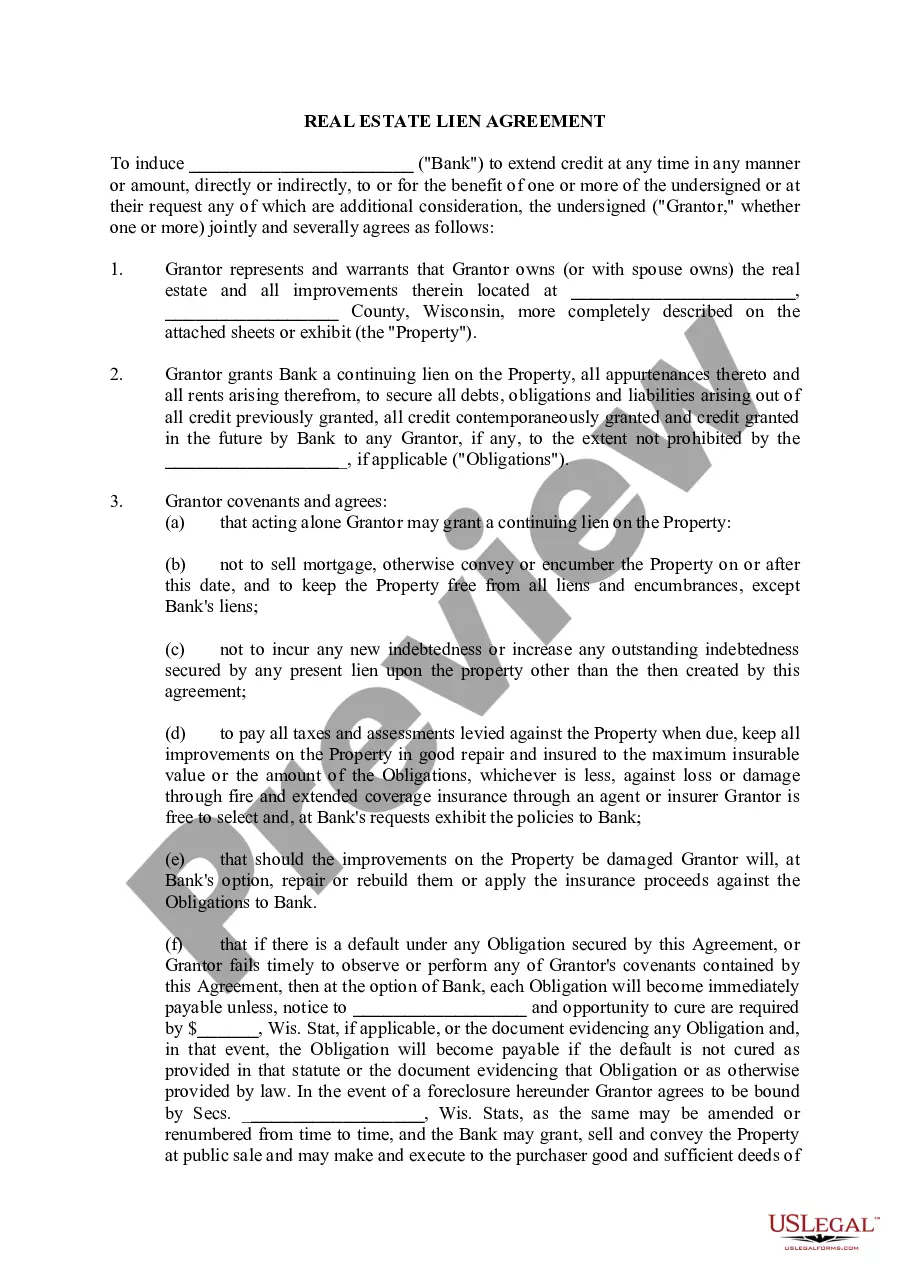
The Landlord's Lien Waiver is a legal document that allows a landlord to waive their right to place a lien on a tenant's personal property located on leased premises. This waiver is typically necessary when a lender provides a loan to the tenant using non-real estate personal property, such as equipment or inventory, as collateral. This form helps distinguish the landlord's rights concerning the borrower's collateral and ensures the lender can secure their interests without interference.
Key components of this form
- Parties involved: Identification of the landlord, tenant (occupant), and lender.
- Property description: Specifications of the leased premises being used as collateral.
- Consent clause: Agreement between the landlord and lender about the lender's security interest in tenant's property.
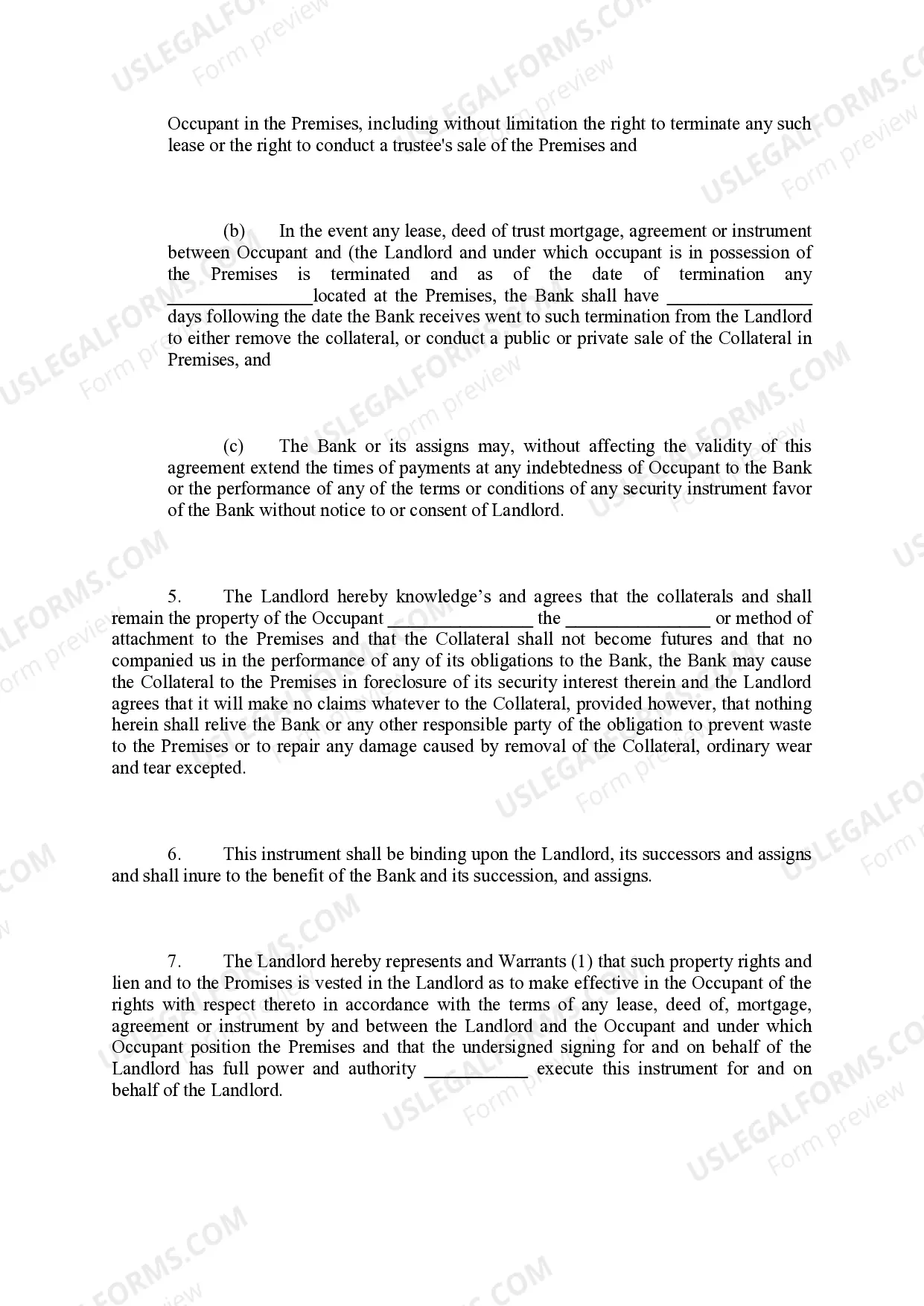
- Default notification: Requirements regarding notification and cure period for any defaults by the tenant.
- Warranties: Landlord's representations regarding the rights and ownership of the property.
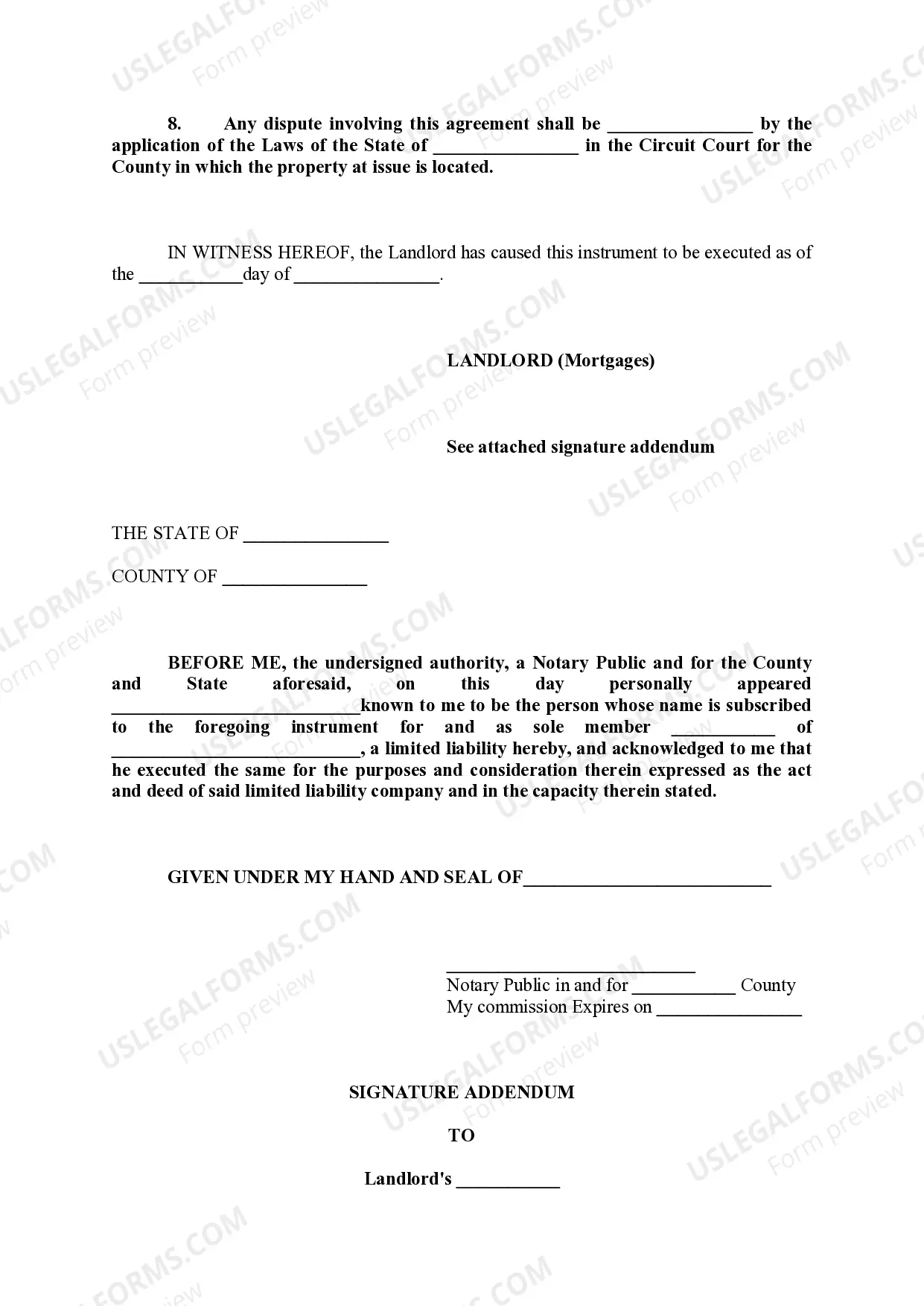
- Notarization: Section for notarization confirming the legitimacy of the signatures involved.
When this form is needed
You should use the Landlord's Lien Waiver when a tenant intends to secure a loan with their personal property located within your leased premises. This agreement is critical if the lender requires assurance that their interests are protected without potential interference from the landlordâs claims on the property.
Who should use this form
- Landlords who lease property to tenants using personal property as collateral for loans.
- Commercial tenants seeking financing that may involve using their leased property as security.
- Lenders who require a waiver from landlords to facilitate loans secured by tenant property.
Completing this form step by step
- Identify all parties involved: Enter the landlordâs name, tenantâs name, and lender's name.
- Specify the property: Describe the leased premises in detail, including size and location.
- Enter details of the collateral: Clearly list the personal property being used as collateral by the tenant.
- Review default terms: Ensure provisions regarding notices and rights in case of tenant defaults are clearly stated.
- Sign and notarize: Ensure all parties sign the document, and have it notarized where required.
Is notarization required?
Yes, this form must be notarized to be legally valid. Notarization provides additional authenticity to the document, ensuring that all parties' signatures are verified. US Legal Forms offers integrated online notarization options for convenient and secure notarization.
Get your form ready online
Our built-in tools help you complete, sign, share, and store your documents in one place.
Make edits, fill in missing information, and update formatting in US Legal Forms—just like you would in MS Word.
Download a copy, print it, send it by email, or mail it via USPS—whatever works best for your next step.
Sign and collect signatures with our SignNow integration. Send to multiple recipients, set reminders, and more. Go Premium to unlock E-Sign.
If this form requires notarization, complete it online through a secure video call—no need to meet a notary in person or wait for an appointment.
We protect your documents and personal data by following strict security and privacy standards.

Make edits, fill in missing information, and update formatting in US Legal Forms—just like you would in MS Word.

Download a copy, print it, send it by email, or mail it via USPS—whatever works best for your next step.

Sign and collect signatures with our SignNow integration. Send to multiple recipients, set reminders, and more. Go Premium to unlock E-Sign.

If this form requires notarization, complete it online through a secure video call—no need to meet a notary in person or wait for an appointment.

We protect your documents and personal data by following strict security and privacy standards.
Mistakes to watch out for
- Failing to fully describe the collateral being used for the loan.
- Not obtaining necessary signatures from all parties involved.
- Neglecting to include a clear description of the leased premises.
- Ignoring state-specific requirements that may alter the formâs enforceability.
Benefits of using this form online
- Convenience: Download and print the form anytime from anywhere.
- Editability: Modify the form to suit your specific needs before finalizing.
- Reliability: Forms are drafted by licensed attorneys to meet legal standards.
Key takeaways
- The Landlord's Lien Waiver protects lender interests in tenant property without landlord interference.
- It is essential for landlords, tenants, and lenders involved in secured financing arrangements.
- Completing this form correctly can prevent legal disputes over property rights in the future.
Looking for another form?
Form popularity
FAQ
New York does not require lien waivers to be notarized.
Lien waivers that are given after payment is received and which generally cover payments received in a prior pay period are considered trailing lien waivers.Lien waiv- ers are typically provided with each requisition during the course of the project and at final completion of the project.
It basically states that you've paid the subcontractor what is owed, they accept the payment in full, and they waive the right to put a lien on your property. Simply present this form to the subcontractor with your payment and ask them to sign it. Make sure you get their signature!
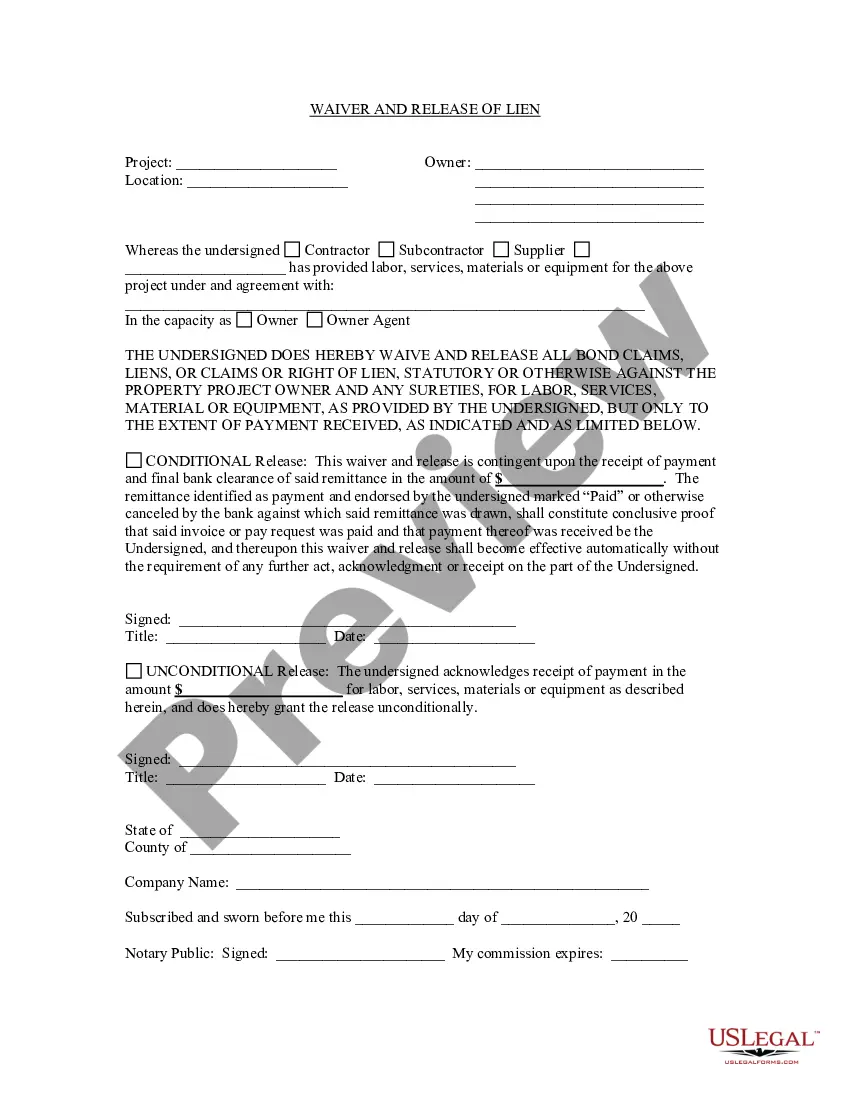
A lien waiver is signed before a lien is actually filed. The party submitting the lien waiver states that they waive the right to lien against the project. In some instances, the property owner or general contractor may request that you sign and deliver a lien waiver before payment is disbursed.
Are California lien waivers required to be notarized? No, there is nothing in the California law that suggests that lien waivers must be notarized in order to be deemed valid and enforceable. Lien waivers in California are regulated by the CA Civil Code §8132-8138.
LIen waivers are not required to be notarized. The primary times that a document needs to be notarized is if it is going to be filed with the county recorder or it is an affidavit. There are some other documents that often use notarization, but lien...
A claimant must file an original and 2 signed, copies of a Wisconsin "Claim for Lien" form with the clerk of circuit court in the county where the property is located, at least thirty (30) days after service of the notice of intent to file claim for lien, but within, and no later than, 6 months from the date that the
A lien waiver is quite common in the construction business. Essentially, it is a document from a contractor, subcontractor, supplier, or another party who holds a mechanic's lien that states they have been paid in full and waive future lien rights to the disputed property.