Wisconsin General Power of Attorney for Care and Custody of Child or Children
About this form
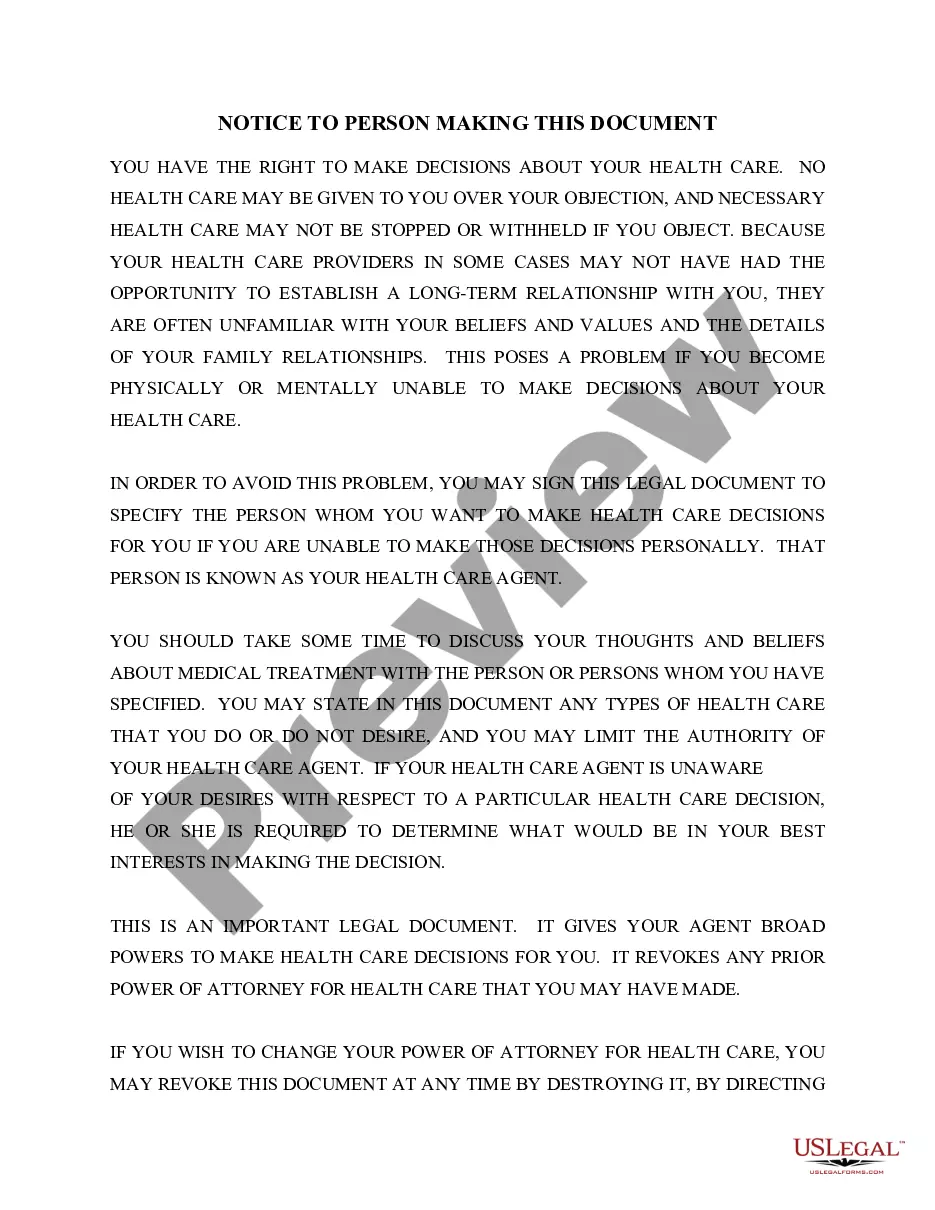
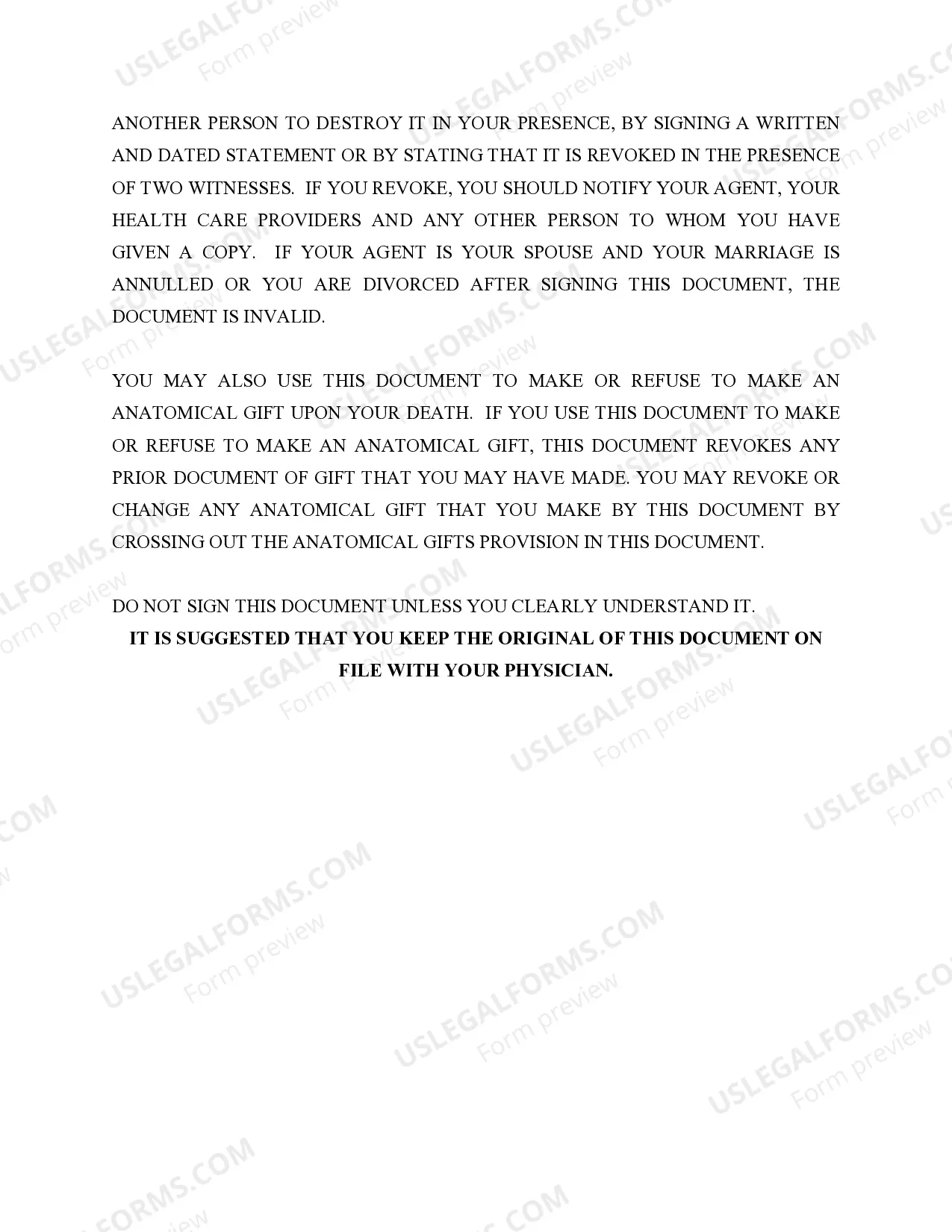
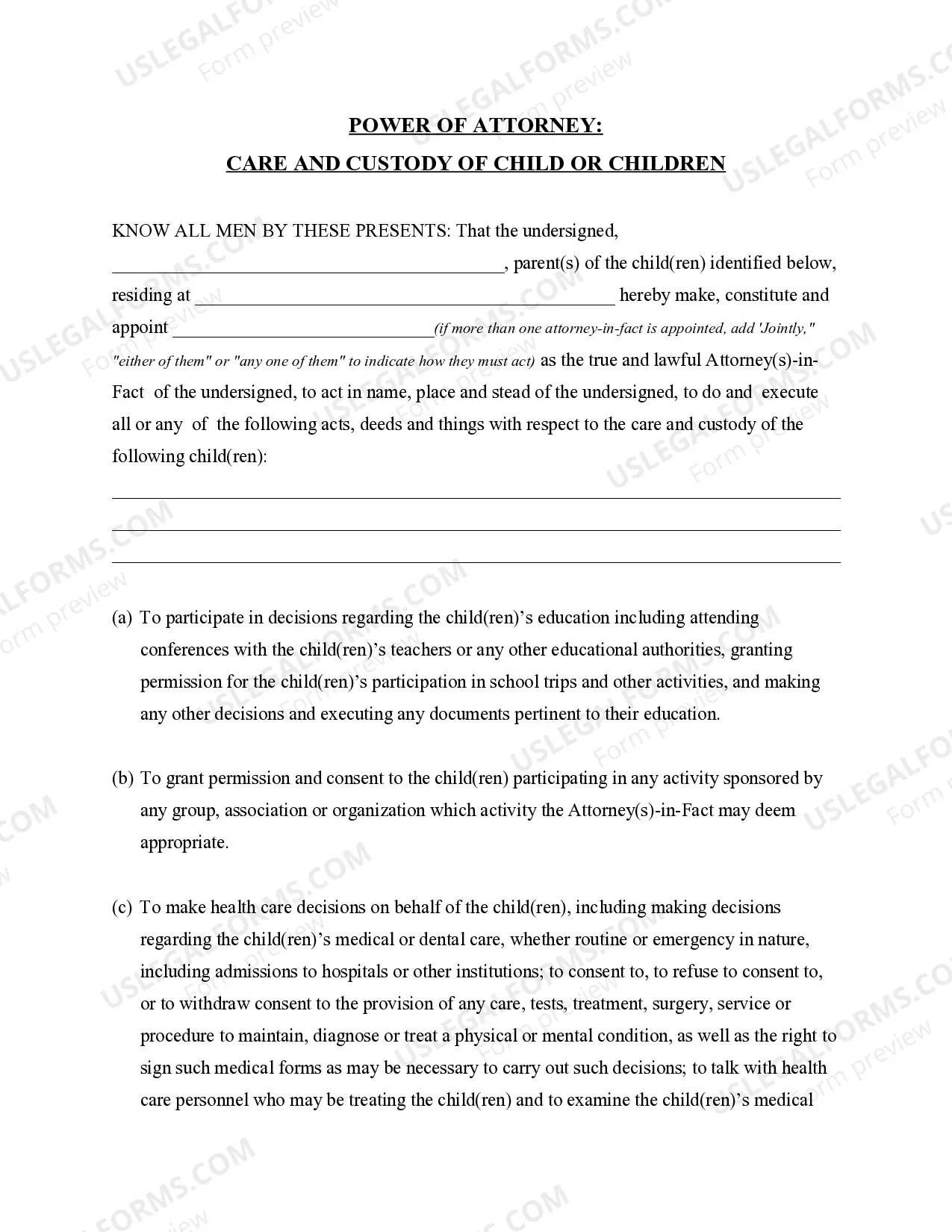
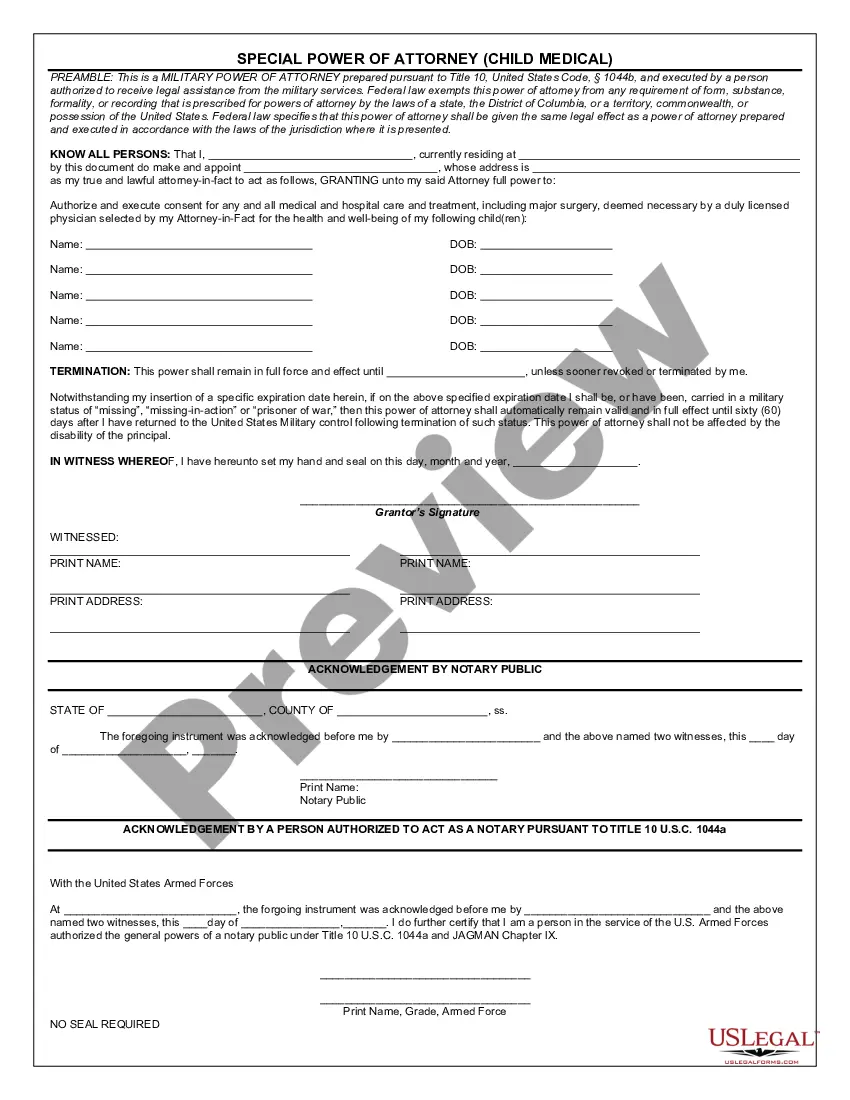
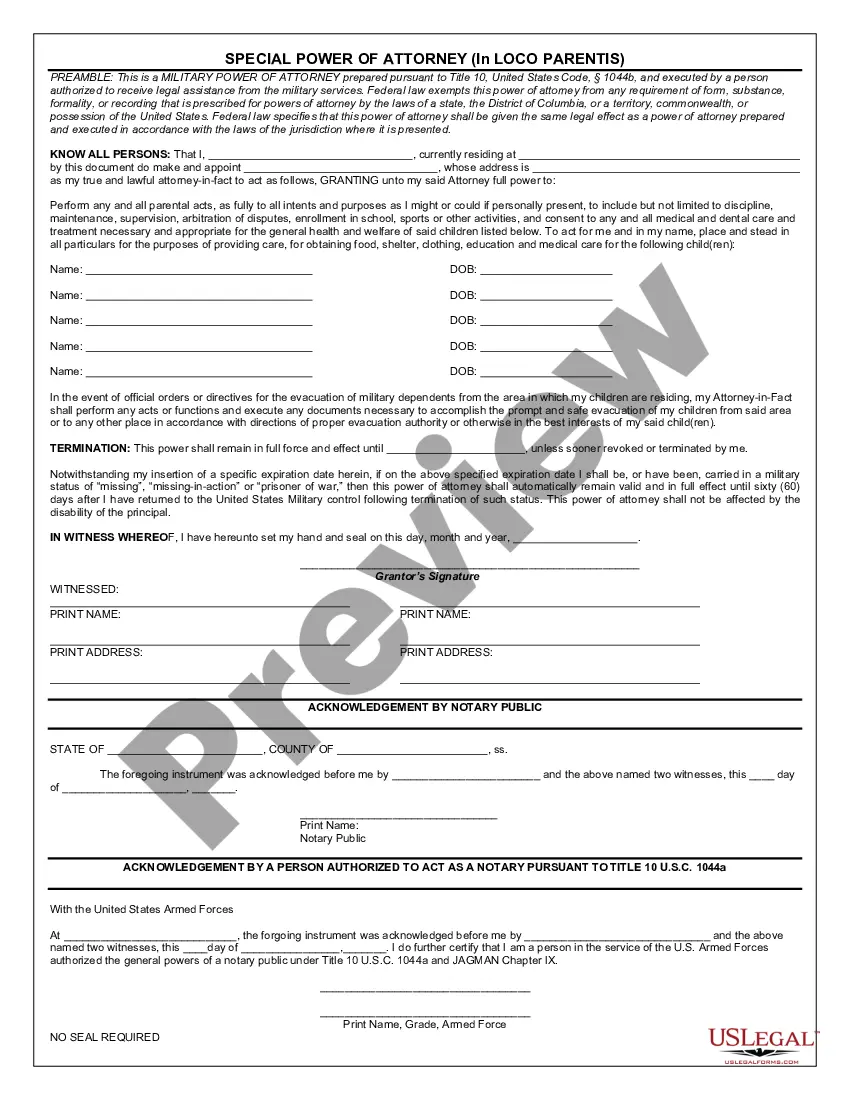
The General Power of Attorney for Care and Custody of Child or Children is a legal document that allows a parent or guardian to designate another person, known as an attorney-in-fact, to make decisions regarding the care, custody, and medical treatment of their child or children. This form is distinct from other power of attorney documents, as it specifically focuses on the responsibilities related to a minor's welfare, ensuring that their needs are met even when the parents are unavailable or incapacitated.
Form components explained
- Identification of the parent(s) granting power of attorney.
- Name of the attorney-in-fact responsible for the child's care.
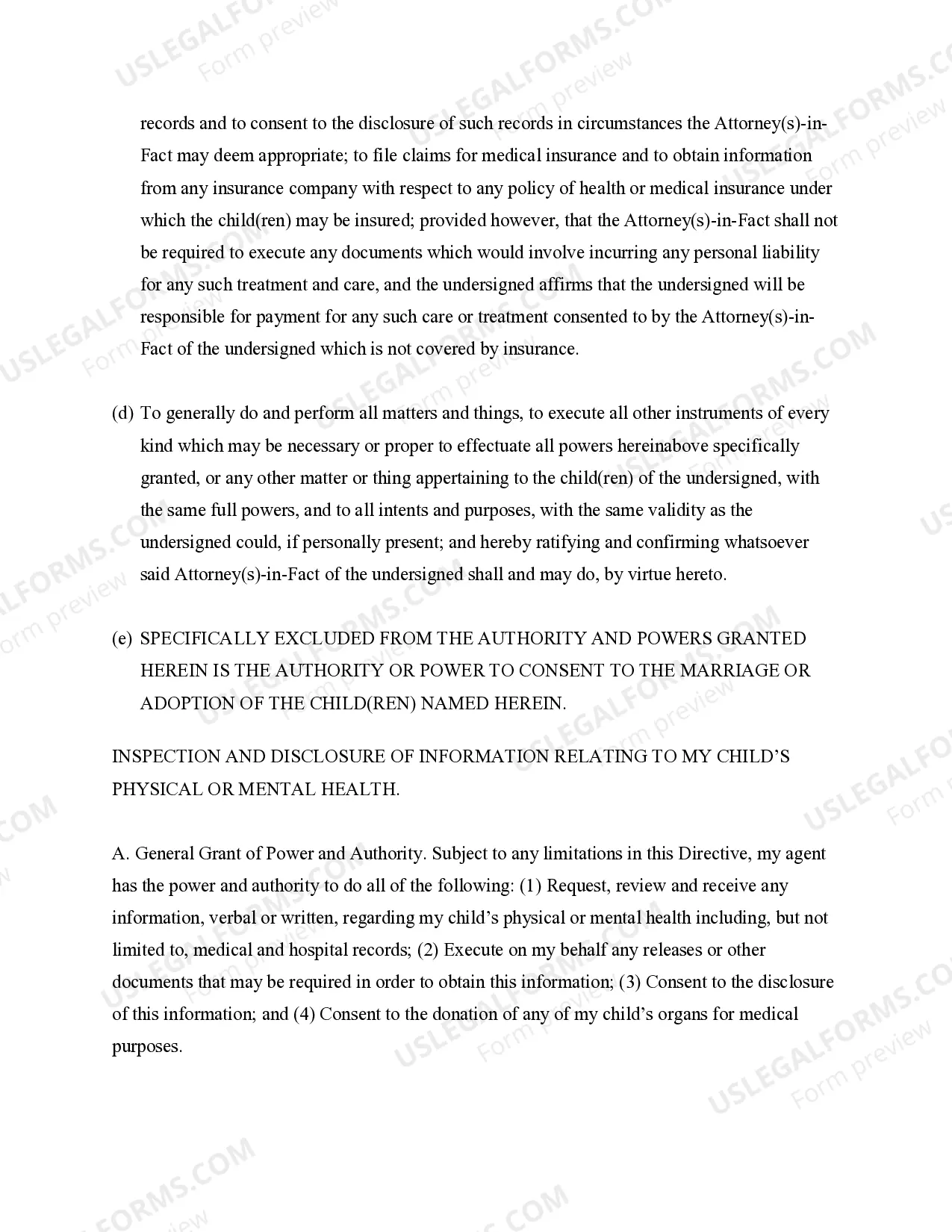
- Specific powers granted, including medical and educational decisions.
- Exclusions, such as the authority to consent to marriage or adoption.
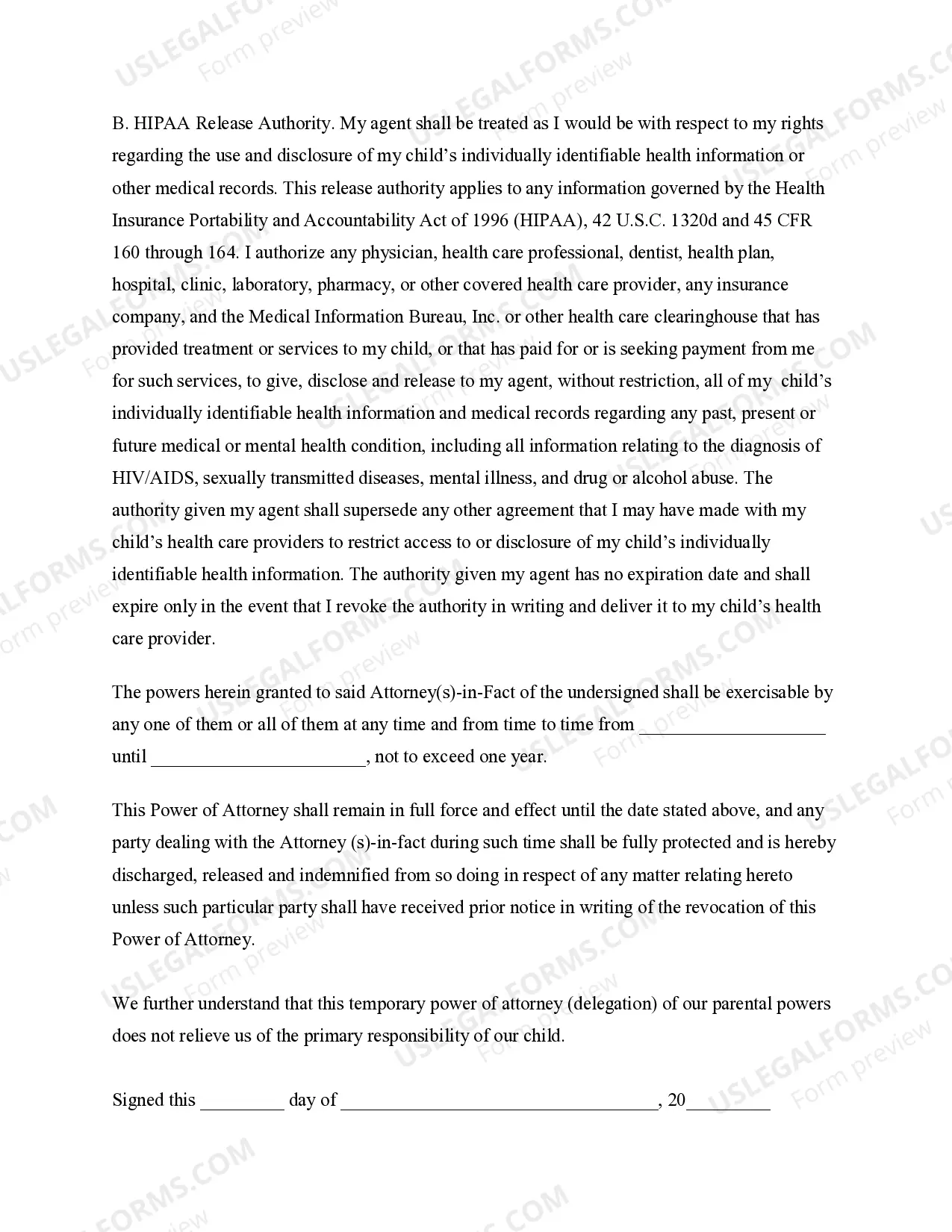
- Duration of the power of attorney, which can be set for a specific time frame.
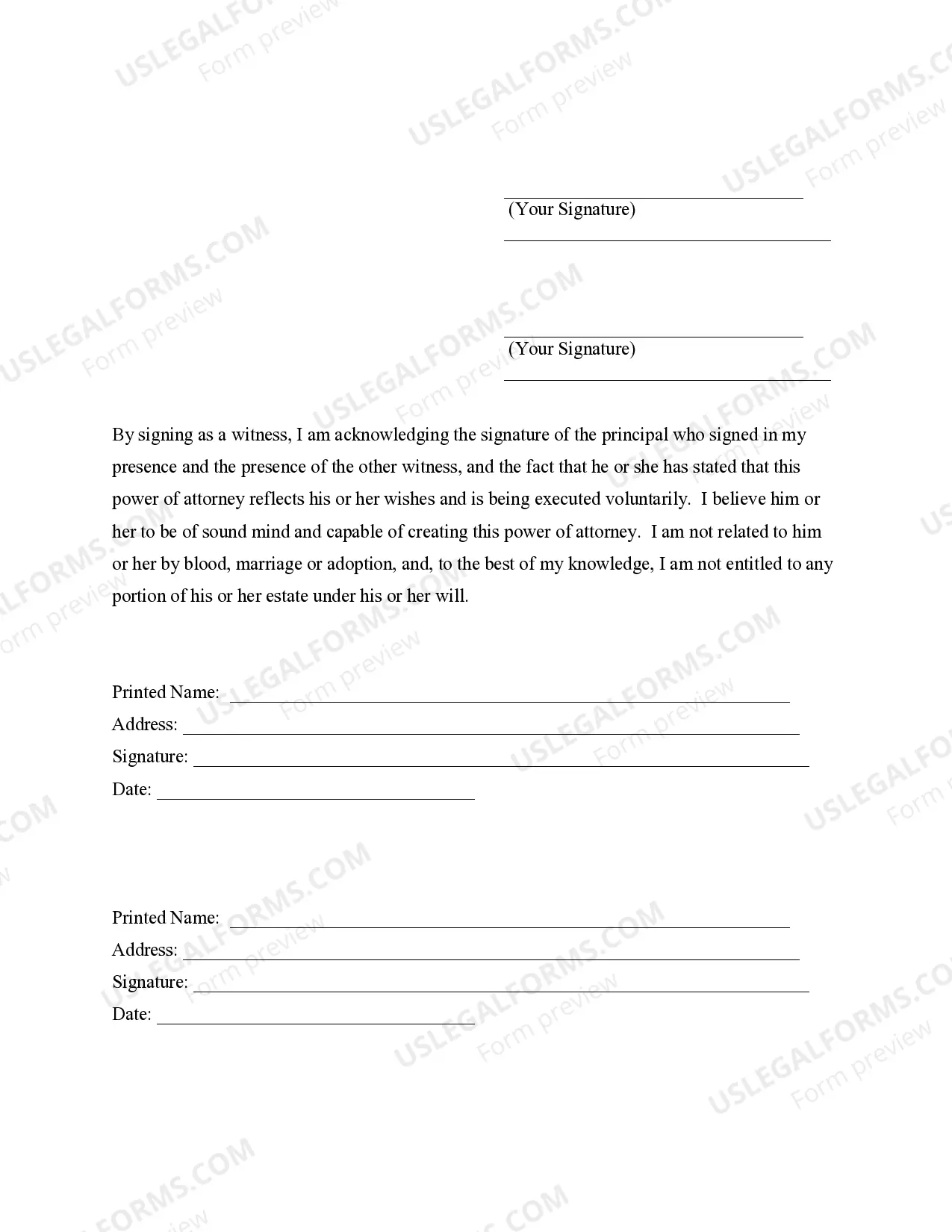
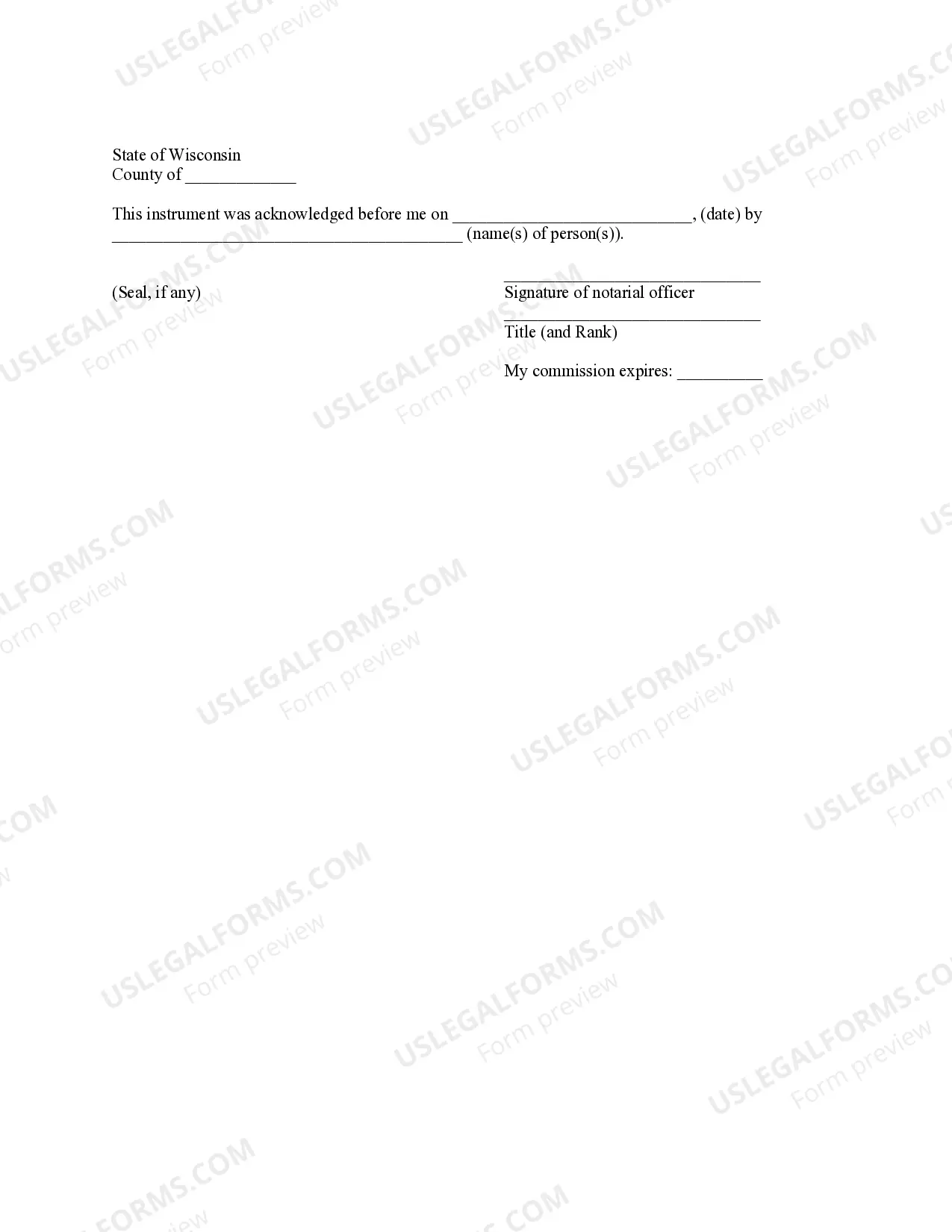
- Signature and notarization requirements for validity.
When this form is needed
This form is useful in various situations, such as when a parent is traveling or temporarily unable to care for their child due to health issues or other obligations. It is also relevant when a parent needs to ensure that someone they trust can make immediate decisions concerning the child's education or health care in their absence.
Who should use this form
- Parents or legal guardians of a child or children.
- Individuals who need to designate someone else to care for their child temporarily.
- Those who want to ensure their child's health and educational needs are met in case of illness or extended absence.
Completing this form step by step
- Identify the parent(s) granting the power of attorney by providing their full names and addresses.
- Name the chosen attorney-in-fact who will oversee the child's care.
- Clearly outline the specific powers being granted, including medical and educational decisions.
- Set the duration for which the power of attorney will be valid, if desired.
- Provide signatures for both the parent(s) and the witness(es), and ensure notarization if required.
Notarization guidance
Yes, this form must be notarized to be legally valid. Notarization ensures that the document is recognized and accepted by authorities. US Legal Forms offers integrated online notarization services that are available 24/7, allowing you to complete the process securely via video call without the need to travel.
Get your form ready online
Our built-in tools help you complete, sign, share, and store your documents in one place.
Make edits, fill in missing information, and update formatting in US Legal Forms—just like you would in MS Word.
Download a copy, print it, send it by email, or mail it via USPS—whatever works best for your next step.
Sign and collect signatures with our SignNow integration. Send to multiple recipients, set reminders, and more. Go Premium to unlock E-Sign.
If this form requires notarization, complete it online through a secure video call—no need to meet a notary in person or wait for an appointment.
We protect your documents and personal data by following strict security and privacy standards.

Make edits, fill in missing information, and update formatting in US Legal Forms—just like you would in MS Word.

Download a copy, print it, send it by email, or mail it via USPS—whatever works best for your next step.

Sign and collect signatures with our SignNow integration. Send to multiple recipients, set reminders, and more. Go Premium to unlock E-Sign.

If this form requires notarization, complete it online through a secure video call—no need to meet a notary in person or wait for an appointment.

We protect your documents and personal data by following strict security and privacy standards.
Mistakes to watch out for
- Failing to specify the duration of the power of attorney.
- Not having the document notarized, if required by law.
- Leaving out critical details about the child or the attorney-in-fact.
- Not discussing the arrangement with the attorney-in-fact ahead of time.
Benefits of using this form online
- Convenience of downloading and completing the form at your own pace.
- Access to legally vetted templates crafted by licensed attorneys.
- Editable forms that can be personalized to meet specific needs.
- Easy to store electronically for future reference.
Quick recap
- This form allows a designated individual to make important decisions for a child when parents cannot.
- It includes specific powers related to medical and educational decisions.
- Notarization is required for the form to be considered valid.
- Clear communication with the attorney-in-fact regarding the parent's wishes is essential.
Looking for another form?
Form popularity
FAQ
The power of attorney must be signed by the principal or by another adult in the principal's presence and under the direction of the principal. The power of attorney is signed and acknowledged before a notary public or is signed by two witnesses.
Wisconsin statutes do not explicitly require a Power of Attorney to be notarized, however, it does mention that any signature acknowledged before a notary public is presumed to be genuine. Therefore, it is highly recommended that you notarize your Wisconsin Power of Attorney.
Most states offer simple forms to help you create a power of attorney for finances. Generally, the document must be signed, witnessed and notarized by an adult. If your agent will have to deal with real estate assets, some states require you to put the document on file in the local land records office.
A Power of Attorney is a legal document that you can create to give another adult the authority to act on your behalf.The Parental Power of Attorney is used by parents and guardians to give another person temporary authority over their child. It is sometimes referred to as a form for Delegation of Parental Powers.
If it is signed by two witnesses, they must witness either (1) the signing of the power of attorney or (2) the principal's signing or acknowledgment of his or her signature. A durable power of attorney that may affect real property should be acknowledged before a notary public so that it may easily be recorded.
In many states, notarization is required by law to make the durable power of attorney valid. But even where law doesn't require it, custom usually does. A durable power of attorney that isn't notarized may not be accepted by people with whom your attorney-in-fact tries to deal.
Power of attorney gives someone other than a legal parent or guardian the right to make decisions about a child's welfare, but it does not establish legal custody. You can only modify legal custody through court proceedings.
A power of attorney and a guardianship are tools that help someone act in your stead if you become incapacitated. With a power of attorney, you choose who you want to act for you. In a guardianship proceeding, the court chooses who will act as guardian.
A power of attorney over a child is a document signed and notarized by a parent giving a non- parent authority to make decisions for a minor child.It can be used to authorize the person to obtain medical treatment for a child or sign up a child for an activity or for other significant decisions.