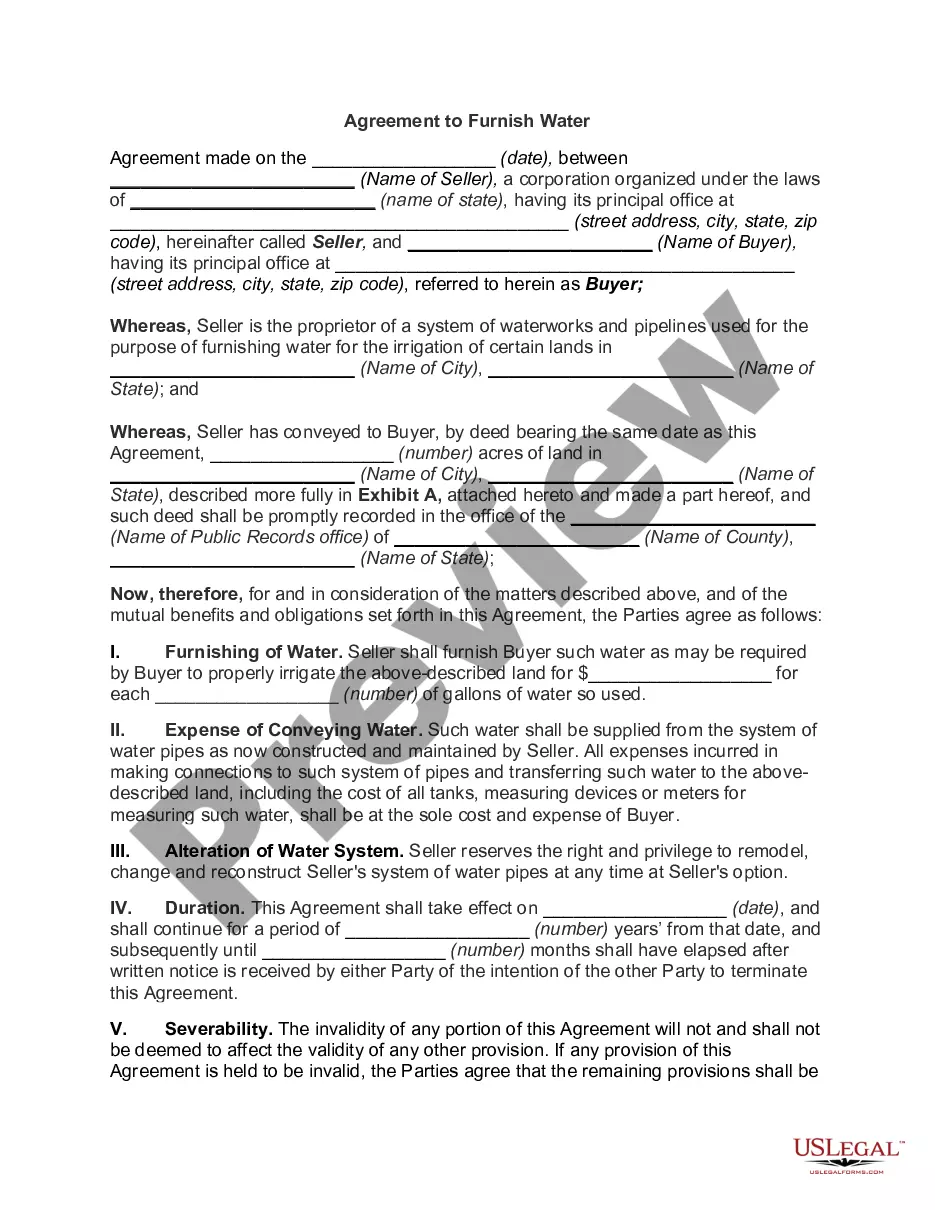
Wisconsin Sample Letter to State Tax Commission concerning Decedent's Estate
Description
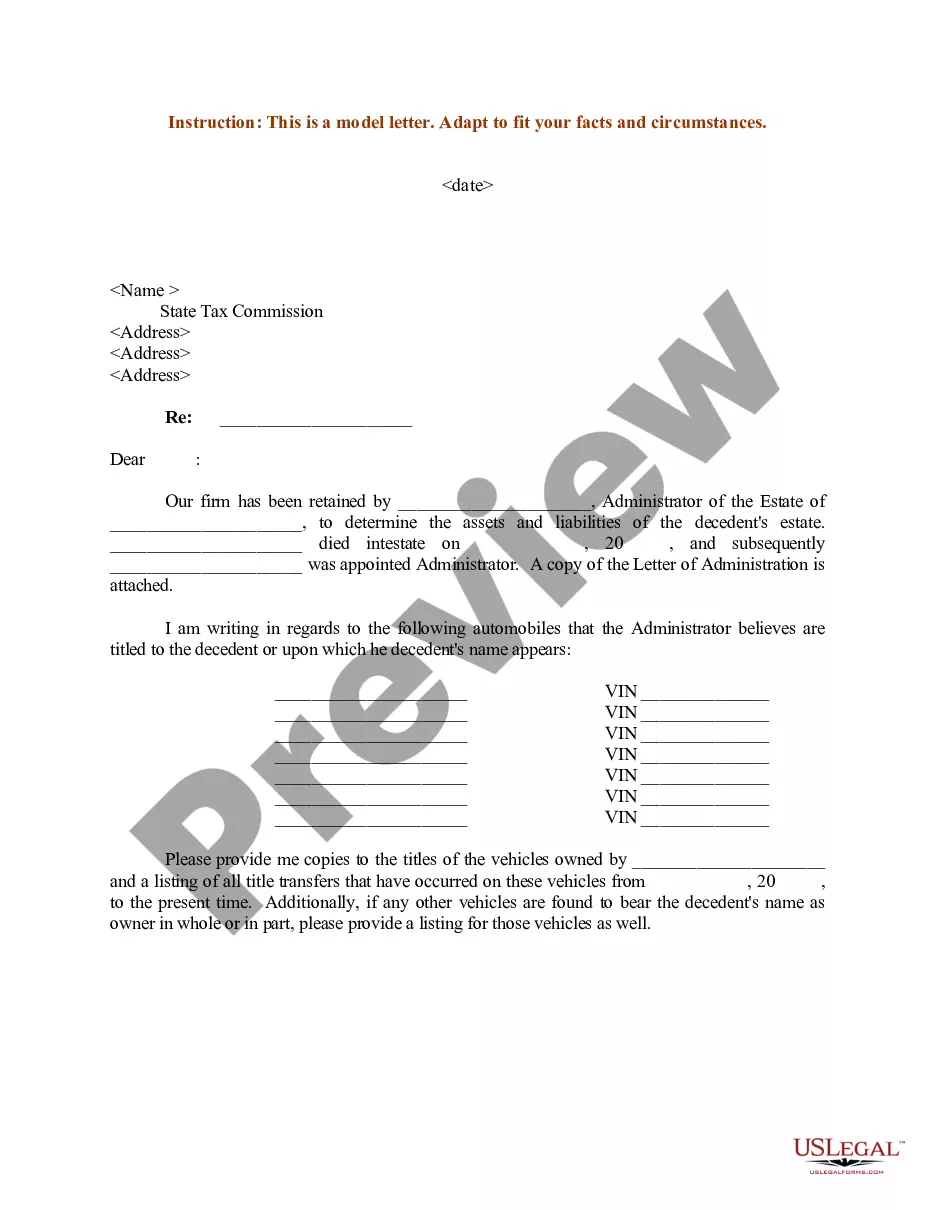
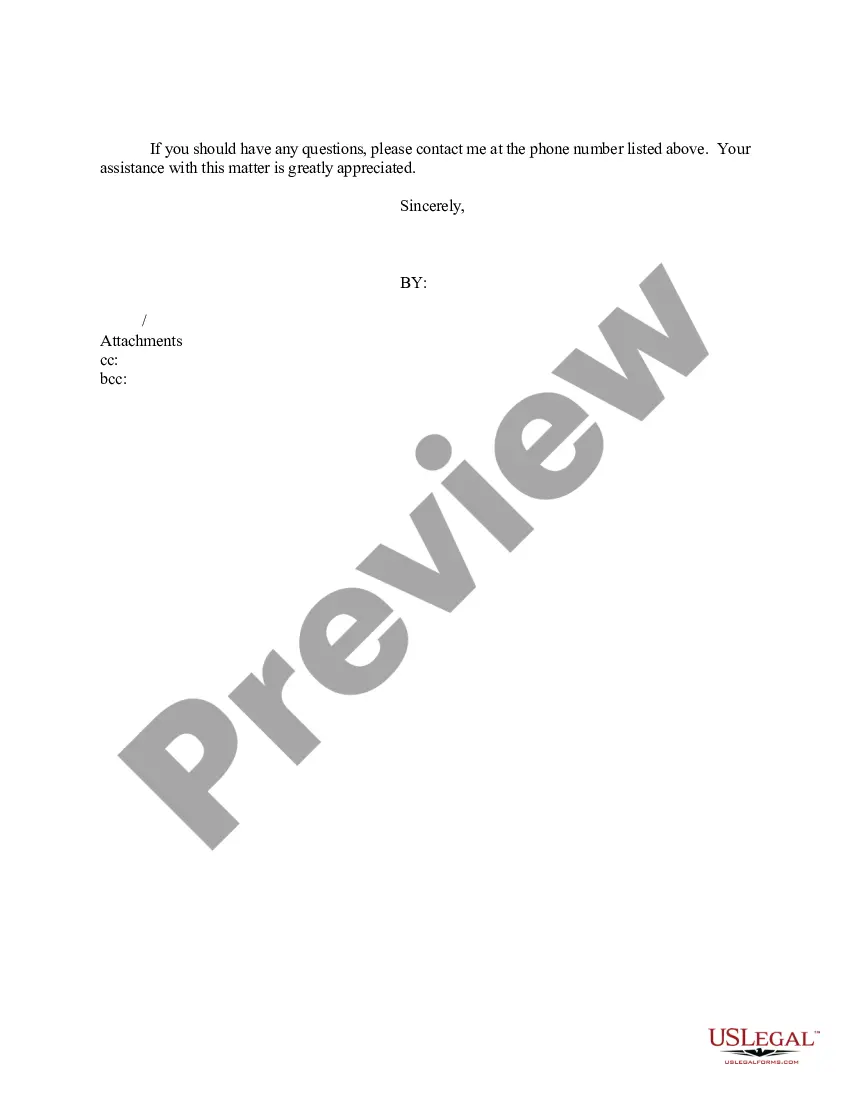
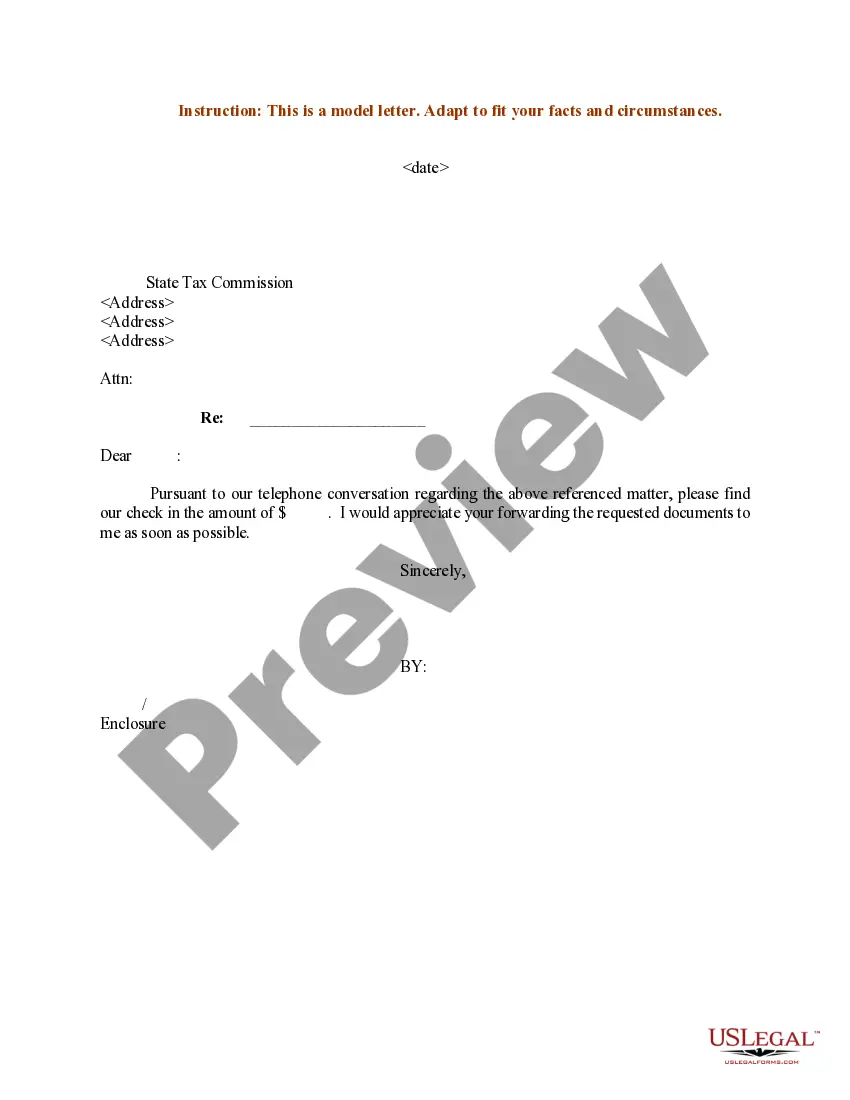
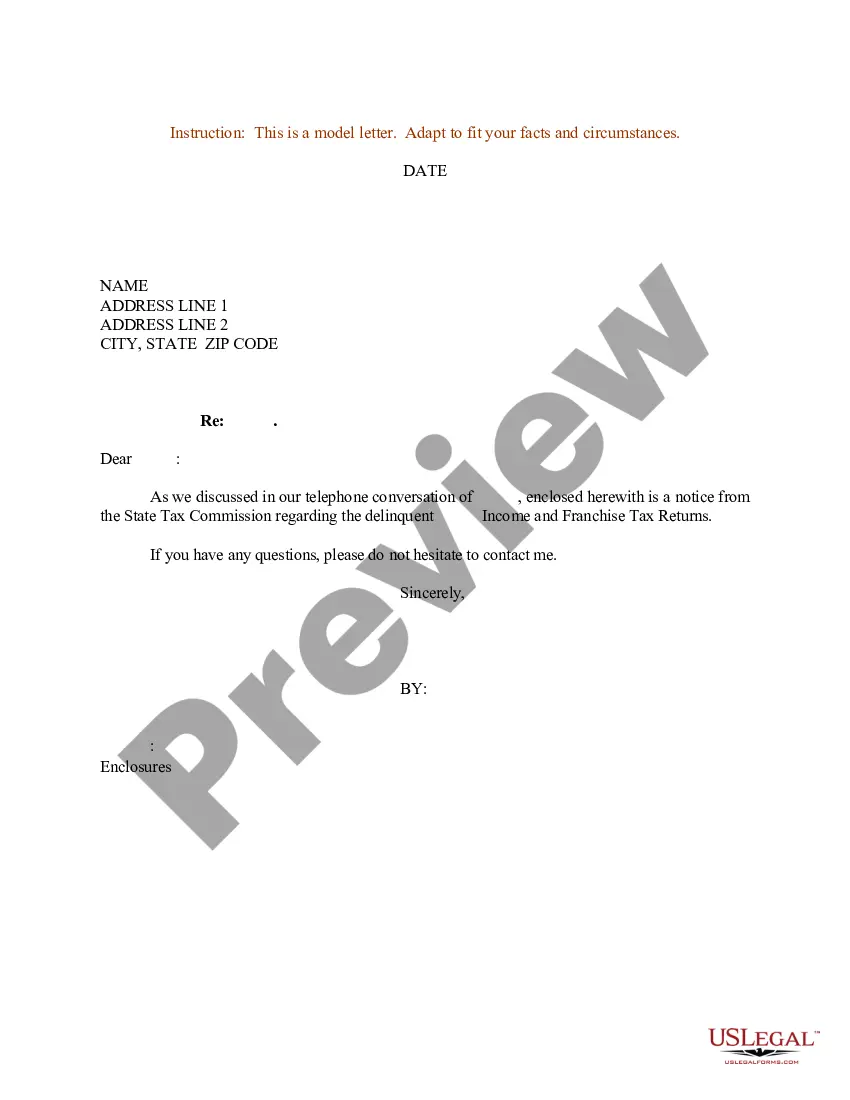
How to fill out Sample Letter To State Tax Commission Concerning Decedent's Estate?
Finding the correct official document template can be a challenge. Clearly, there are numerous templates accessible online, but how do you locate the official form you need? Utilize the US Legal Forms website. This platform offers thousands of templates, including the Wisconsin Sample Letter to State Tax Commission regarding Decedent's Estate, suitable for both business and personal requirements. All forms are reviewed by experts and comply with federal and state regulations.
If you are already registered, Log In to your account and click the Obtain button to retrieve the Wisconsin Sample Letter to State Tax Commission regarding Decedent's Estate. Use your account to search for the official forms you have purchased previously. Navigate to the My documents tab in your account to get another copy of the document you need.
If you are a new user of US Legal Forms, here are simple guidelines for you to follow: First, ensure you have selected the correct form for your city/region. You may review the form using the Review button and read the form description to confirm it is suitable for you. If the form does not meet your requirements, use the Search field to find the appropriate form. Once you are certain that the form is correct, click on the Buy now button to obtain the form. Choose the pricing plan you prefer and enter the necessary information. Create your account and complete the payment using your PayPal account or credit card. Choose the submission format and download the official document template to your device. Fill out, modify, print, and sign the received Wisconsin Sample Letter to State Tax Commission regarding Decedent's Estate.
US Legal Forms is the largest repository of official forms where you can find various document templates. Use the service to download well-crafted documents that meet state requirements.
- Finding the correct official document template can be a challenge.
- Clearly, there are numerous templates accessible online, but how do you locate the official form you need.
- Utilize the US Legal Forms website.
- This platform offers thousands of templates.
- All forms are reviewed by experts.
- If you are already registered, Log In to your account.
Form popularity
FAQ
The IRS requires the filing of an income tax return for trusts and estates on Form 1041?formerly known as the fiduciary income tax return. This is because trusts and estates must pay income tax on their income just like you report your own income on a personal tax return each year.
Income tax on income generated by assets of the estate of the deceased. If the estate generates more than $600 in annual gross income, you are required to file Form 1041, U.S. Income Tax Return for Estates and Trusts. An estate may also need to pay quarterly estimated taxes.
Use Form 804 to claim a refund on behalf of a deceased taxpayer. If you are claiming a refund on behalf of a deceased tax- payer, you may be required to file Form 804. If you are unable to cash the refund check that was sent to you, you should return it with a completed Form 804.
An estate tax return is required if the gross value of the estate is over a certain threshold. For individuals who passed in 2023, the threshold was $12.92 million. Almost anything belonging to the deceased with a tangible cash value is included in the value of the estate.
State estate taxes: Top tax rates and exemption thresholds, tax year 2022 Connecticut: 12%, $9,100,000. District of Columbia: 16%, $4,000,000. Hawaii: 20%, $5,490,000. Illinois: 16%, $4,254,800. Maine: 12%, $6,010,000. Maryland: 16%, $5,000,000. Massachusetts: 16%, $1,000,000. Minnesota: 16%, $3,000,000.
If a tax refund is due, the person claiming the refund must fill out IRS Form 1310: Statement of Person Claiming Refund Due to Deceased Taxpayer unless the person is a surviving spouse filing a joint return or a court-appointed personal representative.
If you file a return and claim a refund for a deceased taxpayer, you must be: A surviving spouse/RDP. A surviving relative. The sole beneficiary.
Like most other states, Wisconsin has no estate tax.