Wisconsin Dismissal Without Prejudice
Description
Get your form ready online
Our built-in tools help you complete, sign, share, and store your documents in one place.
Make edits, fill in missing information, and update formatting in US Legal Forms—just like you would in MS Word.
Download a copy, print it, send it by email, or mail it via USPS—whatever works best for your next step.
Sign and collect signatures with our SignNow integration. Send to multiple recipients, set reminders, and more. Go Premium to unlock E-Sign.
If this form requires notarization, complete it online through a secure video call—no need to meet a notary in person or wait for an appointment.
We protect your documents and personal data by following strict security and privacy standards.

Make edits, fill in missing information, and update formatting in US Legal Forms—just like you would in MS Word.

Download a copy, print it, send it by email, or mail it via USPS—whatever works best for your next step.

Sign and collect signatures with our SignNow integration. Send to multiple recipients, set reminders, and more. Go Premium to unlock E-Sign.

If this form requires notarization, complete it online through a secure video call—no need to meet a notary in person or wait for an appointment.

We protect your documents and personal data by following strict security and privacy standards.
Looking for another form?
How to fill out Dismissal Without Prejudice?
Are you in a position where you require documents for either professional or personal purposes on a regular basis? There are numerous legal document templates accessible online, but finding reliable ones can be challenging. US Legal Forms offers a vast array of template options, such as the Wisconsin Dismissal Without Prejudice, designed to comply with state and federal regulations.
If you are already familiar with the US Legal Forms site and have an account, simply Log In. Then, you can download the Wisconsin Dismissal Without Prejudice template.
If you do not have an account and wish to start using US Legal Forms, follow these steps: 1. Identify the form you need and verify it is for the correct area/region. 2. Utilize the Review feature to examine the form. 3. Check the summary to ensure you have selected the right form. 4. If the form is not what you are looking for, use the Search field to find the form that matches your needs. 5. Once you find the correct form, click Purchase now. 6. Choose the pricing plan you prefer, fill in the required details to create your account, and pay for your order using PayPal or Visa or Mastercard. 7. Select a convenient document format and download your copy.
- Access all the document templates you have purchased in the My documents section. You can obtain an additional copy of Wisconsin Dismissal Without Prejudice at any time, if necessary. Just click on the desired form to download or print the document template.
- Utilize US Legal Forms, which has the largest collection of legal forms, to save time and prevent mistakes. The service offers well-crafted legal document templates suitable for various purposes.
- Create an account on US Legal Forms and start simplifying your life.
Form popularity
FAQ
It's important to remember that the grounds for dismissing a case must be stated in the first document filed with the court; otherwise, the issue is deemed waived. The motion must be filed with the court and served on the opposing party. After that, the other party has a couple of weeks to respond to the motion.
A judge may dismiss a case without prejudice in order to allow for errors in the case presented to be addressed before it is brought back to court. A judge will dismiss a case with prejudice if he or she finds reason why the case should not move forward and should be permanently closed.
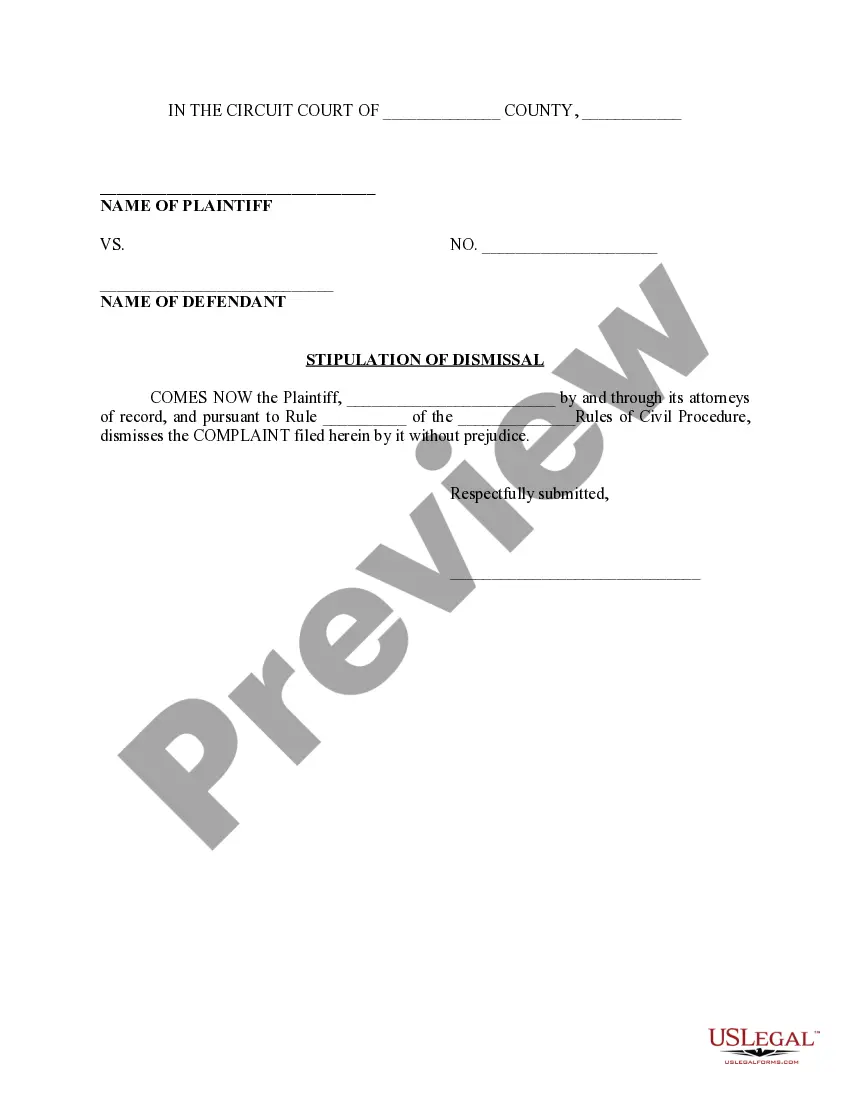
An action may be dismissed by the plaintiff without order of court by serving and filing a notice of dismissal at any time before service by an adverse party of responsive pleading or motion or by the filing of a stipulation of dismissal signed by all parties who have appeared in the action.
A defendant may file a motion to dismiss for failure to state a claim after filing an answer. A defendant who raises the defenses of failure to state a claim or the statute of limitations in an answer does not forfeit the right to bring those defenses on for disposition by subsequent motion.
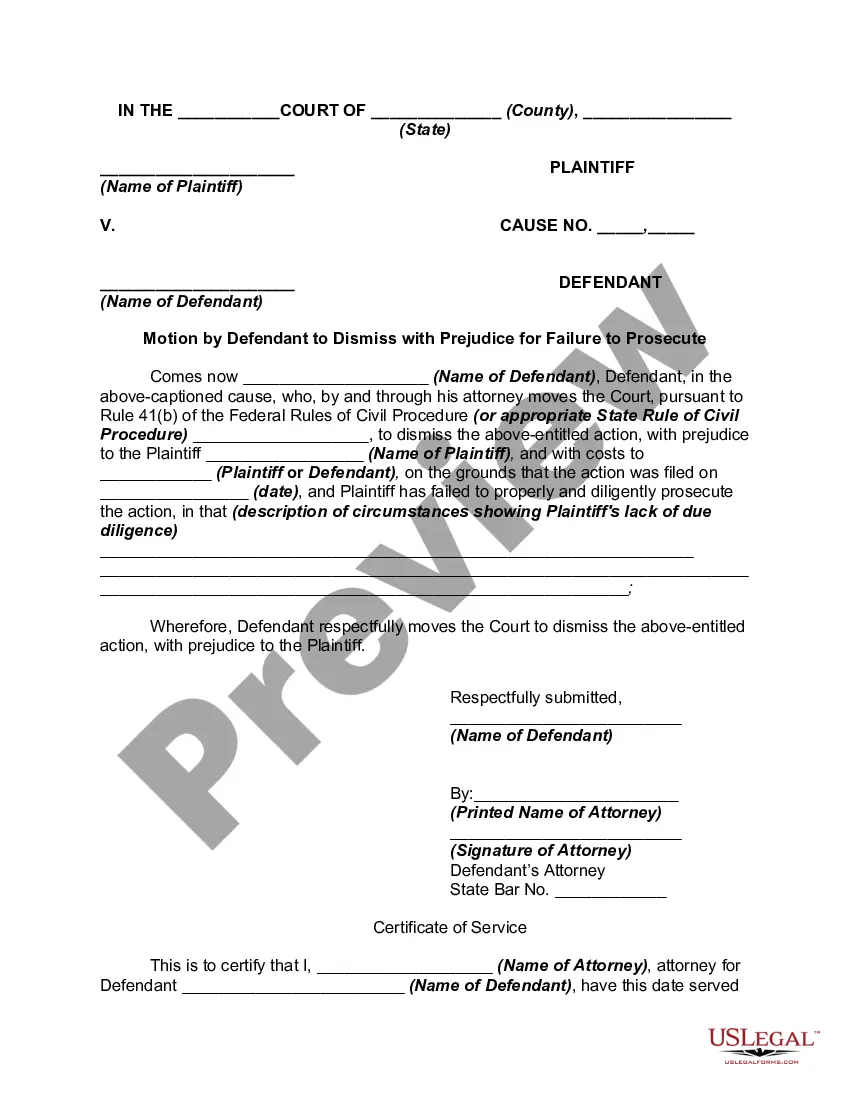
A motion to dismiss is a formal request made by a defendant in a civil case to ask the court to dismiss the case before it proceeds. This legal maneuver is grounded in the idea that even if the facts presented by the plaintiff are taken as true, they do not legally entitle the plaintiff to relief.
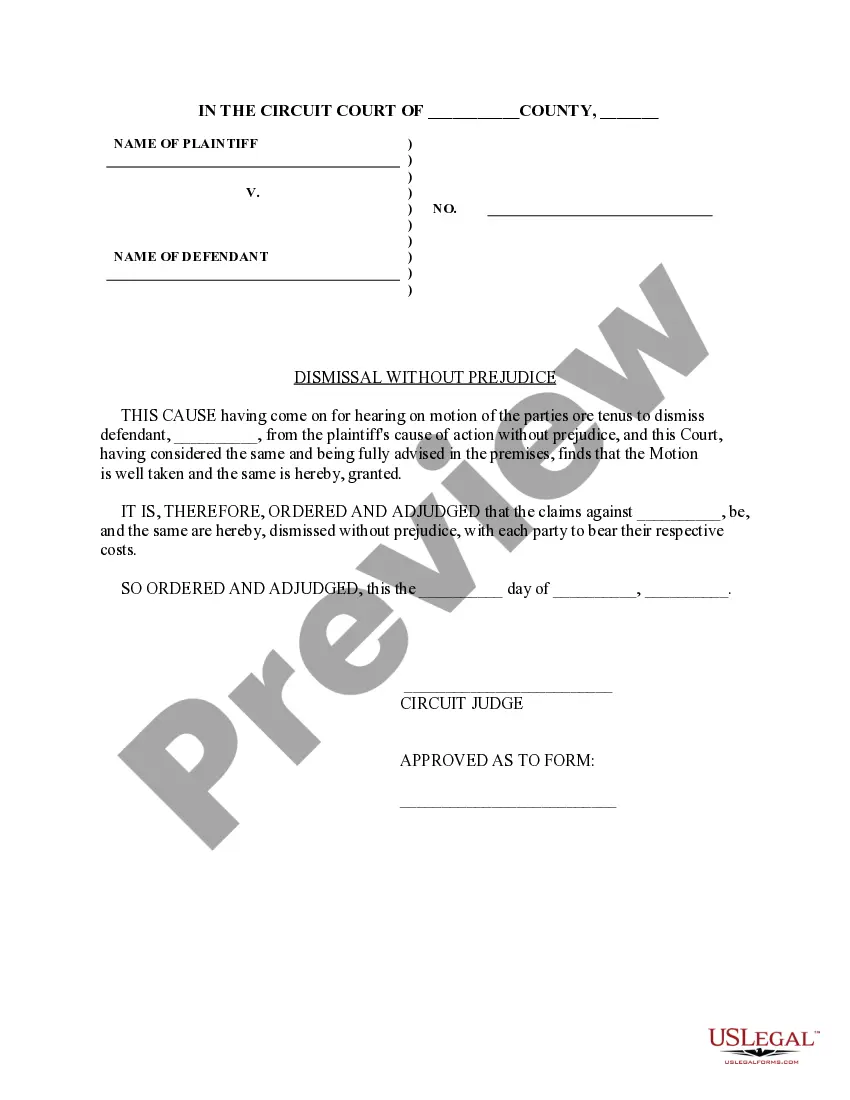
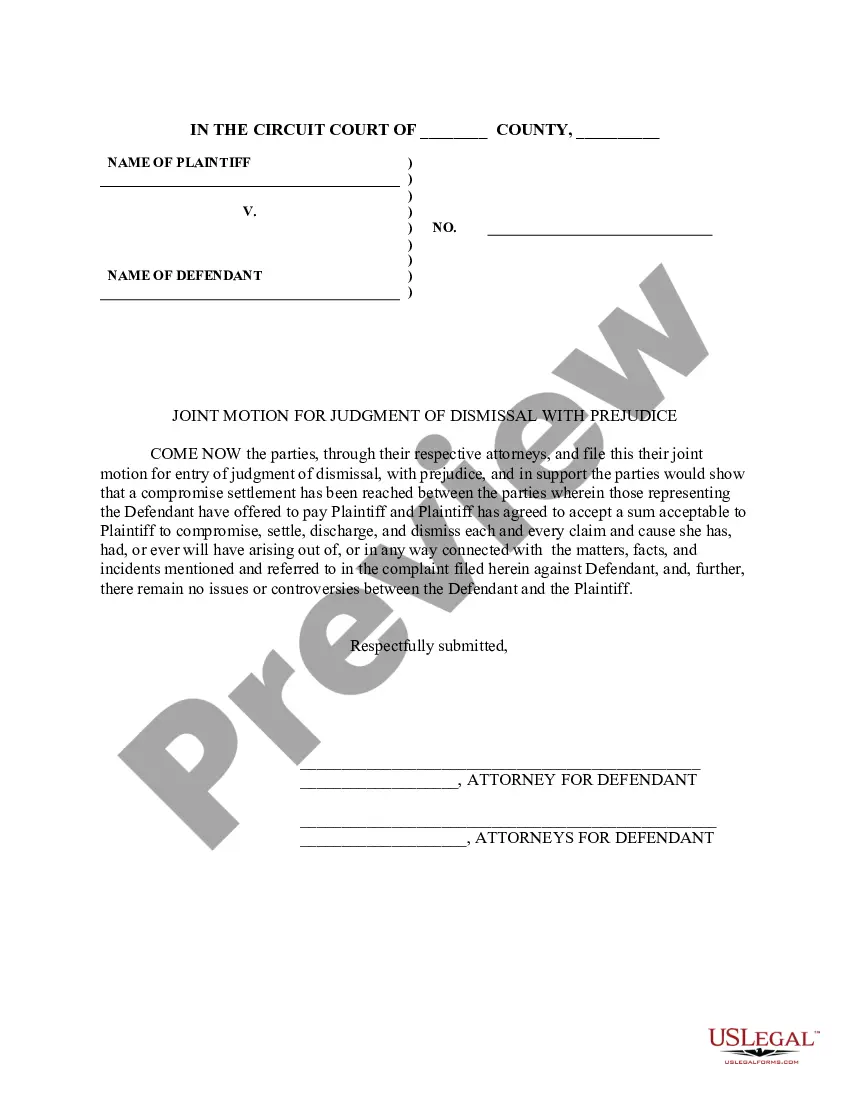
Dismissal without prejudice means that the judge dismissed the plaintiff's or prosecutor's case without damaging their right to have their matter heard in court later. A prosecutor may ask to withdraw the case against a person to have more time to make a case stronger, find more evidence or question other witnesses.