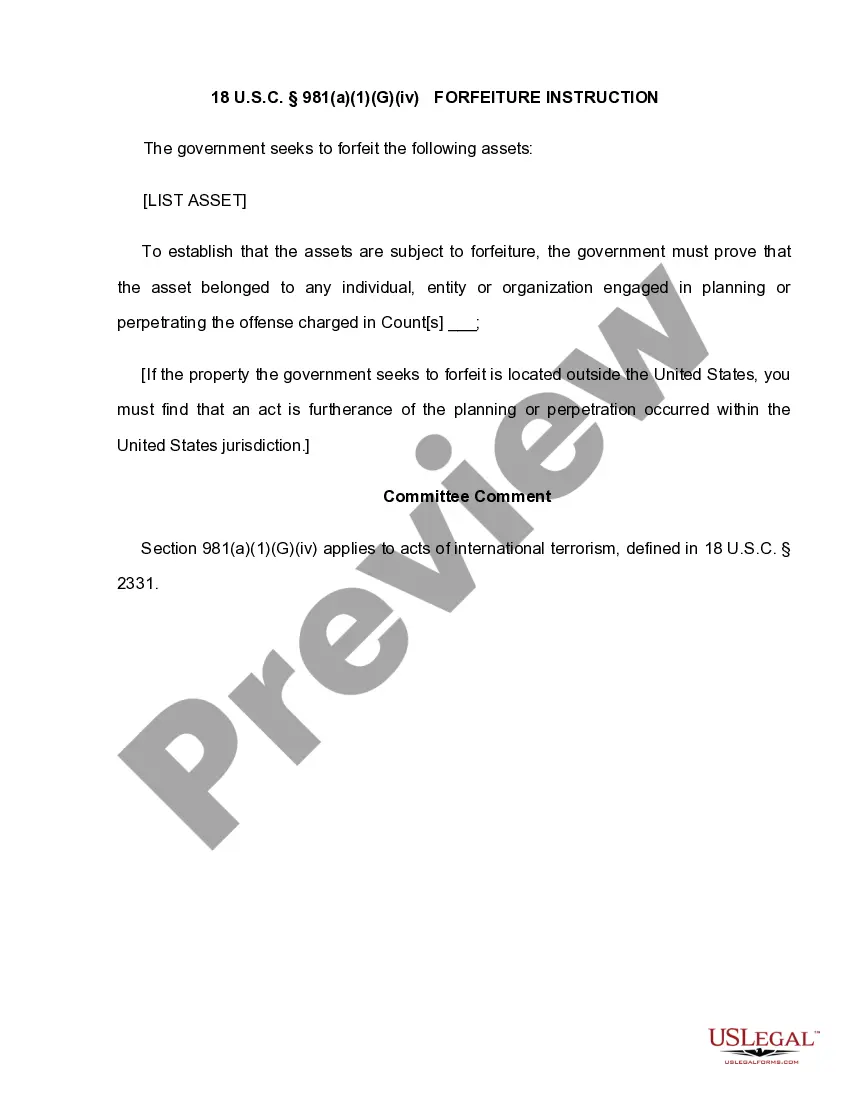
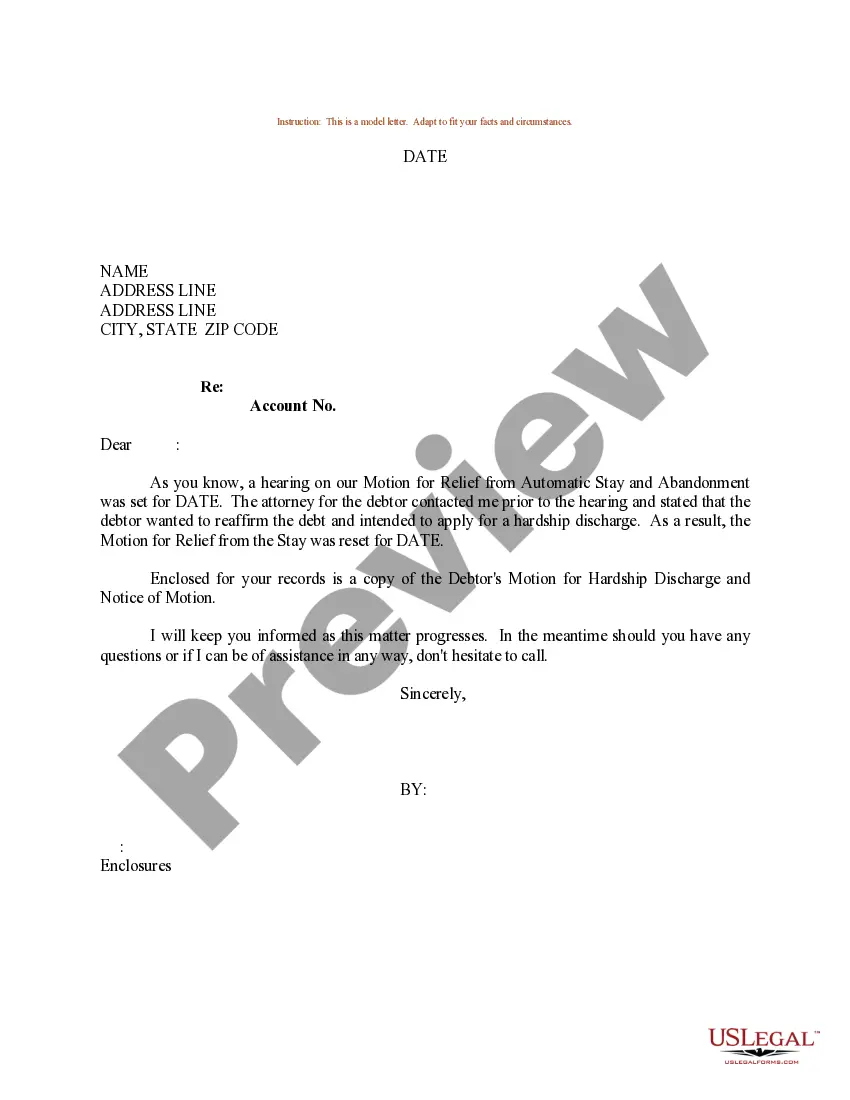
Wisconsin Sample Letter for Debtor's Motion for Hardship Discharge and Notice of Motion
Description
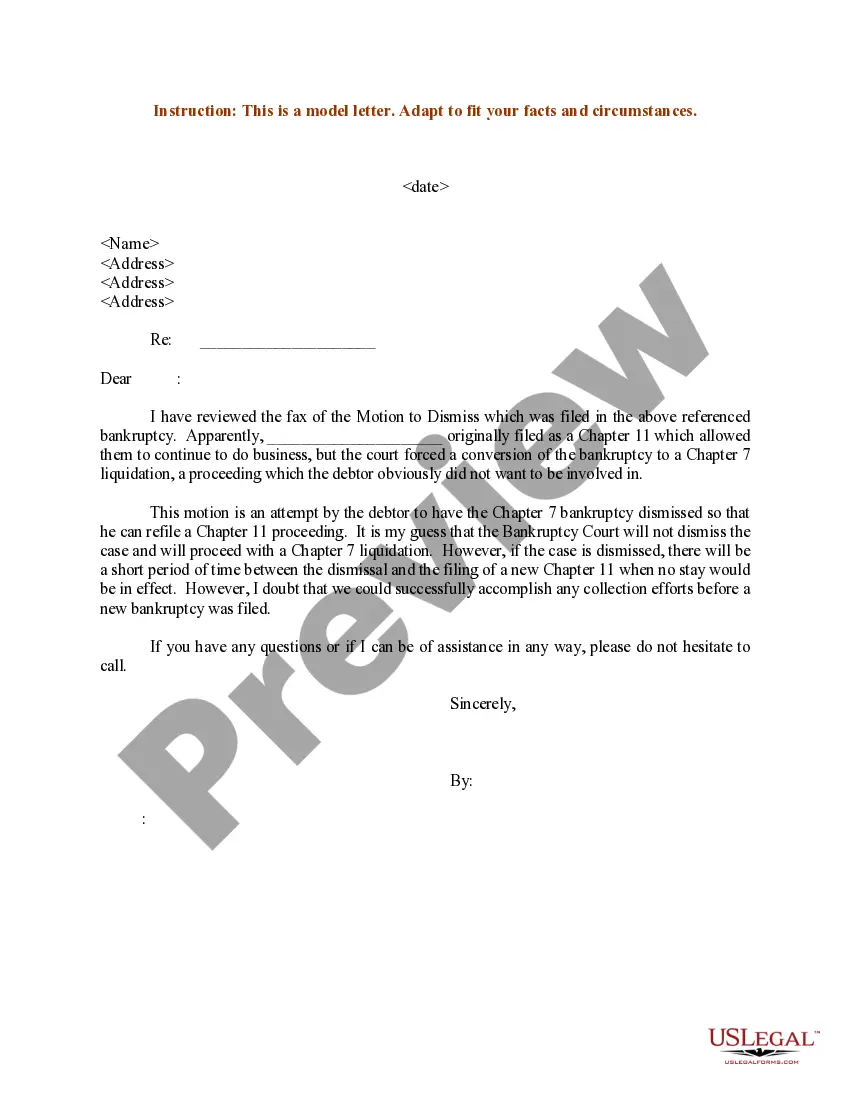
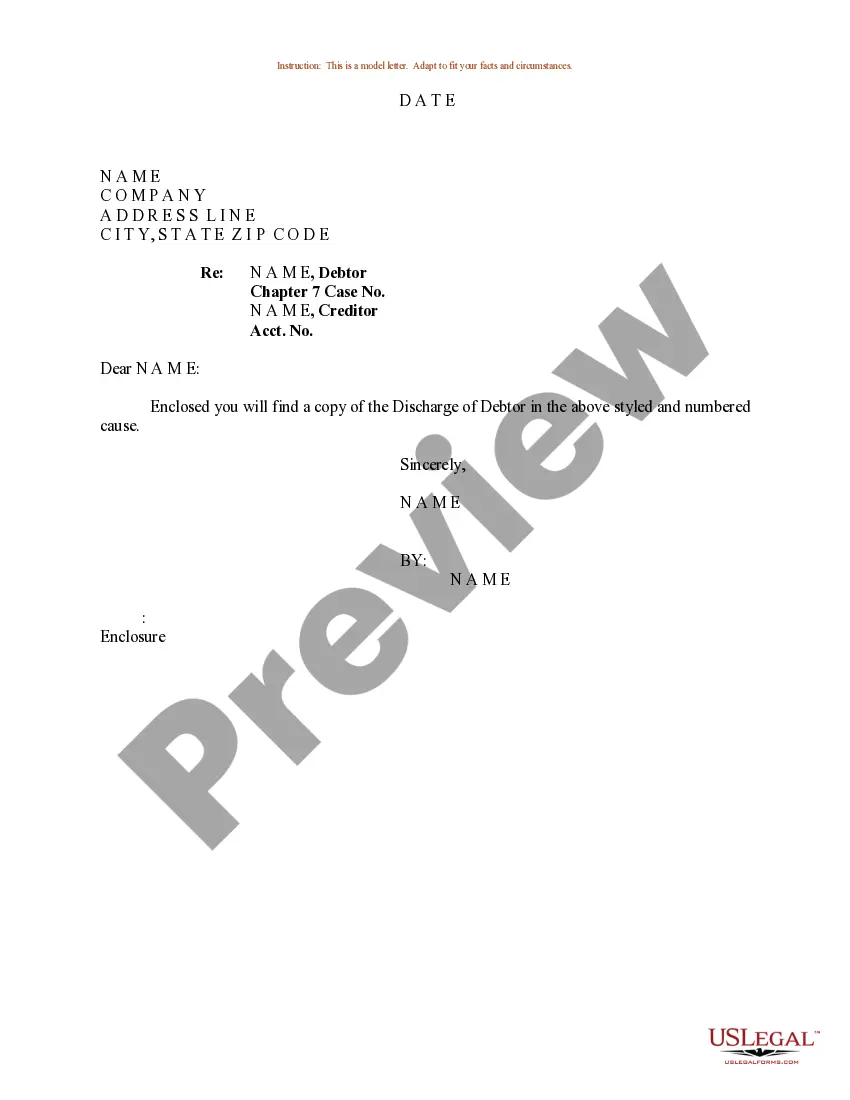
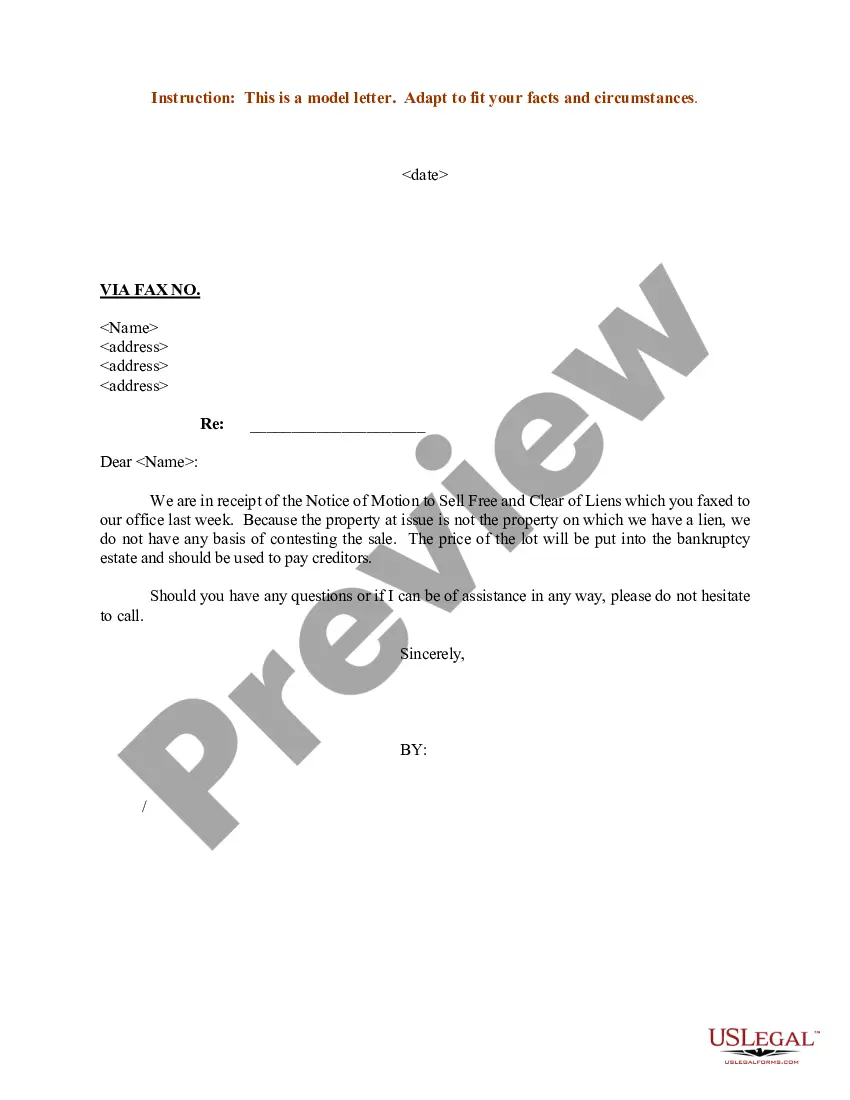
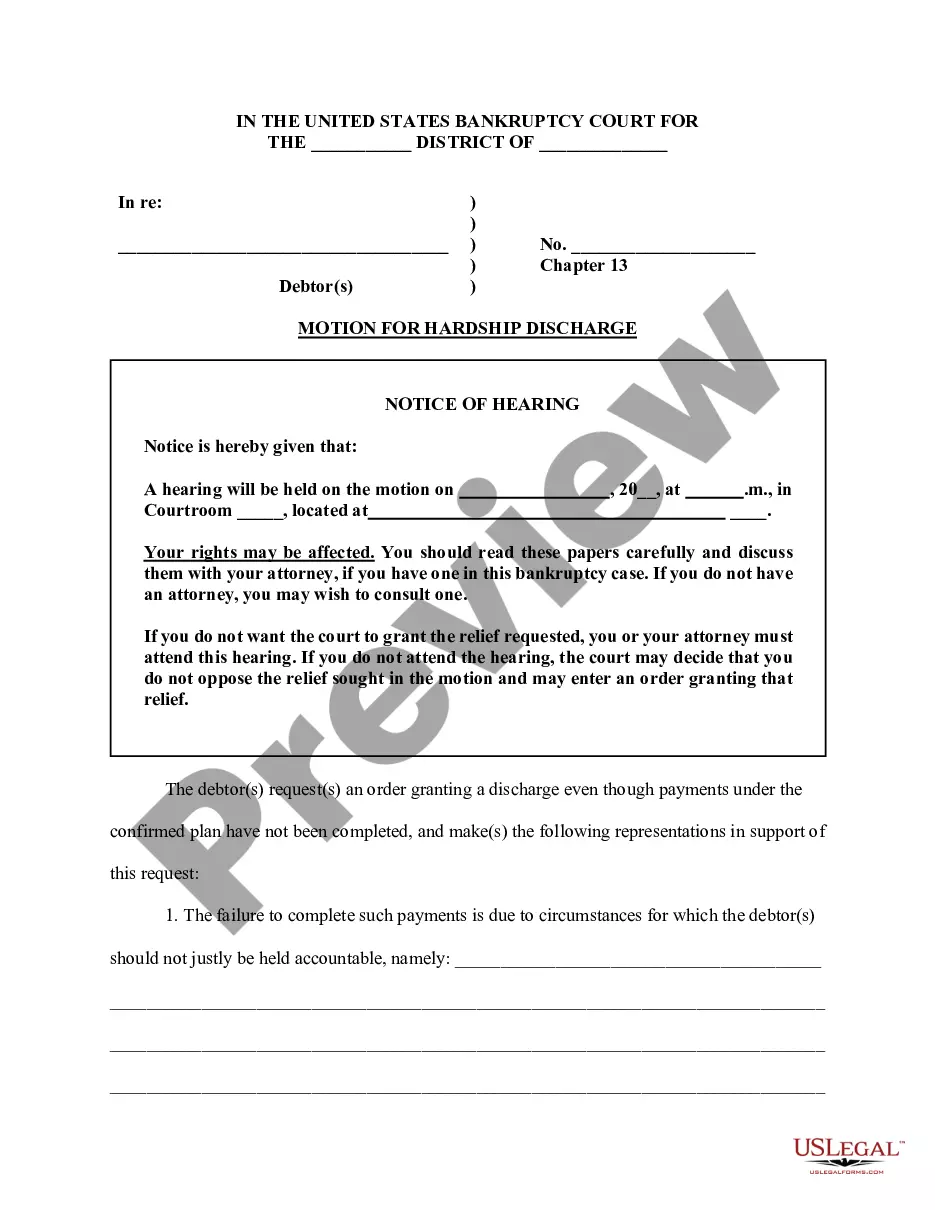


How to fill out Sample Letter For Debtor's Motion For Hardship Discharge And Notice Of Motion?
Locating the appropriate legitimate document template can be a challenge. Obviously, there are numerous formats available online, but how do you find the legitimate form you seek? Utilize the US Legal Forms website. The service offers thousands of templates, including the Wisconsin Sample Letter for Debtor's Motion for Hardship Discharge and Notice of Motion, which can be utilized for business and personal needs. All of the forms are reviewed by experts and comply with state and federal regulations.
If you are already registered, Log In to your account and click the Download button to access the Wisconsin Sample Letter for Debtor's Motion for Hardship Discharge and Notice of Motion. Use your account to search through the legal forms you have previously purchased. Visit the My documents section of your account and obtain another copy of the document you require.
If you are a new user of US Legal Forms, here are simple instructions for you to follow: First, ensure you have selected the correct form for your city/state. You can review the form using the Review button and read the form description to confirm it is the right one for you. If the form does not meet your needs, use the Search area to find the appropriate form. Once you are sure the form is suitable, click the Get now button to obtain the form. Select the pricing plan you want and enter the required information. Create your account and pay for the transaction using your PayPal account or credit card. Choose the document format and download the legal document template to your device. Finally, complete, edit, print, and sign the downloaded Wisconsin Sample Letter for Debtor's Motion for Hardship Discharge and Notice of Motion.
Utilize the service to download professionally-made documents that adhere to state specifications.
- Finding the right legitimate record web template can be a battle.
- Naturally, there are a lot of layouts available on the Internet.
- Make use of the US Legal Forms internet site.
- The assistance gives 1000s of layouts.
- All of the types are checked out by professionals.
- US Legal Forms may be the biggest collection of legitimate types.
Form popularity
FAQ
In Chapter 13 bankruptcy, a hardship discharge is a court-authorized elimination of debt when a debtor is prevented from completing the repayment plan due to financial hardship that arose while their case is open.
Unlike chapter 7, creditors do not have standing to object to the discharge of a chapter 12 or chapter 13 debtor. Creditors can object to confirmation of the repayment plan, but cannot object to the discharge if the debtor has completed making plan payments.
Creditors should not sell or assign your debt after they get notice of your bankruptcy case. At least they shouldn't without informing the new debt holder about your bankruptcy case.
For restitution, or damages, awarded in a civil action against the debtor as a result of willful or malicious injury by the debtor that caused personal injury to an individual or the death of an individual.
The discharge releases the debtor from all debts provided for by the plan or disallowed (under section 502), with limited exceptions. Creditors provided for in full or in part under the chapter 13 plan may no longer initiate or continue any legal or other action against the debtor to collect the discharged obligations.
What happens when a creditor files an objection? A creditor's objection does not automatically prevent a discharge of debt. The debtor gets a chance to file an answer to the objection, and the court may hold a hearing to decide the issue. This is called an adversary proceeding, and it works much like any other lawsuit.
Forgetting a creditor in a Chapter 13 bankruptcy means it will be deprived of the opportunity to review your repayment plan or receive payments under it. Consequently, your debt to the omitted creditor will not be discharged at the end of your repayment plan.
Skipping a Chapter 13 plan payment can negatively impact your Chapter 13 case. If you miss a payment under the plan, the court can decide to dismiss your case or change your bankruptcy case to Chapter 7. Under a Chapter 7 bankruptcy, the court can liquidate your nonexempt assets to pay your outstanding debts.