West Virginia Charitable Remainder Inter Vivos Annuity Trust
Description
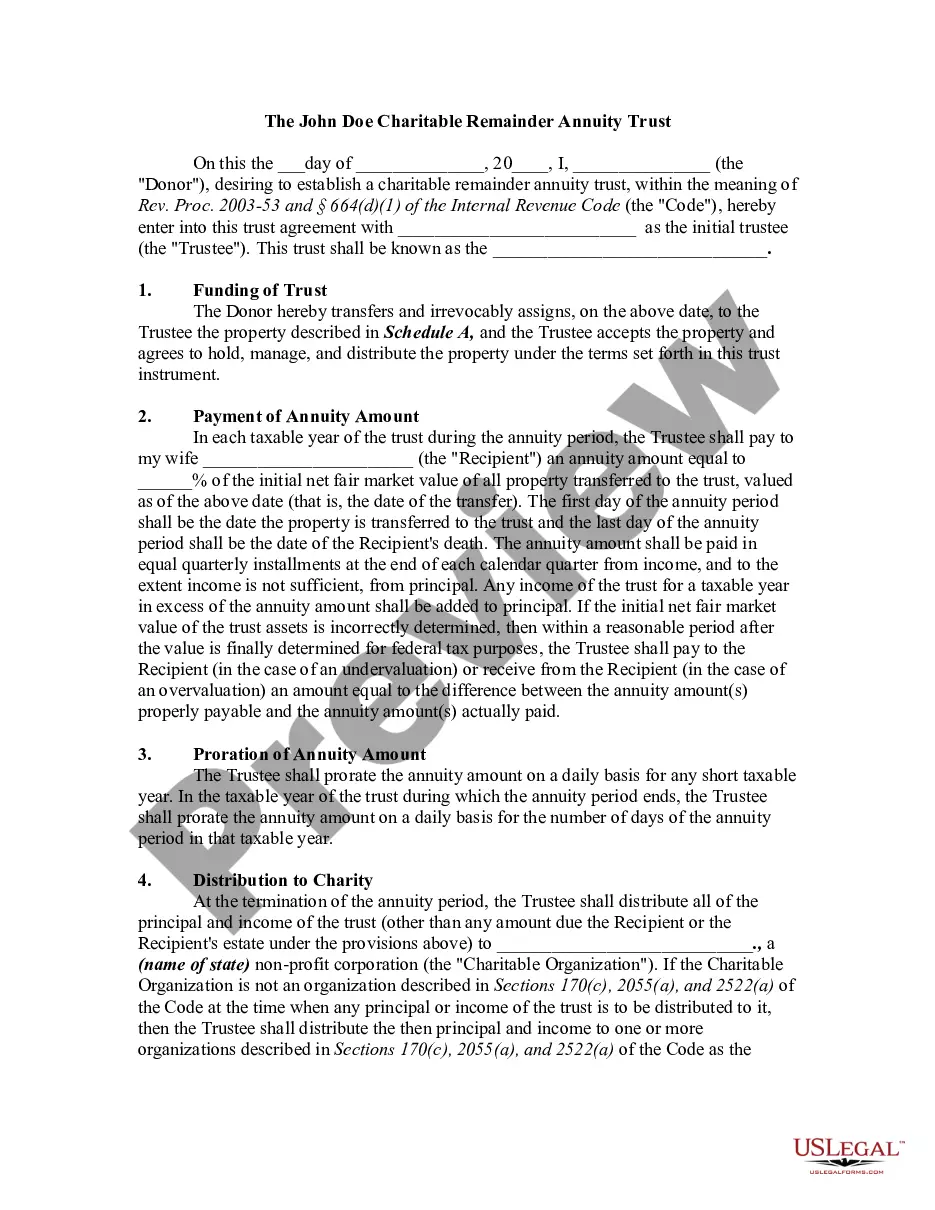
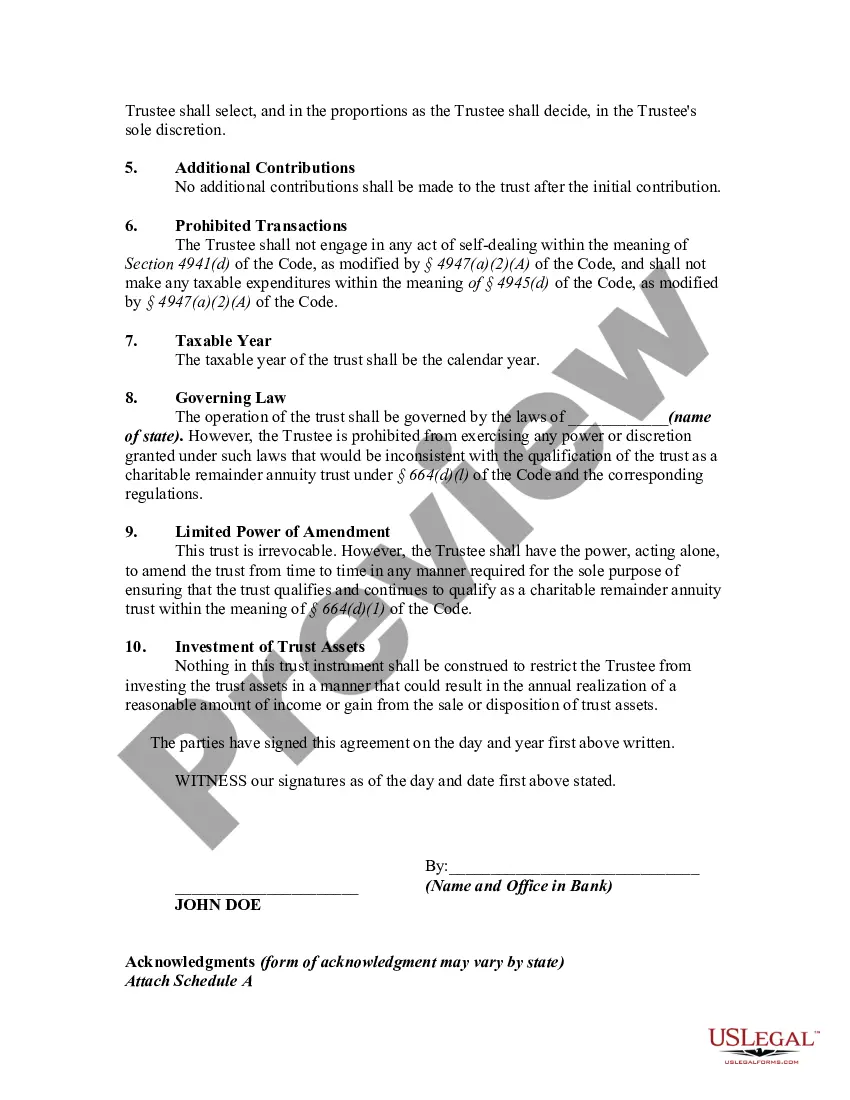
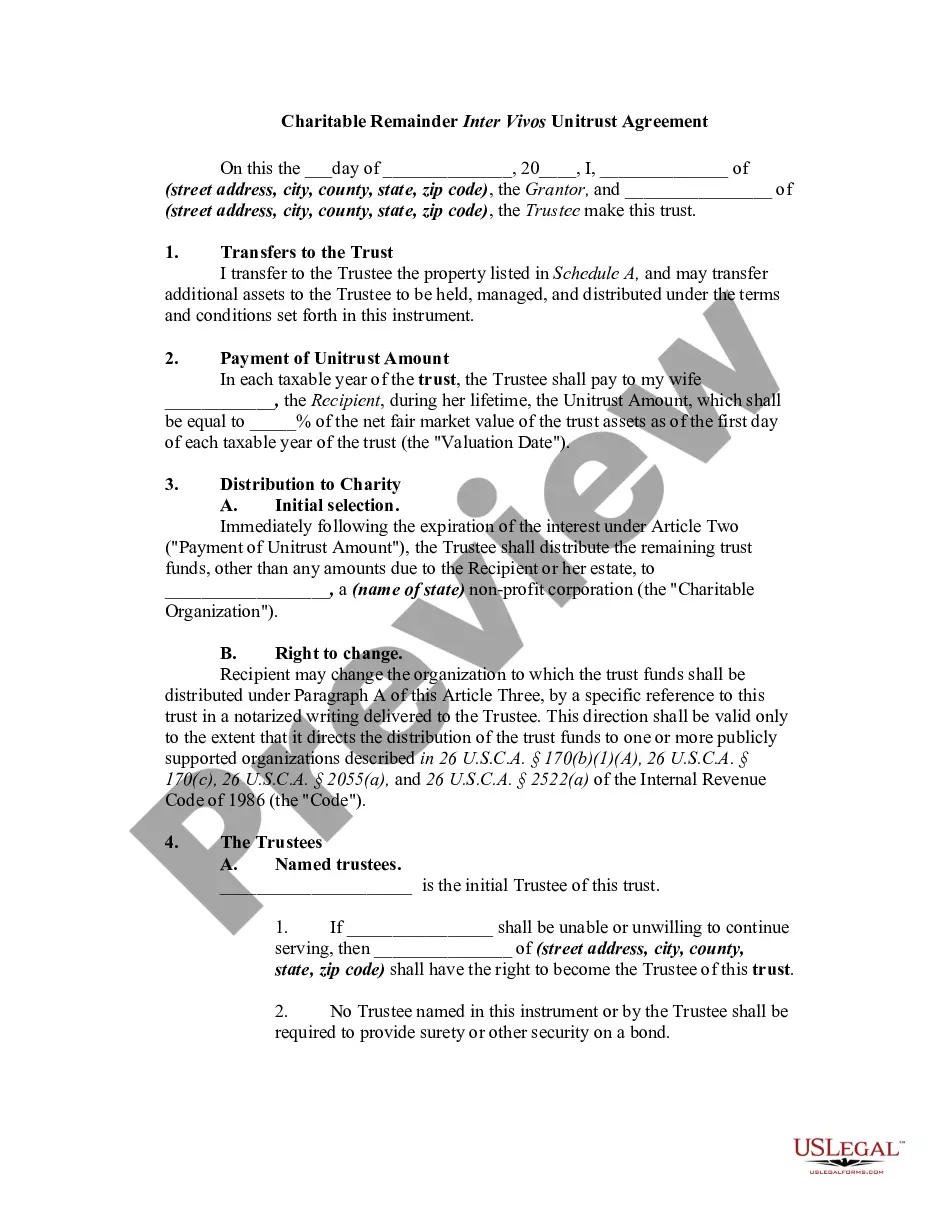
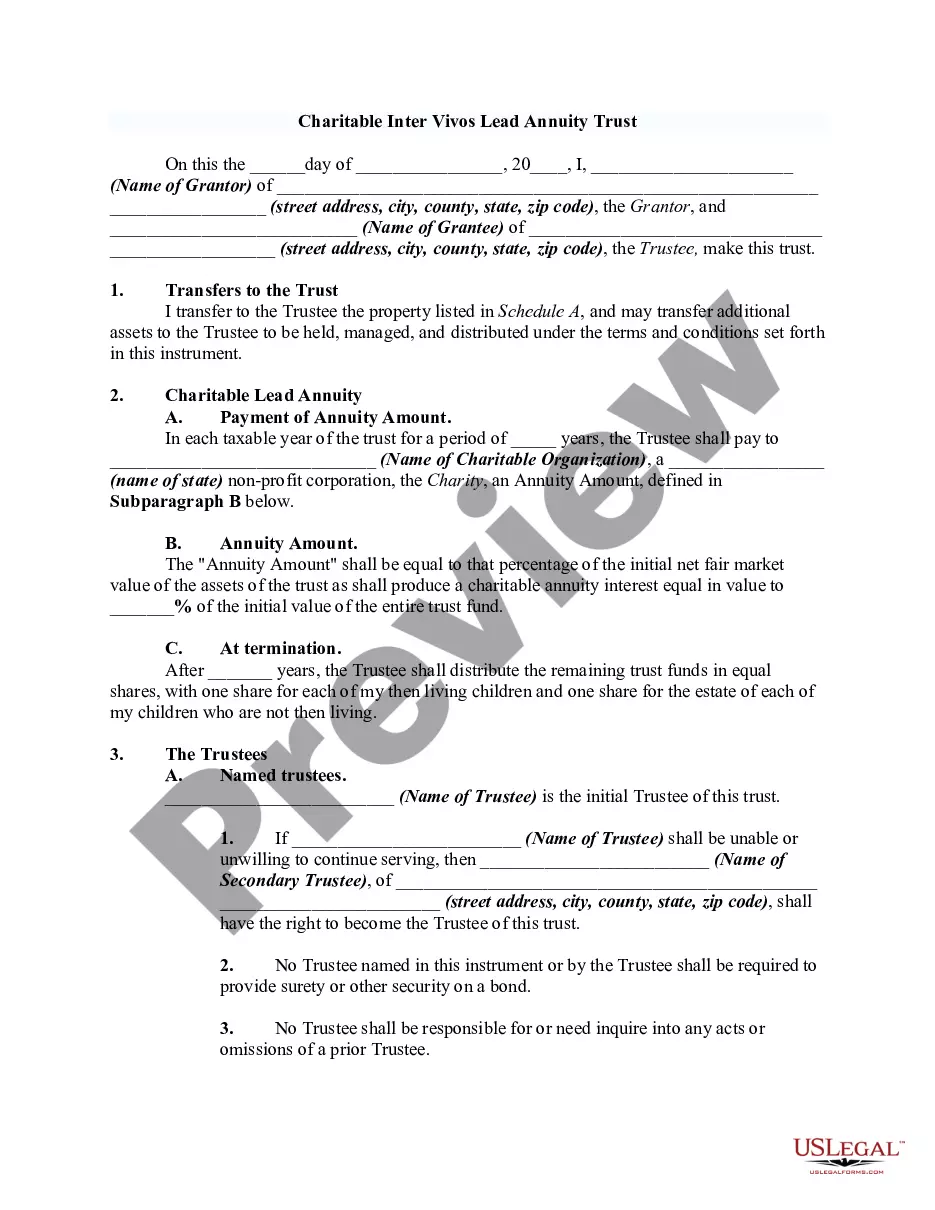
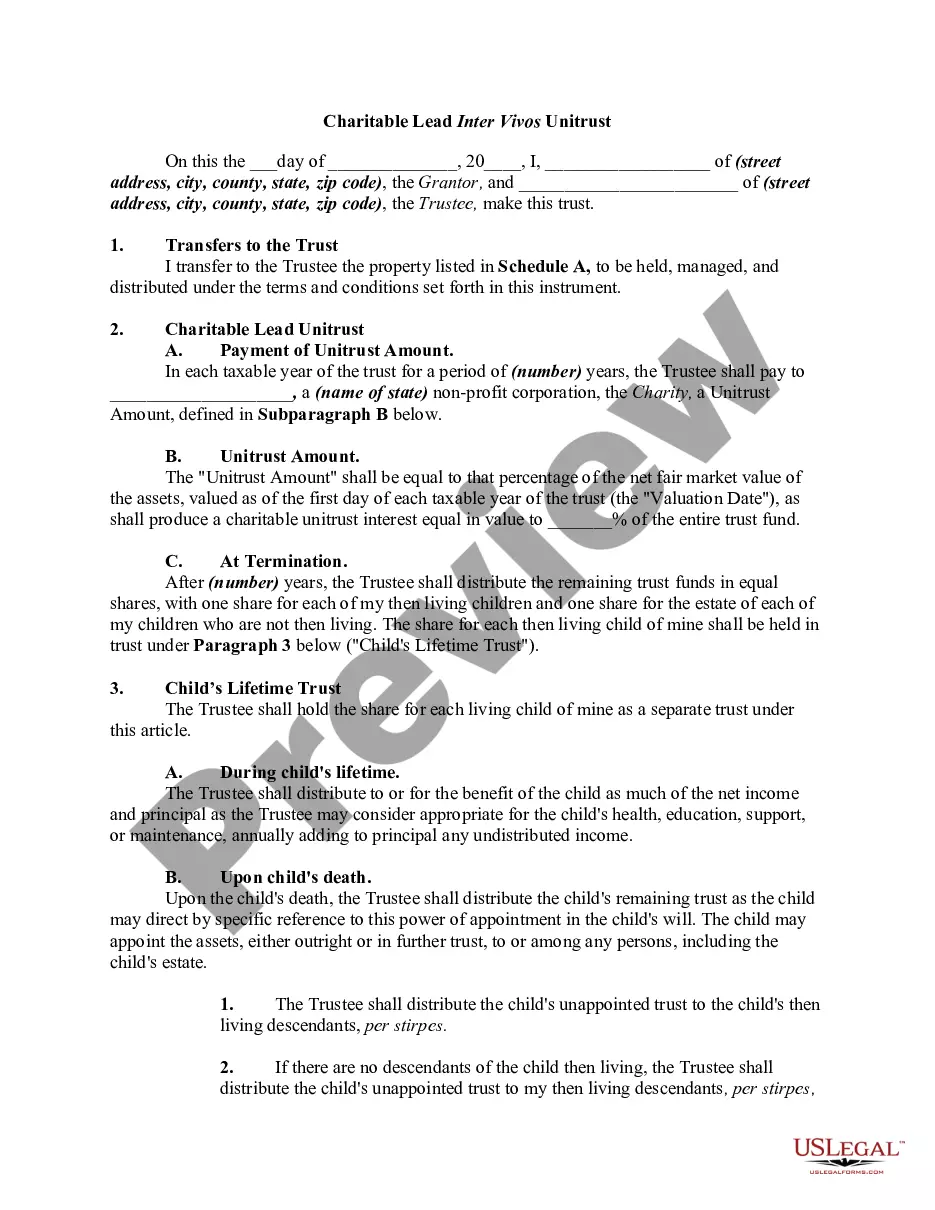

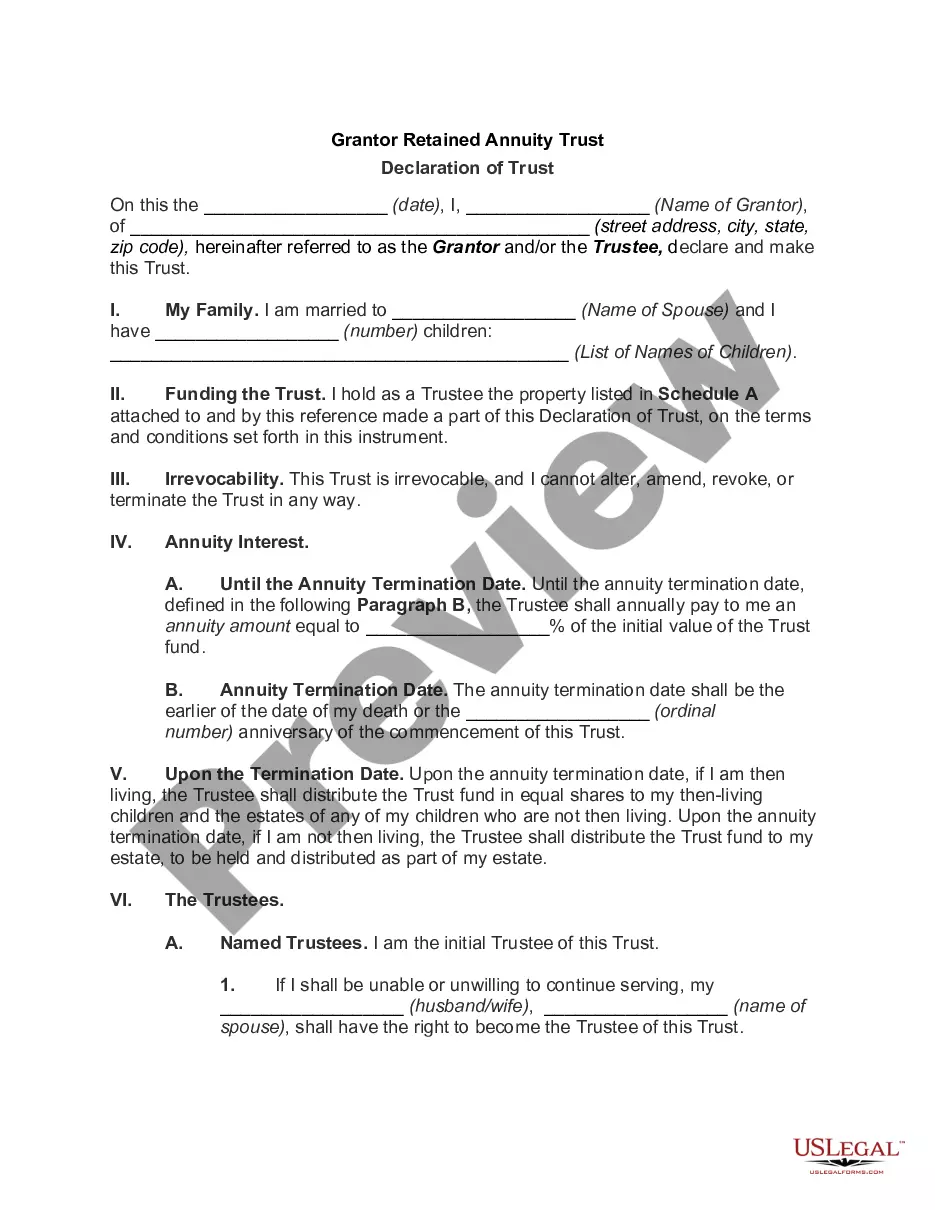
How to fill out Charitable Remainder Inter Vivos Annuity Trust?
Finding the appropriate legal document template can be challenging.
Of course, there are numerous templates available online, but how do you find the legal form you require.
Utilize the US Legal Forms website. This service provides a vast array of templates, including the West Virginia Charitable Remainder Inter Vivos Annuity Trust, suitable for both business and personal needs.
You can preview the form using the Review button and read the form description to confirm it is suitable for your needs.
- All forms are reviewed by experts and comply with federal and state regulations.
- If you are already registered, Log In to your account and click the Download button to retrieve the West Virginia Charitable Remainder Inter Vivos Annuity Trust.
- Use your account to browse the legal forms you have previously purchased.
- Navigate to the My documents tab in your account to download another copy of the document you require.
- For new users of US Legal Forms, here are simple steps to follow.
- First, ensure you have selected the correct form for your city/region.
Form popularity
FAQ
Creating a West Virginia Charitable Remainder Inter Vivos Annuity Trust involves several essential steps. First, you need to draft a trust agreement that outlines the terms of the trust, including the beneficiaries and the annuity payment structure. It is crucial to consult with an attorney or financial advisor to ensure compliance with state laws and IRS regulations. By using platforms like US Legal Forms, you can simplify the process of creating this trust with access to necessary forms and expert guidance.
The assets in a charitable remainder trust, such as a West Virginia Charitable Remainder Inter Vivos Annuity Trust, are typically managed by a trustee. This trustee can be an individual, such as a family member or friend, or a professional organization like a bank or financial advisor. The trustee's role involves overseeing the trust’s investments, ensuring compliance with legal requirements, and distributing income to beneficiaries. Choosing a reliable trustee is crucial for the trust's successful management and fulfilling its charitable purpose.
Advised Fund (DAF) allows you to recommend grants to charities while retaining control over the donor's fund. In contrast, a West Virginia Charitable Remainder Inter Vivos Annuity Trust provides income to you or your beneficiaries for a specified period, with remaining assets going to a charity. DAFs offer more flexibility in giving, while a CRT focuses on generating income and making charitable contributions significantly impactful. Both options serve philanthropic goals, but your choice depends on your financial needs and charitable intentions.
The primary difference between a CRT (Charitable Remainder Trust) and a CLT (Charitable Lead Trust) lies in the flow of income. A CRT, like the West Virginia Charitable Remainder Inter Vivos Annuity Trust, provides income to you first and then contributes to charity after your lifetime. In contrast, a CLT makes immediate donations to charity while providing income to you later. Understanding these differences can help you select the best structure for your financial and charitable goals.
Form 5227 can be submitted electronically if you use specific software approved by the IRS. By filing electronically, you can expedite the process and ensure a timely submission. However, be sure to check for any specific requirements that may apply to your West Virginia Charitable Remainder Inter Vivos Annuity Trust. Utilizing online resources can simplify your task and provide clarity on the filing process.
A charitable remainder trust, such as the West Virginia Charitable Remainder Inter Vivos Annuity Trust, files Form 5227 with the IRS. This form reports the income, deductions, and distributions of the trust. It is essential to complete this form accurately to maintain compliance with tax regulations. You can find helpful resources from platforms like US Legal Forms to assist with the filing process.
An inter vivos charitable remainder trust, like the West Virginia Charitable Remainder Inter Vivos Annuity Trust, is created during your lifetime. It allows you to receive income from the trust assets while designating a charity to receive the remaining assets after your death. This trust structure provides immediate benefits to you while fulfilling your charitable goals. Transitioning to this type of trust can be facilitated with the right legal support.
The form for establishing a charitable trust, such as a West Virginia Charitable Remainder Inter Vivos Annuity Trust, typically includes details about the trust's purpose, trustee information, and beneficiary designations. You need to specify how to distribute income and assets. It is crucial to ensure that all necessary information is correct to comply with state regulations. You can find templates and guidance through services like US Legal Forms.
Yes, you can place an annuity in a West Virginia Charitable Remainder Inter Vivos Annuity Trust. This type of trust allows you to receive periodic payments while benefiting a charitable organization of your choice. It ensures that you get income during your lifetime, and after your death, the remaining assets go to the charity. This arrangement offers both financial support to you and a significant philanthropic impact.
The 10 percent rule dictates that at least 10 percent of the trust's initial value must be designated for charity upon its termination. This guideline ensures a meaningful gift remains after the payout period, promoting charitable giving. When establishing a West Virginia Charitable Remainder Inter Vivos Annuity Trust, it’s essential to adhere to this rule to maximize both your benefits and charitable impact.