West Virginia Revocation of Transfer on Death Deed - Beneficiary Deed for Two Grantors
What is this form?
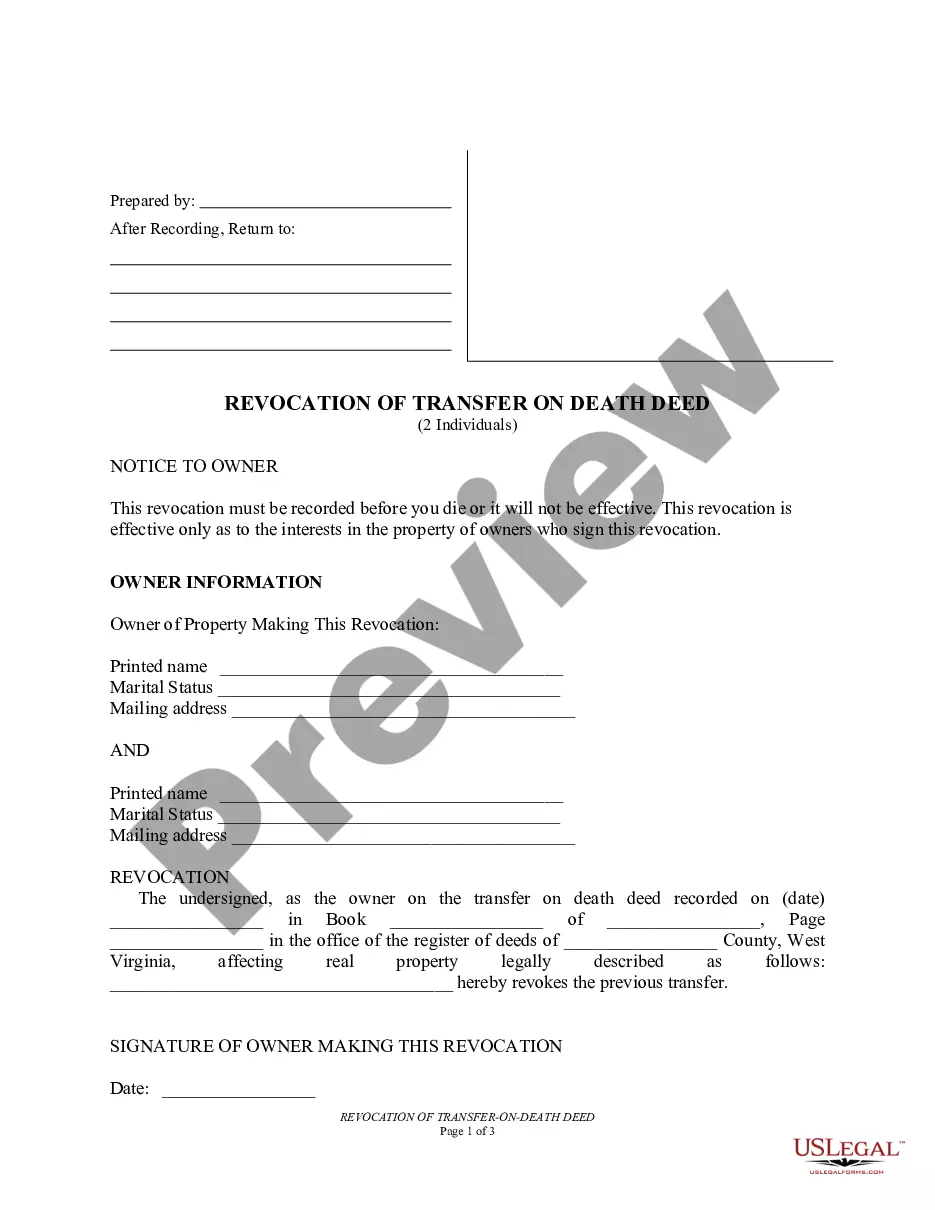
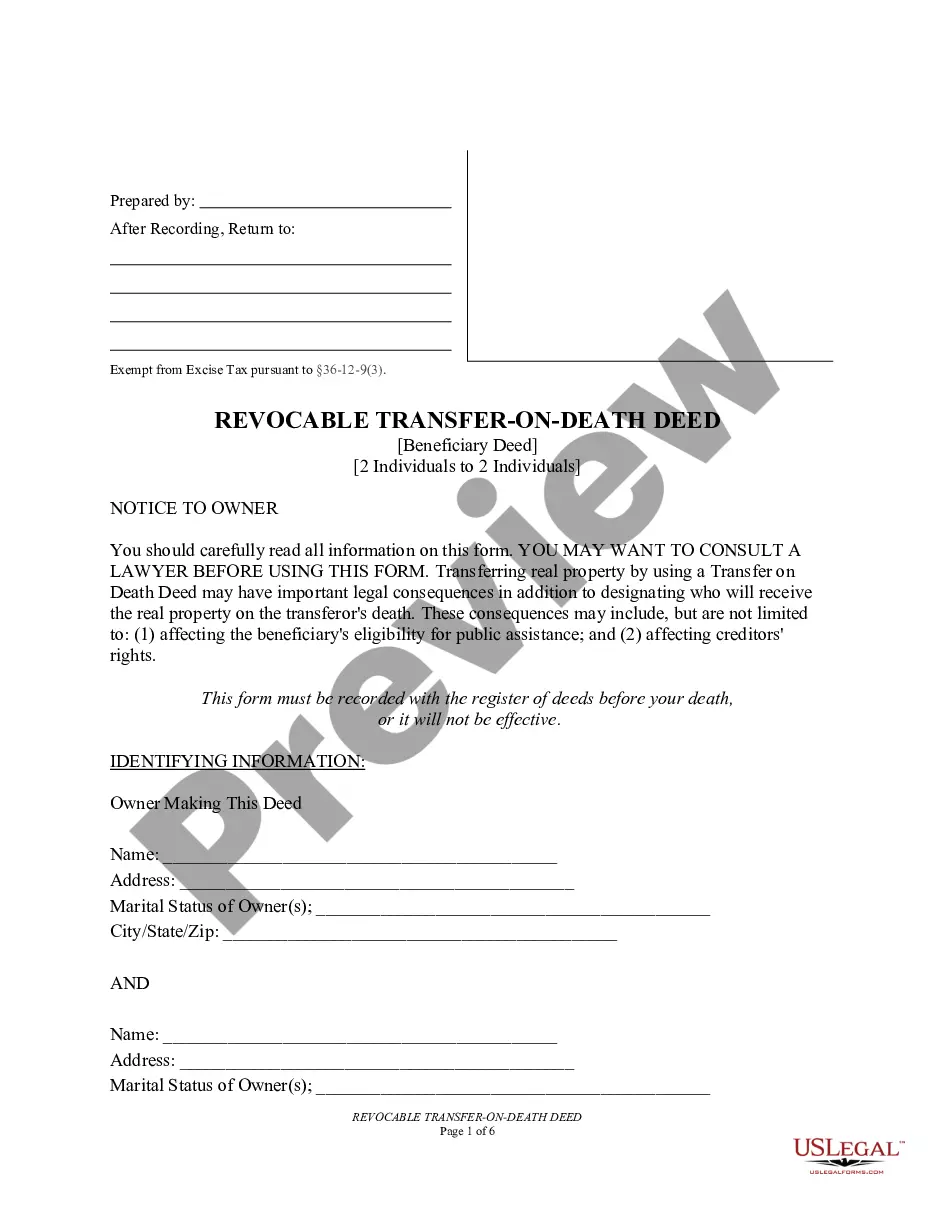
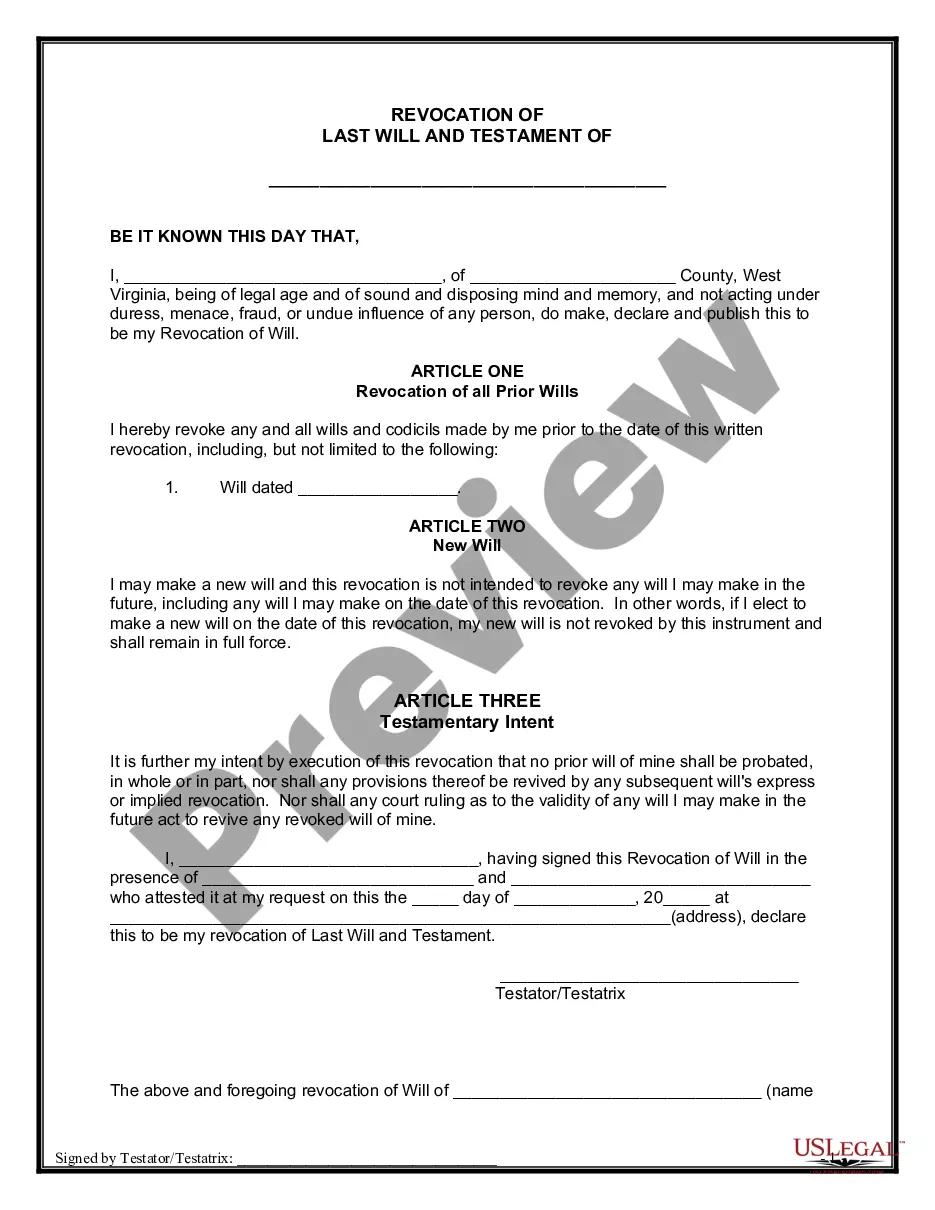
The Revocation of Transfer on Death Deed - Beneficiary Deed for Two Grantors is a legal document used to revoke a previously established beneficiary deed. This form allows property owners to rescind the transfer of property that would have occurred upon their death. Unlike other deeds, a transfer on death deed only takes effect after the owner's passing, and this revocation must be executed and recorded prior to the owner's death to be legally effective.
Key parts of this document
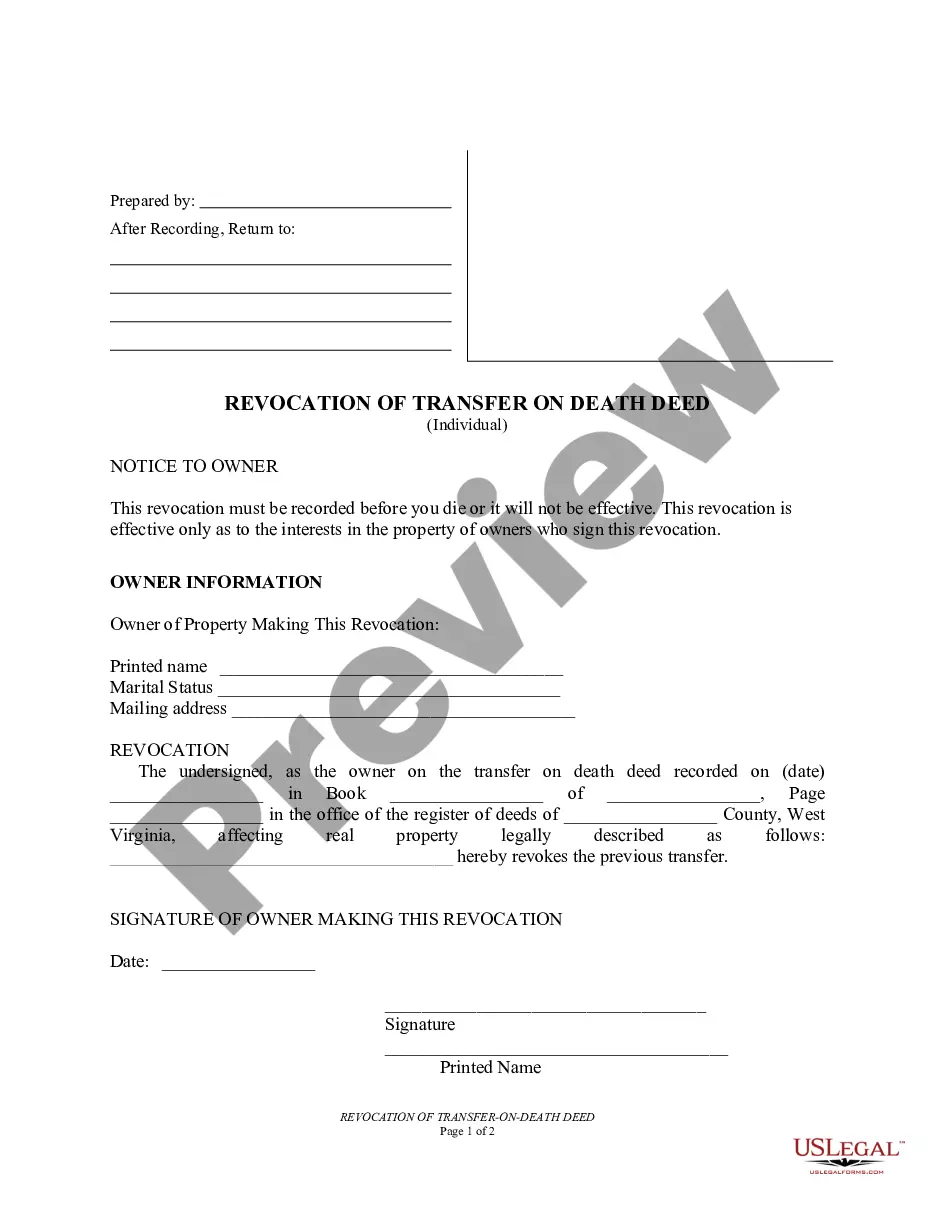
- Owner Information: Names, marital status, and mailing addresses of the grantors must be provided.
- Revocation Statement: A declaration revoking the previous transfer on death deed, inclusive of the original deed's recording details.
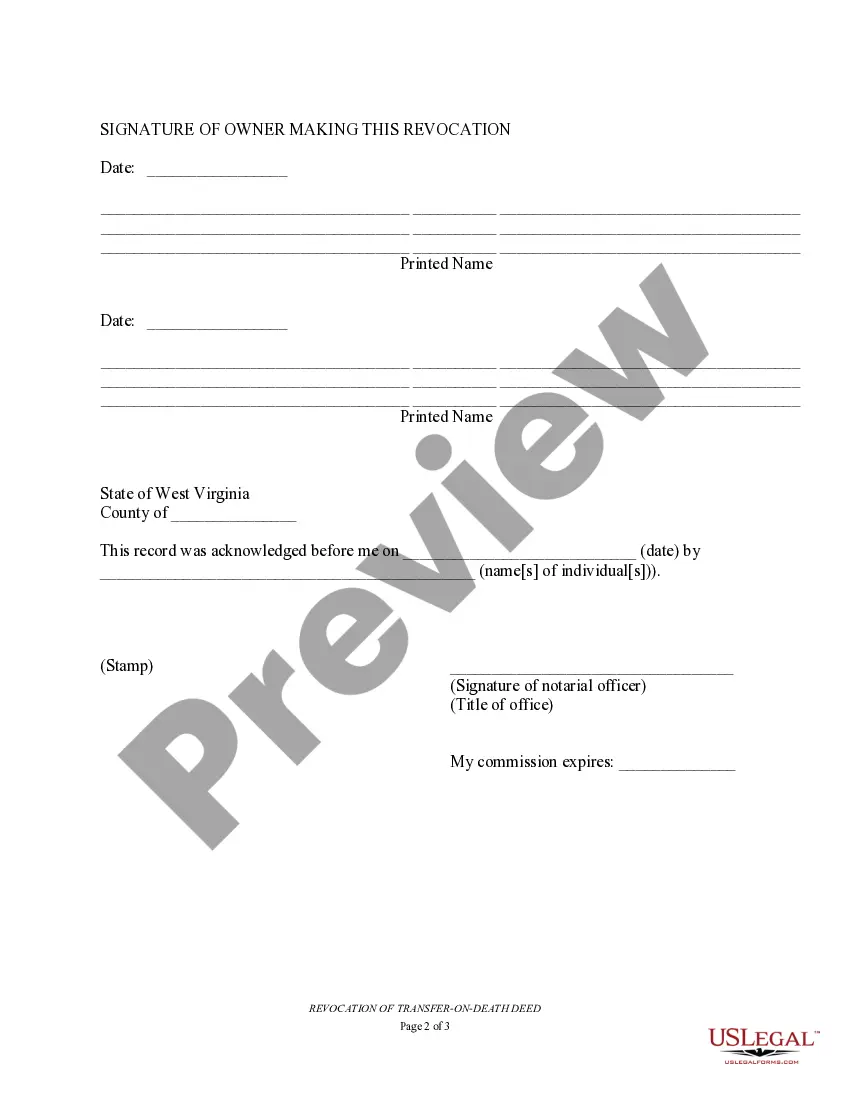
- Signatures: Must be signed by both owners making the revocation.
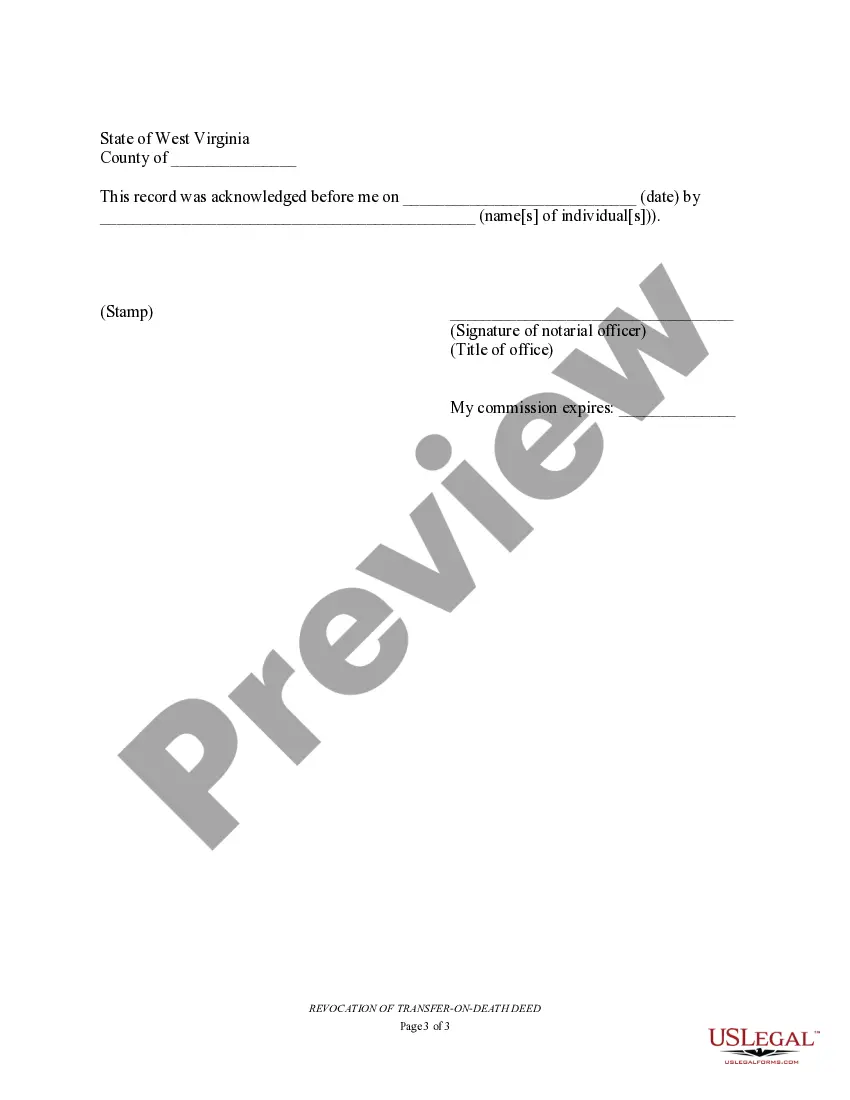
- Acknowledgment Section: Required notarial verification to confirm the identity of the signers.
When to use this form
This form should be used when property owners wish to revoke a transfer on death deed that they previously established. Circumstances may include changes in family dynamics, such as divorce or remarriage, the desire to designate different beneficiaries, or a decision to retain property ownership in its entirety. Proper execution and recording of this revocation ensure that the property will not be transferred as previously intended after the owner's death.
Intended users of this form
- Homeowners who hold property in their names and wish to amend their estate planning strategy.
- Individuals who previously filed a transfer on death deed and want to cancel that designation.
- Co-owners of real estate who want to ensure that shared property interests are addressed before death.
Completing this form step by step
- Identify the owners of the property, providing their full names, marital status, and mailing addresses.
- Locate the details of the existing transfer on death deed, including its recording date and identification information.
- Fill in the revocation statement clearly indicating the intent to revoke the previous transfer.
- Ensure both owners sign the document, providing their printed names and signatures.
- Have the document notarized by an authorized notarial officer to validate the signatures.
- Record the completed revocation with the county recorder's office.
Is notarization required?
Yes, this form must be notarized to be legally valid. The signatures of the property owners must be acknowledged by a notarial officer, ensuring that the identities of the signers are verified. US Legal Forms offers integrated online notarization services for convenience, available 24/7 through secure video calls, allowing you to complete this requirement without the need for travel.
Get your form ready online
Our built-in tools help you complete, sign, share, and store your documents in one place.
Make edits, fill in missing information, and update formatting in US Legal Forms—just like you would in MS Word.
Download a copy, print it, send it by email, or mail it via USPS—whatever works best for your next step.
Sign and collect signatures with our SignNow integration. Send to multiple recipients, set reminders, and more. Go Premium to unlock E-Sign.
If this form requires notarization, complete it online through a secure video call—no need to meet a notary in person or wait for an appointment.
We protect your documents and personal data by following strict security and privacy standards.

Make edits, fill in missing information, and update formatting in US Legal Forms—just like you would in MS Word.

Download a copy, print it, send it by email, or mail it via USPS—whatever works best for your next step.

Sign and collect signatures with our SignNow integration. Send to multiple recipients, set reminders, and more. Go Premium to unlock E-Sign.

If this form requires notarization, complete it online through a secure video call—no need to meet a notary in person or wait for an appointment.

We protect your documents and personal data by following strict security and privacy standards.
Mistakes to watch out for
- Failing to sign the form, leading to invalidation of the revocation.
- Not recording the form before the death of the owner, which renders it ineffective.
- Overlooking the necessary details from the original transfer on death deed.
- Using incorrect or outdated legal terminology that may cause confusion.
Quick recap
- The Revocation of Transfer on Death Deed is essential for altering or canceling a previously recorded beneficiary deed.
- Timely execution and recording of the form are crucial for its validity.
- The process includes filling in specific details, obtaining signatures, and notarization.
- Understanding when and why to use this form can help in effective estate planning.