The decree of the bankruptcy court which terminates the bankruptcy proceedings is generally a discharge that releases the debtor from most debts. A bankruptcy court may refuse to grant a discharge under certain conditions.
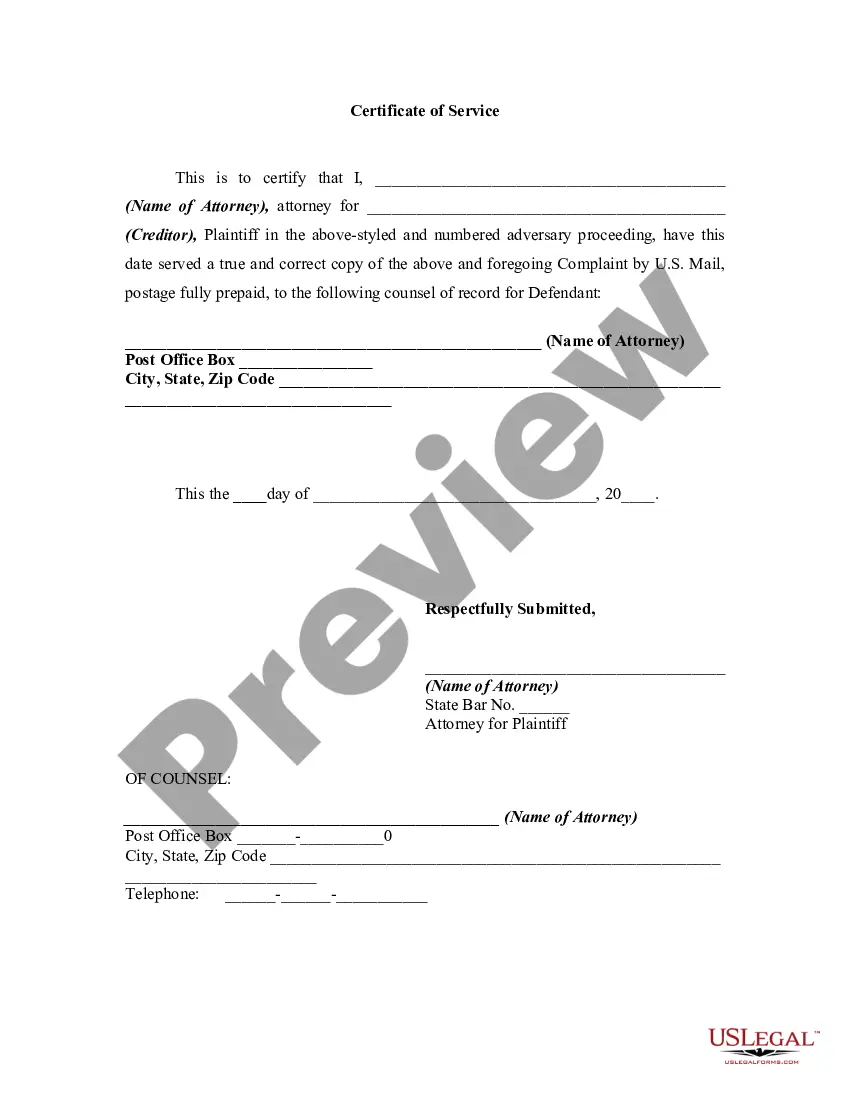
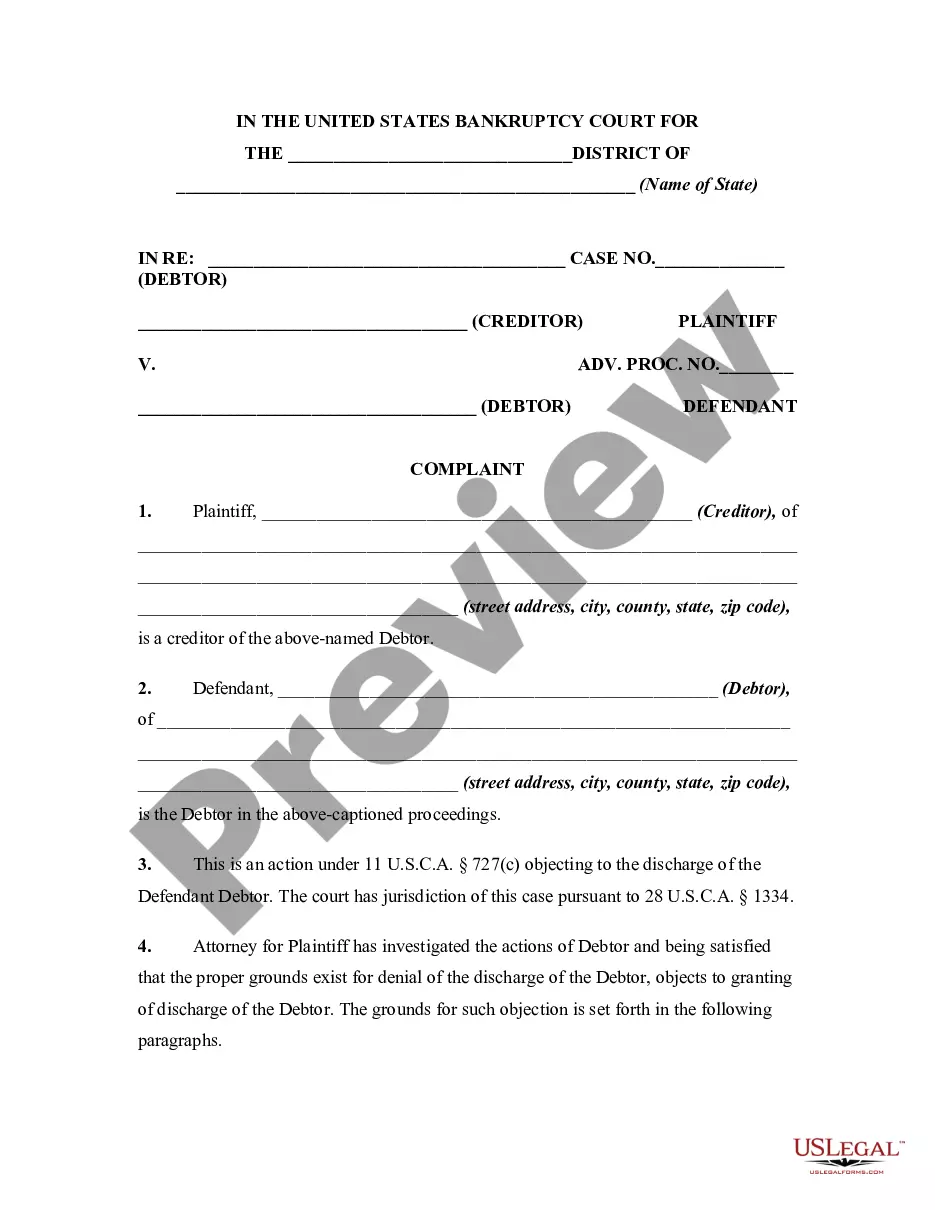
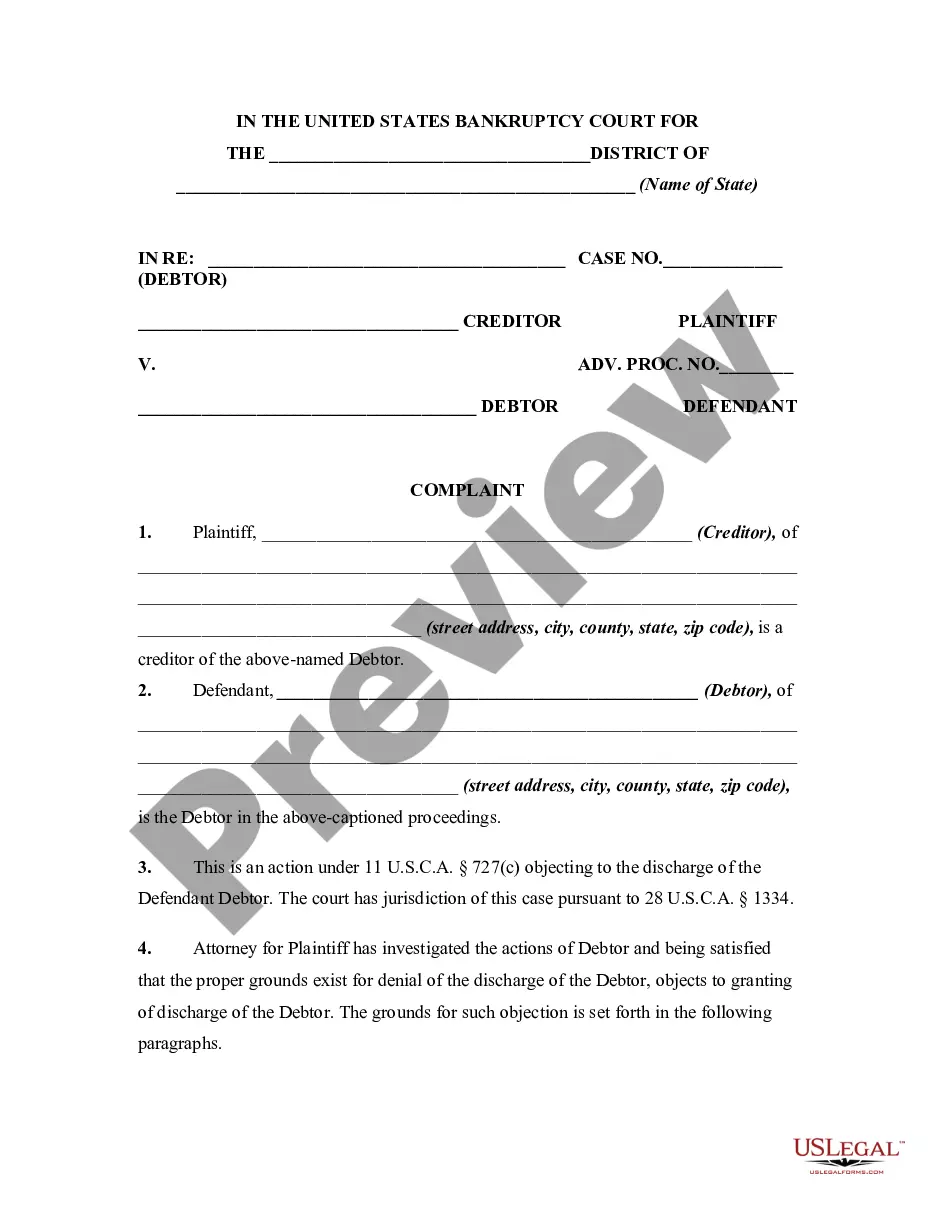
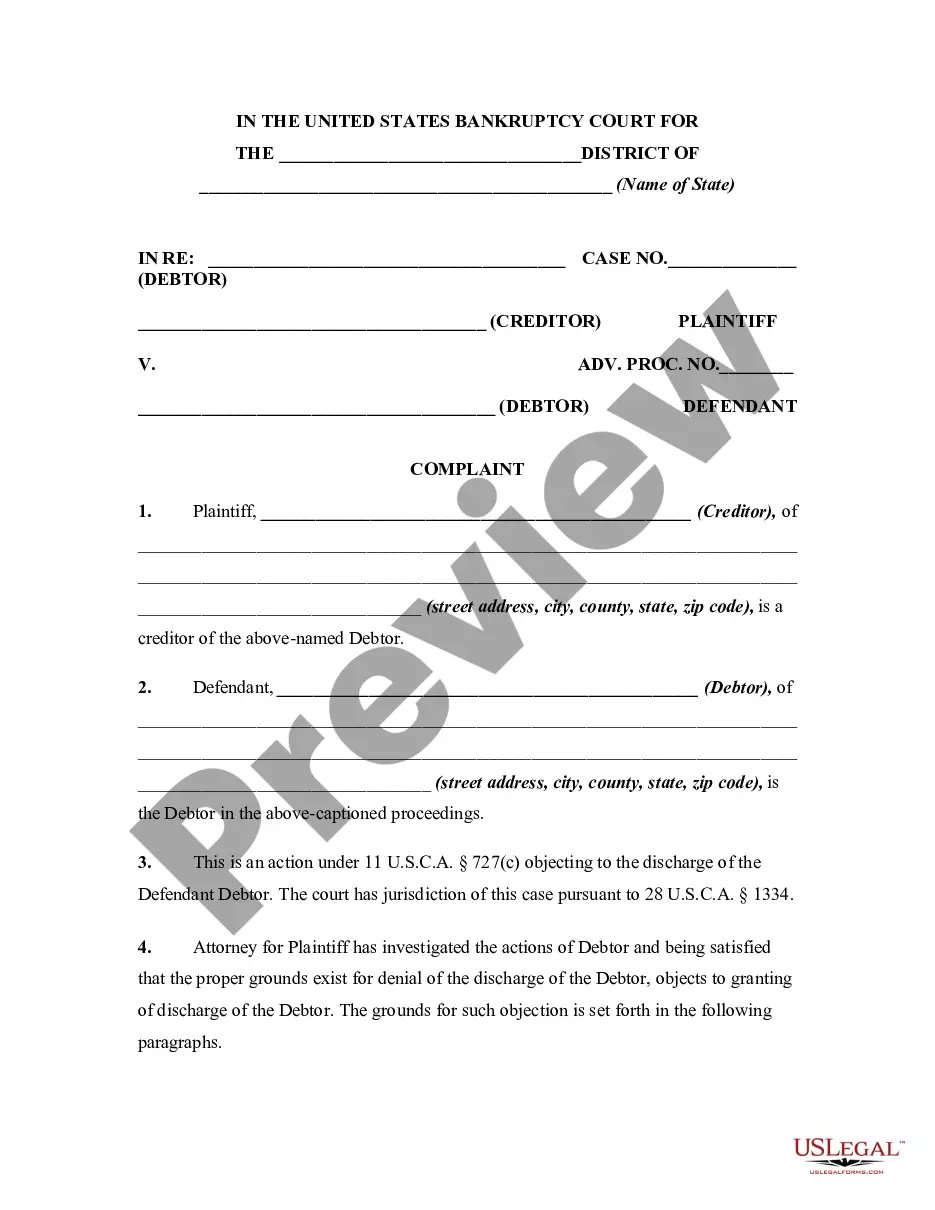
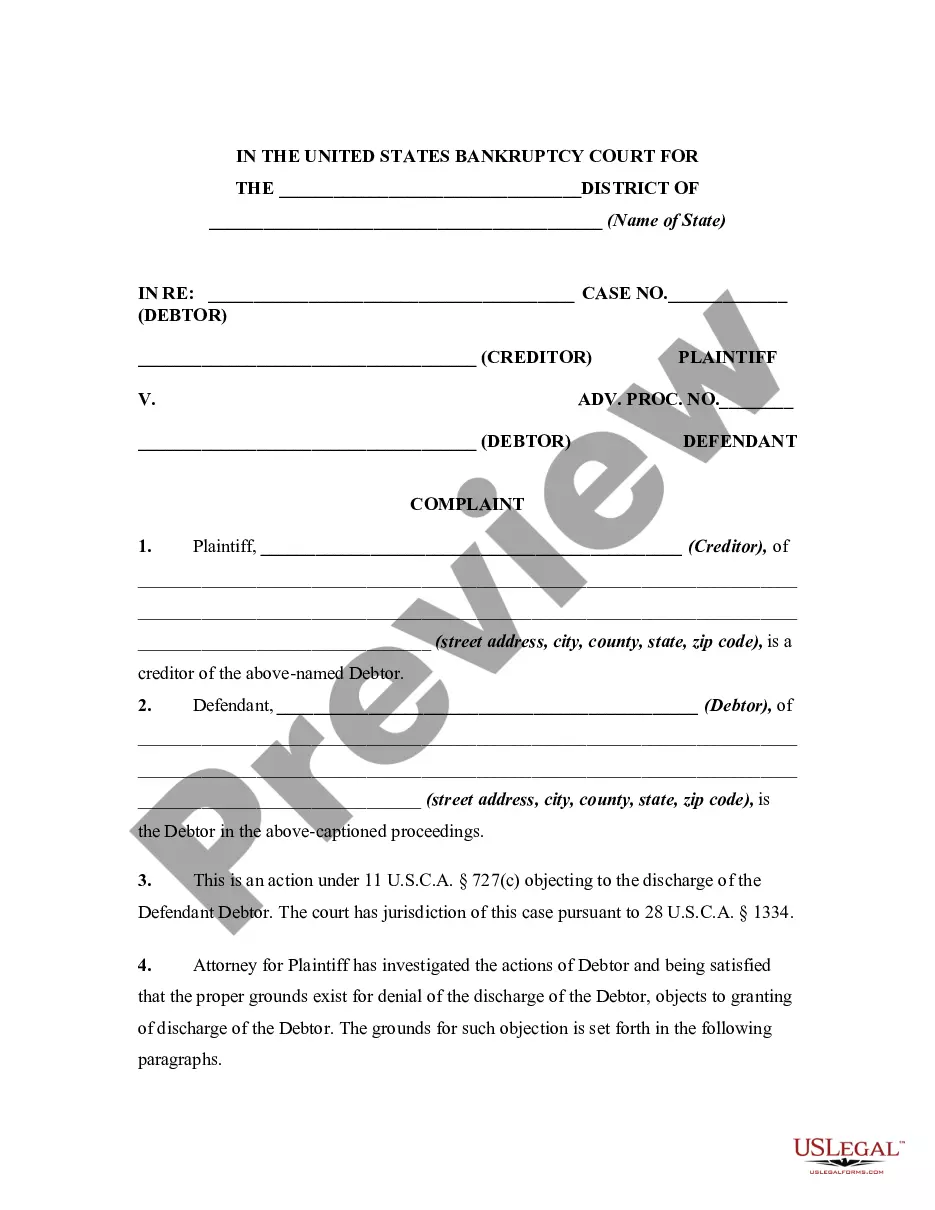
Wyoming Complaint Objecting to Discharge in Bankruptcy Proceeding for Transfer, Removal, Destruction, or Concealment of Property Within One Year Preceding
State:
Multi-State
Control #:
US-01086BG
Format:
Word;
Rich Text
Instant download
Description
Free preview
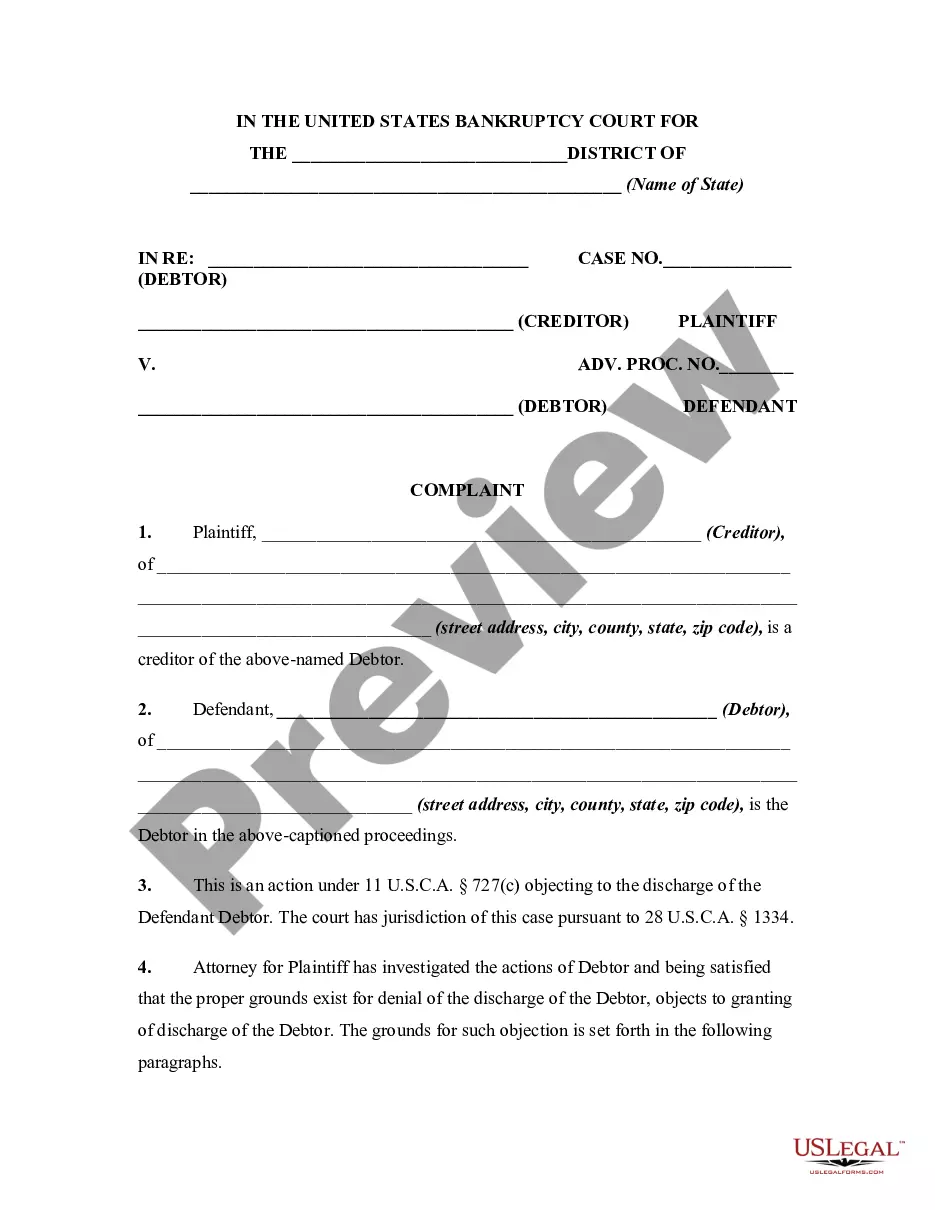
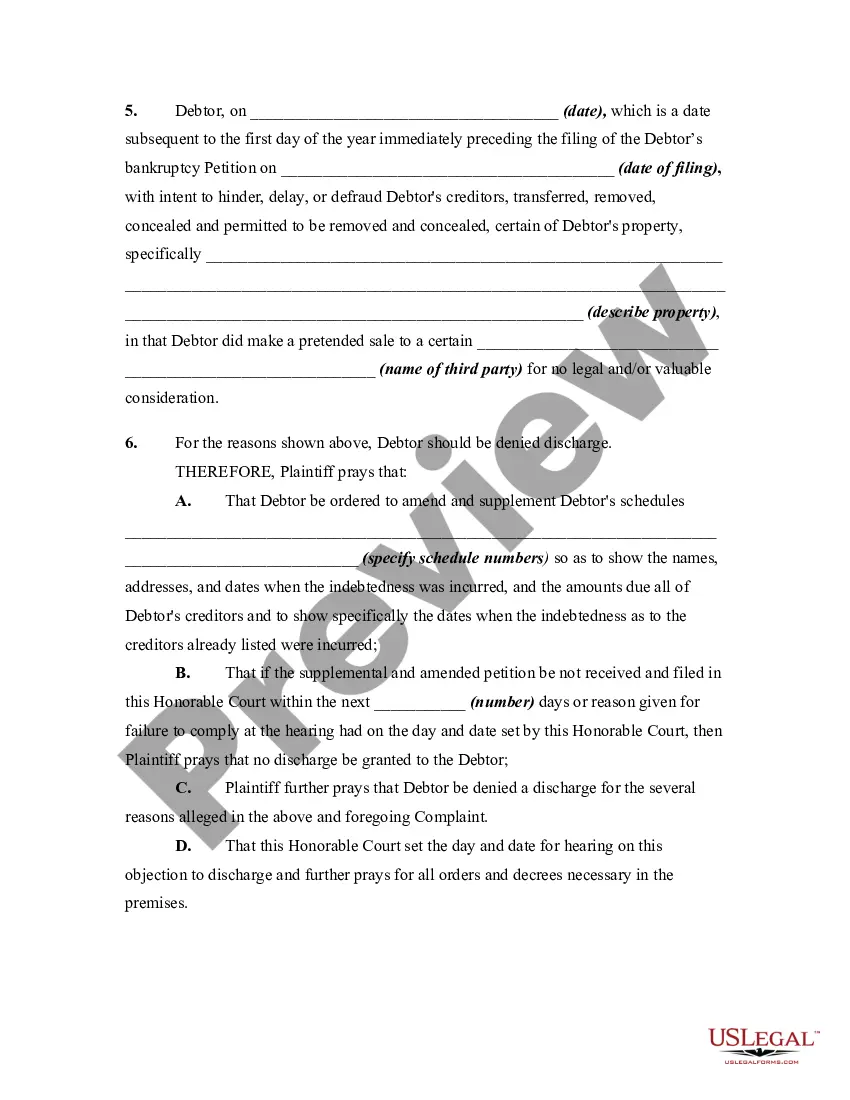
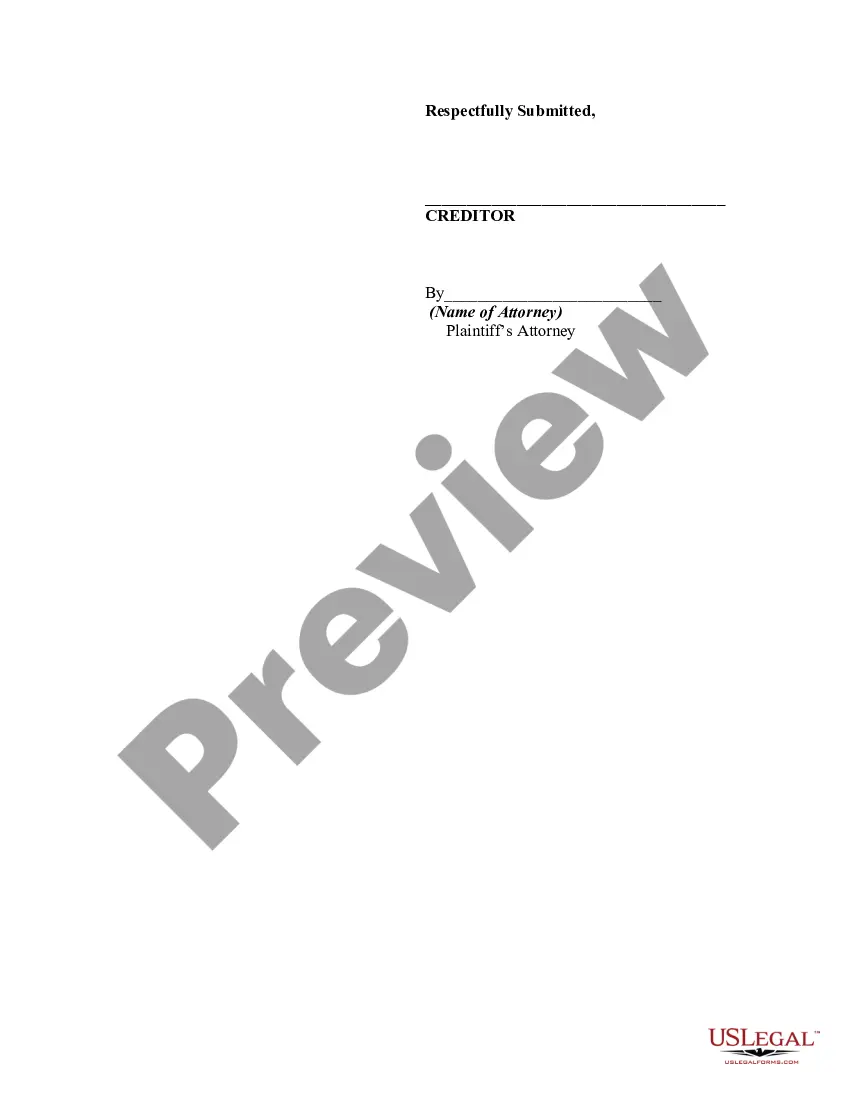




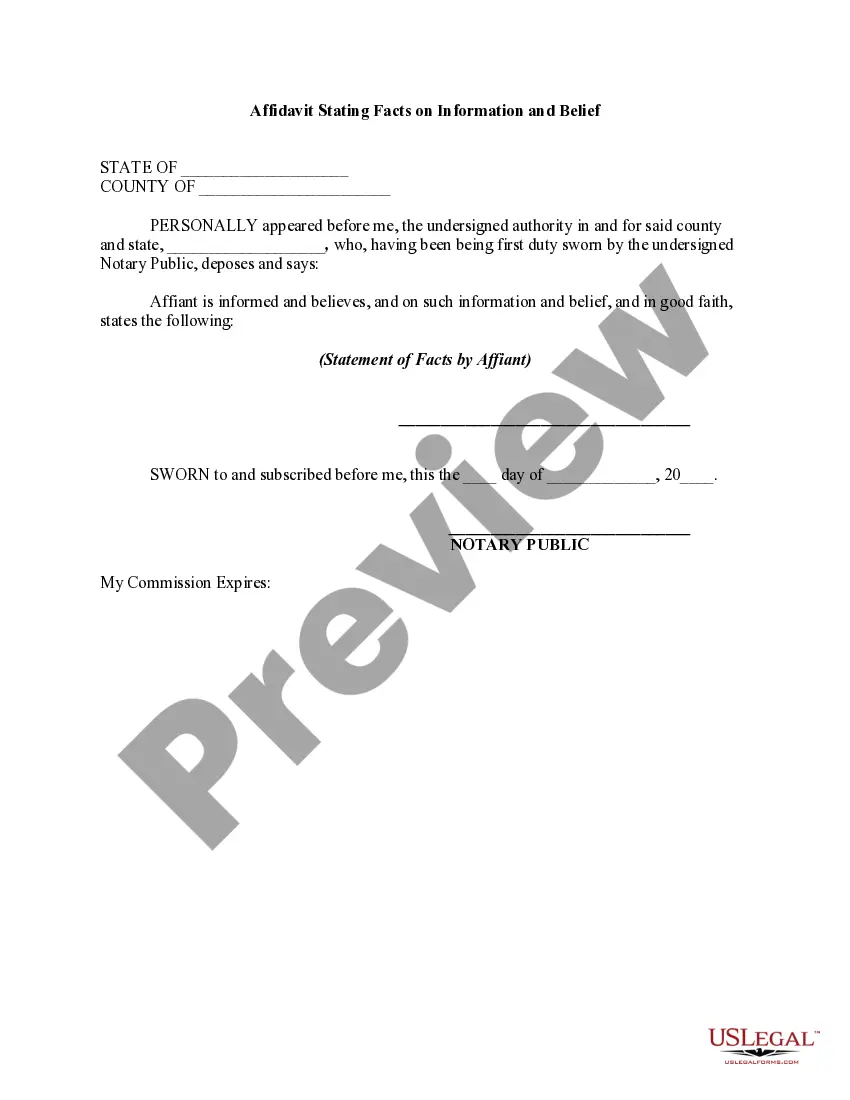
How to fill out Complaint Objecting To Discharge In Bankruptcy Proceeding For Transfer, Removal, Destruction, Or Concealment Of Property Within One Year Preceding?
If you need to thoroughly, download, or print legal document templates, utilize US Legal Forms, the largest collection of legal forms available online.
Employ the site’s straightforward and user-friendly search to locate the documents you require.
Various templates for business and personal purposes are categorized by groups and states, or keywords.
Step 4. Once you have found the form you need, click the Buy now button. Choose the payment plan you prefer and enter your details to register for an account.
Step 5. Process the transaction. You can use your credit card or PayPal account to finalize the transaction.
- Utilize US Legal Forms to find the Wyoming Complaint Contesting Discharge in Bankruptcy Proceedings for Transfer, Removal, Destruction, or Concealment of Property in just a few clicks.
- If you are already a US Legal Forms user, Log In to your account and click on the Download button to obtain the Wyoming Complaint Contesting Discharge in Bankruptcy Proceedings for Transfer, Removal, Destruction, or Concealment of Property.
- You can also access forms you have previously saved from the My documents tab in your account.
- If you are using US Legal Forms for the first time, follow the instructions below.
- Step 1. Ensure you have selected the form for your appropriate city/state.
- Step 2. Use the Preview option to review the form’s content. Don’t forget to read through the description.
- Step 3. If you are unsatisfied with the form, use the Search field at the top of the screen to find alternative versions of your legal form template.
Form popularity
FAQ
Some debts remain even after you are discharged from bankruptcy. These debts include: spousal support (alimony) and child support payments. student loans if you have been a part time or full-time student within the last 7 years.
An objection to discharge is a notice lodged with the Official Receiver by a trustee to induce a bankrupt to comply with their obligations. An objection will extend the period of bankruptcy so automatic discharge will not occur three years and one day after the bankrupt filed a statement of affairs.
An objection to discharge is a notice lodged with the Official Receiver by a trustee to induce a bankrupt to comply with their obligations. An objection will extend the period of bankruptcy so automatic discharge will not occur three years and one day after the bankrupt filed a statement of affairs.
Your bankruptcy discharge wipes out your liability for most types of debt. But if you're not completely honest in your bankruptcy papers or fail to follow all the rules, the court can revoke your discharge even after closing your case.
If a debt arose from the debtor's intentional wrongdoing, the creditor can object to discharging it. This might involve damages related to a drunk driving accident, for example, or costs caused by intentional damage to an apartment or other property.
A debtor may apply to the Court to challenge (oppose) a bankruptcy notice before the time for compliance with the notice has finished. The debtor can apply to challenge a bankruptcy notice if: there is a defect in the bankruptcy notice. the debt on which the bankruptcy notice is based does not exist.
No one can prevent a person from filing bankruptcy but a bankrupt's discharge can be opposed by the Office of the Superintendent of bankruptcy, a creditor or the trustee.
Notice of opposition to discharge This occurs if the bankrupt has not met all of his/her obligations. It can likewise happen if the insolvent has committed a bankruptcy offense. Those are acts provided in Section 173 (1) of the Bankruptcy and Insolvency Act (Canada) (BIA).