Wyoming Counter Offer to Purchase 3 - Residential
Description
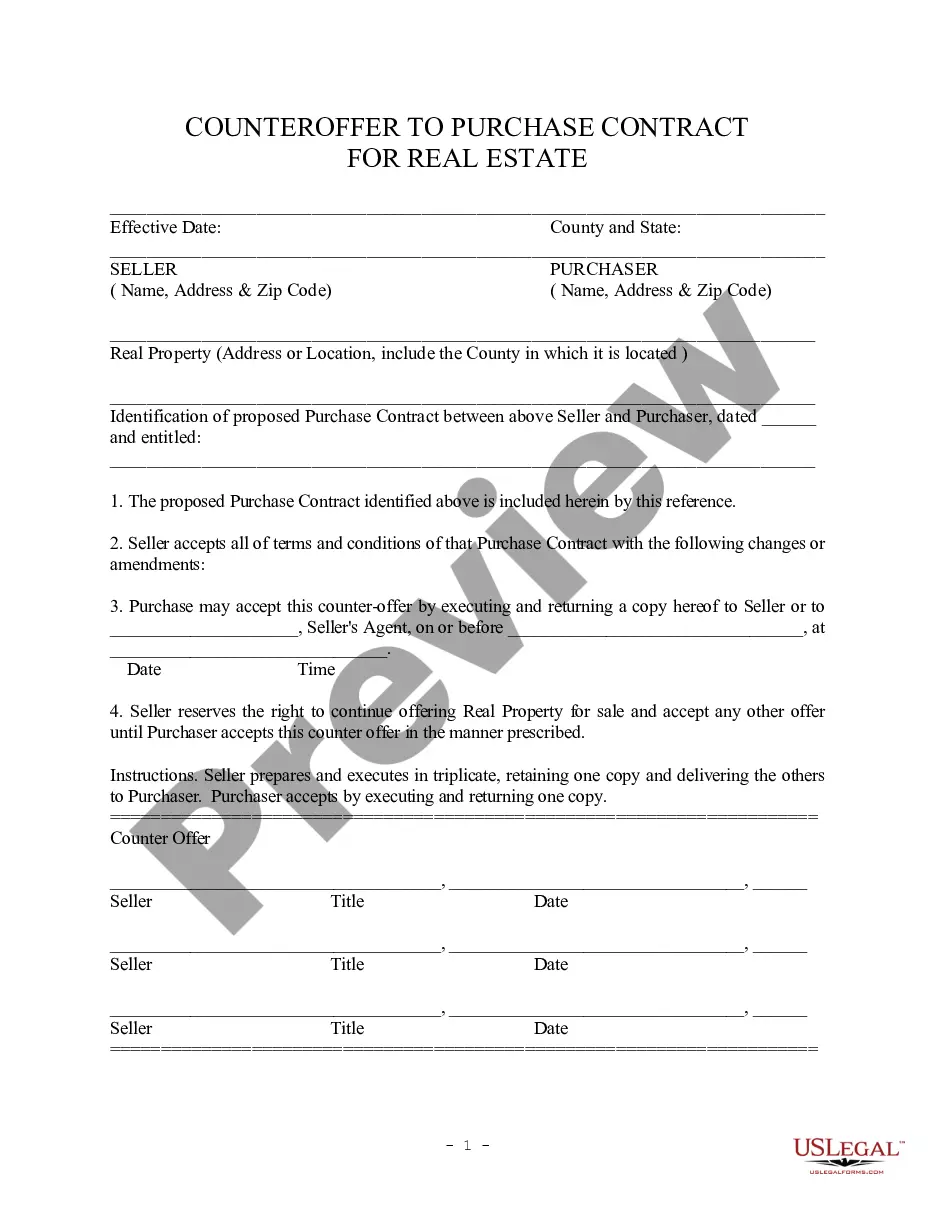
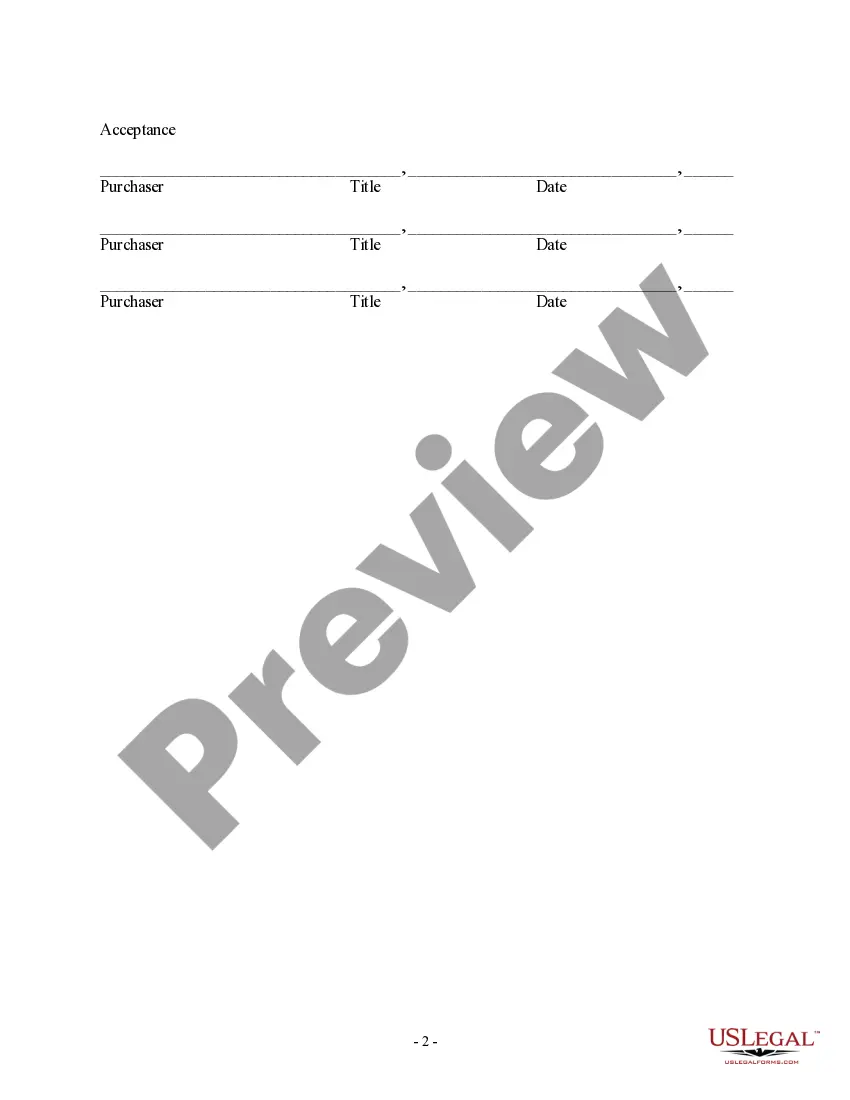
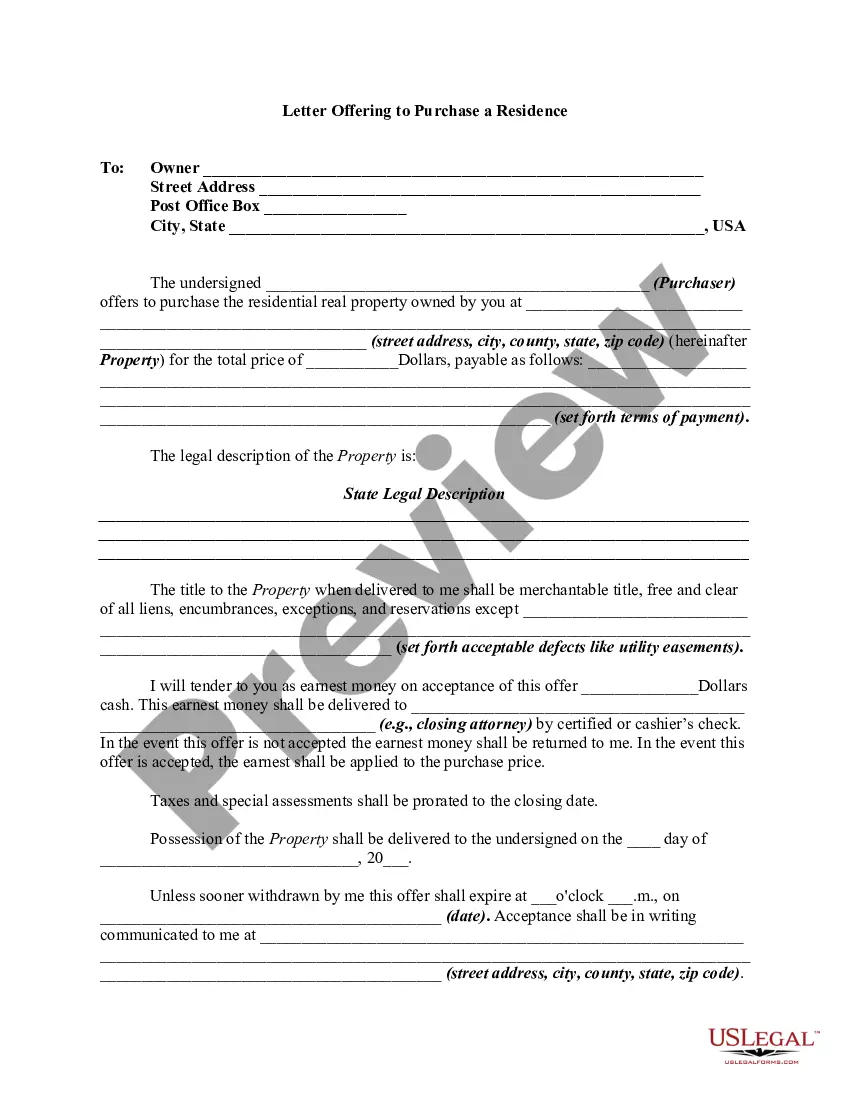
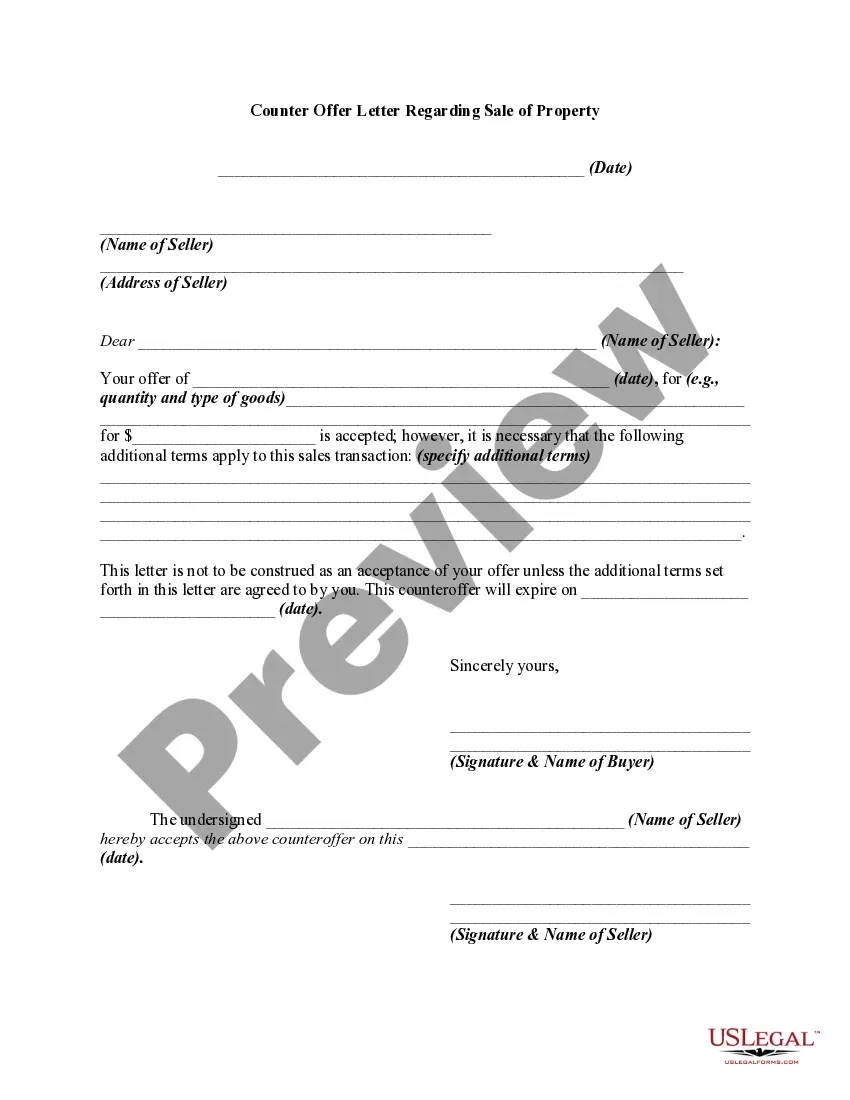
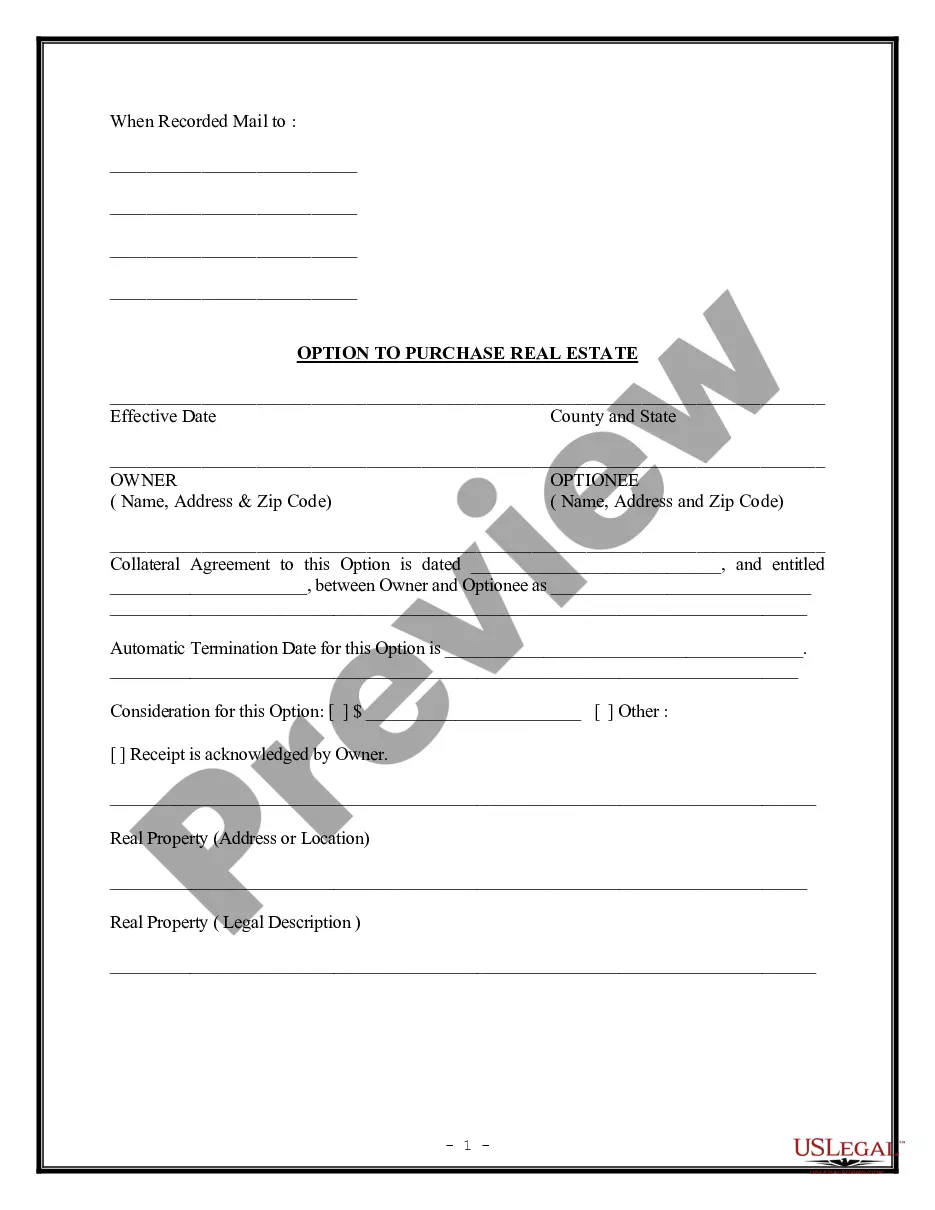
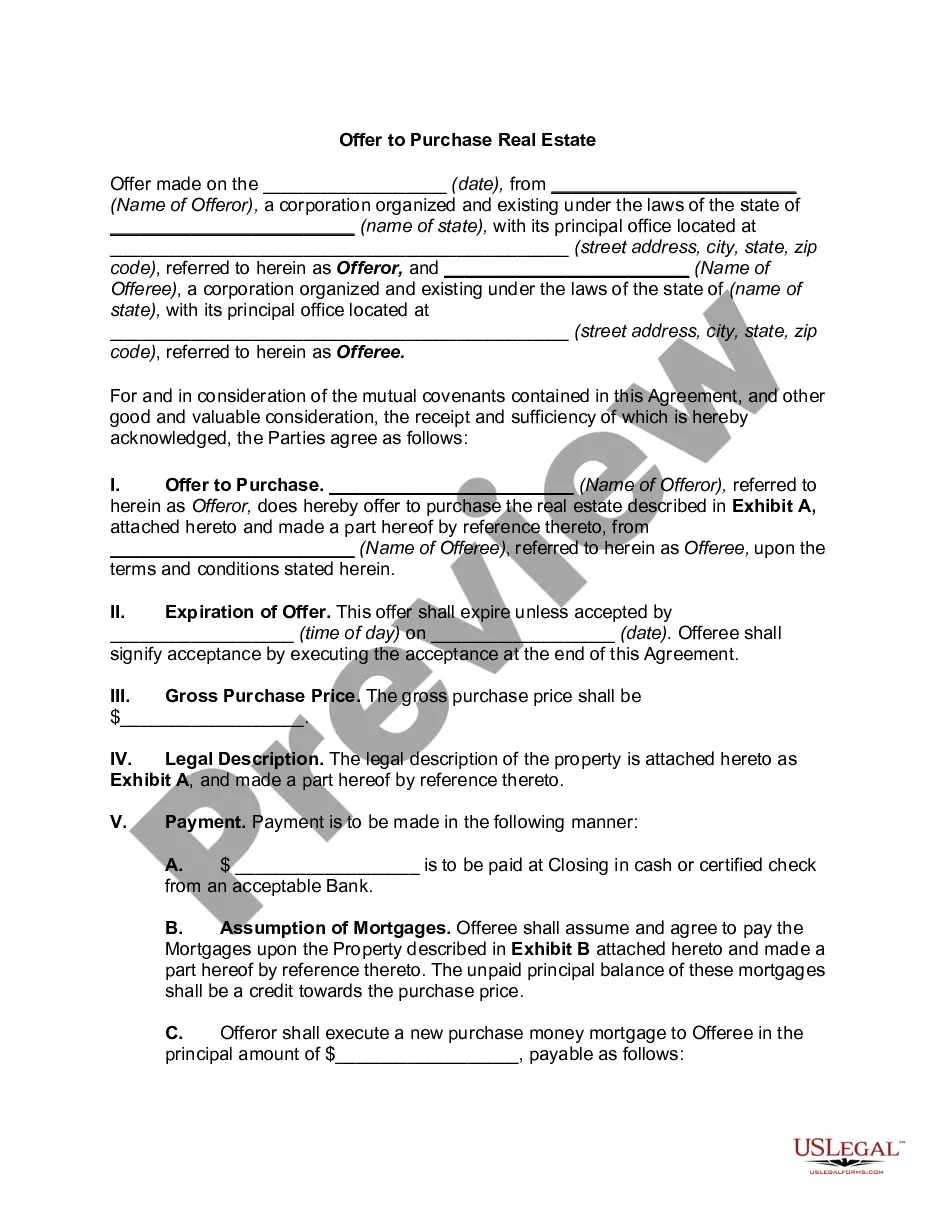
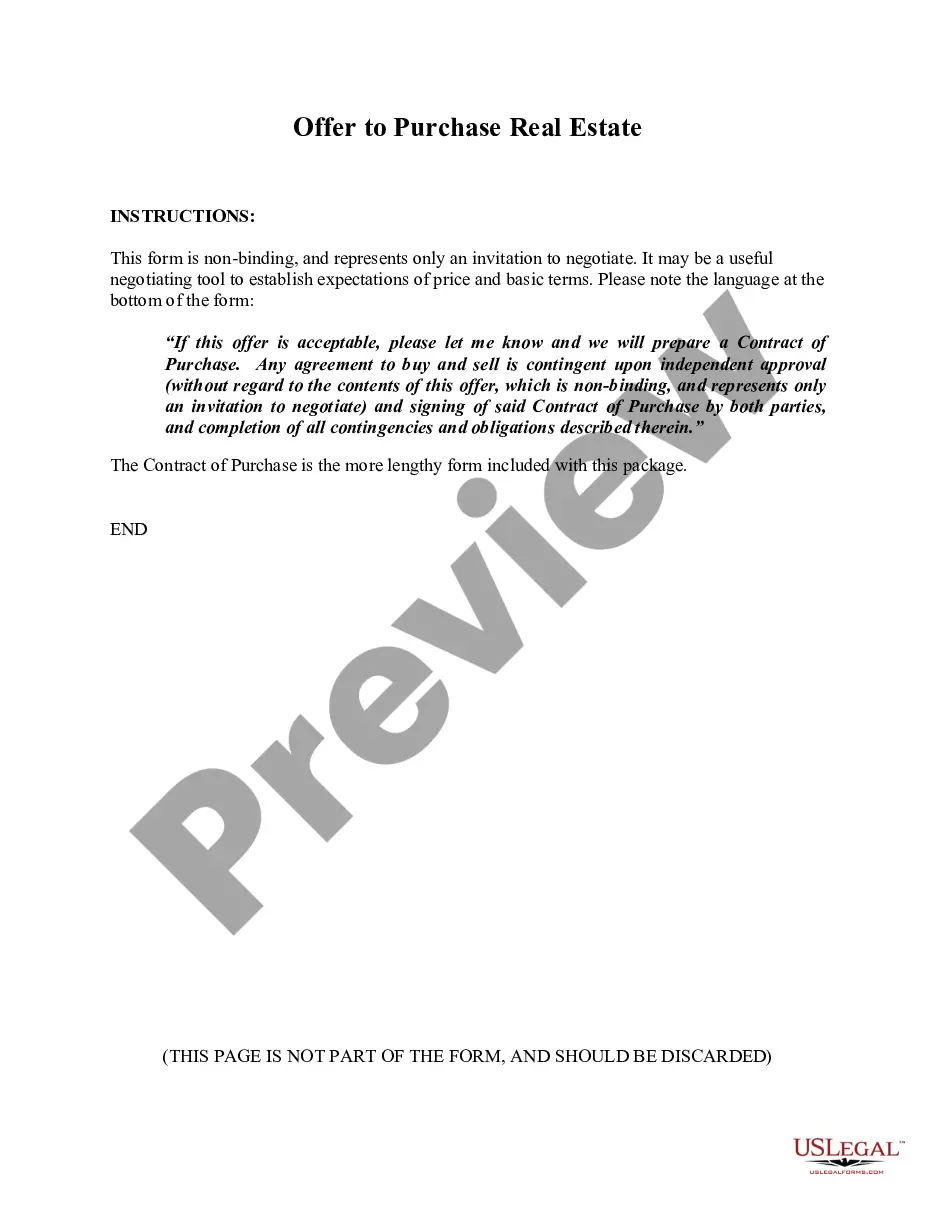
Get your form ready online
Our built-in tools help you complete, sign, share, and store your documents in one place.
Make edits, fill in missing information, and update formatting in US Legal Forms—just like you would in MS Word.
Download a copy, print it, send it by email, or mail it via USPS—whatever works best for your next step.
Sign and collect signatures with our SignNow integration. Send to multiple recipients, set reminders, and more. Go Premium to unlock E-Sign.
If this form requires notarization, complete it online through a secure video call—no need to meet a notary in person or wait for an appointment.
We protect your documents and personal data by following strict security and privacy standards.

Make edits, fill in missing information, and update formatting in US Legal Forms—just like you would in MS Word.

Download a copy, print it, send it by email, or mail it via USPS—whatever works best for your next step.

Sign and collect signatures with our SignNow integration. Send to multiple recipients, set reminders, and more. Go Premium to unlock E-Sign.

If this form requires notarization, complete it online through a secure video call—no need to meet a notary in person or wait for an appointment.

We protect your documents and personal data by following strict security and privacy standards.
Looking for another form?
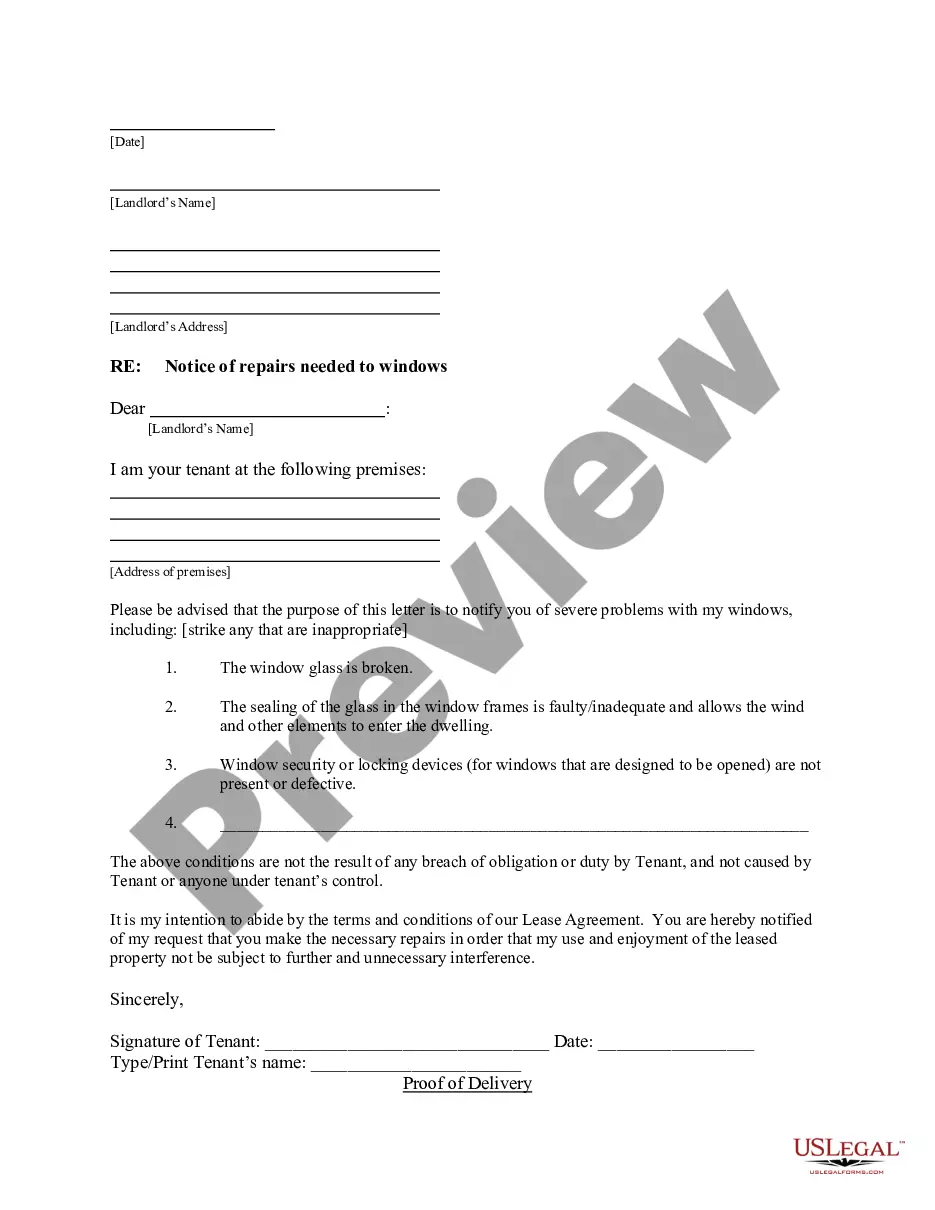
How to fill out Counter Offer To Purchase 3 - Residential?
Selecting the ideal legal document template can be challenging.
Clearly, there is a multitude of templates available online, but how can you locate the legal format you require.
Utilize the US Legal Forms website.
If you are a new user of US Legal Forms, here are simple steps to follow: First, make sure you have selected the correct form for your city/county. You can preview the document by using the Preview button and review the form description to ensure it meets your requirements. If the form does not fulfill your needs, use the Search box to find the appropriate form. Once you confirm that the document is suitable, click the Get now button to obtain the form. Choose the pricing plan you want and provide the necessary information. Create your account and pay for the order using your PayPal account or credit card. Select the file format and download the legal document template to your device. Complete, edit, print, and sign the obtained Wyoming Counter Offer to Purchase 3 - Residential. US Legal Forms is the largest collection of legal documents where you can find numerous record templates. Utilize the service to download professionally crafted paperwork that adhere to state requirements.
- The platform offers thousands of templates, including the Wyoming Counter Offer to Purchase 3 - Residential, which can be utilized for both business and personal needs.
- All forms are reviewed by experts and comply with state and federal regulations.
- If you are already registered, Log In to your account and click the Obtain button to access the Wyoming Counter Offer to Purchase 3 - Residential.
- Use your account to view the legal forms you have previously purchased.
- Go to the My documents section of your account and download an additional copy of the record you need.
Form popularity
FAQ
If a buyer does not respond to your counter offer, the original offer remains on the table until it expires or is officially rejected. It's essential to set a timeline for responses to encourage timely communication. If you have not received a response after the timeframe, you may want to explore other interested buyers. Leveraging platforms like USLegalForms can help you draft clear counter offers that facilitate smoother negotiations.
You cannot reject an offer and then later accept it. The very same rule applies to counter offers. A counter offer revokes the original offer. Thus, a seller cannot counter the buyer's offer seeking more money and, when the buyer rejects the counter, then turns around and accept the original offer.
Do Not Anticipate A Fixed Number Of Rounds You may have been told you should always make at least two or three counter offers before accepting a salary. Some recommend even more rounds of negotiation. However, every situation is different. If you're happy with the second offer, there's no need to push beyond that.
When it comes to counter offers in real estate, there's no set number that constitutes the norm. A buyer and seller could go back and forth with one or many. But in most cases, there are only so many counter offers a potential buyer and seller will make before a real estate transaction just falls through.
A counteroffer in the home buying process refers to a return offer given by the seller in response to the original bid. When a seller gets an offer, they can choose to accept, reject or counter. In return, if the seller makes a counteroffer, a buyer can choose to accept, reject or counter it.
A counteroffer in the home buying process refers to a return offer given by the seller in response to the original bid. When a seller gets an offer, they can choose to accept, reject or counter. In return, if the seller makes a counteroffer, a buyer can choose to accept, reject or counter it.
If they like two or more offers and want to counter them, they have an option to issue a Multiple Counter Offer. With the multiple counter offer process, the seller decides after one or more of the buyers accepts (or if they counter back and forth, or if one buyer improves his or her offer).
To foster a sense of competition, you should only accept offers after an open house. When making a counteroffer, put an expiration date on it to force a speedy response. If you agree to pay closing costs, then increase the purchase price.
A counteroffer functions as both a rejection of an offer to enter into a contract, as well as a new offer that materially changes the terms of the original offer. Because a counteroffer serves as a rejection, it completely voids the original offer. This means that the original offer can no longer be accepted.
When the seller receives a low offer, the seller can counter with a price that is deemed reasonable. The buyer can either accept that offer or counter again. The seller can counter the offer. The person receiving the counteroffer does not have to accept it.