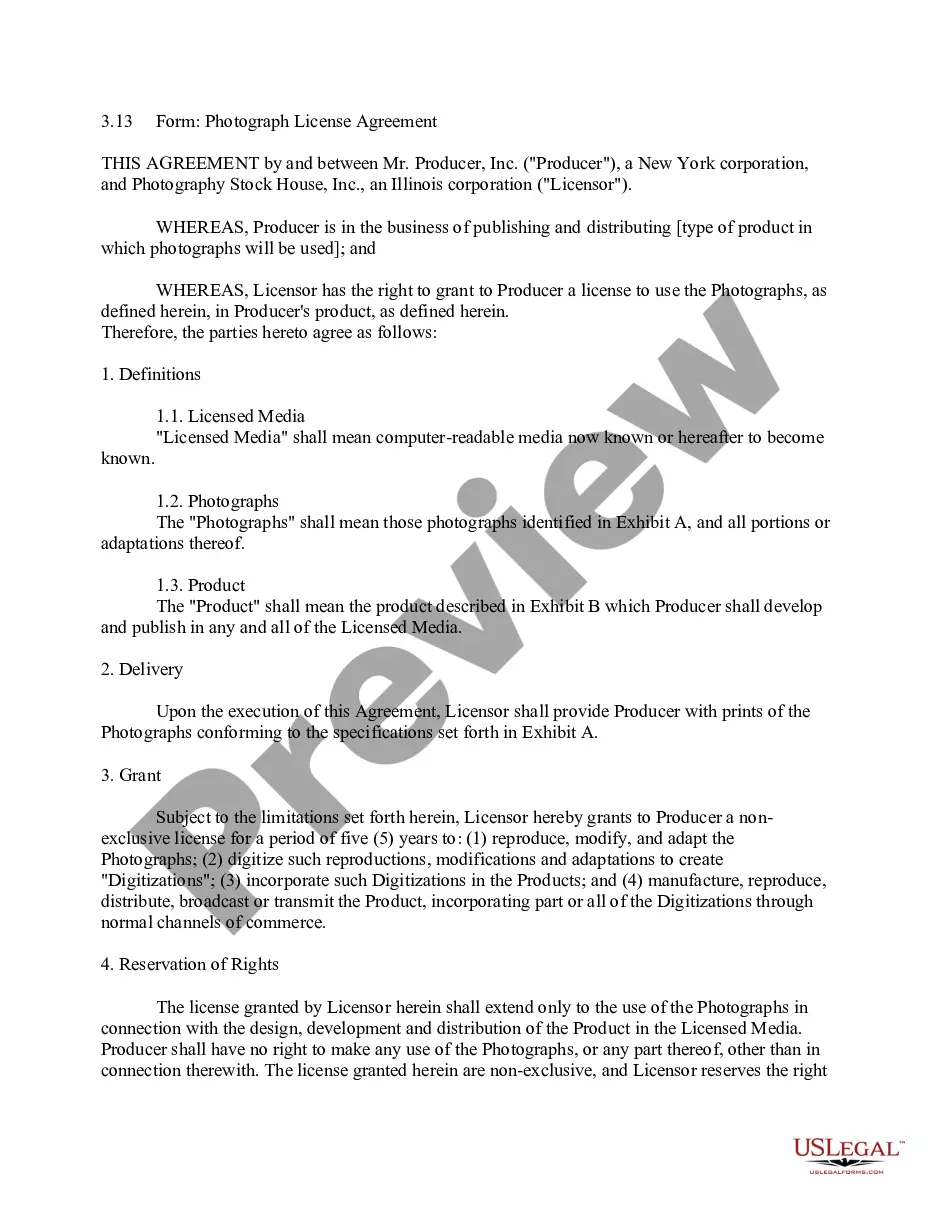
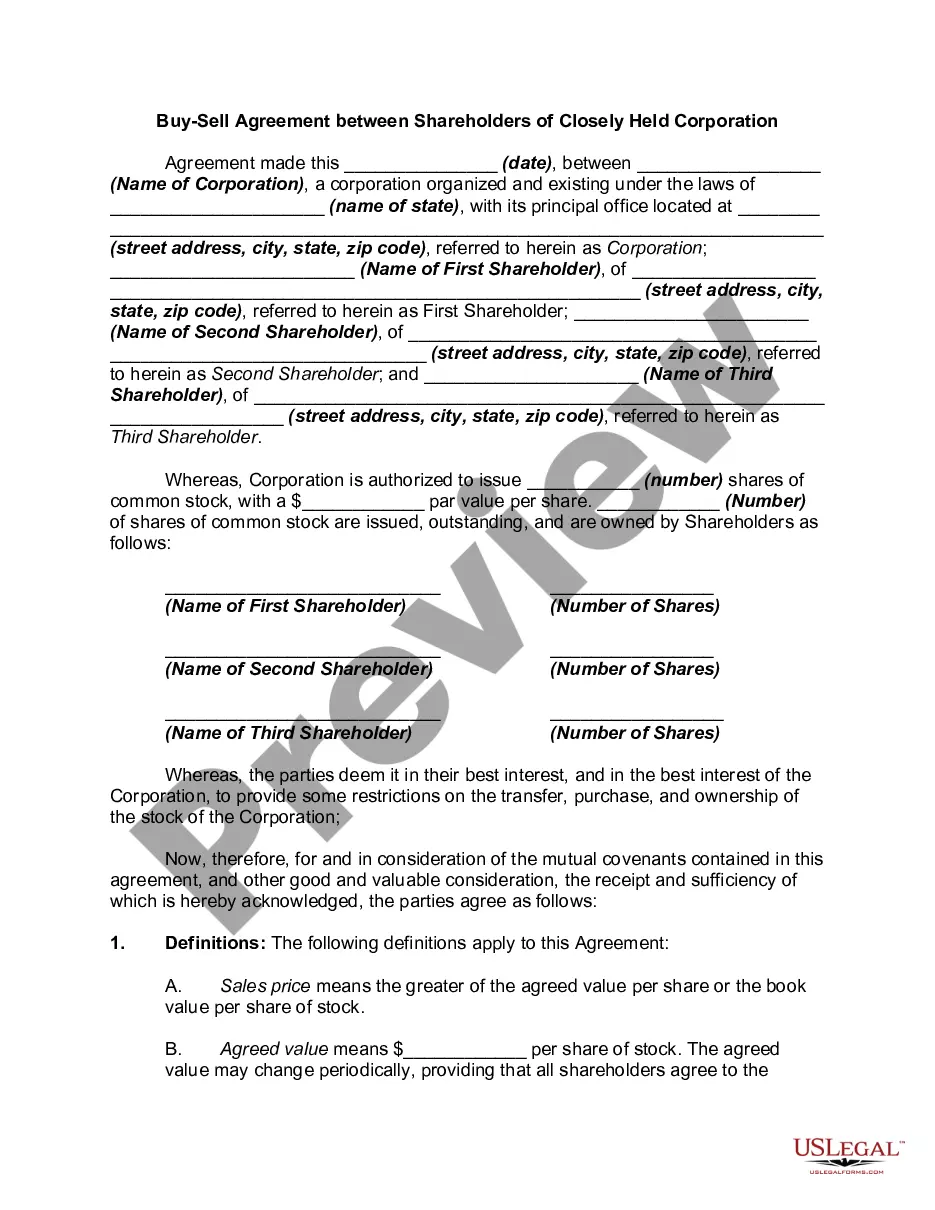
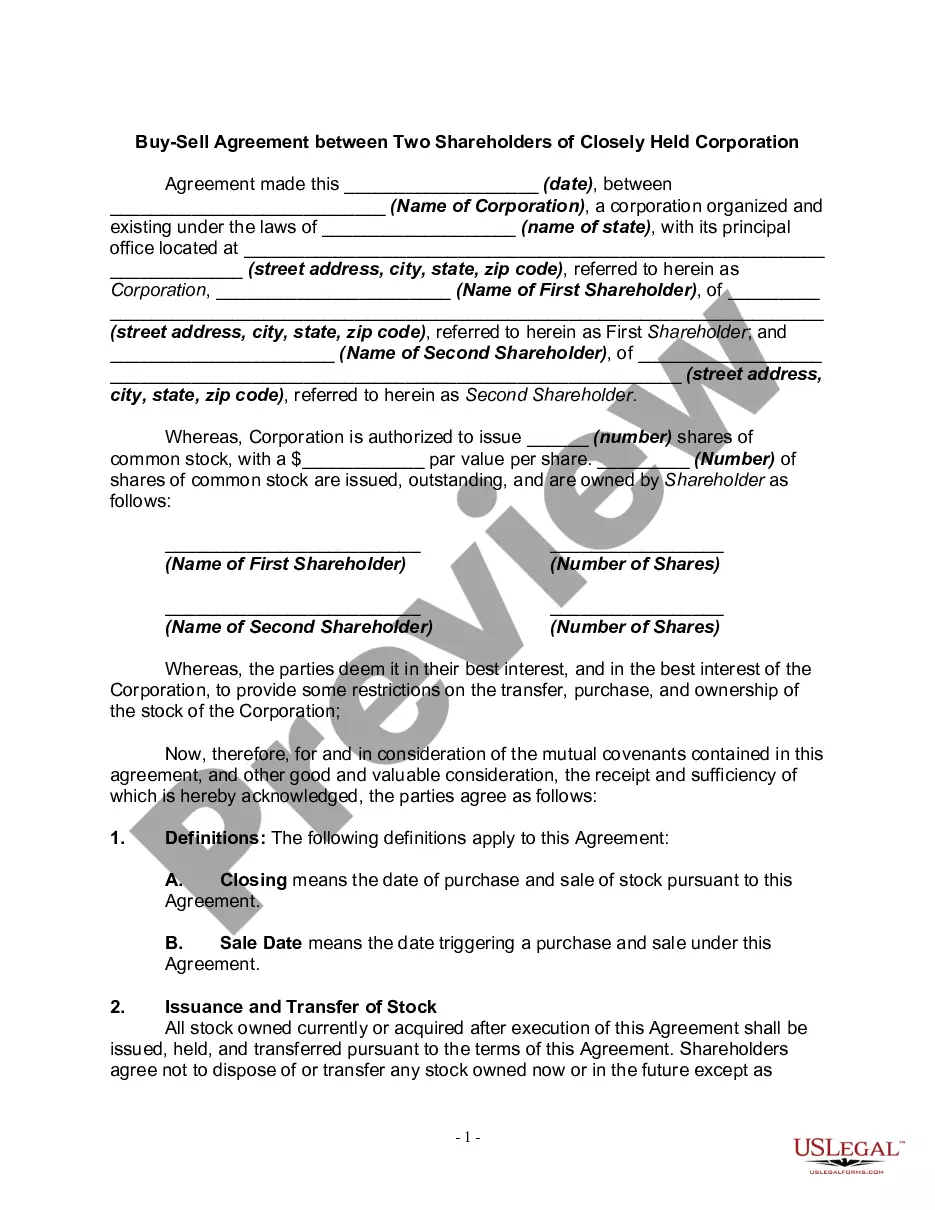
A corporation whose shares are held by a single shareholder or a closely-knit group of shareholders (such as a family) is known as a close corporation. The shares of stock are not traded publicly. Many of these types of corporations are small firms that in the past would have been operated as a sole proprietorship or partnership, but have been incorporated in order to obtain the advantages of limited liability or a tax benefit or both.
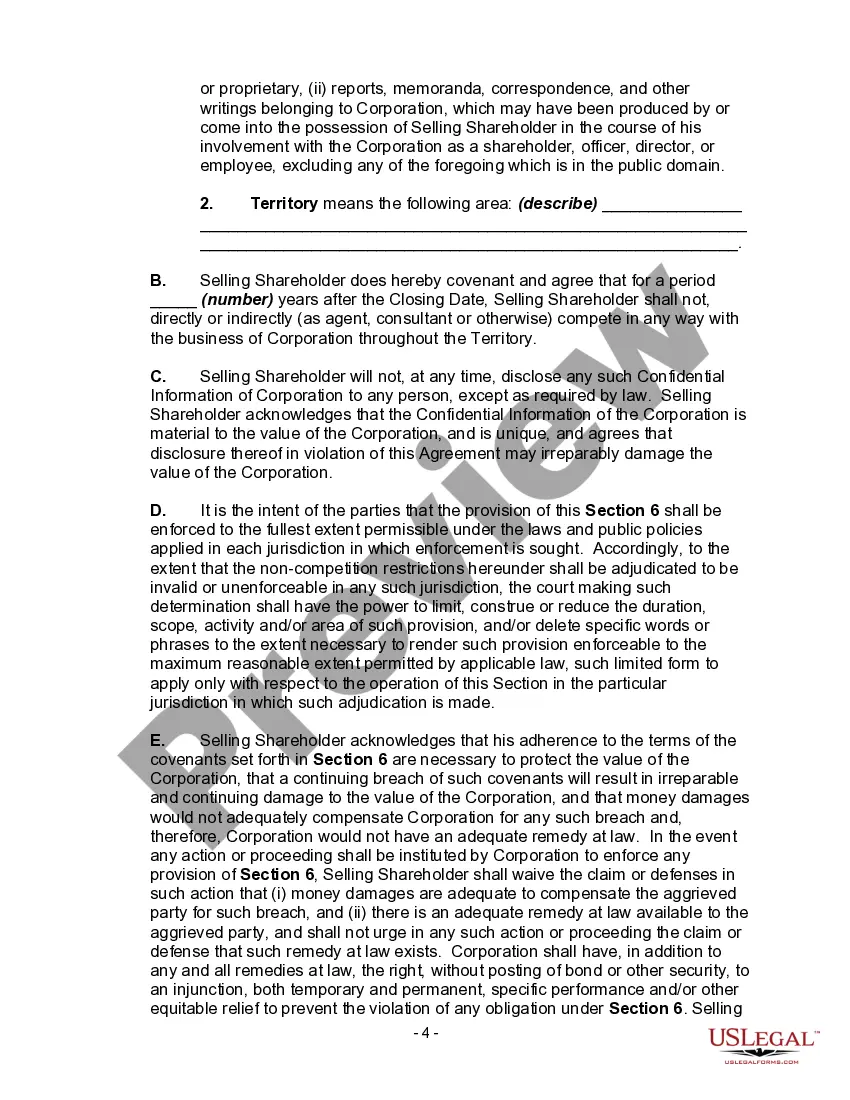
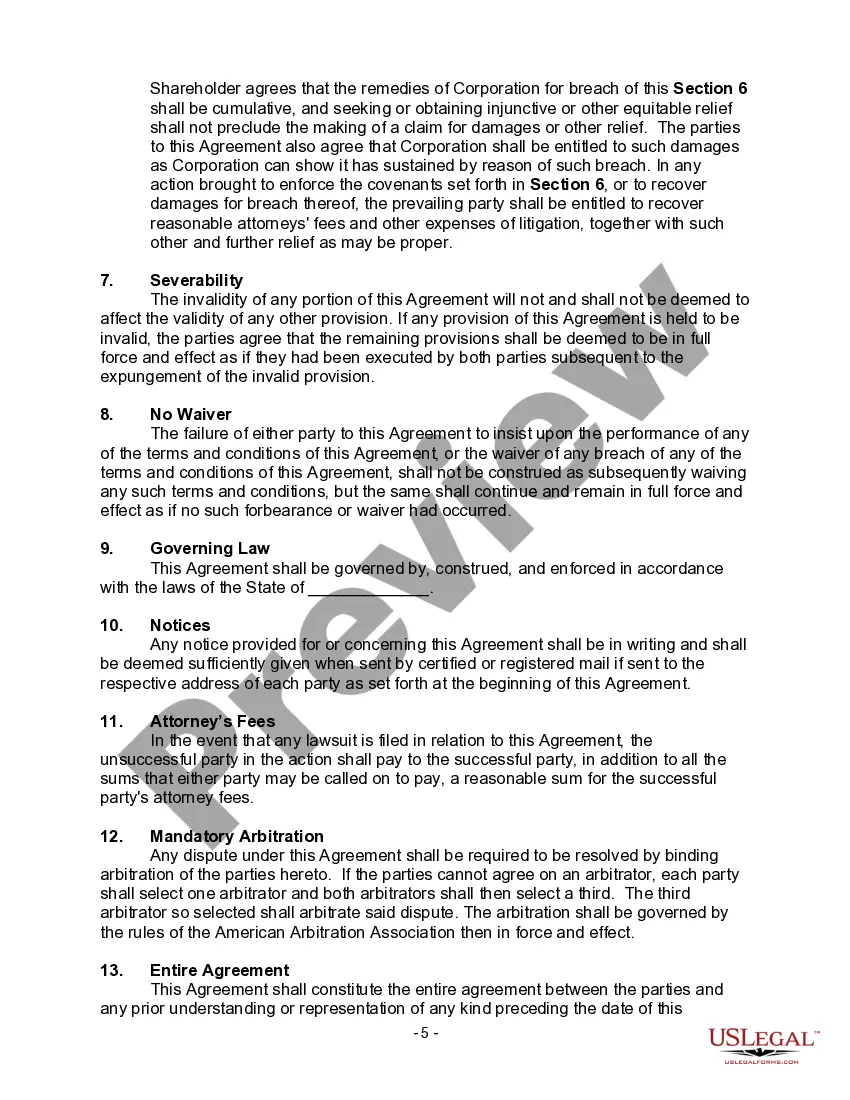
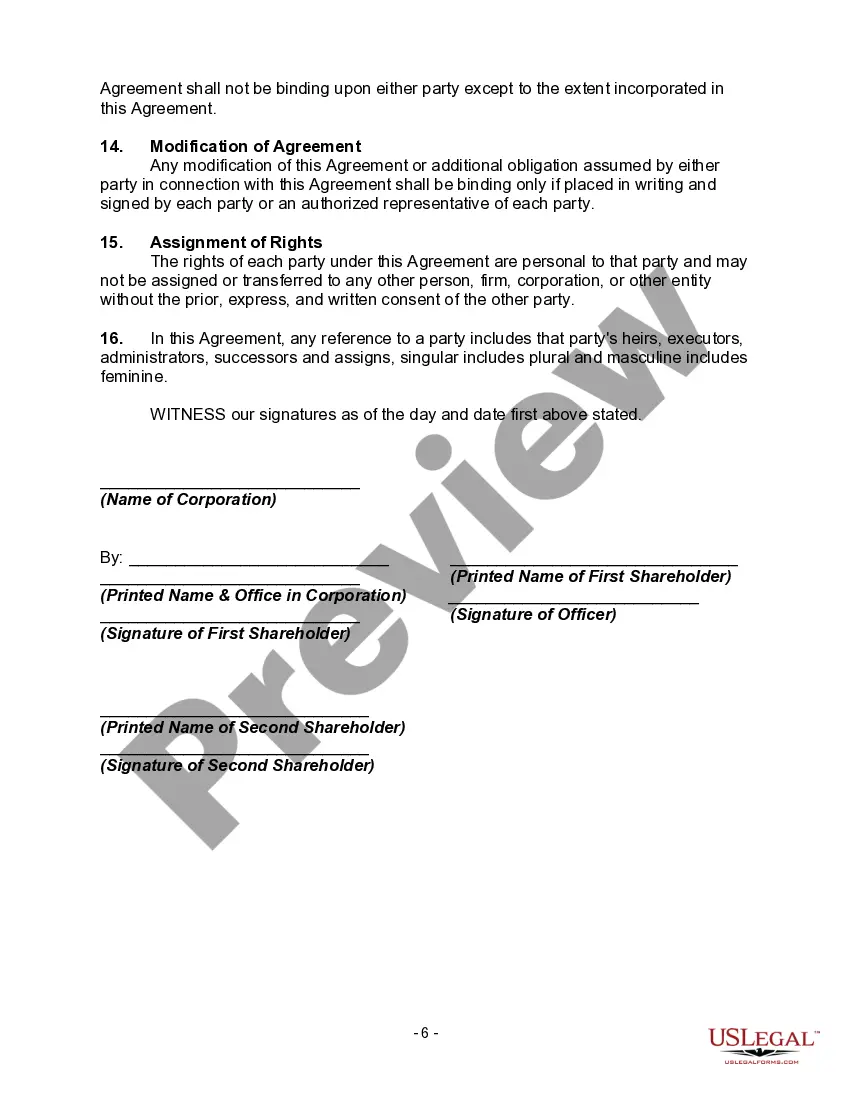
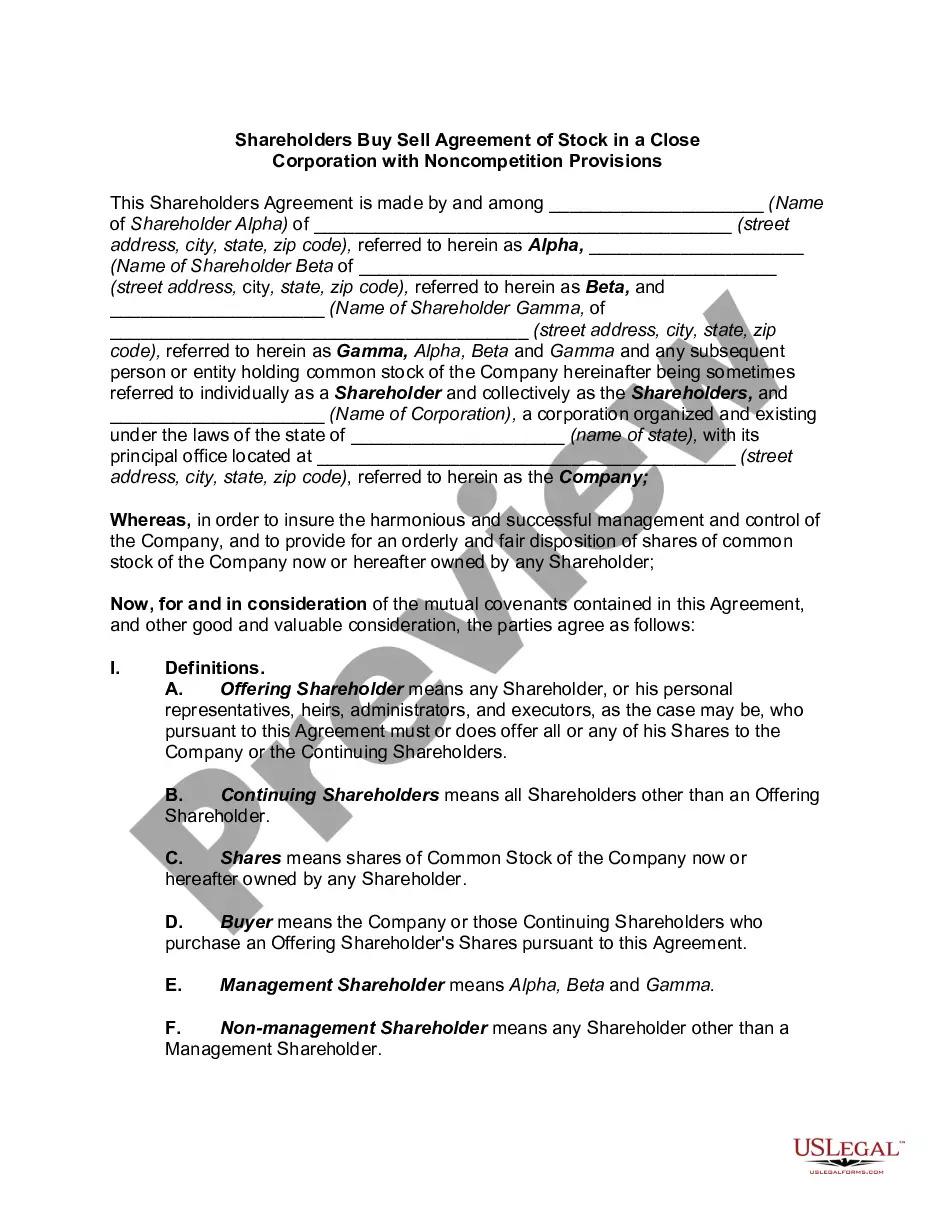
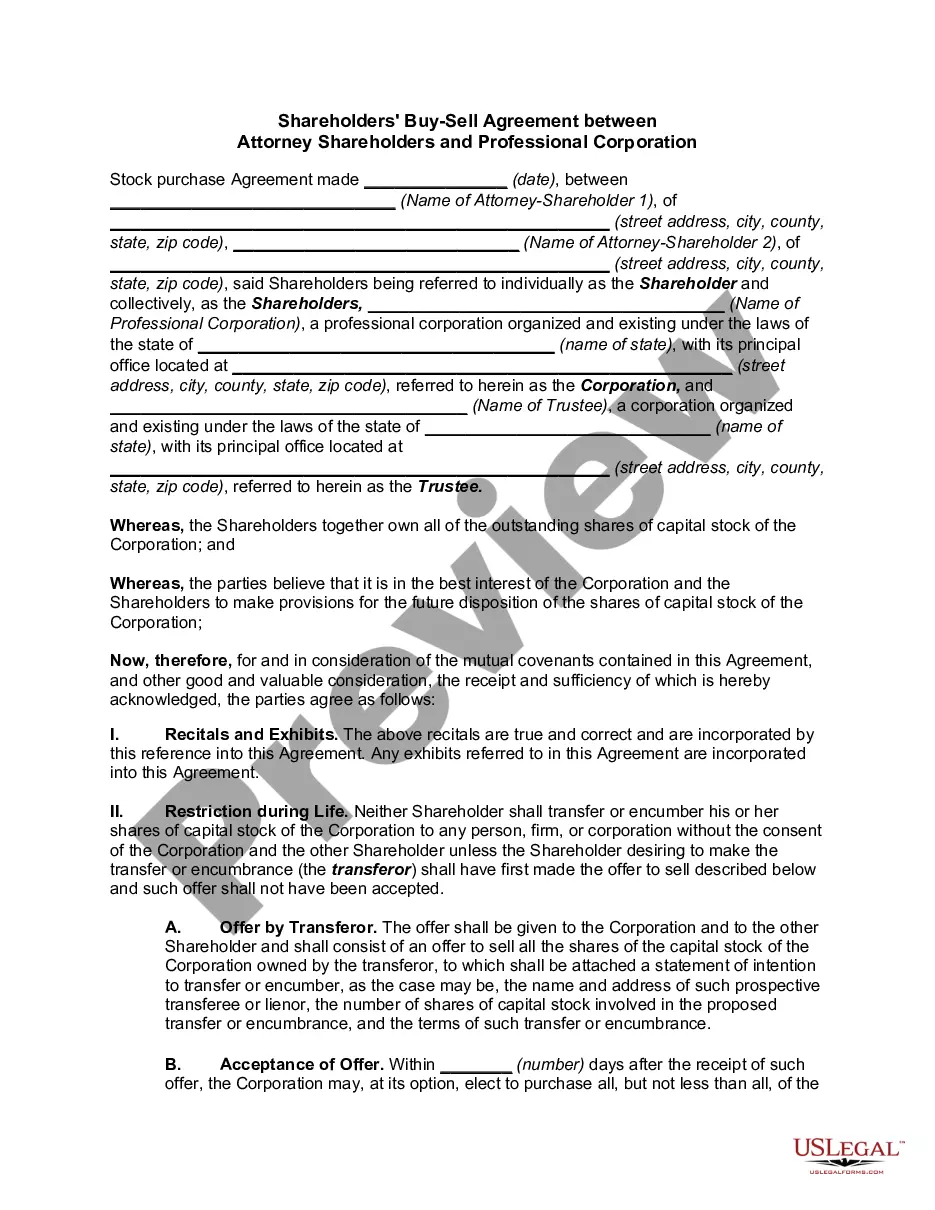
A buy-sell agreement is an agreement between the owners (shareholders) of a firm, defining their mutual obligations, privileges, protections, and rights. This form is a generic example that may be referred to when preparing such a form for your particular state. It is for illustrative purposes only. Local laws should be consulted to determine any specific requirements for such a form in a particular jurisdiction.
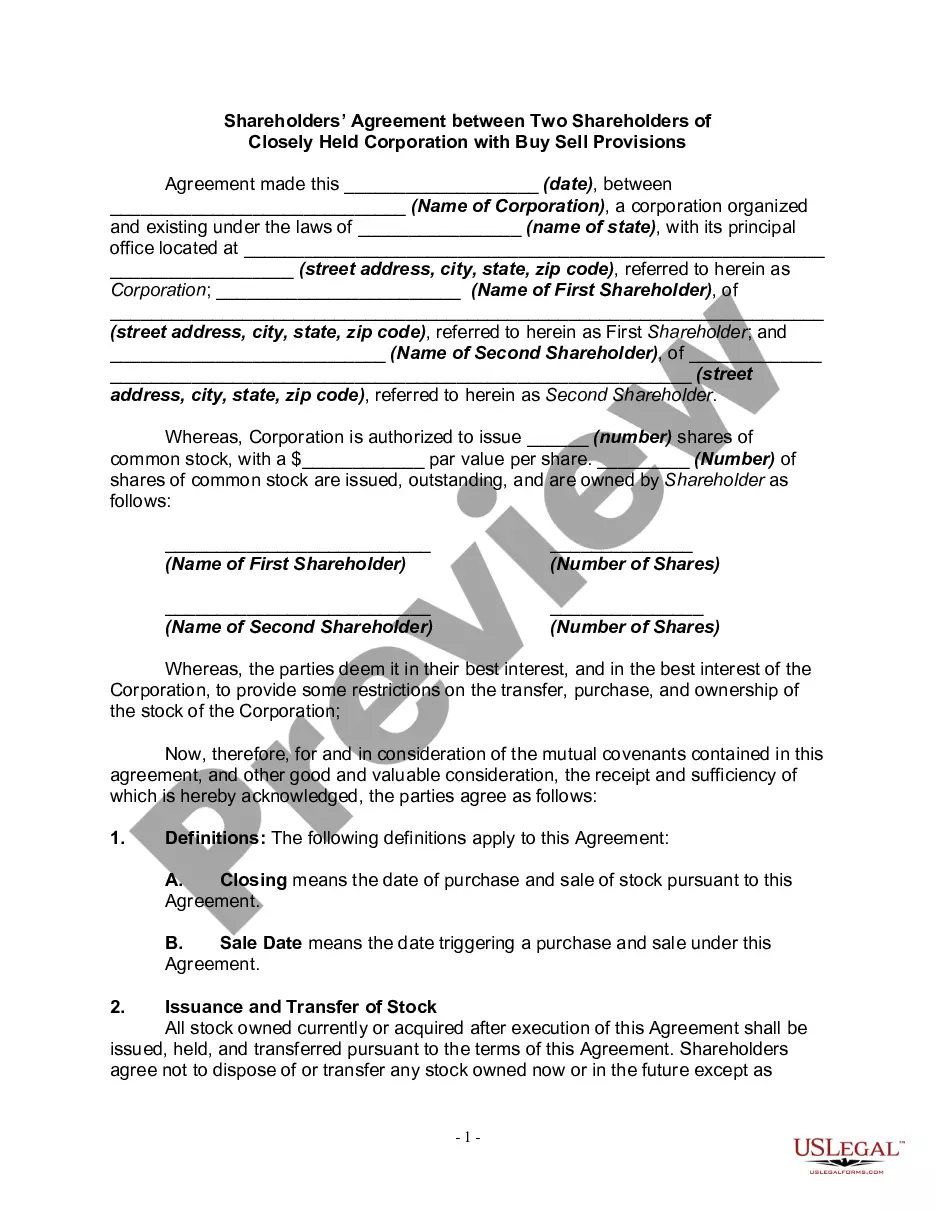
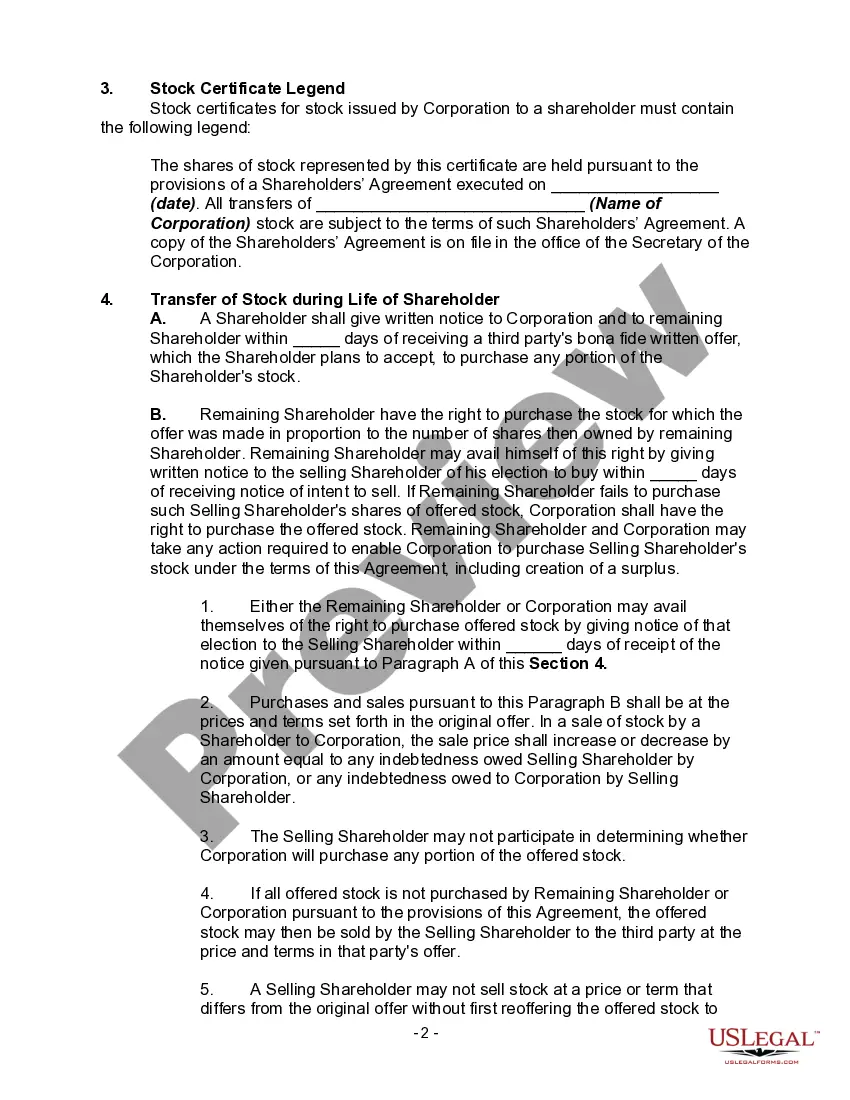
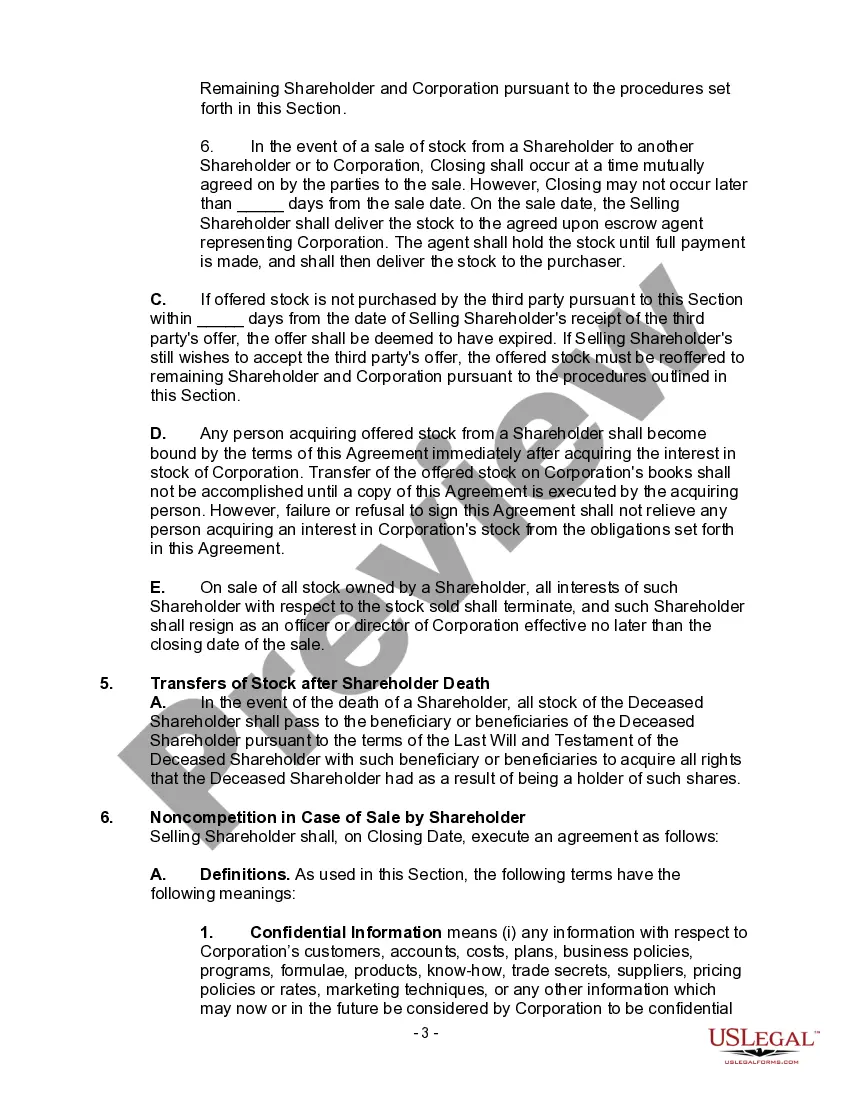
Wyoming Shareholders' Agreement between Two Shareholders of Closely Held Corporation with Buy Sell Provisions
Category:
State:
Multi-State
Control #:
US-02569BG
Format:
Word;
Rich Text
Instant download
Description
Free preview
Get your form ready online
Our built-in tools help you complete, sign, share, and store your documents in one place.
Built-in online Word editor
Make edits, fill in missing information, and update formatting in US Legal Forms—just like you would in MS Word.
Export easily
Download a copy, print it, send it by email, or mail it via USPS—whatever works best for your next step.
E-sign your document
Sign and collect signatures with our SignNow integration. Send to multiple recipients, set reminders, and more. Go Premium to unlock E-Sign.
Notarize online 24/7
If this form requires notarization, complete it online through a secure video call—no need to meet a notary in person or wait for an appointment.
Store your document securely
We protect your documents and personal data by following strict security and privacy standards.

Make edits, fill in missing information, and update formatting in US Legal Forms—just like you would in MS Word.

Download a copy, print it, send it by email, or mail it via USPS—whatever works best for your next step.

Sign and collect signatures with our SignNow integration. Send to multiple recipients, set reminders, and more. Go Premium to unlock E-Sign.

If this form requires notarization, complete it online through a secure video call—no need to meet a notary in person or wait for an appointment.

We protect your documents and personal data by following strict security and privacy standards.
Looking for another form?
How to fill out Shareholders' Agreement Between Two Shareholders Of Closely Held Corporation With Buy Sell Provisions?
You can spend hours online searching for the appropriate legal form that meets the federal and state requirements you need.
US Legal Forms provides thousands of legal templates that are reviewed by professionals.
You can obtain or print the Wyoming Shareholders' Agreement between Two Shareholders of a Closely Held Corporation with Buy-Sell Provisions from their services.
First, ensure you have chosen the correct format for the area/city of your choice. Review the form description to confirm you have selected the right one. If available, use the Review option to view the document as well.
- If you hold a US Legal Forms account, you can Log In and click the Obtain button.
- Then, you can complete, modify, print, or sign the Wyoming Shareholders' Agreement between Two Shareholders of a Closely Held Corporation with Buy-Sell Provisions.
- Every legal template you acquire belongs to you indefinitely.
- To get an additional copy of any downloaded form, navigate to the My documents section and click on the relevant option.
- If you are using the US Legal Forms site for the first time, follow the simple instructions below.
Form popularity
FAQ
The main things to consider including in a shareholders' agreement are:The nature of the company and its purpose.The process for appointing a director.How decisions about the company will be made.How disputes will be resolved.The shareholders' rights to information.How shares will be distributed and sold.More items...?
What Are Buy-Sell Agreements? Buy-Sell agreements or forced buyouts are one way for the majority to force out a minority. This allows a majority to force a minority to sell their shares often in the context of a company-wide buyout.
The simplest solution for selling private shares is to approach the issuing company and ask how other investors liquidated their stakes. Some private companies have buyback programs, which allow investors to sell their shares back to the issuing company.
How is a fair value established for private company share transfers? If shares can be freely sold, seller and buyer can negotiate a price between them. However, the company's articles of association, or a shareholders' agreement, may specify how the shares are to be valued.
In general, shareholders can only be forced to give up or sell shares if the articles of association or some contractual agreement include this requirement. In practice, private companies often have suitable articles or contracts so that the remaining owner-managers retain control if an individual leaves the company.
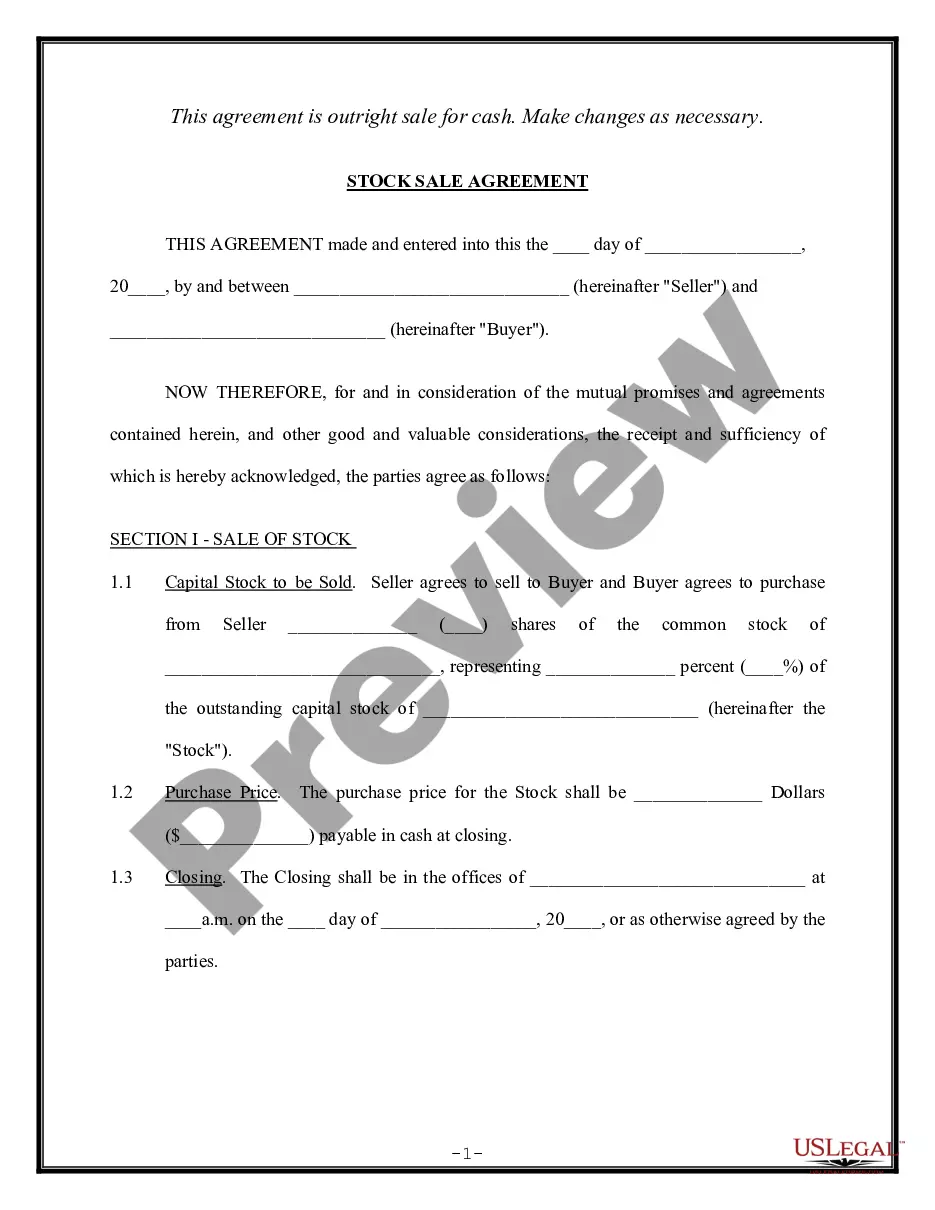
If an individual is purchasing or selling shares in the company or industry with another business or person, they should use a share purchase agreement. For instance, if there are two partners for a business, they have equal rights and shares.
Once private, a company's shares can no longer be traded publicly because the company is de-listed from the public exchange on which its shares once traded. Going private is an easier process than going public due to fewer steps and regulatory hurdles.
The answer is usually no, but there are vital exceptions. However, there are a few situations in which shareholders must sell their stock even if they would prefer to hold onto their shares. The two most common are when a company gets acquired and when it has an agreement among shareholders calling for forced sales.
Yes. Most companies that raise investment (on Crowdcube or elsewhere) include a drag along procedure in their articles of association. The procedure is designed to ensure that minority shareholders cannot block an exit by the majority.
The answer is usually no, but there are vital exceptions. However, there are a few situations in which shareholders must sell their stock even if they would prefer to hold onto their shares. The two most common are when a company gets acquired and when it has an agreement among shareholders calling for forced sales.