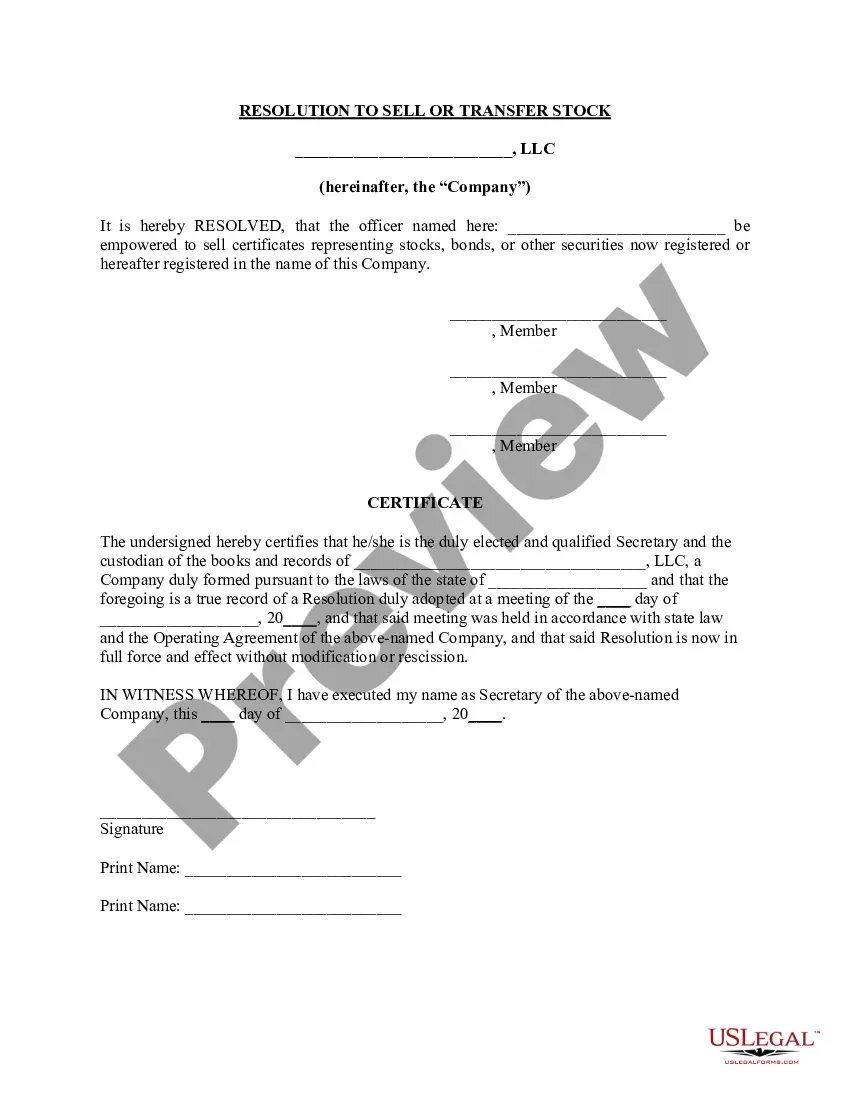
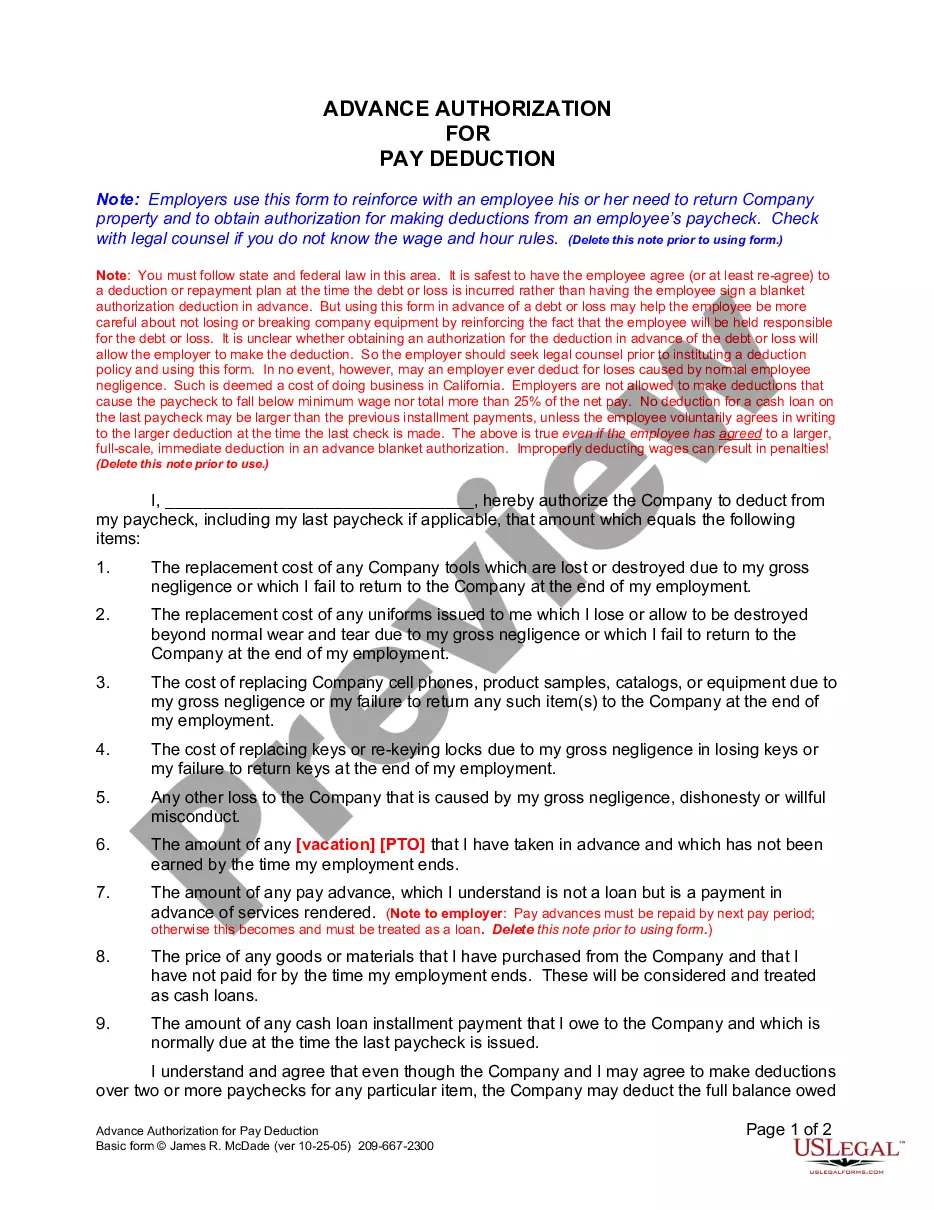
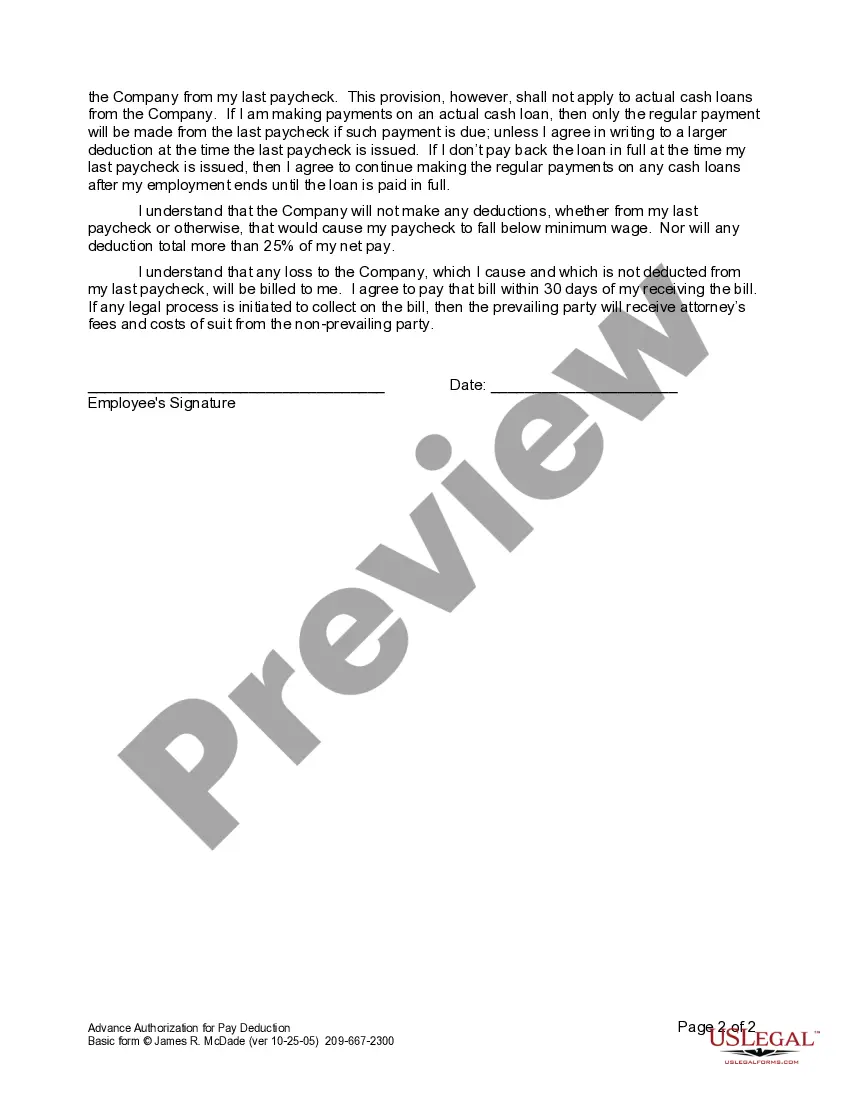
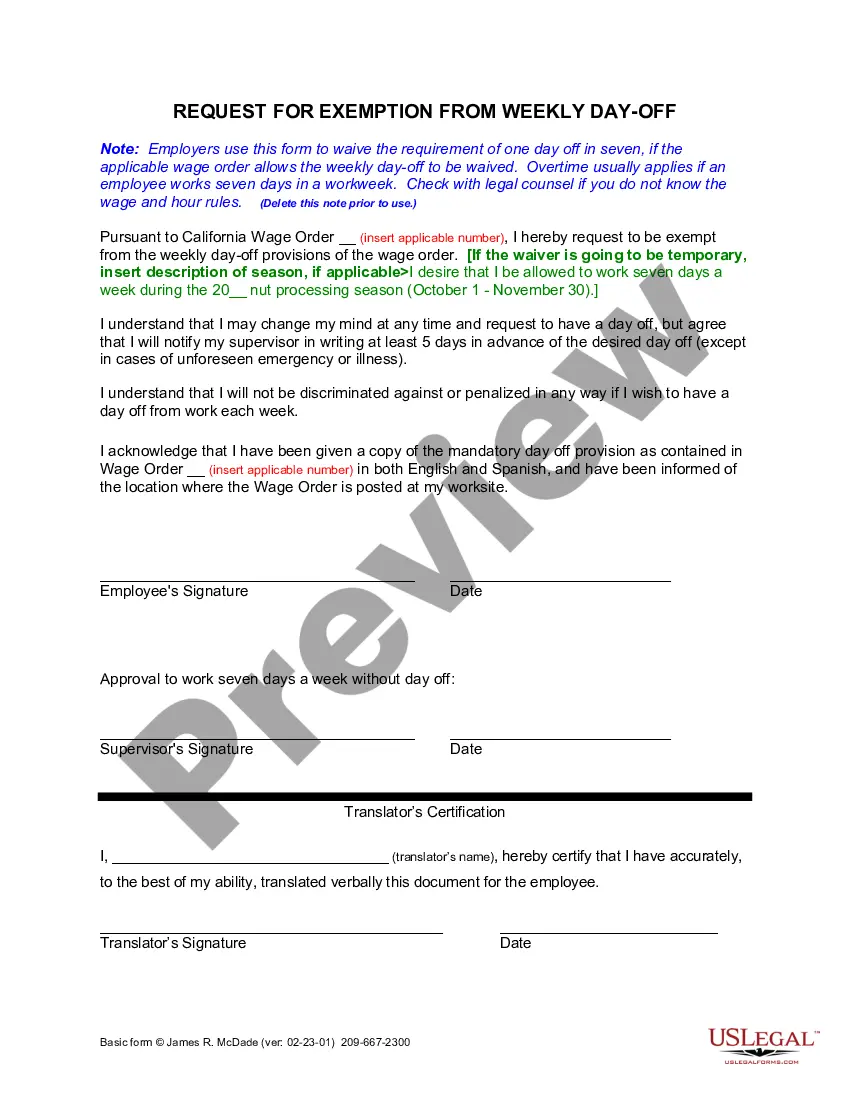
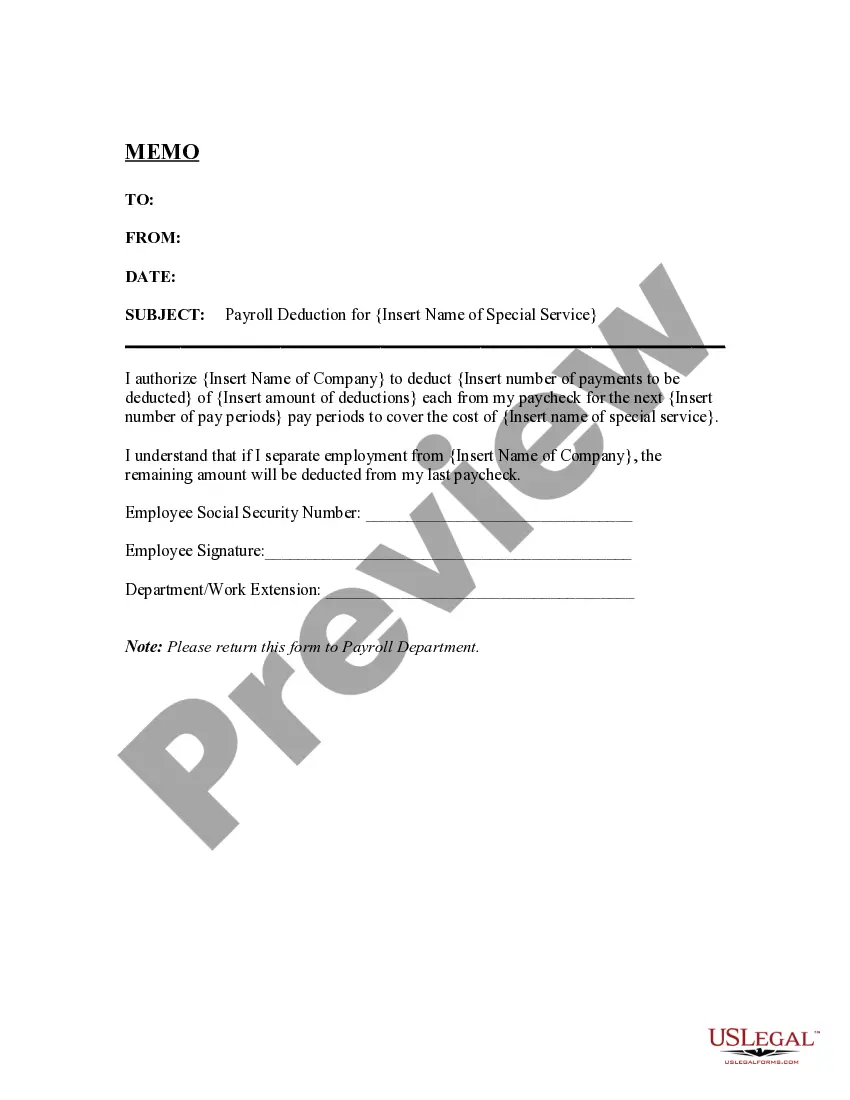
Employers use this form to reinforce with an employee his or her need to return Company property and to obtain authorization for making deductions from an employee's paycheck.
Hayward California Advance Authorization for Pay Deduction
State:
California
City:
Hayward
Control #:
CA-JM-0019
Format:
Word
Instant download
Description
Free preview

How to fill out California Advance Authorization For Pay Deduction?
Acquiring authenticated templates tailored to your regional regulations can be difficult unless you utilize the US Legal Forms collection.
It’s a digital repository of over 85,000 legal documents for both individual and business purposes and various real-life situations.
All forms are appropriately classified by usage area and jurisdictional domains, making it simple and straightforward to find the Hayward California Advance Authorization for Pay Deduction.
Keep your documents organized and compliant with legal standards. Take advantage of the US Legal Forms library to always have necessary document templates readily available for any requirement!
- Examine the Preview mode and form description.
- Ensure you’ve selected the correct option that fulfills your needs and aligns with your local jurisdiction mandates.
- Seek another template, if necessary.
- Once you discover any discrepancies, use the Search tab above to find the accurate document.
- If it meets your requirements, proceed to the next step.
Form popularity
FAQ
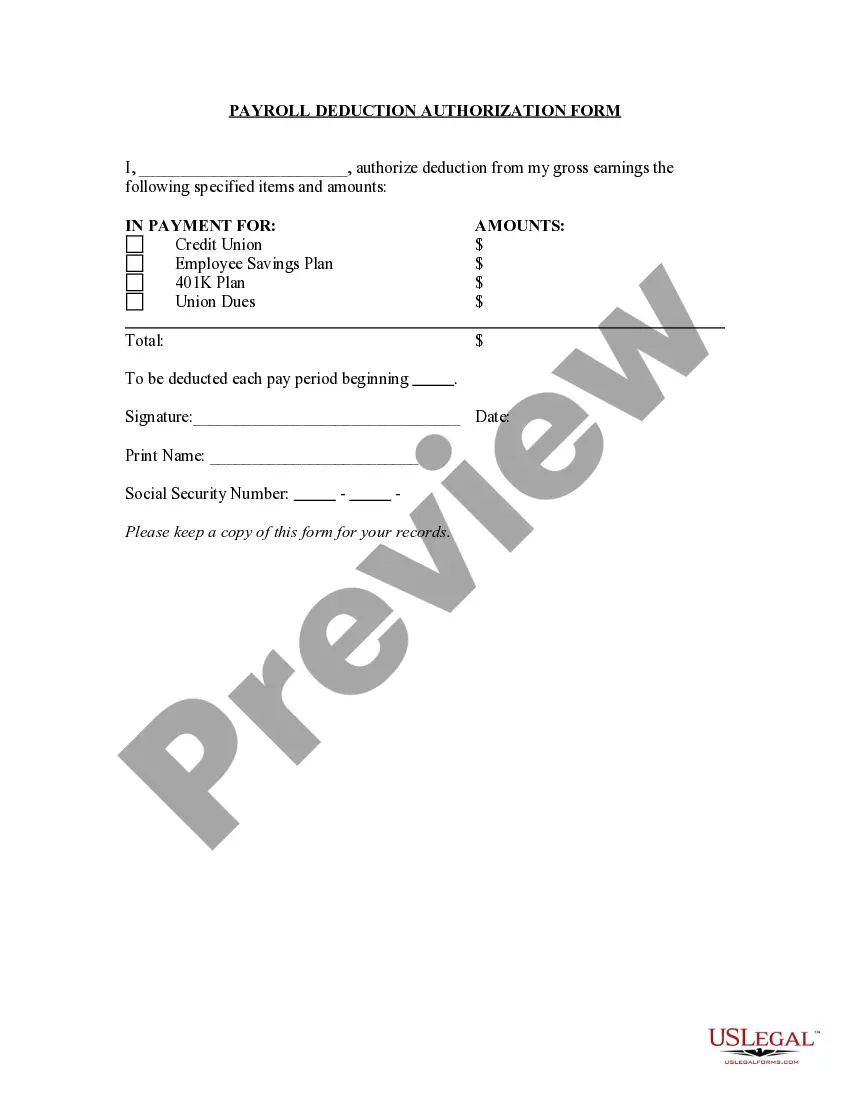
A payroll deduction could include contributions to retirement plans, health insurance premiums, or other benefits agreed upon by the employer and employee. For individuals in Hayward, California, understanding these examples of payroll deductions is essential for financial planning and compliance. This knowledge helps employees make informed decisions about their deductions.
The authorization for payroll deduction form in California is a specific document required by many employers that outlines the deductions to be made from an employee's wages. This form includes details about the frequency, amount, and purpose of the deductions. For residents in Hayward, California, this form is crucial for legally binding payroll deductions.
A letter authorization for payroll deductions is a written request from an employee to their employer, permitting deductions from their salary. This letter specifies the purpose and amount of the deductions. For those in Hayward, California, a well-drafted letter can ensure clarity and prevent misunderstandings regarding payroll deductions.
What types of things cannot be deducted from employees' wages? Employers cannot charge interest or fees for cashing cheques or providing payroll advances. Employers cannot recover business expenses from the wages of employees.
Section 34 (1) of the Basic Conditions of Employment Act prohibits an employer from making deductions from an employee's remuneration without the employee's consent and if the deduction is required or permitted in terms of a law, collective agreement, court order or arbitration award.
The cash advance needs to be reported as a reduction in the company's Cash account and an increase in an asset account such as Advance to Employees or Other Receivables: Advances. (If the amount is expected to be repaid within one year, this account will be reported as a current asset.)
Under federal law, you may deduct an advance from your employee's paycheck. However, you may not deduct so much that it reduces your employee's pay to less than the hourly minimum wage ($7.25, currently). For low-wage employees, this means you may need to spread the repayment period out over several paychecks.
Employees who authorize voluntary deductions usually must consent to these deductions in a written document that outlines the amount to be deducted per pay period. The employer is generally not permitted to make a deduction in the absence of an employee's written consent to a deduction.
Under California law, an employer may lawfully deduct the following from an employee's wages: Deductions that are required of the employer by federal or state law, such as income taxes or garnishments.
Under federal law, the general rule is that employers may deduct certain expenses from their employees' paychecks, as long as the deductions don't bring the employee's earnings below the minimum wage. (However, there are some exceptions, as explained below.) Some states have laws that are more protective of employees.