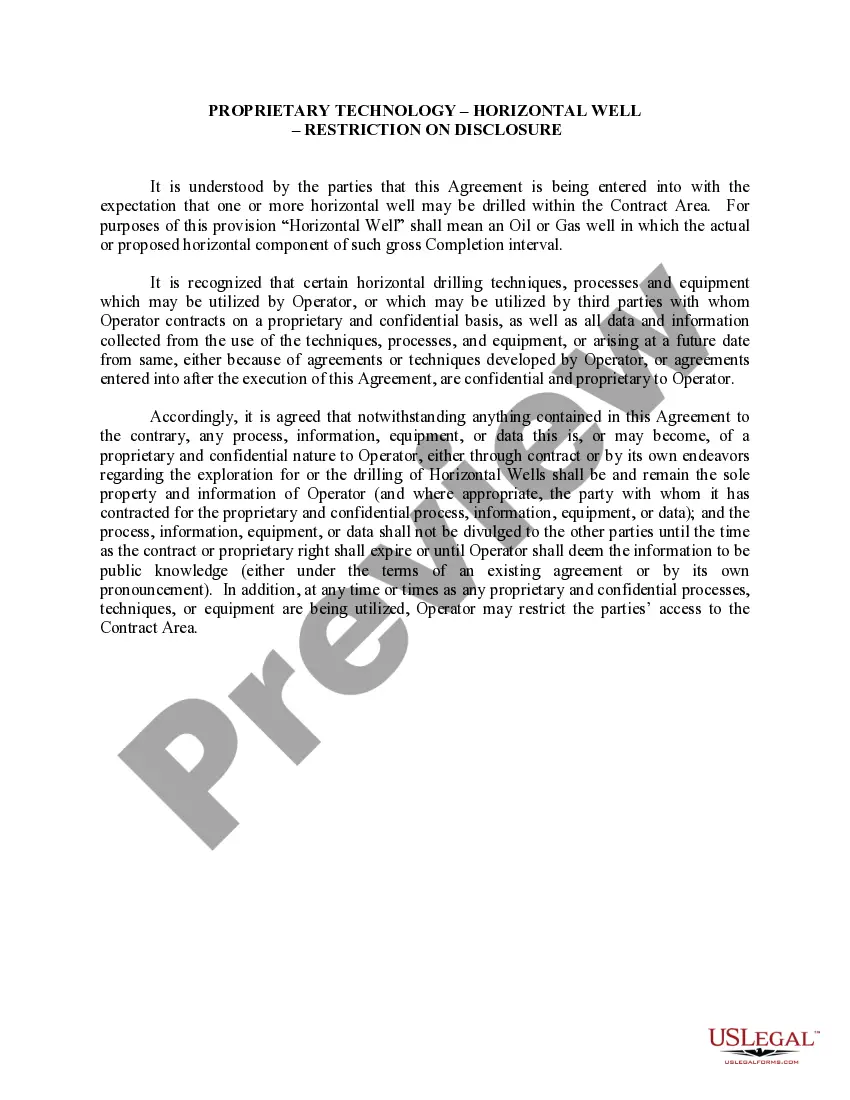
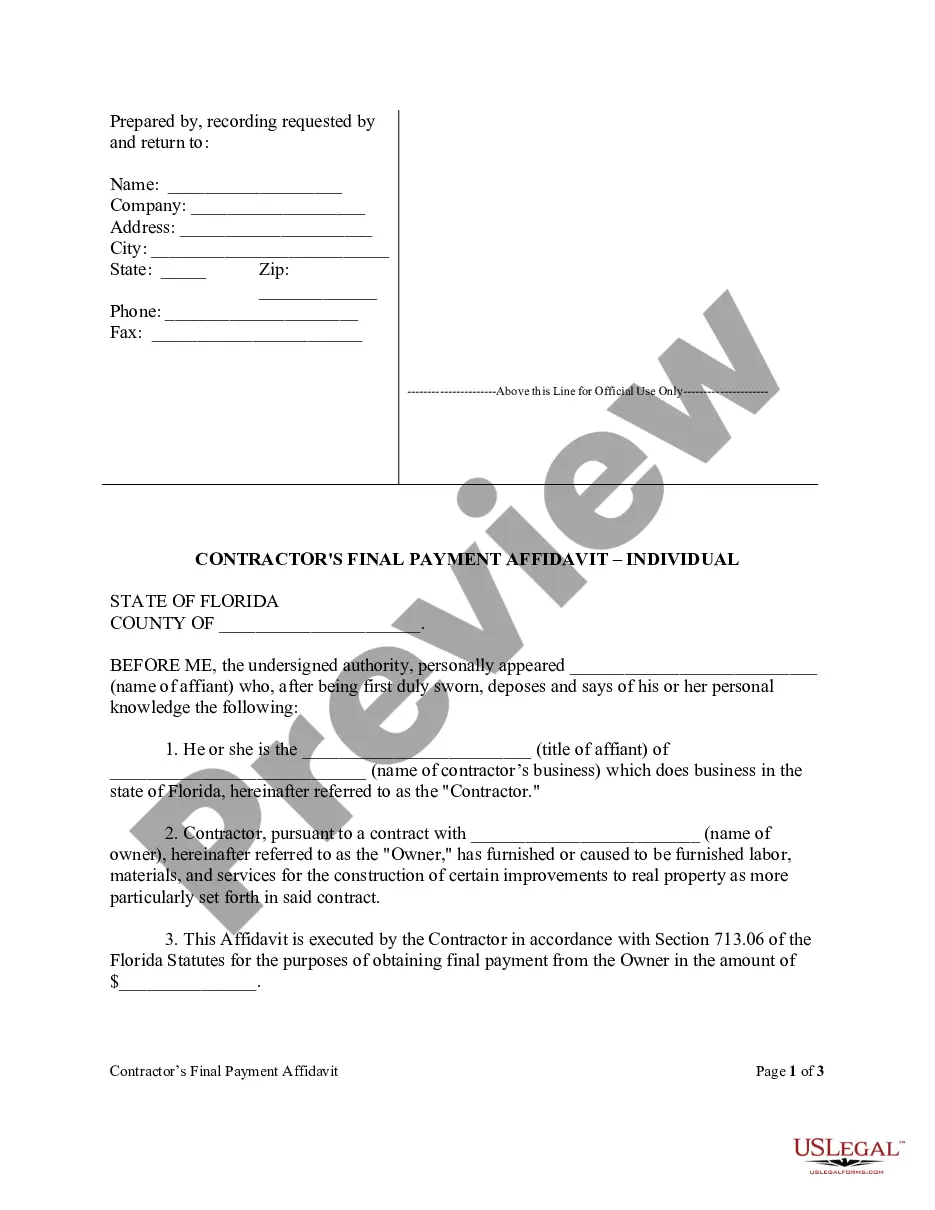
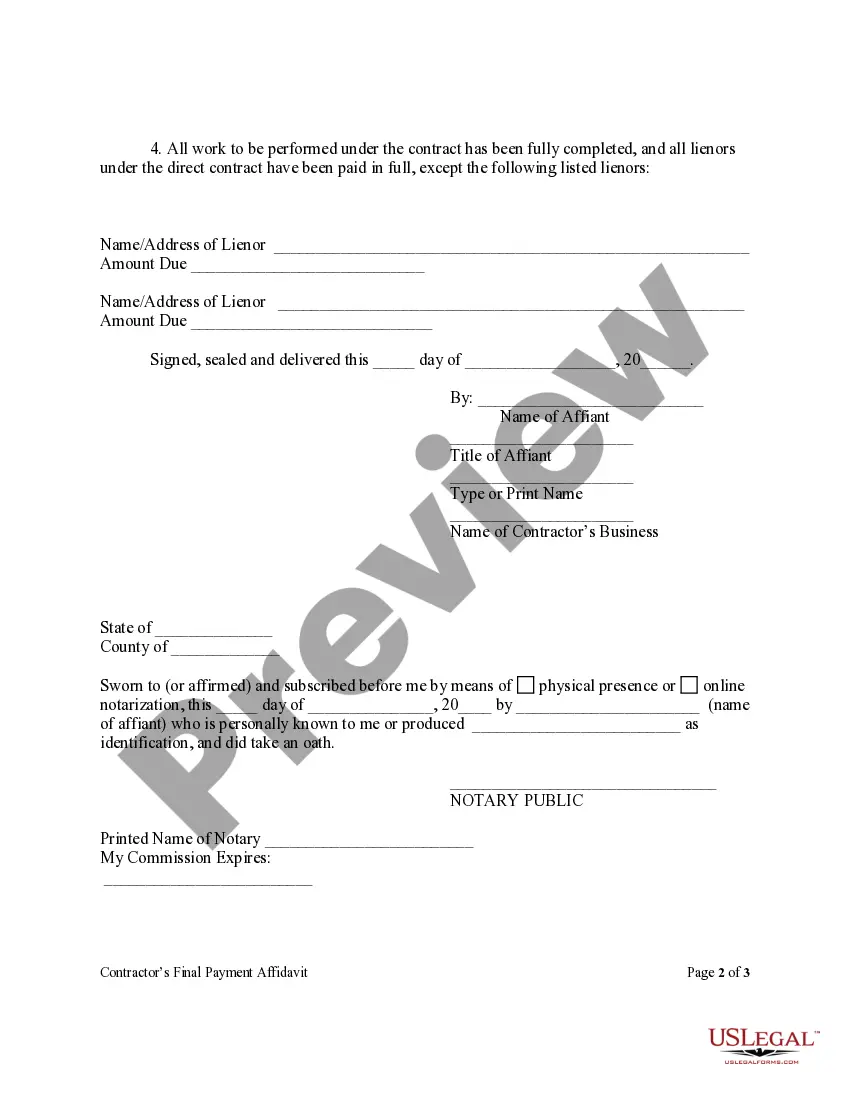
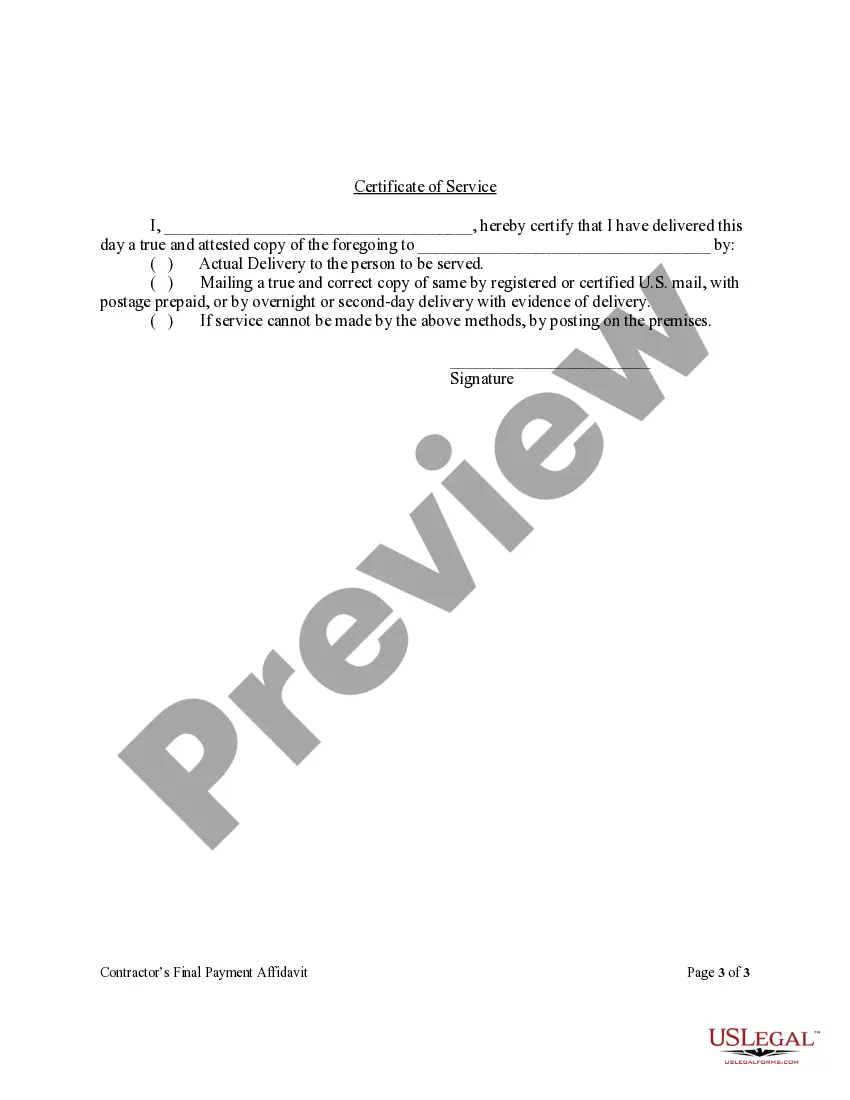
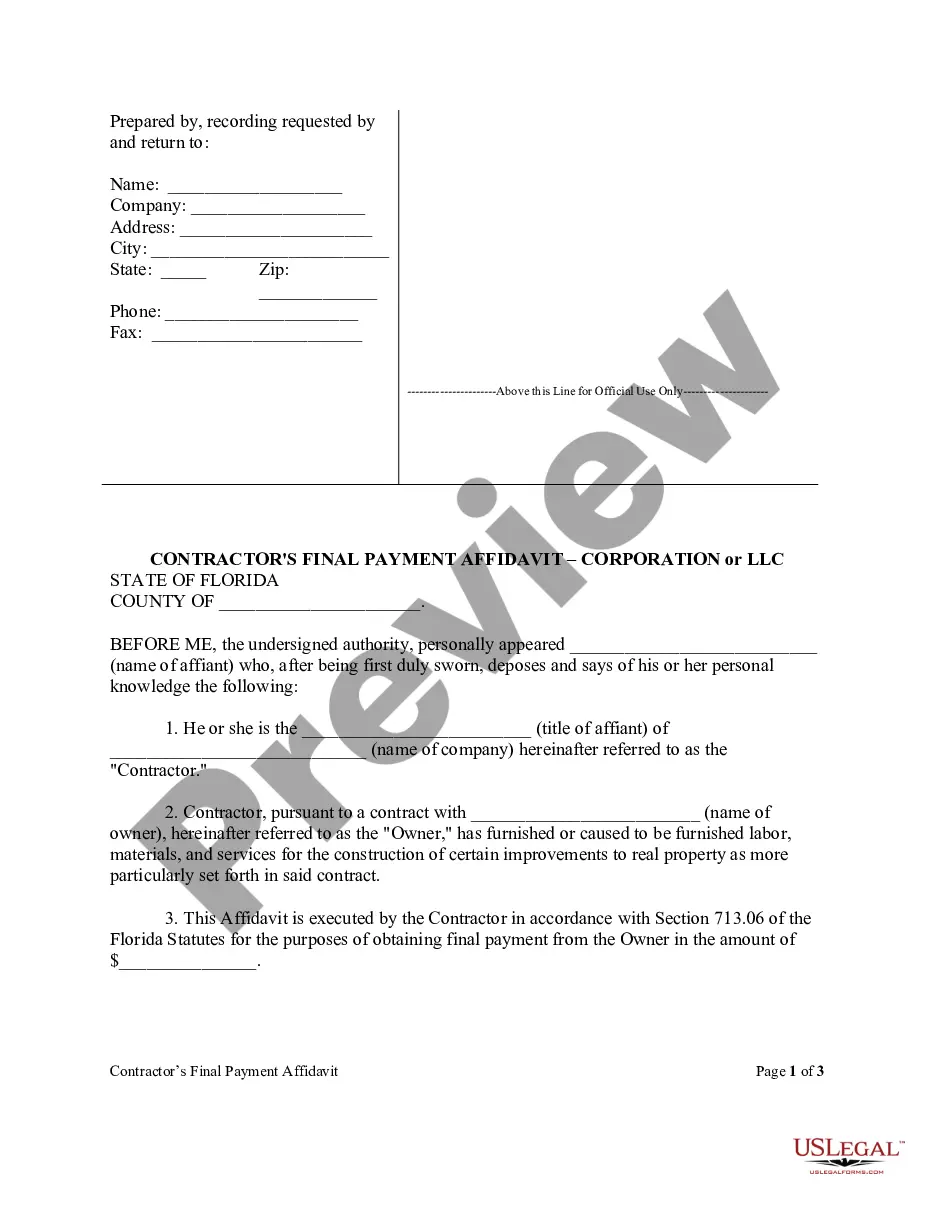
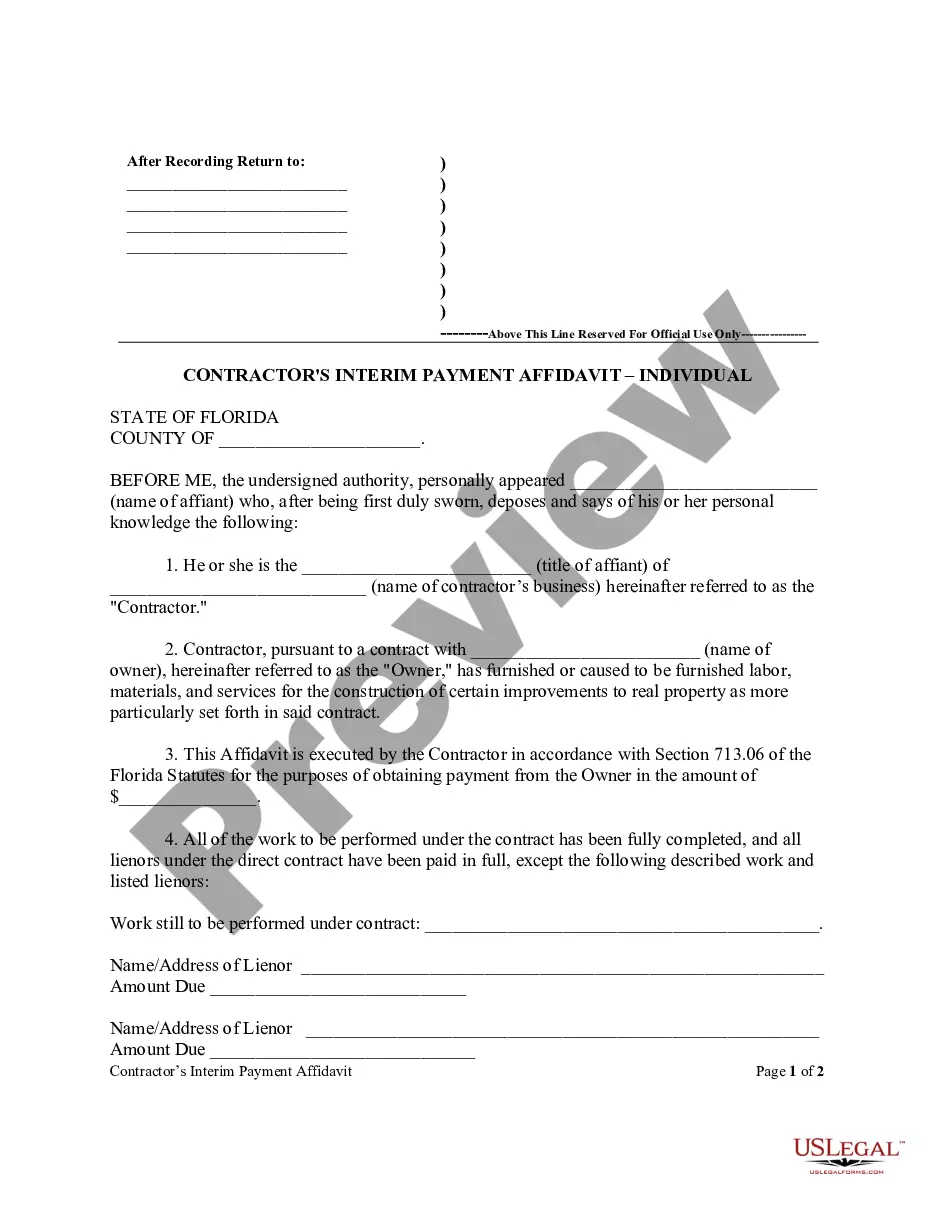
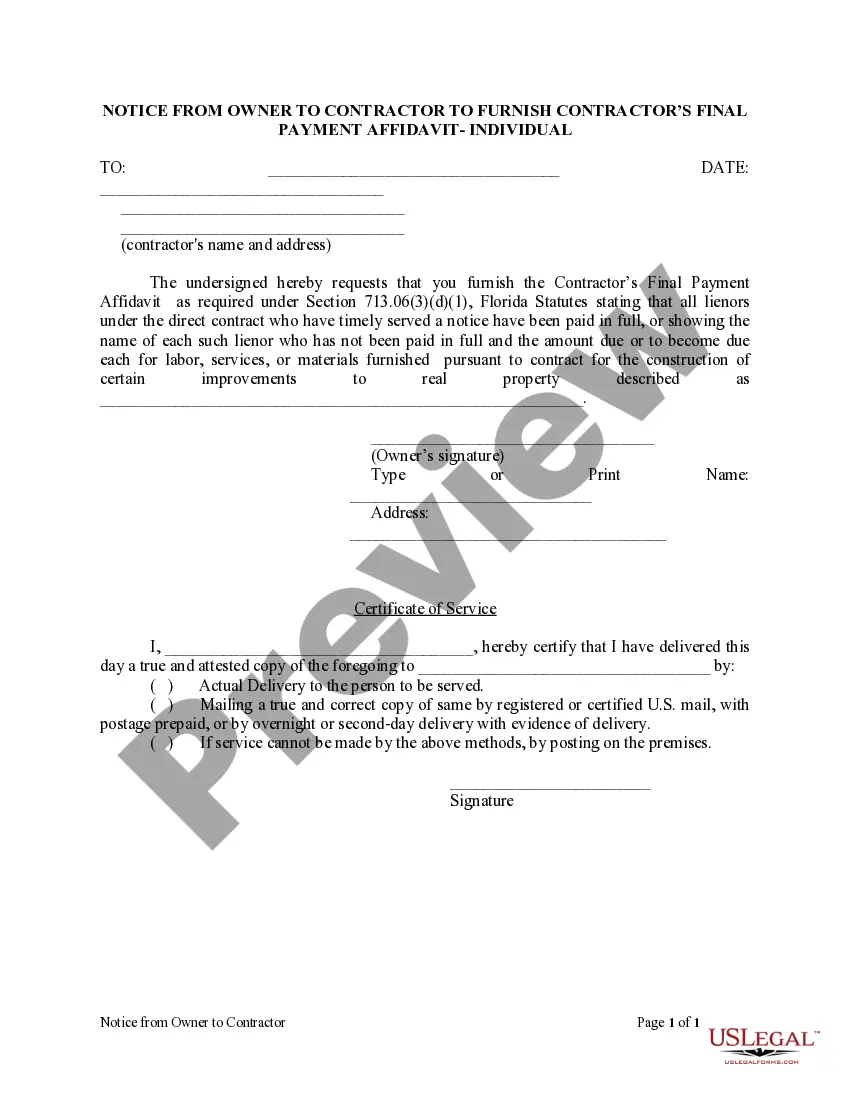
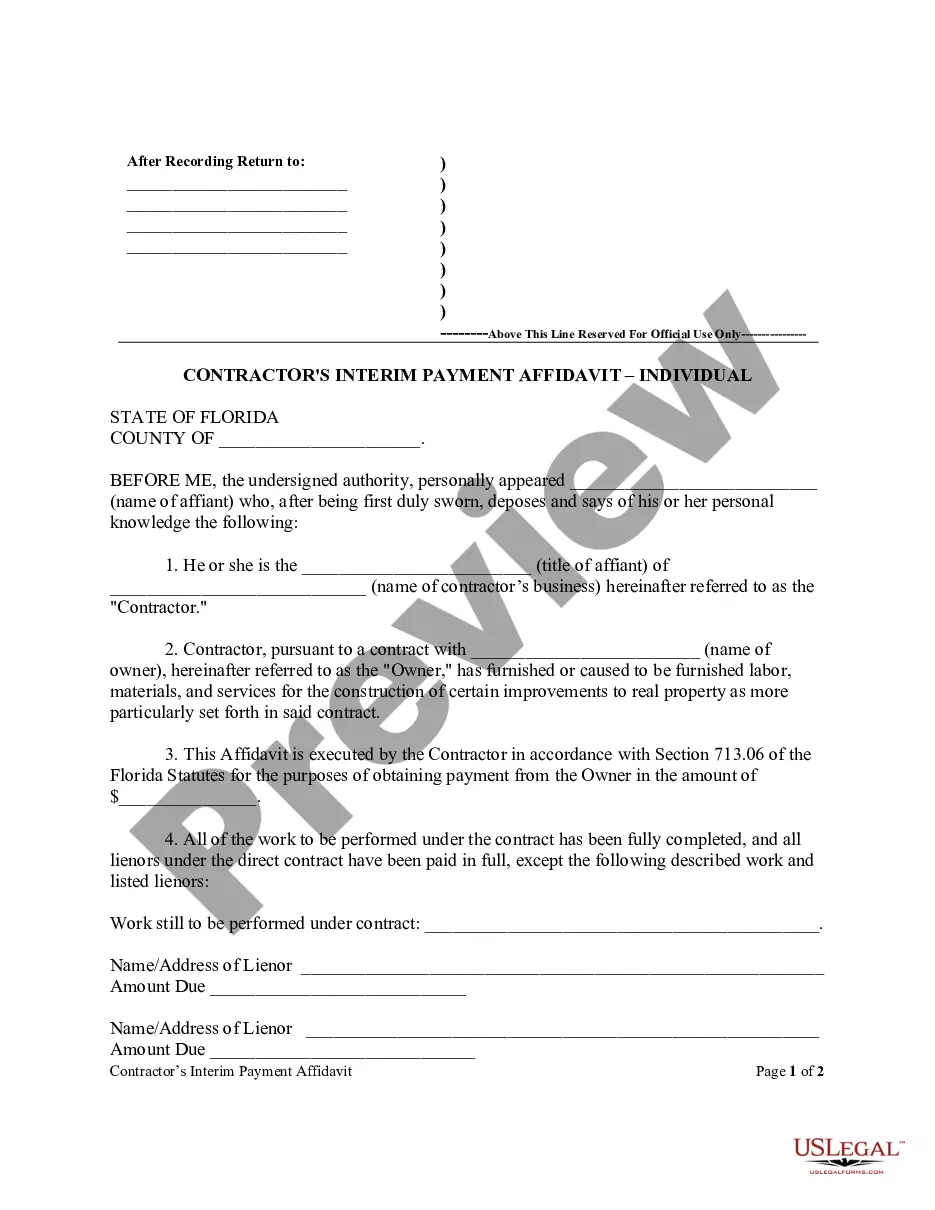
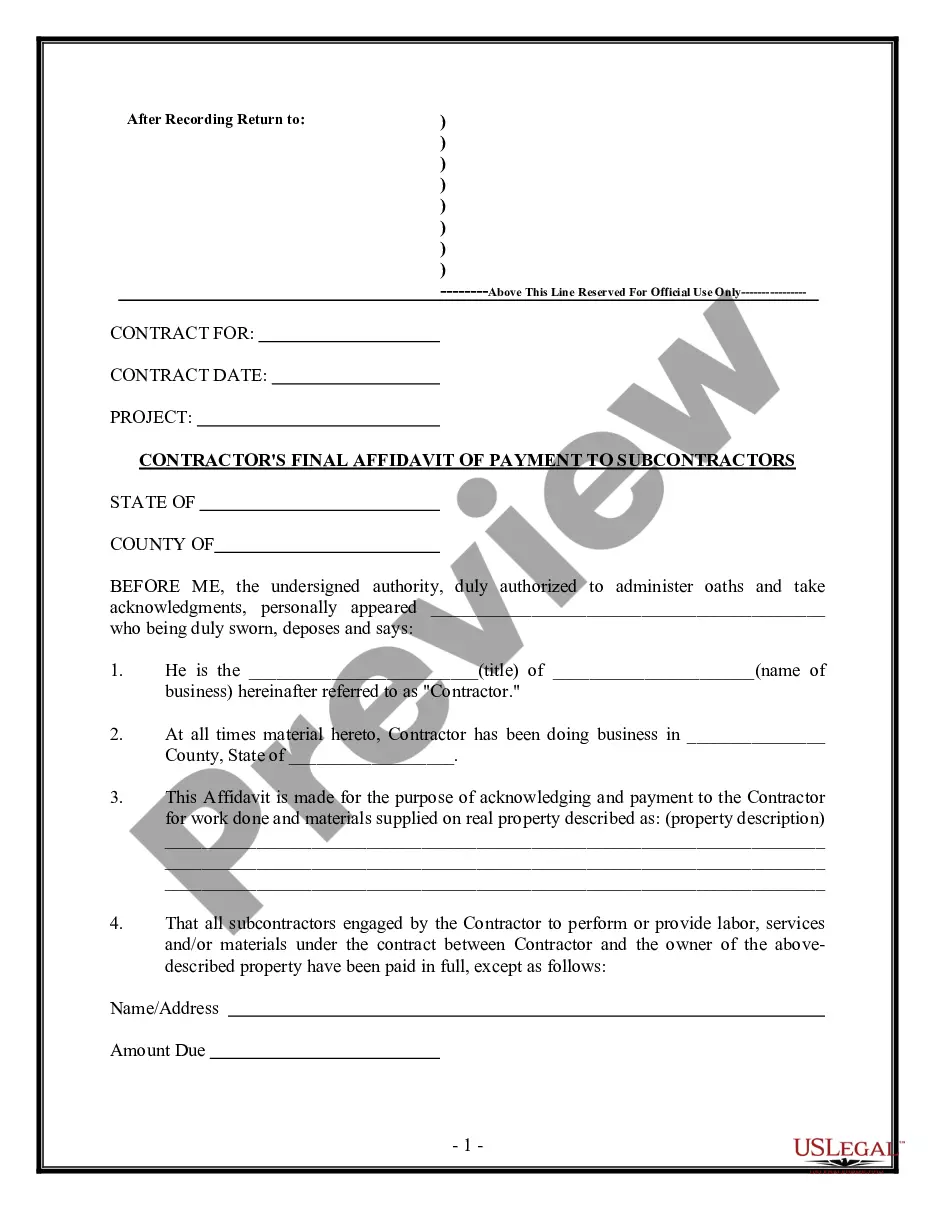
This is the individual Contractor's final affidavit to owner.
Tampa Florida Contractor's Final Affidavit Form - Construction - Mechanic Liens - Individual
Category:
State:
Florida
City:
Tampa
Control #:
FL-03200
Format:
Word;
Rich Text
Instant download
Description
Free preview
How to fill out Florida Contractor's Final Affidavit Form - Construction - Mechanic Liens - Individual?
If you have previously used our service, sign in to your account and acquire the Tampa Florida Contractor's Final Affidavit Form - Construction - Mechanic Liens - Individual on your device by clicking the Download button. Ensure your subscription is active. If it isn’t, renew it according to your payment plan.
If this is your initial encounter with our service, follow these straightforward steps to obtain your file.
You have lasting access to every document you have purchased: you can find it in your profile under the My documents menu whenever you need to retrieve it. Utilize the US Legal Forms service to quickly find and download any template for your personal or professional requirements!
- Verify that you have found the correct document. Review the description and utilize the Preview option, if available, to confirm it meets your requirements. If it doesn't fulfill your needs, employ the Search tab above to find the suitable one.
- Purchase the template. Click the Buy Now button and select a monthly or yearly subscription plan.
- Create an account and complete your payment. Enter your credit card information or choose the PayPal option to finalize the transaction.
- Obtain your Tampa Florida Contractor's Final Affidavit Form - Construction - Mechanic Liens - Individual. Select the file format for your document and save it to your device.
- Fill out your form. Print it or utilize professional online editors to complete and electronically sign it.
Form popularity
FAQ
Florida has statutory waiver forms, but they're not required While Florida is one of 12 states that provide statutory lien waiver forms, this state's law is unique in that contractors are not required to use the forms provided by the state.
Florida Waivers Don't Have to Be Notarized The Florida statutes related to lien waivers do not require waivers to be notarized in order to be effective or enforceable. In fact, only 3 states ? Mississippi, Texas, and Wyoming ? enforce such a requirement.
The Final Payment Affidavit is a sworn statement that serves as a comprehensive outline, issued after completion of a project, to notify the property owner of how much money is still owed for materials and services provided.
Yes, there are many situations where a waiver or release of liability will need to be notarized. A public notary will have to certify that the identities of the individuals in the document are true and correct. This is important for making sure that each party has entered into this agreement voluntarily.
If you want to remove a lien from your property, you need to do one of two things: 1) have the contractor record a release of the lien or 2) file an appeal to have the lien released.
Contesting A Lien An owner has a right to file a Notice of Contest of Lien during the one-year period. Upon the filing of a Notice of Contest of Lien, a lienor must file a lawsuit to enforce the lien within 60 days.
As mentioned before, property owners can cancel a lien by filing a complaint that requires the contractor to show cause why their claim shouldn't be enforced or canceled. If the claimant fails to respond properly, the lien will be removed via court action.
WARNING! FLORIDA'S CONSTRUCTION LIEN LAW ALLOWS SOME UNPAID CONTRACTORS, SUBCONTRACTORS, AND MATERIAL SUPPLIERS TO FILE LIENS AGAINST YOUR PROPERTY EVEN IF YOU HAVE MADE PAYMENT IN FULL. UNDER FLORIDA LAW, YOUR FAILURE TO MAKE SURE THAT WE ARE PAID MAY RESULT IN A LIEN AGAINST YOUR PROPERTY AND YOUR PAYING TWICE.
Even though sending a Notice of Intent to Lien is an optional (not required) step in the state of Florida, they are frequently successful at producing payment (without having to take the next step of filing a lien).