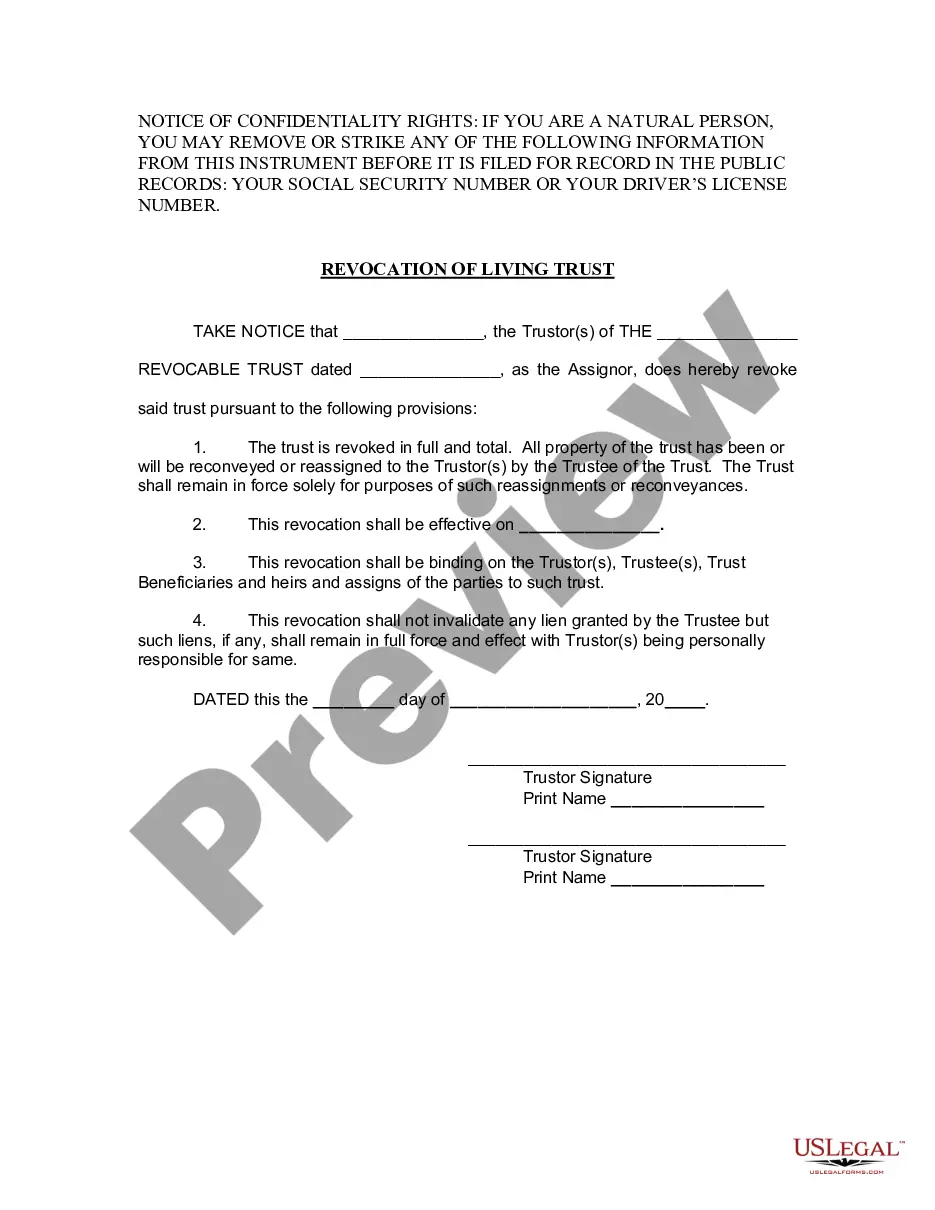
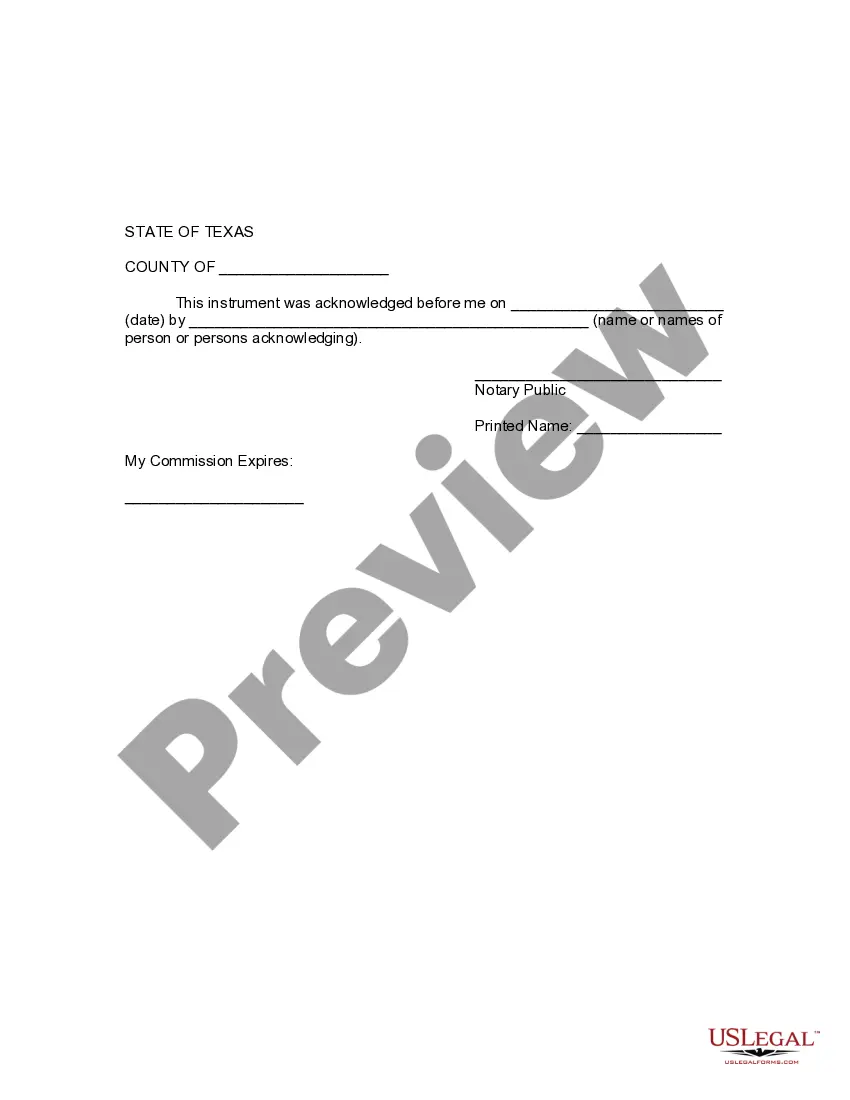
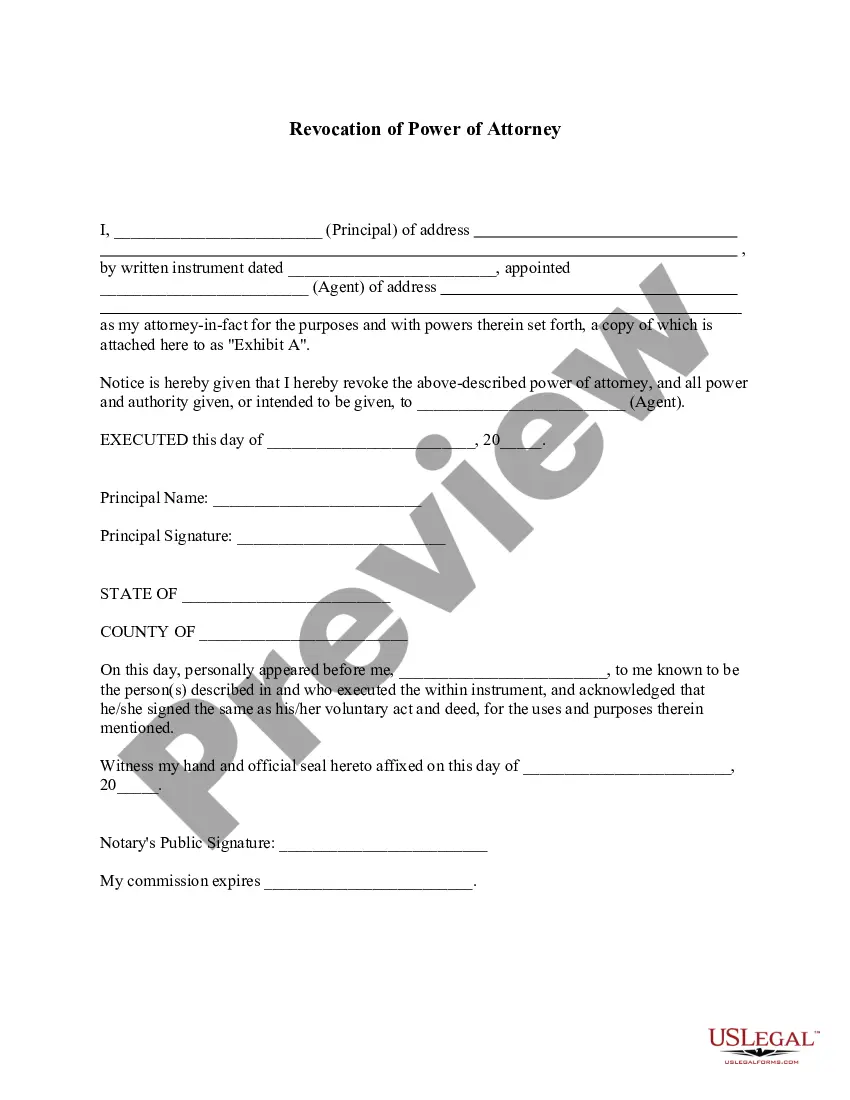
This Revocation of Living Trust form is to revoke a living trust. A living trust is a trust established during a person's lifetime in which a person's assets and property are placed within the trust, usually for the purpose of estate planning. This form declares a full and total revocation of a specific living trust, allows for return of trust property to trustors and includes an effective date. This revocation must be signed before a notary public.
Collin Texas Revocation of Living Trust
Category:
State:
Texas
County:
Collin
Control #:
TX-E0178G
Format:
Word;
Rich Text
Instant download
Description
Free preview

How to fill out Texas Revocation Of Living Trust?
If you’ve previously utilized our service, Log In to your account and store the Collin Texas Revocation of Living Trust on your device by selecting the Download button. Verify that your subscription is active. If it is not, renew it according to your payment arrangement.
If this is your initial encounter with our service, follow these straightforward steps to acquire your document.
You have continuous access to all documents you’ve bought: you can find them in your profile in the My documents section whenever you wish to retrieve them again. Utilize the US Legal Forms service to quickly locate and download any template for your personal or business purposes!
- Confirm you’ve located an appropriate document. Review the description and use the Preview feature, if available, to see if it fulfills your requirements. If it does not fit your needs, utilize the Search tab above to find the correct one.
- Purchase the document. Click the Buy Now button and select a monthly or yearly subscription plan.
- Create an account and complete the payment. Use your credit card information or the PayPal alternative to finalize the purchase.
- Receive your Collin Texas Revocation of Living Trust. Choose the file type for your document and download it to your device.
- Finalize your document. Print it or use professional online editors to complete and sign it electronically.
Form popularity
FAQ
Avoiding the 5-year lookback rule often requires strategic planning. One effective tactic is to transfer assets to a trust well in advance of needing benefits like Medicaid. This proactive approach can help you safeguard assets while ensuring compliance with regulations. Engaging with uslegalforms can provide guidance on creating a solid plan around a Collin Texas Revocation of Living Trust to navigate these complex issues.
The 5-year rule for trusts generally refers to the period during which transfers made to a trust may affect eligibility for certain benefits, particularly Medicaid. If assets are placed in an irrevocable trust within five years of applying for benefits, they might be subject to penalties or delays. Understanding these implications is crucial for effective financial planning, especially in regard to Collin Texas Revocation of Living Trust scenarios.
To revoke a living trust in Texas, you must follow a clear process. Typically, this involves drafting a formal revocation document that states your intent to dissolve the trust. You should also notify all relevant parties, including the trustee and beneficiaries. If you're considering a Collin Texas Revocation of Living Trust, uslegalforms can provide you with tailored templates to ensure proper revocation procedures.
Several factors can render a trust null and void, including a lack of proper execution, the absence of legal capacity, or fraud. For instance, if the grantor did not have the mental capacity to create the trust, it will be invalid. In Collin Texas, it's vital to ensure that all legal requirements are met when establishing a trust to avoid these pitfalls. Consulting a professional can help clarify your trust's validity.
Yes, an irrevocable trust can be affected by the 5-year rule, especially in the context of Medicaid planning. When a trust is established, assets transferred into it may be subject to a lookback period. This period is critical when applying for benefits, including Medicaid. For individuals exploring Collin Texas Revocation of Living Trust options, understanding this rule is essential for effective estate planning.
The revocation clause in a trust is a provision that allows the grantor to dissolve the trust at any time. This aspect is particularly relevant in Collin Texas Revocation of Living Trust scenarios, as it provides flexibility for future changes in circumstances or intentions. By including a revocation clause, you retain the power to manage your assets effectively. It's essential to understand how this clause functions within your trust to navigate potential changes smoothly.
A trust is considered void when it fails to meet the essential requirements of creation or violates the law. For instance, a Collin Texas Revocation of Living Trust can become void if it lacks a clear purpose or is established to evade legal responsibilities. Additionally, if the trust terms conflict with mandatory state laws, it will not hold up in court. Consulting a legal professional can help clarify the necessary conditions to avoid such situations.
Several factors can invalidate a trust, including the lack of proper legal execution and absence of capacity by the grantor. In the context of Collin Texas Revocation of Living Trust, invalidation can occur due to conflicts with statutory requirements or evidence of undue influence. Additionally, failure to adhere to the terms laid out in a trust document can lead to complications. It is wise to ensure that all aspects conform to current laws to maintain trust validity.
A trust typically becomes irrevocable when the grantor decides to relinquish control over the assets placed in the trust. Once a Collin Texas Revocation of Living Trust is executed, you may not change its terms or withdraw assets. This transformation offers benefits such as asset protection and estate tax advantages. Understanding the implications of irrevocability is essential before making that decision.
A trust may become unenforceable for several reasons, including lack of proper creation and failure to meet legal requirements. In Collin Texas Revocation of Living Trust cases, a trust might not comply with state laws, making it ineffective. Furthermore, if the trust's terms are ambiguous or violate public policy, they may also lead to unenforceability. Ensuring compliance with legal standards can help you avoid such issues.